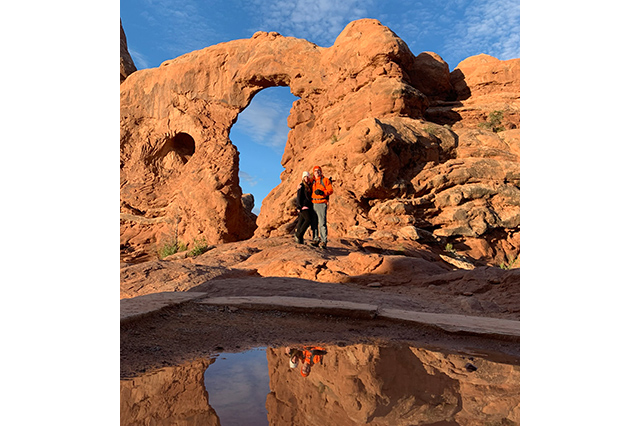
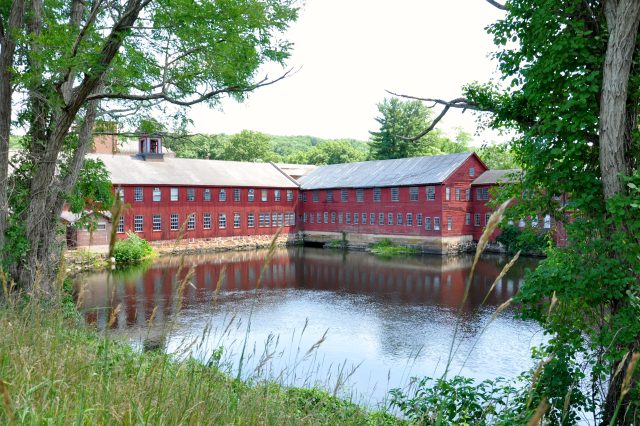
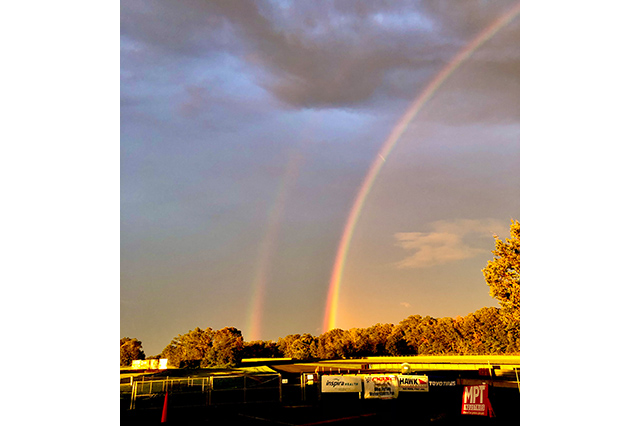
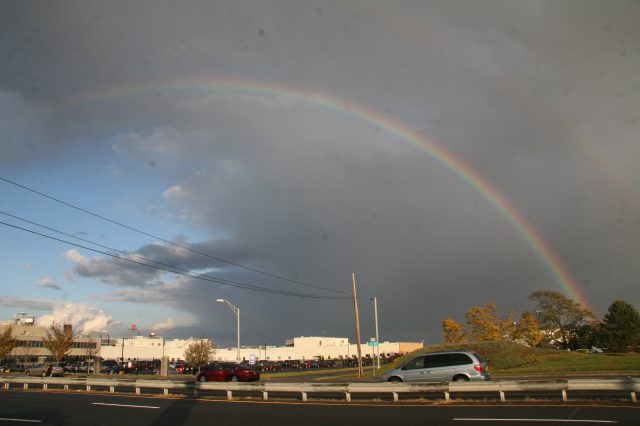
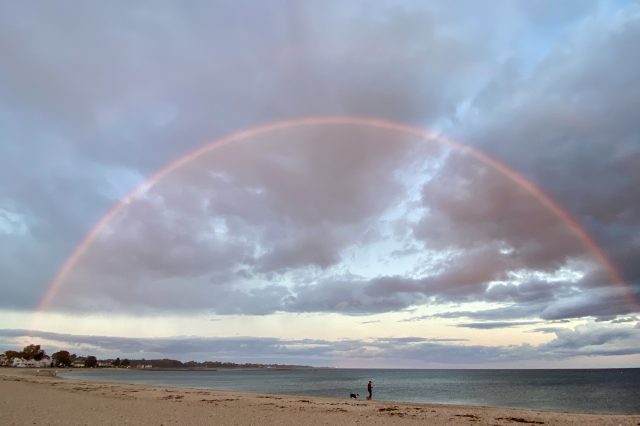
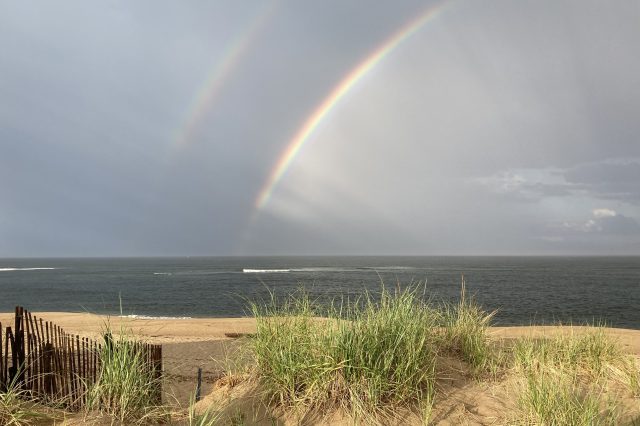
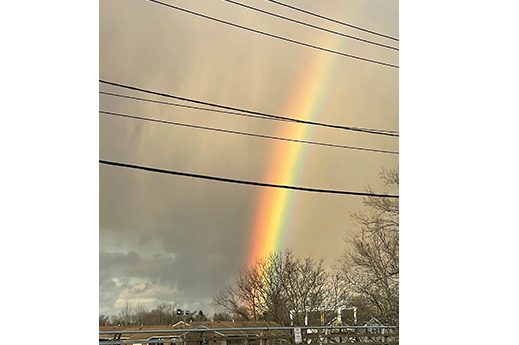
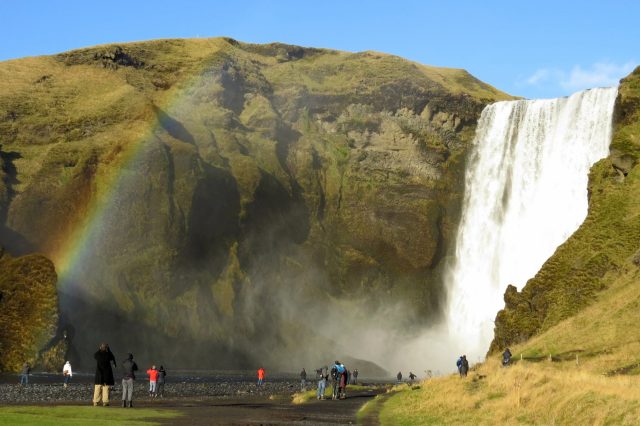
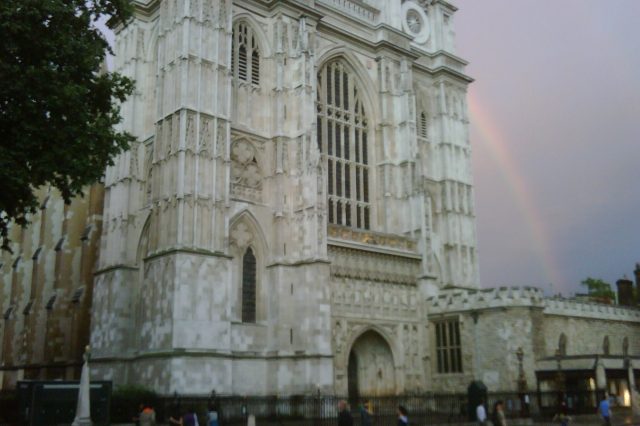
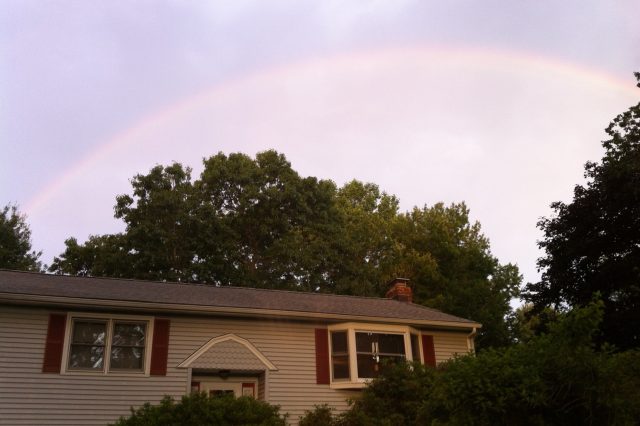
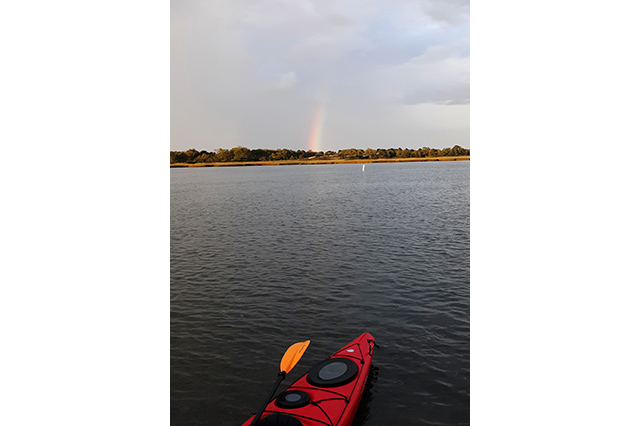
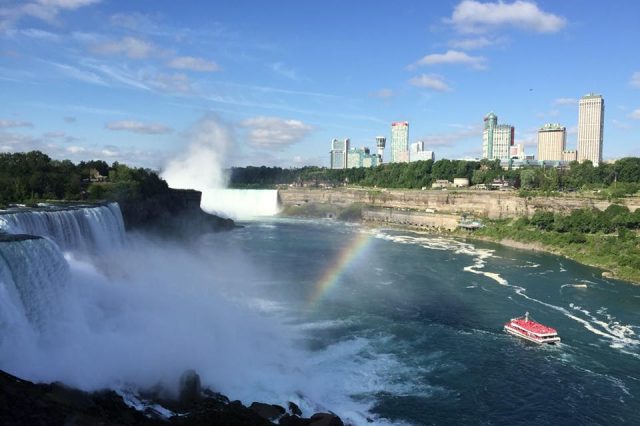
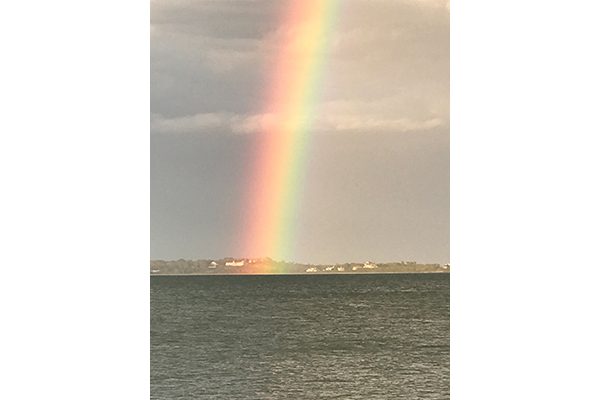
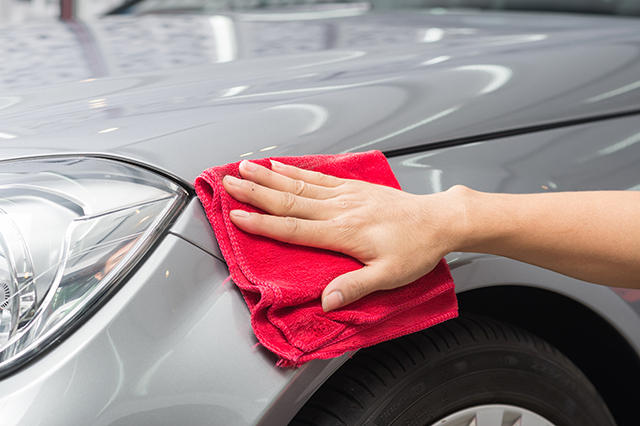
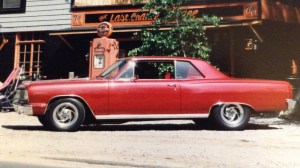
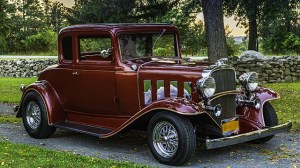
In a mirror, in a puddle or on the surface of a perfectly still lake, reflections offer new perspective and make for especially interesting photos.
Thank You for Participating! (Session Closed)
Browse through all of the photos we received during April’s reflection-themed Photo Session in the slideshow below, and don’t forget to check our social media channels, where we will be sharing some of our favorites. Select photos may also appear in an upcoming issue of Your AAA magazine.
After the storm. (Tom Williams)
Reflection at Rachel Carson National Wildlife Refuge. (Andrew Dion)
Boston Public Gardens (Cindy Merrill)
Awe-inspiriting arches.(Rich Sederquest)
Orange Lake Resort. Kissimmee, Fla. (David Hosford)
Boston skyline from the airport. (Gregg Lentoni)
(Linda Tirone)
Winter sunrise. (Mary Mayko)
The fisherman's reflection. (Stella Tamul)
Tippecansett Trail (Nicole Smith)
Gran Teton National Park Pamela Goody)
A dew drop on sedum plant in backyard. (Pauline DeRosa)
This stoic fellow reminds visitors his private library in Redding is a sanctuary of reflection and solitude. (Fran Mayko, AAA Employee)
Reflection Photo Tips
Adjust your gaze. You’ll be surprised at all the reflections you can find once you start looking for them. A puddle is just a puddle until you notice it’s reflecting the blossoming cherry tree above it. Look for reflections in everything from shiny cars to storefront windows.
Play with composition and angles. Try different ways to compose your photo and a variety of angles. Depending on your approach, reflection photos could be symmetrical or otherworldly and surreal.
Plan ahead. Sunrise and sunset are peak times for reflections. Double the color!
Learn more about reflection photography and the right camera settings to use with these tips from Adobe.
The Northeast is home to a plethora of great hiking spots for every skill level. But if you’ve never hiked before, hitting the trails might feel a bit intimidating. See how to prepare, dress and pack for your first hike with this list of tips and other hiking essentials for beginners.
Before Your Hike
Prior to your outing, take a couple of steps in advance to make the most of your hike later.
First, check the weather forecast. Not only will you want to know the temperature to decide how to dress, avoiding precipitation is key to a safer, less stressful hike.
Eat a hearty, healthy breakfast or lunch, depending on when you plan to hike. You’ll want plenty of energy to get you through your trek.
Let someone (a family member, friend, neighbor, etc.) know where you’re going, especially if you’re heading out alone – just in case you get lost or injured during your hike.
The perfect list of hiking essentials varies from person to person, but these supplies are a good place to start.
Suitable Shoes
Proper footwear is arguably the most important item for a hike. To find your best hiking shoes, consider your athletic ability, experience level and the type of hiking you’ll be doing.
If you have strong ankles, lightweight boots or trail-running shoes are sufficient, otherwise go for stiffer midweight hiking boots.
Once you have a type of shoe in mind, you’ll want to make sure the fit is right.
“Your heel should be locked in place inside the boot to prevent blister-causing friction, and there should be minimal extra space around your foot (although you should be able to wiggle your toes freely),” according to the Appalachian Mountain Club.
Pro tip: It’s best to break in new shoes before going on a longer hike.
Water Bottle
Staying hydrated is imperative during a hike. Have at least one quart of water for each person on your trip.
Reusable bottles are the way to go. Wide-mouth, collapsible and insulated bottles are all great options.
Also, consider a way to purify more water in case of an emergency. Squeeze-style or pump filters take up some room and require a bit of effort to use but are better for groups or longer trips. Bottles like the GRAYL GeoPress and Katadyn BeFree come with filters, making them a good backup for solo treks.
See this guide for information on boiling water, chemical treatments and using ultraviolet light to kill microorganisms and purify water.
Bug Repellant
Using insect repellant can help keep you protected against mosquito-borne illnesses as well as Lyme disease and other diseases carried by ticks.
Bug repellants come in many forms, including sprays, lotions, oils and wipes. Each has their own pros and cons, so choose which best suits your needs. Four of the most common ingredients in bug repellants are DEET, picaridin, permethrin and oil of lemon eucalyptus.
DEET and picaridin are effective against biting insects by hiding your scent. Both can be used on the skin and clothing. DEET offers a few more hours of protection by comparison but will damage plastics and certain clothes, can come off as you sweat and feels greasy to some people. Picaridin is odorless and non-greasy.
Permethrin should not be applied to your skin. Being an insecticide, permethrin kills mosquitoes and other bugs that come in contact with it. “Use 0.5% permethrin to treat clothing and gear (such as boots, pants, socks and tents) or buy permethrin-treated clothing and gear,” according to the Centers for Disease Control and Prevention.
Oil of lemon eucalyptus is moderately effective compared to the others but is more natural. It’s the most effective and long-lasting plant-derived formula; however, some products shouldn’t be used on children under three, according to the EPA.
Always use bug-repellant products as directed, and try wearing long sleeves and pants for another layer of protection. Use the EPA search tool to find your preferred bug repellant.
Pro tip: Bring a lint roller and use it to help pull ticks off your clothing after a hike.
Fit Aid Kit
You can buy a pre-assembled first aid kit or create your own.
Either way, make sure you have these essentials: antibiotic ointment, hydrocortisone cream, bandages, gauze, adhesive tape and adhesive padding (like moleskin) to treat cuts/scrapes, bug bites/stings and blisters. You’ll also want supplies to treat a sprain, like ACE bandages and a pain reliver/inflammation reducer, like ibuprofen.
To complete your first aid kit, consider a pair of scissors – to cut gauze, moleskin, etc. – and a whistle to alert others if you’re ever in trouble.
Rations
Bring along some calorie-dense foods to keep you feeling full and energized during your hike.
Snacks like jerky and energy/protein bars (like Larabar, Clif Bar, ProBar, Luna and Kind) are quick and easy, but be wary of too much salt, which can make you feel thirsty.
Nuts and seeds – like almonds, peanuts, walnuts and sunflower seeds – and nut butters are lightweight and packed with protein. Dried fruits and berries, like banana chips, dried cherries and raisins, along with dark chocolate, have a good amount of calories and will satisfy a sweet tooth. Put it all together to make a trail mix.
Spare Clothes
When dressing for a hike, layering is a great way to stay warm or cool off.
Wear or bring a hat, like a baseball cap to block the sun or a beanie to keep your head and ears warm. Also, have an extra pair of socks, in case your feet get too damp with sweat or you sustain an injury.
“Good hiking socks wick moisture away from your skin and provide padding for your feet,” according to Appalachian Mountain Club. You should avoid cotton, and go for a mix of materials, like acrylic, nylon, polyester and polypropylene (or olefin). These synthetic fibers dry quickly and add durability.
Finally, consider a light jacket to combat a chilly breeze or sudden shower. A water resistant nylon windbreaker is lightweight and will keep your dry for a short period of time. A waterproof jacket will keep you drier, but will likely be heavier as well.
Sun Protection
You’ll also want to protect your skin and eyes from the sun’s harmful rays.
Go for sunglasses that feel comfortable sitting on your face and ears while offering ultraviolet protection. When it comes to sunscreen or suntan lotion, the FDA recommends using a broad-spectrum SPF 15 sunscreen for protection, but the American Academy of Dermatology recommends using a broad-spectrum sunscreen with an SPF of 30 or higher.
Sun protection clothing and lip balm are other supplies worth considering.
Navigation
Navigation tools like a map and compass are trustworthy and essential – you don’t have to worry about batteries dying or losing a signal. Always carry a map of the trail; if you take a picture of it on your smartphone, you’ll be able refer to the map on your camera roll even if there’s no cell service.
For an added level of security, consider a separate GPS device or personal locator beacon.
Light and Heat
In case clouds roll in or sunset comes faster than you were excepting, consider bringing a light source. A simple flashlight – separate from the one on your phone – or a headlamp, to keep your hands free, will do.
A lighter, waterproof matches and/or fire starter are other helpful tools. They’ll offer light and the ability to make a fire, if needed.
Miscellaneous
Some additional tools you might want to consider for your hike are a knife, multipurpose tool and/or duct tape. A multipurpose tool will help you repair to your sunglasses, cut a piece of gauze, pull out a splinter and more.
You might also want to bring some emergency shelter. A tarp, Bivy bag or emergency blanket are all good options – and a heavy-duty garbage bag will do in a pinch.
Sanitation
Bring along some travel-size hand sanitizer and/or disinfectant wipes and a spare face mask.
Backpack
Last, but certainly not least, you’ll need a way to carry all your hiking supplies. A backpack is the perfect method.
You’ll want a pack with comfortable straps, plenty of pockets and a loop/key ring or two for a carabiner and/or your safety whistle, hand sanitizer, etc.
Life is about the journey, and traveling by RV or boat is a unique way to make the most of it. When you are ready to break away from the everyday, these recreational vehicles provide the sense of freedom that comes with operating on your own time and can get you to places an ordinary car might not be able to.
Keep your mind clear while out on the open water or road by knowing you have the right insurance. Speak to a AAA Insurance agent to find out more about a specialized boat or RV policy that works for you.
Boat Insurance
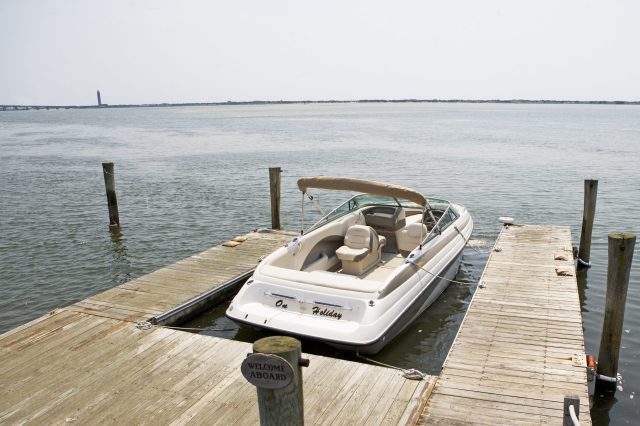
One of the first questions a new boat owner might have is if they should purchase insurance. If you lease or finance a boat, the lending institution will require you to do so. If you own your boat outright and your state does not require liability coverage, there are still many reasons why specialty boat insurance is recommended.
Marinas often request proof of insurance before allowing you to rent a dock or boat slip. Even if you don’t plan to contract with a marina, boat insurance is a wise investment in order to have sufficient protection for yourself, your passengers and your watercraft. Listing a boat on your homeowners policy will only provide limited coverage.
Regardless of if it’s a sailboat, speedboat or other vessel, being out on the water poses unique risks such as hitting a pier, dock, buoy or other boats. Beyond collision, someone may suffer an injury, or your boat may fall victim to vandalism, fire or theft. With the proper coverage, you can be insured for medical costs, bodily injury, and property liability and damage to your boat and equipment, as well as to others. While customizing your policy to your needs, you should also go over exclusions with your insurance agent.
When discussing your boat insurance quote, be prepared to share as much information as possible about your boat usage and storage as well as descriptive information such as the age, type, length, horsepower and value.
RV Insurance
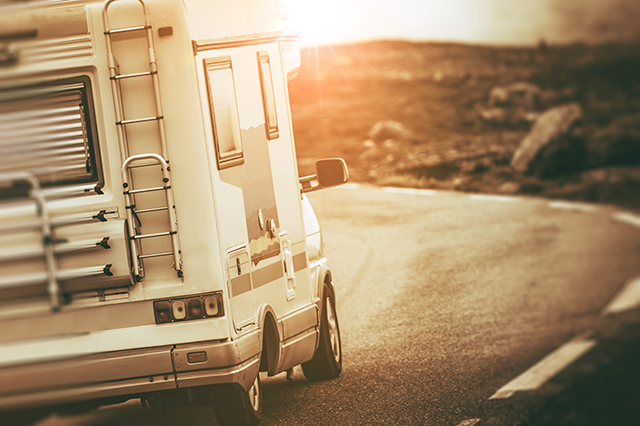
Whether you are traveling to a favorite campground or exploring a series of small towns, RVing comes with special insurance needs.
More than a vehicle, an RV is a home while you travel or may even be your permanent residence. Even the electronics within an RV differ from a typical vehicle. You may have outfitted your camper with a satellite dish and more expensive sound equipment that need protection. When selecting RV insurance, your premium will differ if you live in your RV versus using it for trips, as full-time RVers need coverage similar to a homeowners policy.
Moreover, consider the amount and types of personal property that you will be storing in your RV as you travel and speak to your agent to make sure your policy is crafted to provide the coverage you’re expecting in the event of a loss.
RV insurance should provide you with liability coverage for bodily injury and property. This covers costs if you cause damage to another vehicle or cause an injury during an accident. RV owners may also be liable for claims from guests and should make sure their policies are designed to cover injuries and property damage that occur in your RV as well as on your campsite.
Because of the amount of time spent on the road, another important feature of RV insurance is total loss replacement coverage if your RV is totaled in an accident. You might prefer a policy that provides you with the replacement value of the RV – a new, comparable RV – instead of the “actual cost” or depreciated value. (Depending on the type of boat, you should also look into this on a boat policy.)
Also ask about emergency expense allowances. If you break down, you will want to know if you are paying for food and lodging coverage in your premium.
Enjoy the freedom of boating and RVing with complete peace of mind. Learn more about investing in RV and boat insurance with AAA.
Few would argue electric vehicles aren’t without their faults– they’re often expensive, take time to charge, etc. Their positive effect on the environment, however, is rarely brought into question.
The presence of an electric-powered battery instead of an internal combustion engine allows these cars to roam the roadways without producing any harmful tailpipe emissions. But between manufacturing, charging and recycling them, these batteries may not be as green as they seem. It begs the question: Are electric car batteries bad for the environment?
Let’s follow an electric car battery through its life cycle to see where it’s helping the environment and where it’s not.
The Cauchari-Olaroz lithium mine in Argentina.
Raw Materials
The environmental toll of electric car batteries begins before the product is even assembled, most notably in the mining of its active material, lithium. To extract lithium from the earth, an immense amount of water is pumped down into salt flats, bringing mineral-rich saltwater to the surface. Lithium is filtered out of the mixture left behind after the water evaporates.
This water-intensive process is problematic for several reasons, including its potential to contaminate the water supply. Further complicating the issue is the location of these mines, many of which are found in desert regions of Australia and China. More than half the planet’s lithium supply, however, is in an area called the Lithium Triangle, spanning Andean Mountain sections of Argentina, Bolivia and Chile. The area is one of the driest places on the globe, and lithium mining consumes as much as 65% of the region’s water, according to the United Nations.
Lithium isn’t the only potentially hazardous electric vehicle battery material. The process of mining for cobalt, the majority of which is done in the Democratic Republic of Congo, produces hazardous byproducts that can toxify the environment. Cobalt mine sites often contain sulfur, which generate sulfuric acid when exposed to air and water. This process wreaks havoc on rivers, streams and aquatic life, creating damage that can last for hundreds of years, according to the United Nations.
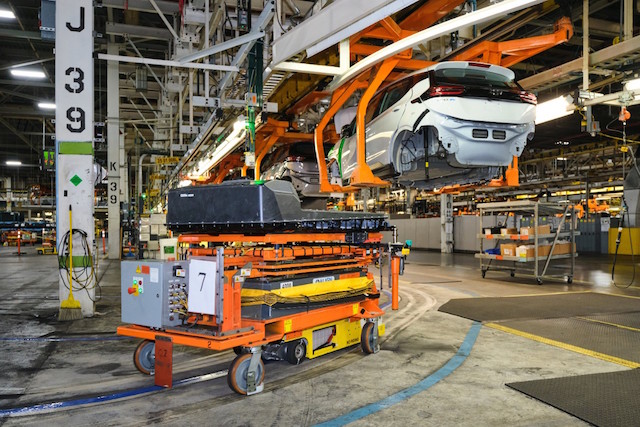
Battery packs for the 2022 Chevrolet Bolt EV go through the production line at the General Motors Orion Assembly Plant.
Production
Because of methods required to mine for its raw materials, and their subsequent environmental effects, battery production is likely the most environmentally damaging stage in the manufacturing of electric vehicles. Research by the International Council on Clean Transportation (ICCT) found battery manufacturing to account for 15% to 20% of an EV’s lifecycle emissions.
If you remove the lithium battery from the equation, production of electric- and gas-powered vehicles is very similar and thus, have nearly identical effects on the environment. Its inclusion, however, makes electric vehicle manufacturing slightly less environmentally friendly than that of gas-powered vehicles.
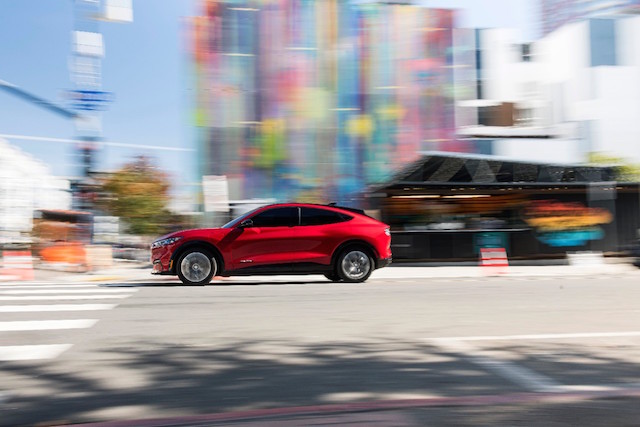
The 2021 Ford Mustang Mach-E
In-Use
Critics of electric vehicles are often quick to point out that green vehicles aren’t, in fact, green. They are charged by an electrical grid likely powered by fossil fuels. This is true. Unless the electricity utilized to power an electric car battery is derived entirely from renewable energy, there are emissions associated with it.
But electric grids across the country are shifting to a mix of natural gas, wind and solar power. Currently, nearly 20% of the electricity in the country is powered by renewable energy, according to the United States Environmental Protection Agency. (Close to home, nearly 17% of New England’s electrical grid and more than 40% of upstate New York’s is fueled by renewable sources.) Regardless of where you live, you’re likely getting at least some of your power from green energy.
Even accounting for electricity emissions, however, research shows that an electric vehicle is typically responsible for lower levels of greenhouse gases than an average new gasoline car due to the complete absence of tailpipe emissions over the entirety of the car’s lifespan. Gas-powered cars, as we know, are another story. The EPA has continuously found the country’s transportation sector to be the largest contributor of greenhouse gas emissions, with cars and trucks leading the way within the category.
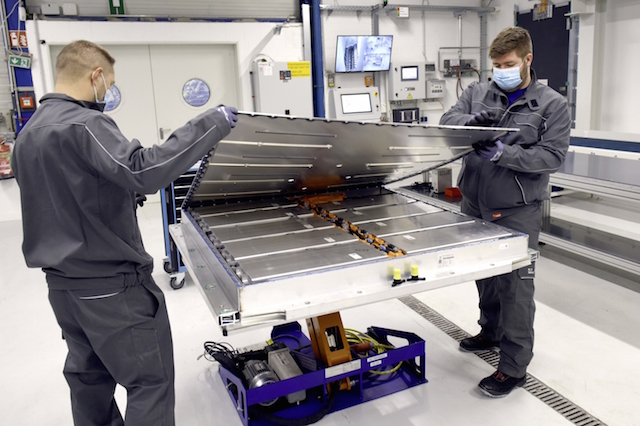
Electric battery systems are disassembled at a Volkswagen recycling pilot plant.
Recycling
Electric and internal-combustion vehicles have drastically different environmental effects when the cars are in use. But when it comes to recycling, the situation is completely reversed. As little as 5% of the world’s lithium batteries are recycled, according to the American Chemical Society, a stark contrast to the 99% of lead car batteries recycled here in the U.S.
The dearth of recycled lithium batteries has significant economic repercussions, but it also takes a dire toll on the environment. Most lithium batteries end up in landfills, where their hazardous components can leak into the soil and groundwater. Landfills are also a major contributor of greenhouse gas emissions, the EPAreports. Recycling would also limit the need for mining raw materials, an environmentally destructive stage in an electric car battery’s lifespan.
So why are so few lithium car batteries recycled? In short, because it takes a lot of time, money and effort. Unlike lead batteries, there’s no standardization when it comes to lithium car batteries. They often vary in size, shape and component ratios from one manufacturer to another. Each one, therefore, needs to be broken down in a different manner, creating a highly labor- and energy-intensive process. Making matters worse, battery packs are not designed to be disassembled. They can contain several thousand individual battery cells plus a complex system of circuitry and sensors. All of these components are tightly packed together and secured in a plastic or aluminum case.
Like other aspects of electric vehicles, lithium battery recycling finds itself stuck in a chicken-and-egg problem. Because of the hurdles, governments and private companies have been hesitant to invest in large-scale recycling programs, but improving recycling efficiency won’t occur without such efforts. We are beginning to see some changes, however. In 2019, the Department of Energy announced the creation of the ReCell Center, the government’s first lithium battery recycling research center, dedicated to developing a cost-effective, environmentally sound recycling process that “will help enable the United States to compete in a global recycling industry and also reduce our reliance on foreign sources of battery materials.”
In Conclusion: Are Electric Car Batteries Bad for the Environment?
Environmentally speaking, electric vehicle batteries are far from perfect: assembling them depletes the Earth of its natural resources; manufacturing them is energy intensive; charging them requires dirty energy; and recycling them is nearly impossible.
These negative effects, however, are offset by the absence of tailpipe emissions throughout the vehicle’s lifetime. the aforementioned ICCT studyfound electric vehicles in the U.S. produce 60%-68% fewer emissions over their lifetime than gas-powered cars.
So, in short, electric vehicles are the more climate-friendly choice. That said, there’s room for improvement. More efficient manufacturing methods, greener electric grids and improved recycling options would benefit electric car batteries – and the environment – going forward.
We only have one planet Earth, making Earth Day the official reminder to treat our planet well. Though this environmentally friendly holidayis celebrated once a year (April 22 marks the event’s 52nd anniversary) these eco-friendly products for your home will help make every day a little greener.
With many brands using buzzwords like “sustainable,” “natural” and “zero-waste,”it can be hard to decipher what’s truly good for the planet and what’s hype. Start by reading the label and looking for products that have green certifications. It can take a little more planning and searching for the rightgoods, but in the long run you can save a lot of money by supporting Mother Nature (just a bonus!).
So whether you’re going zero-waste and stopping the use of single-use plastic products or you just want to start by shopping with a reusable bag, this green guide will help you adjust your carbon footprint. Remember, every small change makes a difference.
Kitchen
Kitchen waste accounts for much of the trash that comes from the common household – from eggshells and coffee grinds to copious amounts of single-use plastics. Start by thinking about where most of your kitchen waste comes from and find eco-friendly products to tackle those items.
Bee’s Wrap is reusable wrap made from cotton and beeswax that can replace plastic wrap and aluminum foil. You can swap out plastic containers with reusable containers made from more sustainable materials (look for glass or steel) like Klean Kanteen and LunchBots. Replace kitchen paper towels and sponges with things like NotPaper Towels, which can be washed and reused, or Swedish dishcloths, which are made from wood and cotton.
Another simple way to care for the planet is by composting your food waste. Start by simply collecting any food waste on your counter in a compost bin. Set up a compost bin in your yard or bring your food scraps to a local farmers market.
When making a trip to the grocery store, bring your own reusable shopping bags. Several states – including Connecticut, Maine, New York and Vermont – banned plastic bags in stores. Envirosax and Baggu are two sustainable brands that offer a variety of stylish reusable bags. Boon Supply, another eco-conscious brand, has products like these farmer’s market totes – made famous by the French – that are perfect for carrying fruit and veggies. Store smaller produce like berries or peas in these mesh drawstring bags. Bye-bye plastic bags!
Bathroom
The second-largest culprit for creating households waste is the bathroom. Between toothpaste containers, disposable razors and beauty and grooming products, your trash can fill up quickly. Instead of plastic and single-use products, look for brands with sustainable packaging that sell in bulk (less packaging) or have a refill program. This is a simple way to save a lot of money.
Think how many disposable razors you buy in one year. Swap this with a reusable razor from Leaf Shave that has a lifetime warranty. You’ll then only have to replace the razor blades. David’s is a green toothpaste brand with a recyclable metal tube and Georganics makes a variety of sustainable oral care products, including bamboo toothbrushes and mouthwash tablets with refills.
Deodorant, skin care, hair care? Opt for personal care products that have natural ingredients, recyclable packing or are reusable. Support brands that have a mission to care for the planet like Weleda, which makes plant-rich skincare products, Meow Meow Tweet, a small-batch vegan skin care company, and Attitude, where their natural products are EWG Verified. LastSwab makes reusable cotton swabs (you just wash with soap and water after using), while By Human+kind features a refillable packaging program for everything from shampoo to hand soap.
When thinking eco-friendly products, you may not necessarily think about things like a greener shower curtain or toilet paper, but there are greener options available. Coyuchi makes items like organic cotton shower curtains (no plastic liners needed) and bathroom towels made with practices that limit harm to the environment. Did you know that global toilet paper production consumes 27,000 trees daily? Save the trees and use toilet paper made from bamboo or skip toilet paper and go the European route by attaching a bidet to your toilet.
Bedroom
Most people spend about one third of their lives sleeping, so it makes sense to ensureyour sleeping materials are green.Sleep and Beyond makes organic and natural bedding like sheets, pillows, comforters and mattress pads that are made in sustainable and fair-trade factories. Don’t forget your mattress! The Avocado Green mattress sounds as green as you think and is made from natural materials
Set the mood with solar lighting! Whether you’re camping or at home, Biolite makes a solar lighting starter kit to ease you into the world of renewable energy.
Green Cleaning
Consider cleaning with eco-friendly products made without harsh chemicals. Supernatural is a cleaning line that uses essential oils and offers refillable bottles. Win, win. Dr. Bronner has been a pioneer in natural products and saving the planet for years: its castile soap has 18 recommended uses for cleaning – face, body, hair, dishes, laundry, mopping, pets and more.
What about your dishwasher? Try Dropps, natural detergent pods that can be purchased as a subscription or in bulk. Need sponges? Sqwishful makes a plant-based compostable pop-up sponge and if you’re looking for reusable cleaning tools like brushes, Redecker has got your covered.
Wrapping Paper
Tons of wrapping paper goes to landfills each year. Combat this by buying sustainable paper or by supporting a reusable solution like Lilywrap, reusable fabric gift wrap with bows that can be used more than 50 times.
Not sure how to recycle an item? Visit TerraCycle.com, a resource that gives more information, tips and a list of brands that partner with the site to help recycle packaging.
What are your favorite eco-friendly products for the home? Share them with us in the comments below.
Not too long ago, a trip to the bank was a usual item on everybody’s errand list. But times, they are a-changin’ – and faster than ever. Not only has visiting banks in person become less common, it’s also increasingly less possible, as banks are steadily closing branch offices. This isn’t anything new – the number of brick-and-mortar locations has dropped every year since 2012. 2020, however, was an outlier: The number of branches nationwide absolutely plummeted.
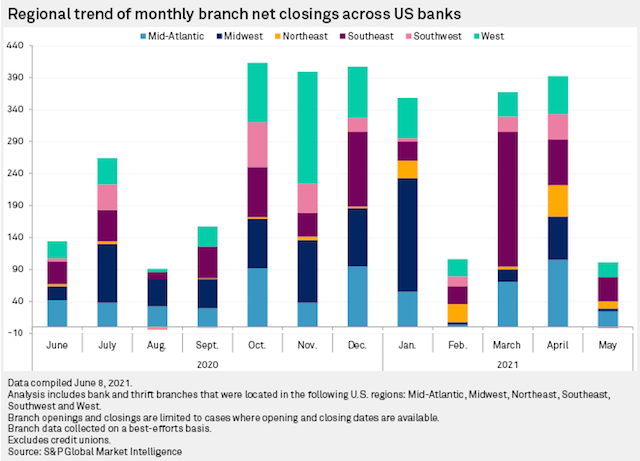
U.S. banks closed a total of 3,324 branches in 2020, while opening just 1,040, according to S&P Global Market Intelligence. The result was a record of 2,284 net closings in one year. (To put that number, which doesn’t include temporary closings due to COVID-19, into context, 1,391 branches closed in 2019.) The trend only continued in 2021. If things stay the same, physical bank branches could be extinct in the U.S. as soon as 2034.
This disappearing act begs two questions: Why are banks closing branches in the first place and what should you do if your bank branch closes?
Why Are Banks Closing Branches?
Like nearly every aspect of our lives, banking is moving further and further into the digital space. Indeed, the driving force behind the upswing in bank branch closings is the increased use of online and mobile banking. Customers can complete most, if not all, of their financial transactions digitally, which creates a waning demand for branch offices.
When banks further compare the cost of operating a brick-and-mortar location to simply offering their services online, the choice to close branches becomes even easier.
How Will I Know if My Bank Branch Is Closing?
Of all the factors surrounding a bank branch closure to be concerned about, learning of said closing should be at the bottom of the list. Banks are legally required to inform customers of a branch closing. The Federal Deposit Insurance Corporation Improvement Act of 1991 states the bank “must mail the notice to the customers of the branch proposed to be closed at least 90 days prior to the proposed closing. The institution also must post a notice to customers in a conspicuous manner on the premises of the branch proposed to be closed at least 30 days prior to the proposed closing.”
Additionally, the bank must either inform customers where they can obtain services after the branch closes or list a telephone number customers can call to get that information.
What Should I Do if My Bank Branch Closes?
Find the Nearest Bank Branch
If you’re accustomed to banking in-person and your home branch shutters, there’s no need to panic. You have a number of options at your disposal. The easiest solution is to simply find your bank’s nearest branch location. If it’s within a reasonable distance, there’s no need to alter anything else about your banking.
Odds are this option will be available to you. Most branch closures are occurring in saturated urban markets, according to the American Bankers Association Banking Journal. These areas typically have a higher density of branch locations, so if one closes, another one is likely nearby.
Courtesy of S&P Global Market Intelligence
Check Local ATM Availability
If there’s not another branch location near you, or it’s too far to visit as often as you’d like, ask yourself if most of your physical banking transactions can be done through an ATM. If so, you may not need a branch. Many bank ATMs allow you to not only get cash, but deposit cash and checks, make transfers between accounts, and check account balances.
Do some research to see how many ATMs your bank has nearby. You can likely get by even if there is just one. You’ll also want to learn if there are nearby ATMs outside of your bank’s network you can use without a service fee.
Switch to Online Banking
As we’ve seen, your bank branch closing is a sign of the times — a trend that won’t likely go away anytime soon, if ever. Therefore, you could use it as the perfect motivation to switch to online banking.
Almost all major banks offer their services online, so switching over will require setting up an online account, which can be done in minutes. If available, you can also download your bank’s app, allowing you to access your account from your smartphone or tablet. Technology has jumped leaps and bounds in recent years; once you’re used to it, you could very well find online banking easier than anything you’ve done at a brick-and-mortar location. A perfect example: the ability to deposit a check simply by taking a photo of it on your phone.
Find a New Bank
If you’ve exhausted all your other options to no avail, you can always switch to a bank with a local branch. It’s a more laborious process, but worth considering if a physical branch location is important to you.
Don’t be fixated solely on proximity. Research the banks in your area to see which one best fits all your financial needs.
Do you prefer banking in-person or online? Is having a branch nearby important to you? Let us know in the comments below!
We know because we’ve been: “Out There” is a series of inspiring travel spotlights from AAA Travel advisors and employees.
Dublin – the small and historic capital of a country that’s contributed so much to the rest of the world. Between mountains, rivers and the Atlantic, Dublin’s heart is that of openness, geniality and having simple, good times.
The city’s streets are so lively with art, both traditional and hip restaurants, buskers, festivals, and pubs, that you understand why so many poets, writers, and the like have made Dublin their home.
My name is Zach Duhamel and I am the associate marketing specialist in travel at AAA Northeast. I recently visited Dublin and the Irish coast with my girlfriend, Phoebe, and wanted to share my experience.
About Me
I love travel, cooking, photography, outdoor adventures, and music. And on my own time, I run a New England travel website. I love to tell people about travel and I want to encourage as many people as possible to make their travel dreams come true.
I consider myself a fairly experienced traveler. I have now been to 10 different countries, most of them in Europe.
I’m also an avid proponent of solo and minimal travel. Solo traveling, for me, is the way to go. It lets you see exactly what you want, when you want and how you want! Plus, you don’t have to worry about the hassle of planning a trip concurrently with others.
Some of my favorite travel memories have been with other solo traveling friends. When you go solo, you are bound to find other people who have shared interests.
Dublin!
I traveled to the UK to meet my girlfriend Phoebe. We spent a few days in London and wrapped up our trip with a visit to Dublin.
I have always wanted to visit Ireland, especially growing up in New England where so much Irish influence exists. My family says we are at least a tiny bit Irish, and Phoebe is Irish on her father’s side, so we figured it would make a perfect place to visit.
Plus, as a travel bug, I wanted to give Phoebe a taste of some of my favorite types of travel experiences by having the both of us visit an entirely new place to us, stay in a hostel, make friends and go on adventures.
Our home base was the Jacobs Inn, which is a hostel located downtown along the River Liffey and a scenic moments’ walk from the famous Temple Bar district.
The Temple Bar itself dressed up for Christmas. This is one of the more touristy areas in Dublin.
Our time in Dublin was strikingly calmer and slower placed than London. This probably had to do with the exhaustion of the previous days, but also in part to the small, cozy and laid-back feeling Dublin imparts.
History
Ireland’s history has everything to do with this. Despite their geographic similarities, the story of England and Ireland could not be more different; Britain, once the greatest empire the world has ever seen, has a history of successful global conquest and incalculable cultural, political and economic contributions, while Ireland … well, they have pretty much lost every war they have ever been in, so we learned.
That’s not to mention the famines and periods of tyranny. It’s no wonder that Ireland is known for emigration. Therefore, the Irish people have a different way of looking at the achievements of their countrymen. Rather than look to their island, they look abroad.
This is highlighted by the EPIC Irish Immigration Museum. There, they celebrate the “epic” contributions emigrants have made as Irish people outside of their homeland, as well as recognize their struggles via several interactive exhibits.
I think it is an incredibly special thing to be able to look at your nation this way, with such humility and positivity as to see that perhaps Ireland’s greatest gifts and achievements lay not within her own borders, but around the globe instead.
This is a highly recommended museum that has been praised by many other visitors over the years.
Not far beyond the city borders of Dublin are the country’s stunning coasts. In fact, a couple of euros and a 40-minute ride on Dublin’s public transport bus will bring you to the coastal peninsula town ofHowth.
This tiny town is known the world over for its stunning views of the Atlantic Ocean. The bus brings you right to the Howth Cliff Walk – a gentle hiking route that gives you the best views of both ocean and mountains, as well as a historic lighthouse. If you have the time to visit, it makes a great change of pace.
Pub Fare and Libations
A great culinary stop in Howth is O’Connell’s Pub and Restaurant, where I enjoyed an Irish classic: Irish fisherman’s pie cooked beyond perfection, with tender and melt-in-your-mouth pieces of fish.
Of course, Ireland is known for its whiskeys, ales, porters and stouts, but one reigns above them all. Phoebe and I heard the Guinness in Dublin is fresher and tastes better than anywhere in the world, which I can now confirm!
If you are a fan of Guinness, a trip to the Guinness Storehouse is an absolute must. It is a giant and stunning museum that walks through the creation of Guinness today, as well as the origins of the legendary libation and a chance to see the brewing equipment of years past.
A Feeling of Home
This was my first time visiting Ireland. I think what made this trip different was recognizing the echoes in my home in New England. With so many Irish having lived in New England throughout its history, it makes sense that the feel of Dublin reminded me of so many places in Boston and the rest of New England.
Even Howth, with its cliff-adorned coastlines, walking paths, and views of the horizon called me back to the famous Cliff Walk and Ocean Drive in Newport, Rhode Island.
Highlights
One of my favorite parts of our trip was the free independent walking tour we booked. I think these types of tours are key for a great travel experience, especially when I am visiting a place I don’t know much about.
I have always noticed a greater sense of excitement, enthusiasm, appreciation and understanding for a place I’m visiting after a tour. It makes a difference when you actually know which historic buildings, parks, museums and landmarks you’re looking at!
Free walking tours are given by independent tour guides, which means you often get a unique, down-to-earth tour of your destination, with off-the-beaten-path sites and advice from a local. I have even gone to lunch with some of them after! They are tip based, so you are not obligated to pay anything; rather, they ask that you tip based on how good/how much you thought the tour was worth.
Another highlight of our tour was a stop at The Celt, a traditional Irish pub just outside of our hostel. Earlier in the day, our tour guide John advised us that the most Irish experience we could have was to go to a pub like this, have a pint or two of Guinness, make new friends, sing, dance and repeat!
Pleasant Surprises
The people were incredibly friendly, polite and had the kind of social skills and jovialness to talk to you about anything.
The food was also a nice surprise, especially the seafood. Ireland is rarely touted for its food, but I found it to have some of best seafood I’ve ever tasted. That means a lot coming from a lifelong Rhode Islander!
If I had to pick a favorite meal, it was our stop at The Fish Shop, which specializes in fish and chips. They were serving two kinds of fish, both cooked perfectly. The oysters also blew me away.
Lessons and Advice
Ireland and Dublin might seem small, but don’t underestimate them! There is plenty to do and history to learn about. My advice would be to come hungry and plan for more time than you think you will need on this tiny island nation.
After having been to so many places all over the world with histories and monuments to great successes and achievements, I think Ireland taught me to always remember to make the most of your situation, to constantly celebrate, and that friendliness to strangers, some good food, and good music will take you far.
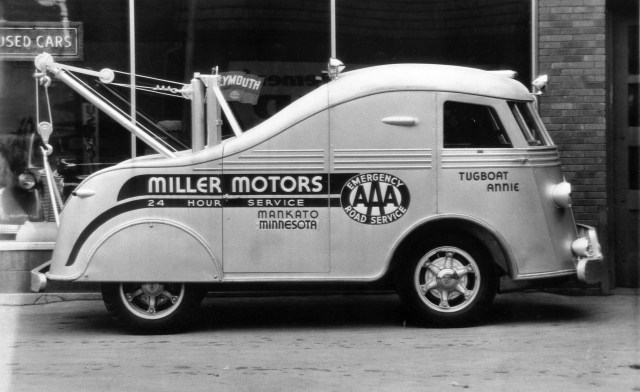
A tow truck is one thing we hope to never need, but when we do, we’re sure glad it exists. These helpful vehicles – and the men and women operating them – get us out of tricky situations when we’re in dire straits.
Considering their usefulness and importance, it might be strange to know there was a time in automotive history when tow trucks didn’t exist. After all, as long as there have been cars, there have been crashes and breakdowns requiring the transportation of disabled vehicles.
Yet tow truck history didn’t begin until well into the 20th century. Once the first was manufactured, however, they quickly became ubiquitous.
The Tow Truck Arrives
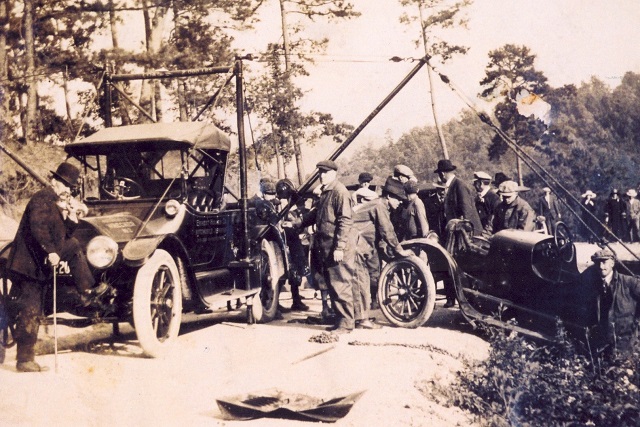
Tow truck history can be traced back to one fateful day in 1916. Ernest Holmes, Sr., a mechanic in Chattanooga, Tenn., received news that a motorist had lost control of their Ford Model T and driven into a creek. Holmes went down to the site of the crash to recover the vehicle. Having little more than some rope and blocks at their disposal, it took six men eight hours to get the Model T out of the water and back onto the road.
The experience convinced Holmes that there had to be a more efficient way to move disabled cars. He went back to his shop and began constructing what would eventually become the first tow truck. To do so, Holmes mounted a chain and pulley system onto the chassis of a 1913 Cadillac. He would later improve the design with the addition of two outriggers, which helped stabilize the towed car when it was being hoisted off the ground. In 1918, Holmes was awarded a patent for his invention.
A Holmes 485 wrecker at work.
The Towing Industry Is Born
With automobile ownership on the rise, Holmes knew the need for tow trucks, or wreckers as they were known, would only grow. He transformed his auto shop business into a manufacturing operation and went to work building and selling these new vehicles.
His first commercially available model was the Holmes 485. This improved version utilized the longer body of a 1913 Locomobile. Considered by many to be the best American-made car of its time, a new Locomobile was selling for $6,000, or roughly $100,000 today.
With a patent in tow and production underway, Holmes was on his way to creating a highly successful business. He supplied the U.S. Army with thousands of military wreckers during World War I and II. When NASCAR came onto the scene, Holmes’ wreckers became a common sight at the racetrack. By 1965, two-thirds of all wreckers in the tow truck industry were Holmes models, according to the Chattanoogan.
Holmes continued to tinker with his initial design in the proceeding years and decades, garnering roughly a dozen more patents. He also invented several new vehicle lifts, creepers and jacks. His brand of trucks still exists today.
For his work, Holmes was inducted into the University of Tennessee Chattanooga’s Entrepreneurship Hall of Fame and the International Towing Museum Hall of Fame, which is located in his hometown of Chattanooga.
Modern Tow Trucks
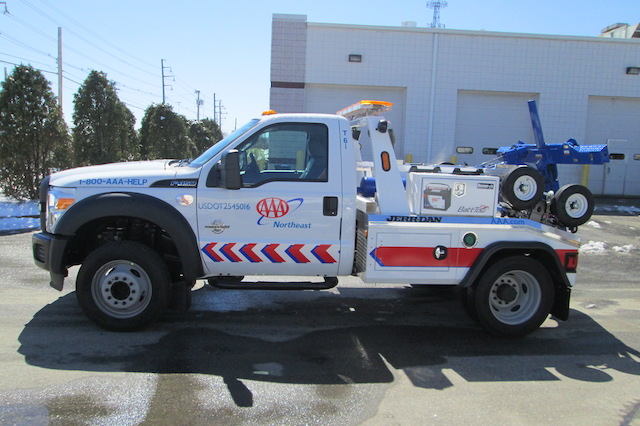
Although the general manner in which tow trucks work has remained the same since Holmes’ day, wreckers have become stronger, more effective and equipped with new features. There are three primary types of tow trucks used on passenger cars today:
Flatbed: As the name implies, these trucks have large flatbeds capable of fitting an entire car. The operator tilts the flatbed toward the ground using hydraulics and the car is driven or pulled onto the platform. The bed is then lifted back into position, the car is secured and the truck is ready to move. Flatbeds are generally considered the safest and easiest way to transport a car because there’s no pressure on the towed vehicle or any chance it could get dragged along the road.
Hook and Chain: These tow trucks employ heavy-duty chains that attach to one end of the disabled car. The chain is then pulled, lifting the car in the air and leaving only two wheels on the ground. The vehicle is transported while in this position. The hook and chain truck leaves the towed car susceptible to damage, so it’s typically only used on wrecked cars or those in poor condition. They can also be utilized to pull a car out of a stuck position, such as a ditch or mud patch.
Wheel Lifts: Like the hook and chain, wheel lifts tow cars with only two wheels in contact with the street. But instead of a shaky chain, wheel lifts utilize a metal yoke to lift the car. This feature puts less strain on the towed vehicle and provides a more stable attachment, reducing the likelihood of damage occurring during transport.
AAA may not have invented the tow truck, but it has perfected the use of it. Roadside Assistance is available to members 24/7, 365 days a year, including towing services. Simply call or request assistance through the AAA mobile app, and a technician will be on their way.
If you ever see a tow truck in operation, remember to Slow Down, Move Over. It’s the law.
Darlene Ford is a longtime volunteer for the American Red Cross, while Brian Butterworth got involved just last year.
But both AAA Northeast employees are deeply invested in the Red Cross mission.
Ford, district branch manager in Tewksbury, Mass., had been a volunteer at Red Cross blood drives for years when, in 2018, she was called into further action during a disaster in Lawrence, Mass.
“Lawrence was hit with a horrible gas explosion that rocked the city. Within an hour, we had a AAA team on our way to Lawrence to help,” Ford said. “Employees from all over participated, and we were able to reach victims of the explosions and help them connect to needed services within the recovery center.”
Since then, Ford has volunteered for more Red Cross disaster efforts in her area. She’s working on more ways to lend support, including helping displaced people get replacement driver’s licenses through AAA and recruiting additional volunteers.
Soon, she and Alison Demokritou, district branch manager in Newburyport, Mass., will become certified trainers for the organization’s Be Red Cross Ready program, so they can teach AAA employees and the community how to react in a disaster.
Fire Safety
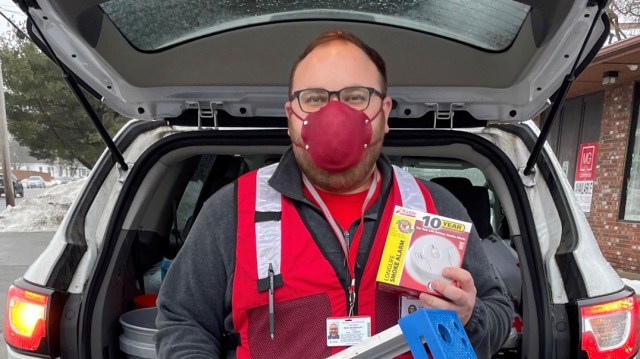
Brian Butterworth, manager of operations support for AAA Driving School in Providence, has been a Red Cross volunteer since last December. And he’s already certified for various roles, including the Rhode Island chapter’s Disaster Action Team, where he helps local families cope with emergencies like home fires. In these few months, he has responded to seven house fires to assist dozens of families.
“A home fire can be an extremely stressful, overwhelming event,” he said. “Being able to provide immediate assistance and guidance to those impacted by a fire or other disaster has been very rewarding.”
He has also participated in Red Cross fire prevention outreach programs, installing smoke detectors in homes, including bed-shaker alarms for people who are hard of hearing. He encourages others to take part in the organization’s “Sound the Alarm. Save a Life” event, where help is always needed.
Since launching the home fire campaign in 2014, the Red Cross has saved at least 1,243 lives, installed over 2.3 million smoke alarms, made 975,500 households safer and reached 1.7 million youth through youth education programs nationwide, Butterworth said.
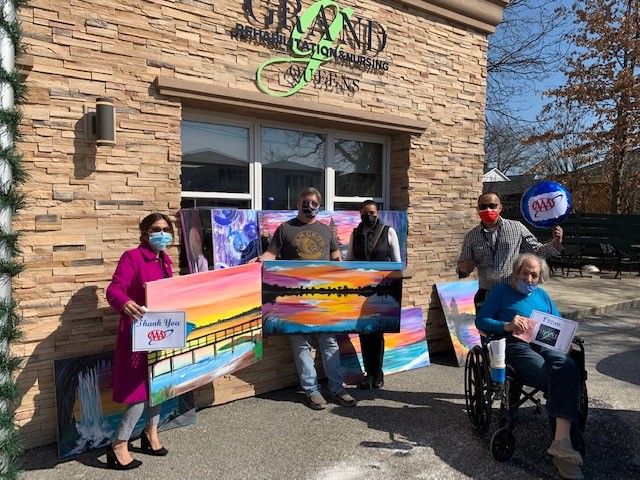
Garden City, N.Y., area employees delivered cards and artwork by Dan Arcoleo to Grand Healthcare System, Flushing, N.Y.
Sending Warm Regards
For the second year in a row, employees around the club responded wholeheartedly to create and deliver greeting cards to local nursing homes, community centers, shelters, veteran homes and hospitals.
More than 150 employees handcrafted thousands of cards for the Send Warm Regards With Greeting Cards activity held throughout February.
For more information on our volunteer and charitable work, visit AAA in the Community.
Hitting the open road is a traveler’s dream. You get to decide where and when you want to go, how far you want to travel, what you want to see – it’s a freedom unlike any other form of traveling. However, that doesn’t mean that simply getting up and going is the best course of action. A significant amount of planning and preparation should go into any road trip you take. Here’s how to prepare for a road trip so that your next highway adventure is as carefree as you imagined.
Your road trip can be over before it starts if your car is not up to the task. Before embarking on your journey, bring your car to a trusted auto repair shop for a thorough inspection.
Check that tires are properly inflated and in solid condition, fluids are topped-off or changed if they are dirty or contaminated, radiator and cooling system are in proper operation, and belts and hoses are in good shape.
All these steps are relatively easy and inexpensive. But if you wait until something breaks or goes wrong, it could lead to a costly repair.
While You’re Gone
Preparing your car for a road trip could also mean the cars you are leaving behind.
If your road trip means keeping another vehicle at home, especially for more than a month, consider using a battery tender. These devices transfer power from an AC outlet to the car’s battery to keep it fully charged. It is also a good idea to fill your gas tank and add a fuel stabilizer, fill fluids and tires to appropriate levels, and remove anything that might attract critters, such as beverages (even water), snacks and pet food. Covering your car can protect the paint and prevent stains while you’re away.
When you return from your trip, start the vehicle and drive it gently for several miles. Then have your repair shop look it over.
More Ways to Prepare for a Road Trip
Plan for an Emergency
No matter how much preparation you put into your trip, emergencies can still arise. And when they do, you’ll want to be ready. In addition to having AAA Roadside Assistance on call, you should also have proper supplies on hand.
Certain items you should pack are a first aid kit, fire extinguisher, jumper cables, motor oil, radiator fluid, nonperishable food, drinking water, blankets and a roadside emergency kit with flares and flashlight. Keep a lug wrench and jack in the car in case you need to change a tire. If your vehicle does not come with a spare tire (around 30% of new cars do not), consider buying one. On a long car trip, a flat-tire kit may not be enough.
Make sure all your emergency supplies are easily accessible. Having them packed away deep within your car won’t help should you need them immediately.
Also check that all your important documents, such as registration and insurance, are up-to-date and stored safely should they be needed.
Know the Rules of the Road
If you’re traveling far from home, particularly through other states, brush up on any local driving laws that may be different than what you’re accustomed to.
For instance, in Northeastern states, interstate speed limits top off at 65 mph. However, out West, speed limits can go up to 80 mph. Another example – New York allows drivers to make a right turn at a red light. However, motorists are not allowed to turn on a red light in New York City unless a sign that permits it is posted.
Knowing laws like these can keep you safe and prevent you from getting a ticket.
Calculate the Cost
You should figure out, roughly, how much this trip is going to cost you. Even if you have prepaid for items such as hotel rooms, it’s a good plan to know how much money you should bring with you or have accessible. Running into financial troubles away from home is not a recipe for a joyous vacation.
A major cost on your trip will be gasoline. Before you head out, check the gas price averages of the states you’ll be passing through. You should also download the AAA Mobile App, which can show you the cheapest gas stations in the area you’re in. These gas saving tips can also help.
If you’re considering a rooftop carrier, “keep in mind that fuel economy could be reduced by up to 20%, depending on the design of the carrier,” said AAA Car Doctor John Paul.
Other cost considerations include tolls and attractions.
Plan Your Route
When planning a road trip – particularly a long one – you’ll want to spend a good amount of time mapping out your desired route. This means more than typing an address into your GPS.
Navigation systems serve an important function and are extremely useful when driving in unfamiliar territory. Following a GPS will get you to your desired location in the fastest, most direct route. But what if you prefer to take the scenic route? Or there’s a particular roadside attraction you’d like to visit?
A good idea is investing in an old-school paper map, on which you can see all the possible roadway options available to you and you can draw out your planned route.
In the end, planning your course on a paper map and then executing it through the help of GPS may be your best option.
Pick Your Stops
It’s not just your route that needs planning. You should also decide where you’re going to make your stops, whether they be for rests, meals or overnight stays.
It’s incredibly important to be honest with yourself in this department, particularly when stopping for the night. Sure, you may think you can pull a marathon driving session late into the evening, but it’s not a good idea. You could easily find yourself exhausted, opening yourself up to the dangers of drowsy driving. Plan your overnight stops conservatively. It’s better to get to your location alert, feeling like you could drive another hour or two than finding yourself tired but still two hours from your destination.
AAA recommends scheduling a break for every two hours or 100 miles, traveling with an alert passenger or taking turns driving, and, if necessary, pulling over to a safe place for a 20- to 30-minute nap.
Get Ready to Go the Day Before
When the day comes to hit the road, every detail should be taken care of. The car should be packed, gas tank should be filled, road maps ready. All you should have to do is wake up and get out the door. But speaking of waking up, make sure to get a good night’s sleep and have some food in your stomach before you depart. You want to be in the best condition possible before you get behind the wheel. This will go a long way to ensuring you have a fun and safe road trip.
Need a ride? Learn about exclusive Hertz discounts for AAA members.
What tips do you have for planning the perfect road trip? Tell us in the comments below!
The restoration of a historical mill building in Warwick, R.I., by AAA Northeast has been heralded as a cornerstone of the city’s revitalization plan.
Known as the sawtooth building for its jagged roof, the 38,856-square-foot structure was part of a massive textile manufacturing complex over a century ago. It was the only building still fully standing after a series of fires in the 1960s. Over time, it had various other uses, but for many years sat vacant and deteriorating before AAA purchased it at auction in 2017.
The thought at the time was to create a AAA hub for branch, Fleet and Driving School activities. The branch moved in and opened last month. However, the remainder of the space is under lease by the city to house government offices. Construction on the city’s portion continues and is expected to be completed by late summer.
“Apponaug village already contains city hall and police and fire department headquarters,” said Mayor Frank Picozzi. “Having all remaining city offices in the sawtooth building truly makes the area the city’s government center.”
The city also has plans to build an outdoor ice-skating rink and events center in the area.
“With this, I firmly believe that businesses will start opening in and around the village, and Apponaug will be the central gathering place for Warwick,” the mayor said.
Community Pride
AAA member Dino Soscia, left, and AAA insurance agent Kristen Krawczyk.
Visibility in the center of the city is one of the biggest benefits of the facility, according to Rick Del Nero, vice president of branch operations at AAA. And, sharing the space with government offices gives people a one-stop location to conduct business with the city and take advantage of AAA services, like Division of Motor Vehicle transactions.
Plus, there is pride in ownership. “We’ve heard so many members state how happy they are that we saved the building from demolition,” Del Nero said.
Member Dino Soscia was impressed when he stopped in about insurance recently. As a Warwick resident, he had passed by the deteriorating building many times wondering what would become of it. “I never thought it would become a AAA,” he said. “It’s easily accessible from the highway. It’s less congested than the old location, and the space is open and friendly.”
Member Christian Phillips, of Cranston, R.I., agreed. He was at the new branch working with Travel Advisor Robert Conners on a trip to Disney. “It’s roomier, and I like the high ceilings a lot,” he said.
AAA travel agent Robert Conners, left, and member Christian Phillips.
Into the Future
The building’s jagged roof was originally built to capture sunlight through the windows on the straight edges. AAA has installed solar panels on the sloping edges to capture the sun’s rays and power the building.
“With solar power and other cost-saving measures, we’ve brought this 1900s mill building into the 22nd century with a new lease on life,” Del Nero said.
Getting behind the wheel of a is always an exciting experience, but that new car smell can’t mask any major defects the vehicle may have. If you find your vehicle has a significant problem that cannot be fixed, you may have a lemon. But lemon laws can be confusing and are different in every state. To help navigate you through the process, here is a step-by-step guide on what to do if your car is a lemon.
What Is a Lemon?
Lemons are cars that have manufacturing problems or defects that substantially impair their use, value or safety and cannot be fixed after a reasonable number of repair attempts. “Substantial” impairment means the issue must affect a vehicle’s use or safety on the road. (A damaged air conditioner would not fall under lemon law protection, faulty brakes would.) The damage also must be a manufacturer default and not the result of a driver’s use or abuse of the vehicle.
Each state has their own standards for qualifying lemon cars. In most states, the lemon law only applies to new cars, but some states allow used cars to be qualified as well. Certain states have specific requirements for how old a car can be or how many miles it’s been driven. Others will specify the minimum number of repair attempts needed. Each state’s lemon law statutes can be found on the Better Business Bureau website.
You can also do research to determine if other drivers have had problems with the same car model as you and if there have been any recalls on the vehicle. The National Highway Traffic and Safety Administration records all complaints, investigations and recalls for a specific model. The status of your personal car can be checked by entering its unique vehicle identification number. The NHTSA site will inform you if your car has any recall defects that have not been repaired.
You can also check AAA.com for all the latest information on vehicle recalls.
What to Do if Your Car Is a Lemon
Gather Records
If you believe your vehicle classifies as a lemon, it is critical that you keep detailed records of all the events surrounding your car’s defect. Should you need to go to court over your case, this is the only way to prove that you have tried to get your vehicle fixed. Documentation should include records of repair attempts, dates of when issues with the car arose and any correspondence with the manufacturer or dealer.
Contact Manufacturer
The first step in getting your refund is contacting the manufacturer in writing. Make sure to include all the information you have compiled as well as a timeline of events including when you bought your car, when the problems arose, when you informed the dealer of the problem, when you took it to them for repairs and the result. You can find template letters online, such as this one from Consumer Affairs.
Go to Arbitration
If you are not offered a settlement you find satisfactory, you will have to take legal action. Most states require that lemon law cases go to arbitration before they reach the court system. You can file and go through arbitration on your own, but you may still want to hire an attorney. Manufacturers employ teams of attorneys that deal with lemon law cases regularly, so it can help to have a professional on your side. Additionally, if you win your case, the manufacturer is liable for your attorney fees.
In arbitration, you and the manufacturer present evidence about the condition of the vehicle to an impartial person (the arbitrator). If the arbitrator agrees that your vehicle is a lemon, you will be awarded a replacement vehicle or full refund (minus the use allowance and the amount of any previous settlement from the manufacturer). However, if the arbitrator rules against you, there will be no award. Arbitration rulings are final, but most states allow either party to appeal the decision. An appeal would push the case to court, where it will now be decided by a judge using the same arguments made in arbitration.
Preventing a Lemon Car Purchase
Of course, the best way of avoiding the arduous task of getting a lemon car refund is never having a lemon car in the first place. The catch is that you will rarely ever know you have a lemon until after you purchase it. So how do you prevent it?
If you are purchasing a new vehicle, you want to make sure the car wasn’t subjected to a recall. Federal law prohibits selling a new car that is under a recall and has not been fixed. That doesn’t mean it can’t happen though. Make sure to look up the make and model on the NHTSA website, and if it was recalled, have the dealership prove that the problem was fixed.
Unfortunately, used cars can be sold while under a current recall. There also may be past recalls on the car that was never addressed. When buying a used car, enter the car’s VIN number to see if all past and present damages have been corrected. You should also research the car’s history report using a service such as CARFAX. These reports will provide not only recall information but any major accidents, structural damage, service history, and, most importantly, if the car was ever labeled a lemon.
The AAA Auto Buying Program is also a good resource for finding and purchasing a vehicle. Learn more.
If you feel confident in the vehicle, you’ll still want to take all the usual car-buying steps. This includes inspecting the interior and exterior of the car, test driving it on both local roads and highways, and taking it to a third-party mechanic for inspection.
Whether your car turns out to be a lemon or not, you’ll always need to protect it. To learn more about AAA auto insurance, get a quote or contact an agent, visit AAA.com/Insurance.
Put your arms up! Sometimes there’s no better thrill than a roller coaster ride – and if you’ve never been on one, you’ve at least stared at one in terror.
But did you ever wonder where they come from? How did we get the idea to send people around a twisty track for fun? Roller coaster history goes back farther than you may think: Since before that apple hit Isaac Newton on the head, we’ve been playing with gravity.
Russian Mountains
Considered to be the forefathers of the modern roller coaster, the Russian Mountains of the 16th and 17th centuries were tall wooden slides covered in ice and snow. These slides could be as high as 70 feet, and people would use ordinary sleds (or ice blocks) to slide down. Catherine the Great even had a Russian Mountain custom-built for one of her residences. At some point, carts with wheels were added so that people could enjoy the “mountains” no matter the time of year or climate. In the 1800s, Russian Mountains became popular even outside of Russia and spread across Europe, becoming especially beloved in France.
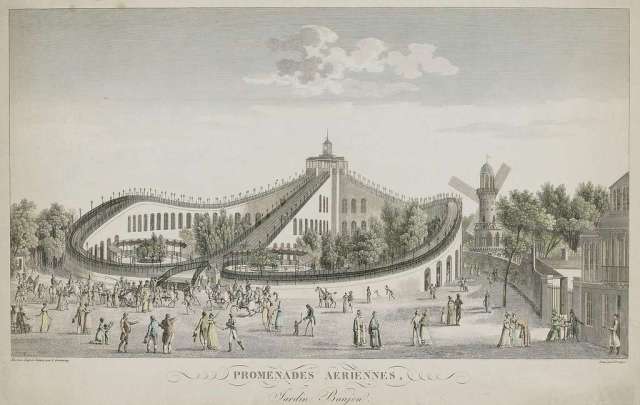
The Promenades Aeriennes
The First Coasters
There is some dispute over what counts as the “first roller coaster.” There’s even a rumor that the first coaster was the previously-mentioned Russian mountain commissioned by Catherine the Great. Some believe roller coaster history began with the 1817 Les Montagnes Russes a Belleville, or “The Russian Mountains of Belleville,” that had two tracks with carts attached so that the cars could “race” each other. Others believe it was the 1817 Promenades Aeriennes, or “The Aerial Walk.” Its 600-foot track could send carts at speeds of up to 40 miles per hour. It had a pair of complete-loop tracks, which meant that the tracks could circle around and finish at the place where it had started. It also had carts that were locked to the tracks and even featured a lift mechanism, which premiered some time after the ride first opened.
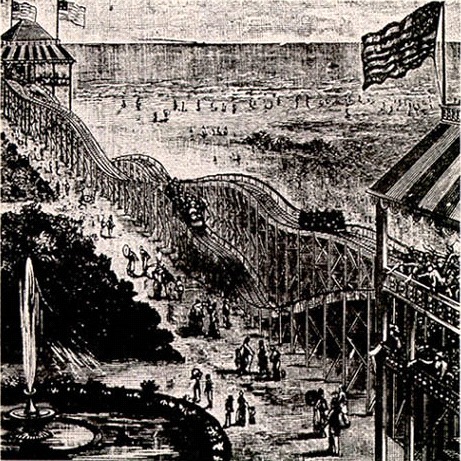
LaMarcus A. Thompson’s Gravity Switchback Railway
Roller Coaster History in America
America’s first coaster-like attraction was Pennsylvania’s Mauch Chunk Switchback Railroad, which opened in 1873. The Mauch Chunk Switchback Railroad was a repurposed coal mine that took visitors on a leisurely journey up the side of a mountain before dropping them back down for a rollicking ride powered only by the terrifying rush of gravity. It was a pretty long ride, too, at over 18 miles. Let’s hope people were holding onto their hats.
In 1884, LaMarcus A. Thompson opened the Gravity Switchback Railway at Coney Island. It wasn’t built into the side of a mountain – rather, it was a wooden structure where guests sat on benches and traveled back and forth down a series of gentle hills. It was five cents per ride, traveled just over 6 miles per hour and was a massive success. The popularity of the Gravity Switchback Railway led to a proliferation of switchback railway style roller coasters across the country.
You might think that roller coasters with inversions are a modern invention, but that’s not exactly the case. In 1899, one of America’s first vertical-looping roller coasters, the Flip Flap Railway, was invented by Lina Beecher. It operated for only three seasons in Coney Island, since the incredibly intense G-force caused some riders to injure their necks or even faint. This is thought to have been caused by the completely circular vertical loops – modern-day coasters have more teardrop-shaped loops for a less intense effect. Though others at the time tried to improve on the design, people eventually stopped producing vertical-looping coasters until the mid-70s.
As coasters became more popular, the pace of innovation surged. Roller coasters shifted away from scenic rides and leaned more into producing excitement and thrills, thanks in large part to the underfriction design patented in 1919 by John Miller. This design allowed for vehicles to lock to the tracks with less friction, leading to safer and faster rides.
The early 1900s, especially the period from 1919-1929, are a golden age on the roller coaster history timeline, as new wooden coasters and coaster designs were regularly produced until the Great Depression. During this golden age, over 2,000 roller coasters were built, though few of them survive today. The 1927 Cyclone at Coney Island is a notable survivor from this period.
Modern Roller Coasters
One of the first big breakthroughs in modern coaster design happened at the happiest place on Earth. Disneyland’s Matterhorn Bobsleds, which opened in 1959, introduced a tubular steel track which allowed the roller coaster to bend and loop without the limits of a wooden coaster track. It was designed as a collaboration between Arrow Development and WED Imagineering. Arrow Development went on to become a major designer and manufacturer in the roller coaster world.
Roller coasters experienced a resurgence in popularity in the 1970s, when the Racer at Kings Island was featured on a 1973 episode of The Brady Bunch. A 1977 film called “Rollercoaster” also cemented the roller coaster’s place in popular culture.
In 1975, the first modern coaster with a vertical loop opened at Knott’s Berry Farm. This steel coaster, featuring a corkscrew design, led to the proliferation of coasters with vertical loops.
Over the years, people have continued to design and iterate new roller coaster features for riders to enjoy. Today, roller coasters can loop-the-loop, spin you around, dangle your feet, imitate motorcycles, stand you up, go backwards and even incorporate augmented reality elements. The next time you get on a roller coaster and strap in, remember that it all started with an ice slide.
Do you have a favorite roller coaster? Do you prefer steel or wooden coasters? Tell us in the comments below.
A cross-country road trip is on every traveler's bucket list. But which route should you take? Here are four worth options that will get you from coast to coast.
On the hierarchy of car adventures, the cross-country road trip reigns supreme. Not only is it the journey of a lifetime, it is easily the best way to see everything our great country has to offer. Big, bustling cities and small, charming towns, national parks and fine-art museums, the great plains and towering mountain ranges – it all lies on the open road ahead.
The only question you need to decide for yourself is, which route to take. We lay out four great options, as well as what and where you can expect to visit as you travel from sea to shining sea.
If you’re looking to travel cross-country through the northern part of the continental U.S., Interstate 90 is the way to go. Covering more than 3,000 miles from Boston to Seattle, I-90 is the longest interstate in the United States. All told, it crosses through 13 states (the second-most of any interstate) and many of the country’s major northern cities. I-90’s longest single-state stretch is in Montana, where it covers roughly 550 miles. Its shortest trip is the nearly 50-mile-long section along Pennsylvania’s Lake Erie coast.
Starting in the east, you’ll have a chance to visit some of the Northeast’s and Midwest’s major metropolitan hubs like Syracuse, Buffalo, Erie, Cleveland and Chicago. After that, you’ll drive through the wide-open spaces of states such as Minnesota, South Dakota, Wyoming and Montana, before cruising into your Northwest destination of Washington. All told, the journey should take about 50 hours of driving.
Major Cities Along the Route
Boston
Buffalo
Cleveland
Chicago
Madison
Billings
Seattle
Top Tourist Attractions Along the Route
Niagara Falls
Mount Rushmore
Yellowstone National Park
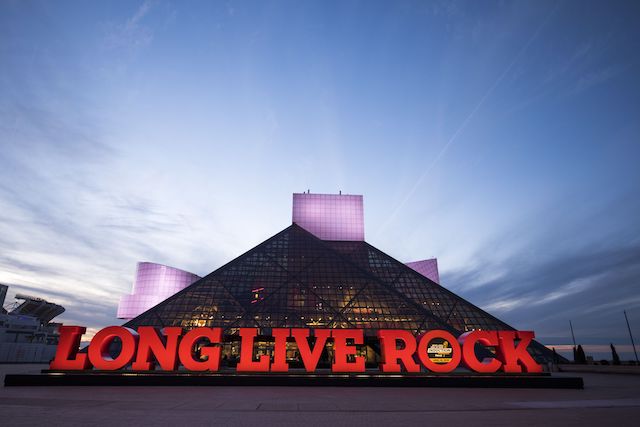
The Rock and Roll Hall of Fame
Interstate 80
If you want to stick to the northern part of the country but have a few different cities and attractions on your list, you may want to opt for Interstate 80. Running from Teaneck, New Jersey, (a stone’s throw from Manhattan), across 11 states to San Francisco, I-80 is the second-longest interstate in the country.
Much like I-90, Interstate 80 hits many of the Rust Belt’s major cities, like Cleveland, Toledo and Chicago. In fact, the two sister roadways overlap through parts of Ohio and Indiana. As you continue west, I-80 takes on a decidedly historic theme. Through the western half of the United States, you’ll travel along the approximate route of the Lincoln Highway, the first road across the country, as well as the Oregon Trail and the First Transcontinental Railroad.
Major Cities Along the Route
New York
Cleveland
Chicago
Des Moines
Omaha
Salt Lake City
Oakland
San Francisco
Top Tourist Attractions Along the Route
Rock and Roll Hall of Fame
Cuyahoga Valley National Park
The Art Institute of Chicago
Oregon National Historic Trail
Alcatraz Island
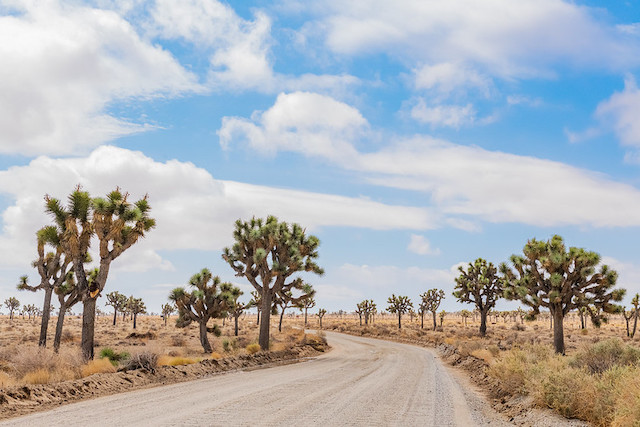
Joshua Tree National Park
Interstate 10
What I-90 is to the northern United States, Interstate 10 is to the southern part of the country. The roadway covers 2,500 miles from Jacksonville to Santa Monica. Starting on the Atlantic Coast, you’ll travel along the Florida panhandle and Gulf of Mexico before reaching the vibrant city of New Orleans. (If the Crescent City isn’t enough of a thrill on its own, it’s here where I-10 intersects with the Lake Pontchartrain Causeway, one of the country’s most dangerous roads.)
From there, you’ll travel past several of Texas’ largest cities, then the deserts of the Southwest, where you can visit some of the area’s famous national parks. Be careful as you travel along Arizona’s long, straight stretch of I-10. It has also proven to be one of the country’s deadliest highways thanks to aggressive and high-speed driving. Your road trip ends in Southern California, right across the street from the Santa Monica Pier.
Major Cities Along the Route
Jacksonville
New Orleans
Houston
San Antonio
Phoenix
Los Angeles
Top Tourist Attractions Along the Route
USS Alabama Battleship Memorial Park
Space Center Houston
The Alamo
Saguaro National Park
Joshua Tree National Park
Santa Monica Pier
Arches National Park
U.S. Route 50
If you prefer the road less traveled, Route 50 is the path for you. Nicknamed the Loneliest Road, it takes travelers through some of America’s most iconic wide-open spaces, such as the Great Plains, the Great Basin and the Appalachian, Rocky and Sierra Nevada Mountains.
But the route offers more than just picturesque sights – it’s a snapshot of the country’s past, present and future. In fact, TIME magazine once called U.S. 50 the “backbone of America.” Along its path, you’ll pass hundreds of small towns but also flourishing cities like St. Louis, Kansas City and Cincinnati, several state capitals and Washington, D.C. U.S. 50 also takes you from historic paths such as the Santa Fe National Trail to the epicenter of modern technology in the Silicon Valley.
U.S. Route 50 ends in Sacramento. To make it a true coat-to-coast trip, just hop on the I-80 for a quick 1.5-hour drive to San Francisco.
You’re going to need the right car for these long trips. If it’s not already in your driveway, don’t worry. AAA members can save up to 20% on Hertz rentals.
Have you ever taken a cross-country road trip? Which route did you take? Tell us in the comments.
What do impacts, citations and flat tires have in common? They’re all things we absolutely do not want to happen when driving a car.
And yet, they are all terms automakers have used to name vehicles. (OK, flat tire is not the name of a car, but Reventon is, which translates to flat tire in Spanish). The lapse in foresight and good judgment immediately places these monikers among the worst car names in history.
Unfortunately, these three are far from alone. Throughout automotive history, countless bad names have come and gone. From the bizarre to the truly uninspiring, with a number of simply bad ideas mixed in, here are some of the worst names ever bestowed upon an automobile.
Studebaker Dictator
It’s hard to imagine a period when this name would have ever worked, but Studebaker picked the absolute worst time in history to try to sell the American driving public on the Dictator: the advent of World War II.
Interestingly, the model was originally known as the Standard Six. Studebaker began renaming its cars in the 1920s. Although no one could have predicted the future, the automaker sensed enough trouble in the air to use the name Director in the European market.
Dictator lasted a decade on this side of the pond before it became too tarnished a word for Studebaker, which opted to swap in the name Commander in 1937.
Ferrari LaFerrari
If you’re unfamiliar with the beauty that is the Italian language, this name translates to “Ferrari the Ferrari.” The Italian carmaker was aiming for the contextual interpretation of the “definitive” Ferrari, but the name just sounds awkward and lazy.
(Photo: SenseiAlan)
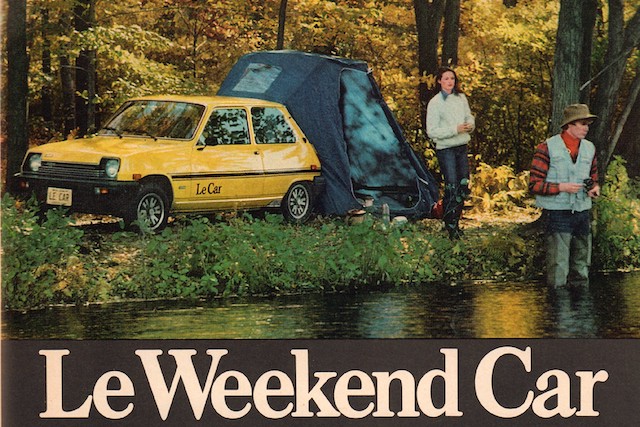
Renault LeCar
In competition with LaFerrari for the least original car name is Renault’s entry: The Car.
Mitsubishi Minica Lettuce
Lettuce has many positive attributes: It’s a good source of vitamins A and K, helps strengthen bones and has even been shown to improve your sleep. It also plays an indispensable role in a BLT. Shockingly, none of these facts served as inspiration for Mitsubishi’s naming of the Minica Lettuce.
Developed in partnership with the Japanese supermarket chain Seiyu, the car was designed specifically for loading and unloading groceries. The tiny sedan, which had two doors on the passenger side but just one on the driver side, was small enough to travel on small streets suited more for bicycles and rickshaws.
As for the name, Lettuce was the title of a shopping magazine published by Seiyu, which also sold the car right there in its grocery stores.
Isuzu Mysterious Utility Wizard
The Wizard was simply ahead of its time. If it had debuted in the late 1990s instead of the late ’80s, it could have ridden the Harry Potter train broom to success. Instead, the MU Wizard has since been left to compete for worst car name ever.
To make matters worse, there doesn’t appear to be any story behind the name’s origin. It’s like it just appeared out of thin air.
Nissan Friend-ME
The Friend-ME was a concept car Nissan unveiled in 2013 specifically designed to appeal to Chinese 20-somethings. As such, the sedan had a social media-inspired cabin in which all four passengers had access to the same infotainment screens and could share content from their phones onto said screens. An interesting concept, indeed!
While the car’s design highlights the positive attributes of social media, its name reminds us of the worst. It simply reeks of desperation and self-promotion. Nissan even went as far as stylizing it with a capitalized “ME.”
Toyota Deliboy
This was not some sort of traveling sandwich purveyor mobile, just a tiny delivery truck. Its name is supposedly a portmanteau of the words, “delivery” and “boy.” Not only was the moniker a failure, so too was the truck itself. Poorly designed and featuring a woefully underpowered engine, the Deliboy was only in production for a few years.
Subaru BRAT
Like many car names before and since, BRAT is an acronym. In this case, it stands for “Bi-Drive Recreational All-terrain Transporter.” Certainly, Subaru could have gone a different route, but we’re not entirely sure the car maker didn’t choose the name due to, rather than in spite of, its unruly connotations. The BRAT was marketed to younger (dare we say rebellious), off-roading drivers.
Interestingly, the car was quick to live up to its devilish moniker. BRAT models sold in America featured two rear-facing jump seats in the cargo area. This allowed Japan-based Subaru to classify it as a passenger car rather than a light-duty truck, thus eluding a significantly higher import tax.
Honda That’s
Honda, that’s a terrible name for a car. The third-generation of the Honda Life had a head-scratching name that was as grammatically awkward as it was flat-out weird. We’re hoping something got lost in translation from the Japanese automaker and no one truly believed this was going to work.
Kia Pro_cee’d
The Pro_cee’d was the sports version of the Kia Cee’d, giving the South Korean automaker two terrible titles in its portfolio. The company later took the bold step of changing the car’s name to ProCeed.
Know a terrible car name we missed? Let us know in the comments below!
Rainbows are a gift from nature. Their colorful displays represent hope, luck and the good that is to come after a storm, inspiring folklore, songs, paintings and seasoned and amateur photographers alike.
Spring has arrived and we’ve got seasonal showers, flowers and rainbows on the mind. We asked you to show us some ROYGBIV and you delivered!
Thank You for Participating! (Session Closed)
Browse through all of the photos we received during March’s rainbow-themed Photo Session in the slideshow below, and don’t forget to check our social media channels, where we will be sharing some of our favorites. Select photos may also appear in an upcoming issue of Your AAA magazine.
Kauai rainbow. (Kathleen Buonarosa)
June jewels of color. (Vicki Hammer Rosenkrantz)
Double rainbow at NJMP. Millville, N.J. (Suzan Casella)
Finding a Rainbow at the airport. Farmingdale, N.Y. (Susan Visconti)
Heaven sent. (Stella Gould)
Kauai rainbow. (Robert Smiley)
Rainbow from Plum Island Beach. (Rita Wesolowski)
Life summarized in one image. (Katherine Arce)
The Rainbow Falls. (Joan Tabor)
Rainbow over Baldwin, N.Y. (JF Purcell)
Skogafoss Waterfall, Iceland. (Irwin Markowitz)
Rainbow Over Westminster Abbey, London. (Gillian Furniss)
Somewhere over the rainbow above the Mayko manse in Milford, Conn. 🙂 (Fran Mayko)
Kayak Wonder at Crane's. (Dorothy McKeen)
Rainbow over Mahopac. (David Tartaglia)
Niagara Falls rainbow. (Ben DeSilva)
Found the pot of gold on Cape Cod. (Amy Kowal)
How to Spot a Rainbow
The right conditions: For a rainbow to form, there needs to be both rain and sun. It doesn’t necessarily have to be raining where you are, but it should be falling somewhere nearby.
Where to look: Look at the darker side of the sky, opposite of where the sun is. “In order to see a rainbow, the sun must be to the viewer’s back, and rain must be falling ahead of the viewer,” according to Weather.com.
Timing: Rainbows are most likely to occur around the hours of sunrise or sunset. This is because the sun needs to hit the raindrops at a certain angle into order for refraction to happen. “Rainbows will only occur when the refracted sunlight strikes the raindrop’s edge at the exact angle of 48 degrees,” explains Weather.com. Any less, and the light will just pass through.
You’re closing in on your parked car and there it is again: that eyesore of a paint scratch above the driver’s side door handle. If only you knew how to get rid of it, or at least where to start.
We spoke to Mike Stoops, product and training specialist at Meguiar’s car care products, to find out how to remove scratches. Rule number one, Stoops said: If you can feel the scratch with your fingernail, it may be too deep for an easy fix. If you can see but not feel the scratch, and want to give fixing it a go, keep reading for his tips on how to remove scratches from car paint.
Q: What kind of equipment do I need?
A: Ideally, you want to get a mild scratch removal product; you don’t need a real aggressive product for this kind of repair. What you do want is to be careful of the applicator you use. People tend to grab an old cotton shop rag or an old cotton wash cloth. That material can haze the paint. Really, the smarter move is to go with a nice clean microfiber towel or, better yet, a soft foam wax applicator pad.
Q: What’s the first thing to know about how to remove scratches from car paint?
A: Paint is hard, paint is thin, and therefore you need to proceed with caution. Even when working by hand (instead of using a buffer), I’ve seen people get overly aggressive and run into problems.
Q: Can you explain the layers of paint on a vehicle?
A: Regardless of if it’s a steel body car or an aluminum body car – or even composite like the Chevy Corvette – all vehicles are covered in a primer coat, a color coat and then a clear coat, which adds the gloss and UV protection to the color below it. And your hope is that whatever scratch you have is only in the clear coat. If you can see it, but you can’t feel it, that’s actually a good sign. If you can’t feel it, you can probably get rid of it.
Q: Once you have your scratch remover and your pad, how do you get started?
A: First, you want to remove any loose dirt or dust from the surface to avoid grinding it into the paint. Spray the area down (with water) and then wipe it dry with a clean microfiber towel. That’s usually more than sufficient to prep the area, if we’re dealing with an isolated scratch.
Q: How much scratch remover should I use?
A: Squeeze a dollop the size of a 50-cent piece – I don’t know how many people remember how big a 50-cent piece is, so let’s call it a “fat quarter” – onto the middle of your applicator pad.
Q: How much of the surrounding area should you hit with the product?
A: If the scratch is, say, about a quarter- or half-inch long, don’t work just that tiny little area. Work an area around it, maybe 6 to 12 square inches.
Q: What kind of motion should you use to apply the scratch remover?
A: It doesn’t really matter if you work it in a circular motion or a straight line motion. Do whichever is most comfortable for you. Work that with some energy. We’re not applying a wax, so you do not want to just lightly apply the product and walk away to let it dry, that’s not going to do anything. That’s a very common mistake. These products have superfine abrasives in them that are used to mechanically work the paint down and remove the scratch, and they don’t do that on their own, they need your help.
Q: How long should you work the product into the scratch?
A: Work the product for 20 seconds or so. Then it will become a very thin translucent film on the surface. Wipe off the residue. Don’t let it dry. These products serve no purpose if you let them dry. Plus, they can be a little difficult to remove if they dry on the paint.
Q: It didn’t go away immediately. Did I do it right?
A: You want to start out lightly. If the first application doesn’t remove the scratch entirely but makes a visual improvement, that’s actually a really good thing. I’d almost rather see that you didn’t fix everything on the first attempt than watch you remove more paint than you actually needed to. Taking two or three applications to slowly get in there is really the perfect way to do it.
Q: Why is aggressively applying a scratch removal product a problem?
A: Take one of your thumbs and rub it vigorously into the palm of your other hand. It will get hot very quickly. Modern paint does not like heat and modern paint does not like concentrated friction. You can literally rub through your entire clear coat in a matter of minutes regardless of what liquid you’re using, especially if you use an aggressive applicator.
And that’s how to remove scratches from car paint.
Have any other tips? Leave them for us in the comments.
There’s something about a classic car that stirs sentiment in all of us.
There is the beauty of bold lines, showy adornments and a shiny grill. There is the rumble of an engine that screams power and speed. There is appreciation for the ingenuity of its designers as well as the craftsmanship of its builders – and those who painstakingly restored them. But mostly, there is a sense of nostalgia for times gone by.
We asked members to share photos of their classic cars for a Photo Session: Show Us Your Wheels feature. Some members also shared the fond memories behind their wheels.
Andy Wittenborn in his 1929 Graham-Paige at East Broad Top Railroad and Coal Company, Pennsylvania, in 1960.
Andy Wittenborn’s 1929 Graham-Paige
Andy Wittenborn, a AAA member from Pleasantville, N.Y., has never owned a new vehicle and never wanted to.
His 1929 Graham-Paige was already antique when he purchased it in 1957. And over the next decade, it took him across the country to pursue his interests in steam locomotives and photography.
Wittenborn always loved trains but didn’t fully develop an appreciation for cars until college in Indiana. That’s where he bought the Graham-Paige for $250. It hadn’t been used in a while. There was old gas in the tank, and when he tried to start it, the valves partially seized. But the owner, a machinist, was able to fix it before handing it over. Wittenborn put a high-fidelity speaker in the trunk and drove it home to Scarsdale, N.Y.
Then, Wittenborn joined the U.S. Army as a photographer. He was stationed in Germany, so the car sat unused for more than two years. When he returned to civilian life, he resurrected the Graham-Paige. He liked its unique features, such side rails for storage and blinds in the rear windows. But it also had wood-spoke wheels, which went flat often. So, he usually carried a couple of spares in the side rails. The car was always in need of some repair, and Wittenborn did most of the work. He was so confident in the old car, he didn’t hesitate to drive it on long road trips, including an epic journey cross-country in 1965.
His friend from the Army asked him to come out to northern California where he was working on a project for the U.S. Forest Service. So Wittenborn set out from New York on a three-week trip, with lots of pit stops.
“I would drive during evening until 1 a.m. and then pull off. I drove across the Midwest on interstate 80 at 45 mph, and the car was happy. As soon as I hit Rocky Mountains, it started overheating,” he said. “On the whole trip, I had nine flat tires.”
When he arrived in California, people were surprised by the old car. Wittenborn joined the project for a couple of weeks, then he and his friend left for home on an indirect route to see various railroads. It was slow going because of car problems and dwindling funds. They took temporary jobs building houses in Colorado before hitting the road again, eventually making it back to the East Coast.
“I drove that car for a while, then bought a 1940 Plymouth for $50. It was like night and day,” he said.
Wittenborn cherishes the memories of the Graham-Paige, though he’s owned other antique cars since. He has a fondness for Franklins. He and his wife used his 1933 Franklin in their wedding announcement, and they are members of the H. H. Franklin Club. He’s the club photographer.
Rolf Beuttenmuller at a car show with his award-winning Vixen.
Rolf Beuttenmuller’s 1970 TVR Vixen S2
Rolf Beuttenmuller, a AAA member from Bellport, N.Y., gets a lot of questions when he’s driving his 1970 TVR Vixen S2. Most people have never heard of it.
The British-made car is rare – one of only 424 built and 177 exported – and highly sought after, according to Beuttenmuller. They were hand-built on a tubular frame with a fiberglass body, and the mechanicals were by other manufacturers, he said.
His car has a 1.6-liter Ford Cortina GT engine. It was recently rebuilt by a professional, taking it from 92 to 150 horsepower on a small-bodied vehicle that weighs only 1,600 pounds.
Otherwise, Beuttenmuller has performed most of the repair work himself, including two frame-off restorations. He also stripped and repainted it the current red, and completely rewired it.
“It’s now a reliable driver with lights that don’t flicker on and off. Electrics in British cars are notoriously bad,” he said.
Beuttenmuller bought the Vixen used for $2,400 in 1972, when he was in the U.S. Air Force stationed in England.
He will always remember his test drive.
He started off slowly and cautiously until the owner told him he had to “kick it in the butt” to fully appreciate it. Then, he fell in love.
“I didn’t care that it is the most impractical car I have ever owned,” he said.
Fifty years later, he feels the same exhilaration when he’s behind the wheel.
“I have to rein in the teenager that lurks within me when I hit the pedal. It is like driving a large go-cart,” he said.
Ed Pater’s 1964 Chevelle amid a period backdrop.
Ed Pater’s 1964 Chevelle Malibu
Ed Pater, a AAA member for Wolcott, Conn., purchased his 1964 Chevelle Malibu two-door sport coupe in 1988. It had only 58,641 miles on it, though it had traveled around the country and oversees with its original owners, a military officer and his wife.
“They bought it new. I have the original paperwork and title,” Pater said.
It didn’t have the horsepower or the bucket seats it has now. Pater made those modifications and more.
“In 1990, I had my friend give it a wild strawberry paint job. And, that’s how you see it now,” Pater said. “The door panels, dash pad and headliner are original, though.”
As a founding member of the former CT Chevelle Connection car club, Pater took the car out for show much more than he does now.
“It only comes out when I find the time to hit a cruise night, but it does bring out the ‘kid’ in me,” he said. “I try to drive it during summer months. In all the years I’ve had it, I don’t think it’s ever been in rain, let alone snow.”
Jack Sheehy loves the body style of his antique Austin-Healey.
Jack Sheehy’s 1965 Austin-Healey
Jack Sheehy, a AAA member for Sterling, Mass., has owned his 1965 Austin-Healey for about eight years.
“It has a gorgeous body style, a beautiful walnut dashboard, and its inline 3,000 cubic centimeter, 6-cylinder engine purrs like a kitten,” he said.
The car gets a lot of use in the summer, when he and his wife visit car shows.
“We even win an award every now and then,” he said.
It’s only broken down once, on the Lowell connector, right after he purchased it. He and his daughter pushed it off the road, then Sheehy called AAA and got a tow the rest of the way home.
Robert Almond’s 1932 Chevy reflects its setting in its shiny chrome.
Robert Almond’s 1932 Chevy
Sheila Almond, of Goshen, N.Y., likes the looks of her husband’s 1932 Chevrolet as well as the looks they get from people when they roll around in it.
The exterior is wild strawberry red with gold trim. The interior is dark red. The 350- horsepower motor is detailed in chrome, and the structure is wood.
They’ve owned the five-window coupe with a rumble seat since 2016.
“It was a retirement present for my husband, who never thought it would be possible to own his dream car,” Almond said.
Do you have an antique vehicle? Tell us about it using this form, and we may add your story to this feature.
Whether you own a classic car for show or pure pleasure, you need the proper insurance. Learn the essentials of protecting your pride and joy.
Connecticut may be one of the smallest states in the U.S., but it sure is mighty. From outdoor activities to an impressive food scene, there’s plenty of reasons to visit – and keep returning. If you need an escape from your everyday stresses (and who doesn’t these days?), book a quick getaway to a Connecticut spa, resort or inn for some rest and relaxation.
Old Saybrook, Conn.
Located on the marina in Old Saybrook, the AAA Four Diamond Saybrook Point Inn, Marina & Spa is a charming escape that exudes the culture and character of coastal New England. This Connecticut spa has welcomed guests for over 130 years and is equipped with Swiss showers, a hot tub, sauna, steam room, a massive pool and a long list of indulgent spa treatments that will relax, soothe and pamper your every whim.
Take a break from spa-ing and enjoy a lobster roll poolside or enjoy waterfront dining at Fresh Salt, where the fresh waters of the Connecticut River meet the salt of Long Island Sound.
While you can easily spend a full weekend at the inn without ever having to leave, those interested in venturing out can grab one of the complimentary bikes and head to downtown Saybrook’s historic Main Street for local art galleries, antique shops, stylish boutiques and eclectic eateries.
New Canaan, Conn.
New Canaan draws in visitors with lush parks, antiquing, clothing shops and chic restaurants, and keeps them there with gorgeous lodging and relaxing Connecticut spas.
Dating back to the 1700s, the Roger Sherman Inn is an enchanting bed and breakfast with historic charm. Expect to enjoy live music, delicious food, the tranquil gardens on the grounds and a sunset on the wraparound porch.
Plan a half-day of pampering at the Ciel Eau Day Spa and indulge in a luxurious massage, facial or nail services from the extensive spa menu. You want to be sure to leave some time for discovering downtown New Canaan and perusing the many swanky boutiques and shops that line the streets.
After working up an appetite from a day of total relaxation and retail therapy, hit up Elm restaurant, where chef Luke Venner is the brains behind seasonal and locally inspired dishes like squash blossom pizza and lobster salad with corn, avocado and manchego.
Mystic, Conn.
You can’t miss the Mystic Seaport when visiting Connecticut, a popular ocean and riverfront village known for its Colonial-period buildings, shopping on Main Street and fresh seafood. (Check out our list of fun things to do in Mystic, Conn.)
The town is scattered with some of the most relaxing Connecticut spas including Le Spa and Mystic Massage and Wellness, ready to help detox your mind and body with massage, facials, reiki (a Japanese technique for stress reduction and relaxation) and more.
For relaxation on the water, enjoy the famous Mystic view from a sailboat with Argia Mystic Cruises, which offers day sails and sunset cruises from May to October.
When you get hungry you can’t miss the Oyster Club, a popular spot in Mystic where the menu changes daily with delicious dock-to-table delights. Weather permitting, head directly above the restaurant to the open-air treehouse for a more casual dining experience.
Rest for the night at The Whaler’s Inn, which has been a site of hospitality in downtown Mystic for over 125 years. The inn retains many historical touches, while the decor pays homage to the area’s nautical heritage.
Morris, Conn.
Tucked away in the Litchfield Hills of northwest Connecticut, Winvian Farm has long been an extraordinary getaway for rejuvenation for travelers from far and nearby.
The AAA Five Diamond Hotel is set on a 113-acre private estate and features the Winvian Spa, a 5,000-square-foot structure with a 40-foot swimming pool.
This Connecticut spa offers a wide range of innovative spa treatments like chromo therapy tub treatment, a hydrotherapy experience or a salt glow body treatment.
The cottages that surround the property each provide a unique experience. Guests can book a night in the treehouse, the log cabin, the greenhouse or the library cottage. The hotel’s amenities include the AAA Five Diamond Designated Restaurant at Winvian Farm, organic gardens, fitness classes and activities like skiing, horseback riding and hiking.
Go to www.ctvisit.com to find more fun things to do in Connecticut.
Traveling with someone with autism requires some extra preparation and patience. Here are our tips for planning for a trip with adults or children on the spectrum.
Preparing for a trip is exciting, but it can also be stressful. From figuring out your mode of transportation to booking accommodations and mapping out attractions, there’s an added level of considerations to be made if your child, significant other or family member has an autism spectrum disorder.
The prevalence of autism in the U.S. has risen from 1 in 125 children in 2004 to 1 in 44 in 2021, according to the Autism Society, making traveling with autism a situation more and more families have to think about.
Traveling with someone with autism requires some extra preparation and patience. Here are our tips for planning for a trip with adults or children on the spectrum.
Recognizing the Challenges
Learning how to travel with an autistic child or family member with special needs may pose some specific challenges. Changing a routine, navigating unfamiliar environments and the potential for significant sensory stimulation (loud noises, bright lights, etc.) can all cause your loved one discomfort and/or stress.
Only 13% of parents with a child on the spectrum said they take family vacations, according to a survey by the International Board of Credentialing and Continuing Education Standards. An even smaller 11% of these parents said they are “satisfied with current travel options for families with autism,” but 93% said they would be “more inclined to travel if autism certified options were available.”
Pre-Travel Prep
“While a lot of research shows that travel is one of the most intellectually stimulating events for individuals with autism, there are very few travel options that are trained and prepared to meet the needs of those on the spectrum,” according to the Autism Society.
When planning your trip, consider talking to a travel advisor who went through a Certified Autism Travel Certificate program – also referred to as Certified Autism Travel Professional.
“I highly recommend using our AAA travel advisors with a SmartDepart Certification and an Autism Travel Certification,” said Stacey Crowley, AAA Travel Business Operations Manager. “They have all the information you need to navigate through all the pieces of your trip with ease!”
You can also find certified destinations via AutismTravel.com, a resource created by the IBCCES. Destinations with certified autism centers will have resources like quiet rooms and at least 80% of their staff is trained in the field of autism.
Other Resources
If you’ll be traveling by plane, the TSA Cares helpline offers travelers with disabilities, medical conditions and other special circumstances extra assistance during security screenings. Call 72 hours before traveling with your questions about the security screening process. Call 855-787-2227 or email TSA Cares.
“If a passenger with a medical device, medical condition or a disability is approved to use TSA PreCheck, he or she does not need to remove shoes, laptops, 3-1-1 liquids, belts or light jackets during the screening process,” according to the TSA. “However, everyone is required to undergo screening at the checkpoint by technology or a pat-down.”
TSA PreCheck enrollment is now available at select AAA branches. Learn more.
When it comes to hotels, parks and other attractions, see if the location is a Certified Autism Center and consider getting a IBCCES Accessibility Card, a free resource to help individuals with cognitive disorders or physical impairments identify helpful accommodations when visiting certified attractions.
Working Together
There are several steps you and your loved one can take to make your next trip less stressful. Consider marking your trip on the calendar.
“It is important to determine how much preparation a specific person may need,” according to the Autism Society. “For example, if your son or daughter has a tendency to become anxious when anticipating an event that is to occur in the future, you may want to adjust how many days in advance you prepare him or her.”
To help prepare your family member for your travels, another option is making a social story or going through a detailed schedule of your trip.
“Let them help in the planning, come to your local branch and pick up some maps or tour books, watch YouTube videos of the rides at Disney you want to go on,” said Crowley. “Getting them invested in the trip will help add excitement and lets them feel like they are in the driver’s seat.”
As your departure approaches, do everything you can to help your child or relative feel as comfortable as possible. This means prepacking their favorite snacks, following your normal nightly/morning routines prior to your trip and bringing a comfort item. Consider a back-up comfort item as well.
“Having familiar items readily available can help to calm stressful situations,” according to the Autism Society.
Other tips include looking at pictures/videos from a previous trip. This helps remind them how fun traveling can be and remind them that they’ve done it before. If you’re going to be traveling for an extended period of time, whether it be via car or plane, consider exercising or playing beforehand to help them burn some energy.
Traveling by Plane
At the airport, consider doing a practice run or role-playing what will happen during the different stages of boarding the plane. Also, consider bringing noise-cancelling headphones if your relative or child is sensitive to this type of stressor.
On the plane, help combat the discomfort of ear popping due to air pressure changes with a piece of candy or gum, or a chewing toy or pacifier for toddlers and infants.
Once you’re safely in the air, keep everyone entertained by watching a movie, listening to music or playing a game on a device. For younger kids, coloring books, toys and putty are good options, too.
If your child or family member is especially anxious about the plane ride, consider setting up a countdown timer. This way they’ll know exactly how much longer the flight will last.
Stay Positive
Be prepared, keep an open mind and have confidence in recognizing your child, spouse or family member’s comfort level.
“Know how much noise and other sensory input they can tolerate. Know their level of anxiety and the amount of preparation it may take,” according to Autism Society. “If you detect that a situation may be becoming overwhelming, help them find a quiet area in which to regroup. And there may be some situations that you simply avoid (e.g., crowded shopping malls the day after Thanksgiving). Know their fears and those things that will make the season more enjoyable for them.”
When planning your next trip, trust your gut and utilize as many resources as you can. Don’t be afraid to ask for assistance.
“I just want families to know that it is possible to travel and have those vacation memories everyone dreams of,” said Crowley. “There are a ton of great resources out there to help guide you through vacation planning, and AAA is one of them that you definitely want to use. We are always here for you, so let us do the heavy lifting so you can relax and enjoy. There is such a great big beautiful world out there and everyone deserves a chance to explore it!”




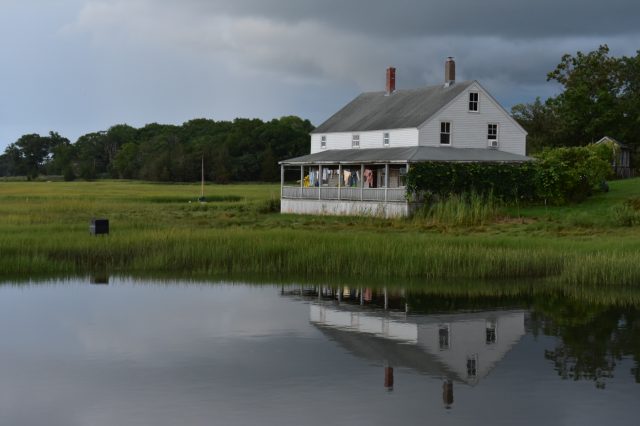 After the storm. (Tom Williams)