Northeast gasoline prices are easing slightly on renewed hopes for a deal between the United States and Iran to reopen the Strait of Hormuz and end the nearly three-month-old war that has upended global petroleum markets.
Oil and refined product prices tumbled last week on signs of progress in the latest round of peace talks and reports of several tankers successfully transiting the strait. Domestic West Texas Intermediate (WTI) ended the week nearly $9 a barrel lower, and Brent crude fell by nearly $6 a barrel, alongside similar declines for gasoline and other refined products in futures markets. Prices edged even lower in early trading on Sunday after the release of official U.S. and Iranian statements citing progress in the talks, but a new round of U.S. attacks on Iranian targets on Monday will keep uncertainty at the forefront this week.
As oil prices declined last week, data from the Energy Information Administration (EIA) show U.S. oil and gasoline inventories followed suit, tightening despite near-record production. Steady demand for gasoline ahead of the Memorial Day holiday weekend led inventories to fall for a 14th straight week, declining by 1.5 million barrels to 214.2 million barrels —11.4 million barrels below this time last year and 5% below the seasonal average. Crude supplies fell by nearly 18 million barrels to the lowest level since mid-June of last year on strong export demand. Exports rose by 112,000 barrels a day to 5.6 million barrels a day, 2.1 million barrels a day higher than this time last year.
“As gasoline prices hover near four-year highs, oil and gas market participants continue to cautiously monitor ongoing peace talks between the U.S. and Iran,” said Jillian Young, director of public relations for AAA Northeast. “Until a firm deal is reached and the Strait of Hormuz fully reopens, markets will likely remain volatile.”
AAA’s May 26 survey of fuel prices found the national average decreased 4 cents from the previous week ($4.53), averaging $4.49 per gallon. The May 26 national average price was 40 cents higher than a month prior ($4.09) and $1.32 higher than last year ($3.17).
Region
Current Price*
One Week Ago
One Month Ago
One Year Ago
Connecticut
$4.61
$4.64
$4.19
$3.11
Massachusetts
$4.48
$4.49
$4.02
$3.01
New Jersey
$4.49
$4.50
$4.07
$3.06
New York
$4.58
$4.61
$4.17
$3.12
Rhode Island
$4.44
$4.48
$4.06
$3.01
*Prices as of May 26, 2026
As of May 26, Indiana and Mississippi had the lowest prices in the nation at $3.89 and $3.95, respectively. California and Washington had the highest prices in the nation at $6.10 and $5.75, respectively.
The AAA Gas Prices website is your resource for up-to-date fuel price information. Search for average gas prices on national, state and metro levels by regular, plus, premium and diesel.
After a long winter in the Northeast, the first glimpse of summer sun can be a tonic — especially for self-identified sun worshippers. But even if that’s never been your thing, in small doses, the sun, can still have positive health effects on your mind and body.
From sleeping well to better moods and more energy, these are some of the ways sunlight does us good.
The Sun and Our Bodies
To understand why the sun makes us happier, there are a few factors that make the largest contributions: vitamin D, serotonin and, of course, moderation.
Vitamin D is an important mineral for our health, and sunlight is the most efficient way for us to receive it. While we can absorb it from some foods like oily fish and eggs, the amount is very small compared to sunlight. In fact, more than 90% of our vitamin D comes from sunlight, per the Cleveland Clinic.
Five to 30 minutes of sun exposure most days of the week is optimal for our bodies to absorb the ultraviolet-B (UVB) rays needed to make vitamin D, according to a study published by the National Library of Medicine. When our skin absorbs UVB rays, it triggers the conversion of a molecule in the skin into vitamin D.
Having enough vitamin D has been associated with strong bones, a healthy immune system, cardiovascular health and good muscle function. It also contributes to the production of serotonin, the body’s “happy hormone.” Without enough sunlight, serotonin levels can dip, potentially increasing the likeliness of major depression with seasonal pattern (formerly known as seasonal affective disorder or SAD).
Sunlight plays a role in regulating our sleep cycle, as well. How does more sunlight make you sleep better, you may ask. Well, it has to do with humans’ circadian rhythm, or internal clock. When our eyes are exposed to enough natural sunlight, it signals our brains to stop producing melatonin, a hormone that helps us get to sleep. The more sunlight you get during the day, the more melatonin you produce at night. This, in turn, ensures that you’re well-rested and more alert during the day. Who needs coffee anyway?
Be Sun Safe
Sunlight keeps our bodies and minds happy, but it’s important to remember that moderation is key.
Because the sun emits UV radiation that can penetrate the skin and lead to skin cancer, the risks are high when it comes to improper exposure. Before going out in the sun, consider your location, skin tone, season and the time of day. If you plan to be outside in the sun for more than 30 minutes, apply sunscreen with at least 50 SPF and have a protective hat, shirt and pants just in case.
Do you feel happier when the sun is out? Tell us in the comments.
This article is for information purposes only and should not be construed as advice. Speak with a doctor or qualified health professional if you have questions about your health, wellness or lifestyle changes.
Home renovations are both exciting and stressful. They improve the value of your property, not to mention your overall quality of life. But from setting a budget to vetting general contractors, there’s a lot to think about when beginning a new project.
It can be easy to overlook how your home insurance factors into this equation. But changes like a new kitchen, home additions and plumbing can all affect the home insurance coverage you need. It’s important to weigh possible premium increases into the overall cost of your renovation.
Fortunately, some types of renovations can actually lower the cost of insurance.
“It’s important to keep your agent informed about changes you make to your home for a lot of reasons,” said Ashley Kehew, director of insurance at AAA Northeast. “Plus, many times there are renovated-home discounts you are eligible for as well!”
Here are five of the most common home updates and how they can impact your insurance.
New Bathroom or Kitchen
Kitchen and bathroom renovations are popular home updates that often increase the overall value of your home. However, you’ll likely see the cost of your dwelling coverage increase, which in turn, increases your premium. Improved fixtures (such as a luxury new tub or faucets) may also exceed your personal property coverage limits, meaning you’ll need to extend them.
Note that small-scale changes (such as a new carpet or updating your windows) typically don’t require a policy change.
Home Additions or Home Office
Home additions can affect insurance coverage both during the renovation and after it’s complete.
During construction, you may need additional coverages, such as sewer backup coverage, if your renovation may affect your plumbing, or uninhabited home insurance, if you’re vacating the property during renovations.
An insurance agent can help you determine the coverage you may need during construction based on the scope of your project. Be sure your contractor has workers’ compensation or liability insurance, or you’ll be held liable if they sustain an injury on your property.
If your addition includes a home office, you may need to purchase a separate home office policy or endorsement. This increases the limit on your existing policy to include business property coverage. Be sure to notify your agent if you have increased business risk in your home. Remember, a portion of your insurance policy is always determined by your home’s square footage. This means that home additions almost always increase your premiums.
Upgrading Your Roof
Not only does upgrading your roof increase the overall value of your home, but you’ll be prepared to withstand common risks, such as extreme weather. As such, insurance premiums typically decrease.
If you live in a hail or hurricane-prone state, and your roof includes built-in loss-mitigation measures (such as hurricane straps or impact-proof shingles), you can often look forward to additional insurance discounts.
Building a Pool
A swimming pool can be an attractive feature that drives up home value. However, insurance companies consider pools an “attractive nuisance” and a significant liability risk. Add a slide or a diving board and expect your premiums to increase even more.
Some insurance providers may require you to install a locking fence around your pool or request that you purchase an umbrella policy. In certain instances, providers may deny coverage altogether. In almost all instances, you’ll need increased liability coverage.
Be mindful of pool landscaping during the design phase. For example, in-ground and above-ground pools are typically categorized differently by insurance companies.
Updating Your Electric or Plumbing
Bringing plumbing and electrical systems up to code lowers the risk of flooding or electrical fires, typically resulting in lower insurance premiums. Though the upfront cost of rewiring a home is significant, the insurance payoffs can go a long way to balance the cost.
With updated plumbing and electrical systems, you may even find more providers are willing to cover you, allowing you to shop around for a lower rate.
Ultimately, the impact of a renovation on your home insurance depends on the type of renovation and your existing policy.
Work closely with an insurance agent before, during and after your home renovation. It’s good practice to inform your insurance agents of cost estimates, a projected timeline, a description of the work and permits and contractor agreements before you begin work. Failure to notify your insurance company of a renovation could result in a voided policy or a denied claim down the line.
“Imagine after years of planning, you finally renovate your kitchen to create your dream kitchen. You’d want it to be rebuilt exactly as it was if you had a loss, right? Not only do these things change your replacement cost coverage on your home, they can also change your liability risk.” Kehew said. “Your agent can help you evaluate your new insurance needs to make sure you are properly covered.”
Jumping a car battery doesn’t have to be a stressful process. You can always call for roadside assistance — that’s what AAA is here for, but it’s also a good idea to know the basics yourself. Here’s how to jump a car battery safely so you can be on your way as soon as possible.
AAA Mobile Battery Service makes buying a new battery easy. Our technicians will even test your current battery and charging system at your home or job.
Step-by-Step Guide to Jump Start a Car
Safety First
Jump-starting a car safely begins with these important first steps.
Consult your owner’s manual to make sure you’re following the manufacturer’s recommendations. Some newer vehicles, including hybrid and electric vehicles, may require manufacturer-specific jump-starting or battery replacement procedures.
Make sure that other vehicles are at a safe distance and that you’re in a spot that’s out of danger’s way.
All you need are positive and negative jumper cables. You should have these on-hand, tucked away for that inconvenient moment when your battery fails. They come in anywhere between 10 and 20 feet long with longer cables being easier to use. The extra length means less maneuvering to get the cables to reach from your car to the car providing the jump-start.
There are also portable car jump starters, which are essentially the jumper cables with a built-in battery pack so you don’t need another car to help with the process. These are a bit bulkier and shouldn’t be stored in a hot car.
Positioning the Vehicles
Ideally, you want both cars to face each other head-on about 18 inches apart. Depending on where the breakdown happens, this might not be possible. Do your best to get as close to head-on as possible without letting the vehicles touch. Err on the side of caution. Be careful of car doors if the positioning isn’t ideal. You don’t want to open the door and have the two cars accidentally touch.
Some batteries are located under the back seat or in the trunk; consult the owner’s manual if you have trouble finding it.
Once the cars are positioned, put both cars in park for an automatic transmission or neutral for a manual transmission. Set the parking brakes, turn off the ignition and remove the keys.
Attach the Jumper Cables
This is the part about jumping a car battery safely that makes people nervous, but there is no need to worry. Start by opening the hoods of both cars and finding the battery terminals. Usually, the terminals on the battery are red or black and you will see a + (red) and – (black) sign on the top. Make sure you can clearly see these signs; if the terminals are dirty, use a rag or brush to knock off any dirt or debris.
Where to Put the Positive Cable When Jumping a Car
If you’re wondering which jumper cable goes on first, think positive. Attach the red, positive cable clamp to the red, positive terminal of the dead battery. You want this connection to be secure so wiggle around the clamp to get a tight grip if it feels loose. Next, attach the opposite end of the red, positive cable to the working vehicle’s positive battery terminal.
Where to Put the Negative Cable When Jumping a Car
Attach the black, negative clamp to the working car’s black, negative battery terminal but do not attach the negative clamp to the negative battery terminal of the dead battery. Instead, attach it to an unpainted metal part of the car like a bolt or the engine block. Dead batteries can produce hydrogen gas — if there’s a spark you want it away from the battery.
Start the Car
Start the engine of the working car and let it run a minute or two before trying to start the dead car. If the car won’t turn over at first, wait a few more minutes and give it another try. Speeding up the idle for a minute or so can sometimes help.
If the car still doesn’t start, then you may need to call for roadside assistance. It could be a number of problems like battery corrosion, fuses or the starter. A professional can diagnose the problem and recommend a repair.
Disconnect the Jumper Cables
There’s an order to disconnecting the cables, too. Remove the black, negative clamps and do not let them touch while the other cables are attached to the car. Next remove the red, positive clamps. Do not let the red and black cables touch. You can now close the hoods and stow your jumper cables. Once your car is running, take it to a local repair shop to have the battery fully charged and tested.
See, it’s easy to learn how to jump a car battery. With a set of jumper cables and the help of someone with a running car, you can do the job yourself in no time.
Do you have an interesting story about a time you needed a jump-start? Share it with us in the comments below.
As an ever-evolving repository of American history, our nation’s capital is the place where politics and “we the people” intersect. The city, which straddles the Potomac River bordering Virginia and Maryland, rewards visitors with grand neoclassical architecture and dozens of monuments honoring leadership, heroism and sacrifice. Downtown revitalization, including an international dining scene, continues to make D.C. more appealing than ever.
Here are some of our favorite things to do in Washington, D.C.
The Smithsonian is the world’s largest museum complex, and within its 21 buildings there’s a ton of cool stuff to see. Head to the National Air and Space Museum to check out the planetarium or marvel at the many aircraft and spacecraft on display. The National Museum of American History is packed with interesting artifacts relating to American culture like Dorothy’s ruby slippers and Julia Child’s kitchen. Or check out the National Museum of African American History and Culture, one of the Smithsonian’s most powerful and comprehensive museums. A trip to one or several of the museums is among the Washington, D.C., day trips that you simply can’t miss while visiting.
2.
Spending time in Georgetown is one of many fun day trips around Washington, D.C. You’ll be charmed by a stroll through the residential neighborhood dating to 1751 that’s home to great restaurants, the M Street shopping district and the university bearing its name. A few sights to see in the area include the Old Stone House, the oldest house in D.C., and the historic Tudor Place. For a relaxing walk, try the C&O Canal, or for something livelier, The Washington Harbour.
There are just a few zoos in the U.S. where you can see giant pandas, and the National Zoo is one of them. You’ll fall in love with the zoo’s two giant panda residents, male Bao Liand female Qing Bao, while watching them eat, sleep and roll around. Some other popular animals that the zoo conserves and cares for include elephants and large cats like African lions and Sumatran tigers, but with 1,500 animals from 300 different species to see, you’re sure to discover a few new favorites.
4.
The Tidal Basin is one of Washington’s most photogenic sights, best experienced in early spring when the 3,000 cherry trees that ring it (a gift from Japan in 1912) are in bloom. Every year from late March through early April, the National Cherry Blossom Festival is held to celebrate the beautiful blossoms at their peak. Make your way around the circuit to find the Franklin Delano Roosevelt memorial, the Martin Luther King Jr. memorial and the Jefferson Memorial.
5.
The D.C. restaurant scene includes power lunch spots like the Michelin-distinguished Blue Duck Tavern and the tapas-style menus by Jose Andres at Zaytinya.
6.
Monument-hopping is one of the quintessential things to do in Washington, D.C, and one of the most commanding is the Lincoln Memorial. Walking up the 58 steps to the memorial brings you face-to-toe with the 19-foot-tall white marble statue of our 16th president, seated and looking toward the Washington Monument. To the left, the Gettysburg Address is etched, word for word, into the wall.
7.
Every president since John Adams in 1800 has called the White House home — and it’s worth reserving a free tour with your Congressional representative. Requests can be submitted up to three months in advance.
Union Station.
8.
Union Station is arguably one of our country’s prettiest train stations. The circa-1907 Main Hall, fresh from a restoration, has an optical-effect coffered ceiling.
9.
The Vietnam Veterans Memorial, which features austere black-granite walls engraved with the names of the more than 58,000 Americans who died during the conflict, is one of Washington’s most-visited and powerful monuments.
10.
Sit in one of the red-velvet banquettes at the Off the Record Bar in the basement of the AAA Four Diamond Rated Hay-Adams Hotel and order a cocktail. It doesn’t get more D.C. insider than this.
Quick Summary: You don’t need a flight to Florida for a budget-friendly getaway. The Northeast offers several affordable beach vacations, including Madison, Connecticut; Wells, Maine and Narragansett, Rhode island, which serve as lower-cost alternatives to pricey nearby hubs like Newport or Ogunquit. To maximize savings, book hotels several months in advance and leverage AAA member discounts for lodging and dining.
Though the Northeast is sometimes associated with harsh winters and record-breaking cold temperatures, the warmer months and sprawling coasts can provide the perfect atmosphere for a cheap beach vacation that won’t overheat you (or your wallet). So put aside those plans to head down to Florida and look closer to home — we’ve got a list of nearby beach towns that might surprise you.
Budget Destination
The “Cheap” Alternative To…
Key Budget Activity
Wells, ME
Ogunquit, ME
Kayaking the Webhannet River
Narragansett, RI
Newport, RI
Point Judith Lighthouse views
Dennis, MA
Outer Cape Towns
Mayflower Beach (Bay Side)
Madison, CT
Luxury CT Shorelines
Hammonasset Beach State Park
Madison, Connecticut
A quiet Connecticut getaway, Madison is not well-known by most tourists, so restaurant, lodging and entertainment prices aren’t driven by a high tourist demand.
Hammonasset Beach State Park is your one-stop shop for outdoor summer activities; swim and lounge in the sand on the beach, fish and hike the walking trails, or visit the Meigs Point Nature Center to have hands-on experiences with native animals.
Highlight
Main Street, aka Boston Post Road, is lined with independent shops and boutiques, family-owned restaurants and historic buildings, such as the crown jewel of the town, R.J. Julia Booksellers. The charm of this town is a welcome respite from everyday life.
Wells, Maine
Though Maine is as north as the Northeast gets, it isn’t all chilly temperatures. Its coastline is home to a number of beaches, 7 miles of which are in Wells.
When you’re not swimming, zipping on a personal watercraft or just enjoying the sun at one of four beaches, you could be kayaking or canoeing up the Webhannet River, or shopping at the antique stores along Route 1.
Highlight
Just a short drive away is Ogunquit Beach, a popular tourist destination in Maine. But since Ogunquit is so popular, the restaurants, hotels and shops nearby can get pricey. Staying in Wells ensures that you enjoy all of the views without breaking the bank.
Dennis, Massachusetts
As far as New England beach vacations go, it doesn’t get any better than Cape Cod. One of the more inexpensive areas, Dennis lies right in the middle of the peninsula.
In Dennis, you decide which kind of beach you’d like to swim at — beaches with the mild waters of the Cape Cod Bay, like Mayflower Beach, or the even calmer waters of the Nantucket Sound, like at West Dennis Beach.
Highlight
The best part about Dennis is its proximity to everything else on the Cape. Whether you prefer the wilder waves of the Atlantic Ocean on the lower Cape or a more historic getaway like Falmouth on the upper Cape, Dennis is central to it all.
Hampton, New Hampshire
The waters in New Hampshire are quite cold for some, but this beach town has enough for you to do even if you don’t care to swim.
Enjoy fresh seafood at any of the eateries along Hampton State Beach or take the family to the Blue Ocean Discovery Center, where the little ones can get up-close and personal with marine life.
Highlight
Treat yourself to breakfast or lunch and watch the planes at the Hampton Airfield Airfield Cafe, which features an open deck cafe decorated with an aviation theme.
Cape May, New Jersey
With its sprawling beaches and quaint Victorian architecture, Cape May is perfect for family vacations.
Not far from the coast are attractions like the Cape May Lighthouse, Naval Air Station Wildwood Aviation Museum, Willow Creek Winery and more. Also nearby are campgrounds, which provide cheaper lodging options for vacationers.
Highlight
Just north of Cape May is Jersey Shore Alpacas, where visitors can meet and feed alpacas on a tour of the farm. It’s an inexpensive way to be sure that your vacation is memorable.
Narragansett, Rhode Island
A cheaper alternative to Newport, Narragansett also has beautiful beaches, plenty of opportunities to sample local seafood and a number of historic landmarks.
When you’re not swimming and soaking up the sun at Scarborough State Beach or Narragansett Town Beach, check out the Point Judith Lighthouse for a spectacular view of the coast. Then, head to Galilee for a bite to eat as you watch boats leave the harbor.
Highlight
The Block Island Ferry leaves from Point Judith, giving you the perfect opportunity to day trip on the island and enjoy a relaxing ride on the way there.
While vacationing nearby will save you from airfare, location isn’t the only factor to consider when you want to save. Reserving your hotel several months in advance will generally get you a lower price. AAA members also get discounted rates at thousands of hotels whenever they book.
FAQ
Which Northeast beach town is the best alternative to Newport, Rhode Island?
Narragansett is a top-tier alternative to Newport. It offers similar beautiful coastlines and historic landmarks like the Point Judith Lighthouse but at a significantly lower price point for dining and entertainment.
How can I save money on lodging for a beach vacation in New Jersey?
For a cheaper stay in Cape May, consider local campgrounds or Victorian-style B&Bs located slightly inland. Additionally, booking through AAA can unlock member-only rates at thousands of regional hotels.
What is the most central budget beach town on Cape Cod?
Dennis, Massachusetts, is considered one of the most central and affordable areas on the peninsula. Its location provides easy access to both the calm waters of Mayflower Beach and the historic sites of the Upper and Lower Cape.
Share your tips and tricks to having a great vacation without breaking the bank in the comments below.
Some trips are about getting away. Others are about how effortlessly you get there. A Caribbean cruise with Norwegian Cruise Line blends both.
Conveniently sailing out of New York City, your vacation begins long before the ship’s horn sounds. No flight schedules to manage. No airport delays to navigate. Just step aboard and let the ocean views, island vibes and fun come to you.
With four, five and seven-day itineraries, travelers can choose a pace that fits their schedule, whether it’s a quick reset or a longer stretch of time to fully unwind.
A New Ship Designed for the Journey: Norwegian Luna
Norwegian Cruise Line’s newest ship is designed to bring together modern design, elevated dining and immersive onboard experiences.
Sailing from both New York and Maimi, Norwegian Luna™ offers a balance of energy and escape. Days at sea can be as active or relaxed as you choose, from poolside afternoons and oceanfront dining to live entertainment and thoughtfully designed spaces that make it easy to settle in.
Great Stirrup Cay: A Private Island, Reimagined
Many of Norwegian Luna’s itineraries include a stop at Great Stirrup Cay, the cruise line’s private island in the Bahamas — and it’s evolving in ways that make the experience even more dynamic.
Enhancements expected to debut this summer are set to expand what guests can enjoy throughout the day. A new dock will allow for smoother arrivals, while upcoming additions like a water park, cliff jumps and a dynamic river (a faster-moving take on the traditional lazy river) bring a more energetic, activity-driven edge to the day.
Beyond the new features, the island retains what makes it so appealing in the first place: wide stretches of beach, clear water and the freedom to spend your time however you choose. Whether that means relaxing in a private cabana, snorkeling along the shoreline or simply taking in the view, Great Stirrup Cay offers a more personal take on a Caribbean beach day.
New York and Miami Departures
For Northeasterners, sailing from New York offers the advantage of simplicity.
Skipping the flight can turn a vacation into something far more accessible. You can step onboard, settle in and begin the experience without the added layer of travel logistics. For many, that ease becomes part of the appeal — especially for shorter itineraries where every day counts.
Miami departures put you closer to the Caribbean from the start, with itineraries designed to maximize time on the water while still allowing for meaningful time ashore.
Flexible Itineraries, Memorable Moments
Whether sailing for four, five or seven days, Norwegian Cruise Lines’ itineraries are designed to make each day feel special without feeling over-planned.
A stop at Great Stirrup Cay might mean a morning relaxing on the beach, followed by an afternoon of adventure in the water park. Time onboard Norwegian Luna can shift just as easily, from relaxing spa time to riding on the Aqua Slidecoaster with the family.
Longer journeys allow you to settle in more, with more time to move between island experiences and unhurried days at sea, while shorter itineraries keep the pace focused, delivering a complete experience in just a few days.
When our cat, Charlie, suddenly got sick, my husband and I were frantic.
Besides having no interest in sprinting down the hallway for treats (highly unusual in itself), Charlie was lethargic and hiding away. What did this mean? What was going on, and what should we do? Being only 6 years old, he’d never had a health scare before, and we were woefully unprepared. After many panicky phone calls, we were finally able to get him in to see an available vet.
Diagnosis: Tummy ache.
Cost: $600. No insurance. No financing options.
Although we were relieved Charlie would be OK, the worry and stress we experienced could have been avoided — or at least diminished — if we had a prior plan in place. Don’t make our mistake; read on to learn what to do in a pet emergency and how you can prepare for the unexpected when it comes to your best friend’s health.
Immediate First Steps in a Pet Emergency
Stay calm and assess. If your pet seems sick or has had an accident, your initial reaction should be to stay calm. Hard as it may be, staying calm is imperative, as panicking can hinder your ability to make rational decisions. Begin to quickly assess your pet’s condition to determine if the situation is critical. Look for signs like difficulty breathing, excessive bleeding or unconsciousness.
Seek veterinary care. If your pet is in severe distress or showing critical symptoms, contact your veterinarian or an emergency animal clinic right away.
Know basic first aid. Familiarize yourself with first aid for pets, such as how to perform CPR or apply pressure to a bleeding wound. These skills won’t substitute veterinary care but could be crucial in stabilizing your pet until you can get them to a professional for further help.
Transport your pet safely. Use a carrier to transport your pet to minimize any movement and prevent further injury. Try making them as comfortable as possible with blankets, treats or favorite toys. Of course, drive carefully.
Monitor and document symptoms. Keep a detailed record of your pet’s symptoms including when they began and any changes in behavior. This information helps the veterinarian better diagnose and treat the condition.
“Anyone with a pet can benefit from the peace of mind and financial freedom provided by pet insurance,” said Ashley Kehew, director of insurance sales with AAA Northeast. “Depending on the pet insurance you have, it can help provide financial protection for emergencies and for regular vet visits. Pet parents can choose the best care for their furry friend rather than what is most affordable.”
Specialized care treatments or advanced tests that could be crucial for your pet’s health are more accessible with pet insurance.
“Pet emergencies, while unpredictable, are almost inevitable and extremely costly,” said Kehew. “You can’t put a price on the peace of mind that comes from knowing you can afford to give your pet the best of care with the help of pet insurance.”
In the event of a pet emergency, vet bills can be upward of thousands of dollars depending on the severity of the health issue, and some clinics are unable to provide treatment without proof of ability to pay first. Pet insurance is able to help mitigate emergency vet costs by covering a significant portion of the expenses, depending on your policy. Knowing you have that support can keep you focused on what truly matters in the moment: Your pet’s wellbeing and recovery.
Health emergencies aren’t the only unexpected events you should prepare your pet for. Learn how you can plan to keep your pet safe during storms and hurricane evacuations.
Bike rides are fun, environmentally friendly and great exercise to boot. But, like with any mode of transportation, you need to make sure to keep safety in mind while on two wheels.
Did you know? AAA Northeast offers 24-hour roadside assistance for your bike, too! The free service is available to all members. Learn more.
Helmets
Wearing a helmet is the single most important thing you can do to protect yourself when riding a bike.
American bike fatalities reached a record high of 1,166 in 2024, according to information from The League of American Bicyclists. Head injuries are the leading cause of death and serious injury. In 2023, 62% of bicyclists killed were not wearing helmets, according to the Insurance Institute for Highway Safety.
When you put on your helmet, make sure the visor sits about 1 to 2 inches above your brow, and that the chin strap is snug, but not constricting. If you can fit no more than two fingers in between your chin and the strap, you’re good to go.
You might not love the way you look in a helmet but looks don’t matter when your life is on the line.
Biking While Drunk
If you wouldn’t get behind the wheel of a car, you shouldn’t get behind the handlebars of a bike. The most recent stats reported by the Insurance Institute of Highway Safety show that 21% of cyclists killed in traffic crashes in 2022 were legally drunk.
Biking in the Dark
Bike deaths peak from 6 p.m. to 9 p.m., but why is that? Visibility is important on the road, especially when drivers and bikers share the same streets. During the day, you don’t have to worry too much about seeing and being seen, especially if it’s spring or summertime. However, as the day gets duskier, it’s more difficult for drivers to spot cyclists darting across the road or on the side of the street. If you’re going to be biking during this time, there are tons of bike accessories that will help make you more visible.
Sharing the road with cars is dangerous, but it’s often necessary. Riding on congested sidewalks puts pedestrians in danger, and it’s actually illegal in some cities. Bike on the right side of the road (just like when you drive) and stay about 2 to 3 feet away from the curb. Be careful when you’re driving past parked cars – you never know when someone could open a door and clothesline you. Remember to stop at stop signs and red lights, just like someone in a car would.
Drivers
When you spot a cyclist, give them a wide berth. You’re driving something that weighs more than 4,000 pounds, while cyclists are balancing on a 15-pound, two-wheeled machine powered by their own legs. They don’t have the benefit of a car’s safety systems, and if there’s a crash, they’re probably going to get hurt. If there’s a bike lane in your city, don’t park in it. This forces cyclists to dart unexpectedly into traffic lanes. You also should not be driving in the bike lane, even if you’re just edging in by a foot or two. There could be cyclists in your blind spot, and even the cyclists that you can see are too close for comfort.
White, black, gray and silver now account for more than 75% of all cars on American roads. But car colors haven’t always been this monotonous. Economic shifts, new paint technology and changing cultural tastes have shaped what we drive in every decade since the automobile was invented. Here’s how we got from Henry Ford’s all-black assembly line, to the bright rides of the 50s and 60s, to the colorless roads of today.
After decades of brilliant shades, muted tones are now among the most popular car colors. How did that happen? A look back in history shows us how we got to the common car colors we have today.
The History of Car Paint Begins
Any customer can have a car painted any color that he wants, so long as it is black.”
– Henry Ford
Automobiles in the late 1800s and early 1900s were essentially motorized carriages, and so they were painted just like their transportation predecessors. This meant using oil-based paint applied by hand. Most cars were painted black because the color was durable, cheap and dried quickly.
But there were problems with both the color and the application of early car paint. Even though it provided a luxurious, brilliant finish, painting a car took weeks to complete. In addition, the black paint would often fade or yellow. Since the paint had no binding agent, when discoloration occurred, the car had to be repainted, which cost money.
Despite Henry Ford’s famous words, not all Model Ts were painted black. In fact, from 1908 to 1914, the car came in several different colors. But when Ford implemented the assembly line manufacturing process, he needed a paint that dried quickly, thus the switch to black.
⚡
At a Glance: The Evolution of Car Color
•The Modern Monopoly: White, Black, Gray, and Silver account for over 75% of vehicles on U.S. roads today.
•Resale Dominance: Neutral colors remain popular because they maintain higher resale value and appeal to a broader secondary market.
•Historical Peak: The 1950s and 60s were the “Golden Age” of car color, defined by vibrant pastels and chrome-heavy two-tone designs.
•Tech Influence: Modern “minimalist” aesthetics are heavily influenced by consumer electronics and the “Apple effect” in premium design.
Duco Paint
A major milestone in the evolution of car paint history occurred in the 1920s when the DuPont company developed a new type of automotive coating. DuPont scientists modified nitrocellulose, a substance used to make explosives and motion picture film, to create a low-viscosity lacquer that could be sprayed onto automobiles. This new paint, dubbed Duco, had numerous benefits over previous versions of car paint.
According to the Science History Institute, “Traditional varnishes chipped, cracked, crazed and faded; Duco lacquer was almost invincible. It tolerated air, sun, rain, mud, dampness, heat, cold, salt water, bacteria, perspiration, dirt, soaps and detergents. Most low-end finishes came in few colors, while Duco made available a rainbow of hues.”
General Motors was the first manufacturer to adopt Duco (at the time, GM and DuPont were under the same leadership). GM’s Oakland Motor Car Company painted its cars with two different shades of blue and a red or orange racing stripe, and debuted them at the 1923 New York Auto Show. The colors were an immediate hit with the public and by the mid-1920s all GM divisions were using Duco.
Car Color in the Roaring ’20s
The economic boom of the 1920s saw the rise of automobile ownership, which invited a broader spectrum of car colors and a variety in shades. Although the Great Depression reduced the abundance of colorful vehicles, it didn’t deter the evolution of car paint.
In the 1930s, newly created metallic paint gave vehicles an improved sheen. (Automobiles were also becoming less box-like, and the new paint helped enhance the curved forms.) Metallic paint was first made using real fish scales. It took 40,000 herring to make one kilo of paint, according to Consumer Reports. Less expensive versions of the paint used aluminum flakes instead.
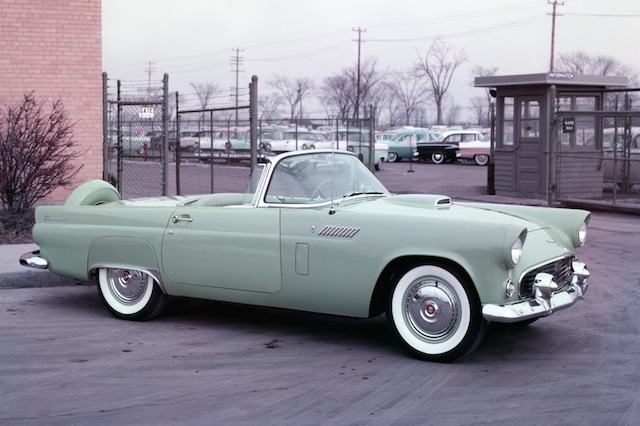
A 1956 Ford Thunderbird
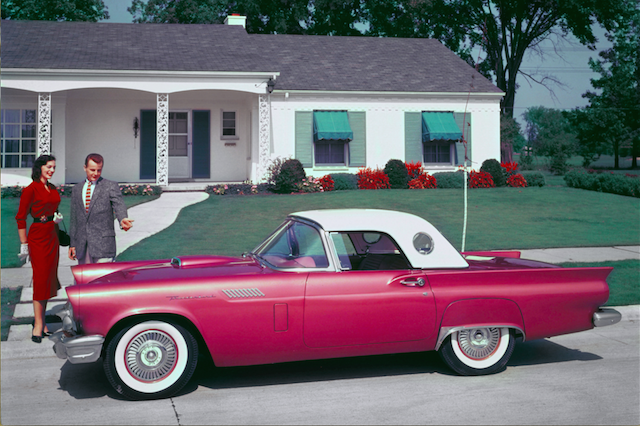
A 1957 Ford Thunderbird
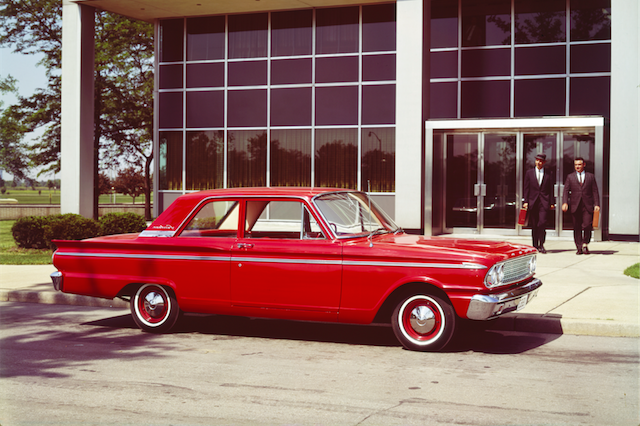
A 1963 Ford Fairlane
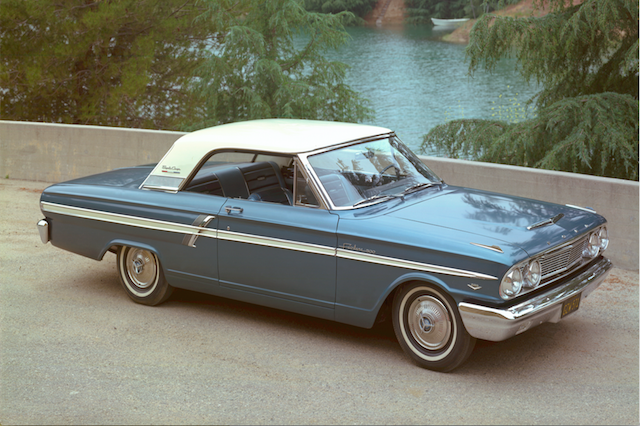
A 1964 Ford Fairlane
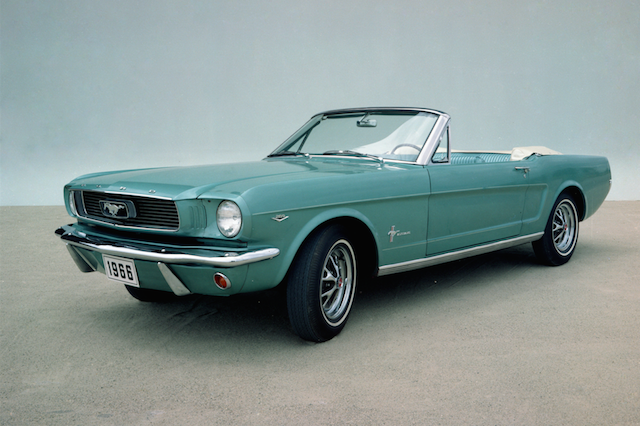
A 1966 Ford Mustang
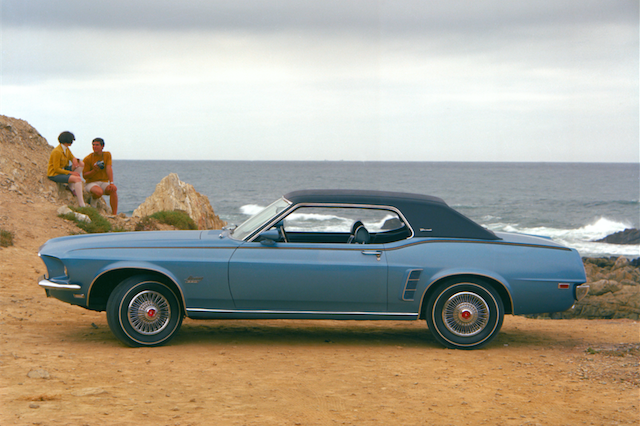
A 1969 Ford Mustang Grande
Post-War Car Paint
The end of World War II saw a boom in consumption and style, with automobiles at the forefront. By this time nearly all the large automakers had color advisory panels that surveyed consumers’ tastes and studied color trends in fashion and culture. Cars became flashier with features like tail fins, curved windshields and, of course, bright colors. In addition to the copious amounts of chrome, automobiles were painted in all shades of the rainbow. Two-tone arrangements, where a car’s body and roof were painted different colors, also became popular.
The color trend continued well into the 1960s with the emergence of muscle cars. These cars have always been more about performance than pragmatism, lending themselves as better canvases for brightly colored paints.
The color trend came to a quick halt during the fuel shortage of the 1970s. During this time, car owners became more concerned with fuel efficiency and car color took a back seat. Earth tones like brown, tan and dark green became popular.
What Is the Most Popular Car Color Today?
The current color situation on United States’ roadways is not very colorful at all. “If you drove down an American street and looked only at the new vehicles, you might be forgiven for thinking you’re in a black-and-white movie,” described Volkswagen.
No one can argue with the truth. A recent study on popular car colors by iSeeCars found that 25% of the 20 million vehicles analyzed were white, 23% were gray and 22% were black. And this isn’t an anomaly: These have been the most common car colors for a decade.
Why Are Muted Tones the Most Popular Car Colors?
It wasn’t too long ago, from the 1950s through the 1970s, when U.S. roadways were filled with automobiles of all shades of the color spectrum. So why the change?
“Color is always shifting, and our color perception is always evolving depending on what we see, what we observe and what we live with,” said Volkswagen Senior Color and Trim Designer Jung Lim “Limmy” Park. “Color preferences really reflect the unique social and cultural trends and even geography [of a region].”
There are a number of social and cultural theories as to the prevalence of more somber car colors in America. We are currently living through the second significant recession in about a decade. During times of economic uncertainty people tend to be conservative with their money. And while a different color on your car may not increase its cost, the mindset of keeping things simple and avoiding anything flashy has been known to carry over. A similar trend occurred following the Great Depression nearly a century ago.
As for cultural influences, there are some that suggest our car color choices are defined by our obsession with technology. Apple is the world’s most valuable company and its muted-color logo is recognized around the world.
“Prior to Apple, white was associated with things like refrigerators or the tiles in your bathroom,” Sandy McGill, chief designer for BMW DesignWorks told Motoramic.com. “Apple made white valuable.”
The Right Car Color for the Right Car
There’s also always been a belief that certain colors are right for certain cars. Pickup trucks are more utilitarian and don’t need a neon coating. Luxury sports car, meanwhile, are made to get people’s attention and are likely a more acceptable place for a bright-yellow coat of paint.
But sports cars haven’t been immune to the colorless trend. The Ford Mustang is a perfect example. In 1967, the muscle car was available nine shades of blue and two shades of pink. In the 1970s, brown was consistently among the top three most popular Mustang colors, but hasn’t been offered since 2000. Black, on the other hand, didn’t break into the top three until 1994 but has remained there ever since.
Future Car Color Trends: What Will Be Most Popular?
No one can predict the future, but we do know that trends change. As long as the demand for new colors is there, the supply will come with it.
There’s another reason to be hopeful for more vivid roadways. We view so much of our lives through the sharp, brightly colored images on our electric devices that it wouldn’t be surprising to see other shades pop up on cars in the near future.
“We are all so impacted by our digital life through the pandemic, and the colors you mainly see are [on] your screen more than actual physical objects,” said Volkswagen’s Park. “The future is getting colorful, for sure.”
Frequently Asked Questions About Car Colors
What is the most popular car color in the United States?
White is the most popular car color in the U.S., making up roughly 26% of vehicles on the road. Black comes in second at about 22%, followed by gray and silver. Add those up and more than three out of four American cars are essentially colorless.
Why are most cars white, black, or gray these days?
A few things are at play. During uncertain economic times, people tend to make conservative choices across the board, and car color is no exception. There’s also a cultural angle: design experts have pointed to Apple’s influence in making white feel premium rather than plain. And neutral colors generally hold their resale value better, which makes them a safer bet for buyers thinking long-term.
Were cars always such boring colors?
Not at all. From the 1920s through the early 1970s, American roads were full of bright, expressive color. The post-World War II era was a particular high point, with two-tone paint jobs, pastels, and bold hues everywhere you looked. The 1970s oil crisis is the turning point most historians point to, when practicality took over and earth tones quietly became the new normal.
What was the first big breakthrough in car paint technology?
In the 1920s, DuPont developed a product called Duco, a nitrocellulose lacquer that could be sprayed on rather than applied by hand. It dried faster, lasted longer, and came in a wide range of colors. General Motors was the first to use it, showing off two-tone blue cars at the 1923 New York Auto Show to immediate public enthusiasm.
Does car color affect resale value?
It can. Neutral colors appeal to the widest range of buyers, which tends to make them easier to sell. Unusual or bold colors might limit your potential pool of buyers, though rare shades can occasionally command a premium with the right enthusiast.
Is car color making a comeback?
There’s reason to think so. Auto designers have noted that our screen-heavy lives are starting to influence what people want in the physical world. Some manufacturers are already reintroducing bolder options, and the general consensus in the industry is that more color is coming.
Why did Henry Ford only make black cars?
The short answer is efficiency. Black paint dried the fastest, which kept his assembly line moving. That said, the all-black era was more limited than the famous quote suggests. Early Model Ts (1908 to 1914) actually came in several colors. Ford switched to black when the assembly line launched and returned to offering more options once paint technology caught up.
Madeira moves to its own rhythm, guided by nature, harvest cycles and vibrant annual festivals. Each season offers something new.
Comprised of four islands off the coast of northwest Africa (two are inhabited and two are nature reserves), Madeira is an autonomous region of Portugal, about a two-hour flight from the mainland. Its location and history have allowed it to develop a culture blending multiple influences and an enthusiasm for celebration.
Throughout the year, various festivities shape life on the islands, from street parades and fireworks to flower-strewn traditions and wine-filled gatherings.
Take a look at what each season in Madeira has in store. Visit Madeira provides a wealth of information to help you explore even more.
On a subtropical island, is it ever really winter? Madeira’s low winter temperature is about 55 degrees, so you don’t need to bundle up for any celebrations. The festival season gets off to an explosive start with Carnival in February, when the streets overflow with quirky parade floats, musicians, tasty foods and revelers in colorful costumes over the course of three weeks.
Each year, the island celebrates its flora and fauna with the month-long Flower Festival, typically held from late April through May. The celebration includes two parades with dancers and colorful floats and a classic car parade. Highlights include the Wall of Hope, which children decorate with flowers and streets covered with floral carpets. Also in spring, the Madeira Rum Festival features five days of tastings, masterclasses, cocktail competitions and entertainment.
Madeira kicks off summer with the Atlantic Festival, which runs through the month of June on the waterfront at Funchal Bay. Highlights include an international fireworks competition every Saturday night, with displays centered around a theme and set to music. Street performers and music add to the fun. During the day, visit any of Madeira’s many beaches and enjoy swimming, scuba diving, surfing and boating. Later in the summer, celebrate Madeira’s most famous beverage at the Madeira Wine Festival from the end of August until mid-September. Enjoy theme dinners, toast musical performances and of course, sip the country’s famous Madeira wine as well as other tasty cocktails.
Madeira’s Nature Festival, held in early October, is a newer addition to the festival line up. The goal is to connect tourists with the island’s rich and diverse environment and promote active tourism, so visitors appreciate Madeira’s outdoors as much as its wine, food and music scenes. But yes, there also is music. Participants learn about Madeira’s plants and wildlife, try a new activity, such as surfing; go hiking or mountain biking or do yoga on a beach.
From it’s centuries of history to it’s vibrant gastronomy scene, there so much to discover in Madeira whenever you go. Reach out to your AAA travel advisor to start planning your getaway today.
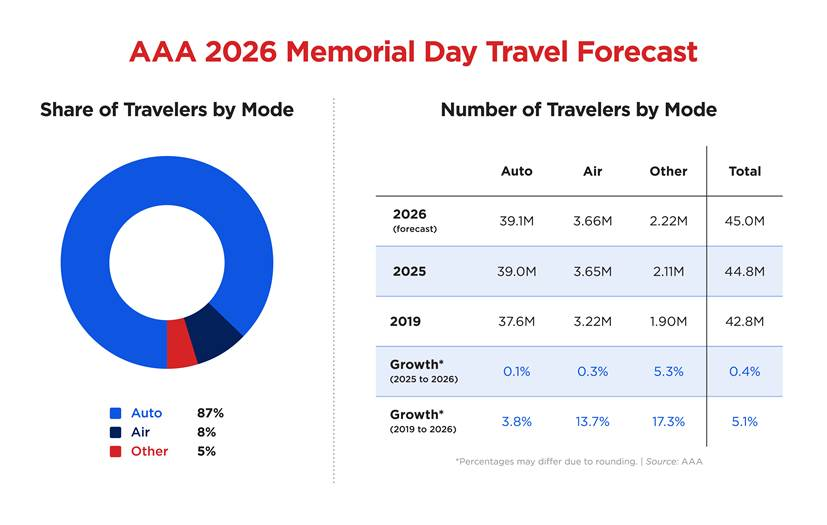
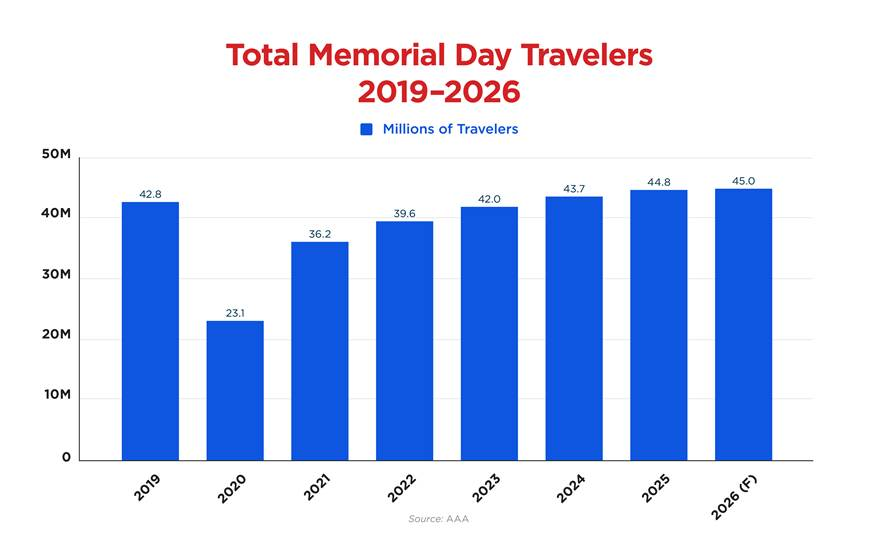
AAA projects a record-setting 45 million Americans will travel at least 50 miles from home for Memorial Day between Thursday, May 21 and Monday, May 25. Road and air travel are both expected to set records, with 39.1 million travelers driving and 3.66 million flying to their destinations.
“Memorial Day marks the unofficial start of summer, and for most Americans, it’s a three-day weekend,” said Jillian Young, director of public relations for AAA Northeast. “Despite higher fuel prices, many people continue to prioritize leisure travel during holiday breaks.”
Memorial Day Travelers by Mode of Transportation
By Car
AAA projects 39.1 million people will travel by car over Memorial Day weekend, a slight jump over last year. Driving is the most popular way to travel, accounting for 87% of travelers. This holiday weekend, drivers are paying more at the pump compared to last year. The national average for a gallon of regular gas as of May 11 is $4.52, up $1.39 from last year.
With a record number of travelers on the road this holiday weekend, AAA reminds drivers to put safety first, Slow Down, Move Over and drive sober. Before hitting the road, check your car’s battery, tire pressure and fluids. Last Memorial Day weekend, AAA responded to over 300,000 emergency roadside assistance calls nationwide to help drivers with issues like dead batteries, flat tires and empty fuel tanks.
For travelers who are renting cars over the holiday weekend, AAA’s car rental partner, Hertz, says Thursday and Friday are expected to be the busiest pickup days.
By Air
AAA projects 3.66 million travelers will take domestic flights over Memorial Day weekend, another small increase over last year. Air travelers make up 8% of the share of travelers this holiday weekend.
By Other Modes
Travel by other modes is expected to increase by 5%, with 2.2 million people traveling by bus, train or cruise. The popularity of Alaska cruises is helping drive this category’s growth, with peak Alaska cruise season kicking off this time of year.
AAA’s Top Memorial Day Weekend Destinations
Memorial Day weekend travelers are taking trips to theme parks and famous landmarks, boarding cruises in the Pacific Northwest and Alaska, and flying to Europe to visit iconic capital cities. Here are the top 10 domestic and international destinations, based on AAA booking data.
Ranking
Domestic
International
1
Orlando
Rome, Italy
2
Seattle
Vancouver, Canada
3
New York City
Paris, France
4
Las Vegas
London, England
5
Miami
Athens, Greece
6
San Francisco
Dublin, Ireland
7
Anchorage
Barcelona, Spain
8
Chicago
Southampton, England
9
Denver
Amsterdam, the Netherlands
10
Boston
Edinburgh, Scotland
Best and Worst Times to Drive
Drivers should expect the heaviest congestion on Thursday and Friday between 3 and 6 p.m., and Monday afternoon, according to transportation data and insights provider, INRIX. Sunday should be the lightest day for traffic, barring any unexpected events on the road.
Northeast Gas Prices Continue to Climb Amid Tightening Inventories, War Uncertainty
Northeast gasoline prices remain under pressure as unsuccessful peace talks between the U.S. and Iran keep oil markets volatile and global supplies tight.
Last week, petroleum prices moved lower and retail gasoline prices stabilized slightly after reports that negotiations to end the 10-week-old conflict would resume through the weekend. Crude oil prices settled about $6 lower by the end of trading on Friday as markets weighed the chances of a peace deal and the potential resumption of oil and gas shipments through the blockaded Strait of Hormuz.
But market optimism faded as the week began without an agreement that would bring an immediate end to the war. Crude prices climbed roughly 3% in early Asian trading on Monday and will likely remain volatile as uncertainty becomes the focus for oil and gas markets.
Domestically, gasoline prices are facing increasing pressure from tightening supplies ahead of the busy summer travel season, which is set to begin with record-breaking travel volume over the upcoming Memorial Day holiday. Gasoline stocks fell last week for the 12th straight week, declining by 2.5 million barrels, according to the Energy Information Administration (EIA). Inventories are now 2.6% lower than the same time last year and 3.4% lower than the five-year average. And despite gasoline prices reaching four-year highs, demand continues to remain strong for the season, settling at 8.8 million barrels a day. That’s a decrease of about 300,000 barrels over the prior week, but still higher than last year by about 1.1%, according to the EIA.
“Pump prices remain under pressure from tightening domestic supplies and higher oil costs caused by the ongoing war with Iran,” said Jillian Young, director of public relations for AAA Northeast. “Even with higher prices, demand figures show that Americans’ appetite for travel remains undeterred — for now.”
AAA’s May 11 survey of fuel prices found the national average up 7 cents from the prior week ($4.45), averaging $4.52 per gallon. The May 11 national average price was 39 cents higher than a month ago ($4.13) and $1.39 higher than last year ($3.13).
Region
Current Price*
One Week Ago
One Month Ago
One Year Ago
Connecticut
$4.61
$4.52
$4.09
$3.06
Massachusetts
$4.46
$4.35
$3.97
$2.97
New Jersey
$4.52
$4.53
$4.05
$2.98
New York
$4.58
$4.46
$4.13
$3.09
Rhode Island
$4.47
$4.39
$3.99
$2.95
*Prices as of May 11, 2026
As of May 11, Oklahoma and Mississippi had the lowest prices in the nation at $3.94 and $3.98, respectively. California and Washington had the highest prices in the nation this week at $6.15 and $5.76, respectively.
The AAA Gas Prices website is your resource for up-to-date fuel price information. Search for average gas prices on national, state and metro levels by regular, plus, premium and diesel.
Cape May sits at the southern tip of New Jersey, where Delaware Bay meets the Atlantic Ocean. It’s the nation’s oldest seaside resort, welcoming sun-seeking vacationers since the mid-18th century, then touted as a “healthy place for sea bathing” by the Philadelphia Gazette.
Today, Cape May draws visitors for its walkable downtown, pristine beaches, easy access to nature and well-preserved architecture. A National Historic Landmark, Cape May is home to more than 600 candy-colored Victorian style buildings, including inns, cottages and shops. You’ll find the second largest collection of Victorian era structures in Cape May, just behind San Francisco.
Whether you arrive by way of the Garden State Parkway or the Cape May-Lewes Ferry, you are in for a real treat.
Begin in the Cape May Historic District, where the town’s architectural identity is on full display. Guided walking and trolley tours educate visitors on structural hallmarks, including intricately designed gingerbread trim, large wraparound porches and steeply pitched gabled roofs.
If you prefer to explore on your own, focus on Hughes Street and Columbia and Beach avenues for the highest concentration of restored buildings. These streets showcase some of the best preserved “painted ladies,” a term used to describe Victorian structures painted in three or more colors to emphasize their decorative features.
One of the more notable Victorian homes is the George Allen House, known as the Southern Mansion, a grand estate dating to the 1860s that now operates as a bed-and-breakfast. Public tours are offered daily at noon for a small fee, offering insight into upper-class life at the time.
For a closer look at the period, tour the Emlen Physick Estate, Cape May’s only Victorian house museum. Built in 1879, this 18-room mansion offers guided tours that focus on architecture, daily life and the Gilded Age elegance of the home.
Pedestrian Friendly Hub
Cape May’s pedestrian-only Washington Street Mall serves as the town’s central hub. Spanning three blocks, from Ocean Street to Perry Street, it’s lined with more than 75 boutiques, gift shops, bookstores, cafes and scoop shops.
The Mall features brick-paved paths, plenty of benches, landscaped gardens, gas lamps and twinkling string lights. Browse specialty shops like Whale’s Tale for shore-theme gifts, Louisa’s Chocolate Bar for artisan chocolates and Madame’s Port for home accents and apparel.
Hungry? Dining ranges from casual to upscale, and there’s something for every palate. Enjoy fresh seafood at the Cape May Fish Market, sample elevated cuisine like curry mussels and filet au poivre at Tisha’s or stop in for wine tastings at Washington Inn & Wine Bar. For dessert, it’s got to be Uncle Charley’s Ice Cream, serving up 48 homemade flavors.
Cape May Beaches
Cape May city beaches stretch 2½ miles along Beach Avenue. The Cove is popular for its wide sandy shoreline and reliable surf, as well as its close proximity to the Cape May Lighthouse. For a relaxed beach day, head to Broadway Beach for fewer crowds and great waves. All city beaches require beach tags, which can be purchased in town, for admittance between Memorial Day and Labor Day.
Sunset Beach offers a different vibe. This free beach (no beach tag necessary) features calm waters and colorful sunsets over the Delaware Bay. It’s best known for Cape May diamonds — small quartz pebbles polished by the water. Visit at low tide for the best chance of finding them.
Just offshore, you’ll see the remains of the SS Atlantus, an experimental concrete ship built during World War I that ran aground in 1926, about 150 feet offshore. It’s a photo-worthy landmark and a curious piece of local history. In summer, locals and visitors alike gather for a nightly flag-lowering ceremony at dusk to honor veterans.
Cape May Point
At the southernmost tip of the peninsula is Cape May Point State Park, which offers a quieter, nature-focused alternative to the beach scene. This 244-acre park includes sand dunes, freshwater ponds, marshes and maritime forest. Admission is free, making it an easy add-on to your itinerary.
There are three main trails (red, yellow and blue), ranging from a half mile to 2 miles. The red trail is fully accessible via a raised boardwalk, while the blue and yellow trails wind through marshes and wooded areas. Birding is a major draw, thanks to the park’s location along a migratory route that regularly attracts raptors, shorebirds and monarch butterflies.
The 160-foot-tall Cape May Lighthouse is the park’s most visible landmark. Built in 1859, it remains active. Visitors can climb 199 iron steps to the top for panoramic views across the Cape May peninsula. Interpretive panels on the grounds, at the base and on the climb share stories of lighthouse keepers, as well as how the lighthouse functioned historically and today. The remnants of a concrete World War II bunker are also visible on the beach, once designed to protect the Delaware Bay and Philadelphia from German submarines.
If you’ve seen drivers darting aggressively across lanes as they race through traffic, you’re not alone. Nearly 75% of drivers reported noticing at least one type of street racing in the past year, according to a new study from the AAA Foundation for Traffic Safety (AAA FTS).
Street racing — which includes behaviors such as drag racing, street takeovers and weaving through traffic — poses significant risks to drivers, pedestrians and emergency responders alike. To understand more about the prevalence of and public concern about street racing, the AAA FTS surveyed over 3,000 U.S. drivers.
Key Findings
Weaving through traffic is the most observed form of street racing. Over 30% of respondents said they notice drivers weaving through traffic regularly, or fairly often. That number jumped to 37% for respondents who lived in urban areas. In the Northeast, 65% of respondents said they’ve observed street racers weaving through traffic at least once in the past year.
Street takeovers and drag racing happen less frequently, but a sizeable minority have encountered them. 9% of respondents reported having witnessed a street takeover regularly or fairly often, and 12% indicated the same regarding drag racing. In the Northeast, 28% of respondents said they’ve witnessed a street takeover at least once in the past year, and 35% said the same for drag racing.
Street racing is a growing concern. Nearly half (47%) of respondents from the Northeast said they are concerned about street racing on public roads in their state. And over a third of respondents from the Northeast — about the same as all respondents — said street racing is a bigger problem today compared to recent years.
Trends differ between urban and rural areas. Respondents in urban areas reported greater exposure to street racing and higher concern, while rural drivers reported slightly higher participation but lower concern.
In short: Yes! AAA does offer life insurance, focusing on term life insurance and permanent life insurance, which includes universal life insurance. AAA life insurance policies are designed to evolve with your life, and our knowledgeable agents will provide you with guidance every step of the way.
The following is a breakdown the types of life insurance offered by AAA, with explanations and input from AAA insurance agents.
AAA Term Life Insurance
AAA term life insurance provides coverage for a set period of 10 to 30 years. It is designed for a specific period of your life, such as while you’re raising a family. It usually costs less than other types of insurance, and premiums remain at one fixed rate for the duration of the term.
“Term insurance is most often used for income replacement and mortgage coverage. It offers leveled premiums up to 30 years and a convertible option after one year until age 65 for qualifying clients,” said Candice Burroughs, AAA life insurance agent. “You can incorporate a child life insurance policy by adding a child rider, or a return of premium rider, who will receive all the paid-up premiums when the policy expires.”
Once the initial term period is complete, you have the option to extend at a higher premium. AAA offers low-premium term life insurance with a death benefit up to $5 million.
AAA Permanent Life Insurance
AAA permanent life insurance offers lifelong coverage. The policy builds cash value over time, and premiums don’t increase once they’re locked in. Usually, permanent life is more expensive than term life insurance.
“Permanent life insurance lasts a person’s entire life, not just a set number of years,” said Jeffrey Bechtold, AAA internal life insurance agent. “As long as you keep up with premiums, it guarantees a tax-free check to your beneficiaries whenever you pass away. It also builds a cash value ‘savings bucket’ you can borrow from or withdraw from when you’re alive. It’s generally best for people who want permanent protection, have long-term dependents or want to leave a guaranteed legacy behind.”
Learn more about term vs. permanent life insurance.
Universal Life Insurance
AAA universal life insurance offers more premium flexibility and the ability to build up cash value over time. Policyholders can use this cash value against their premiums, to pay their mortgage or to contribute to their retirement funds.
LifeTime Universal vs. Accumulator Universal
AAA offers two universal life insurance products: LifeTime Universal Life and Accumulator Universal Life. Both types build up cash value, offer a death benefit starting at $100,000 and can be purchased through an agent.
An Accumulator policy builds more cash value than a LifeTime policy. Another key difference is the premium structure: LifeTime Universal guarantees a set premium rate that won’t change, even if interest rates do. Accumulated Universal offers customizable premiums and coverage that can be altered as your needs change.
Other AAA Life Insurance Product Questions
Do you have to be AAA member to get AAA life insurance?
Yes and no. You must be a member to apply for AAA guaranteed issue life insurance.
“For all other policies, you do not have to be a member to apply.” Burroughs said. “If you are a AAA member, you will get an additional 10 percent off of the premium for your term insurance policy.”
Does AAA term life insurance require a medical exam?
A paramedical exam may be a requirement to qualify for a AAA term life insurance policy.
Get a AAA Life Insurance Quote
Choosing the right life insurance policy to fit your needs is a big decision, but AAA insurance agents are here to help. Our team is fully committed to helping you find the right policy to work for your life and provide the protection you need.
Learning about an auto insurance premium increase can be a bummer, especially if you’re a safe driver with a clean record. Thankfully, there are steps you can take to limit hikes in your rates.
Drive Safe
Avoiding accidents and speeding tickets is the most important part of averting an auto insurance premium increase. Motorists with tickets and crashes on their records are higher risks for insurance companies, and their premiums reflect that.
Take a Defensive Driving Course
Speaking of safe driving, in some states taking a defensive driving course like the AAA Driver Improvement Program can earn you an insurance discount. Even if you don’t get a discount, the tips you learn can help keep you safe behind the wheel, which is a big part of managing insurance costs. Learn more.
Bundle Up
Getting auto and renters/homeowners insurance through the same company is a recipe for savings. Most companies give discounts to customers who bundle their coverage.
Look at Your Deductibles
Deductibles are what drivers are required to pay toward the cost of a claim before insurance kicks in. Many drivers who increase their deductibles see a drop in premiums because they’re limiting the costs their insurance companies will face following an accident.
Look at Your Vehicles
The cost of repairing a vehicle after a crash factors into insurance premiums. It’s why a high-end sports car is likely going to be more expensive to insure than your everyday sedan.
Comprehensive and collision protection might make sense for newer cars (it may also be required for financed vehicles), but as cars get older and their values decrease, the expense of such coverage might not be worth it.
Adding a teen driver to your policy can be expensive, but many companies will give discounts to young drivers who are doing well in school. Your child must be a full-time high school or college student and maintain at least a B (3.0) average or equivalent.
Use Your Garage
Has your garage become more of a storage container than a place to house your vehicle? If so, think about spending a Saturday or Sunday cleaning it out. Some companies offer discounts to drivers who garage their vehicles.
Pay at Once
Paying for your policy in one payment versus installments may get you a discount. Some companies also provide discounts to drivers who have monthly payments automatically deducted from their bank accounts.
Maintain Good Credit
In most states (excluding Massachusetts, California and Hawaii), having mediocre or poor credit can impact your premium.
Talk to Your Agent
A lot of drivers only talk with their insurance agents when they’re looking for a policy quote or after an accident, but regular communication with your agent can help make sure your insurance costs aren’t higher than necessary. AAA insurance agents are ready to discuss these and other ways of getting you the right coverage for the right price.
College has never been more expensive than it is today.
The average annual cost of tuition and room and board per student in 2026 is $38,270, according to the Education Data Initiative. And tuition prices are only getting costlier every year, evidenced by the student loan crisis in the United States. Approximately 44 million people in the U.S. have about $1.833 trillion in outstanding student loans.
How can you plan ahead and avoid taking on exorbitant student loan debt? Start thinking about paying for college today.
Saving for College
It’s a falsehood that only the wealthy save for college. Families can begin thinking about paying for college by putting together an education savings budget. For starters, go online and plug in your information into a college savings calculator to get an idea of what you will need to save to pay for a degree.
To save for college many parents opt for 529 plans, which are education savings accounts that provides tax deductions. The benefit of a 529 plan is that the money increases tax-free. And you can save for your child, niece, grandchild or anyone in your family. Contribute up to five years’ worth of savings without paying gift taxes. Let your family know about your 529 plan so they can contribute birthday or holiday money there instead of buying gifts.
While it’s always better to start saving earlier rather than later, opening a 529 plan for a high school student is also valuable. The plans are sponsored by states, but students can take their money to any out-of-state college. There are no taxes assessed when the money needs to be accessed for college. Choose from either a 529 savings plan, which will grow based on your investment options, or open a prepaid plan that allows you to pre-pay all college expenses.
To enroll in a 529 plan, contact your financial adviser or get in touch with a 529 plan manager.
Mary Maguire, Director of AAA Public Affairs, and Donald Kerr, Senior Manager of Student Lending at AAA, sit down to discuss college planning tips and tricks.
Best College Student Loans
Very few students have the liquid cash to pay for college in full without taking out loans or needing scholarships. Before applying for private or federal students loans, see how much money you can get in scholarships and grants. The best part is, you won’t have to repay scholarships or grants, which makes these funding options ideal. Prepare your child to win scholarships early in their schooling by encouraging them to get good grades and be active in the community.
Your next option — after using cash, grants and scholarships — should be federal loans. Federal loans have flat interest rates and income-based repayment plans. Students who fill out a FAFSA and show that they have the financial need are eligible for Direct Subsidized Loans; interest rates for the upcoming academic year will be announced in June.
Consider all of your federal loan options before you take out private loans through a bank or credit union. Only turn to private loans once you’ve exhausted all other options. The interest rate on a private loan will depend on your credit score.
Also consider tuition waivers that are offered for teachers, veterans and dependents of college employees. To help with the cost of college, students may want to also considering working part-time or enrolling in federal work-study program.
Thinking about the costs of college can be overwhelming. But a college degree should be considered an investment. Getting an education matters, especially in terms of your future salary. The median weekly earnings for a person with a doctoral degree is $2,278; $1,840 for someone with a master’s; and $1,543 for a person holding a bachelor’s degree, according to the U.S. Bureau of Labor Statistics. The facts show that when you have a college degree your earnings will be higher than someone with only a high school diploma and your chances of unemployment are lower. Getting a higher education still pays off in the long term.
Learn more about student lending options with AAA.
Still have a question about paying for college? Check out our student lending FAQ or ask us in the comments and we will get you an answer from one of the many student lending experts at AAA Northeast.
Looking for a stress-free vacation with all the planning built in? Check in to an all-inclusive resort for a relaxing island getaway free from lengthy itineraries, worrying about dinner options and entertaining the children.
With multiple destinations worldwide, there’s an all-inclusive resort for everyone, whether you’re traveling solo, looking for an adults-only romantic escape or a fun-filled family vacation.
Here’s what to consider when booking your next vacation.
An all-inclusive resort is a vacation property where the package covers your accommodation, unlimited food and alcoholic beverages, entertainment and more at one price.
The convenience of everything included in one bundle helps those traveling on a budget and prevents travelers from having to pull out the calculator to add up tomorrow night’s dinner expenses.
Although the essentials are included, added amenities such as personalized spa treatments, private pool cabanas, exclusive lounges and premium selections of alcohol will cost an extra fee.
The biggest advantage of booking an all-inclusive is having everything you need right at your fingertips. With dining, entertainment, water sports and more on property, there’s no need to leave the safety of the resort.
Each resort offers multiple restaurants, pools and beaches, adding a wide variety of cuisine and activities so you’ll never be bored or looking for more.
Paying up-front for an all-inclusive resort additionally includes taxes and tips, so there are no surprise charges when you get back home.
AAA-Recommended All-Inclusive Resorts
All-inclusive resorts are all about fun in the sun, and you’ll often find them throughout the Caribbean and Mexico.
Surrounded by lush mangroves and oceanfront views, Hilton Cancun offers all-inclusive comfort and relaxation on the shores of the Mayan coastline. From traditional Mexican cuisine to global buffets and wood-fired pizzas, there are more than 12 luxury restaurants and bars on property featuring worldwide cuisine, plus an all-you-can-eat ice cream and churro shop for all ages.
Create lasting memories in swim-up pool rooms, play a classic game of bingo or take a Latin-style dance lesson. For families, the resort offers a variety of beach games, including volleyball and a splash playground with waterslides and interactive elements for the kids.
If you’re seeking a romantic excursion or family adventure, Hilton Tulum Riviera Maya All-Inclusive Resort is the perfect getaway, accommodating all parties. Choose between an ocean-view suite overlooking crystal-clear waters or nature views of the lush jungle from a private balcony. Unlimited drinks crafted by expert mixologists are always being poured, whether you’re lounging on the beach or swimming in the pool.
Enjoy Colores de Mexico, an evening of traditional cuisine, mariachi music, pinatas and games celebrating Mexican culture. Families can also snuggle up for beach movie nights or grab a pair of headphones for a silent disco with three live DJs.
Additional benefits include a daily restocked mini bar and 24-hour room service.
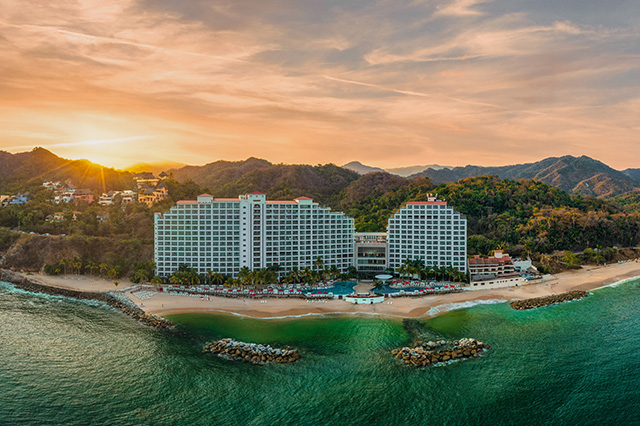
Located at the base of the Sierra Madre Mountains, Hilton Vallarta Riviera All-Inclusive Resort brings fun experiences daily with a wide variety of activities. With two infinity oceanfront pools, guests can take in the Banderas Bay during the day and enjoy live music and cultural performances after the sun sets.
Its 13 dining spots include restaurants inspired by spices of Southeast Asia, grill houses with premium cuts of steak, seafood and grilled fish and local fresh sushi with exquisite presentation. The martini and mojito lounges are both must-visits, featuring unique takes on cocktails, including refreshing liquor.
On an exclusive beach near Redonda Mountain, savor views of palm trees and teal waters, with on-site amenities making the trip as easy and relaxing as possible. The newly built Zemi Miches Punta Cana All-Inclusive Resort, Curio Collection by Hilton offers daily activities for every vacationer.
Explorers can enjoy water activities, including paddleboarding, kayaking and snorkeling, while artists can take art and cultural classes, like pottery. For parents looking for a night without the kids, the resort offers two safe spaces — Coki Cove Kids Club and Palmchat Teens club — for socialization and games.
Whether you sipping poolside pina coladas or wandering beneath the palm trees, this resort offers a multitude of experiences.
Looking for more Caribbean getaways? Click here to discover top destinations, trending vacations and more!
You’ve Read About It — Now Experience It
AAA travel advisors will turn your inspiration into a memorable vacation, providing trusted guidance and exclusive member benefits. Connect with us to learn more.