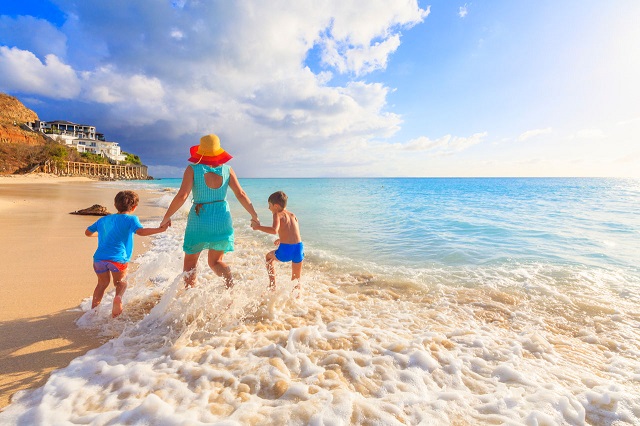
Q: We’d love to splurge a little on our next vacation. Where can we find a little rest and relaxation but still have plenty of options to explore with our kids (ages 9 and 13)?
Jennifer Della Penna, a member of our virtual travel advisor team, took all of one second to come up with her answer: Beaches Turks & Caicos, an all-inclusive family resort nestled just north of Haiti and the Dominican Republic.
“It’s amazing for families,” she said. “It was completely designed for families. There’s enough there to keep you busy or, if you want, to do nothing at all.”
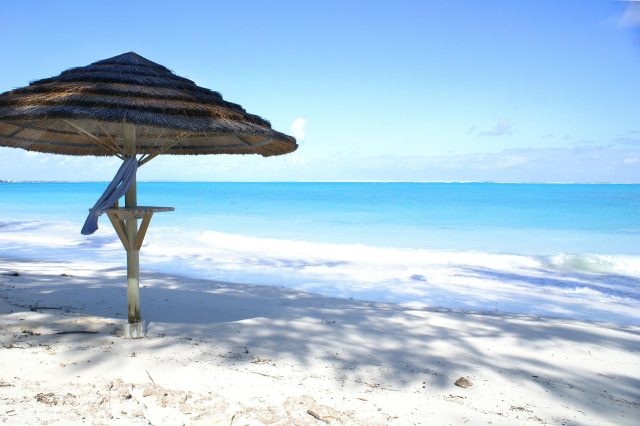
Located on pristine Grace Bay Beach (with perfect aqua water and soft sand), the resort has five “villages” with accommodations ranging from luxury rooms and suites to family villas that come complete with butler service.
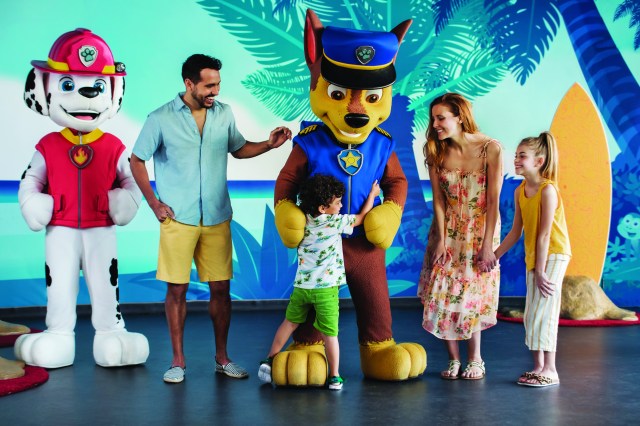
The property also has 21 restaurants, 10 pools, a water park, watersports, a kids’ club, nanny service and “Sesame Street” characters to keep the littles entertained.
Della Penna and her family have been to Beaches Turks & Caicos five times, and are planning on going back in 2023.
If you want to see the world while riding, flying and staying in style, Della Penna suggests checking out Adventures by Disney and Tauck Bridges tours. Both providers craft tours with families – and five star accommodations and dining – in mind.
But whether you want to explore Antarctica, see the ancient marvels of Egypt, take in a Seine river cruise or check out the U.S. national parks, there are tours available for every family and every budget.
Have a question for our travel advisors? Ask away!
We know because we’ve been: “Out There” is a series of inspiring travel spotlights from AAA travel advisors and employees.
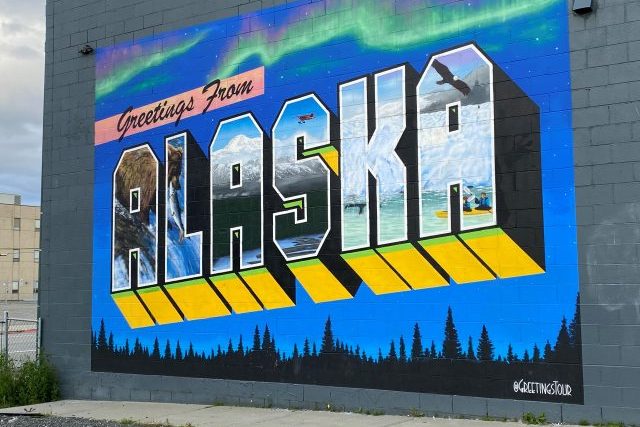
Alaska is one of the most beautiful places on earth.
The largest state is where memorable experiences are an everyday occurrence. The great Alaskan outdoors offer both thrills and relaxation. Wildlife can be spotted from land, air and sea, and Alaskan Native culture and history comes alive through tours and festivals.
It’s the sense of discovery that defines the Alaskan experience and help it live up to its name: the Final Frontier.
A few AAA travel advisors recently got to visit Alaska as part of the Out There2.0 program.Their trip was hosted by our travel partner Travel Alaska.
By visiting a destination, the travel team gains in-depth, firsthand knowledge to help you plan your vacations and get the most from your experiences. Here’s what AAA travel advisor Kim Roberts had to say about her trip.
Tell us a little about yourself.
I am an associate travel advisor with AAA Northeast. I have been with AAA for almost six years. I enjoy my family, camping, hiking, exploring new places, kayaking, traveling and quilting.
Where have you traveled before?
I have traveled the East Coast of the United States, Canada, Colorado, Vermont and now Alaska. My favorite destinations are national parks. While I love traveling to theme parks and resorts, I really love the outdoors.
What was Alaska like?
Our trip to Alaska was nothing short of amazing! We flew into Anchorage and were transferred to the Copper Whale Inn, a very nice accommodation built in 1939. Then, we went to a welcome dinner at the restaurant Orzo. The fresh seafood was fabulous.
In the morning, we went on a Deluxe City Trolley Tour through Anchorage Trolly Tours. This amazing two-hour tour took us around the city of Alaska stopping at several vantage points. We ended up seeing a moose alongside the road, which was very exciting!
We visited the Anchorage Museum and learned about the native Alaskans, and from there we were transported to the Alaska Glacier Lodge and Tours where we each were able to stay in our own deluxe cabin.
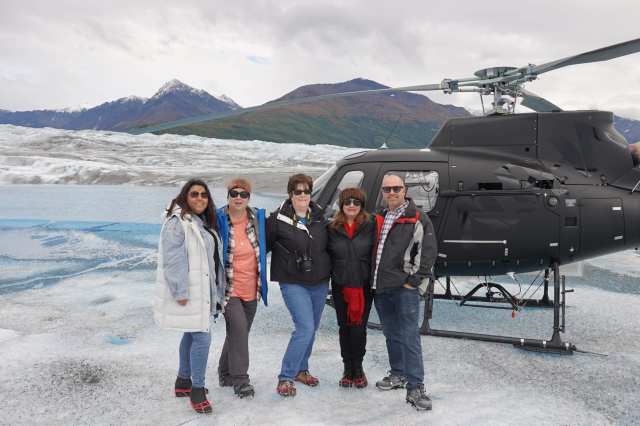
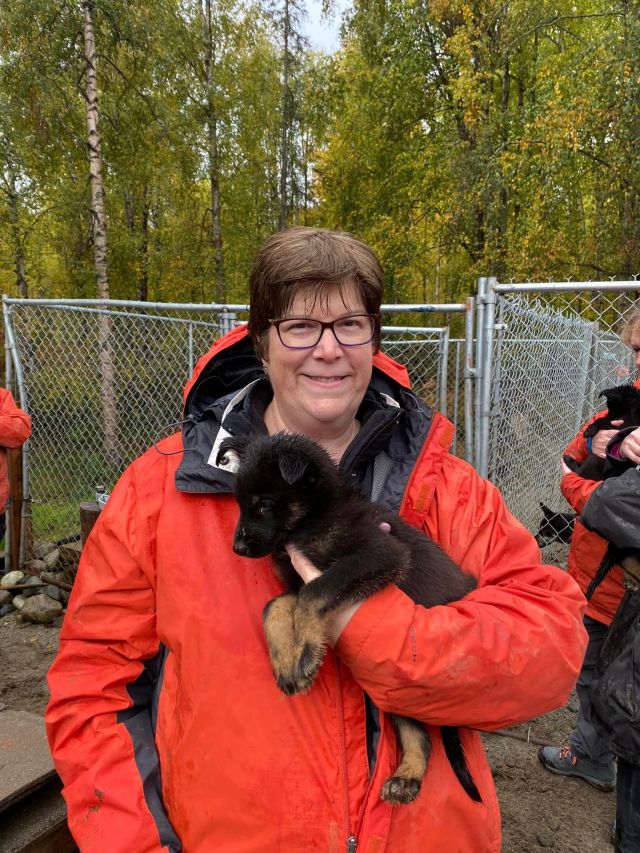
Alaskan Helicopter Tours sent the group off for a thrilling adventure in a five-person helicopter to a glacier. We got to walk the glacier and drink from a glacier river and lake. The scenery was breathtaking, and we were able to see some Dall sheep and golden eagles. We also went on a summer dog sled adventure tour through Snowhook Adventure Guides of Alaska and got to meet the dogs and new puppies. The dogs train all year.
I think my favorite museum was the Alaska Native Heritage Center. We were treated to a journey through 10,000 years of Alaska Native History and culture through art, dance, Native games demos, exhibits, traditional Native dwellings and films. There were several vendors there and we had the chance to purchase some beautiful jewelry and other items.
The group then boarded the Alaska Railroad to Denali National Park. We rode in a glass-dome railcar in premium class and were treated to breakfast, lunch and two drinks. The views were absolutely stunning from the glass-dome roof!
We stayed at the Grizzly Bear Lodge in Denali, where each of our rooms had a porch overlooking a riverbank. The next morning, we were up bright and early for a tundra wilderness tour. The guide on this tour was fantastic. We were able to see a couple of grizzly bears, Dall Sheep, golden eagles and many types of birds and other wildlife. It was the most amazing bus ride I have ever been on.
Of course, I can’t forget the auroras! We were there during aurora-viewing season and visited Aurora Pointe on two evenings. This venue offered indoor accommodations, free beverages and snacks, a program on the northern lights and several experts to help you get the most out of your experience. On our first night, the northern lights did not cooperate and reveal themselves, but the second night they were out in full force! I was in such awe that I shed a few tears. But that wasn’t the only time.
On our tour of the Alaska Pipeline and a gold dredge, we got a few history lessons and got to pan for gold – but I didn’t get rich! I only found about $6.00 worth of gold, which I had made into a necklace. Talk about a special keepsake!
The Northern Alaska Tour Company took us on a small plane trip to the Artic Circle. Only about 2% of people who visit Alaska ever do this, so it was a unique experience.
There was even a stop at the Santa Claus House where we met Santa himself. I told him that I had been good all yearlong! Then we stopped at the Fountainhead Antique Auto Museum, which had a stunning car collection. I am not a big antique auto fan, but I could have stayed there for several hours.
The group did a site inspection at Pike’s Waterfront Lodge and then it was time for us to say goodbye.
What was it like to vacation with Travel Alaska?
This travel partner kept us busy the entire time. I could have stayed another week! The meals were outstanding, as were the accommodations. We were treated like royalty.
The leaders of our group were super friendly and knowledgeable and set up an incredible agenda for us. They are very easy to reach for any questions you might have.
What was your favorite part of your trip?
My favorite part of the trip was Denali National Park. Alaska and Denali National Park are now in my heart. I would recommend travel to this state and destination to everyone!
From 007’s classically stylish Aston Martin to the beat-up station wagon that starred in “National Lampoon’s Vacation,” sometimes cars are the scene-stealers.
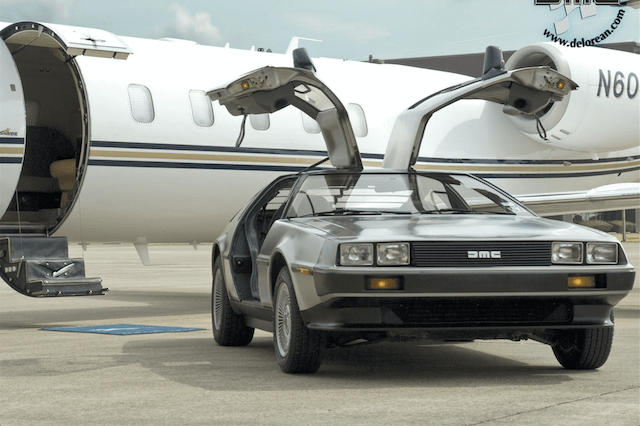
One of the most famous movie cars of all time, the DeLorean didn’t just look cool – it also played a critical part in the plot of the “Back to the Future” movies. It was the DeLorean DMC-12 that Doc Brown chose as his time machine. Known for its distinctive gull-wing doors, fiberglass frame and stainless-steel body, the car was the brainchild of automotive engineer John DeLorean, a former General Motors executive who founded the DeLorean Motor Company in 1974. The first DMC-12 was released in January 1981.
The following year, the company filed for bankruptcy. The last car was manufactured in December 1982. Approximately 9,200 cars were built in total.
In this classic film’s most famous scene, legendary actor – and avid race car driver – Steve McQueen races around the streets of San Francisco in a 1968 Ford Mustang GT. Not only did the Mustang become one of the most iconic movie cars of all time, the scene became the standard by which all other car chases are measured. In 2018, Ford released its third special edition Mustang model to commemorate the 50th anniversary of “Bullitt.”
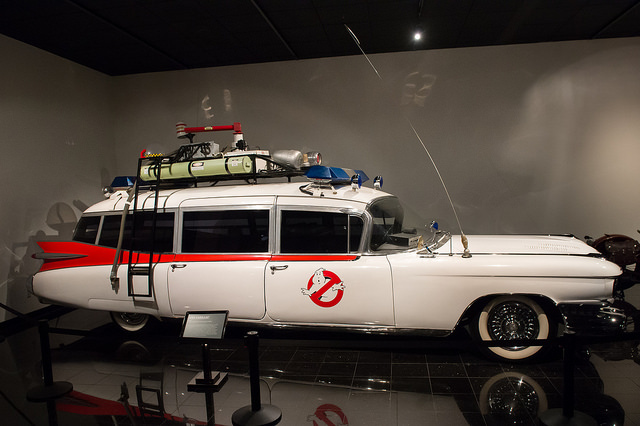
The Ghostbuster car became nearly as iconic the characters themselves. This spirit-hunting wagon, better known as the Ecto-1, was actually a 1959 Cadillac Miller-Meteor ambulance. Only about 400 of these cars were made, and two found their way to the “Ghostbusters” set. Originally the car was to be painted black. That idea was scrapped because of how often it was going to be shot at night.
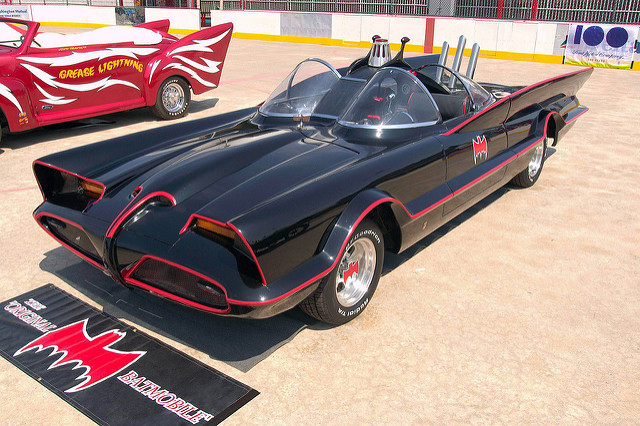
Certainly one of the most famous cars in movie history, the Batmobile has undergone myriad transformations over the years. From the Lincoln Futura-based car of the 1960s to the more recent tank-like Tumbler, everyone has their favorite. While you’ll have a difficult time picking one up at the dealership, know that the long, sleek version in “Batman” and “Batman Returns” was built on the chassis of a Chevrolet Impala. So you can start there.
The Torino was produced by Ford between 1968 and 1976. It was named after the city of Turin, considered to be the “Italian Detroit.” In “Gran Torino,” Clint Eastwood plays cantankerous Korean War vet Walt Kowalski, who has isolated himself from the world. It’s Walt’s prized 1972 Ford Gran Torino that serves as a conduit for a friendship between him and his young neighbor, which would have profound effects on both their lives.
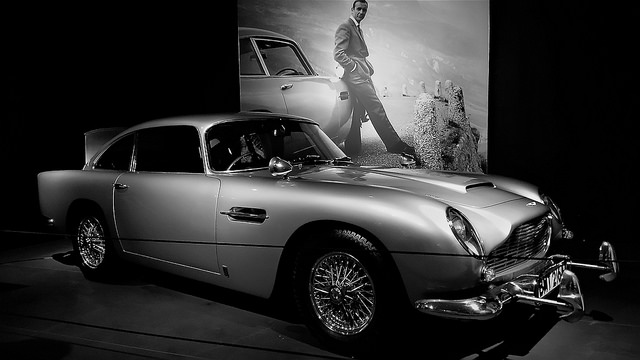
There are few more iconic film characters than James Bond, and few more iconic images of Bond than with him behind the wheel of an Aston Martin. Debuting in 1964’s “Goldfinger,” the Aston Martin DB5 has been featured in 12 films over the course of more than 50 years. The book version of “Goldfinger” had Bond driving a DB Mark III. But Aston Martin had just released the DB5 in 1963, so the decision was made to use the company’s latest car. Needless to say, sales of the DB5 increased when “Goldfinger” hit the silver screen.
We could list all the transformers here, but none underwent such a transformation upon landing on the silver screen (or had its own standalone movie) as Bumblebee. The yellow automobile was originally a Volkswagen Beetle, but took the form of a Chevrolet Camaro in the film franchise.
For cross-country road trips, it certainly helps to have the right set of wheels. Unfortunately for the Griswolds, they’re forced to settle for the Wagon Queen Family Truckster. The station wagon was oversized, had a pale avocado and metallic green paint scheme, extensive imitation wood-paneling decals and eight headlights. The famous movie car was created specifically for the film. However, it was based on a 1979 Ford LTD Country Squire.
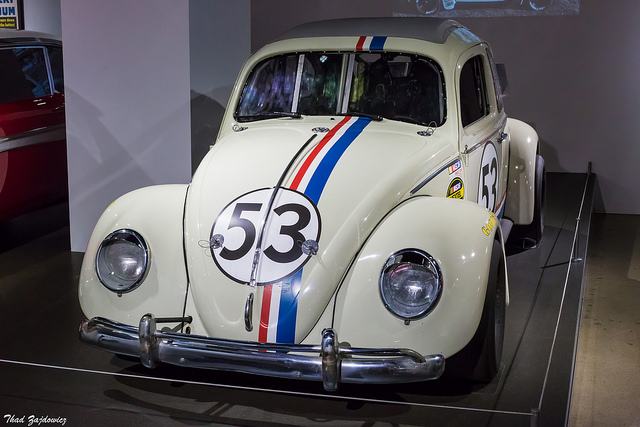
The eponymous Bug in Disney’s 1968 film “The Love Bug” was a pearl-white 1963 Volkswagen Beetle named Herbie. Of course, the beetle also came to life and had the ability to drive itself. Herbie has had a long and storied career on the silver screen. The car has appeared in six films, most recently 2005’s “Herbie: Fully Loaded.”
If you’re going to skip school and gallivant around the Windy City, a proper set of wheels is a requisite. Fortunately for Ferris Bueller, his best friend Cameron’s dad just happened to be the owner of a cherry red 250 GT California Spyder. Although Ferris and company – and a pair of lucky parking garage attendants – enjoyed the car, it did, regrettably, meet an untimely end.
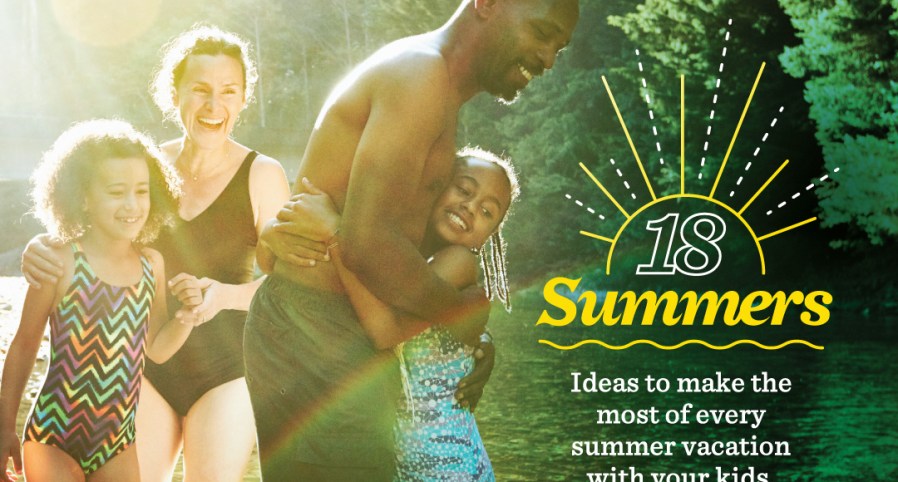
Eighteen years seems like a long time, but parents of grown children can tell you that the span between celebrating first steps to senior prom can fly by all too quickly. The same is true for family vacations. The window of opportunity for packing the whole clan into a car for a group getaway is surprisingly brief before the kids turn into adults and make exploring the world on their own a bigger priority.
Here’s how to get every smile and memory you can out of those 18 precious summers of family fun.
Vacationing with a newborn or toddler quickly changes your travel priorities from museums and five-star restaurants to resorts with babysitting and an indoor pool.
The need for potty stops and avoiding restlessness argues for short drives over long road trips. Under four hours by car from Boston, Smugglers’ Notch Resort in Jeffersonville, Vt., offers child care programs for kids 6 weeks to 3 years old, along with a huge range of family-friendly summer activities, from puppet shows to arts and crafts programming to panning for precious minerals. For cooling down and splashing around, the Little Smugglers’ Lagoon has gentle waterslides, fountains and a lazy river.
Having kids in (or barely out of) diapers doesn’t mean having to forgo more ambitious travel, however. Nickelodeon resorts in Punta Cana, Dominican Republic, and Mexico’s Riviera Maya have extensive kids’ programs for all ages. In addition to cartoon-themed accommodations, character appearances, water parks and play areas, they make it easy on parents of young children by providing amenities like strollers, cribs, bottle warmers and baby food.
Ages 4-12
Theme Park and Cross-Country National Park Adventures
This age group falls right in the sweet spot for a trip to Walt Disney World Resort, which still belongs on any family vacation bucket list. Most of the Disney parks in Orlando, Fla., have seen some recent expansion, like the immersive Star Wars: Galactic Starcruiser experience near Disney’s Hollywood Studios, a new TRON-themed roller coaster in Magic Kingdom Park and the Guardians of the Galaxy: Cosmic Rewind roller coaster at Epcot.
Speaking of sweet, Hershey, Pa., appeals to chocolate-loving kids with a factory tour at Hershey’s Chocolate World and thrill rides at Hersheypark. Lodging options run from campgrounds to the AAA Four Diamond Designated Hotel Hershey, which has Kids Night Out programs for ages 5-13, as well as cocoa-infused treatments at the spa for the grown-ups.
“National Lampoon’s Vacation” may have captured the highs and lows of a cross-country family road trip, but there are much better destinations to explore in the family truckster than the world’s “second largest ball of twine.” As your kids head into their tweens, follow the tire tracks of the Griswold family to the Grand Canyon, or go on a guided six-day adventure through Yellowstone and Grand Teton where you’ll see Old Faithful and some of the most spectacular natural scenery the U.S. has to offer.
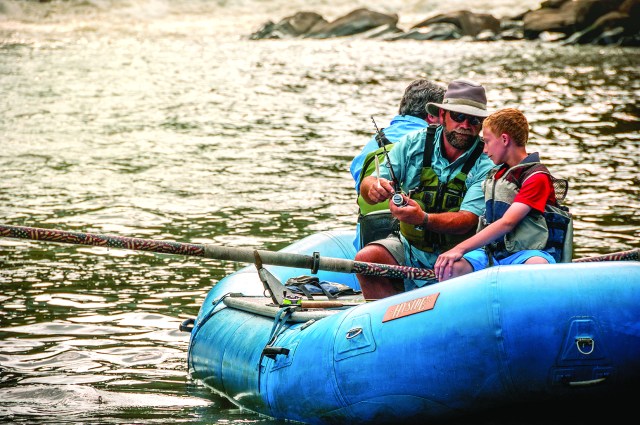
To avoid the summer crowds at these popular parks, consider a road trip to the less-traveled New River Gorge National Park and Preserve in West Virginia. A highlight of a visit to one of America’s newest national parks is the chance to paddle the New River. The upper part of the river is great for tweens with its long, calm pools and mostly gentle rapids. The park also has hiking and biking trails for all ages and abilities, plus scenic drives and activities like fishing and camping that the whole family can enjoy.
Fishing on the New River. (Photo: The West Virginia Department of Tourism)
Ages 13-18
Rail Travel, Washington, D.C., and Europe
Seeing North America by train has been a family adventure almost since the transcontinental railroad was completed in 1869, and it’s still one of the most laid-back ways to get the pack on the (rail)road. For a long train trip, nothing compares to the Rocky Mountaineer, which has a new Rockies to the Red Rocks route between Denver and Moab, Utah, as well as Canadian itineraries connecting Vancouver to Banff National Park and Jasper National Park.
Another memorable rail journey closer to home is on Amtrak’s Ethan Allen Express, which departs daily from New York City on a journey through the scenic Hudson Valley and Green Mountains to Burlington, Vt., on the shores of Lake Champlain.
And if you’ve been waiting to visit the nation’s capital, this is the time. The newly renovated Smithsonian National Air and Space Museum, with exhibits focused on everything from the Wright brothers to future expeditions to Mars, may be the most kid-friendly museum in Washington, D.C., but it’s hardly the only one.
The National Zoo is famous for its resident pandas but also shares its conservation mission through daily presentations and animal exhibitions. Families will love the admission price, too; like all Smithsonian museums, the zoo is free, though passes need to be reserved in advance. The interactive International Spy Museum lets teens channel their inner James Bond (or the real-life CIA agent Sandy Grimes).
Kimpton’s The George Hotel on Capitol Hill makes a great base for White House tours and other D.C. explorations. The hotel’s First Family package offers discounts on second rooms and special kids’ amenities, and AAA members get up to 20% off the hotel’s best available rates.
These years are also ideal for creating core memories on a European vacation. Book a group tour for worldview-expanding encounters with art, food and architecture. Older teens will appreciate the history and culture of Europe’s treasures, not to mention plenty of opportunities for epic selfies in front of the most famous attractions throughout the continent.
18 and Up
Inspo for Traveling With Your Adult Children – and Their Children!
There’s a big side benefit of providing childhood travel memories – your kids may keep exploring with you as adults.
An all-inclusive family cruise has multigenerational appeal. Royal Caribbean’s Oasis class ships (the largest in the world) boast epic slides and zip lines for daredevils and low-key activities grandparents, parents and kids can enjoy together. There are many destinations and cruises that leave from homeports in the Northeast.
If active and adventurous travel is your family’s style, consider a small group tour, featuring immersive experiences at unforgettable destinations. Take your entire crew on a Botswana Family Safari or the Iceland Northern Lights itinerary, filled with hot springs, glaciers, volcanoes and maybe an aurora or two.
Turn your dream family trip into a reality. Take advantage of member benefits and savings when you plan with a trusted AAA travel advisor.
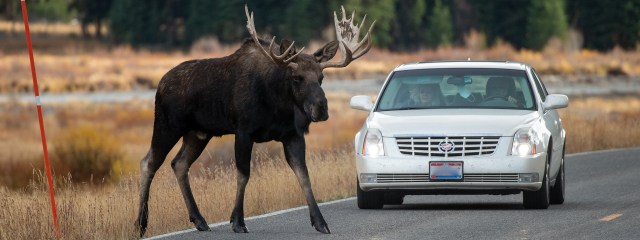
An estimated one to two million crashes between a motor vehicle and large animal occur every year in the United States, according to the Department of Transportation. Once thought to be strictly a problem in large, rural states, such crashes are becoming increasingly common in more urban areas as roads and other construction expand into previously undeveloped animal habitats.
Fortunately, there is an effective, well-supported solution to this growing problem: wildlife crossings. Unfamiliar? We don’t blame you. These roadway features are a still rare find, especially in the densely populated Northeast. So, what exactly are wildlife crossings and when can we expect to see more?
Wildlife-Vehicle Collisions by the Numbers
Before we get to the solution, let’s define the problem. If you live in an urban area, you may not be fully aware of just how prevalent WVCs are. The scale and scope of the issue, however, quickly comes into focus once you look at the numbers. A study from the Federal Highway Administration found the following:
There are approximately 300,000 reported wildlife-vehicle collisions per year in the U.S. Most researchers believe the actual number is much higher, however, as many such collisions are not reported for a variety of reasons. The FHWA estimates there are 1-2 million WVCs annually.
Roughly 5% of WVCs cause human injury, resulting in 26,000 injuries per year.
The vast majority (as high as 90% in some states) involve deer.
More than 90% of collisions with deer and nearly 100% of collisions with larger animals such as elk or moose result in vehicle damage.
The average cost of repairing a vehicle after colliding with a deer was estimated at $1,840. For collisions with elk and moose, the cost increases to $3,000 and $4,000, respectively.
In most cases, an animal that has been hit by a vehicle dies immediately or shortly after a collision.
What Is a Wildlife Crossing?
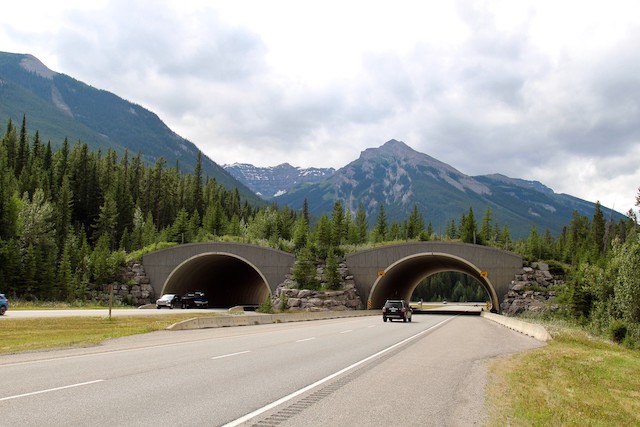
A wildlife crossing is a manmade structure that allows animals to safely cross over or under a roadway. It is designed to act as an extension of the natural landscape, connecting animals to surrounding areas that are otherwise cut off by the road. In doing so, it prevents habitat loss and fragmentation, as well as reduces the prevalence of VWCs.
There are many different types of wildlife crossings. Some of the most popular include green bridges, overpasses covered in grass and other vegetation, and culverts, tunnels and passageways running underneath a roadway.
A wildlife bridge in Canada’s Banff National Park (Photo: daveynin)
Do Wildlife Crossings Work?
The answer is a resounding yes. Research by Montana State’s Western Transportation Institute in 2009 found wildlife crossings used in combination with fencing reduced WVCs by 86%. More recently, a 2021 study from the U.S. Forest Service found that wildlife crossings nearly eliminated WVCs completely (a 97% reduction).
There are numerous real-life examples supporting these findings. Animal mortality dropped 93.5% in Florida’s Paynes Prairie State Preserve after a wildlife crossing was constructed. A combination of over- and under-passes along Colorado’s State Highway 9 reduced WVCs by 88%. Since completion of a wildlife underpass across Oregon’s Highway 97 in 2012, the roadway has seen more than a 90% drop in collisions with animals.
Similar success stories have been reported the world over, including Brazil, Mexico, Australia and the United Kingdom. In fact, the most oft-cited wildlife crossing is found just north of the border in Canada’s Banff National Park.
As visitation to the park surged in the 1970s, so too did traffic congestion on the section of Trans-Canada Highway running through the area. More motorists also meant more WVCs. To combat the growing problem, officials constructed several underpasses along the road in the 1980s. In 1996, the first wildlife crossing bridges were constructed.
Today, there are six overpasses and 38 underpasses along this section of the highway. Combined with fencing, they have reduced WVCs by more than 80%, including a 96% drop for deer and elk. As Western Transportation Institute researcher Tony Clevenger told Canadian Geographic, “This is Canada’s biggest conservation success story.”
The Future of Wildlife Crossings
Although wildlife crossings have proven to be highly effective, they are still underutilized. That should begin to change in the near future.
Included in the massive bipartisan Infrastructure Investment and Jobs Act passed last year is funding for a Wildlife Crossings Pilot Program. The program will allocate $350 million over five years to federal, state and local governments and agencies to construct wildlife crossings in the U.S. that reduce WVCs and improve habitat connectivity for animals.
It’s human nature to always be searching for – and awed by – the latest and greatest. That tendency certainly extends to the automotive world, where the best new cars get all the headlines. But there are some important lessons to learn if we reverse course and look at some of the worst cars in history.
There was a good idea hiding somewhere within all of these vehicles, but in each case those good intentions were betrayed by ulterior motives, fueled collectively by a calamitous combination of greed, frugality, ego and short-sightedness. The result is five of the worst cars ever.
DeLorean DMC-12
It may be strange seeing the DeLorean DMC-12 on this list of the worst cars in history considering its fame and popularity. But off the silver screen, the car fell far short of expectations.
Former General Motors executive John DeLorean touted the DMC-12 as the sports car of the future. With its gull wings and sleek metallic look, it certainly has the aesthetics to meet that boast. But behind that façade was a heavy, underpowered and overpriced vehicle.
Originally, the company expected to sell 12,000 cars per year. In the end, only about 9,000 vehicles were made during its two-year run and the company was shut down in 1982. Ironically, the DeLorean became iconic just a few years later with its prominent role in 1985’s “Back to the Future.” The movie franchise ensured that the car’s legacy would extend well past its seemingly destined fate as an automotive footnote.
The Yugo was a decades-old Soviet-era Yugoslavia automobile imported to the U.S. in 1985. The decision to sell the car in America was the brainchild of entrepreneur Malcolm Bricklin and was destined for failure from the start. In an interview with Car and Driver, Bricklin recalled tasking his employees to find the cheapest car in the world. They did so at a 50-year-old factory in Yugoslavia that was manufacturing a 30-year-old car. “We took this piece-of-crap car and within 14 months had set up 400 U.S. dealers and made 528 changes to the car,” Bricklin said.
Yugoslavia had been manufacturing the car for years. Bricklin’s plan was to spruce it up and bring to America. There was no amount of changes that could overcome the vehicle’s poor quality, however. The Yugo’s engine generated a measly 55 horsepower, making the car dangerous to drive on American roads. The car was notoriously unreliable (the rear window defroster was reportedly there to keep your hands warm when you needed to push the vehicle), had many parts made of plastic, and oddly enough, featured carpeting as a standard feature.
But for the people selling the Yugo, the car was all about one thing: profit margin. The vehicle only cost $2,000 wholesale and was sold stateside for nearly twice that. Consumers quickly realized that even $4,000 was too much for the Yugo.
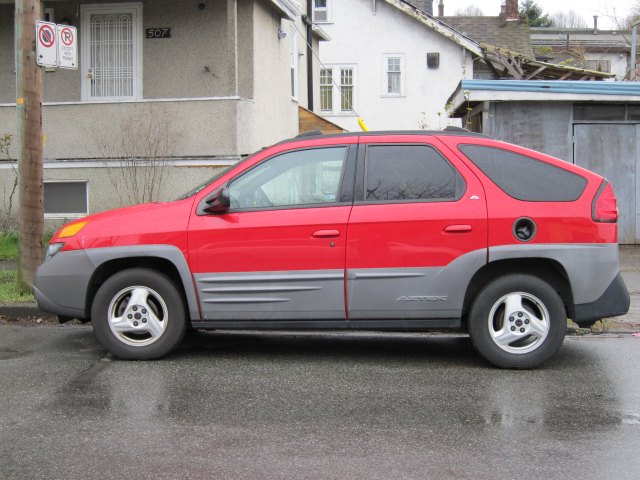
For as much grief as the Aztek got, it was actually at the forefront of what would prove to be one of the top automotive trends of the past two decades. When the car was first introduced in the early aughts, SUVs were surging in popularity and the idea of crossovers – vehicles with the space and power of an SUV combined with the on-street abilities of a sedan – was just beginning to take hold.
In fact, if you look the Aztek concept car, it doesn’t look all that dissimilar to some of today’s crossover models. Time magazine may have put it best, saying, “The shame is, under all that ugliness, there was a useful, competent crossover.”
Clearly, the idea behind the car was good, but the execution was not. The problem was that the Aztek was designed by committee. No singular, coherent vision took the lead and just about everybody got a say in the design process. Even the bean counters made their mark involved. GM accountants reportedly ordered the Aztek to be built on an existing minivan platform in order to reduce costs. This platform, however, was not long enough to hold the Aztek, forcing designers to create a box-like tail end.
The Aztek was in production all of five years, from 2001-2005. But showing that everything comes full circle, the car got a significant popularity boost when it was prominently featured as Walter White’s vehicle of choice in the uber-popular television show “Breaking Bad.”
While most of the cars on this list are here due to aesthetic design fails, poor craftsmanship or lackluster sales, several of the worst cars ever made were actually dangerous to drive. These vehicles had such fundamental mechanical and design flaws that they posed a serious risk to the occupants of the car.
Chrysler’s PT Cruiser had a unique look, which many people derided, but it’s most notable for its mercurial nature. The car was known to shut off in the middle of driving, completely out of the blue. The 1979 Oldsmobile Cutlass Supreme, meanwhile, had an engine that exploded when it made 90 horsepower.
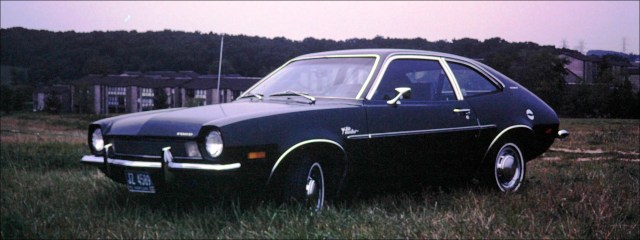
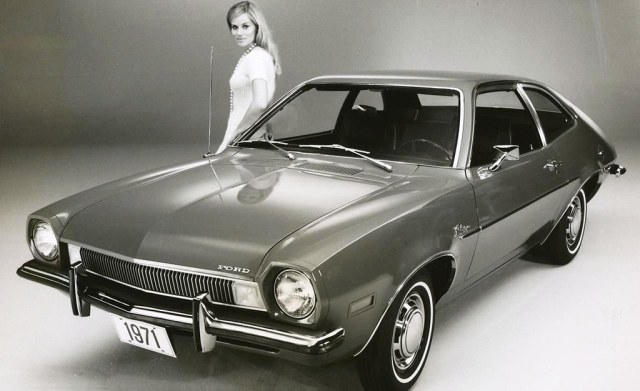
But the most infamously dangerous worst car in history is the Ford Pinto. The only feature that needs to be discussed about this 1970s vehicle is its fuel tank. The Pinto famously featured an exposed fuel tank. Cars involved in rear-end collisions, even at slow speeds, tended to burst into flames. Later on, the “Pinto memo” was publicized, which proved the company concluded it was cheaper to settle victims’ lawsuits ($50 million) than to recall and fix the cars ($120 million).
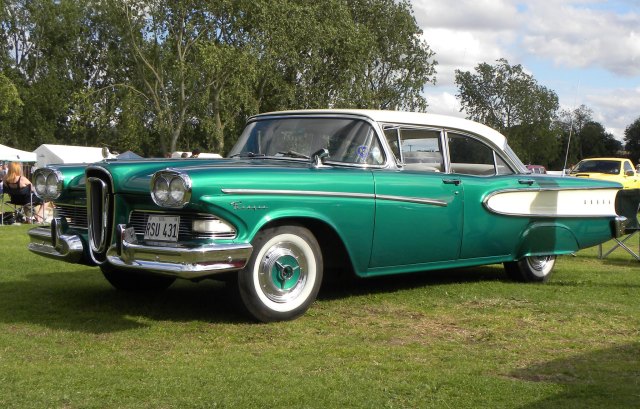
We’ve reached the pinnacle of the worst cars in history. For decades, the terms “automotive failure” and “the Edsel” have been all but synonymous. So what went so wrong?
In the mid-1950s, Ford came to the conclusion that it should expand its product line. Specifically, it needed a new, mid-priced brand to go in between its flagship Lincoln and mid-level Mercury. Studies predicted that “by 1965 half of all U.S. families … would be buying more cars in the medium-priced field, which already had 60% of the market,” according to Time magazine. And so the Edsel was created, named after Henry Ford’s son, no less.
It’s not so much that the Edsel was such a terrible car – although it certainly had its faults, namely its price. It’s that it suffered the unfortunate fate of being hyped up as the greatest thing on four wheels. Believe it or not, Ford booked an hourlong prime time television slot on CBS to unveil the car, claiming the broadcast day as “E Day.” “The Edsel Show” included performances by Frank Sinatra, Bing Crosby, Rosemary Clooney and Louis Armstrong. By this time, however, the push for compact cars was well underway. Just two years after its prime-time debut, the Edsel’s run was over after less than 120,000 were sold. Ford had estimated it could sell up to 400,000 cars a year. In total, the company spent roughly $350 million on the Edsel’s research, design, tooling and production facilities, the equivalent of nearly $3.2 billion in 2021.
To add insult to injury, while the Edsel was cementing its place as the biggest automotive flop ever, “The Edsel Show” was nominated for an Emmy.
What do you think are some of the worst cars in history? Let us know in the comments below!
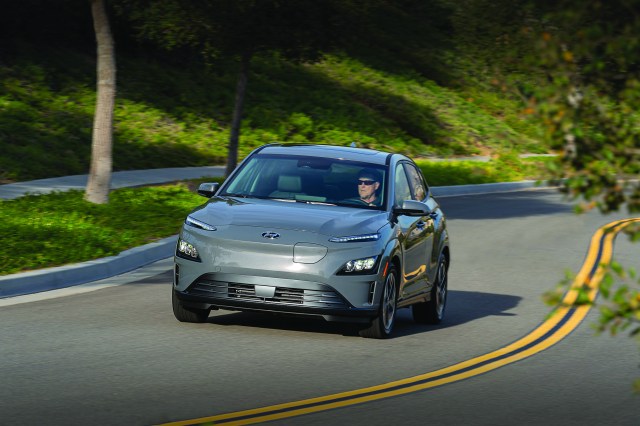
Buying an electric vehicle may strike you as years away. The truth is there are some appealing EV models out there right now – like the Hyundai Kona Electric.
The battery-powered version of this subcompact crossover SUV offers lively acceleration with 201 horsepower on tap, a lot for a vehicle this size.
More importantly, the EPA estimates the range at 258 miles on a full charge. While the gas-powered model may take you a little further on a fill-up, our experience showed this electric powertrain should get you through a couple of days before topping it off with electrons.
On the road, a low center of gravity and well-tuned suspension make the Kona Electric enjoyable to drive even on a curvy stretch of asphalt. Adjustable regenerative braking helps recharge the battery pack while driving and brings the vehicle to a stop simply by lifting your foot off the accelerator.
With all those details, the Hyundai Kona Electric could easily introduce EVs to a wider audience today.
Starting Price: $33,550
MPGe (city/highway): 134 city / 106 highway
Safety: N/A
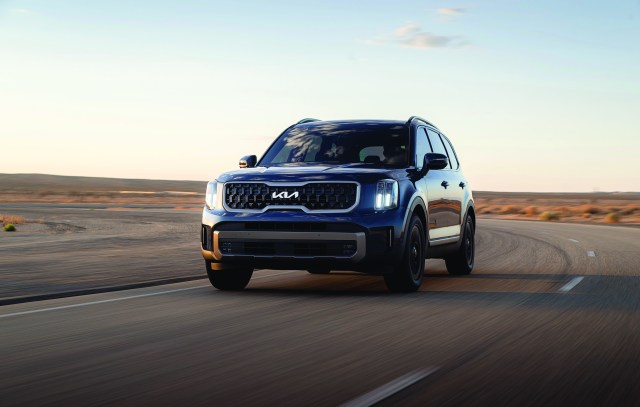
If the term SUV conjures images of rugged, four-wheel-drive models on backcountry trails, the restyled Kia Telluride will surprise you.
The mechanical bits of this sophisticated midsize crossover include a 291-horsepower, 3.8-liter V-6 that delivers strong acceleration. Front-wheel drive is standard, while all-wheel drive is available as an option.
Towing capacity of 5,500 pounds and a nicely tuned suspension make for an excellent road-trip companion.
Inside, the spacious eight-passenger cabin is done up in high-quality materials. Top trim levels, like the SX model we drove, could hold their own against luxury crossovers costing thousands more.
Seats offer adult-size comfort, even in the third row. Folding those rear seats down gets you a healthy 87 cubic feet of cargo room.
Add an impressive list of high-tech features and options and the Kia Telluride will change your mind about what an SUV can be.
Starting Price: $35,690
MPG (AWD): 18 city / 24 highway
Safety: N/A
Looking for a new ride? Check out more car reviews at AAA.com/TestDrive.
Have you ever felt the urge to see something brand new? Some people were just meant to explore. For Women’s History Month, we’re celebrating these famous female explorers and adventurers, who saw the world and broke barriers while doing it.
Jeanne Baret (1740 – 1807)
When Jeanne Baret’s lover, botanist Philibert Commerson, was invited on an expedition by Louis Antoine de Bougainville to circumnavigate the globe, the couple decided that Baret would disguise herself as a man to work as Commerson’s valet. At the time of the expedition, women were prohibited from sailing on French navy ships. Commerson and Baret shared a cabin on the ship, which allowed Baret to keep her secret safe. Baret and Commerson did their botany work together, collecting and cataloguing samples from the different places the expedition visited.
Baret’s secret wasn’t discovered until months into the trip, though there are several different accounts of how exactly the discovery occurred. Baret and Commerson left the ship for good when it landed on Mauritius, in the Indian Ocean. Some years later, after Commerson passed away and Baret married a French Army officer, she returned to France and completed her circumnavigation.
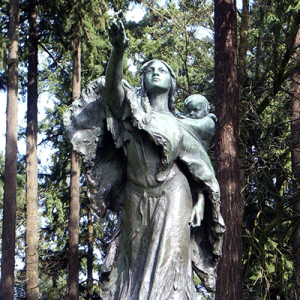
Statue of Sacagawea by sculptor Alice Cooper, unveiled in 1905.
Sacagawea (1788 – 1812)
One of the most famous female explorers, Sacagawea was a Lemhi Shoshone woman who famously aided Lewis and Clark on their expedition when she was only 16. She was invaluable to the expedition as a guide, naturalist and translator as they explored the Louisiana Territory. She even rescued vital journals and documents when they fell into a river (later named the Sacagawea River). Unfortunately, Sacagawea’s story is a bit more complicated than what most people learn in school.
She was the child bride of Quebecois trapper Toussaint Charbonneau, who purchased her from her previous captors when she was just 13. Charbonneau was the one who brought Sacagawea on the expedition. She had given birth just a few short months before, and carried her infant son with her on her back. While Charbonneau was paid handsomely for his part in the expedition, Sacagawea was never compensated. Years after the expedition, William Clark adopted Sacagawea’s son, Jean Baptiste Charbonneau, and after her death, adopted her infant daughter, Lisette Charbonneau.
In the early 20th century, Sacagawea became an icon for American suffragettes, who were searching for historic female figures to attach to their cause and saw her as a symbol of female strength, perseverance and independence.
Isabella Bird (1831 – 1904)
Isabella Bird was a British writer, traveler, photographer and naturalist who was first encouraged to travel by a doctor, who thought it would cure her insomnia and depression. She wrote fondly of Hawaii – where she climbed Mauna Kea and Mauna Loa – and Colorado, where she explored over 800 miles of the Rocky Mountains. Later, she traveled through Asia, seeing countries like Japan, Singapore, Korea and Vietnam.
When her husband, John Bishop, passed away, Bird inherited a large sum of money and traveled to India, where she built the John Bishop Memorial Hospital. She continued to write and travel all her life, and even became the first woman to be elected Fellow of the Royal Geographical Society.
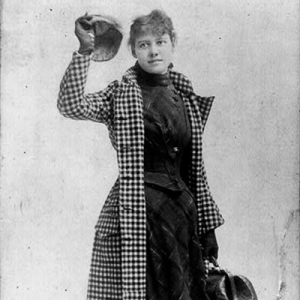
Nellie Bly (1864 – 1922)
Born Elizabeth Jane Cochran, Nellie Bly was always on the lookout for a good story. In 1885, when The Pittsburgh Dispatch published a misogynistic column titled “What Girls Are Good For,” Bly responded with an infuriated (and extremely well-written) letter to the editor. The Dispatch not only published her response – they offered her a job.
Bly became a pioneer in the field of investigative journalism, reporting on the lives of factory workers and briefly becoming a foreign correspondent in Mexico. After she moved to New York City and began working for the New York World, Bly went undercover as a psychiatric patient to report on the Women’s Lunatic Asylum on Roosevelt Island. Her resulting report and book, “Ten Days in a Mad-House,” rocketed her to fame and caused the asylum to implement more humane practices.
In 1888, Bly decided to take a trip around the world inspired by the novel “Around the world in Eighty Days.” The world was hooked as Bly sent short dispatches and longer updates on her adventures throughout her journey. She completed the trip in just over 72 days – a world record at the time, solidifying her place in history as a famous female explorer.
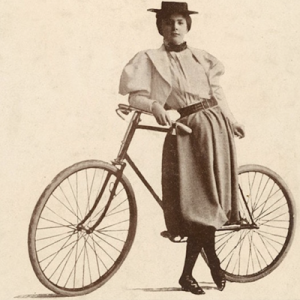
Annie Londonderry (1870 – 1947)
Born Annie Cohen Kopchovsky, Annie Londonderry was the first woman to circumnavigate the globe by bicycle. Londonderry’s trip, which lasted from 1894 to 1895, happened during a time when bicycles were all the rage and women’s clothes were finally versatile enough for women to ride them easily.
Londonderry was a Jewish Latvian immigrant to the U.S., and she hadn’t even ridden a bicycle until she decided to take the trip. She also had a husband and three children at home, but that didn’t stop her. She was ready to bike across the world.
Londonderry took sponsorships from bike companies, perfume manufacturers, and Londonderry Lithia Spring Water Company – which paid her $100 to adopt their name for her trip. At the completion of the journey, she was awarded a prize of $10,000. Afterward, she wrote stories and gave lectures on her various adventures.
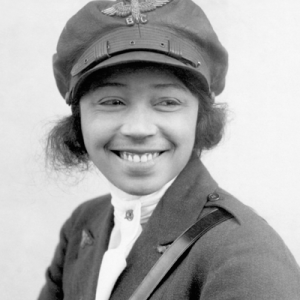
Bessie Coleman (1892 – 1926)
As a Black and Native American woman at the turn of the century, life in America wasn’t easy for Bessie Coleman. She applied to flight schools across the country and was rejected from each one due to her race and gender.
When she learned that French women were allowed to fly planes, she learned French to fill out applications to flight schools, and moved to France. She became the first Black woman and first Native American to earn a pilot’s license and an international aviation license.
Upon returning to the U.S., Coleman started performing in airshows as a stunt flyer. “Queen Bess” became an instant sensation in America and Europe alike. She suffered an accident in 1923 that left her with a broken leg and cracked ribs, but she healed and returned to air stunts in 1925. Coleman was known for standing up for her beliefs, refusing to dress in demeaning costumes or perform for segregated audiences.
In 1926, Coleman was killed when she fell from a plane piloted by her mechanic and publicity agent, William D. Willis. Willis also perished when the plane crashed soon afterward. Bessie Coleman’s memory has continued to inspire the female, Black, Native American and even French pilots who followed in her flight path.
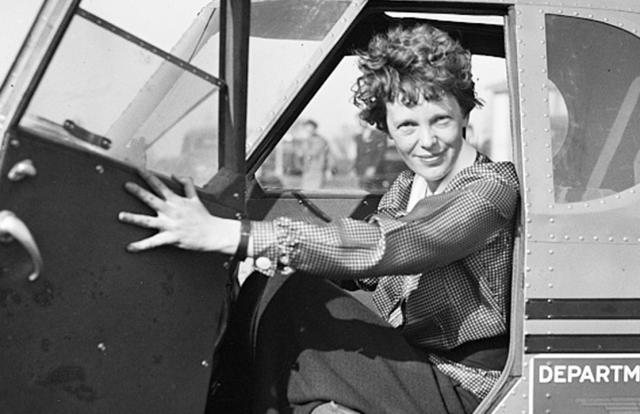
Amelia Earhart (1897 – disappeared 1937)
Ever since she first rode in a plane in December 1920, Amelia Earhart was dedicated to a life in aviation. She first achieved fame when she flew across the Atlantic in 1928 with pilot Wilmer Stultz. Though Stultz did most of the flying, Earhart was the first woman who had ever undertaken such a voyage.
Afterward, she decided to set some of her own records. In August 1928, she became the first woman to fly solo across North America. She also started competing in long-distance air races with other pilots. She became active in the Nintety-Nines, an organization supporting women in aviation, eventually becoming their first president.
In 1932, Earhart became the first woman to complete a nonstop solo transatlantic flight. After racking up several distance, speed and solo flight records, she began planning for her world flight in 1937.
Earhart planned to become the first female aviator to circumnavigate the globe. Accompanied by navigator Fred Noonan, Earhart took off from Oakland, California on June 1, 1937. They stopped in New Guinea from June 29 to July 2 before taking off once more. They were never seen again. Amelia Earhart and Fred Noonan disappeared somewhere on their way to their next refueling stop on Howland Island.
Earhart was a trailblazer all her life – not only for women, but for aviation as a whole. She helped popularize the concept of commercial flights and inspired female pilots for generations to come.
Aloha Wanderwell (1906 – 1996)
Born Idris Galcia Welsh, this famous female explorer was a Canadian-American writer and filmmaker who became the first woman to circumnavigate the globe by car when she was just a teenager. She traveled with Walter Wanderwell (who she later married) in a Ford Model T, and soon became known as the “World’s Most Travelled Girl.”
An increasing number of states, including several in the Northeast, are instituting laws banning the sale of new gas-powered cars. In each case, states are adopting some form of California’s Advanced Clean Cars II program, which requires stakeholders to start phasing out gas cars, SUVs and light-duty trucks in lieu of zero-emission vehicles. Under this framework, clean-energy vehicles will account for 35% of new vehicle sales beginning in 2026 and increase annually until reaching 100% in 2035. The law also institutes increasingly stricter pollution standards for vehicles with combustion engines.
It’s important to emphasize that these measures are not bans on all gas-powered cars. Motorists will still be able to drive and purchase used models of such vehicles. Instead, the laws prohibit the sale of new gas-powered cars.
Here are the local states that have announced such legislation.
Massachusetts
In August 2022, Governor Charlie Baker signed the Clean Energy and Offshore Wind act into law. The legislation included a stipulation that if California bans the sale of new gas-powered cars, so too would Massachusetts. Later that month, the West Coast state did just that, triggering Massachusetts to adopt the same regulations.
New York
In September 2022, Governor Kathy Hochul announced a requirement for all new passenger cars, SUVs and pickup trucks sold in New York to be zero-emission vehicles by 2035. The measure is part of the state’s effort to reduce greenhouse gases 85% by 2050. Hochul simultaneously announced complementary initiatives, including electric vehicle infrastructure investments and zero-emission vehicle incentives.
New Jersey
In February, New Jersey became the latest state to introduce legislation banning the sale of new gas-powered cars starting in 2035. Governor Phil Murphy announced the measure as part of a broader environmental initiative that aims to transition the Garden State to 100% clean energy by the same time frame. New Jersey had previously set that deadline at 2050.
Here are some tips to help you get the most out of your puzzle playing experience. Good luck!
Since our members are the root of everything we do, your feedback is important to us. Let us know if you run into any issues while playing, or share your ideas for future puzzles by emailing us.
It’s March in New Hampshire. The grey sky threatens snow that will inevitably fall in a few hours. Despite this wintery omen, the buzz of spring is in the air and it takes the form of maple syrup. It’s Maple Madness, New Hampshire maple syrup season.
The entire state embraces the madness of maple sugaring season – typically from mid-February to mid-April, and with a choose-your-own-adventure New Hampshire maple syrup tour, you’ll immerse yourself completely. Winding roads overlooking scenic mountain views will lead you to cities and one-street towns alike, met by friendly locals and a lot of sugar in its various maple forms to power you through.
A quick drive from Manchester to North Woodstock is the perfect place to start your New Hampshire maple syrup voyage.
The Best of New Hampshire Maple Syrup
On the main drag of North Woodstock is a yellow, nondescript building, easy to overlook, but despite its simple appearance, it’s a must stop on your New Hampshire maple syrup tour. Inside of Fadden’s General Store & Maple Sugarhouse lie the secrets of sugaring passed on through the Fadden family for no less than five generations.
Fadden’s maple syrup is an award-winning sugarhouse, having won six Carlisle Awards from the New Hampshire Maple Producers Association and a Governor’s Cup for the best maple syrup in all of North America.
James Fadden, the current sugar master, believes that his sugarhouse excels over others due much in part to his attention to cleanliness. He cleans his equipment every single day. Further, he processes his sap daily, not leaving it to sit for any length of time in tanks. Fresh and clean wins it all.
Maple sugaring in action at The Rocks estate. (Photo: Chrissy Barua)
Down on the New Hampshire Maple Syrup Farms
Tucked even further into the majestic White Mountains is The Rocks, a sprawling estate in Bethlehem that boasts hiking trails and a Christmas tree farm, making it a year-round destination. However, since this trip is for all things maple, early spring is when you’ll want to visit to get the full New Hampshire maple syrup experience – learn the history of sugaring, help tap a tree and, of course, taste a sample or two. You may even get the VIP treatment with a horse-drawn carriage ride.
If all of that New Hampshire maple syrup talk is giving you the hankering for something a little more savory, mosey across the street to Adair Country Inn & Restaurant where you’ll be greeted by roaring fires, friendly faces, delicious food and drinks that pay homage to the ongoing maple festivities and a warm bed should you need a place to rest your head for the evening.
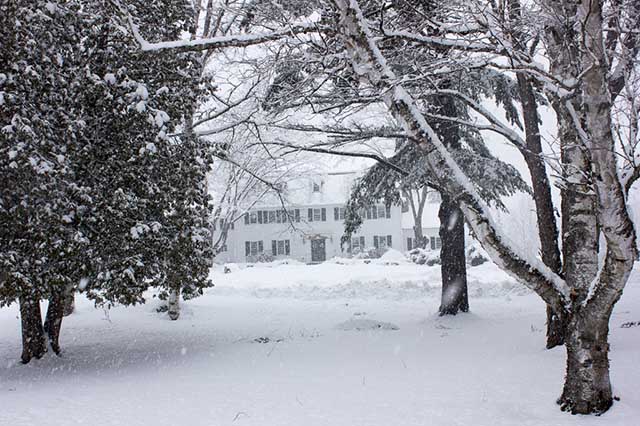
Adair Country Inn in Bethlehem, NH, hiding under a fresh blanket of snow. (Photo: Chrissy Barua)
Drink in the Sweetness
If live music is your thing, visit Contoocook Cider Company. They’ll lure you in with their seasonal Fireside Maple Cider and whatever local band is taking the stage when you stop by.
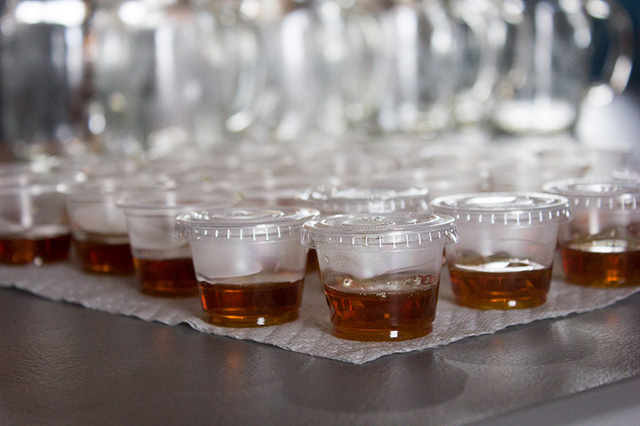
A taste of the season’s syrup. (Photo: Chrissy Barua)
Masters of the Sap
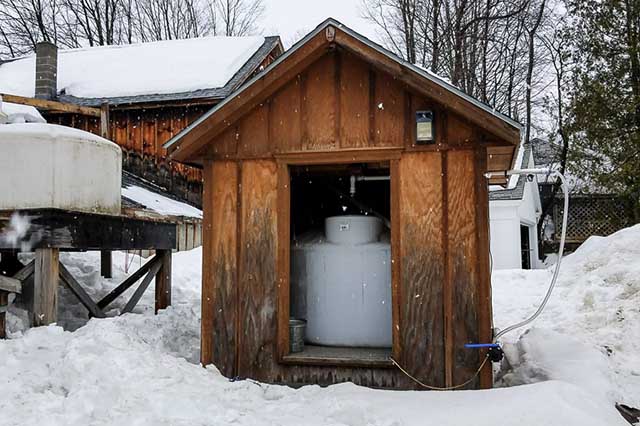
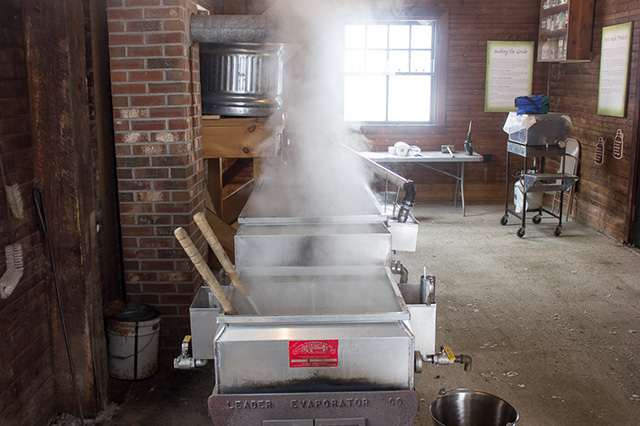
Whoever the sugar master, wherever the trees, making maple syrup follows the same process that it has for hundreds of years. Historically, sugar makers collected sap by hanging metal buckets from maple trees and emptying the buckets daily. Today, rubber tubing carries sap to a central repository where it’s boiled. The water evaporates, the sugar concentrates to 66.9% and it’s officially deemed maple syrup. As you drive from town to town, you’ll see tubing draped throughout the countryside, along roads and in backyards.
New Hampshire doesn’t party alone; Vermont and Canada boast similar festivities. Vermont celebrates the first crop of the season with Maple Open House Weekend March 25th-26th and April 1st-2nd, 2023. If you can’t make it out that early in the spring, St. Albans holds its Vermont Maple Festival at the end of the season from April 28th-30th.
Cross the border into Canada, where from Nova Scotia to British Columbia, getting your fix is always a short drive away. Whether you’re partial to New Hampshire maple syrup, or that from Canada, Vermont or elsewhere, there is no fundamental difference between syrup from one locale over another since the sugar content is standardized. What everyone can agree on is that maple syrup is delicious!
What’s your favorite way to use maple syrup? Pancakes? Over oatmeal? Tell us in the comments.
What could be better than browsing through some of the most unique small bookstores in the Northeast? Finding that special book and then continuing your day by exploring some of the most charming towns in the area.
Located next door to the Block Island post office, the Island Bound Bookstore is open year-round. Owner Susan Bush capitalized on this prime location, selling books for day trippers to take to the beach or pick up to pass the time on a rainy day. Discover the extensive collection of books, including those about the history of the island and plenty of books for children vacationing with their family.
Island Bound Book store has hosted several famous visitors including Frank McCourt and the great Walter Cronkite. Surround yourself with the fresh sea air and enjoy your book.
Located in the heart of the Green Mountains in a town that looks like a Norman Rockwell painting, you will find the Northshire Book Store.
The book shop is in a building that was the Colburn House Hotel for over 100 years. “Our store is full of nooks and crannies, making your search for just the right book a charming adventure,” said co-owner Nicole Ihasz.
Between the in-house books and their extensive online collection, the booksellers at Northshire have access to over 10 million titles. After finding the perfect book, check out their amazing array of gifts including art supplies, Mount Mansfield maple products and the interesting Angry Goat Pepper Co.
Sandwich is the oldest town on Cape Cod, home to the Heritage Museum and Gardens, the world-famous Sandwich Glass Museum and Titcomb’s Bookshop.
Titcomb’s features three floors of unique books and gifts. The main floor has a mix of today’s bestselling books; the top floor has used books, a remarkable collection of antiquarian books and old Life magazines; and the basement is packed with enough toys to fill Santa’s workshop.
Over the years, Titcomb’s has hosted visits by many celebrity authors including Jeff Kinney, Jodi Picoult and, the “Fonz” himself, Henry Winkler.
The Book Barn is unusual in the best way. Here you can wander around tiny gardens and a series of buildings that look like sheds stuffed with an inventory of 400,000 used books.
“We have regular visitors from Japan, Norway, France and India, which just shows how far people will go to get a bargain,” said Glen Shea, who has been selling books for over 20 years.
The Book Barn buys used books. Park your car, fill up a cart with your old books and strike a deal with one of the booksellers. Summer is the busiest season, when they sometimes purchase between 10,000 and 15,000 books a week, according to Shea.
River Run has the distinction of not only being a novel bookstore, but it will also help you with the tools to write your own book. In addition to books, owner Tom Holbrook sells used typewriters.
Customers bring in their battered old typewriters, and Holbrook repairs and sells them in his store. “Strange as it may seem, young people are the biggest buyers of the typewriters,” he said. “I had one 10-year-old girl who saved her own money to buy a typewriter.”
About a third of River Run’s books are used, with the balance being new titles. While searching the shelves, you pass through an arch made of old discarded books. It’s a special shop enjoyed by the residents and visitors to the seaside town of Portsmouth.
When it comes to describing the contents of Boston’s Brattle Book Shop, bookseller Zach Marconi said it best: “Here you can buy 10,000 books for as little as $1 each or buy one book that costs t$10,000.”
In a tiny plaza outside the bookstore are bins stuffed with used books at bargain prices. Upon entering the store, you can continue your browsing on three floors. The first two floors are filled with used books, and the top floor offers rare books for your library at home. The stock changes every day so you never know what you can find.
“I have customers who come into the store every day,” said owner Ken Gloss. “If somebody is home sick, they will call and find out what new books are in. When it comes to books, they don’t want to miss anything.”
In Cooperstown, you will find plenty of books about baseball. But at Willis Monie Books, you will find the largest stock of out-of-print baseball books in the country. Although customers come to this small bookstore searching for all types of books, including Americana, art, history, fiction and thousands of mystery titles.
The business sells used books only. Monie and his son, Willis Monie Jr., are members of the Antiquarian Booksellers Association of America. And if you can’t find that special book you’re looking for, Monie has over 100,000 books listed online that he can search for you.
Bath is known for its shipyard, which produced destroyers for World War II in as little as 17 days. Today Bath draws tourists to its Maritime Museum and unique shops like the Mockingbird Bookshop.
The cozy store offers a very diverse collection of books, greeting cards and stickers. “We get a great deal of business from tourists in the summer looking for that special gift,” said owner Terri Schultz. “We have all styles of literary gifts, art supplies and handcrafted gifts.”
One of the special services is offered by Schultz’s 8-year-old daughter, Olivia, who said: “I love hanging out in the back of the shop making bookmarks to sell at our store,.” Is there a better gift than a bookmark crafted by the child of a bookseller?
Back in my college days, I had a 45-minute (each way) commute to school. Being in my 20s, I spent my car-bound jaunts mostly listening to ’90s alternative radio and (shudder) cassette tapes from my favorite bands. How I wish iPhones and podcasts had been around back then. I would have tapped into the best news podcasts and learned so much about art, news, history, politics, etc., instead of amassing a near-encyclopedic knowledge of bands like Pearl Jam, Stone Temple Pilots and the Counting Crows.
For you lucky souls who now get to make long commutes with smartphones at the ready, here are some of the smartest and best news podcasts that will make your journeys worthwhile and keep you caught up on what’s happening in the world, from breaking news to new-to-you.
Host Marco Werman fleshes out news and human interest stories from around the globe – with cool tunes thrown in – in this weekday podcast. Recent shows touched on fast fashion entering the secondhand market, a radioactive capsule that went missing in Australia, the resilient Odesa Opera and more.
No more waiting for the top or half of every hour; now you can get your news whenever you want it from NPR, in handy five-minute chunks. It’s updated hourly, every day and every night. Yes – if you’re dying to find out what’s new at 3 a.m. on a Tuesday, NPR will sate your newsy appetite.
Just need to know the major news to start your day? The hosts of “Up First” are awake in the wee hours of the morning to collect the three biggest news stories that you need to know about – in an an episode that’s just around 10 to 15 minutes!
Los Angeles-based KCRW hosts this weekly roundtable discussion, which features – you guessed it – a guest from the liberal side of the political spectrum, a centrist and a guest with a more conservative bent. It’s one of the best news podcasts for gaining a well-rounded knowledge of current events, without the self-imposed digital news and politics bubble so many of us find ourselves immersed in these days. During the lively debates you’ll learn how all sides feel about hot current events.
True to its name, “The Daily” is a daily podcast from The New York Times. Every weekday, you can load up an episode and find out what’s going on in the world. Listeners can also enjoy the Sunday Read, a special type of episode that airs every Sunday and features a recent New York Times article in full. It’s a daily conversation with some of the best journalists in the business.
Looking for a more global perspective? “Global News Podcast” is a daily podcast that features the top stories from BBC News, about the biggest things that are happening all around the world.
If you want to know how the news is affecting the business world, this is the podcast for you. “The Journal.” from The Wall Street Journal covers all the latest news through the prism of what it means for business and the economy. In their words, it’s a podcast about “money, business and power.”
This weekly podcast makes learning fun again. On any given day, you might hear cohosts Tracy V. Wilson and Holly Frey talking about ghost ships, the latest in technology, the history of baking in America or the ancient stone city of Great Zimbabwe.
This podcast from the Smithsonian brings stories about technology, art and history to life. The anecdotes are pulled from the hallowed institution’s 154 million treasures, including comedian Phyllis Diller’s joke file – a cabinet that held 50,000 typewritten jokes that she’d perform during her standup routines – to the days when it was legal to send a baby through the mail. Check out the “Artist in Dissidence” episode, which chronicles the career of provocative Chinese artist Ai Weiwei.
From John Singleton Copley to avant-garde multimedia artist Pipilotti Rist (whose 1997 work is strikingly similar to Beyonce’s car window-thrashing “Hold Up” video), host Tyler Green (a historian and award-winning critic) explores all manner of art in his weekly one-hour show. Recent episodes have explored the works of Italian artist Medardo Rosso and the portraits of Gustav Klimt.
Hosts Stephen Dubner and Steve Levitt – the duo behind the best-selling “Freakonomics” books – spin yarns about politics, talent, technology and fascinating phenomena in this podcast. For example, some episodes have delved into the psychology behind bad decisions, why we still use cash in a debit card-laden society and 10 ideas to make politics “less rotten.” Ha!
Food, food, glorious food. Cynthia Graber and Nicola Twilley discuss everything from flexitarian diets to the growing problems facing cacao cultivation to how and when the first restaurant was invented. They even look into the popularity of seltzer. (Seriously – everyone is drinking it! Is there something I’m missing?) Episodes air every two weeks, and even if you’re not a gourmand you’ll find yourself fascinated with the topics.
What do you think is the best news podcast? Let us know in the comments.
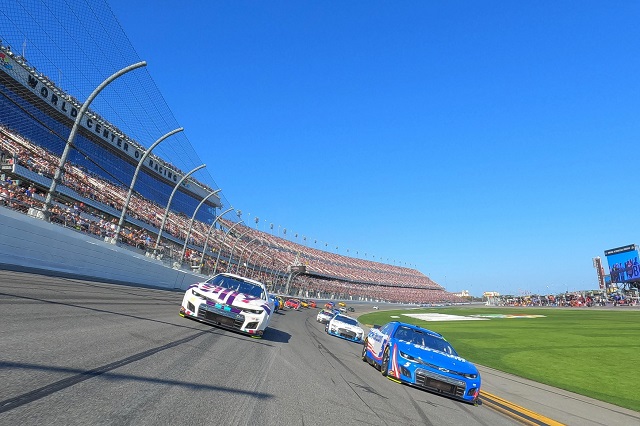
Each year, millions of spectators head to speedways across the country to see NASCAR events. Millions more tune in to watch the action on television. It’s a far stretch from when dozens of viewers lined the beaches of Florida to catch a glimpse of early NASCAR races and shows just how far the sport of stock car racing has come.
As the racing circuit celebrates its 75th anniversary in 2023, let’s take a look back at the history of NASCAR.
The history of NASCAR begins with a man named Bill France, Sr. A mechanic by trade, France owned an auto repair shop in Washington, D.C., until moving to Daytona Beach, Fla. in the 1930s. The area had a well-known racing scene that France joined as both a competitor and promoter. There was just one problem – these early races had no rules or regulations. France believed there needed to be a governing body. He organized a meeting at the Streamline Hotel in December 1947, and this was where the National Association for Stock Car Auto Racing (NASCAR) was born. France would go on to become NASCAR’s first president and was instrumental in the sport’s early growth.
NASCAR was officially incorporated the following year and held its first race on the Daytona Beach Road Course in February 1948. Drivers in these early races used the same cars you’d find on the street. Future Hall-of-Famer Red Byron took the inaugural checkered flag. He also won the first NASCAR season championship the following year.
NASCAR held its first Strictly Stock competition (known today as the NASCAR Cup Series) at the Charlotte Fairgrounds Speedway in June 1949. The most notable entrant was female driver Sara Christian, who became the first woman to race in NASCAR’s premier division.
The Daytona 500
As the sport continued to gain popularity, France quickly came to realize that the sandy beaches of Florida were not suitable venues for racing. They could not handle the growing crowds nor the increasingly powerful cars.
In 1954, France signed a contract with the City of Daytona Beach to build a proper racing track. The Daytona International opened five years later. The 2.5-mile track featured 31-degree highbanks, allowing the cars to reach higher speeds and giving fans a better view of the race. Speaking of fans, 41,000 of them packed themselves into the new venue to watch the inaugural Daytona 500. In a race that featured both hardtops and convertibles, Lee Petty was declared the winner 61 hours later, when officials watched a news clip of him eking out a 2-foot victory over his nearest competition.
NASCAR Goes National
In 1972, France handed over the NASCAR reins to his son, Bill France, Jr., who became the organization’s second president. Over the proceeding years, the younger France oversaw the next chapter in the history of NASCAR, one that saw the racing circuit evolve from a regional attraction in the Southeast to a popular sport across the country.
A major milestone in that process occurred when CBS aired the 1979 Daytona 500. It marked the first live, flag-to-flag broadcast of a 500-mile NASCAR event. Also helping the sport’s popularity was the emergence of star drivers. To this day, few, if any, drivers have come close to matching the greatness of Richard Petty. The son of Lee Petty, Richard first entered a NASCAR race in 1958. Over the next 34 years, he would collect a staggering number of records that still stand today, including most wins (200), most wins in a season (27), most Daytona 500 wins (7) and a tie for most championships (7).
Petty’s last race was the 1992 season finale at Atlanta Motor Speedway, which coincidentally was the first NASCAR race for future Hall-of-Famer Jeff Gordon. Equally talented and charismatic, Gordon took the sport by storm in the 1990s and helped bring NASCAR further into the mainstream in the 2000s. He became the first NASCAR driver to host “Saturday Night Live,” and by the time he retired in 2016, had racked up 93 career wins, which remains the third-most in the history of NASCAR.
Recent Milestones in NASCAR History
2010: The inaugural NASCAR Hall of Fame class is inducted. It features Bill France Sr., Bill France Jr., Richard Petty, Dale Earnhardt and Junior Johnson.
2013: Danica Patrick becomes the first woman to win the pole in NASCAR premier series, accomplishing the feat at the Daytona 500.
2016: Jimmie Johnson captures his seventh NASCAR premier series title, tying him with Richard Petty and Dale Earnhardt for the most championships in the history of NASCAR racing.
2021: Bubba Wallace wins his NASCAR Cup Series event at Talladega Superspeedway, becoming the first Black driver to win a race since Wendell Scott in 1963.
Are you ready for your close-up? Turns out, you were!
You got eye-to-eye with tiny insects and into the intricate details of flower petals, bird feathers and more for this Photo Session.
Thank You for Participating! (Session Closed)
Browse through the photos we received for the January/February close-up themed Photo Session in the slideshow below, and don’t forget to check our social media channels, where we will be sharing some of our favorites. Select photos may also appear in an upcoming issue of Your AAA magazine.
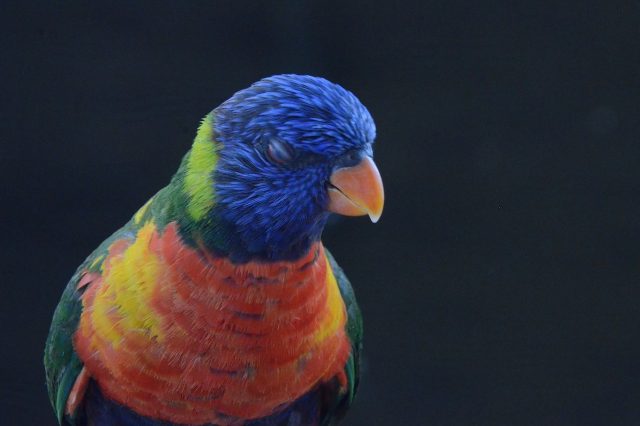
Lorikeet from the Rooster Cogburn Ostrich Farm. (Barbara Langan)
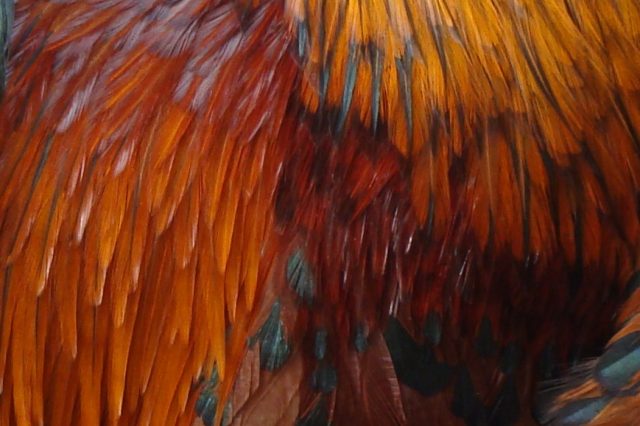
Rooster feather roundup. (Victor Olmstead)
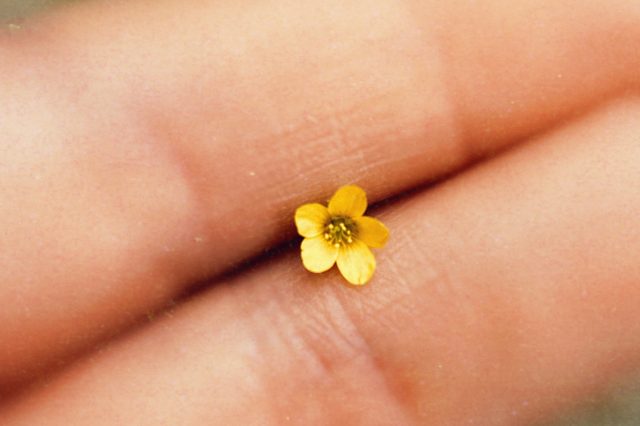
Yellow swirl. (Bearj Bahtiarian)
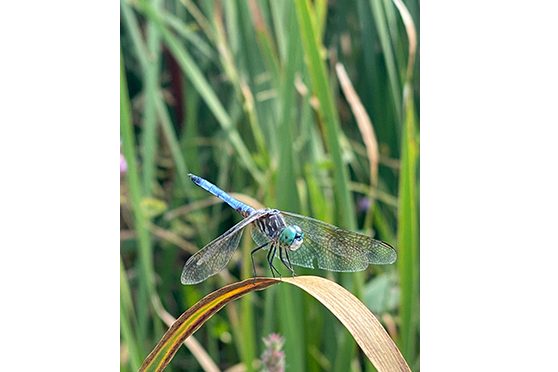
"This dragonfly appeared to laugh when I took their picture!" (Brian Guagnini)
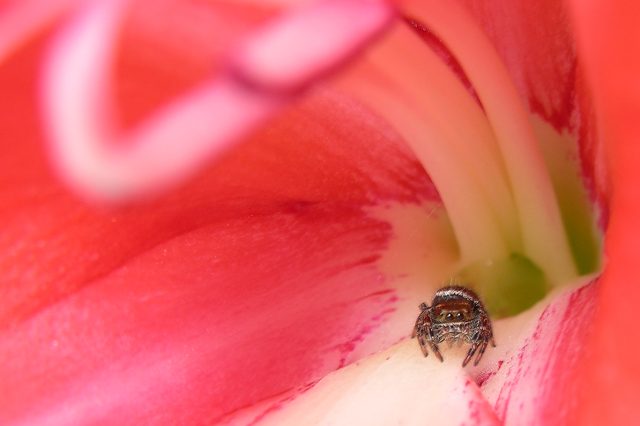
Spider in its Gladiola home. (Tove Abrams)
January Snowflakes. (Vicki Hammer Roskenkrantz)
It's the little things. (Veronica Vasconcelos)
January flakes on my sweatshirt. (Sharon Nikosey)
What lies beneath. (Robert Williams)
Frog in leaves. (Roberto Donofrio))
Summer dream. (Philip Hermann)
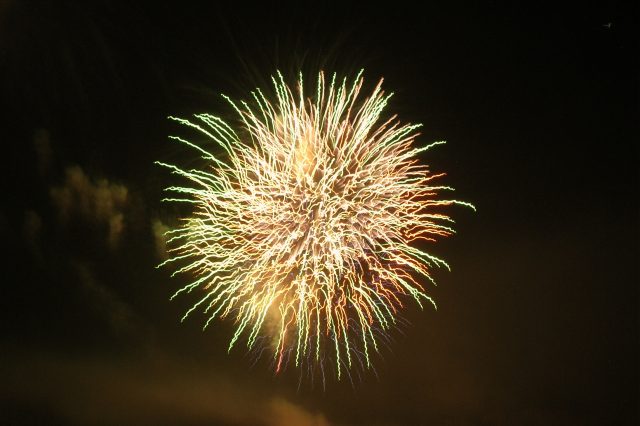
Fourth of July firework. (Patricia Soule)
Catching some rays. (Linda Zanetti)
Great Meadow where dragonflies land softly at eye level and fighter jets soar overhead. (Leah Klein)
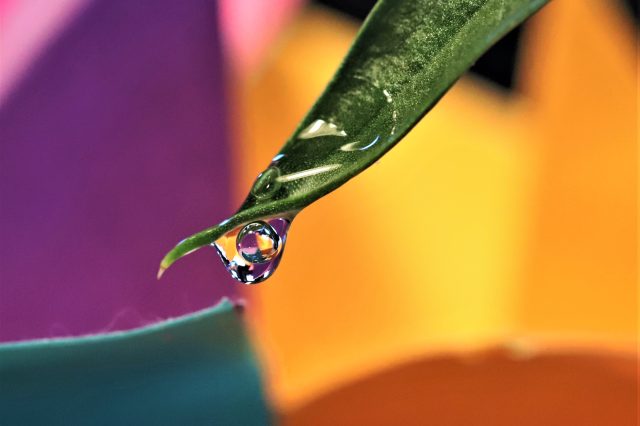
Glass rain, (Kourtney Sein)
Beautiful waterdrops. (Joyce Donovan)
Two tiny grasshoppers on a violet petal. (Joyce Collins)
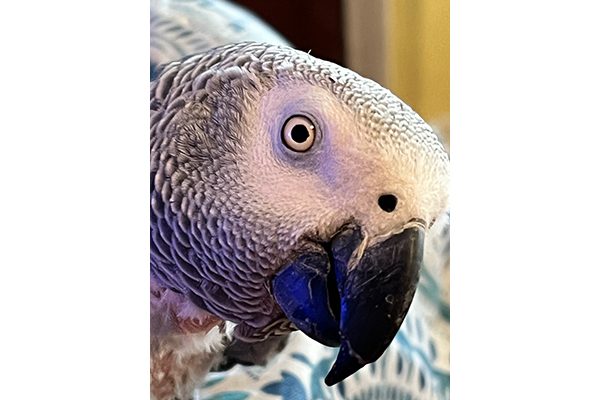
"Yes, I like jazz music very much!" (Jeanie Foley)
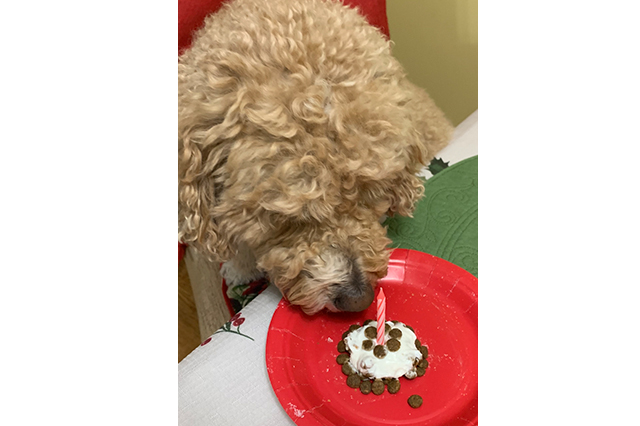
Happy Birthday, Emma! (Laura Valls)
Hibiscus. (Greg Gale)
Leaf in ice. (Ellen Minde)
Dog day afternoon. (Dorell Migliano)
Baby's breath. (Donna McWilliams)
Bees' chicken dinner. (Deborah Berg)
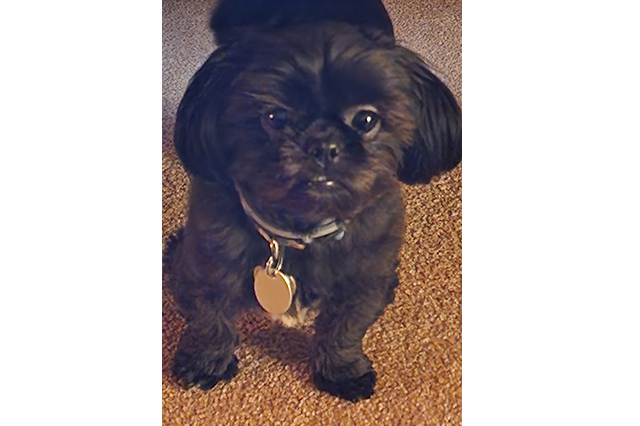
Milo: 2-year-old Shih Tzu (Michelle Cenedella)
Tools of imagination. (Susan Crane)
Bee with Zinnia. (Veronica Kane)
"I have my eye on you!" (Christine McDonough)
Inspired?
This macrophotography guide from Masterclass gets into the basics for beginners. If you’re serious about getting better close-ups, you will need a special lens for your camera. For those just starting out, a macro lens with a focal length of 100mm to 150mm is recommended.
Of course, you can also take some impressive close-ups with your phone with no special equipment needed. Smartphone cameras get better with every model, but if you don’t have the latest and greatest, a clip-on macro lens for your phone can help.
Fun activities to keep your little ones busy over winter break.
February 20, 2023
Even though it feels like the Christmas/New Year’s vacation just ended, most schools have another week-long recess in February around President’s Day. If you’re not heading out of town for the week, you might be struggling to think of fun things to do with kids over winter break, but don’t sweat it – we’ve got you covered.
Depending on the weather, the stir-craziness of your kids and the jealousy of watching your friends jet off to Disney or Universal, school breaks can be long and arduous.
You need all the ideas you can get. So, check out our list of ways to keep the kids busy this winter break. You got this!
Fun Things to Do With Kids Out of the House
Go stargazing (during the day and indoors!)
There’s nothing better on a long vacation home with the kids than to go to a planetarium and be reminded of the infinite cosmos and your tiny place in it. It can bring some much-needed perspective if the kids are getting a little restless. And you can even pat yourself on the back for finding a real educational experience on a non-school day.
Even if you head just one town over, the books, toys and programs could be vastly different. Especially if it’s late in the winter and you’ve already played with every toy in your neighborhood library. Be nice to the librarians and be honest that you are an out-of-towner. Friendliness can go a long way.
Check out a children’s workshop at a hardware store
If you want the kids to get their hands dirty and learn the fine art of making stuff, check out your local big-box hardware store on the Saturday of your winter break. Home Depot, in particular, has free workshops on Saturday mornings for kids. For that matter, ask if they offer anything during the week. You might get lucky.
Climb in an appropriate setting
Those with boys probably know this feeling better than most. When your kids are almost literally climbing the walls, why not bring them to a place where it’s actually appropriate to do so? Check out indoor rock climbing locations in Rhode Island, Boston, Manhattan and Long Island.
Things to Do With Kids at Home
Build up arts & crafts skills
Get creative. The beauty of art projects with toddlers is that skills aren’t required. Who cares if you can even draw a stick figure or not? The point is just to have fun and let your young ones explore their artistic abilities.
Don’t throw out those cardboard boxes
No one can find more uses for an empty cardboard box like a 4-year-old bored with his or her toys. It can be a spaceship, a log cabin, a boat, a transmogrifier (for those Calvin & Hobbes devotees) or anything else you and your kids can dream up. Plus, you can use some of your newfound art skills to gussy up the box.
Rotate your toys
On the topic of kids bored by an abundance of colorful plastic, have you ever noticed that the youngsters can get awfully overwhelmed by too many toy choices? Heck, your kids probably can’t even remember what they got for Christmas.
Take the opportunity to pack up a few storage bins of older toys and games and stick them in the basement or a closet. Wait a few months, break them out again, and your kids will be amazed with their forgotten playthings.
Drop things through a paper towel holder
Seriously, this simple activity could bring you a few precious hours of peace with little ones. Take an old cardboard paper towel holder, tape it to a doorjamb and put a plastic container underneath. Gather up all sorts of little Legos, doodads and game pieces and have the kids drop them through your makeshift slide. Obviously, the younger the kids, the longer this will fascinate them. If that’s too lame for you, check out this Pinterest page on paper towel roll ideas and go nuts.
Can’t stand the thought of being stuck at home again for the next school break? Book a trip with AAA Travel.
All along the Eastern Seaboard, historic hotels bring new life to old buildings. Along with great amenities they also have fascinating stories to tell about their past lives. Check in and check them out!
The Beekman Hotel
New York City
The Beekman is housed in lower Manhattan’s historic landmark Temple Court skyscraper, originally constructed in 1883. Edgar Allan Poe penned some of his work here during the 19th century, when it was the site of the Mercantile Library Association and a theater. This AAA Four Diamond-Designated historic hotel features exquisite architectural details, including a stunning nine-story Victorian atrium, as well as restaurants by celebrity chefs Tom Colicchio and Daniel Boulud. The Beekman is also close to downtown attractions like the One World Trade Center Observatory.
The Liberty Hotel
Boston
Housed in Boston’s former Charles Street Jail, built in 1851, the Liberty Hotel is a light-filled AAA Four Diamond-Designated hotel with a 90-foot-high atrium and soaring red brick walls. Check out the historic hotel’s details, like metal walkways and the courtyard that was the jail’s exercise yard. You won’t want to break out of the Liberty; its lux amenities include a lounge for hotel guests only, perched atop one of the catwalks. The hotel also hosts live jazz and blues music, art exhibitions, fashion shows and top DJs.
The Langham
Boston
The grand 1920s building that was formerly Boston’s Federal Reserve Bank is now the AAA Four Diamond-Designated Langham Hotel. Close to popular Boston attractions like Faneuil Hall and the Freedom Trail, the hotel boasts the Bond restaurant and lounge, with impressive 25-foot-high ceilings and crystal chandeliers, as well as an indoor pool and a spa.
Ocean House
Westerly, R.I.
This AAA Five Diamond-Designated historic hotel (and home to Rhode Island’s only Five Diamond restaurant) has hosted celebrities and bigwigs since it opened in 1868 as an oceanfront summer retreat. There’s plenty for guests to enjoy including a spa, food and wine classes, croquet, shuffleboard, a putting green and a private white-sand beach.
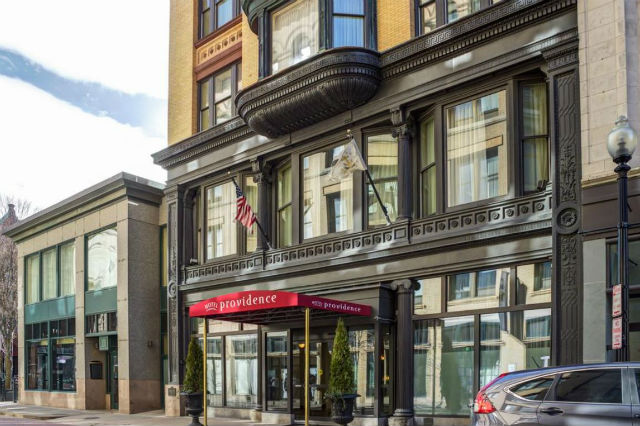
The Hotel Providence (Photo: AAA.com/Hotels)
Hotel Providence
Providence, R.I.
Another AAA Four Diamond luxury boutique hotel, Hotel Providence comprises two historic 19th-century buildings in Rhode Island’s lively theater district. One part of the hotel, the Lederer Building, was built in 1897 and housed the offices of musicians, clothing designer and artists, while the hotel’s Westminster Building once served as a dormitory for Johnson & Wales University students.
Lokal Hotel
Philadelphia
A boutique hotel in Philadelphia’s Old City, Lokal Hotel is situated in an historic building where soldiers’ hats were made during the Civil War. The hotel has six units and is designed for people who like privacy and exploring on their own, with no front desk. It’s smack dab in the middle of all the coolness that is the Old City, with boutiques, cafes and restaurants galore nearby.
The Sagamore Pendry
Baltimore
This historic hotel opened in Baltimore’s Fells Point neighborhood in 2017 in the renovated Recreation Pier building, built in 1914. Once one of the busiest points of entry for immigrants in the U.S., the building also served as the set for movies and TV shows. The hotel is decked out with cool modern art by local artists, and boasts an outdoor waterfront pool, an Italian restaurant and a whiskey bar.
The Line
Washington, D.C.
Looking for historic hotels with awesome architecture in the nation’s capital? In D.C.’s Adams Morgan Neighborhood, The Line occupies a 110-year-old neoclassical building, formerly the First Church of Christ, Scientist. The hotel showcases live music five nights a week, a live radio show broadcasting from the lobby and 3,000 works of art by women. Three restaurants serving a local and multicultural range of dishes, a coffee shop and two bars round out the offerings in this gorgeous historic building, which features vaulted ceilings and stained-glass windows.
The Kimpton Cardinal
Winston-Salem, N.C.
One of the coolest historic hotels in the Southeast, the Kimpton Cardinal occupies an art deco skyscraper that was once the headquarters of R.J. Reynolds Tobacco Co. and the architectural inspiration for New York City’s Empire State Building. While visiting this AAA Four Diamond-Designated hotel, check out the historic details, like the gilded tobacco leaf motif on the ceiling in the lobby and the art deco designs on the elevator doors. On the lower level you’ll find a modern recreation area with basketball courts, a bowling alley, shuffleboard, pingpong and pool tables and a tube slide.
Graylyn International Conference Center
Winston-Salem, N.C.
Built in the 1930s as the estate of Bowman Gray, former president of R.J. Reynolds Tobacco Co., Graylyn International Conference Center feels like your own private castle on lush, sprawling grounds. Be sure to search out the hotel’s elaborate Persian card room, and the library’s hand-carved 300-year-old oak paneling that once covered the walls in King Edward VII’s Paris office. Look for the bullet hole in the paneling that a spurned girlfriend is said to have created when she shot at the king and missed him. There’s also a fantastic indoor art deco pool, and an ice cream room on every floor where guests can indulge in free frozen treats any time of the day or night.
Have you ever stayed at a historic hotel? Tell us about it in the comments.
Caroline Goggin has been in good health her whole life. She exercises regularly, practices proper nutrition and in other ways makes wellness part of her lifestyle. So why, at only 27 years old, did she suffer a stroke in October 2019?
She struggles with that question, too.
“I have no prior history, no family history,” Goggin said. “I’m so mad at my body.”
She is fully recovered physically. Emotional healing has been more difficult.
“I fear every day that I will have another one. I worry if I wake up and my arm is numb because I slept on it,” she said. She’s returned to the hospital a few times because of these concerns.
Her doctors are still monitoring potential factors and believe a medication she was taking at the time was the main cause. She faults herself for not understanding the possible side effects of that drug. It’s one of the most important lessons she wants to impart to others.
Goggin considers herself lucky. Her husband, Travis, recognized the symptoms and called for medical help immediately. “He doesn’t give himself enough credit. He says he did what anyone would do, but not everyone would know what to do,” Goggin said.
And not all strokes exhibit the same. Hers had the tell-tale signs. She lost her vision, had slurred speech, her hands were shaking and the left side of her face drooped.
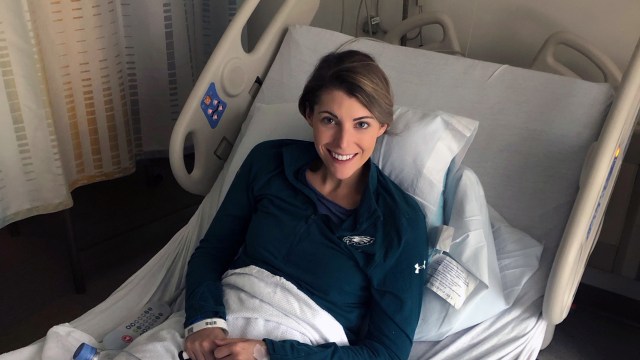
Caroline Goggin in the hospital just after her stroke in 2019.
She was treated at Norwood Hospital in Massachusetts and then Boston Medical Center. She returned home within a week. That same day she decided to use her story to spread awareness, starting with posts from her professional social media accounts.
As a news anchor for a New England TV station, she was able to reach a sizeable audience.
“The feedback was overwhelming,” she said. “I did not expect how wonderful people in this world could be,” Caroline said.
She was surprised to hear from other young stroke survivors. “So many of them go through this and don’t say anything because they are embarrassed, as if they did something wrong,” Goggin said.
They suffer the emotional effects in silence. She is their voice.
“I really want people to know that the emotional pain lingers long after you go through a stroke,” Goggin said.
She is committed to her cause, supporting any effort that increases awareness and prevention or assists stroke survivors and their families. The American Stroke Association, an arm of the American Heart Association, leads many of those efforts.
In February 2020, the association honored Goggin and other brave heart disease and stroke survivors at its Providence, R.I., Go Red for Women luncheon. About 700 people attended.
In April 2022, Caroline and her husband ran the Boston Marathon on behalf of Tedy’s Team, a major supporter of the American Heart Association. Former NFL linebacker Tedy Bruschi and his wife, Heidi, founded Tedy’s Team in 2005 when Bruschi suffered a stroke shortly after winning a third championship title with the New England Patriots and participating in the Pro Bowl.
At AAA Northeast, we recognize that Goggin is not our only member affected in some way by heart and brain issues. We encourage all of our members to come along with us to the Southern New England Heart Walk on June 10 at Bryant University in Smithfield, R.I., or in other ways support the efforts of the American Heart Association.
It’s time for a family vacation! But before the fun, there’s the planning. Of course, planning can be fun too if you take it step-by-step.
And you don’t have to go it alone. A travel advisor can help you book, score the best deals and answer all your questions along the way.
To ensure you don’t spin your wheels, here are our best tips simplify your family vacation planning.
1. Figure Out the When and Where
It’s a big, wide world out there, and there’s only 52 weeks in a year. Working around school and work schedules, lessons, practices and special events helps to narrow down your options, but remember, dates impact pricing.
The amount of time you can spend on vacation can also help to inform how far you’re willing to travel. For example, a family in New York is less likely to spend a narrow four-night window on a six-hour flight to Los Cabos with a two-hour transfer to their resort in Tulum. On the other hand, if they have seven nights at their disposal, Hawaii can (and ought to be!) in the cards.
2. Find Family-Friendly Resort Brands
Once you have a destination and time frame in mind, you’ll want to thinking about hotel brands. Do your research. You don’t want to fall in love with a property only to find out it’s adults-only. Some resort chains are more family-friendly than others with amenities tailored toward specific age groups. If you have teens and tweens, you’ll probably want to look for age-restricted lounges and plenty of activities. If your kids are younger, you may want included daycare options and amenities like stepstools, mini robes, children’s menus and a splash pool.
3. Check for Special Promotions
Having a set list of hotel brands you’re interested in can help you refine your search for deals. Family-friendly resorts often launch promotions where children up to a certain age can stay – and sometimes even eat and play – for free, except for possibly taxes and fees. Some resorts may also have limited-time offers for adjoining or connecting rooms or sales on family suites. Look for these deals to get the most space for your rate!
4. Define Your Budget and Prioritize Vacation Value
Determine a budget range that works for your family’s wants and needs. A range will account for any fluctuations that you can expect to encounter for factors such as airfare, destination and time of year.
It’s also important to remember the value of your family vacation is determined by the memories you make, not the price you pay. Think about the items you want to save on, as well as where you’re willing to splurge. Small enhancements like room upgrades and dining experiences can make a trip.
5. Work With a Travel Advisor
We saved the best for last. By enlisting the help of a professional licensed travel advisor, you can keep the travel-planning legwork to a minimum. They’ll do all the research for you, plus fill in any gaps for questions you might not even think to ask. A travel advisor will:
Recommend the best time to travel to certain destinations.
Let you know about upcoming promotions, instant credits, airfare patterns, hotel policies and added values.
Book affordable and reputable airport transfers, so you don’t have to worry about finding a taxi to your hotel.
Choose from pre-vetted companies to make sure your tours and excursions are safe in every way.
Keep you up-to-date on the latest health protocols, guidelines and policies.
So what are you waiting for? Get in touch with a AAA travel advisorand starting planning your family vacation today.
What you want from your life insurance policy will likely change as you get older. Here’s a look at how your life insurance needs might evolve through every decade.
Life Insurance During Your 20s
As you might imagine, life insurance rates are lowest when you’re young. After all, you’re far less likely to be burdened with medical problems and don’t have a pressing need for coverage just yet. That all changes when you begin to accumulate assets and dependents.
Young adults in their 20s often have lots of affordable options that they will probably never have access to again. It’s highly encouraged to start looking into life insurance at this age, even if you don’t invest very much in it upfront. The fact that you have an established policy at these lower rates will go a long way toward laying the groundwork for your financial future.
During Your 30s
The need to have a financial safety net in place increases as you reach your 30s. By this point, more people have begun to start families and purchase homes, leaving more on the line if tragedy were to occur. Now is the time to begin or expand your policy according to your specific finances, taking into account lost income, expenses, debts and all future financial burdens.
While rates won’t be as low as in previous years, this is still a perfectly respectable time to start a policy. If you already have one, you might choose to add a second plan now or convert your term policy to whole. One popular philosophy dictates that you should buy at least 10 times the coverage of your annual income. Consider sticking as closely to this guideline as possible to fortify your family’s protection.
During Your 40s
This is the period in your life when having a life insurance policy starts to become a true necessity. In your 40s, most people have already begun to amass significant assets, and you’re still not too old to perhaps qualify for some decent rates. If you already have a plan, here’s when you definitely want to step it up according to your finances.
Therefore, how much you invest depends largely on your personal financial situation. Calculate the minimum amount of life insurance you should have by identifying the difference between your current resources and your expected financial needs.
In other words, your policy should equal whatever the amount of remaining funds you need to cover your income, expenses and debts (both current and anticipated). Just be sure to include a sizable margin of error.
During Your 50s and Beyond
Once you reach your 50s and beyond, your needs dramatically shift. As you enter the realm of senior citizenship, rates tend to skyrocket. Having a life insurance policy, of course, still provides the peace of mind you’ll especially crave as you get older, and in the short term, your policy could help provide coverage in the face of any lingering debts. Yet, because your life insurance policy is bound to be more costly now, you may need to adjust your plan accordingly.
If this is the case, you could opt for a term plan to find an affordable balance that can keep your policy active without harshly cutting into your resources. While they tend to be more expensive as you age, your life insurance plan could even be used to fund a trust or plan your estate’s future.
Looking to the Future
No matter how old you are, a life insurance policy is a worthwhile investment. Knowing your family’s finances will remain secure in your absence will more than justify the time, energy and money you put into it.
The value in getting started as early as possible can’t be stressed enough. Yet, even if you’re already in your later years, the benefits of having a robust life insurance plan are clear.
AAA insurance agents are happy to help with your life insurance needs. Reach out today.
When did you decide it was time to get a life insurance policy? Tell us in the comments.