Spring is here and that means that April showers will soon bring May flowers. While most people head inside when it rains there are many reasons you should head outside to capture the beauty.
Make the most of the next cloudy day with the photography tips below. Look through the photos submitted by members during our rain-themed AAA Photo Session for inspiration.
Thank You for Participating!
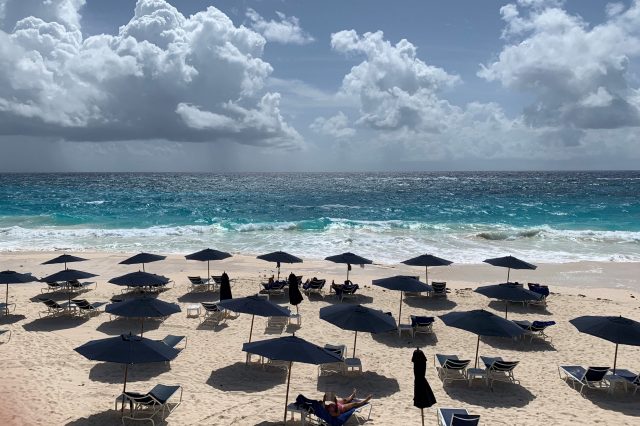
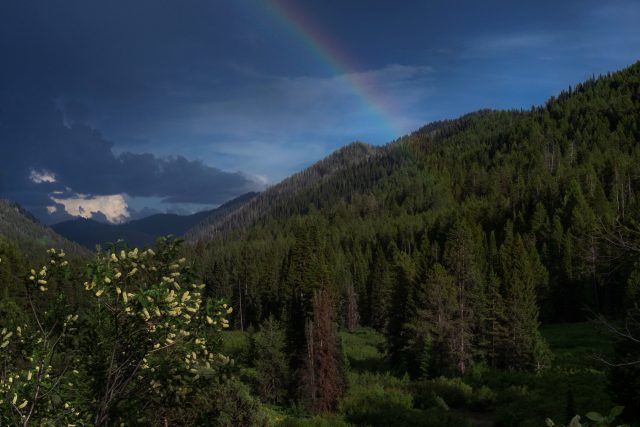
A storm in the distance. (Karen Galasso)
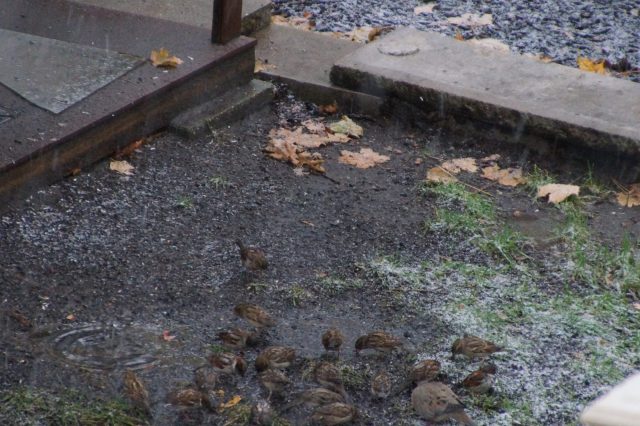
Enjoying the bounty. (Michael MacDonald)
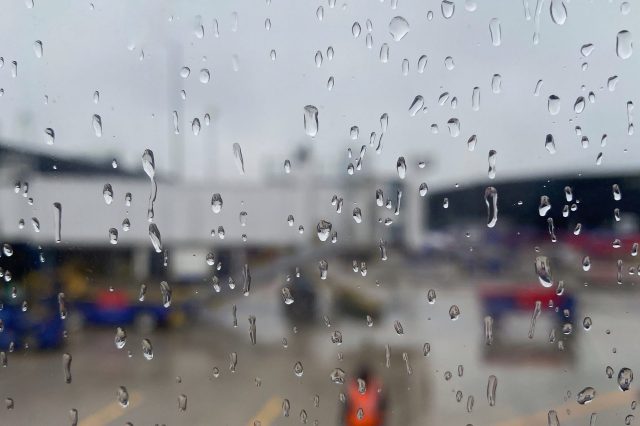
Rain on the plane. (Lucille Gallagher)
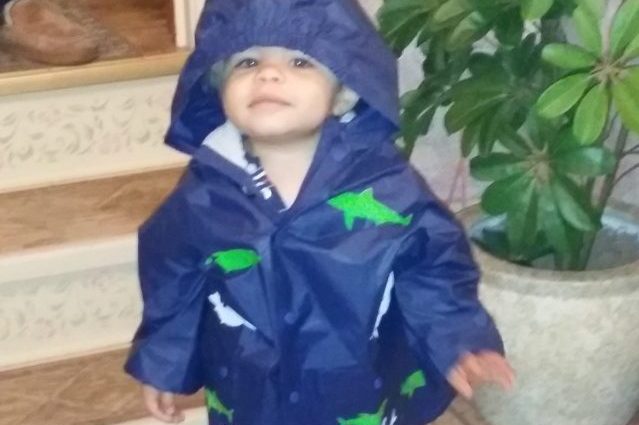
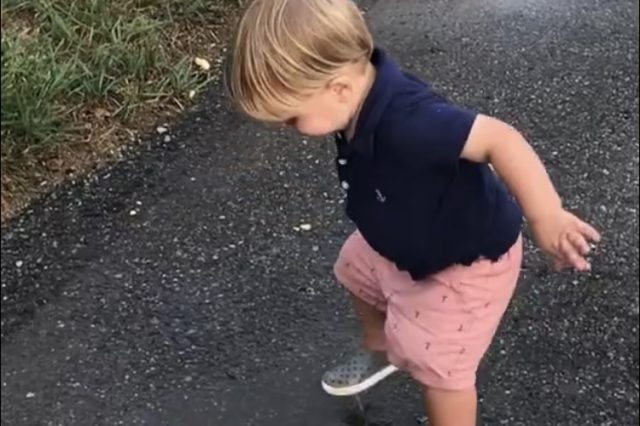
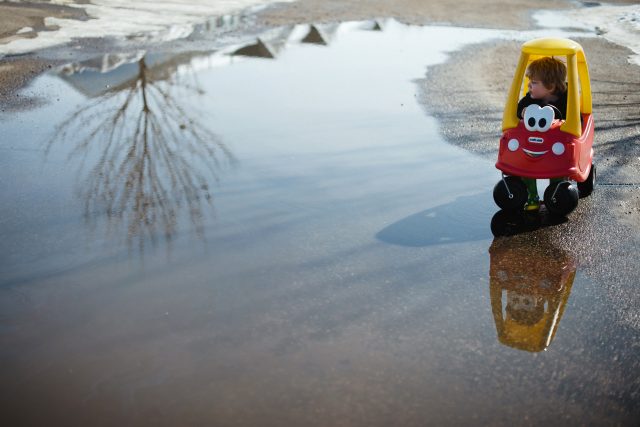
Getting ready to play in the puddles. (Linda Ferreira)
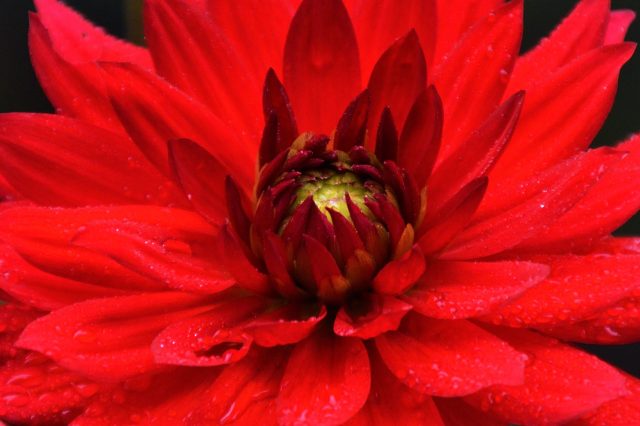
A red dahlia after the rain. (Jayne Hammel)
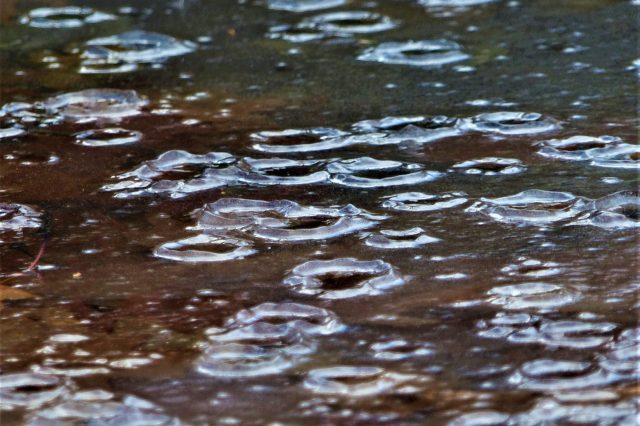
Freezing rain (James Bayette)
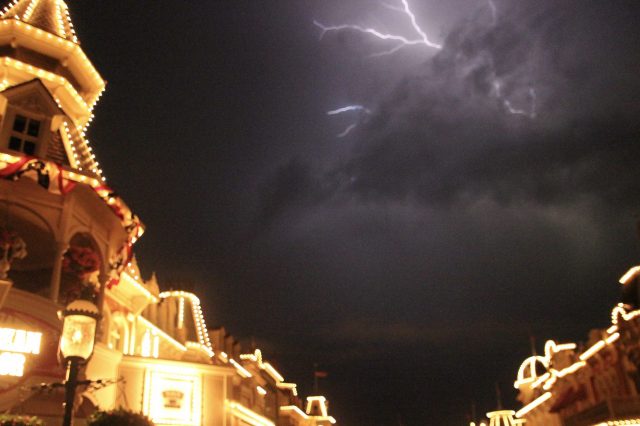
Lightning on Main Street. (Gregg Lentoni)
Early (Eileen Kotak)
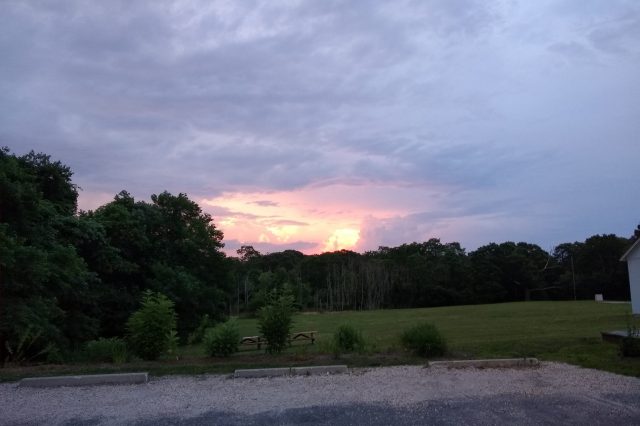
Eastern sky after rain reflecting sunset. (Deborah Boesch O'Toole)
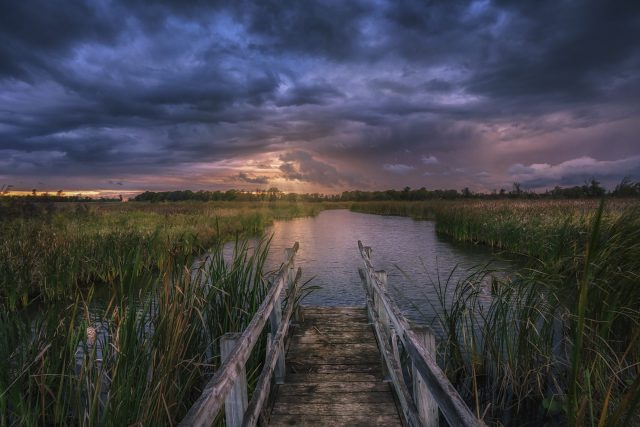
Looming storm (David Saias)
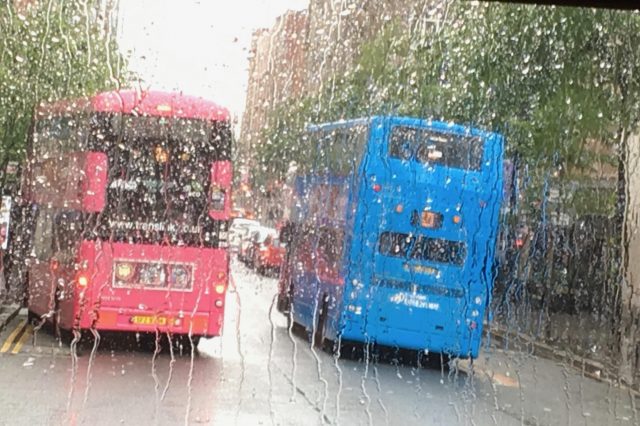
Belfast, Ireland (Barbara Ruvin)
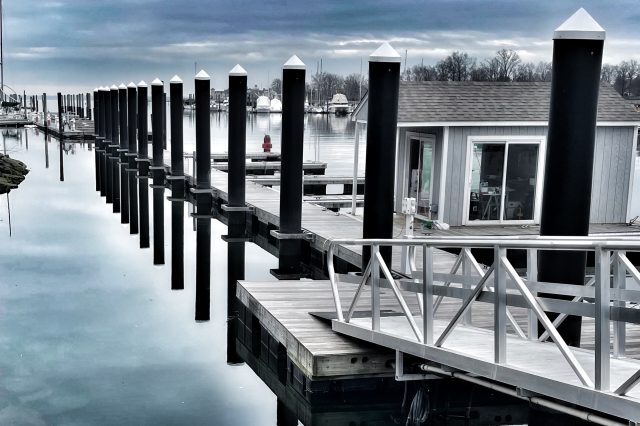
Calm after the storm. (Anne Marie Stevens)
April showers bring may flowers. (Alyssa Ugent)
Splashing good time! (Susan Lynch)
Distant storms (Steven Anthony)
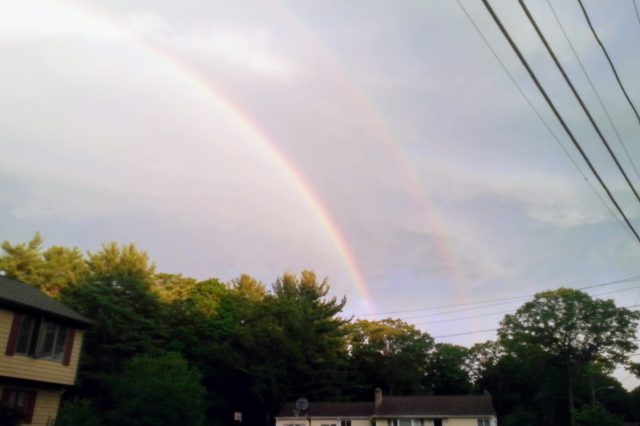
Pot of gold! (Ritch Sternbach)
Raindrops through streetlight on windshield makes an interesting tapestry. 6 a.m. in Gloucester, Mass. (Perry Persoff)
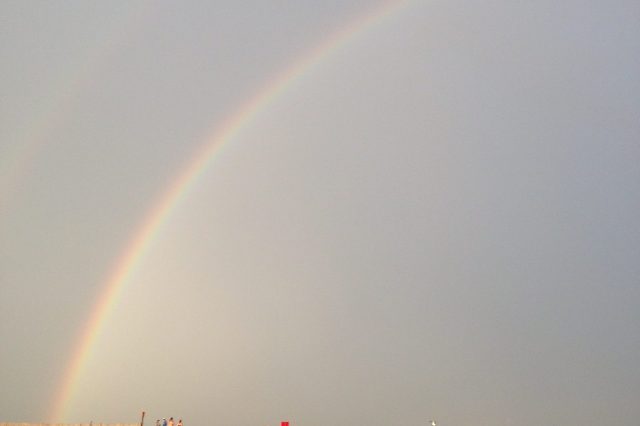
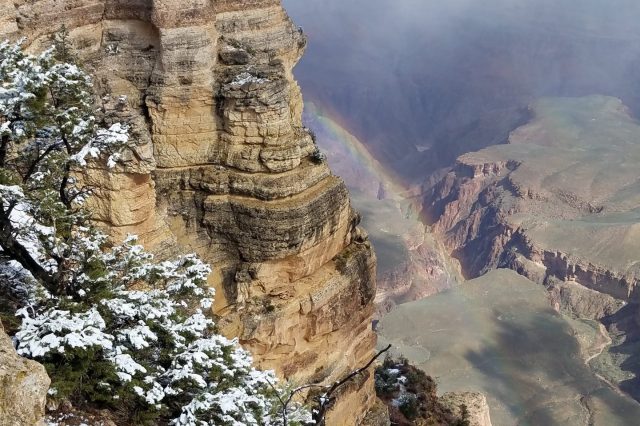
Rainbow formed by a snow shower in Grand Canyon. (Michael Marotte)
From ominous dark clouds to vibrant rainbows, your photos showcased the art in nature’s dreariest days. Browse through all of the rain photos we received in the slideshow above, and don’t forget to check our social media channels, where we will be sharing some of our favorites. Some photos may also be featured in an upcoming issue of Your AAA magazine.
Tips for Photographing Rain
(Photo: Beth Mancuso)
Wear A Rain Jacket
No, not you! Although you may want to keep yourself dry with one, too. There are rain jackets made for cameras called “rain covers.” For under $20, it allows you to take rain photos without worrying about water damage to your camera.
Watch the Weather
I always check the forecast every morning. If I see that rain is in the forecast, I make note of when it is predicted to start and end. Often before the heavy rain sets in the sky will fill with dark moody clouds that make for excellent dramatic pictures. As the rain slows down and the sun starts to emerge, look for rainbows in the sky.
(Photo: Beth Mancuso)
Capture the Aftermath
I love heading out after a fresh rainfall to search for puddles. If the light is right you can capture a great reflection. Also note the little water droplets left behind on plants and windows.
Use Props
Break out your umbrellas and rain galoshes! I think they help add to the storytelling aspect of an image. You can even head out in the rain with a subject if you have your rain cover on your camera.
Know Your Settings
To freeze the motion of the rain falling you will want to use a fast shutter speed. If you are somewhat of a beginner photographer I recommend using Shutter Priority Mode. In this mode you are just choosing the shutter speed of your exposure. You will want to set the speed to 1/500th of a second or faster. Learn more about camera settings with our cheat sheet.
(Photo: Beth Mancuso)
Check out past AAA Photo Sessions and stay tuned for the next one, coming soon.
Beth Mancuso is a professional landscape and travel photographer.
April is National Donate Life Month, a time when the power of organ, eye and tissue donation is recognized and celebrated. This topic is deeply personal for the nearly 10,000 New Yorkers currently waiting for a lifesaving organ transplant, but they are not the only ones affected by this issue. Additionally, there are thousands of families across the greater New York area whose loved ones gave the gift of life. Each of these donors is a hero and their legacy lives on in the lives they saved through organ donation.
Meet Kingston, a 7-Year-Old Hero
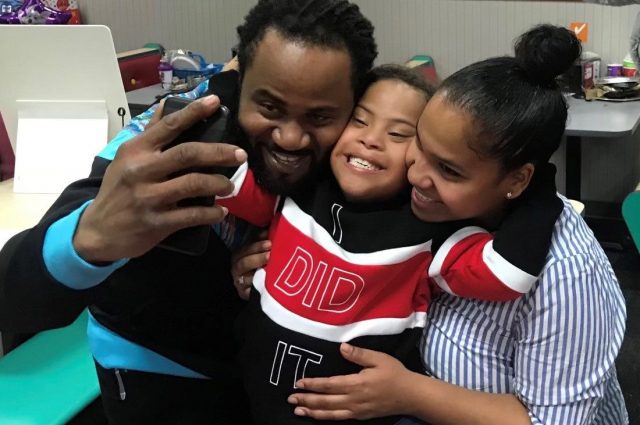
Kingston was a curious and happy boy who touched all who knew him. He was born with Down syndrome, but that didn’t stop him from living life to the fullest. A Bronx resident, he was the joy of his parents’ lives and a friend to his siblings and classmates.
Kingston tragically passed away in late 2019 at the age of 7 after falling from the window of his apartment building. On the darkest day of their lives, his parents, Rozzy and Steve, were asked if they would donate the young boy’s organs so that others may live on. Without hesitation they said yes, and Kingston went on to save five lives.
“If you believe in God then it’s OK to think about others, even in your worst moment,” Rozzy said. “Because that is the godly thing to do. There are people out there who don’t get the chance to see their kids reach even a month or a year. We had at least seven. Our son would have wanted to help others, so why not help?”
Late last year on the one-year anniversary of Kingston’s passing, his family hosted a memorial celebration for the young boy in the street outside of their home. Hundreds of people showed up to share memories and participate in a balloon release in his honor.
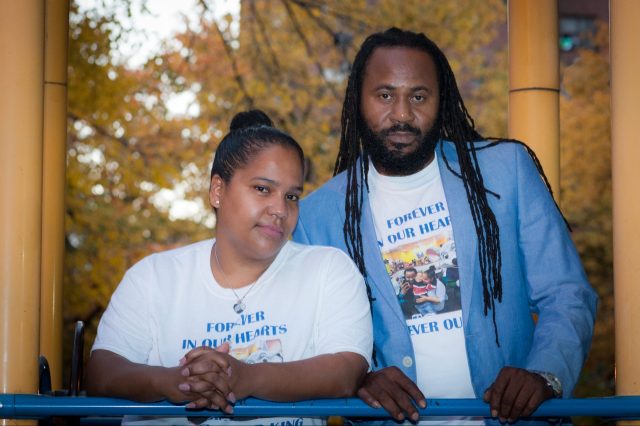
Kingston’s Parents, Rozzy and Steve.
“I want to keep my son’s legacy alive,” Rozzy said at the ceremony. “And I want to share how important it is for everyone to think about signing up to donate their organs.”
This Donate Life Month we remember Kingston and his incredible gift. April is a chance to raise awareness about the heroes of organ donation who gave the ultimate gift. It’s an opportunity to have important conversations and share your wishes with loved ones and encourage others to do the same. One person can save up to eight lives and leave a lasting legacy through those who live on because of their generosity. This April, consider being a hero like Kingston.
In honor of those who have donated, please take a few moments to learn more about organ donation and to consider registering as a donor.
Carmakers haven’t totally abandoned traditional automotive body-styles. Despite the demise of several high-profile nameplates, there are still a number of fabulous four-doors on the market.
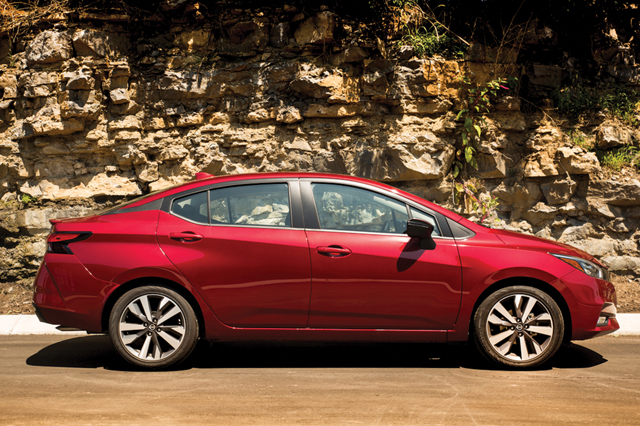
Once the staple of every carmaker’s lineup, relatively inexpensive small sedans have become few and far between. To remind yourself why they were once so popular, look no further than the Nissan Versa.
The third generation of this subcompact four-door has gotten longer, lower and wider than the version it replaces. Its new styling is also noteworthy, as it gives the Versa a sporty feel.
The same 1.6-liter four cylinder now puts out 122 horsepower, but it’s still the car’s weakest link. While I found this super-fuel-efficient powertrain was fine for around town, you’re going to want to give yourself plenty of room for open-road passing maneuvers.
Versa used to be America’s least expensive car, but the new version’s modest price increase gets you a nicer interior. Better still, you’ll find it filled with a list of desirable new standard equipment, including keyless entry with push-button starting, power windows/locks and several important advanced safety features.
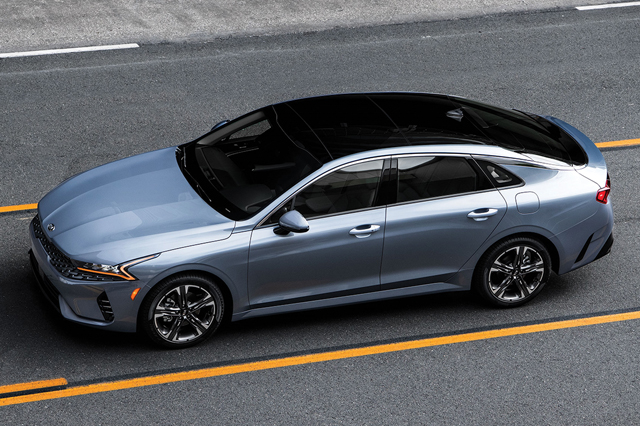
While four-door models have been dropped from automakers’ lineups left and right, there’s still a place for a good old-school midsize sedan. At least that’s what the folks behind the all-new Kia K5 are betting.
Of all its improvements over the Optima sedan it replaces, the K5’s most noticeable upgrade is its athletic good looks, with longer and lower proportions than the outgoing model.
Most versions, including the upscale EX I drove, get a 180-horsepower, turbocharged 1.6-liter four-cylinder engine that provides decent acceleration. If that leaves you wanting more, the 290-horsepower, 2. 5-liter turbocharged I4 under the hood of the performance-oriented GT trim level should prove plenty gutsy enough. All-wheel drive is also available for the first time, something to keep in mind if you have to motor through your share of bad weather.
Driving the K5 is a distinctly pleasant experience with confident handling and a comfortable ride quality.
Looking for a new ride? Check out more car reviews at AAA.com/TestDrive.
After weeks of earthquakes, Iceland’s Fagradalsfjall Volcano erupted March 19, drawing millions of pandemic-weary viewers to computer screens worldwide and thousands of visitors to the site.
You can watch a live feed of the event courtesy of RUV, the Icelandic National Broadcasting Service.
It’s the first time in more than 6,000 years that the volcano, located on the southwestern coast of the country in the Reykjanes peninsula, has erupted. The eruption can also be seen from space.
The volcano as seen from space, lower left. Credit: NASA’s Earth Observatory
You can also fly over the site, courtesy of Instagram user Bjorn Steinbekk’s stunning drone footage.
One late evening nearly 25 years ago, Shane Snowden was driving home on a rural California highway she had traveled hundreds of times before. She wasn’t under the influence. She wasn’t speeding or on her phone. Snowden was just driving along as her regular self. Everything was fine, until it wasn’t. As she rounded a curve, Snowden heard a thud unlike any other she had heard in her life. Before she knew it, she saw a young man sprawled across the hood of her car before rolling over the windshield and over her car.
The teenage bicyclist died instantly. Snowden was found not at fault, but for more than two decades, the experience has remained engrained in her heart and mind. It’s why she has worked tirelessly to ensure her story does not become someone else’s. In recent years Snowden has begun speaking publicly about the experience. To help spread the word about the importance of safe driving, Snowden founded The Crash Project, an organization that aims to encourage mindful driving and support for safety initiatives.
“There are a lot of loved ones telling their stories and they do a lot of good,” Snowden says. “My thought was, what if people thought about car crashes not only around how it feels to have a loved one die? What if we talked about another piece of that – how it feels to kill somebody as the driver? That’s something a lot of people have not had the chance to think about. They haven’t heard from drivers who’ve killed. That’s why I try to tell my story and speak out about road safety.”
While traffic fatalities have dropped over the last few years, pedestrian deaths are on the rise. In 2019, more than 6,500 pedestrians were killed in the U.S., the most since 1988. The pandemic has only further emphasized the need for a change in driver behavior and attitude. The number of traffic fatalities in the U.S. increased last year despite a significant drop in number of miles driven by residents. The National Safety Council estimates that more than 42,000 people died in car crashes in 2020, an 8% increase over the previous year and the most since 2007.
Snowden is still hopeful that change on the roadways will come despite the sobering statistics. She points to the widespread acceptance of safety measures such as seat belts, child restraints and designated drivers, all of which were not commonly used just a few decades ago. “I do believe people can change. I believe drivers can change. One driver at a time, driving differently, day by day, drive by drive.”
If you’re looking for a nearby escape, have you considered New Jersey? Whether you prefer a relaxing day on the beach, the heart-pumping fun of an amusement park or exploring art, culture and history, the Garden State has a little bit of everything. Take a trip and enjoy one of the following weekend getaways in N.J.
Note: Due to the ever-changing nature of the COVID-19 crisis, please see official websites before visiting to check for restrictions or closures.
The oldest seaside resort community in the country, laid-back Cape May is home to beautiful beaches and year-round attractions. Find Southern hospitality during your weekend getaway in N.J. at the AAA Four Diamond Rated bed and breakfast, The Southern Mansion, built in 1860, like much of Cape May’s historic buildings. Attractions including the Cape May Winery, Washington Street Mall, Cape May County Park and Zoo all provide options for a fun family weekend exploring South Jersey.
College towns like Princeton, home of Princeton University, aren’t just for students – the arts and culture scene makes for a great getaway at any time of the year.
When you’re not strolling through one of Princeton’s museums and gardens, or touring the university’s campus, you could be trying artisan ice cream at The Bent Spoon. History buffs can also enjoy Princeton, the location of the first sessions of the Continental Congress, and its many historical sites and buildings, like the Princeton Battlefield State Park or Rockingham, where George Washington stayed during the Revolutionary War.
The “garden of the Garden State,” the New Jersey State Botanical Garden at Skylands in Ringwood, is perfect for a romantic weekend getaway, and among one of the best day trips in N.J.
In addition to the lovely gardens and 1,000 acres of woodlands for you to wander, there’s also the Skylands Manor, a beautiful granite Tudor revival mansion. Staying in the manor will make you feel as if you’re living in a European castle, and the pampering you’ll receive by the staff will make you feel like royalty. Couples will enjoy the chance to live in the lap of luxury for the weekend, while day trippers can tour the manor and gardens or take a family hike.
The first blueberry was cultivated in Whitesbog Village, a historic town in Brown Mills, where families looking for a relaxing weekend getaway in N.J. can escape in nature.
Explore the village, from the Whitesbog General Store to the Agricultural Museum, and the surrounding cranberry bogs, blueberry fields, reservoirs, sugar sand roads and forests of the Pine Barrens. Take advantage of the guided tours of the village’s museums and gardens to learn about the historic area. City slickers in Whitesbog will feel like they’ve stepped into a time capsule. It’s the perfect spot for anyone yearning for the tranquility of a simpler life.
This costal spot – home to one of New Jersey’s favorite beaches – has something for everyone.
Those seeking some adventure can try watersports like windsurfing, kitesurfing, sailing, parasailing and surfing. On land, you can spend a day at the beach and/or explore the two and a half miles of boardwalk lined with shops, eateries and amusement parks. Music-lovers will enjoy live performances at the Music Pier while sightseers and exercise enthusiasts will like cycling on bike paths around the city. Go solo or or use a surrey (multiple-person bike). Rentals are widely available.
Get a taste of the Jersey Shore at Asbury Park, a historic town with a thriving nightlife and a musical mecca or two.
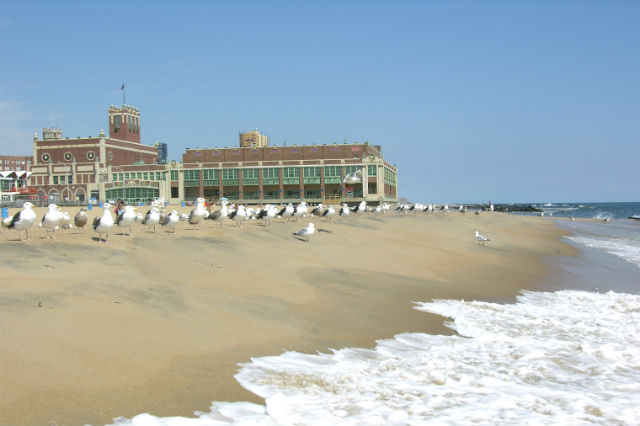
Swim and lounge in the sun on Asbury Park Beach, then head to the Asbury Park Boardwalk to shop, grab a bite to eat at one of the diverse restaurants and check out the artsy murals along the oceanfront. Catch a show at The Stone Pony, one of the world’s most famous music venues, hosting performers like Bruce Springsteen and Jon Bon Jovi. Convention Hall is another staple of Asbury Park, having hosted the likes of the Rolling Stones and Elton John. Stop in the Grand Arcade to see what events are going on and shop at its unique stores. A fun-filled weekend isn’t far away at Asbury Park.
Kittatinny Mountain Range
Kittatinny Mountain runs through northwestern New Jersey and provides the perfect backdrop for a weekend in the mountains, no matter the season.
The AAA Four Diamond Rated Grand Cascades Lodge at Crystal Springs Resort in Hamburg has all the amenities you need for a weekend getaway. Swim at the Biosphere Pool Complex, get a massage at the Reflections Spa, take a wine cellar tour, participate in various family and kids’ activities or try outdoor activities like skiing, archery and zip lining. Outside of the resort are plenty of opportunities for shopping and entertainment.
No list of day trips or weekend getaways in N.J. can be complete without Atlantic City, the casino capital of the Northeast.
Being on the coast, Atlantic City has beautiful stretches of sand, but what sets it apart from the rest of the region are its casinos. Roll the dice, take your chances and play away at one of the city’s casino resorts, like Harrah’s Atlantic City or Caesars at Atlantic City. When hunger or thirst strikes, choose from any of the Italian and seafood restaurants, bar and grills, and steakhouses in the area.
What are your favorite weekend getaways in N.J.? Tell us in the comments below!
Many people are working from home these days, and it’s a new situation for a lot of folks. While you’re not adding the wear and tear of a daily commute or paying as much for gas, you can’t completely forget about your car while it sits in your driveway.
Depending on how long your car is idle, issues like dead batteries, stale fuel, rusty brakes or issues with rodents and other critters should be addressed. Here are a few tips to keep your car running properly during a hiatus from driving:
Fill your vehicle’s fuel tank and add a gasoline stabilizer. This will extend the life of fuel and prevent condensation from building up in the fuel tank.
Inflate the tires to the vehicle manufacturer’s recommendation; the correct pressure is usually found on a placard on the driver-side door jamb.
Drive your vehicle at least once a week for 30 minutes. Not only will it get you out of the house, it will exercise all the moving parts of the engine and help maintain the battery. Don’t just let the car sit idle; drive it around to get the maximum benefit for all the fluids and tires.
When you do drive the vehicle, don’t be surprised if you hear a slight grinding noise from the brakes. This is nothing more than a little surface rust wearing off the brake surfaces. Rust can accumulate from being parked for a period of time and isn’t something to be too concerned with.
Take a few minutes to lubricate door locks (if accessible), hinges, the hood release and even the gas door release. Use a light oil or silicone spray, not a penetrating oil. Penetrating oil is great for dealing with rusty nuts and bolts but tends to wash away lubricants.
Don’t ignore needed maintenance. Many service recommendations are based on time and not just mileage. For example: your car requires an oil change every six months, or 7,000 miles. You still need to have the oil replaced and the vital fluids checked, regardless of whether you drive 7,000 miles or not.
Depending where you park, there may be mice or other critters that want to call your vehicle home. These rodents can chew on wires and cause thousands of dollars of damage, make nests in your filters and cause other messes. I’ve even had one set up shop in my glove compartment! There are a variety of sprays and granules on the market to deter these animals. Some have the scent of a predator and others smell like mint — a scent rodents don’t like.
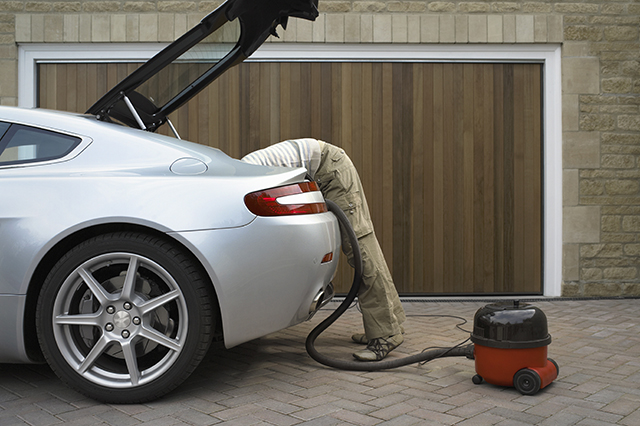
Keep your car clean. Wash your car weekly if it’s parked outside. Acid rain and bird droppings can damage the finish. And, an afternoon spent washing, vacuuming and waxing your vehicle will burn about 1,100 calories — it is also a great stress reliever!
AAA members can save on automotive replacement parts and accessories at NAPA.
Got a question about your car? Visit AAA.com or email jpaul@aaanortheast.com to get an answer from AAA’s Car Doctor John Paul.
A partnership between Bryant University and AAA Northeast gives both sides an edge in the field of data science. Students gain valuable real-world experience and make in-roads to AAA careers.
AAA data analyst Liam Theis is a Bryant University graduate.
Just ask Liam Theis: He started his AAA career straight out of Bryant.
As a student in Bryant’s Information Systems & Analytics program, Theis delved into anonymous AAA data for practical learning and real problem-solving projects. Then, in 2019, he gained full access to the AAA vault as an intern in information technology.
AAA Career Prep
Liam had previous job experience at small companies but none of them were as data-rich as AAA.
“My first few work hours left me spinning with the sheer amount of information we generate, collect and think about across all our business lines,” Liam said. “Luckily, AAA also provided me with easy access to friendly and experienced professionals who helped me adjust in a short period of time.”
And the internship opened job opportunities. Now, as a full-time data analyst at AAA, he is helping business leaders realize the extent of available information.
“My primary focus is helping to expand the understanding of the club’s available and future data,” he said. “This includes prototyping new advanced analytics solutions, increasing awareness and helping business line leaders track and test the logic of their lines.”
Yet even as a student, Liam presented findings to club leaders. It’s one of the enrichment activities AAA offers Bryant students through the partnership, said Dean Patterson, vice president of information technology, and Sandeep Chadha, vice president of enterprise data technology.
Real Work
AAA Northeast has an abundance of data but limited availability of staff to scour through it. Bryant, meanwhile, equips students with the knowledge but is limited in the amount and types of real-world data it can supply, according to Chadha.
“We give them data at a velocity and volume never imagined from a variety of businesses and expose students to advanced analysis and advanced technology,” Chadha said. “Their work helps us leverage data to better understand our members and institute some of the findings.”
Several of Bryant’s upper-level data science courses include AAA projects, according to Suhong Li, professor and chair of the Information Systems and Analytics department at the Smithfield, R.I., school. Chadha and other data professionals from AAA provide guidance to students, collaborate with educators on teaching cases or publications and are guest speakers in the classroom.
“Our partnership with AAA is one of the highlights of the data science program because it gives students real-world experience,” Li said. “It gives students a competitive edge when looking for internships and jobs.”
It is not only an excellent learning opportunity for students but for AAA as well, said Thomas Dougherty, Executive in Residence for Data Science at Bryant.
“The students get to work on interesting projects with real corporate data, including all of the normal imperfections. AAA gets the benefit of the students’ work and business insight from the professors,” he said.
Job Opportunities
At the same time, the students gain greater appreciation for AAA as an organization and future employer.
“Partnering with Bryant shows AAA’s commitment to support higher education and to keep up with the latest development in analytics and data science,” Li said.
In the rapidly growing field, it’s an important reputation to have, Patterson said. It tells students that AAA is a tech-forward organization invested in the future of data science and a great place to start a career.
Theis agrees. He said the diversity of data and questions posed by business leaders have motivated him in his career and working with experts in the field has built his experience beyond what he imagined.
Looking to jump start your tech career? There may be something for you here.
A AAA Northeast member in Rhode Island received some unwelcome news. Someone was using her name to file online loan applications with several banks in the Midwest.
After asking herself how such a thing could happen, she faced the question identity theft victims know all too well: What do I do now?
Experian was there with the answer.
As a AAA member, she had the advantage of a free identity theft protection plan from Experian, simply by signing up.
Experian alerted her to the phony applications by email, and, within an hour, a fraud resolution specialist was on the phone talking her through the next steps, like contacting the police and credit bureaus.
“I was a nervous wreck,” she said. “But Experian put me at ease. All AAA members need to know about this service.”
It’s called ProtectMyID Essential. Members who sign up get identity protection services from Experian, including daily credit report monitoring, suspicious activity alerts, resolution support and more.
Programs like ProtectMyID and preventive measures like shredding old bills are good practices to keep personal information secure, said one financial crimes investigator.
“I recommend having all the protection you can,” said Detective Paul Bessette, of the Cranston, R.I., Police Department. He didn’t handle this member’s case, but he’s dealt with many like it. And they’re becoming more frequent.
Every 2 seconds there is an identity victim, according to a 2019 Identity Fraud Study by Javelin Strategy & Research.
Bessette said that paying bills online has dramatically increased opportunities for hackers to swipe debit or credit card numbers. Also, while large-scale data breaches have compromised millions of Social Security numbers and other personal information, credit card skimmers at ATMs and stolen purses and wallets remain real threats.
Has Experian helped you following identity theft? Leave a comment to let us know about your experience.
Learn more about how ProtectMyID can help keep your identity safe.
It was cold. Luckily the water in my portable water filter hadn’t frozen overnight. I was laying in my tent, comfortable enough in my sleeping bag, wondering whether or not to let some air out of my sleeping pad.
It was a little light; probably around 6 or 6:30 in the morning. I was dreading what was awaiting me: an ice-cold stream crossing. Well, at least the sun was coming out. Time to get a move on.
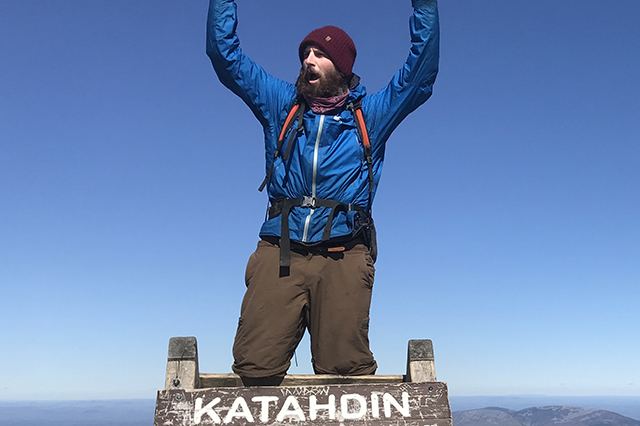
Just another day on the Appalachian Trail. On this specific day I was near the end of my journey in Maine’s Hundred Mile Wilderness, the last section of the trail. The Appalachian Trail is a 2,192-mile hiking route that winds from Springer Mountain in Georgia to Mount Katahdin in Maine. It’s one of the most popular trails for thru-hikers, folks who complete a long trail from beginning to end within a year. In 2018 alone, over 4,000 people tried to thru-hike the Appalachian Trail, with just over 800 achieving their goal.
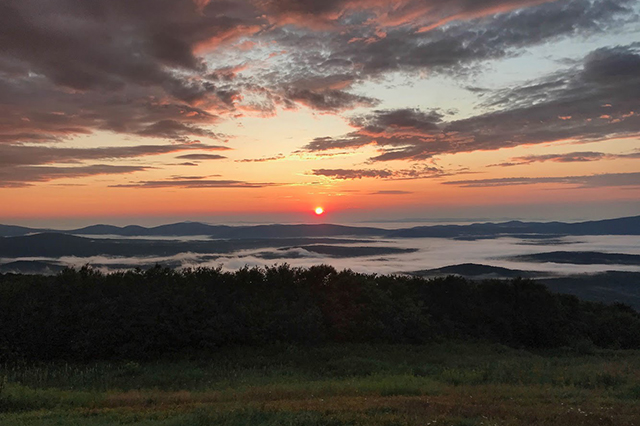
Sunrise at Bromley Mountain in Vermont.
Why the Appalachian Trail?
Why would someone want to become a thru-hiker? That’s a good question, and one that isn’t answered easily. For me, it was a collection of reasons. Primarily, I love backpacking, and I love to challenge myself. I have a great respect and enthusiasm for the outdoors, our public lands and their conservation and preservation. However, taking a selfie in the woods to post on your Instagram is not going to get you through the trail. There are many logistics to consider. It took me more than a year of planning to make the trip happen. Leaving my job, family and friends was a real jolt. Many times I wondered if I had made the right decision.
The first few days were tough. I wasn’t sure if I could complete the trail. To add insult to injury, I fell flat on my face on the first day. It takes a while for a hiker to gain hiker legs, but after a few weeks, I entered a new realm. A simpler – yet extremely demanding – one. I woke up, packed up my gear, ate, walked, drank water, walked, had a snack, walked. You get the picture.
Dinner is a hiker’s favorite time of day. Some days, it was all I thought about. My mind would play tricks on me – somedays I could smell a hot meal hours before I arrived at camp and started cooking. When I finally stopped for the day and completed most of my chores, I would cook and chow down. Sleep came shortly after: Most hikers are out cold when night comes.
A (Hot, Hungry, Cold, Buggy) Walk in the Woods
Walking in the woods is fun, but it can be monotonous and lonely at times. I was always facing down to watch my step. Uneven ground was twisted with roots and scattered with rocks. I spent all day walking up and down hills, sometimes with an occasional breathtaking vista as a reward. I listened to audiobooks, or albums I downloaded in town, and sometimes just mulled things over in my head. I took in the world around me: the trees, plants, birds and sounds of the woods.
Of course, there was also rain, and cold, and burning heat and incessant mosquitoes. I started to miss life’s simple pleasures and couldn’t wait to get into town for a shower, a bed and beer! Hostels line the Appalachian Trail, and I would see all my fellow vagabonds when I arrived at one. We ate lots of food. Calories are important when you exert as much energy as we did. I would eat my food, more food, and everyone else’s food if they didn’t finish their meals. Which is how I earned my trail name: Two Dinners.
Bedtime was always early, since I needed to hike 15 to 20 miles a day. I soon felt like a professional hiker. This was my job, my life.
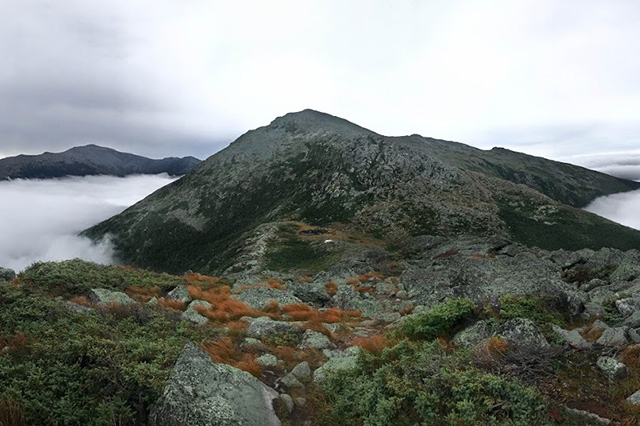
Clouds obscure nearby peaks on Mount Adams in New Hampshire’s Presidential Range.
The Social Network
The Appalachian Trail is a very social trail. Thru-hikers travel together daily for almost 2,200 miles. Trail families, or “tramilies,” form as certain groups of hikers become close to one another. Some grow so close that they’re inseparable. I considered myself a loner since I hiked alone most of the time. This allowed me to chat with different types of hikers. We’d meet at camp, exchange trail names, and exchange words about ourselves, our gear, and our hopes and dreams. Perhaps I’d see that cool hiker again the next night. Or maybe I’d see them hundreds of miles down the woodland corridor. The trail allows you to get to know people of all different origins, life experiences and world views, which was a great perk of my journey.
I started the trail full of expectation. The excitement and fear I felt standing on top of Springer Mountain followed me for a while. Eventually I got used to the daily grind, and then suddenly, the beginning felt so far away. The months passed by in Virginia and the Mid-Atlantic states. I briefly stopped in Vermont and visited home for a week. When I returned the end was in sight, and before I knew it, I was in Maine. One afternoon I could see Katahdin, the final mountain, looming in the distance.
There and Back Again
Now, my journey is over and I’m back in Rhode Island. I lost 40 pounds and am in the best shape of my life. The trail taught me that doing what you want matters, and that it’s important to take chances. We can get caught up in society’s expectations. We worry about what is expected of us, or about what we think is expected of us, and lose a bit of ourselves in the process.
It was important for me to experience a change. It was necessary to be the hero of my own journey and to face it and persevere. I now make decisions carefully and tailor what I want for my life. I recommend that everyone put themselves out there and take on the unknown, no matter how big or small the journey.
One way to do this is to get out there for a hike yourself. For the past six years I’ve been taking day hikes and weekend backpacking trips around New England. It’s not hard to get out there, even for just a few miles. Local trail organizations, books and trail-finding apps are full of resources.
Maybe one day, you’ll even take a chance and drive down to Georgia to start your own epic journey.
Jonathan Cipriano is a AAA Northeast member from R.I. He departed Georgia’s Springer Mountain on April 16, 2019, and reached Mount Katahdin in Maine on Oct. 5.
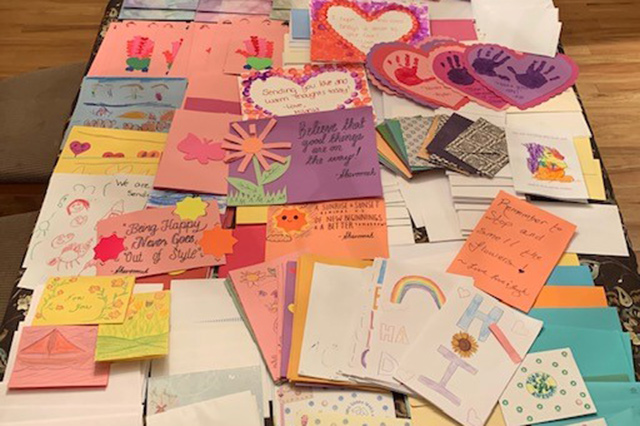
Employees recently collected more than 2,500 personalized greeting cards to give to people living in community care facilities.
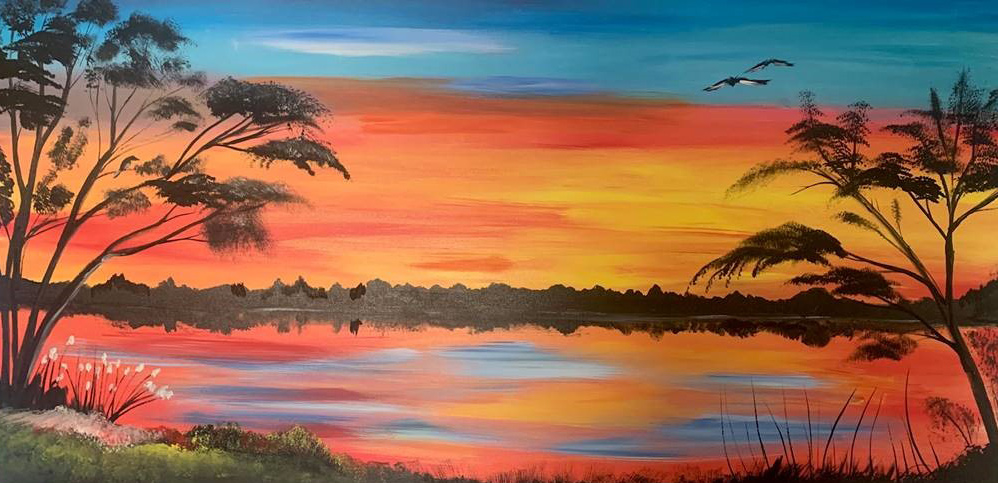
Many of the donations were hand crafted. And six of the designs were truly one-of-a-kind. Dan Arcoleo, member relations counselor in Garden City, N.Y., donated six of his original paintings.
Employees, their families and friends, as well as members contributed to the community cause.
The Somerset, Mass., branch set up a table for three days, inviting members to write messages in the premade cards. The feedback was tremendous, according to Rebekah August, assistant branch manager. The team is thinking about carrying over the Valentine’s Day-themed activity to other holidays and creating thank-you cards for veterans.
AAA employee Dan Arcoleo donated his original artwork to two facilities.
The support from across the community was heart-warming,
“The outpouring of support was truly touching,” said Karen Diehl, senior employee experience specialist for Human Resources. “Employees and their families really took care in crafting heartfelt messages to people who have been isolated and lonely, unable to connect with family or friends, throughout the pandemic.”
Diehl had a lot of help from people across the club who rallied around the effort, collected the cards and arranged for deliveries. For instance, Gerri DiSalvo, public affairs specialist in Garden City, got a local Girl Scout troop involved.
More Community Efforts
The card collection was just one of the charity activities taking place at AAA Northeast this year. In February, AAA Northeast delivered hundreds of care packages to health care workers in appreciation for their continued efforts during the pandemic.
And AAA Northeast branches will be collecting canned goods and other nonperishable foods March 20-April 3. All donations will benefit local organizations.
For more information on this initiative and others taking place in your community, visit AAA.com/AAACares.
The American Society of Civil Engineers (ASCE) gave America’s infrastructure a C- grade in its latest report card. While not an impressive mark, the C- grade is actually the highest score the country’s infrastructure has received in 20 years. Previously, it received a D+ in 2017.
The report grade, released every four years, rates every part of America’s infrastructure system including roads, bridges, energy, rail, transit and aviation. Overall, 11 of the 17 categories received a grade in the D range, including transit, which had the worst mark of D-. On the opposite end of the spectrum, rail received the highest grade with a B. Five category grades — aviation, drinking water, energy, inland waterways, and ports — went up, while just one category — bridges — went down. The grading includes several measurements in its methodology, including condition, capacity, safety, and innovation.
The ASCE estimates that the U.S. will need to invest nearly $2.6 trillion over the next decade to maintain a state of good repair and earn a grade of B. This echoes the sentiments expressed by Rhode Island Senator Jack Reed when he sat with AAA recently. “We do have to have a big infrastructure package,” Reed said. “We’ve been working at it slowly but we do need a bigger, more intense program.”
Failure to properly fund infrastructure improvements will cost the public down the road. According to the ASCE, “By 2039, America’s overdue infrastructure bill will cost the average American household $3,300 a year, or $63 a week.
The ASCE the country’s oldest national civil engineering organization, represents more than 150,000 civil engineers in private practice, government, industry, and academia.
What do you think of the infrastructure in your area? Let us know in the comments below.
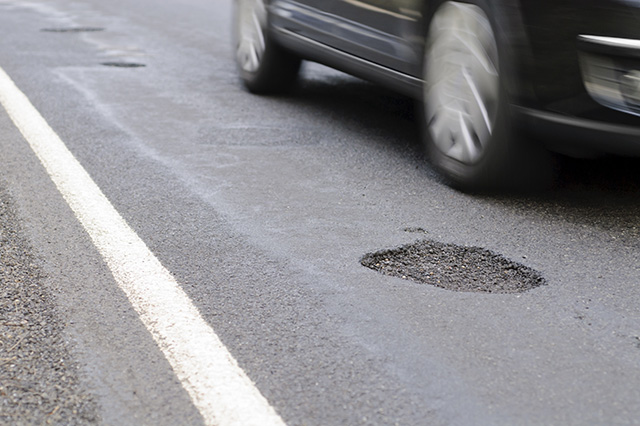
Driving over rough roads can take a toll on your wheels. Make sure you’re covered with AAA’s Tire & Wheel Protection Program.
The New York Hall of Science is the center of the universe when it comes to interactive science. Founded at the 1964-65 World’s Fair, NYSCI has grown into one of the area’s leading educational institutions. It welcomes droves of students, teachers and families each year.
Located in Queens, the museum uses the “Design-Make-Play” method to educate visitors in the STEM subjects of science, technology, engineering and math. It has 12 permanent exhibit areas as well as several temporary exhibits hosted throughout the year. NYSCI also has a 3D movie theater and hosts a litany of public programs and events.
NYSCI is always buzzing with activity. Here are a few of the museum’s main exhibits and attractions that are a must-see during any visit.
Note: Due to the ever-changing nature of the COVID-19 crisis, please check official website before visiting to check for restrictions or closures.
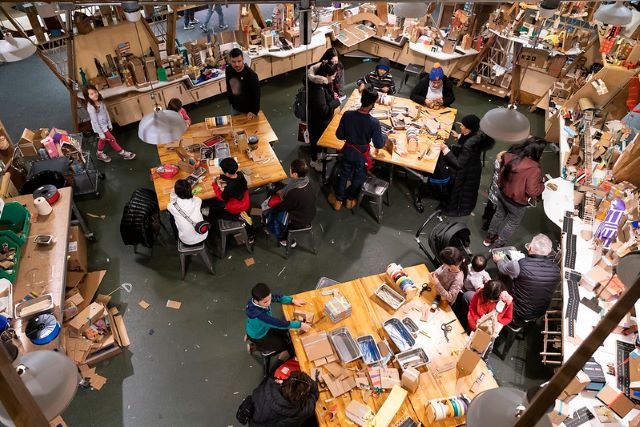
The Design Lab is a drop-in space where visitors can explore, build and create. It has various activity spaces, where guests are challenged to find solutions to real-world problems. Explainers are stationed throughout the Design Lab should guests need any help solving a challenge. Explainers are young men and women (ages 14 to 24) from the community who work on the museum floor, interacting with the public and helping visitors to understand the science behind the exhibits and demonstrations. Since 1986, NYSCI’s Science Career Ladder has enabled more than 4,000 students to serve as Explainers to gain work experience while being exposed to a wide array of STEM career and college pathways.
The activities at Design Lab are frequently changed based on experimentation, reflection, and feedback from guests. This makes each trip to the Design Lab – and to NYSCI – a unique one.
The fun is not just contained within the walls of the museum. Outside, guests will find several interactive exhibits including the Science Playground. Designed for children of all ages, it features elements such as Archimedes screw and water play area, windpipes, a climbing net, a giant lever, slides, sandboxes and metal drums.
Also located outdoors is Rocket Park Mini Golf. This nine-hole miniature golf course is designed to teach players the science of spaceflight. Key concepts such as propulsion, gravity, escape velocity, launch window and gravitational assist are explored along the way. There is an additional fee of $6 for adults and $5 for children and seniors to play.
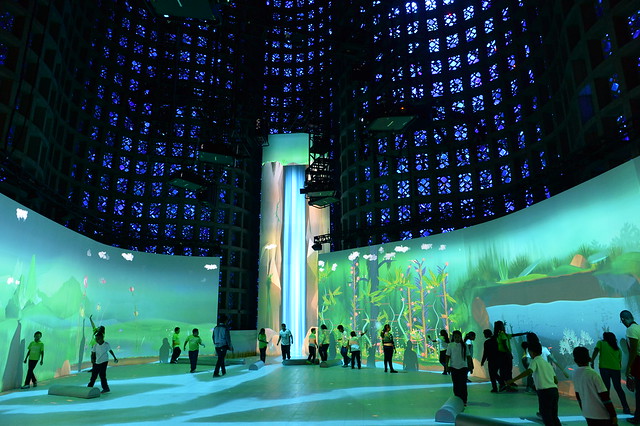
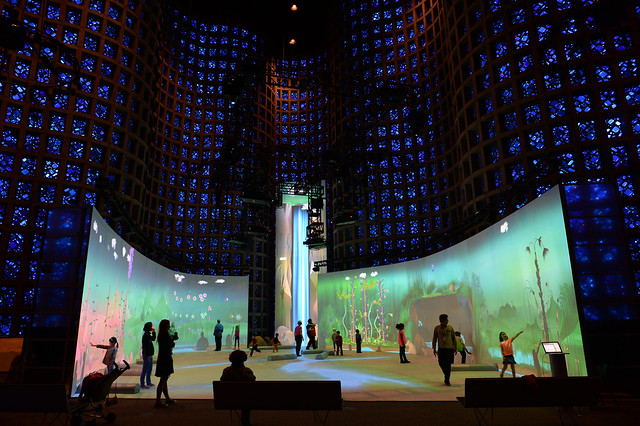
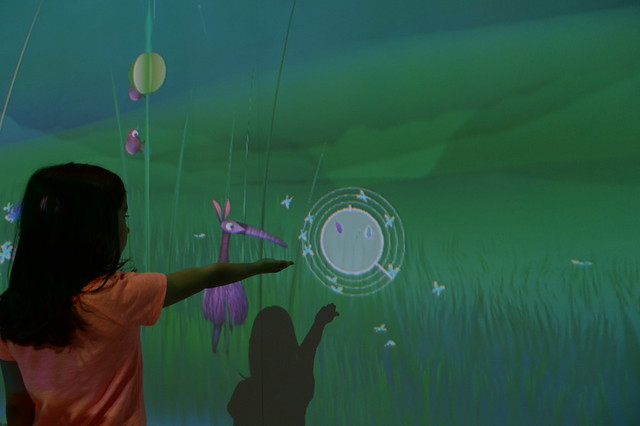
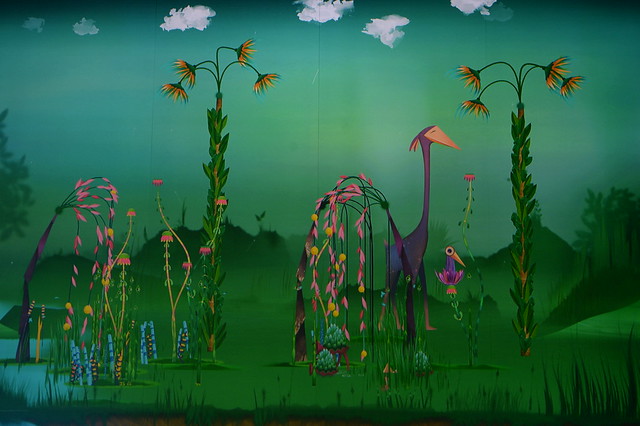
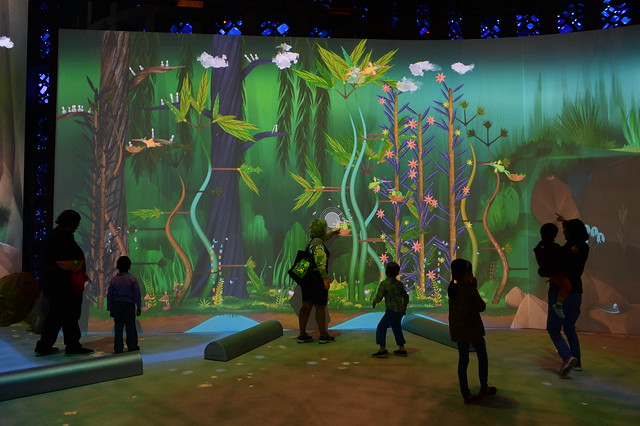
Connected Worlds, held in the Great Hall, is an interactive animated world where visitors’ decisions and actions dictate how the natural world is kept in balance. The six different environments – jungle, desert, wetlands, mountain valley, reservoir and plains – are fed by a 38-foot-high projected “waterfall” that flows out across an 2,300-square-foot interactive floor.
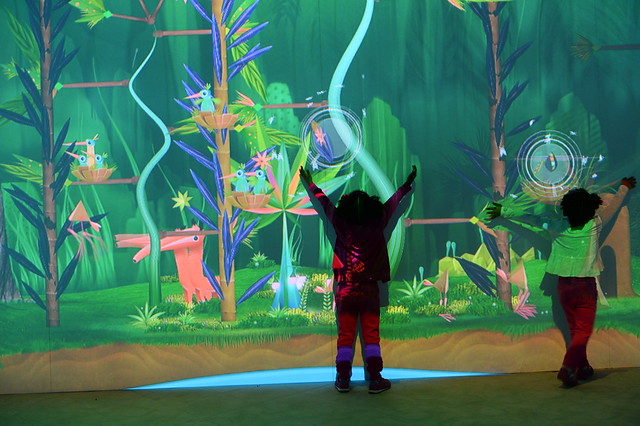
Guests are challenged with keeping their environment flourishing by planting seeds, feeding animals and learning to share the water source among all the “worlds.” Guests learn about the concepts of sustainability science including feedback loops, equilibrium in a dynamic environment, and casual links and influences.
The museum has a state-of-the-art 3D movie theater, complete with a 22-foot wide screen. It plays a variety of educational videos as well as award-winning scientific movies throughout the year.
Have you visited the New York Hall of Science? Tell us about your experience in the comments.
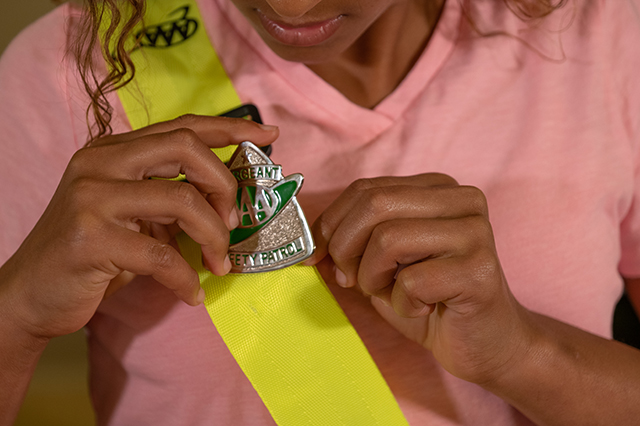
For a century, the AAA School Safety Patrol program has served as a training ground in leadership for young volunteers, many of whom go on to become pillars of their community.
Founded in 1920, the program activates students intent on helping their classmates arrive and depart school safely each day, with the help of law enforcement, teachers and crossing guards. What began as a boys-only program in the 1920’s quickly evolved into a community resource for any student to learn about good citizenship and responsibility.
Many of the nation’s leaders, including President Bill Clinton, Vice President Joe Biden, and Supreme Court Justices Anthony Kennedy, Clarence Thomas and Stephen Breyer, got their start in public service through the program.
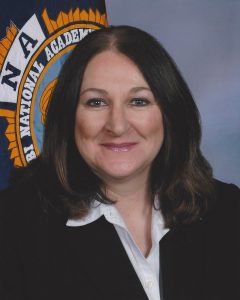
We recently sat down with an alumnus of the program, AAA Northeast member Karen Guilbeault, who recently retired as Captain of the Cranston, R.I., Police Department after a career of over 30 years in public service.
Guilbeault is the first female in the history of the Cranston Police Department to graduate from the FBI National Academy in Virginia – an exclusive program where law enforcement personnel study to enhance their credentials and advance in their field. She has also worked for the Rhode Island Department of Children, Youth, and Families. And she credits the program as a starting point of a remarkable career.
What made you decide to join the AAA School Safety Patrol, and how long did you serve?
My parents led by example. My mother was a teacher in the same school district, and my father was very aware of the need to give back to the community. So, this was my first opportunity to get involved in my community. I believe I served in grades 5 and 6.
My house was one of the farthest from the school, over a mile each way, and I walked to school every day. Believe it or not, we did walk uphill! So, I think part of the reason they selected me was because I had to walk to school and I was focused on safety.
What lessons did you learn from being on the Patrol?
It instilled a sense of community service in me from a young age, as well as the responsibility to serve others. This was my first real exposure to being responsible for other peoples’ well-being and safety. I remember taking it very seriously! I also remember that the person who gave out the badges took the responsibility very seriously.
In my career as a high-ranking official, I always took my employees’ well-being very seriously – overall, not just at work. And I always tried to go the extra mile to make sure everyone was safe, particularly in domestic violence-type situations, for example.
You had a long, decorated career in law enforcement and public service. Did your time serving on the Patrol inspire you?
My personality was already formed at that age and I like to take charge of a situation when I can. I like to have a say in the outcome of a situation. And if I can use that to have a positive outcome, I’m going to do it. This was my first true exposure to responsibility. My mother always said, “Make a place better when you leave than when you found it,” and so I try to live by that every day.
I like to believe I was a catalyst for positive change in the Cranston Police Department. I was the first female to achieve the ranking of lieutenant and captain in the department, so I hope that paves the way (and sets a good example) for females looking to pursue a career in law enforcement. In addition, I was the first female from Cranston to attend the FBI National Academy in Quantico, Va., a program that less than .1% of police officers nationwide get chosen for. I hope that my experiences provide a good example to younger people, especially females, as they think about their careers.
Do you have any advice for children enrolled in the Safety Patrol program today?
It’s a serious responsibility – even more so today than when I was a child. The kids walking to school today are at a higher risk than we were. Cars are faster and quieter, and there’s the possibility of distracted drivers on their cell phones. So, the AAA School Safety Patrol is needed today more than ever before. Any time someone agrees voluntarily to be a part of something, especially a safety program, they should take it seriously. Their agreement to be responsible can positively or negatively affect someone else’s well-being.
For more about the AAA School Safety Patrol program, visit AAA.com.
Read about another impressive former safety patroller, “Diary of a Wimpy Kid” author, Jeff Kinney.
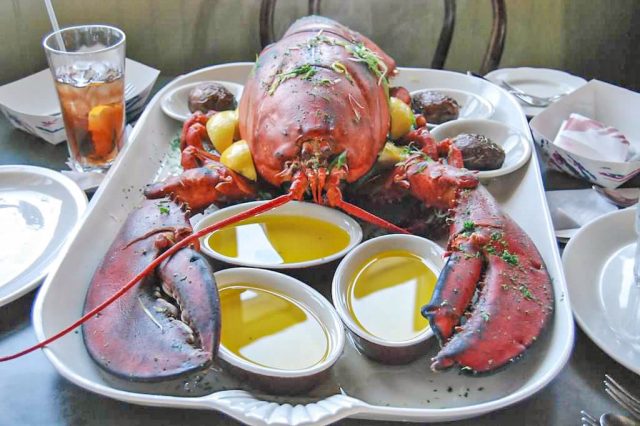
Here in the Northeast, we have some of the best food in the country. From New York and New Haven-style pizza and Long Island bagels to New England classics like clam chowder and lobster rolls, our culinary landscape is one worth bragging about. Of course, the home-cooked meals and family recipes coming out of our own kitchens are also photo-worthy sources of pride.
Food can be so much fun to take pictures of. It doesn’t move, you can pose it however you like and afterwards you can eat your creation.
Spice up your food photos with these five simple tips on how to photograph food.
Scroll down to see all of the delicious-looking food photos we received from this Photo Session.
Use Natural Light
Artificial light can create unnatural colors in your food images, so using natural light is best. If it’s warm enough outside, I recommend heading outdoors to set up your shot. Look for a shaded area – filtered or overcast light is best. You want to avoid direct sunlight, it can create harsh shadows. If you’re stuck inside for the shot, arrange your food display by a window that gets a lot of natural light.
(Photo: Beth Mancuso)
Vary Your Depth Of Field
If you want to focus on just one food item – or one part of a dish – use a shallow depth of field to draw the viewer’s eye in. Choose a large aperture anywhere between f/1.8 – f/2.8. If you’re using your phone to take the image, use portrait mode to achieve this look. Alternately, if you want to show a whole plate of food, use a smaller aperture anywhere between f/5.6-f/11. For my shot of the cookies my aperture was set to f/2.2. Learn more about camera settings with our cheat sheet.
Color can add wow factor to your photos. Try pairing your foods with complimentary colors. In this image I paired the red of the berries with a teal background to really make the red pop. You can add color to your photos by either introducing another colorful food into the image or by using a colored background. You can find a colored wall in your surroundings or use colored paper.
(Photo: Beth Mancuso)
Show the Process
Food preparation often has many steps involved. Take a few shots of the different steps, and create a collage with the images. I shot this triptych with my phone and made sure to use the same angle, background and lighting for all the shots so they would match.
(Photo: Beth Mancuso)
Tell a Story
Add a human element to your image to show the relationship between food and people. Food has many traditions and emotions tied to it. I love how excited my son was to eat this ice cream cone. I think it shows how we all feel when we get to eat such a treat!
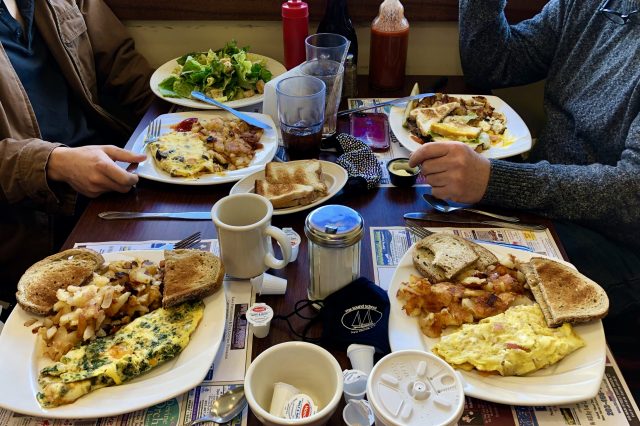
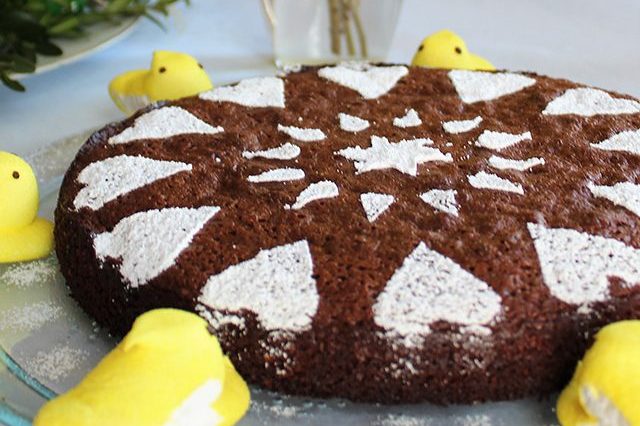
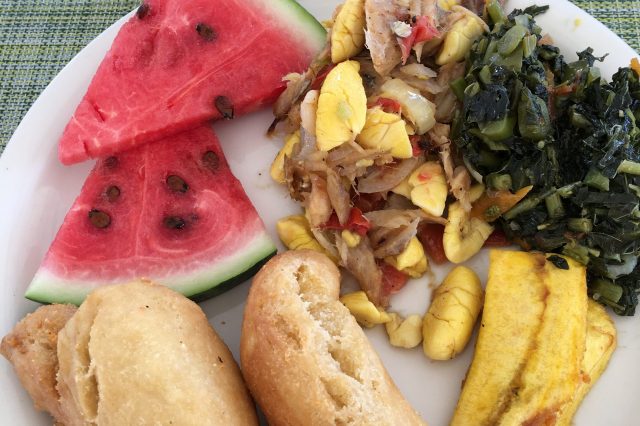
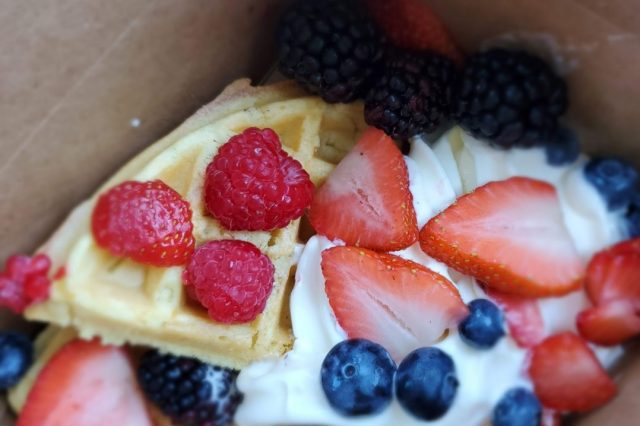
My grandmother’s 80th birthday tea party during COVID. (Paige Parrella)
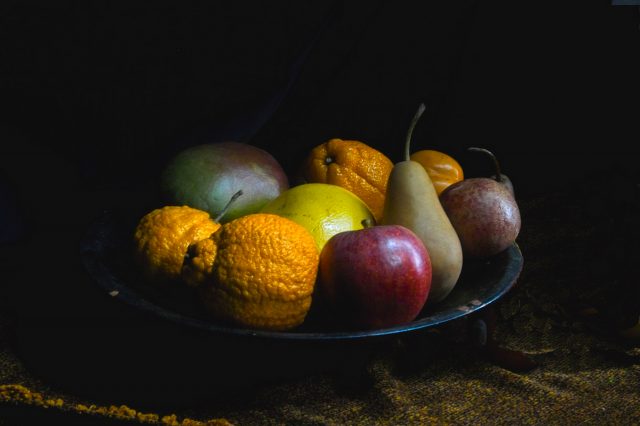
Fruit Bowl (Norman Shein)
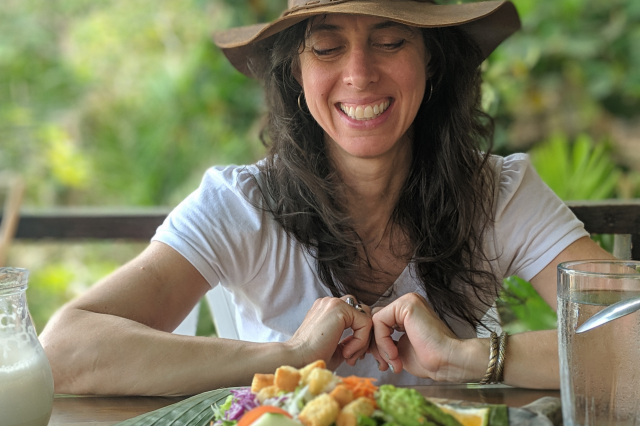
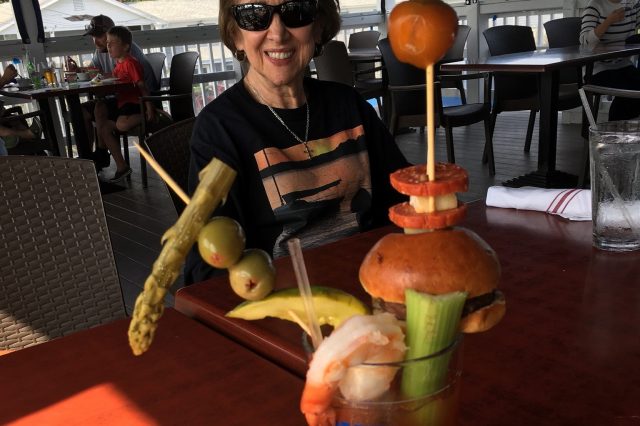
These member photos look good enough to eat! Take a look at all of the food photo submissions we received from this Your AAA Photo Session in the slideshow and don’t forget to check our social media channels, where we will be featuring some of our favorites. Some photos may also be featured in an upcoming issue of Your AAA magazine.
Check out past AAA Photo Sessions and stay tuned for the next one, coming soon.
Beth Mancuso is a professional landscape and travel photographer.
The Northeast is home to some of the most talented celebrities in film, music, and television. Did your favorite star make it into our new crossword? Play to find out!
The Northeast is home to some of the most talented celebrities in film, music and television. Did your favorite star make it into our new crossword? Play to find out!
Here are some tips to help you get the most out of your puzzle playing experience. Good luck!
Since our members are the root of everything we do, your feedback is important to us. Let us know if you run into any issues while playing, or share your ideas for future puzzles by emailing us.
Far too often we believe trips require traveling countless miles to reach faraway lands. But that thinking can rob us of the amazing sights and sounds found much closer to home.
With the COVID-19 pandemic restricting our travel, now is the perfect time to rediscover your own backyard. Fortunately, several local state tourism boards have put together road trip suggestions. Whether you’re a foodie, history buff or just love hitting the open road, there’s something for everyone.
A more unique road trip through the state is following the Barns Trail. Consisting of seven different routes, this trail takes you past Connecticut’s barns that are open to the public, including working farms, farm stands, orchards and wineries.
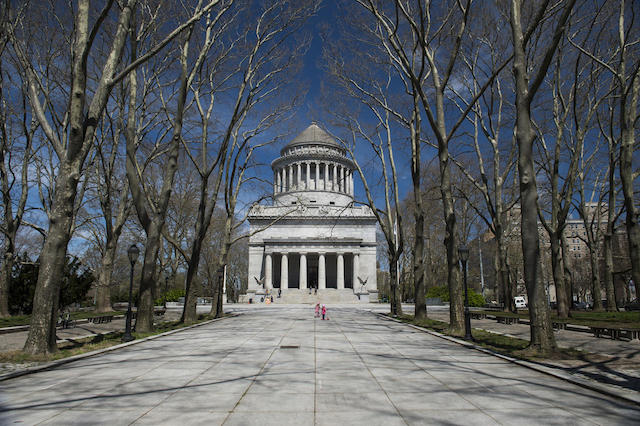
Grant’s Tomb in Manhattan (Photo: Courtesy of New York State)
New York
The New York State Division of Tourism has compiled a plethora of road trip destinations that allow travelers to discover the Empire State’s rich history. The stops are divided into themes, including Arts and Culture, Civil Rights, Immigration and Natural History.
New York’s Finger Lakes region provides the ideal backdrop for an educational road trip about the origins of the modern-day women’s rights movement. It all starts in Seneca Falls, where the first Women’s Rights Convention took place in 1848. Today, the city is home to the Women’s Rights National Historical Park and National Women’s Hall of Fame. Nearby, in the cities of Rochester and Auburn, travelers can visit museums dedicated to Susan B. Anthony and Harriet Tubman, respectively.
The Blackstone Valley Tourism Council teamed up with the Providence Warwick Convention and Visitors Bureau to create a series of themed road trips throughout Rhode Island.
“Are We There Yet?” is a family-oriented journey that takes travelers to Central Rock Climbing Gym in Warwick, BattleGroundz in Lincoln and the Providence Children’s Museum. When hunger strikes, families can chow down on burgers at Harry’s Bar & Burger then satisfy sweet tooth cravings with the latest offerings from PVDonuts.
Speaking of food, “Comfort Food Across Cultures” allows travelers to experience different societies by eating their way through various cuisines. Stops include the Bolivian and Peruvian restaurant Los Andes, Korean Fried Chicken spot Den Den and Krakow Deli & Smokehouse, which serves up Polish pierogis and golombki.
The “Take it Outside” road trip celebrates the Ocean State’s outdoor escapes, including Rocky Point Park, Goddard Memorial Park and Roger Williams Park, which also houses the Roger Williams Park Zoo and Museum of Natural History and Planetarium. When the weather warms, outdoor activities like kayaking, water sports, horseback riding and hiking can be done at the Landing at Lincoln Falls and Lincoln Woods State Park.
The site of Paul Revere’s capture (Photo: Courtesy of NPS)
Another Massachusetts road trip idea takes you along Cape Cod. Stretching from Orleans to Provincetown with stops at various beaches, trails and lighthouses, this is an ideal scenic drive.
New Jersey
New Jersey’s Department of Travel and Tourism recommends cruising along the state’s eight scenic byways, which “showcase the state’s cultural contributions, rich heritage and natural beauty.”
All of these drives offer travelers something different. The Millstone Valley Bypass is a 25-mile journey that will transport you back to Revolutionary War times as you pass by Rockingham, George Washington’s last wartime headquarters. More Washington history can be discovered along the Delaware River Bypass, which takes you to Washington Crossing State Park, the location where George Washington and the Continental Army landed after crossing the Delaware River.
In the northern part of the state, the Palisades Bypass offers unparalleled views of the Hudson River and the Manhattan skyline, with lookout points to stop and enjoy the sights. In southern New Jersey, you can travel along the Bayshore Heritage Scenic Byway. This 122-mile roadway allows you to view much of the state’s coastline as well as the East Point and Cape May Lighthouses.
Whether you rediscover your own backyard or take a longer drive to one of these states, enjoy the journey, travel safely, and don’t forget to review the COVID-19 guidelines if you are planning to travel outside of your own community.
And, if you need a little extra space while you’re on the road, or you just want to take the trip in a vehicle that’s “new to you,” visit your local neighborhood Hertz and don’t forget AAA members can save up to 20% on rentals.
This past fall, a road trip in Sicily fulfilled one AAA member's personal goal of driving abroad – and tested his driving moxie against their notorious drivers.
A road trip in Sicily fulfilled a personal goal of driving abroad – and tested my driving moxie against their notorious drivers.
My first impression of driving in Italy came from overhearing a colleague throwing out ideas at work: “Just like road signs in Italy, these are merely suggestions.”
Sixteen years later I could attest to that firsthand with my first Roman cab ride – the only recollection of which is my wife and I clutching each other in the back seat, equal parts fear and fondness. A few days later, we boarded a Trenitalia for a seven-hour train ride. The train itself boarded a ferry on the way to Messina, the first stop in Sicily, where we would visit family I’d never met before.
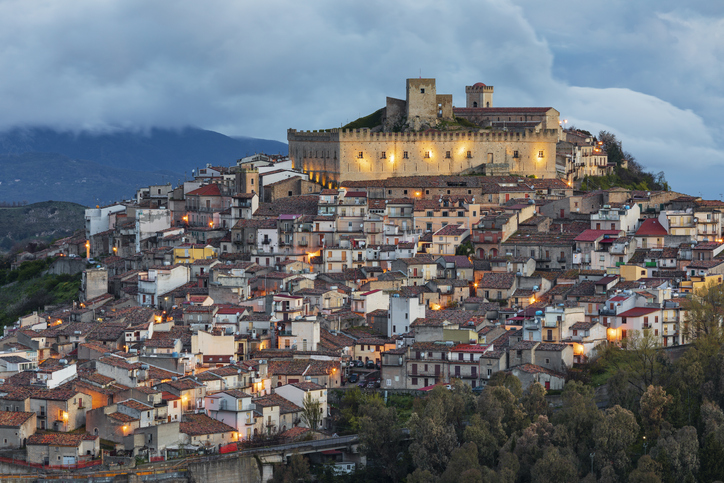
A few days into our stay, we were brought to Montalbano Elicona, the town where my father was born, 40 miles west of Messina. Cousin Carmelo did the driving as we sat in the back overlooking the steep hill we needed to ascend to reach the town. As Carmelo confidently sped around tight turns with not much more than a stone wall protecting us from potential doom, I assured myself, “They do this all the time.”
The skyline of Montalbano Elicona at dawn.
We departed three days later, with Carmelo driving us to the airport – and missing the airport exit. We expected him to take the next exit to turn back. Instead he turned back ‘Sicilian style’: put the car in reverse, back up for a few hundred feet and take the exit.
No shoulder? No worries.
Driving in Sicily
My turn to drive in Sicily would come six years later during a couples trip, circling the island at Italy’s boot tip. Our six-day journey planned for us to pick up our car in Palermo, drive south to Agrigento to visit the Greek ruins, cut east to Taormina, a quick stop north to see the family again in Messina, then back across to Palermo.
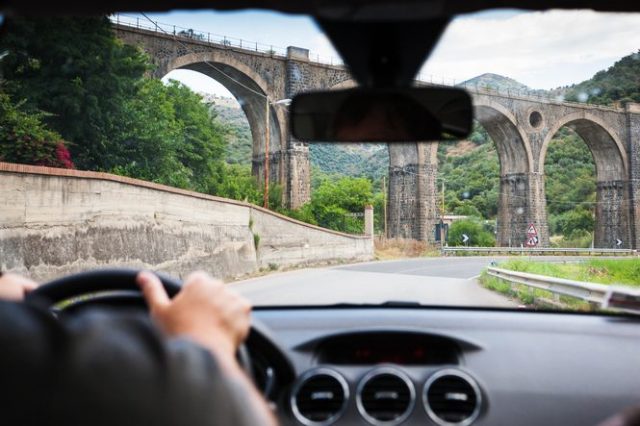
The beaten path rarely being the most interesting, en route to Agrigento we diverted to the Cattedrale di Monreale, the UNESCO World Heritage site located in the eponymously named town. The roads here were not designed with cars in mind. The first anxious moment was when a local tailgated us as we made the way up the winding one-lane road to the cathedral. My sense that we were holding up traffic was justified when I allowed a driver behind me to pass and received a less than welcoming wave from him in return.
We garaged the car and arrived at the cathedral with a few minutes to spare before the Italian afternoon riposo, just enough time to awe at the 12th century Norman architecture. The next stop brought us to Sciacca, and that stretch of SS624 didn’t disappoint, gifting us with a stunning hilly landscape. As we got closer, we caught our first view of the Mediterranean Sea.
Agrigento was among the largest cities of the ancient Greek empire. It sits on a plateau overlooking the Mediterranean; the Valley of the Temples, Agrigento’s main attraction, is also recognized as a World Heritage site.
Two days later, for the run from Agrigento to Taormina, I took a break from driving to enjoy the view from the backseat. The diversion on that leg of the trip was the town of Piazza Armerina and the third UNESCO site on our itinerary, the Villa Romana del Casale. The mosaics in the 4th century Roman resort made the stop worthwhile.
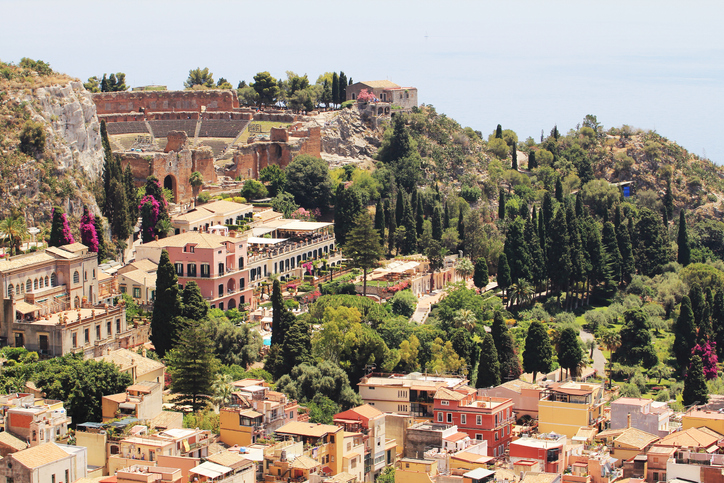
Taormina, Sicily.
Continuing from the villa, it was easier to see the sights unfold from the backseat as Sicily continued its run of hilly landscapes, fertile vineyards and a shepherd using much of the road to guide his sheep.
We hit the Autostrade for the first time as we reached Catania. From my phone I determined that the toll from Catania to Taormina would be €1.70 and payable by credit card or cash. I patted myself on the back and texted this intel to my wife who was riding in the ladies car.
Upon reaching the Taormina exit, we inserted the credit card into the toll machine – and saw it gobbled up. A few tense minutes passed with the credit card not forthcoming as we tried to converse with an agent over the intercom.
Eventually the machine gave up its catch, which we exchanged for dropping two euros in the basket and sped off. I subsequently learned that American credit cards aren’t suitable for the toll road and the wives had wisely paid cash.
The trip up the hill is a scenic single lane that brings you into the heart of Taormina. Miss a turn there and you’ll find yourself either circling the town again, facing the wrong end of a one-way, or in a local’s driveway (as my wife’s car did).
As we arrived at the hotel, we were happy to garage the cars and become pedestrians for the next three days, Taormina being very walkable.
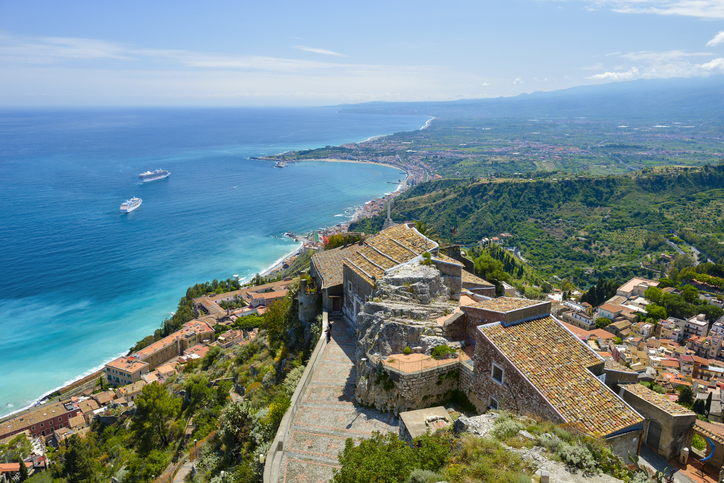
It was easier to let Angelo, a local guide, drive us to Mount Etna on our third day there. On our way back to town, Angelo took us to the Madonna della Rocca, a 1640 church built in the rock which hangs high over the town. The road leaving the church cannot allow large tour buses and provided its own acrophobia-inspiring overlooks.
Santuario Madonna della Rocca, Taormina.
Family Reunion
Back on the road the following day, we headed north to Messina, enjoying the view of the blue Ionian Sea hugging A18/E45. At the Messina Centro exit (paid that toll in cash!), I was confident we would reach the family by 1 p.m. as promised. Guided by GPS, we took a turn that led up a somewhat familiar road. The roads were wide enough for no more than a parked car and one lane of traffic to accommodate both directions.
So, what to do when a car inevitably comes in the opposite direction? Always defer to the local, hit it in reverse and hopefully find a spot to back into. But how do you do that when another driver is on your tail? The spot we found was not easy to get back into and in that panic, I looked in my rearview hoping for some sympathy. Instead I saw frustration as my tailgater clasped his hands in a very animated way, wagging them, plainly praying to the driving gods that I would get out of his way.
It was now apparent we needed to turn around. As I looked for a place to reverse, our next obstacle came into view: A large tree branch extending three quarters across the road. The branch itself wouldn’t have been difficult to drive over, but that would have meant bowling over the bent-over woman picking whatever the branch was offering – berries, figs, pistachios or maybe olives.
She and our car had a standoff, which we lost; she continued to pick at the branch. We crept around the branch and advanced a few dozen meters to make our U-turn. The unforgiving road was not much wider than the length of our car, making the U-turn tight and treacherous. A fence bent over 45 degrees, overlooking a sharp hill drop, was evidence that other drivers had done this before. Fifteen to 20 delicate K-turns later, we were on our way back.
Traffic in Monreale, Sicily
The lost time made the visit with family too short. We considered staying overnight, as we indulged on pancetta-wrapped scallions and braciole paired with homemade creamy limoncello and red wine. But rather than risk missing our morning flight, it was best to move on.
Returning west, I drove A20 in awe of the tunnels built into the mountains to accommodate the Autostrade and gazed at the towns built into those mountains centuries earlier.
Three hours later, we found ourselves in Cinisi, just south of Palermo – a favorite overnight spot for early-morning fliers. The next morning, after one final missed turn, we reached the rental car return.
The rental agent thoroughly inspected the car and joked “You’re a killer.” In his thick accent he points out a small bird carcass wedged in the wheelhouse. Add that regret to the list of unexpected yet mostly endearing memories.
Nick Popolo is a longtime AAA member from Staten Island, NY. Connect with Nick on Twitter at @npopolo.
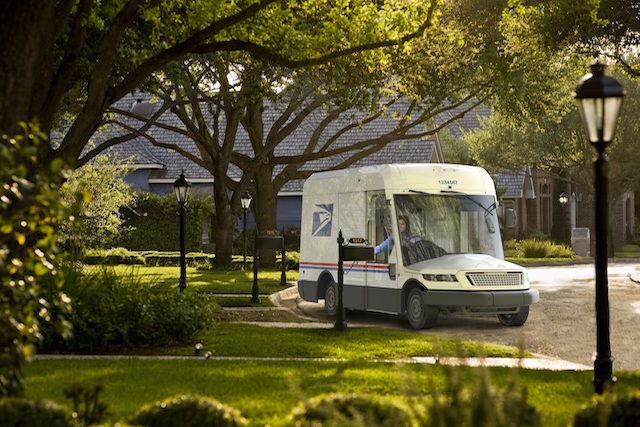
Last month, the United States Postal Service announced it awarded a contract to Oshkosh Defense to manufacture a new generation of postal delivery vehicles. It will be the first major upgrade to the USPS fleet in thirty years.
Oshkosh Defense, based in Oshkosh, W.I., will produce at least 50,000 to 165,000 trucks over 10 years. All the vehicles will be assembled in the United States. The Postal Service has a fleet of more than 230,000 vehicles, approximately 190,000 of which deliver mail six or seven days a week. The current mail-delivery trucks are Grumman LLVs manufactured between 1987 and 1994. They were only intended to have a have 24-year life span.
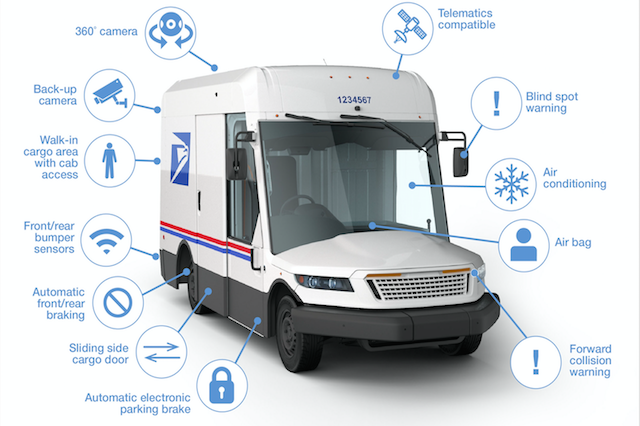
The exact design of the new vehicles has yet to be finalized, but it’s clear that these trucks will have a unique look. And while they may look funny, the vehicles were designed with safety in mind. The large windshield allows for increased visibility and eliminates the front blind spot. The low hood and bumper were designed to prevent pedestrian fatalities. Should one get hit by a truck, they are more likely to get stuck in the legs rather than the torso, a difference that could very likely safe their life. This comes at a time when pedestrian deaths are reaching record highs.
Other safety features found on the trucks include 360-degree cameras, advanced braking and traction control, air bags, a front- and rear-collision avoidance system that includes visual, audio warning and automatic braking.
The new fleet vehicles will also be environmentally friendly, equipped with either fuel-efficient internal combustion engines or battery electric powertrains. The trucks will also have increased cargo space allowing them to accommodate higher package volumes, thus reducing the number of trucks needed on the road.
AAA is proud to celebrate its School Safety Patrol program’s centennial anniversary. For 100 years, Patrollers around the world have provided school-age children an extra sense of safety and security when going to and from school.
Closer to home, countless students across the Northeast have participated in the program and gone on to become leaders in their fields and communities. But no matter where life has taken them, they still fondly recall their AAA Safety Patrol experience.
Here are just a few of our members’ stories.
Connecticut
Claudio Anania
I very distinctly remember my Safety Patrol experience. It was during my fifth grade school year (1973-1974) at Washington Elementary School. We were handpicked to be patrollers by the teachers assigned as our councilors. Being a patroller taught me how to work successfully, independently and also as part of a team. We were the first ones at school in the mornings getting ready to man our assigned posts, school driveway, each corner of closest intersections with crossing guard, U.S. flag duty, etc. It taught me great leadership skills I still use to this day. Both my daughters were Safety Patrollers at their elementary school in fifth grade, with one taking her patroller experience to the next level to become a police officer.
As I look back on it now, it was such a rewarding leadership position that I still talk about to people to this day.
Ed LoTurco
I was a Safety Patrolman at Locust Avenue Middle School in Danbury, Conn., from 1955-1956. I was the first to volunteer in my school because I was already a Boy Scout and felt this was just a calling and it sounded like something very special to do. I became the captain of my group because I managed to get eight of my classmates to also join. This may have very well been my first leadership role that led to so many new experiences and leadership roles.
(Photo: Nancy Cirmo)
Nancy Cirmo
I have been a member of AAA since the 1970s, as a young adult. I am now 67 years old and have used AAA services many times. It has always been a great experience and helped me more times than I can count, especially when I experienced a predicament with a car (such as my dead battery a year or two ago in subfreezing temperatures, out on the road).
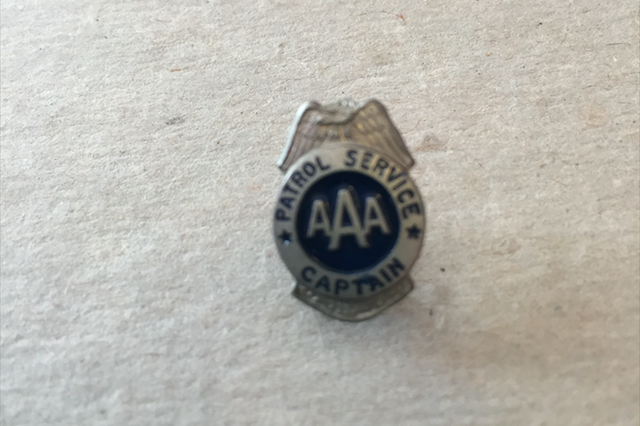
In 1962, I was Nancy Carlson. I was 10 years old and attended Margaret L. Keefe grammar school on Pine Street in Hamden, Conn. (It is now the Keefe Senior Center.) A teacher organized the patrol and described it as a great responsibility and service to my school. I thought it would be great to help kids, especially the little ones. I remember being assigned to a specific street corner and making sure kids crossed safely. It was great to feel that I was helping kids stay safe on their walk home from school. There were no buses, only walkers. I was introduced to the patrol in fifth grade, and in the sixth grade, at age 11, I was elected as captain of the Safety Patrol. It was probably my first experience with leadership, although I do not recall the specifics of my responsibilities. It gave me confidence and a sense of pride and responsibility that started me on a road to helping others. I became a speech pathologist in the public schools in Bristol, Conn., and recently retired after 39 years. I mostly worked with special education preschoolers, continuing my feelings of confidence, responsibility and pride in my work. I am attaching a picture of my captain’s Safety Patrol pin. I still have it after all these years!
Massachusetts
Pamela Alvarez
From the first day I began kindergarten at West Boylston Street School (Worcester, Mass.) in 1966 I wanted to be a patrol leader! In those days, students were home for lunch and at the end of the school day in lines patrolled by one older student. I was excited to be able to wear the belt and yell “lines out” as the head patrol leader would shout everyday if the students behaved well!
However, such an honor was bestowed by the principal on fifth and/or sixth grade students only. My year would come when I was offered the junior patrol leader position in fifth grade. I would lead the youngest of the students home. I could not have been more excited! To wear that patrol belt and lead was such a thrill for me. My sixth grade year would begin with the honor of head patrol leader. I still can feel the excitement on a sunny day screaming “lines out” as we neared a few of my last neighborhood streets!
(Photo: David L. Clark)
David L. Clark
In 1954, I was a 10-year-old fourth grader when I was appointed as captain of the Safety Patrol at the Waterford School in Blackstone, Mass. As noted in the records of the Blackstone Historical Commission, the Waterford School was constructed in 1865 by Welcome Farnum, a local mill owner. Blackstone is located on the banks of the Blackstone River, which was a well known center of the textile industry in the Northeast. The school was a two-story wood building on a raised granite block foundation consisting of four large classrooms. It has since been replaced by a CVS.
This was indeed a proud moment in my life and instilled a sense of purpose, duty, service and responsibility. My post was at the intersection of Blackstone and Main streets. Upon my command with a raised arm, the other patrollers would lower their flags to stop traffic and allow students to safely cross a busy Main Street. I felt like I was an integral part of the law enforcement community in that part of the world. Upon reflection, perhaps that experience was the basis for my ultimate career choice: I was an FBI special agent for 31 years.
The school safety position taught me another important lesson about not exceeding the limits of my own authority. While I was on duty, a motorist intentionally disregarded the patrollers’ lowered flags and came to a sudden stop directly in front of my post. I immediately recognized the passenger as the local bully named Alex. When I confronted Alex about the reckless behavior he responded by picking me up and throwing me into the bushes!
New Jersey
Dr. Dick Lejava
My school patrol duties started in about 1950 while in Garfield, N.J., Grammar School (#4) Washington Irving. The reason I wanted to be on the school patrol was that I felt like I was helping my classmates to stay safe while attending school each day. Being on the school patrol taught me that I had a duty to my fellow student’s safety as well as always being on time and to never shirk my duty. It taught me to be responsible each and every day, no matter the weather! My classmates also looked up to each and every school patrol member and we all did it with pride, satisfaction and responsibly. All these lessons stayed with me all my life, and I guess it helped me to achieve my goal in later life to become a doctor.
One side story: I was voted as the captain on our school patrol.In my last year I did not have a steady post but walked around to each post to make sure everyone was at their duty assignment. I struck up a friendship with one motorcycle patrolman on our police force as he would be at the busiest corner each morning and afternoon. At times, while he was helping to direct traffic, I would somehow manage to be at that corner to say hello and somehow I’d manage most times to sit on his motorcycle, which being a 12-13-year-old was the greatest!
In 1952, my last year on the school patrol, my friend the patrolman gave me a silver dollar. I am sorry to say that a few years later while the motorcycle patrolman was leading a funeral procession on his motorcycle he was struck and killed in the line of duty. From then on I squeezed that silver dollar he had given me a little harder and cherished it and always kept in in my pocket until I moved up to Cape Cod to practice. One day my receptionist who worked for me lost her brother who also was killed in the line of duty due to a traffic accident in my hometown and I saw how it had affected her and her family. I thought about my friend and said I had to try and find his son to give him the gift his dad had given to me. With my persistence I found him living in New Jersey; I think he became a principal in one of the schools in one of surrounding towns. I sent him the coin with a letter explaining how I had obtained it. In return I received a beautiful letter thanking me for my kind gesture and how appreciative he was. I hope he still carries that coin in his pocket. I know he will pass it on to his son and think of his dad as I did, and what a beautiful person he was and what an inspiration his dad was to me.
Patricia Dahlhaus
I attended School No. 5 in Paterson, N.J. I was a safety patroller in seventh and eighth grade in 1952-1953. I wanted to protect my fellow classmates. You had to go stand out there and cross kids in the morning. You had a strap and a badge. I had a captain badge, a blue one. I think I was picked because I was the oldest of six kids. It taught me to always abide by the rules (laughing). We always did follow the rules, especially when my husband became a police officer. We could never do anything wrong!
Linda Schulman
I served as a fifth grade safety patrol guard at Clifton, N.J., elementary school #9. My most remarkable memory was of Nov. 22, 1963. I served with a male classmate as the guard on the kindergarten bus, as those students were picked up and dropped off separately from the other students. An announcement was made over the loudspeaker that school was being dismissed early and to prepare for immediate departure. Puzzled, my fellow safety patroller and I headed out to the kindergarten door. When we got to the bus, we found the bus driver in a state of shock, listening to the radio. He told us the president had been shot. At the end of our school year, we traveled to Washington, D.C., to march in the 1964 Safety Patrol parade. The evening before, after dinner, we climbed to the top of the Washington Monument. It was extremely hot and very crowded but the view was amazing!
I recently retired as an audiologist after more than 40 years and always found many of my early experiences working with and interacting with small children extremely beneficial to my career. Serving on the safety patrol also helped greatly in developing time-management skills, you had to be on time for the bus and you had to be all set with all your books and assignments at the end of the day. It gave me an early lesson on the value on being depended upon. Thank you.
New York
Edward P. Welsh
As I recall, back in 1965, there were two things I wanted: the new Ford Mustang I saw at the New York World’s Fair and to be a member of the AAA School Safety Patrol. I did get the Mustang as part of the Aurora HO Scale Electric Race car set that Christmas, but the School Safety Patrol badge was something that had to be earned. The upperclassmen students that participated in the School Safety Patrol were highly respected by all and represented the best of us at PS 100 in Queens, N.Y. Most of the kids I hung around with wanted to be a part of that elite cadre. Being a good student and staying out of trouble were key attributes for those who wanted to join.
It was a proud day when I took my post as a member of the School Safety Patrol. My shiny badge had the famous three AAA’s embossed on its surface. We learned that AAA protected the rights of motorists and my job was to help protect fellow schoolmates under the supervision of Mrs. Grinnell. The most important lesson I learned was the value of service to others. That lesson followed me throughout my life.
Many years later, my affinity for AAA was renewed when I applied for and was hired by the AAA National office to work as an automotive field representative in New York state, which was the beginning of a 34.5 year career. Until my retirement, I felt the same pride working every day at AAA as I did standing on the corner at PS 100 helping to protect my classmates. I credit much of my success to those lessons learned as a School Safety Patroller and will be forever grateful to AAA for allowing me to wear the badge.
Jim Soto
Just saw the article celebrating the 100 years of School Safety Patrollers and it brought back fond memories. I attended Elementary School PS 154 (Queens) and was a patroller from 1965 (fifth grade) until graduation in 1966 when I was captain of the squad. I signed up because a friend was on the squad. I remember having the vinyl safety sashes and badges. It was an honor to be selected. I learned how to be dependable and to schedule the morning, lunch and afternoon coverage of the four intersections around the school and any after-school activities. It was a great experience. Although it was 54 years ago, I have the small metal plaque that I was presented by the school principal to recognize my involvement on the squad when I graduated from sixth grade.
Thanks for the memories.
Jay Pasachoff
In the 1940s and 50s, I grew up in the Bronx and attended PS 114. As did most of the boys in my class, we went to Hebrew School four afternoons a week, Monday through Thursdays, though our families attended synagogue only on the three days a year of high holidays in the fall. (I would join my father and uncle for a bit during the services.) An ultimate aim was to be bar mitzvah (age 13), which I was in June 1956. (Girls at that time had an age-15 “confirmation,” not the bat mitzvah many Jewish girls, including my daughters, have these days.)
When I was perhaps 10, in 1953, I decided that I might as well learn how to run a service, so I went on a Saturday morning to a children’s service. We attended Temple Adath Israel on the corner of the Grand Concourse and 169th Street; the auditorium for the children’s service was entered from the 169th Street side. I sat in the back one Saturday and started to take notes. Almost immediately, someone came over and told me that I wasn’t allowed to write! In principle, I had known that in that “conservative” denomination, you weren’t supposed to write (or drive) on Shabbos, but everybody I knew (and my whole family) did.
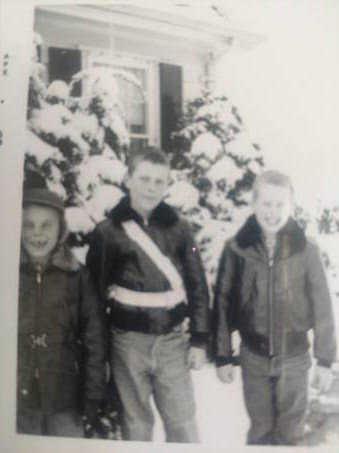
Anyway, banished from the religious service, I devoted more time to the school safety patrol. I had a white belt that went over my shoulder and around my waist, of course, and a badge. Soon I had the red-backed badge as lieutenant, as I recall, and then I got the blue-backed captain’s badge. So I remember my school safety patrol captaincy as my main religious responsibility for much of those three years until my bar mitzvah.
It has been joked that if you have mice in your house, just bar-mitzvah them and they’ll never come back! That’s what happened to my friends and me, once we had our religious services and bar-mitzvah receptions. Mine was at the Concourse Plaza Hotel, with friends/cousins and others present. And I no longer had responsibility for the school safety patrols, though I always feel especially kindly toward the crossing guards I see.
Richard Hessel
I was on the school Safety Patrol at Covert Avenue School in Elmont, N.Y., from I believe 1954 thru 1957. We had the white belts as I remember. Also the captain had a blue shield and the lieutenant and sergeant had red and green. I signed up because I wanted to help the school and I also was in the Cub Scouts at the time. I figured it was a good way to “do a good turn daily” and “always be prepared.” During one afternoon in 1956, I was patrolling the school bus pickup area at the school. As one of the busses left with the students to take them home, a student didn’t see the bus moving and ran in front of the bus. Somehow I just ran after him and pulled the boy to safety on the other side of the drive. As other adults came running, the driver who was quite upset for not seeing the boy thanked me for my deed.
Later that year at an assembly, I was presented with the AAA Distinguished Service Award for my actions. I still have the medal engraved with my name and “1956” in my possession. From then on I always seem to be volunteering to assist others through Boy Scouts (where I’m still an active leader), American Legion vice commander, official Red Cross volunteer, BOE inspector and volunteer at the VA Hospital in Northport, N.Y.
Rhode Island
Angela Tarlian
In 1957, I was a School Safety Patroller at Randall Holden Elementary school in Warwick, R.I. I was in the sixth grade and assigned to help children cross Warwick Avenue. April of 1958, I, along with a boy at my school, was chosen to travel to Washington, D.C., and march in a big holiday parade. I don’t recall the holiday. We traveled by train and stayed at the Annapolis Hotel for the weekend.
During our stay we were taken to many of the sites by bus. When visiting the White House I saw President and Mrs. Eisenhower get into their limo. I was so excited! After leaving the White House one of the three buses transporting us was in an accident. I don’t remember anyone being seriously injured.
The day of the parade was beautiful! I can remember being so proud to represent my school, city and state. After the parade we made our return to Rhode Island. It was an experience I never forgot.
Kathryn R. Levine
I do not recall whether I actually applied to be a patroller and really don’t think that was the case. Rather, I believe the school authorities asked if I would take on that role. I considered it an honor to be asked to do so. I was issued a white safety patrol belt and badge and I believe I may also have had a flag on a pole. It was my job to help safely cross students from the opposite side of the street to the side on which the school was located. I believe I had the job when I was in the sixth grade at Warren A. Sherman Elementary School in Warwick, R.I., and that would have been the 1957-58 school year.
Although I was proud to be asked to serve in this leadership role, my greatest memory from my participation in the program was that I was one of the patrollers selected to go to Washington, D.C., to represent our state patrol program. Kids came from all different states and we got to visit the national monuments, sleep in a hotel and march in the Cherry Blossom Parade! For the parade we had to dress all in white and were issued red safety patrol belts to wear just for the occasion. We felt mighty important indeed!
I am not sure if any studies have ever been done looking into the connection between school safety patrol programs and later leadership roles or volunteer work done by former patrollers. I think that would be a worthwhile study. As for myself, I went on to become a school psychologist and then a director of special education. As a young mother I fostered newborn infants and cared for them until they were formally adopted. I also taught Sunday school and raised two boys of my own. Later, I became a hospice volunteer and, in connection with that service, I became and remain a member of a hospice threshold choir. Our group sings at the bedsides of those transitioning from this life.
I cannot say that being a safety patroller directly led to any of these lifetime activities. But I can say that I was then and am now very proud to have held that position. Oh, and one last thing: My husband was also a School Safety Patroller!
(Photo: Michelle G. Traub)
Michelle G. Traub
I was amazed to see your call for stories on being in the School Safety Patrol because I had just been telling my boyfriend how much I had enjoyed that role. I was a patroller at Tiogue Elementary School in Coventry, R.I., from 1985-1986.
We were allowed to join at the end of fifth grade. I had admired the sixth graders who helped patrol the school and knew I wanted to join as soon as I was old enough. I was actually attending Washington Oak Elementary School at that time. I remember we were meeting in the gym to discuss who would be captain of the patrol. My friend Michael nominated me unexpectedly, and then it was taken to a vote. Two of us were selected as the final candidates. We had to turn our backs to the group while our peers voted. I was sure I wouldn’t be picked, as the other girl was much more popular. When I learned that I had won I was amazed and so proud. But then a few months later we learned that our school districts were being reassigned and I would be attending Tiogue. I was a bit worried that the new school might not have a safety patrol. However, once the school year started the new principal already had me assigned to the role. My task was to walk the kindergarten students to their bus. They were always such bundles of energy and nerves. Since I remembered being a very shy and timid 5-year-old myself, I loved being able to comfort and support them as they made their way home safely. I still remember the little ones who were on my bus. It felt like they were my siblings.
I think the role gave me a lot of compassion for children. I had initially planned to be an elementary school teacher, but once I started college I found a greater passion for health promotion. I ultimately went on to become a registered dietitian and am now a writer. However, my love of children never left. I have utilized that in a very important role as an aunt to 13 nieces and nephews.
Cathy Rounds Waldron
In 1960, when I was in sixth grade at Park School in Warwick, R.I., I saw the principal talking to my teacher. She stood at the head of my class and announced that Cathy Rounds was chosen to be a Jr. Police! (That’s what we were called.) I was given a red sash and a red flag with the word “Stop” on it. My post was at the top of my street where it met the main drag going to my school. It was pretty calm every day because back in 1960 everybody walked to school since most of our moms stayed home and most families had just one car, which dad took to work.
Then, towards the end of the school year, I was chosen to take a trip to Washington, D.C.! We went by train (my first time), stayed in a hotel (my first time) and of course saw all the sights: the White House, Lincoln Memorial, Arlington and many more exciting things. As a young girl who had never really been anywhere, it was quite the experience!




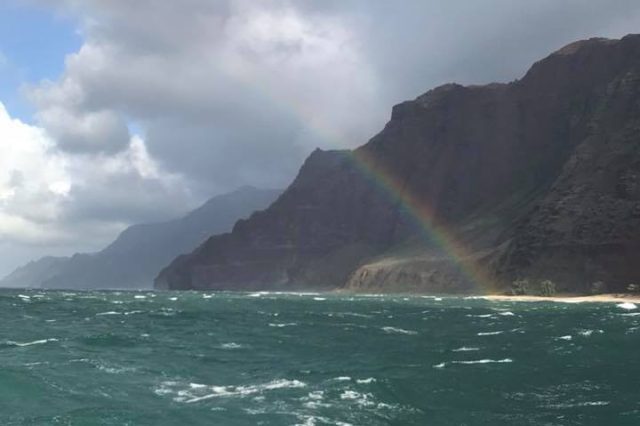 A storm in the distance. (Karen Galasso)