
Related Articles


Trending Articles


NEWEST ARTICLES



It’s no surprise that raising kids can be expensive.
“Middle-income, married-couple parents of a child born in 2015 may expect to spend $233,610 ($284,570 if projected inflation costs are factored in) for food, shelter and other necessities to raise a child through age 17,” according to the U.S. Department of Agriculture. That’s before considering college costs.
Sticking to a budget isn’t always easy but every little bit you can save now can benefit you later on. Here are seven tips that could help you save on activities, necessities and planning for your kids’ future.
One of the biggest expenses associated with having kids is childcare. Not everyone can be a stay-at-home parent or have the opportunity to work from home. In these cases, childcare may be a necessity.
First, look into whether your employer offers a childcare voucher. There are also government and local programs that could be worth looking into.
Try swapping babysitting duty with family or friends. This way, you’ll rest assured knowing who’s watching your kids without having to spend a penny.
Once the kids are in school, consider after-school activities. Things like art club, mathletes and other extracurriculars can be inclusive and free or possibly cheaper than other options.
Sports can be worthwhile as well, but equipment can be expensive. Consider buying used equipment and/or limiting to one pay-to-play sport per child or season. Running around trying to make it to too many activities can be overwhelming for both kids and parents.
Toys typically go on sale in January, after the holidays. Consider stocking up on a few gifts for kids’ birthday parties throughout the year. Timeless gifts can even be saved until the next holiday season.
You don’t have to go on a big, expensive vacation every holiday break, or even every year. Consider mixing in “staycations.” Go for quality over quantity. Genuine family time is priceless, and kids that are too young won’t remember elaborate trips.
When it is time for a family vacation — whether it’s yearly or every other year — look for discounts, family packages and consider going off-season to save on cost.

Takeout can be expensive. While homemade meals are almost always healthier because you can control what you put in, home cooked foods are cheaper too.
Start with setting up a menu. Meal planning saves time later on; you won’t be searching through the cabinets wondering what to make. Plan at least a week in advance. Save money by using what you already have, which will also reduce food waste.
Have a couple of go-to favorites, like taco Tuesdays. Some meals can be made in advance while gadgets like slow cookers and instant pots will do a majority of the work for you.
Have a budget and track your spending as you shop. Save by skipping pre-cut and prepared foods. Use weekly circulars from your grocery store to take advantage of sales, as well as coupons and apps. Don’t go overboard with snacks, only buy what you need and never go grocery shopping hungry.
When you do dine out, save any leftovers. This way, you’re getting all of what you paid for. Leftovers make a good lunch or possibly dinner for the next day.
The idea behind reusable products are to pay a little more upfront — compared to cheaper throw-away items — in order to save money in the long run. Reusable items are more sustainable and better made for this reason.
Rather than using plastic baggies for kids’ snacks or school lunches, consider reusable bottles, containers and bento boxes. They are eco-friendly, come in fun colors and designs and are typically dishwasher safe.
Though clothing may not be a stereotypical reusable product, clothes do fit the bill. Young kids are always outgrowing clothes. Ask family and friends for hand-me-downs and consider buying certain items secondhand. A major exception would be car seats, which should be newer in order to meet safety regulations.
When it comes to buying new clothes, shop when there are sales. February and August are good months for purchasing kids’ clothes thanks to back-to-school sales. Also, consider investing in unisex clothes if you plan to have another baby or someone close to you is.
Just like family vacations, not every outing has to be extravagant. Plenty of family and kids’ activities can be enjoyed in and around the house, with little to no cost at all.
Home movie nights and family games — both digital and classic board games — are fun and affordable, sometimes free. Utilize your local library for everything from books and movies to classes and audiobooks.
To get some fresh air, camp or picnic in your own back yard. For more physical activities, try family bike rides and games like hide and seek, tag and scavenger hunts.
Saving on utilities by turning off lights, only cooling/heating certain parts of the house and reducing water waste have become energy-saving no-brainers to most adults. Take some time to teach these skills to your kids, and then they’ll be helping you save too.
Try gardening or planting with your kids. Teaching them how to nurture a living thing and/or giving them the job of watering your plants can teach responsibility. Growing some of your own food can lessen the amount of groceries you have to buy.
When decluttering, donate or sell things you don’t need rather than throwing them away. Sell with a yard sale or through apps like eBay, LetGo and Facebook Marketplace to make a little money. Meanwhile, donating can show your kids the importance of giving, which you can later include during tax time.

Open a savings account in their name, preferably a high-interest savings account. Contribute to it as regularly as every other paycheck or annually on birthdays, depending on your financial situation. When it comes to saving, every penny really does count.
Take some time to sit down and talk to your kids about money. Explain the value of it and the importance of saving. As kids get older, have them pay for things they want on their own, whether that means doing extra chores, babysitting or finding a part-time job.
Finally, when it comes to higher education — whether that means college, trade school or other training — look into every option for saving on costs. Consider scholarships, grants, online classes and community college. There’s also student lending.
With so many different expenses, it can be overwhelming to think about how to save money when you have kids. By planning ahead and saving smart, it’s a more obtainable goal than it may seem.
Do you have any other tips on ways to save when you have kids? Share them in the comments.



Discover the path to longevity. Reducing the likelihood of heart disease, obesity and anxiety, hiking can help increase your quality of life. The heart healthy and therapeutic activity of exploring nearby hiking trails is the perfect way to spend a weekend. Forget about your worries. It’s time to take a breather and slow down.
Note: Due to the ever-changing nature of the COVID-19 pandemic, please see official websites before visiting to check for restrictions or closures.
Black Mountain Loop at Lake George
Length: 7 miles
Located in: Lake George, N.Y., 75 minutes north of Albany and four hours north of NYC
Highlights: The moderate hike up Black Mountain rewards with breathtaking views that overlook the northern portion of Lake George. To the south, mansions and resorts dot the shoreline, and to the north, there are spectacular views of Anthony’s Nose preserve and the rugged peaks of Tongue Mountain. Detour from the main path and venture off on one of the trails leading to the south or east, where three small ponds (Black Mountain, Lapland and Millman) rest within a mile of the summit. At the summit awaits one of the few remaining fire towers in the Adirondacks.
Don’t miss: Take a hot air balloon up over the water.
Length: 8 miles
Located in: Northeast Piscataquis, Maine, 3 1/2 hours north of Portland
Highlights: Considered the “Grand Canyon of the East,” the Gulf Hagas Trail rests in one of the most remote sections of the Appalachian Trail. With no bridge at the trail crossing point, travelers should be prepared to get wet at Pleasant River, which spans 150 feet wide. Along the trail, beautiful cascading waterfalls and deep, mesmerizing gorges are the main attractions. Watch your footing; the path can get a little wet. And be sure to visit Hermitage, a stunning old growth pine stand owned by the Nature Conservancy, or gaze at Screw Auger Falls.
Don’t miss: Bring a friend, a map and a plan. This trail, while beautiful, is extremely remote. Be careful and wear well-draining shoes for river crossings.
Length: 9 miles
Located in: Albany, Pa., 90 minutes northwest of Philadelphia
Highlights: Out of the entire 230 miles of Appalachian Trail cutting through Pennsylvania, this 9-mile stretch offers two of the best views around Pulpit Rock and Pinnacle Rock. Moderate on the difficulty scale, this hike is fine for most adventurers and at the summit, seemingly endless views of Leigh valley make it well worth the trip. Travelers can expect sprawling views surrounding hills and patchwork of farmland. Beautiful year round, the view comes alive during the fall.
Don’t miss: The chance to get there early! This hike is popular and on busy weekend afternoons large crowds detract from the peaceful view.
Length: 3.5 miles
Located in: Newport, R.I., 45 minutes south of Providence
Highlights: The first National Recreational Trail in New England, this walk has history. It winds past the cliffs of Sheep Point Cove, showing off rocky shoreline, and travels the gilded age architecture of Newport’s Historic District. Along the way, wildflowers and birds add to the scenery. Further south, trailgoers scramble from rock to rock on a more natural and rugged path. So, be sure to wear the proper shoes.
Make sure you: Visit the Colonial architecture and the local museums. The White Horse Tavern, which is the oldest U.S. tavern still serving drinks, is also a neat spot to visit.
Length: 13 miles
Located in: Salisbury, Conn., 90 minutes north of Bridgeport and 75 minutes southeast of Albany
Highlights: Go for the hike, stay for the scenery. The quiet trek up Lion’s Head along the Appalachian Trail is a short (but difficult) hike with an amazing view. The highest peak in Connecticut, Bear Mountain overlooks a sprawling and breathtaking landscape. From the top of the summit, hikers can watch as sections of southern Connecticut fan out wide, with rolling Litchfield Hills. Due east, the Twin Lakes. And north, views of Massachusetts and the interspersed mountainsides, farmland, woodlands, and small towns.
Don’t miss: The 22-foot stone pyramid at the top of Bear Mountain and enjoy views of the Catskills.
There’s nothing better than a little one-on-one with nature or a quiet hike with family or friends. During autumn, these nearby hiking trails offer beautiful blazing color. Head off on a new adventure!
Need some motivation? Read about one AAA member’s ultimate hike along the Appalachian Trail.
What are some of your favorite nearby hiking trails? Let us know in the comments below. And for more local outdoor exploration check out these walking and running trails.
This post was originally published in 2018 and has been updated.


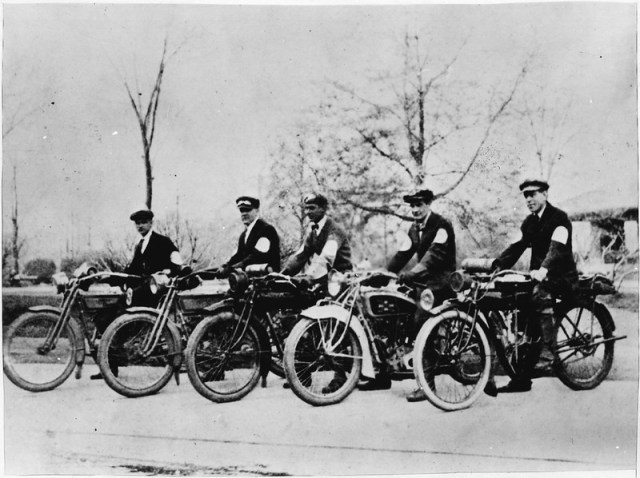
AAA kick-started its roadside assistance service back in April 1915, when five motorcyclists working for the Automobile Club of St. Louis founded the “First Aid Corps.”
The group didn’t wait to be called. They drove through the city’s streets on Sundays looking for stranded motorists, making minor engine and tire repairs for free, for members and nonmembers alike. They helped 24 folks on that first Sunday and 171 by the end of the first month.
The service was wildly popular. The club was flooded with grateful letters, including one from Carl Simons, manager of the St. Louis branch of Studebaker Corp., after his inner tube was repaired by one of the mechanics.
“I don’t know who was the originator of this service idea, but it is the most splendid feature we can call to the attention of prospective (AAA) members,” wrote Simons. “And you may rest assured that every purchaser of a Studebaker car will be solicited by me personally to become a member of the St. Louis Automobile Club.”
Studebakers may not be around anymore, but the rest, as they say, is history.


Street photography tells the story of a time and place. It showcases the people that live there, and the everyday moments that make up their days.
Today I am sharing with you some street photography tips and tricks to get you started on how to visually tell the stories of your adventures out in the cities, towns and communities that you roam.
First things first, make sure you know the street photography rules of the country that you are in. In the United States, street photography is permitted for artistic purposes. You can sell prints and showcase your images online. You can not use your images for commercial purposes. Most countries have somewhat similar laws, but its best to research a country’s street photography laws before you start taking pictures.
Some people are not going to be too keen on having their picture taken. It never hurts to ask someone’s permission. You can always get their email address and email their images to them in exchange for letting you take their picture.
Camera
Really any camera works for street photography. However, if you are trying to fly under the radar, the smaller the camera the better. Mirrorless cameras are the smallest in size and weight. I personally recommend Sony mirrorless cameras; they are the leaders in technology for these types of cameras.
Need more help choosing a camera? Check out this camera buying guide.
Lenses
I recommend a fixed focal length lens of either 24mm, 35mm or 50mm. Fixed lenses are smaller in size compared to a zoom lens, which often intimidates people.
An aperture of f/11 or greater will deliver images that have most of the scene in focus. To freeze motion you will want to have your shutter speed above 1/250th of a second. I recommend using a semi-automatic mode like aperture priority for street photography. Since the light varies so much by location and time of day it’s easier to set your aperture to f/11 and let your camera pick your shutter speed for you. If you notice your shutter speed is too slow, you need to raise your ISO. For portraits, I would switch the aperture to a shallower depth of field like f/2.8.
If all these camera terms sound like a different language to you, use our camera settings cheat sheet as a guide.
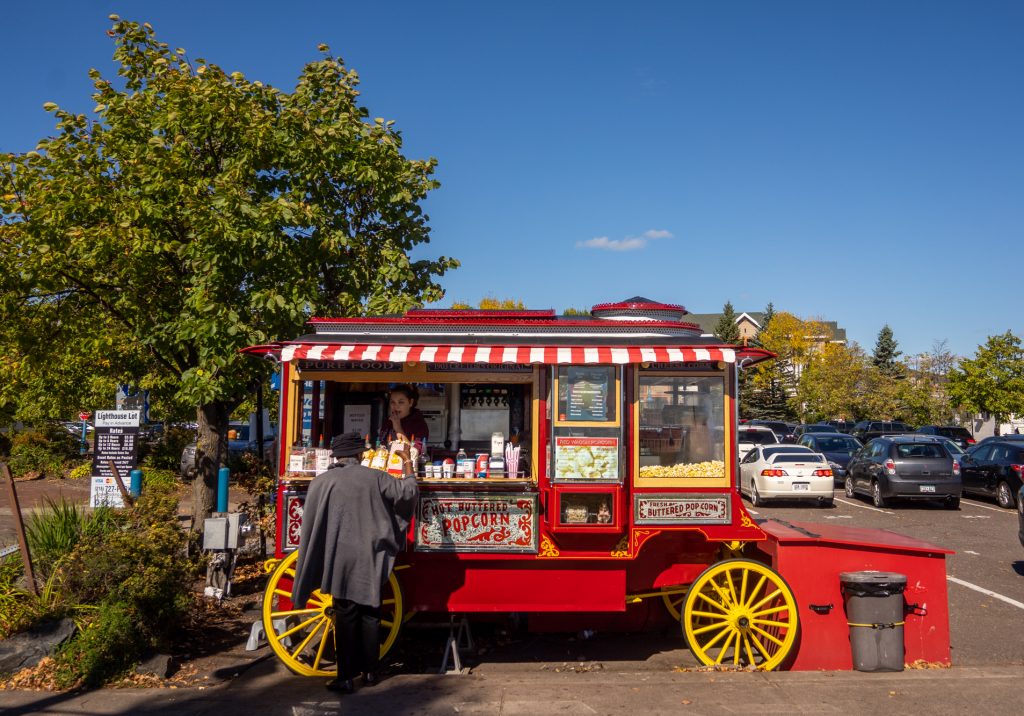
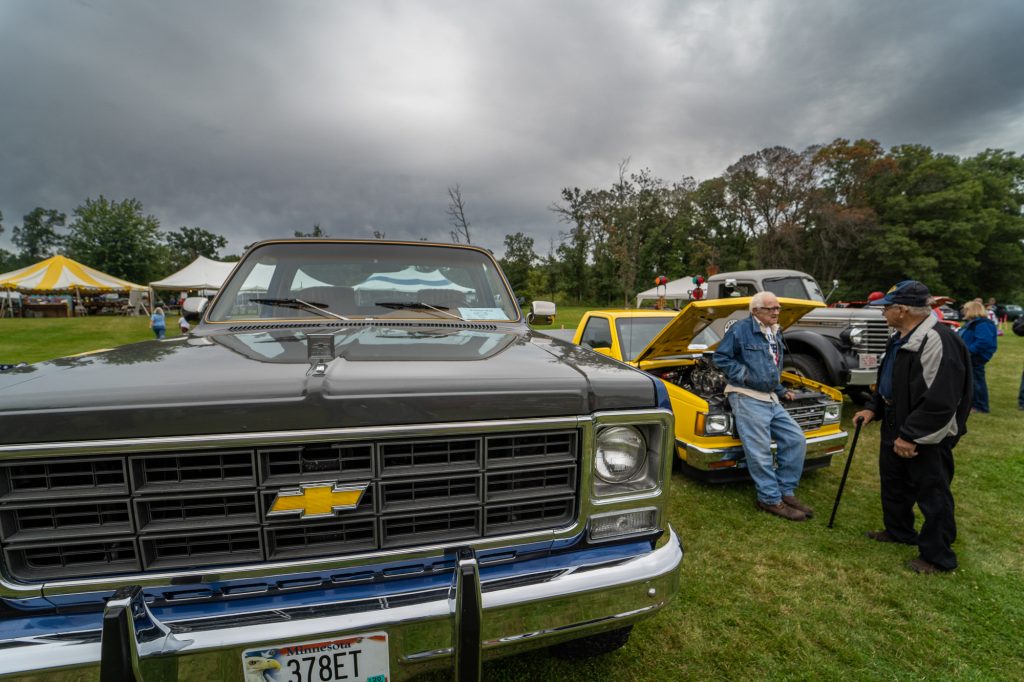
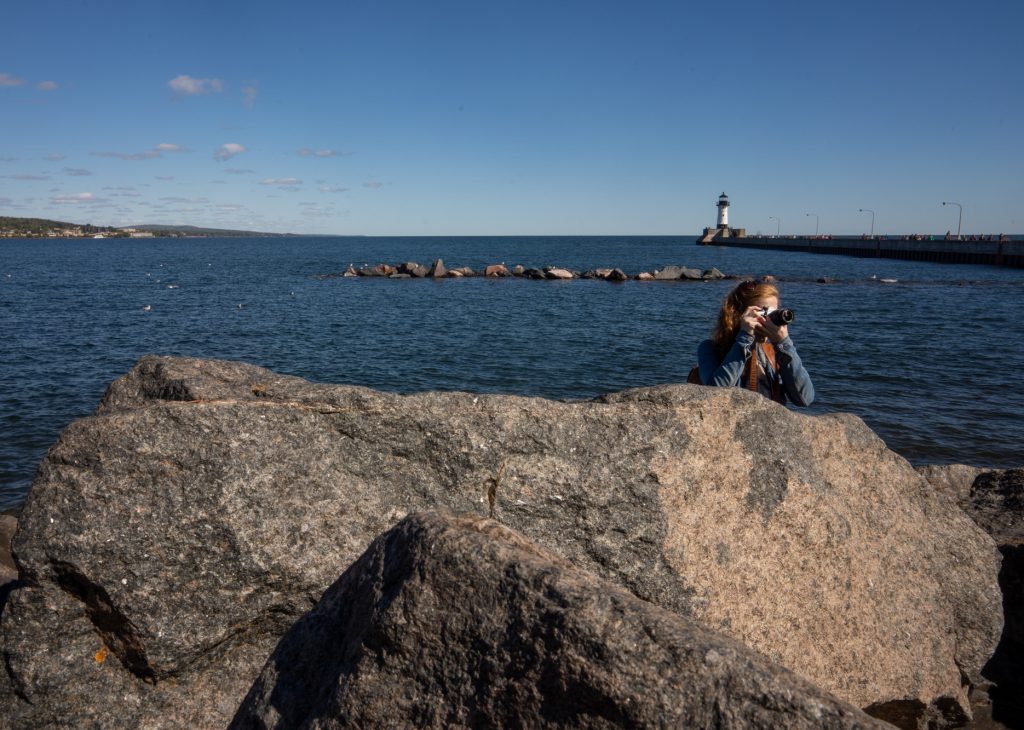
Just because the term “street photography” has the word street in it doesn’t mean you necessarily need a street in your images. Look for places where there will be a lot of people, motion and visual interest. My favorite places to do street photography are big cities, carnivals, car shows, vendor markets, parades, peaceful protests, the beach and county fairs.
While street photography is open to creative interpretation, here is a list of things to look for to get you started.
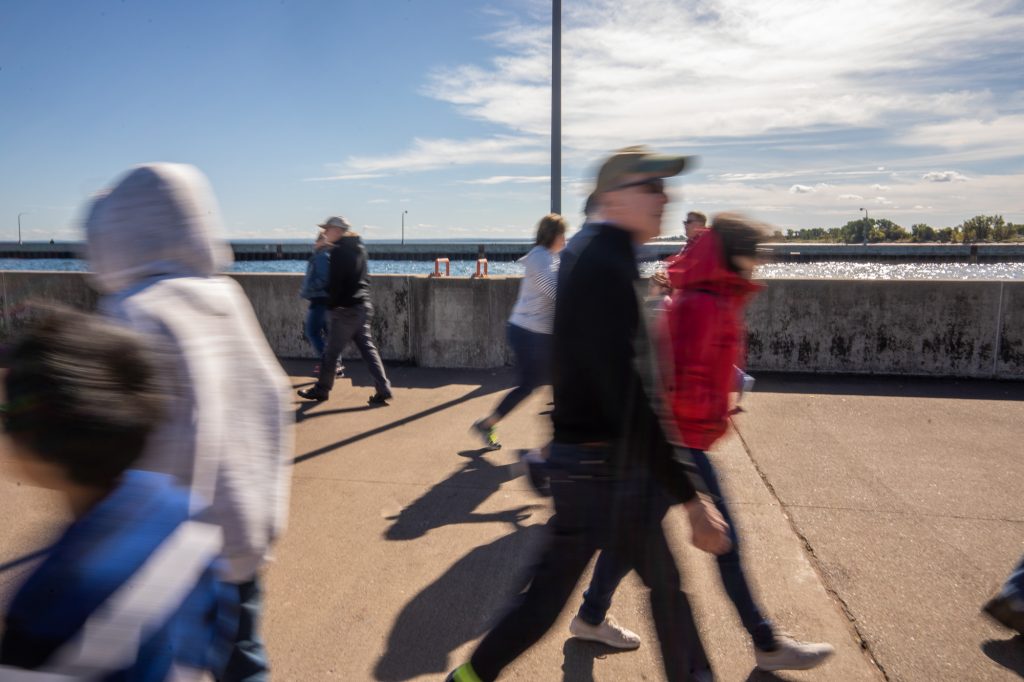
Slow it Down
Slow your shutter speed down to show the hustle and bustle of the city. A slow shutter will make the people and cars in your images be blurred and will show them in motion. In the image above, my shutter speed was 1/25 second. Rest your camera on something to get a steady shot or use a tripod.
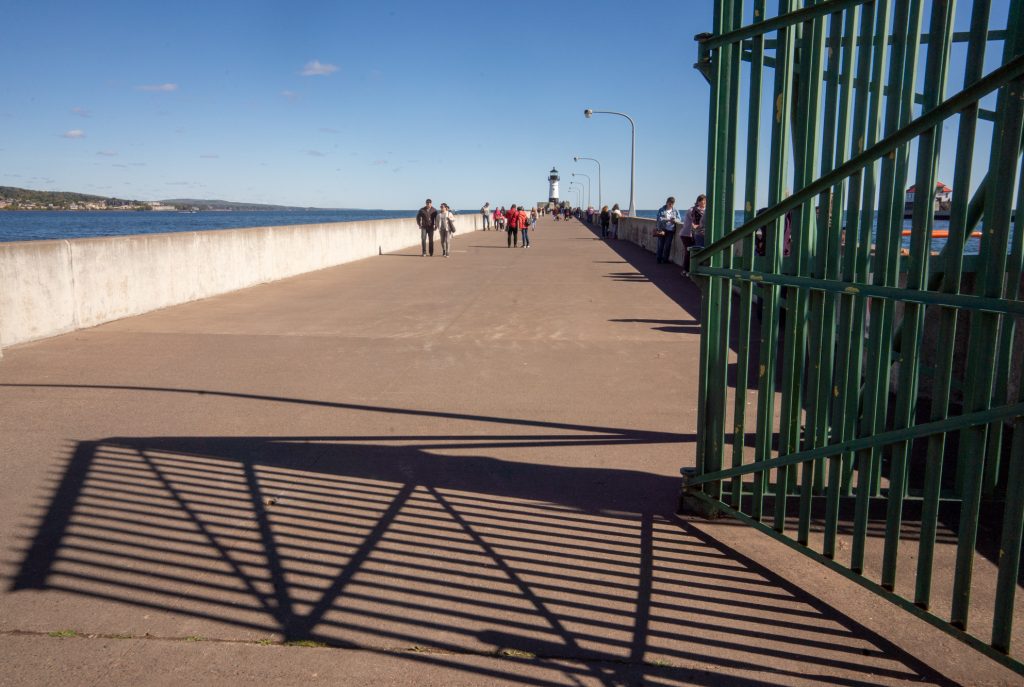
Look for Light
Use light and shadows in creative ways. Look for shadows from buildings, fences, people and trees and interject them into your images.

Create a starburst with light. For this, you will want your cameras aperture to be at its smallest. In the image above my aperture was set to f/22.

Edit in Black and White
Use Photoshop or Lightroom to convert your color image to a black and white image. When you take the color out from a photo it forces the viewer to focus more on the subject. Plus there is a certain nostalgia tied to black and white imagery.
Shoot From the Hip
If photographing people makes you a little nervous, you can try the shoot from the hip method. To do this, wear your camera around your neck and take pictures while your camera hangs there. For the best results, make sure you have a small aperture selected anything above f/11 would work. Vary how you tilt your camera for a wide variety of images. While this technique is a little bit of a gamble, it is a great way to get comfortable shooting people.
Now that you are armed with street photography knowledge, hit the streets and see what you come up with! Happy Snapping!
What do you think of these street photography tips? Will you be trying them on your next vacation or daytrip? Tell us in the comments.


AAA lives to serve its members so we are always on the lookout for ways to enhance our members’ experiences.
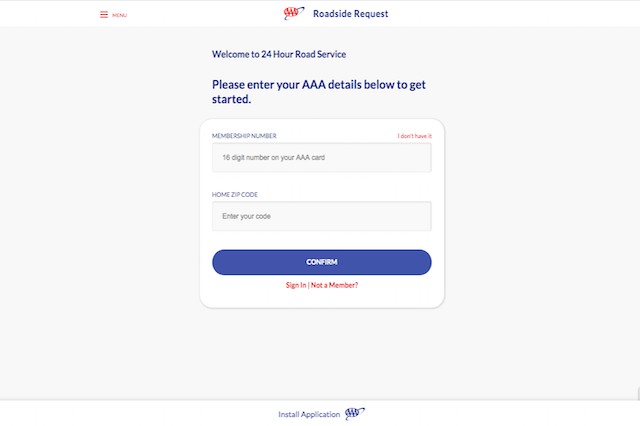
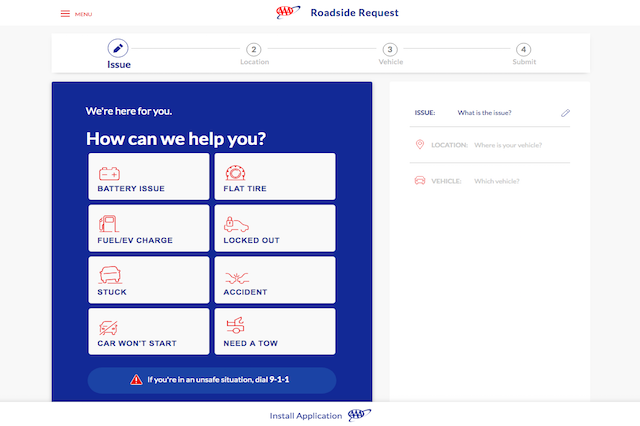
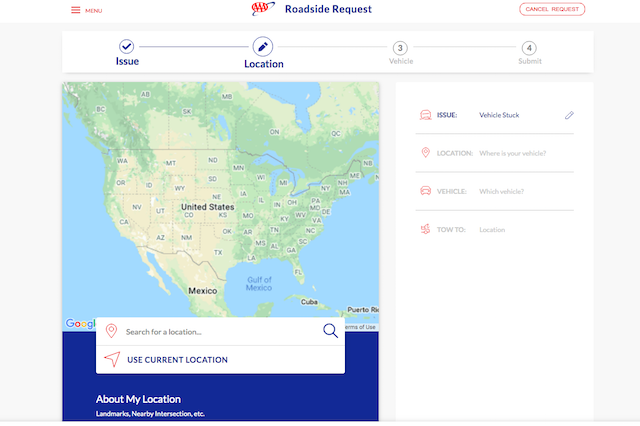
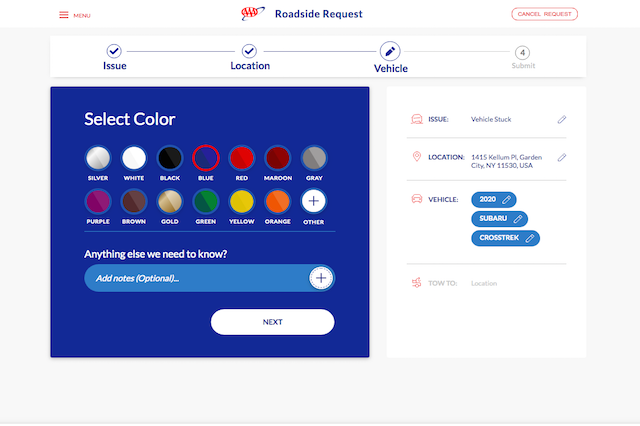
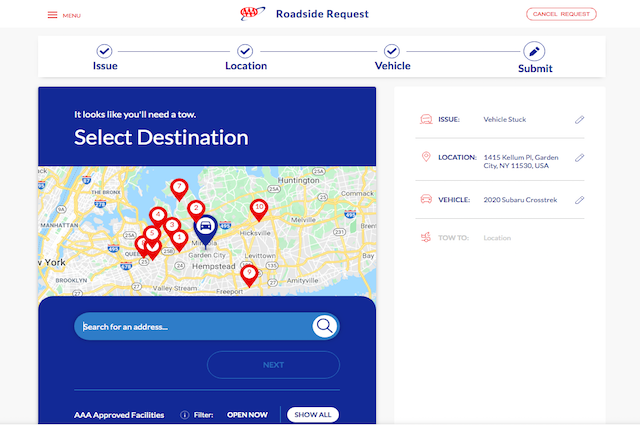
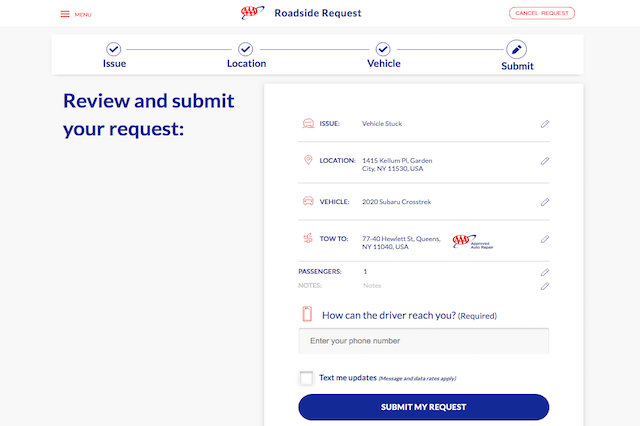
Because Roadside Assistance is such a valued and trusted service, we want to make it as easy to access as possible. This is why we have revamped our online Roadside Assistance request system. The new system is much more intuitive and user-friendly. Members can get complete a request in just a minute or two.
“Our investment in this new system is really an investment in our members,” says John Nardolillo, AAA’s Senior Vice President of Member Services. “Requesting service online will be easier, faster and more efficient, which are all important factors when you’re having an issue at the roadside.”
AAA accepts online requests for road service 24-hours a day in the Connecticut, Massachusetts, Rhode Island, New Jersey, New York and Salem, NH, areas. To request service online have your 16-digit membership number ready. This is located on the front of your AAA Membership Card.
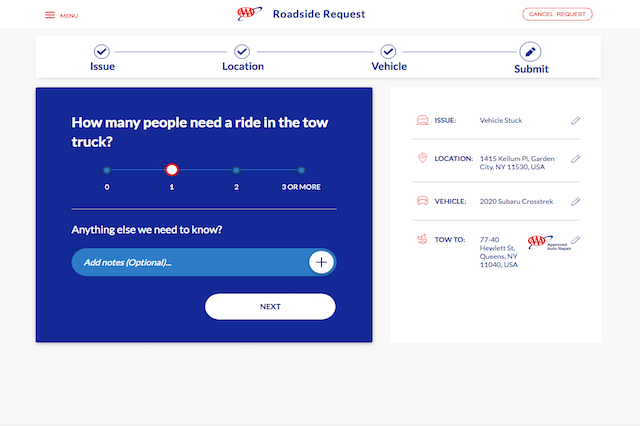
You’ll then be directed to enter the type of assistance you need (flat tire, dead battery, locked keys, etc.), your location, and the make and model of your car. You can also include information such as the facility you would like your vehicle to be towed to if needed, and how many passengers need a ride.
Your membership covers you with 24/7 roadside assistance. If you need us, request service quickly and easily at AAA.com/GetMoving.
Learn more about what to do when your car breaks down.



The belt color may have changed quite dramatically over the 100 years of the AAA School Safety Patrol Program — from white to neon orange to today’s fluorescent green called ’Lectric Lime — but the mission remains the same: To provide a safer environment and leadership opportunities for millions of schoolchildren.
In honor of its centennial, let’s take a look back at how this historic program came to be and the impressive alumni it counts among its ranks.
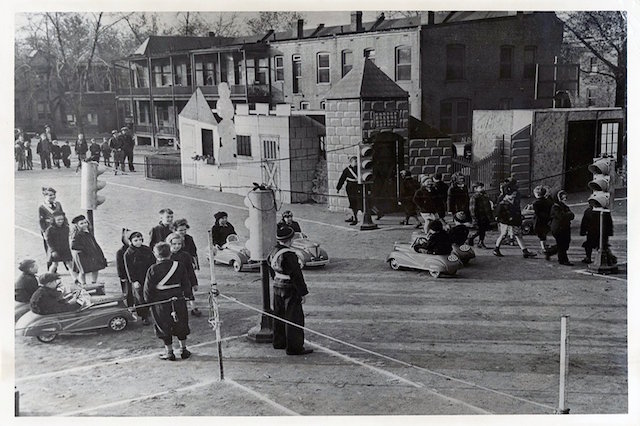
The idea of school boy patrols began in 1920 when Charles M. Hayes, then president of the Chicago Motor Club, built the infrastructure and provided the resources so that AAA clubs across the U.S. could protect school-age children walking to and from school.
Hayes witnessed several children at a school crossing get killed by a speeding car. After the horrific incident, Hayes pledged to help prevent such a tragedy from happening again and from that day forward Patrollers received traffic safety training designed to keep children safer to and from their way to school. Because of Hayes’s steadfast dedication, the program is now 100 years strong and continues to have a positive impact on schools, students and communities.
In the 1930s, three national organizations – AAA, the National Congress of Parents and Teachers and the National Safety Council – collaborated on Standard Rules for the Operation of School Boy Patrols. These guidelines have been updated over the years to become the operating standards for AAA School Safety Patrols.
Since its creation, the program has included 670,000 Patrollers in 35,000 schools, making it the world’s largest safety program. Today, these brave young leaders dedicate their time before and after school each day, working with teachers, supervisors, adult crossing guards and law enforcement to ensure the safety of their classmates.
“AAA School Safety Patrol plays an important role in helping young pedestrians learn and fulfill responsibilities regarding traffic safety,” said AAA Traffic Safety Advocacy and Community Impact Manager Rhonda Shah. “Millions of American children have honorably served their classmates since the program began in the early 1920s, and interest in the program has spread around the world.”
The AAA model has been adopted in at least 30 other countries, including England, France, Germany, the Netherlands and New Zealand. The program has been praised by national and international safety and education groups for reducing deaths and injuries among 5-to-14-year-olds, the age group most at risk for pedestrian injury.
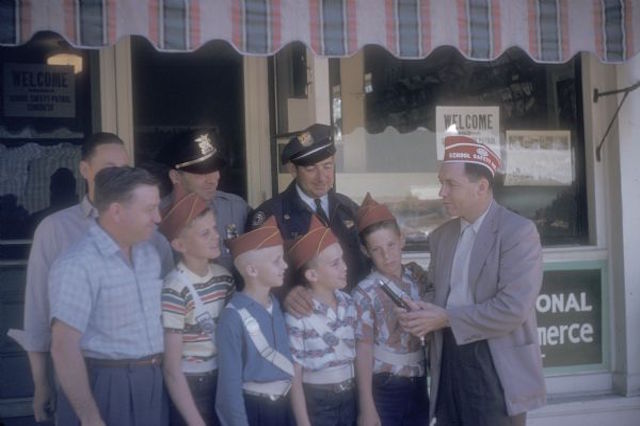
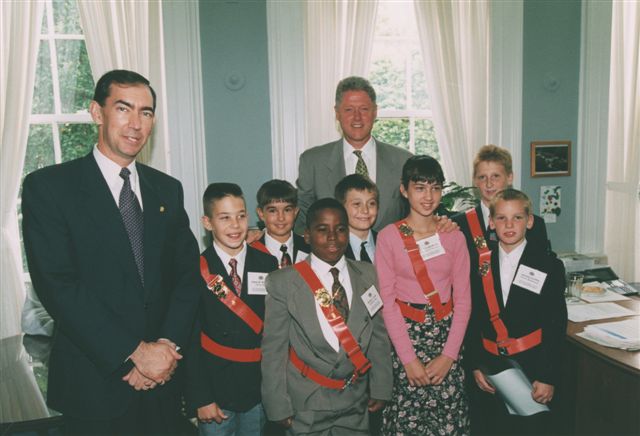
The AAA School Safety Patrol Program also teaches lifelong lessons of good citizenship, leadership and responsibility, as evident in the fact that past Patrollers have grown up to be U.S. presidents or vice presidents (Jimmy Carter, Bill Clinton and Joe Biden), astronauts, governors, members of Congress, Supreme Court justices (William Brennan, Stephen Breyer, Warren Burger, Anthony Kennedy and Clarence Thomas) and Olympic medalists (Eric Heiden, Caitlyn Jenner — formerly known as Bruce Jenner, and Edwin Moses). Many Patrollers also now serve as educators, executives, physicians and other community leaders throughout the nation.
Did you proudly serve on AAA’s School Safety Patrol? AAA members are encouraged to submit their photos at AAA.com
Automotive innovation has certainly come a long way in 100 years. What started out as a wood frame with four wheels and an engine has become a technological marvel and a haven for modern innovation. Some of the most advanced models today cost more than the average price of a home.
There are certain names and brands that come to mind when you picture the history of the automobile. Henry Ford, the Dodge Brothers, Chevrolet, to name a few. When placed under a magnifying glass, however, automotive history has many other contributors that are often forgotten or not given credit for their major contributions.
We take so many features in today’s automobile for granted – seat belts, antilock brakes, airbags and even turn signals. Who deserves the credit for these breakthroughs? Let’s take a look.

The story behind the Tucker Corporation is fascinating. Preston Tucker is known for establishing the Tucker Corporation – which produced only one model, the Tucker 48, for the 1948 model year. Only 51 cars in total were produced – all by hand (including the prototype) before the company was forced into bankruptcy in March 1949.
The company was suspected of fraud by the Securities and Exchange Commission, which had small, start-up automakers under a magnifying glass at the time. However, Preston Tucker suspected that the Big Three automakers played a role in his company’s demise because they may have been threatened by his car’s fresh new design and safety advancements, many of which were ahead of their time.
Some of Tucker’s safety advancements paved the way for modern-day safety standards, such as a padded dashboard (to reduce injury in the event of a crash), a windshield that could pop out on impact (also to reduce potential injury) and even a headlight that could move with the steering wheel for increased visibility when turning (known today as ‘adaptive headlights’). The prototype Tucker car also featured innovative front and rear seat belts. However, the seat belts never made it to production because the company felt, ironically, they made the car appear unsafe.
While Preston Tucker’s dream didn’t make it to mass production, his contributions to the automotive industry should be remembered.
Looking for more on the Tucker story? Check out the 1988 movie “Tucker: The Man and His Dream” starring Jeff Bridges. The AACA Museum in Hershey, Penn., also features an extensive Tucker collection and exhibit, as well as periodic meetups of Tucker fans.
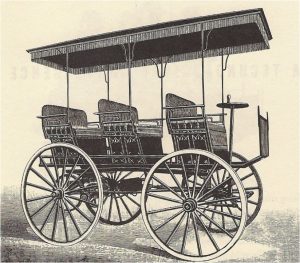
Think electric cars are modern creations? Think again.
The electric car doesn’t have a single creator but rather is the result of a series of inventions. The construction of the first battery-operated vehicle in the United States can be attributed to William Morrison, an inventor working in Des Moines, Iowa, in 1887.
The vehicle could seat 12 people and move at a walking speed or cruise up to a hair-raising 20 miles per hour. Morrison produced 12 prototypes of his vehicle, none of which exist today. Morrison showcased his vehicle in parades and even claimed that it was the “first successful practical passenger automobile in the world” and offered $5,000 to anyone who could prove otherwise.
However, with the onset of Ford’s Model T and the assembly line production of gasoline cars, the gasoline engine became more popular in the early 20th century, lessening demand for the electric automobile.
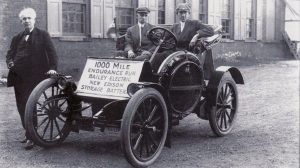
Thomas Edison is celebrated for inventions such as the lightbulb, but he has more of a connection to the automobile than many realize. He and Henry Ford were well-known friends. Ford was working for Edison at the time he developed his Quadricycle in 1896 and Edison encouraged him to pursue his plans for automotive design and production.
A few years later, Ford had launched his automobile company and Edison was researching and developing battery storage technology. Edison convinced Ford to collaborate on a battery-powered vehicle, which Ford admitted to the New York Times in 1914.
While rumors circulated throughout 1914 as to the status of the vehicle – how much it would cost, the mileage range, etc.- the vehicle never made it to production and Ford focused instead on gasoline-powered automobiles, specifically the Model T.
A few prototypes of these vehicles reportedly have been built but never saw the light of day.
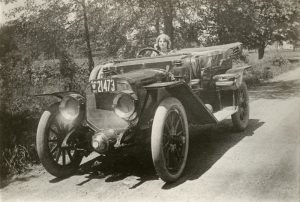
It may surprise you that it wasn’t an inventor or engineer that designed the turn signal – it was an actress.
Florence Lawrence, who acted in over 250 films, was an automobile enthusiast who was privileged enough to own a car at a time when only the wealthy could afford them. Trying to come up with her own way to improve the automobile, she invented the ‘auto signaling arm’, which was the early version of a turn signal. This consisted of an arm attached to the rear fender that could be raised or lowered by buttons to indicate the driver’s intention to turn.
Unfortunately, Lawrence never patented her invention and therefore never profited nor received recognition for it. Automakers adapted her invention and improved upon it – by 1939, Buick had made electrical turn signals standard on all its models.
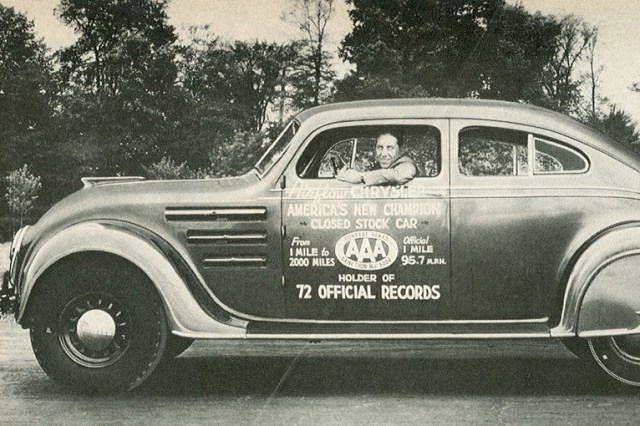
The Chrysler Airflow, introduced at the New York Auto Show in January 1934, represented a dramatic change in automotive design: it was the first automobile to have aerodynamics considered for efficiency. This design was polarizing- at the New York Auto Show, the Airflow topped attendees’ lists of both best-and worst-looking cars.
The Airflow packed in many innovative features. For starters, the cabin was placed between the axles (instead of on top of the rear axle) to ensure a smoother ride and maximum comfort. The car also featured unibody construction, which would help ensure maximum safety in the event of an accident.
The Airflow also had an available in-dash radio system with automatic volume control, which would raise or lower the volume according to the speed the vehicle was traveling. Many cars today don’t include this feature.
In addition, aerodynamic design greatly improved fuel efficiency and AAA was there to bear witness.
Harry Hartz, a retired professional race car driver, was accompanied by a AAA representative for a publicity stunt in August 1934, in which an Airflow was driven from Los Angeles to New York to test fuel efficiency. AAA even chose the vehicle off a showroom floor to ensure the vehicle was entirely stock. On the trip, they achieved an average 18 miles per gallon and burned just 2.5 quarts of oil – an amazing feat for a vehicle at the time.
Unfortunately, because customers didn’t see the need for these features, sales of the Airflow were disappointing and automakers didn’t think the upgrades were necessary on future cars.
What automotive advancement do you appreciate the most? Tell us in the comments below!


There is no doubt that money is a stressful topic. Even if you’re in a good financial situation, there is a seemingly never-ending list of money-related questions to ask yourself: Do I have enough to make all my payments? Am I putting enough toward retirement? Should I be saving more or paying off debt?
Here are a few tips to get yourself in a good financial position and reduce some of that money-related stress.
If you’re feeling stressed about money, it might be tempting to try to clear it from your mind. But dealing with your finances is not the time to bury your head in the sand. A bill won’t pay itself just because it was left unopened, ignoring your financial statements won’t put more money in the bank. In the end, not knowing your exact financial situation will cause far more stress.
Nobody likes to think about emergency needs like unexpected car repairs or an unforeseen medical bill. But they happen to all of us and they can very easily put a major strain on finances. Having a rainy day fund will ensure that the financial side of these events won’t be a concern.
A great way to start a financial safety net is by creating a separate savings account. You can then have a slice of each paycheck deposited directly into the account without even thinking about. Don’t be afraid to start small and build on your savings as you can.
Being in debt probably ranks at the top of the list of most stressful financial situations. But creating a solid plan to rid yourself of this burden can make things much easier.
First, figure out exactly how much you owe. Make a list of all your debts (credit cards, student loans, mortgages, etc.), how much you owe on each, and the respective interest rates. Once you have all these in one place, you can prioritize which should be paid off first. It usually makes the most sense to try to pay off the loans with the highest interest rates first as those will be accumulating the most debt the longer they stay on the books.
Consolidating your debt into a single loan can help ease stress in two ways:
Even if you can’t secure a lower rate, refinancing allows you to change the terms of your payment plan in your favor. For example, you could lower your monthly payments by extending the length of your loan. This may cost you more in the long-run, but if you’re stressed about short-term money woes, this could be just the trick.

If you’re having trouble paying your bills, reach out to your creditors to let them know the situation. Ask if they can provide any leniency, such as waiving late fees or providing forbearance. It is in a lender’s best interest to make sure you can pay back your debt, so they could be willing to work with you. It won’t always work but it can’t hurt to ask.
Creating a new source of income is surely easier said than done. That doesn’t mean it’s impossible. Brainstorm ways to earn more income. Consider a side job or a freelance gig that can be done in your free time. It doesn’t even need to be in the same line of work as your main career. You can turn your hobbies into money-making endeavors like selling homemade crafts, teaching piano, etc.
But don’t stop there. If finding a new job isn’t feasible (or just adds more stress), be creative. How about selling any belongings you no longer use?
Any task is easier to successfully complete if you have a plan. Think of a budget as a financial plan for your short- and long-term future. If you know precisely how much you can afford on discretionary spending, and stay within that amount, you’ll know that you are staying on track. This will eliminate a great deal of stress.
To make things even easier, there are a host of savings apps that can track your spending and make creating a budget a breeze.
Part of creating a budget is deciding where to allocate your money. This is when you need to have a serious talk with your yourself about your spending. What do you need and what can you live without?
It can be tempting to limit this conversation to discretionary spending. If cutting out smaller items solves your financial problems, do it. But if you’re in need of more radical changes, don’t be afraid to look at major expenses. For example, refinancing your car loan can reduce your monthly payments and keep more money in your bank account.
Finances can be a tricky subject. There’s no shame in asking for help. A financial advisor can help decide what your goals should be and create a plan for reaching them. You can then rest assured that you’re on the right track no matter how untenable your money situation feels.
Many advisors offer free consultations. This is a perfect, no-pressure opportunity to understand how a professional can help ease your financial stress.
A positive mindset won’t magically make debt disappear or your bank account grow. But it can go a long toward easing your mind if you’re stressed about money. Think about the areas where you’re doing well, not just where you’re struggling. You might be worried about your lack of savings and forgetting about the debt you paid off, which will put you in a good position going forward.
It’s easy to focus solely on the negative but it’s important to take an objective, big-picture look at finances. You might just be in a better place than you thought.
The goal of digital assistants is to make life easier – they can set timers and alarms, make to-do lists, find hotels and restaurants, make calculations, control your smart home and much more.
But while these day-to-day skills are common to many digital assistants, there are some fun and useful commands for different devices you may not know about. To get the most out of your Alexa, Google Home or other home digital assistant, check out these tips.
Amazon Alexa devices like the Echo and its variations, give users access to Amazon’s digital assistant.
On top of the typical abilities of digital assistants, Alexa provides easy access to Amazon. Using only your voice, you can order items, track packages and add items to your shopping list or cart.
When it comes to being productive, Alexa can read, reply, delete or archive emails, make and receive calls, read PDFs and give traffic warnings.

Teach Alexa a New Skill
To personalize your Echo device, you can change “Alexa” to a different name or “wake word.” Go to Settings, select your Echo and then Wake Word to choose a new one. If you don’t want your Echo listening for a wake word, you can always mute it with the press of a button.
By asking Alexa “What’s new?,” you’ll receive a Flash Briefing that’s customizable. Though weather and news updates are the norm, you can choose where your news is coming from — be it local, global or specific publications. You can also add more content to your briefing and change up the order.
There are plenty of games to play with Alexa, including quizzes about animals, capitals, “Harry Potter” and “Star Wars” as well as Jeopardy, a Word Master game and the “Wayne Investigation,” an immersive, choose-your-own-adventure game set in Gotham.
Siri is the digital assistant available through various Apple devices, like iPhone, iPad, Mac and HomePod.
Siri can read you your notifications, but it’s also able to control third party apps. Users can manage Siri Shortcuts, like playing music from your preferred apps, posting through different social media platforms and sending messages through various apps.
Siri is good at finding things. Say “Get me a ride” and Siri will find you an Uber or Lyft, depending on which app you have installed. It will also offer a local taxi option. Ask Siri “where did I park?” and you’ll be shown a map indicating where your phone last disconnected from your car’s Bluetooth.
Siri will also identify a plane flying overhead or a song that’s been stuck in your head thanks to built-in support for Shazam. You can also find friends who share their location with you.
Though Siri doesn’t come equipped with many games — asking to play a game will take you to the App Store — this assistant will roll a dice or flip a coin if needed. Siri is known to have a sense of humor, asking personal questions like “What are you doing later?” and “What do you dream about?” will yield interesting, often changing results.

Available through smart home devices like Google Home, as well as mobile devices, Google’s assistant can be talked or typed to for a two-way conversation.
Digital reminders can be extremely helpful. If you forget a password or where you parked your car, the Google Assistant can give you hints (for confidentiality) or tell you directly, depending on what and how you told it to remember.
It can also send reminders to others, as long as they have a Google account. This digital assistant can do everything from reminding the kids to do their chores to reminding family members of appointments and other upcoming events, anniversaries and birthdays.
When it comes to entertainment, Google Assistant can quiz you on math, vocabulary, geography and entertainment. For something a bit more unique, play Mad Libs, Never Have I Ever or say “I’m feeling lucky” for an Assistant-hosted game show.
Then there’s the “Tell me a story” option. Not only will the assistant tell a story, it can do it as characters from Disney’s “Frozen” as well. Just say “Tell me a ‘Frozen’ story.” Similarly, the My Storytime feature lets you record yourself reading a story, which you can share with family, friends or have your digital assistant read to your kids within the home.
If your device is too responsive or not responsive enough, you can adjust its “Hey/OK Google” sensitivity with a slider found under “Device Settings” in the Google Home app.
Digital assistants aim to make life easier, featuring a plethora of must-have commands as well as abilities unique to specific devices. Lesser-known digital assistant tips and tricks can be found across the internet, and new skills are being added all the time thanks to updates.
What are your favorite digital assistant commands? Share with us in the comments.


Do you love DIY craft projects? Test your home crafts knowledge.
Here are some tips to help you get the most out of your puzzle playing experience. Good luck!
Since our members are the root of everything we do, your feedback is important to us. Let us know if you run into any issues while playing, or share your ideas for future puzzles by emailing us.
When Meg Selig decided 45 years ago that she wanted to quit smoking, travel helped her do it. “I cut down and set my quit day as the first day I would take a road trip west with a non-smoking friend,” said Selig, a licensed counselor and author of “Changepower! 37 Secrets to Habit Change Success.” “Without the usual cues for smoking around me, and thanks to the novelty of travel, I was able to stop an addictive habit with very little agony.”
Of course, not all habits are bad. When they’re good, we call them routines, and some of these are worth maintaining even away from home. Dental hygiene is an obvious example, but exercise, healthy eating and sleeping routines can also be important. The key to maintaining those is to plan ahead.
“Routines, good and bad, depend to some degree on a predictable schedule,” Selig said. “When you travel, anything can happen, and often does.” So, do a little research about the food and exercise options at your destination.
Try to plan your days so that you can eat regular meals, and pack healthy snacks in case of scheduling hiccups. You might grab a workout at the hotel gym, or even squeeze in a walk or some self-care at the airport. “Get a massage or a mani-pedi. Window shop (but don’t buy anything that you don’t want to carry around with you),” Selig adds.
It can also pay to stay flexible. “I find that when I’m touring, I do plenty of walking, so I don’t worry that I don’t follow my usual structured exercise routine,” Selig said. “In fact, I don’t even bring exercise clothes!” If you’re traveling for work, get creative and exercise with a colleague.
Frequent travelers can even benefit from building specific travel routines. Selig explains, “the more you can routinize your travel preparation, the less time you will have to spend on it.” Also, if you are an anxious traveler, make plans in advance, rather than wing it. Planning is the enemy of anxiety.”
But if, despite your best intentions, your routines go out the window completely, don’t worry too much. “The rigors and unpredictability of travel have taught me that I am a creature of habit. However, when I manage to tear myself away from my usual routines, I find that travel is refreshing – even liberating,” said Selig. “New sounds, new sights, new challenges – the novelty of it all has a positive effect on my mental outlook and helps me realize that there is more than one way to do something.”
To read more articles about travel-related health topics, visit AAA.com/LiveWell.


Finding a unique piece of public art is like discovering a treasure. For your next selfie, hunt down one of these incredibly Instagram-worthy walls located across the Northeast.
View this post on Instagram
ARCY’s Murals — Wallingford
Street artist Ryan “ARCY” Christenson’s works feature animals, celebrities, Disney/Pixar characters and more. He has created several semi-abstract, splatter-accented murals in Connecticut, like the tiger piece on the side of the WPAA-TV building at 28 South Orchard Street.
Scuba Divers Mural — New London
For a creative underwater scene that is totally Instagram-worthy, visit the mural on Homeward Bound Treasures thrift store 35 Golden Street. New London also features the Wall-to-Wall Mural Walk where you can take a self-guided tour of 16 unique murals.
“Small State Big Heart” Mural — Hartford
This geometric, pastel-colored mural is located on the side of Peppercorn’s Grill at 363 Main Street in Hartford. With funky blocks of color as a backdrop, your selfie will pop.
View this post on Instagram
Artists & Craftsman Supply Mural — Portland
The abstract color scale beautifying the Artists & Craftsman Supply store by artist Ryan Adams is a crowd-pleasing Instagram wall. While you’re there, you could also pick up some supplies to make your own art wall back home.
Public Murals Tour — Portland
Portland is filled with amazing public art displays. The city’s nonprofit art agency Creative Portland has outlined a Public Murals Tour, so you don’t miss any.
View this post on Instagram
“Domino Theory” Mural — Boston
Surround yourself with spots of color at this fun, Instagram-worthy mural at 510 Lincoln Street in Allston, created by artist Caleb Neelon.
Underground Ink Block — Boston
This urban park features a plethora of wall art in all kinds of colors and styles courtesy of numerous artists. The 8-acre, must-see underpass park is located at 90 Traveler Street.
Purple Cactus Mural — Boston
On the side of The Purple Cactus burrito and wrap bar in Boston, there’s a vibrant mural featuring birds, flowers and intricate designs.
Munroe Street Murals — Lynn
Traveling down Munroe Street, you’ll see several murals, ranging from Georgia Hill’s black and white piece to Cey Adams’s colorful love wall.
Zukies Mural — Lynn
Pose with an entire cast of cute and colorful “Zukie” creatures in this mural found at 16 City Hall Square. The work was a collaboration between artists Miss Zuckie and JPO.
View this post on Instagram
Nostalgia Mural — Nashua
This black-and-white mural captures scenes from classic films. On the side of the Chase Building that faces Main Street, you can take a selfie with the characters from “It’s a Wonderful Life,” “Gone with the Wind” or “The Three Stooges.”
Portsmouth Love Wall — Portsmouth
For something industrial-looking, but still heartwarming, visit the Love Wall. This chain-link fence in Prescott Park overlooks the water and is decorated with locks featuring couples’ names, initials and notes.
Whaling Wall — Portsmouth
The Whaling Wall outside the Vaughan Mall could use some love. Depicting the cool blues of the ocean and magnificent humpback whales, the mural has been a staple in the community since its creation in 1993. Groups have wanted to restore the mural but faced opposition because the building is privately-owned.
View this post on Instagram
Summit Ave. Mural — Jersey City
This colorful, abstract mural scales the side of an 18-story building at 627 Summit Avenue in Jersey City. Painted by international artist MadC (Claudia Walde), this spectacle would make a stunning photo background.
“El Gran Sueño” (The Great Dream) mural — Jersey City
This incredibly detailed mural by artist Asbel Gomez Dumpierre can be found outside the Key Food supermarket at 574 Jersey Avenue.
Boardwalk Murals — Asbury Park
You’ll find plenty of places to take Instagram-worthy pictures along the Asbury Park boardwalk. There’s a pair of beautiful baby blues in “Mermaid Eyes” by Thiago Valdi, a giant winged seahorse in “Havhest” by Mike Shine, a cool black-and-white piece called “Boombox Saint” by Dylan Egon and many more.
First Street Green Art Park — East Village
Check out the Street Garden on 33 East 1st Street for a collection of murals splashed across two walls.
Multicolor Flowers Mural — Nolita
Stretching around the John Fluevog Shoes store at 250 Mulberry Street is a patterned, multi-colored mural of flowers. It was created by artist Jet Martinez.
Ombre Wall — Dumbo
Located on York Street between Adams and Washington, you’ll find a picture-perfect rainbow ombre mural, smoothly transitioning its range of colors from one to the next.
The Bowery Mural — Bowery
For something exciting and a bit mysterious, check out the Bowery Mural at 76 East Houston Street. This frequently changing mural has featured a variety of artistic styles and stretches across a long wall just off the street corner.
View this post on Instagram
Magic Gardens — Philadelphia
The ornamental, tiled walls and floors of Philadelphia’s Magic Gardens at 1020 South Street are a sight to behold. Tickets are required to enter, but if you’re in the need of a good selfie, the Gardens offer plenty of top-notch opportunities.
Electric Light Mural — Philadelphia
Bask in the glow of neon lights at this electrifying mural on Percy Street in South Philly. Snapping a picture here will surely light up your Instagram.
Front Street Walls — Philadelphia
For a wide array of murals from a variety of artists, check out the collection of decorated walls on Front Street.
View this post on Instagram
#WhatLiftsYou Mural — Cranston
Artist Kelsey Montague has created murals across the U.S. and the around the world. From wings in Pittsburgh, Penn. and New York City to balloons in Boston and now a pair of arms in Cranston, R.I., her work is so Instagrammable because it asks to be interacted with.
South Side Selfie Wall — Providence
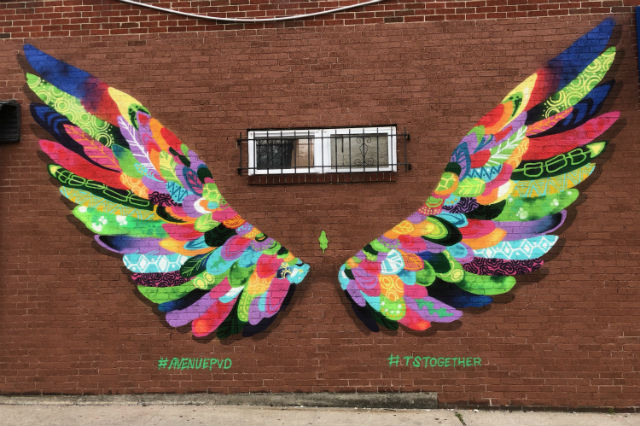
Discover the beautiful, multi-colored wings at the intersection of Broad and Wickham Streets. This work came to be thanks to The Avenue Concept and is one of many public art pieces beautifying the city of Providence.
“Graffiti Dragon” Mural — Providence
This color-packed mural on the back of a Chinese marketplace on Rice Street was a collaboration between artist Swerve One and others. It features a silvery-blue dragon surrounded by colorful bursts of graffiti.
View this post on Instagram
Colorful Silos — Burlington
These two 32-foot silos sit near Pine Street in downtown Burlington. The colorful, geometric paintjob by artist and muralist Mary Lacy clearly pops.
Nature Mural — Milton
This lovely mural is located on the side of Milton Gardener’s Supply warehouse. Featuring a giant butterfly, hummingbird and flowers, artist Sarah Rutherford painted this mural for the Milton Artists’ Guild.
Alchemist Brewery Murals — Stowe
Located at 100 Cottage Club Road, the Alchemist Brewery and Visitors Center offers prime opportunities for interesting pictures along with their beverages. Between the grayscale, geometric silo outside and two black and white murals on the ceiling, this place is definitely Instagram-ready.
To see even more Instagram-worthy walls in the Northeast, check out the slideshow below.
Featured image: J. Mustin wing mural in Providence, R.I. (Courtesy of The Avenue Concept).
There’s a lot to think about when buying a new car – horsepower, gas mileage, space and, of course, safety. With distracted and reckless driving behavior on the rise, it’s becoming more and more important to invest in the most reliable car possible. Every year, new car safety features like blind spot monitoring and lane keeping assist come around. And consumers can expect to find even more advanced driver safety functions in the future.
But with new advancements springing up left and right, it can be difficult to keep track of exactly what each does. Here’s a rundown of some of the most popular and useful car safety features on the market.
Anti-lock brakes prevent wheel lockup and skidding that can occur with conventional brakes. This keeps more of the tire surface in contact with the road, giving the driver greater ability to steer to safety. ABS brakes won’t stop a car quicker than conventional brakes, but they do provide more control.
Rear-end crashes are the most common type of crash in the U.S., which explains why this next safety feature was developed. Using front-facing sensors, this system is designed to scan the road ahead and alert drivers of an imminent crash. However, while the forward collision system can sense danger, it won’t help you avoid it. That’s why this safety feature is often paired with automatic braking.
While some crash prevention systems will only provide a warning and prepare the brakes for full stopping power, others apply the brakes automatically to prevent a crash. This safety feature combination just might be the reason your next zone-out moment isn’t fatal. If your budget only allows for one add-on, crash mitigation should be a major contender.
While typical cruise control holds vehicle speed as set by the driver, Advanced Cruise Control (ACC) varies the speed based on traffic. For example, if the driver sets cruise control at 65 mph but traffic slows to 55 mph, ACC automatically reduces your speed until traffic clears. In some cases, these systems can control speed down to a complete stop. As part of the ACC system, following distance is also calculated to keep the vehicle a safe distance from the one in front.
Many vehicles combine these features. Traction control systems use the braking system to stop a wheel that is spinning and force the opposite wheel to turn. This may provide the necessary traction to get a stuck car moving again. Stability control also uses the brakes to help “steer” the car when it is skidding. Stability control doesn’t necessarily improve handling, but it does reduce the chance of getting into a skid.
Perhaps one of the simplest changes in newer car models is the fully integrated steering wheel. In an effort to keep drivers hands-free, steering wheels have been redesigned with control shortcuts to some of the most widely used car systems. Most drivers can change the radio station, control the volume, switch on (and off) the cruise control, pick up and end phone calls, and more, all from the buttons on their steering wheel. While it’s a small change, it makes a big difference in the driving experience.
While operating in-car systems without taking your hands off the wheel has become much easier, there are still times when a driver has to reach over and fiddle with controls. But some car manufacturers have taken the hands-free mantra one step further. Ford’s SYNC technology has introduced voice-activated controls for the radio, climate and even navigation systems. And while this isn’t a standard (yet), all signs show that the automotive industry is headed in that direction. Consumers should expect to talk to their cars a lot more in the future and it could prove really useful.
The lane monitoring safety feature has been popping up on more car models each year. Using road markings for reference, these systems detect if a driver is drifting into a new lane without a turn signal. Then, depending on the car make and model, the driver will be alerted with a chime, flashing light or vibration. Some systems will even step in with corrective steering or braking. More complex systems use a hands-free lane keeping system that can even slow and stop with the flow of traffic. But this is a moot option if you live in areas with a lot of backroads. Most systems still have trouble reading country and suburban lines. Lane keeping assist is one of the new car safety features best left for drivers who often use highways.
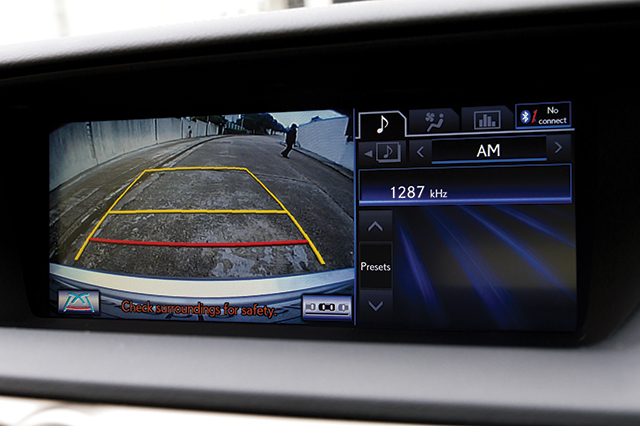
Paired with lane keeping assist, blind spot monitoring can make traveling traffic-heavy highways and major roads much safer. The systems use sensors to detect when there is a car in your blind spot and then alert you with a visual or audible warning. And some more advanced systems take it even further, showing what’s in your blind spot using camera footage. This feature is likely to become standard on all vehicles in the future.
This system uses a camera and radar to “see” pedestrians a driver may miss. More advanced systems have used infrared technology to detect the heat produced by humans and animals to prevent collisions.
Rearview cameras are now standard on all American market vehicles. This feature allows drivers can see live footage on the dashboard of what’s behind their car, making it easier to navigate parking lots, pulling out of driveways and other situations where it’s easy to accidentally hit something (or someone).
Supplementing the backup camera, this system uses radar to look to the left, right and behind the vehicle as it backs out of a parking space. This is especially handy when you find yourself sandwiched between two large SUVs in a parking lot!
Even this basic component has become more sophisticated. Manufacturers are adding features that turn the lights slightly when taking a turn or staying level when driving up and down a hill. Some European cars have headlights that automatically shut off or block some of the light momentarily to prevent blinding oncoming drivers.
While there are plenty of other new car safety features on the market, the ones listed above are arguably some of the most useful. However, adding additional systems and perks to your car can get expensive and ultimately, your budget will determine which ones you buy (if any at all). So, when making decisions, try to consider your driving environment.
Which car safety feature will benefit your lifestyle most?
Have a question about your car? Ask AAA’s Car Doctor John Paul.
Happiness takes a bit of effort – some days more than others – but it doesn’t always have to be a big production. There are small ways to be happier, starting with positive thoughts. Life is all about perspective and regardless of what transpires, your attitude is key.
There are good days and there are bad days – that is just a fact of life. There are also a lot of regular days in-between. But no matter how down you might be feeling or how caught up in your routine you may become, it’s important to prioritize your happiness.
You don’t have to be a scientist to figure out that being happy feels good for you, but according to the Greater Good Science Center at UC Berkeley, research proves that being happy is good for you. Aside from the jolt of dopamine, happiness has been linked to improving many aspects of life, from helping to increase productivity to longevity.
Here are a few ideas on how to be happy every day.
Everyone knows that exercise is good, but a lot of people have a hard time finding the motivation to begin. Not only does it keep your weight in check, keeping physically active makes you feel better. It’s no coincidence that those who regularly exercise are less stressed, less anxious and generally happier. Too busy for the gym? Try to fit a quick workout into your daily routine. These fun retro exercises never go out of style.
Enroll with Active&Fit Direct and get a fitness center membership for just $25 a month. Participating AAA members get rewarded.
Are you tired of feeling tired? You’re not alone. According to studies, about one-third of Americans say they don’t get enough sleep every night. While many claim they can function with five hours of sleep, most doctors agree that adults should aim for seven to nine hours of sleep each night for optimal health. Getting a good night’s sleep is one of the small ways to be happier as it helps us recover and repair our bodies from the day. If you constantly find yourself fighting off the urge to nap during the day, your body is telling you to get more sleep. If you struggle to fall asleep at night, try one of our recommended products to help you improve your sleep routine.
A simple way to instantly feel better is do something special for someone else. Studies have shown that personal acts of good to others often make us feel better. Many will attest that kindness is contagious and something we should all do. For example:
Nature is beautiful. Spending time outdoors is one of the most effect ways to improve your health and happiness. Get a breath of fresh air and some warm sunlight and open up those shuttered windows in your mind. Adventuring outside for a walk or even just to sit and relax is an easy, convenient way to increase happiness. Walking in nature can also make us forget about our problems and appreciate the beauty of the outdoors.
Are your digital habits getting out of hand? For many, the reliance on technology can feel like an addiction, and for some it is a true addiction. Try a digital detox. Taking a break from all the notifications, emails and texts to spend time with others or alone in your thoughts will help you in the long run. Your mind and body will thank you later.

Surrounding yourself with people who have a positive influence on your life is one of the best ways to find happiness. It is refreshing to be around people who don’t waste time and energy complaining. Don’t let the Debbie Downers bring you down with them. Ask yourself who you enjoy spending time with and create a circle of happy and supportive friends.
The road to happiness starts with valuing yourself one step at a time. When you take care of yourself, you experience a number of benefits, including reduced stress and anxiety, increased positive thinking and boosted immunity. Take a break from your daily routine to do something that’s just for you. This doesn’t always mean booking a vacation (but it could). Baking, reading a good book or listening to your favorite podcast are a few small ways to be happier.
Although new challenges can be intimidating, trying new things boosts your well-being in many ways. Focusing on developing new knowledge or skills puts you in a state of flow and fosters a sense of accomplishment. When we are curious and engaged in learning, we build confidence and a sense of self-efficacy. So what is it you’ve always want to learn? Interested in trying a new language? How about changing a tire?
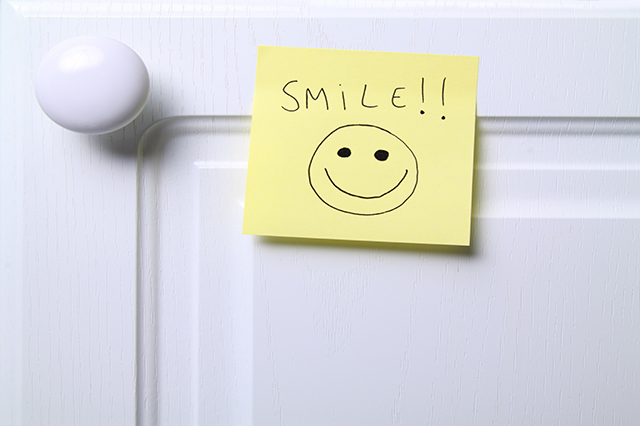
Smiling causes the brain to release dopamine, which makes us feel happy. A sincere grin can go a long way as it’ll lighten your mood and make others feel better.
Including as little as five minutes of meditation into your routine can help to improve your mind and body. There are many methods you can explore to clear your mind from breathing tricks that can center you throughout the day to setting aside a few moments in the morning to set a positive direction. Those who meditate regularly are less stressed, have a more positive attitude and sleep better. Try these simple tips to get started.
After decluttering your mind with meditation, take the time to declutter your space. Sometimes less mess means less stress and that can lead to improved happiness. While most see it as a daunting task, taking the time to declutter your home and other areas can refresh your mind and result in positive changes in your life.
The secret to how to be happy every day starts with you. What are some of your small ways to be happier? Share them with us in the comments.

If you’re a runner living in the big city, getting ready to go out for a run likely means getting ready to hit the asphalt – and concrete, and potholes and other city hazards. Needless to say, an urban environment isn’t ideal for running, especially if you like to pair the activity with a good view. Scenic running trails may be harder to come by in the city, but they do exist.
Put the high-rises, busy roads and drab colors behind you. Here are some scenic running trails in the Northeast’s big cities, Boston and New York City.
Note: Due to the ever-changing nature of the COVID-19 pandemic, please see official websites before visiting to check for restrictions or closures.
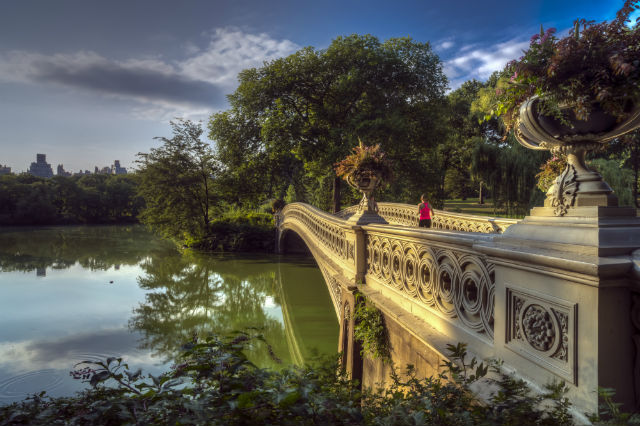
It may seem obvious, but Central Park is worth the mention. Central Park is an escape in the middle of the city with lakes, wooded trails, outdoor family activities and a variety of events to boot. Ambitious runners can tackle the outer loop (6.03 miles) or take on one of the many trails inside the park, like the 1.58 mile path following the perimeter of the Jacqueline Kennedy Onassis Reservoir.
Click here for a map of Central Park running trails.
Built on a historic freight rail line elevated above the streets on Manhattan’s West Side, the 1.5-mile long High Line provides a unique vantage point for views of the city and the Hudson River. You may have to dodge tourists during peak hours, but that’s just more motivation to wake up for an early morning run. Discover more fun things to do on and around the High Line.
The Brooklyn Greenway is a 26-mile stretch that runs through Brooklyn Bridge Park. Only 6 miles of the Greenway are available for public use, and most of those miles are in Brooklyn Bridge Park. It follows the length of the waterfront from Pier 1 to Pier 6, providing views of the Brooklyn Bridge and East River.
Located in the Bronx, Van Cortlandt Park is another natural haven within NYC. It’s a quick getaway from the cinderblocks and skyscrapers that normally make up the scenery. The park includes over 14 miles of trails, including a few nature trails and a cross-country course. As you run through wooded areas and past a babbling brook, you’ll feel as if you’ve left the city behind you.
Click here for a map of Van Cortlandt Park running trails.
The paved pathways at Prospect Park in Brooklyn may provide a similar scenic experience, just without the rugged trails. Take a gander at the foliage and Prospect Park Lake as you run the inner loop (3.36 miles) or perimeter loop (3.68 miles). Be sure to wave to the Prospect Park Track Club if you see members running by!
Click here for the Prospect Park Alliance Running Map.
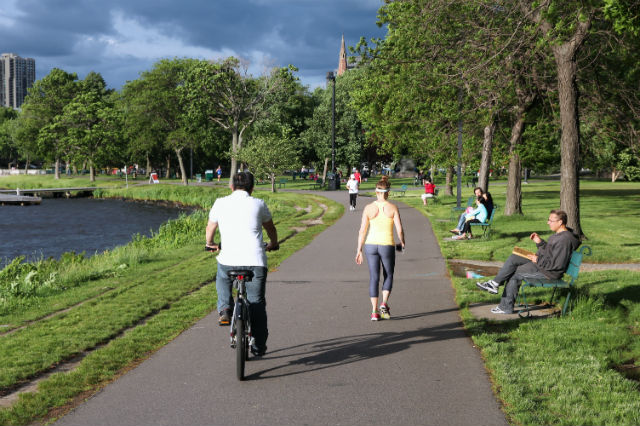
The Emerald Necklace is a chain of parks in Boston and Brookline, Mass., that stretches from Boston Common all the way to Franklin Park. Within the Necklace are several walking and running trails, each with different parkland and city views. The Back Bay Fens Loop (1.6 miles) runs through an urban wild not far from Fenway Park. The Arnold Arboretum – during off-peak times – is a great place to catch stunning views of flowers and other plants during a run. A paved pathway follows the circumference of Jamaica Pond (1.5 miles), providing views of the pond and the foliage framing it.
Click here for suggested routes.
Pleasure Bay and Castle Island
Castle Island is the site of Fort Independence, one of the oldest fortified sites of English origin in the United States. Not a traditional trail by any means, but a beautiful spot to run nonetheless, the Castle Island Loop (.79 miles) circles Fort Independence, providing views of the historic site on one side and the harbor on the other. The Pleasure Bay Loop (1.84 miles) is longer and offers more views of the water, with Pleasure Bay on one side and Dorchester Bay on the other.
The Esplanade is on the Boston side of the Charles River, stretching 3 miles between the Museum of Science and the Boston University Bridge. Run the bike path that follows the length of the Esplanade for views of the Charles River Basin and Cambridge on the other side. For more of the city’s charm, be sure to run by the Bowker Overpass, where colorful art murals decorate the walls and pillars.
Check the map of the Esplanade for the best route.
The Chestnut Hill Reservoir shares its name with the surrounding Chestnut Hill neighborhood, which is home to Boston College. The 1.6-mile loop trail circling the reservoir is flat and wide, perfect for newbies and avid runners alike. It offers views of the lake, Boston College campus and the Boston skyline. The picturesque setting – especially during a sunrise or sunset – is enough to get anyone moving.
Is walking more your speed? Find walking and hiking trails near you.
What are your favorite scenic running trails? Tell us in the comments below.
This post was originally published in 2018 and has been updated.
Whether you are a seasoned road-tripper or hitting the road for the first time, try to see if you can solve this road trip-themed puzzle.
Here are some tips to help you get the most out of your puzzle playing experience. Good luck!
Since our members are the root of everything we do, your feedback is important to us. Let us know if you run into any issues while playing, or share your ideas for future puzzles by emailing us.
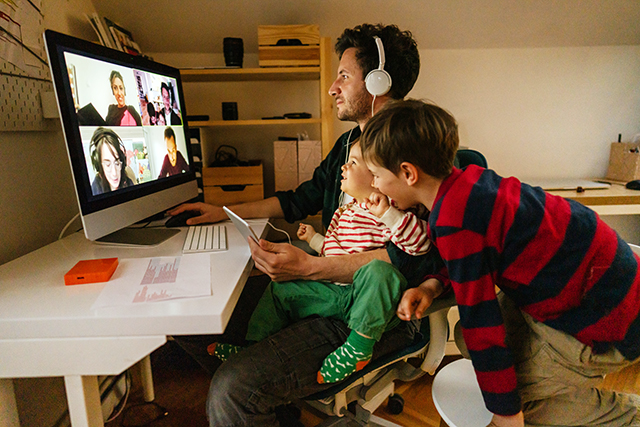
For times when you can’t be together in person, multi-player game apps and group video chat services like FaceTime and Zoom make it possible to have a fun virtual family game night wherever you are. From word searches to trivia, these eight games will challenge and spark friendly competition across households.
Looking to learn a few new words? If you’re not already hooked on Words With Friends, chances are you’ve heard of this timeless word game. The “world’s most popular social mobile word game” is a fun way to expand your vocabulary and challenge your brain. The latest version offers a variety of game modes for users to play alone, against family and friends, and random opponents around the world.
Exploding Kittens is a feline game of chance that involves cards, bizarre humor and cute kittens. Players draw cards and whoever can avoid drawing an exploding kitten wins the game. The rules are simple to learn and game play is fit for all ages. Available as both a digital app ($1.99) and as physical cards, Exploding Kittens is a great way to bring family and friends together for an exciting virtual family game night.
Among the many popular games produced by Jackbox Games, Quiplash is one of the best games for family game night because it is simple and easy to pull off virtually. Similar to Mad Libs, players fill-in-the-blanks in phrases that are sure to create some funny sentences. The winner of each round is decided by the group vote for which anonymous answer is best. Get a group of up to eight people together and have yourself a hilarious virtual game night.
Meet Pictionary’s weird cousin, Drawful 2, another virtual game by Jackbox Games. Each player is given a prompt and has to draw it the best they can – no erasing allowed! The players then have to guess what each drawing depicts and it can get pretty silly. The app is available on most platforms including consoles, tablets and computers.
Bring trivia night to your home with QuizUp, a free virtual trivia app. This online multi-player game allows you to test your knowledge on thousands of different topics. Whether you’re competing against family, friends or strangers, it’s a sure to be a battle of the brains for any trivia fan.
Many people may recognize this charades game from “The Ellen DeGeneres Show.” Race against the clock to guess a hidden word based on the clues provided. In addition to the mobile app, you can also play it online with up to eight friends in the Houseparty video chatting app for free. It’s guaranteed to make your virtual family game night one to remember.
Think quick! Scattegories is a trivia-based game that challenges players to get creative in a true battle of the brains. The unique word game is a great way to pass time for parties of all sizes. Try the free app, the classic game or Scattegories Categories.
Buckle up for an exciting game that’ll have your friends and family racing to get together. For those who know Mario Kart from Nintendo, you will be happy to know this game can also be played on your phone or tablet. Challenge up to seven people as you take on courses inspired by real cities across the world.
Looking for more virtual fun? Check out these video games.
Do you have any other virtual family game night ideas? Share them with us in the comments.
For many working professionals, achieving work-life balance — creating the perfect harmony between their job, family, friends and personal time — can be a struggle.
Performing well at your job while maintaining all of the different aspects of your life from taking care of your family to keeping on top of household errands and handling expenses does take a lot of effort, but it’s important find and strike the balance that works best for you. Allowing work to follow you home or vice versa can be overwhelming.
Juggling too many tasks can cause emotional, mental and physical stress as well as increase the likelihood that something will fall by the wayside. Working too hard can also lead to burnout, a medical diagnosis and “occupational phenomenon” officially recognized by the World Health Organization.
Burnout has been defined as a syndrome “resulting from chronic workplace stress that has not been successfully managed,” according to the organization. It has three main characteristics: exhaustion, reduced professional efficiency and increased mental distance or cynicism toward your job.
To perform your best in and outside of the office, try these work-life balance tips.
Being organized is a simple way to help you save time and energy doing everyday tasks, which can help you cut down on small stresses and ultimately make achieving work-life balance easier.
Staying organized means knowing where things are; so always keep your essentials — keys, phone, wallet, work bag or purse, etc. — in the same location so you never have to waste time searching for them. You can also save time by planning ahead, like making your lunch and picking out your clothes the night before.
A to-do list will help you to remember things, whether they be physical items you need to bring with you or tasks that have to get done. The way you structure your list should be whatever works best for your needs. It can be physical — on paper, a dry erase or chalk board that gives you the satisfaction of erasing or crossing things off — or electronic. Alerts or reminders on your phone can be better for time-sensitive matters.
Sleep is how we recharge, but it seems we’re never getting enough. Exactly how much sleep you need depends on a number of factors, like your age, activity and stress levels. Nevertheless, sleep should be a priority because it’s an essential component of your overall health.
The National Sleep Foundation recommends that younger adults (ages 18 to 25) get seven to nine hours of sleep per night, adults (ages 26 to 64) should also get seven to nine hours and older adults (ages 65 and older) should get seven to eight hours.
“You must schedule sleep like any other daily activity, so put it on your ‘to-do list’ and cross it off every night,” according to the Sleep Foundation. “But don’t make it the thing you do only after everything else is done — stop doing other things so you get the sleep you need.”
Check out these tips for getting better sleep. If those don’t work for you, look into getting some items that might held you catch some Zs.
Working remotely is growing in popularity, and it’s easy to see why. Telecommuting allows the flexibility to work when it’s most convenient, the ability to save time and gas money by avoiding a commute and no office distractions/interruptions.
However, just as there are pros to working from home, there are also cons. A lack of physical separation between work and home could pose some issues, mainly overworking. To avoid forgetting to “clock out,” have set work hours for yourself. Only focus on work for a specific number of hours a day — like the typical 9:00 a.m. to 5:00 p.m. — and have an organized, designated space for work so you can compartmentalize.
When it comes to bettering your work-life balance, consider what would best fit your situation and work ethic. You may only want to work remotely one or two days a week rather than full-time, vice versa or keep work completely in the office.
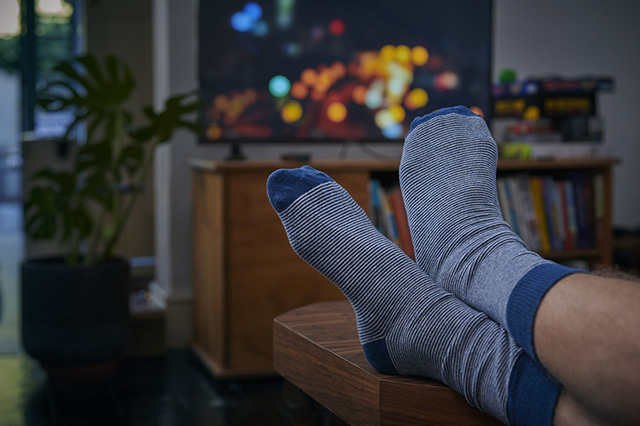
If weekdays are for work and weekends get filled by errands, family and friends, when do you get time for yourself? Taking some personal time, even if it’s just an extra hour in the morning for a quiet cup of coffee and breakfast, can be really beneficial.
Doing something relaxing like going to the spa, taking a nap or being creative can be refreshing, making you feel more capable of tackling what life throws at you.
If you’re the kind of person who wants to make your personal time a bit more productive, that’s fine too. Meditating, reading or going for a walk are all calming “me time” activities that will still feel like you’re accomplishing something.
Maybe you want to keep mind and body healthy with an exercise routine. Get a fitness center membership for $25 a month with Active&Fit Direct. AAA Members get 10% back after 12 months.
However and whenever you spend it, don’t overlook the importance of having some time to yourself.
The pervasiveness of technology makes it all too tempting to obsess over work, like repeatedly checking your email away from the office, especially if you work from home.
To avoid throwing off your work-life balance or possibly burning out, take a moment to unplug — even if it’s for only 20 or 30 minutes — and do something that doesn’t involve screens. If you choose to unplug during the day, this could become part or your personal time, or you can try multi-tasking like doing chores or having fun while exercising.
Avoiding screens before bed could make it easier to fall asleep, so unplugging before bed could be right for you if you’re looking to make sleep a priority.
If you’re still feeling overwhelmed or like your work-life balance is out of whack, you might want to consider taking a slightly longer break. You may be in need of a vacation if you’re showing some of these signs.
The definition of achieving a work-life balance varies from person to person. To find what works for you, consider all of your responsibilities, decide what’s most important and how much of your time should be allotted to each.
Be realistic about your abilities by knowing your strengths and weaknesses, and seek out help when you need it.
Remember that people aren’t perfect, and trying your best is sometimes all you can really do.
What could help you achieve a better work-life balance? Tell us in the comments.
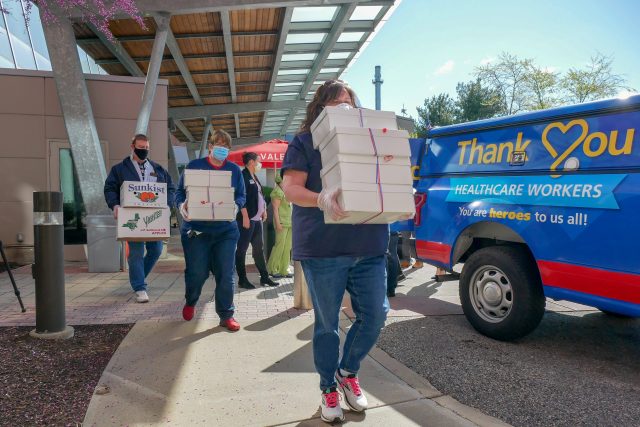
Last week, AAA employees delivered over 200 gift baskets filled with nutritious snacks for nurses and health care workers at 11 Rhode Island hospitals and health care centers in celebration of National Nurses Week.
“Nurses are there when we need them, and AAA wants to be there when they need us,” says John Galvin, president and CEO of AAA Northeast. “These first responders help and serve as a way of life, and we want them to have the peace of mind to know AAA will be there if they need roadside assistance.”
Several employees met at AAA Northeast headquarters in Providence, R.I., last week to load up two vans and one truck with gift baskets. The truck was the AAA battery service vehicle recently wrapped with a “Thank You Healthcare Workers” message. Each basket contained all-natural granola bars and breakfast snacks donated by local businesses Mello’s Fruitland, Naturally Divine, Trader Joe’s, Shri Bark and Sacred Cow.
The sweeping effort was organized by AAA Northeast’s information technology department. To launch the effort, Bill Dziura, vice president of information technology operations, partnered with Miriam Hospital’s nutrition expert Dr. Mary Flynn, an associate professor at Brown University. They produced a list of nutrient-rich grab-and-go snacks to help sustain health care workers working busy shifts during the COVID-19 pandemic.

AAA Northeast regularly contributes to community efforts across its territory and has supported a number of local initiatives during the COVID-19 pandemic, even giving many employees the opportunity to provide community service during their work shifts.
On Thursday, AAA Northeast employees delivered breakfast to health care workers at Faxton St. Luke’s Healthcare and St. Elizabeth’s Medical Center in Utica, N.Y., in collaboration with local restaurant Willie’s Bagels. Breakfast items included bagels, granola bars, fruit and other nutritious options.
“The donation provided a great way to show appreciation to those who are working long hours fighting the COVID-19 virus,” said Patti Artessa, regional director of public affairs for AAA Northeast.
AAA employees are also helping Meals on Wheels in New Jersey, New York and Rhode Island. AAA roadside technicians are delivering much-needed protective gowns made and donated by Thermaxx to first responders and health care workers in Connecticut. In addition, AAA Northeast has donated more than $100,000 since the crisis began and supplements employee donations through a matching gift program.
AAA Northeast will continue to support its local communities during this crisis and always.