Visit Boston on Any Budget

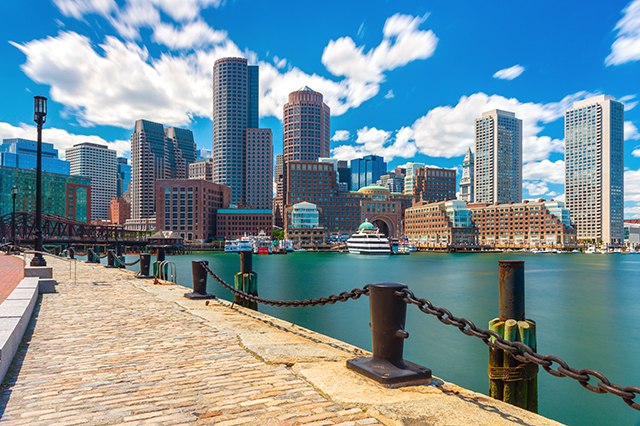
One of the East Coast’s most charming cities, Boston is compact but jam-packed with stuff to do – no matter what your budget. History buffs will love Beantown’s Colonial heritage encompassing numerous Revolutionary War-era treasures, while culture lovers can visit top museums like the Museum of Fine Arts. There’s also great shopping, dining and, of course, Red Sox baseball. So if you’re heading to Boston, here are some varied itinerary suggestions.

Boston, budget-style

Stay: The AAA Two Diamond Chandler Inn Hotel is situated in the trendy South End and within walking distance to shops and restaurants (Copley Place is 10 minutes away). The 56 rooms are on the small side but are comfortable and feature a stylish, modern decor. There’s a 24-hour front desk and some cool free amenities include Wi-Fi, coffee/tea and newspapers. You can enjoy dishes like calamari fritto and steak frites while sipping on a craft cocktail at the Trophy Room restaurant just off the lobby.

Do: It’s free to walk along the Freedom Trail (marked by a red line on the pavement), where you’ll pass historic sites, including the Old North Church and the Bunker Hill Monument. Check out two of Boston’s beloved green spaces, the Boston Common, established in 1634, and the Public Garden, where you can glide along the lagoon on one of the famous swan boats. Afterward, cross the street to see where the state’s top movers and shakers craft legislation inside the golden-domed State House. Free guided tours are offered weekdays from 10 a.m. to 3:30 p.m.

Dine: Faneuil Hall is a top spot for dining in Boston. It has a bustling food court where you can enjoy New England classics like clam chowder and lobster rolls. Wanna go where everybody knows your name? Head to the Cheers outpost, where you can grab a brew at the famous bar where Sam, Diane, Carla and crew traded witty remarks and barbed banter. There are also plenty of food trucks around town for a quick and inexpensive bite to eat – try Roxy’s Grilled Cheese for gourmet grilled cheese sandwiches and Bon Me for tasty Asian fare (check online for the most up-to-date truck locations).

Mid-range Boston finds

Stay: The AAA Three Diamond Boston Marriott Copley Place is in a prime location, just minutes from the hustle and bustle of Back Bay. Interiors are contemporary with sleek leather couches in the lobby atrium and flat-screens and picture windows offering city views in the rooms. Start out with a coffee in the on-site Starbucks and late night, catch a game in Champions sports bar.

Do: Kids will love the New England Aquarium, featuring thousands of nautical creatures. Highlights include the penguin exhibit and the Atlantic harbor seals exhibit. Everyone in the family will enjoy the Museum of Science, which straddles the Boston/Cambridge line along the Charles River. Hundreds of exhibits, along with a planetarium, Imax movie theater and dining area, fill the cavernous, three-level space. You could also visit Boston’s cultural institutions, including the Isabella Stewart Gardner Museum, known for its rare tapestries and illuminated manuscripts, and the Museum of Fine Arts, featuring silverware by Paul Revere.

Dine: Hit the North End, Boston’s oldest neighborhood, for its many Italian restaurants and cafes lining the main drag, Hanover Street (and down its side streets). Join the lines outside Giacomo’s for delicious chicken parm or veal Marsala, while Panza is tops for pasta dishes. And dining in Boston isn’t complete until you’ve tried some cannoli (there are over a dozen flavors to choose from) at Mike’s Pastry.

Here are 10 signature Boston foods and eateries you don’t want to miss!
visit boston
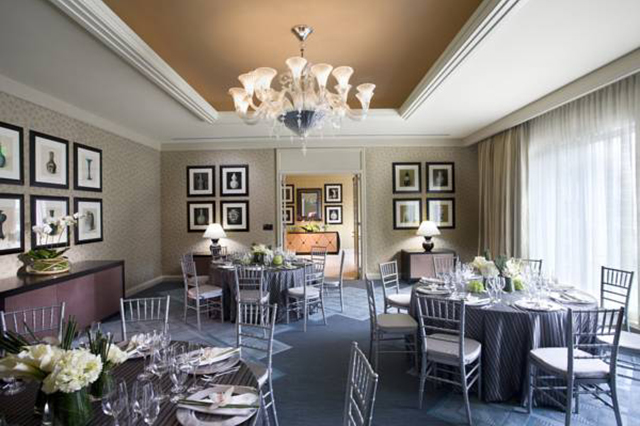
Mandarin Oriental’s Boston dining room. (Photo: AAA Hotels)

Luxury Boston

Stay: Rooms at the AAA Five Diamond Rated Mandarin Oriental feature marble baths, silk curtains and king-size beds with Frette linens. At Bar Boulud – from famed French chef Daniel Boulud, dine on dishes like coq au vin and sip wine from the Burgundy region. Luxuriate in the spa with a three-hour Taste of the Orient treatment and have the concierge arrange Theater District tickets.

Do: Catch a Red Sox game at Fenway Park, built back in 1912 (splurge on box seats to be closest to the action). Ready to shop? Head to Newbury Street in the Back Bay, which is lined with boutiques like Burberry and Chanel. In the market for a diamond ring or a high-end watch? Stop into Shreve, Crump & Low, dating from 1796.

Dine: Barbara Lynch is one of Boston’s most respected chefs, and her fine dining restaurant Menton is a much sought-after reservation. The cuisine, an Italian-French hybrid, might include yellowfin tuna crudo and wagyu beef sirloin. At the elegant L’Espalier, try the five- or eight-course tasting menus, or book the chef’s table, which is located in the kitchen, for a singular dining in Boston experience.

Do you have any tips on where to save and splurge in Boston? Share them with us in the comments below!

To book these hotels and find other lodging options, click here.

Subscribe to Your AAA Newsletter

Sign up and receive updates for all of the latest articles on automotive, travel, money, lifestyle and so much more!

Interior Furnishing Ideas to Brighten Up Your Living Space

Interior Furnishing Ideas to Brighten Up Your Living Space

When you walk into a room in your house, do you feel welcomed by its light, cheery atmosphere? Or do you notice a dark, gloomy air that doesn’t seem to go away, even when you turn on the lights? Hopefully, the latter isn’t the case, but if you find that you or your guests are feeling a bit less at home due to a room’s ambiance, you may need some new interior furnishing ideas to help you redecorate.

The first step is to determine the cause of the room’s gloominess. It could be that there isn’t enough natural daylight, or that there are too many heavy pieces of furniture or accessories weighing down its design. It may even be the size of the room; small spaces can feel darker than they actually are.

Your initial thought may be to make some drastic changes to your home – a full remodel. But before you start researching feng shui, consider these easier interior furnishing ideas instead.

1. Switch up your window treatments

In the warmer months, heavy drapes and curtains can help you save money on your energy bill. They block sunlight, which keeps the room cool and the need for air conditioning down. In the colder months, they can do well to keep out the cold air, thus keeping your heating bill down – but they still block sunlight.

Natural daylight can transform a room from drab to lively. To make a space more inviting, but still protect from cold air seeping in, opt for window treatments made from medium-weight fabrics such as canvas or cotton.

Dress up your living room windows with Roman shades or sheer cotton curtains, which provide some protection while still letting the sun’s rays warm the room (literally and figuratively).

2. Add reflective surfaces

You’ve got sunlight back. Now what?

Placing a mirror directly across from the largest window allows sunlight to bounce off of its surface and illuminate the room. Mirrors tend to make a space feel larger and brighter anyway, but this strategic placement allows for the most light to fill a space.

If a mirror doesn’t tickle your fancy, try a glass-topped coffee or end table. Then, for extra shine, place metallic accessories on its surface.

interior furnishing ideas

3. Light the way

Now that you’ve tackled natural light, what about artificial?

After the sun sets, it’s a no-brainer – flip the switch and let there be light. But the wrong light fixtures, or right ones with the wrong placement, can actually make the room fare worse in terms of lighting.

Mirrors reflect natural light. Aim a lamp upwards or towards a wall, and walls and ceilings will reflect the artificial light just the same. If you can, aim a bedside table or desk lamp at the ceiling or a nearby wall. Or try a torchiere floor lamp, which directs light upwards. Your bedroom or office will feel bigger and brighter.

If you have a darker ceiling, say, in your kitchen, recessed ceiling lights might help the room feel less like a cave and more like a charming country abode. Install a dimmer switch and you’ll be able to adjust brightness to your needs.

If your kitchen has a lighter ceiling, but some areas still seem darker than others, try pendant lighting, which can give your kitchen a bit more personality as well as brighten up a dark corner.

4. Choose pieces that contrast with one another

Despite how it may seem, having dark pieces of furniture and darker colored walls is A-OK. You don’t have to give up that dark wood dining table you love or paint over that burgundy wall in your entryway.

The trick to brightening up a room with darker-colored accents and furnishings is to contrast them with lighter-colored accents and furnishings.

That burgundy wall making it feel like the entryway to a vampire’s lair rather than a friendly home? Contrast it with a tan armchair or white end table.

That dark wood table making your dining room seem dreary? Contrast it with chairs covered in a light, neutral fabric or place a light area rug underneath it. Another helpful trick: If you can, place the table closer to a window to let the sunlight illuminate an otherwise dark focal point.

5. Other interior furnishing ideas

  • Place houseplants strategically throughout the room. Small, low-maintenance plants – such as succulents – add brightness to a room without weighing it down. Plus, some houseplants can improve air quality.
  • Move your bookshelf or partition to a wall that isn’t parallel to a window so it doesn’t obstruct light.
  • Swap a solid interior door for a glass door. A pair of French doors, for example, can make an office, bedroom or living room feel more open and bright.

Have you got any other interior furnishing ideas to brighten up a room? Tell us in the comments below!

Before you take these ideas further and make drastic changes, protect your home with AAA homeowners insurance

Subscribe to Your AAA Newsletter

Sign up and receive updates for all of the latest articles on automotive, travel, money, lifestyle and so much more!

Supplemental Health Care for Medicare: Do I Need It?

Medicare may be a financial life saver for most elderly or disabled Americans, but not in every case. There are times when the well-known health insurance plan falls short in paying medical bills. That’s when supplemental health care for Medicare, also known as Medigap, can fill the “gaps” in Medicare coverage.

Medigap policies are sold by private insurance to help pay for health-care costs not covered by the original Medicare plan. The two policies, used together whenever possible, will each pay a share of medical expenses.

There are 10 types of Medigap policies, lettered A through D, F, G, and K through N. Each must be labeled “Medicare Supplement Insurance.” The plans offer varying types and levels of coverage, leaving consumers to sort out their health-care priorities and budget before choosing a plan that fits their health-care needs and finances.

Thinking about traveling outside the United States when you retire? You can find a policy that will cover medical care should you need it while in a foreign country. But there are gaps in Medigap policies, both large and small. For instance, they don’t cover long-term care. Nor do they cover mundane costs, such as eyeglasses.

Plans F and C became the most popular plans over the years. However, Congress decided to wind down those Medigap options to cut government spending. If you choose either of those, make sure you understand how long that coverage will last and have a fallback plan for dealing with your medical bills at the ready.

That leaves you with two major questions to ask yourself. The first is: Can I take the chance that I will have enough money to pay medical bills that Medicare won’t cover?

The second is: If not, should I buy supplemental health insurance before 2020 so that I’m not locked out of the plan I may want later?

If you are turning age 65 or are otherwise entitled to Medicare due to a disability, you will be able to take advantage of a six-month open enrollment period for Medicare supplemental insurance that begins the month you first enroll in Medicare Part B. After this period, your option to buy a Medicare supplemental policy may be limited.

If you apply for a Medicare supplemental policy during your six-month open enrollment period, any insurer you apply to must insure you and must give you the plan you choose. This is known as “guaranteed issue.” Insurers may ask you medical questions during this period, but you cannot be refused coverage during open enrollment, even if you have a medical condition.

Disabled Medicare beneficiaries who enroll in Medicare Part B before age 65 have a Medicare supplemental health care open enrollment period at that time and an additional six-month open enrollment period when they turn age 65.

supplemental health care for medicare

After these initial periods, “guaranteed issue” for Medigap applies only in specific cases, such as:

  • Your Medical Advantage plan shuts down or you move out of its service area.
  • Your retiree plan shuts down.
  • You joined Medicare Advantage but decide to switch back to original Medicare within a year.
  • Your Medigap plan shuts down.

When you buy a Medigap policy you must have Medicare Part A and Part B. Medicare Advantage plans and Medicare Part D are not supplemental health care for Medicare. You must pay the monthly Medicare Part B premium. In addition, you must pay a premium to the Medigap insurance company. As long as you pay your premium your Medigap policy is guaranteed to be renewable. Your coverage will continue year after year as long as you pay your premium. However, your premium may go up each year.

Something else to remember if you’re married: both you and your spouse must purchase separate policies.
Another caveat: be aware of the timing should you decide to switch Medigap plans. Late enrollment fees may apply if you wait too long between ending the old policy and starting a new one.

Medigap policies must follow federal and state laws. The federal government sets minimum rules to help protect consumers, but many states have added additional consumer protections of their own. Each Medigap plan must offer the same basic benefits, no matter which insurance company sells it. Still, Medigap costs vary, so it’s important to compare policies before choosing coverage. Also, if you’re married, you and your spouse must buy separate policies.

It’s important to remember that Medigap plans simply fill in health coverage; they don’t make any decisions about what to cover. Medigap plans pick up the tab for a specific part of health care costs not covered by Medicare, such as deductibles and co-pays.

You can find a complete list of Medigap insurance carriers in your area on Medicare.gov. Quality and financial ratings for the insurers are thin because the plan offerings are dictated by federal and state regulations. Still, buying supplemental health care insurance may be the financial decision that helps you sleep when medical bills stack up.

Do you have supplemental health care insurance for Medicare? Tell us about your experience and share your advice for choosing supplemental health care in the comments below.

Subscribe to Your AAA Newsletter

Sign up and receive updates for all of the latest articles on automotive, travel, money, lifestyle and so much more!

Increase the Battery Life of Your Phone

Have you ever found yourself snapping vacation photos only to find your phone’s battery draining more quickly than ever? Maybe you needed to make a business call and had to scramble for a portable charger. With phones being an indispensable hub of personal and business activity, running low on power puts us in a bind, and over time the situation can happen more frequently.

Review these strategies to improve efficiency and preserve the performance of your phone’s battery.

Enable Power Saving Mode

When you’re quickly losing power, take advantage of your phone’s power saving setting, which is referred to as low power mode in iOS and battery saver mode in Android. This setting reduces the amount of power required to operate your phone and helps to stretch what is left. Once activated, it takes measures such as reducing screen brightness and stopping automatic email fetches, background app refreshes and automatic downloads. Your phone will operate more slowly in this mode, but the amount of power you save is substantial.
Identify and Limit Major Power Drains

If you’re not struggling to conserve power at the moment, investigate which apps use the most. Both iOS and Android allow you to accomplish this easily via their native monitoring features, which show the percentage of battery usage attributable to each app. Usual suspects include those related to messaging, social media and anything that uses location services.

While location pinging is essential for on-the-go driving directions, it’s not so essential for social media, which often uses it anyway. In fact, many apps rely on GPS to customize your experience and deliver local content such as weather forecasts, news stories and restaurant recommendations. You can pare down battery usage by digging a little deeper into location settings and adjusting when each app is able to determine your location. Limit or completely prevent the ability of apps to access location services on a case by case basis.

Although it’s possible to completely turn off location services, they’re useful in certain situations, particularly when traveling.  While you can use general direction apps to navigate a new area, some destinations are easier to explore using ones that have been custom designed.  National Park Service apps use GPS features to help you navigate trails and explore wilderness areas more easily, even suggesting activities you might otherwise have missed. Since you won’t need these recommendations once you’ve returned home, remember to delete the app so that it doesn’t continue to locate you.

sprint spons battery life

Turn Off Background App Refresh

Between checking email, watching videos, taking photos and relying on door to door directions, you might not be surprised that your phone habits drain battery life. What might be surprising is the amount of power that apps use even when you’re not actively using them.  As apps update themselves with fresh content such as status updates, they individually drain battery life and collectively become a major drain on your phone.

As with location services, background app refresh can be turned off completely, but it’s often best to review the list of apps currently set to update their content.  Social media, game and news apps generally don’t need to grab new content until you open them, so these are easy ones to turn off.  While scrolling through the list, you might be unsure about others.  Compare the apps allowed to refresh content with the those that rank high in terms of overall battery usage.  This can help you determine if the continual updates are the cause of rapidly decreasing battery percentages during the course of the day.

Fine-Tune Mail Account Settings

Adjusting the way your phone fetches email while you’re busy doing other things requires another step since mail accounts won’t be in the list of apps set to background refresh.  Navigate to your mail accounts and reduce the frequency of automatic fetching or opt for manual refreshes. During the work day, you may need business email constantly updated, while less important accounts can be set to fetch hourly or manually.

Reduce Screen Brightness

One of the easiest ways to increase battery life is to turn down the brightness of your screen.  Many of us never adjust the visual effects on our phone, leaving them at their maximum setting. When you factor in the number of times that you switch on the display during the day, you are wasting power that is better spent other ways. Experiment with brightness to find the level that balances power conservation with comfortable viewing. Since some research suggests that using screens at maximum brightness in the evening might interfere with sleep, you may reap benefits in other ways as well.

Decrease Automatic Lock Timing

With screen brightness factoring into power percentages, it also makes sense to adjust the auto-lock feature on your phone. By reducing the amount of time that your display is on, you lessen the amount of battery life wasted on keeping it lit. When you’re figuring out how to increase battery life, this is another easy strategy to try, and it saves power exponentially depending on the number of times your screen times out from inactivity.

Turn Off Bluetooth and Wi-Fi

Sometimes Bluetooth and Wi-Fi are essential to what you’re doing at the moment, say listening to a podcast on your car stereo or connecting to your home router. At other times, your phone is constantly trying to connect for no particular purpose. Turn off both Bluetooth and Wi-Fi when not in use to prevent this power drain. When you’re running low on power also remember that streaming media over Bluetooth won’t make your predicament better, so you might want to listen to that audiobook at a different time.

While batteries will degrade over time, these strategies should help your phone operate more efficiently. Remember to stay current with software updates, as sometimes these can make an unexpected and dramatic difference. Updates require a lot of power to install, but once up and running, they can conserve battery life by fixing battery drain issues you didn’t even know existed.

Subscribe to Your AAA Newsletter

Sign up and receive updates for all of the latest articles on automotive, travel, money, lifestyle and so much more!

You’ll Want to Rent a Luxury Car for These Road Trips

When I think of road trips, I think of the time my family and I – a group of seven or eight of us – drove to Canada in my grandmother’s old van. If that not-so-glamorous image isn’t enough for you to cringe, wait until you hear about the time five of us drove 21 hours (not including traffic holdups) to Florida from Rhode Island in a Honda Accord. We didn’t rent a luxury car for these trips. On your next road trip, why not go big or go home?

Most people think renting a luxury car will cost an arm and a leg, since buying it seems like it would cost that and more. In reality, you’d only be splurging a bit more than you would renting the same old Ford Focus everyone else is renting.

AAA Members Save With Hertz!

Save 20% on everyday rentals and enjoy special limited time offers. Plus, get perks like waived young renters fee and more.

Learn More

Got fantasies of cruising down winding roads in a drop-top Porsche? Rental car companies like Hertz can hook you up with your dream car.

Learn how AAA members save with Hertz.

How to rent a luxury car

It’s about as easy as renting any other car. Most rental car companies like Hertz will have convertibles, luxury SUVs, sports and exotic cars in their collection. What’s available to you depends on where and when you’re renting, but most luxury car collections include makes like Porsche, Mercedes-Benz, BMW, Audi, Land Rover and Tesla.

Other companies, like Gotham Dream Cars, specialize in offering “ultra-exotic” luxury cars from manufacturers like Aston Martin, Rolls Royce, Lamborghini and more.

Though it’s easy to go right up to the counter and request a luxury car for your trip, you’re more likely to get a better deal if you reserve in advance and, when you do, expect some extra restrictions such as daily mileage limits.

Hertz normally rents cars to drivers 20 years old and up, with an added surcharge in some circumstances for those 20 to 24 years old. (Young renter fee is waived for AAA members  ages 20-24.) But if you’re renting a vehicle from Hertz Dream Cars collection, you must be at least 25 years old.

Plus, at the time of rental, you will need additional forms of identification, which will vary depending on location and the vehicle that you are renting.

Restrictions and qualifications vary from company to company, so be sure to check on those before you rent.

Other Tips

  • Before renting any car, ensure that your auto insurance policy covers rentals. Usually, full coverage auto policies, or policies that include comprehensive and liability coverage, will extend to rentals. However, you may want extra coverage for a luxury car in case of a collision. Many car rental companies such as Hertz offer Loss Damage Waivers or Liability Insurance products. Call your credit card company and find out if they’ll cover any gaps in your auto insurance policy.
  • Ask to be given a walk-through of the car. Luxury cars will often have advanced technology that our run-of-the-mill vehicles may not have. If your rental company can go through safety features, how to operate the transmission and how to avoid potential dangers with you, you’ll spend less time figuring out the car and more time enjoying a smooth ride.
  • Examine the terms and conditions closely. What’s included in a standard rental agreement can differ from what’s included in a luxury rental. For example, Hertz Dream Car rentals don’t include unlimited miles.

Now that you’re ready to rent a luxury car, the question is – where do you take it? Which are the most scenic journeys in the country, made even more memorable in a stylish Mercedes-Benz or sporty Range Rover?

luxury car rental

Mountainside Road Trips

Kancamagus Scenic Byway, New Hampshire

The Kancamagus Scenic Byway – or the “Kanc” as it’s known to locals – in New Hampshire connects Lincoln to Conway and, while popular for its foliage in the fall season, its views are exquisite at any time of the year. The White Mountains surround you on this 34.5-mile route. You’ll have plenty of opportunities to stop along your drive and snap photos of the mountains, as well as picnic or hike. You’ll feel one with nature cruising through the mountains and past waterfalls and rivers in a luxury electric car.

Hudson Valley, New York

Begin your trip through the Hudson Valley of New York on the Taconic State Parkway in Mount Pleasant, catching views of the Taconic Mountains and admiring the foliage as you pass by in a flashy luxury car. The Taconic leads to several state parks, including the Franklin D. Roosevelt State Park, perfect for a day trip. Along the parkway are the 10 New York counties that make up the Hudson Valley, which is designated a National Heritage Area. There are plenty of opportunities to eat, stay and immerse yourself in the history and culture of the area.

Desert Rides

Badlands Loop State Scenic Byway, South Dakota

Badlands National Park in Interior, South Dakota, is home to the best views in the Badlands. The loop is 58 miles long and full of desert-like hills, cliffs and buttes, wildlife, hiking trails and overlooks for your viewing pleasure. Imagine getting to enjoy a rugged nature getaway from behind the wheel of a luxury SUV. Among the incredible rock formations, you’ll feel like you’re on another planet, or the surface of the moon. But from inside a leather-seated vehicle, you’ll feel on top of the world.

Zion National Park Scenic Drive, Utah

The byway begins at the intersection of Highway 9 and Interstate 15 near St. George, Utah, and ends in Mt. Carmel Junction. The 54-mile byway cuts through Zion National Park, which is distinguished by can’t-miss views of the Zion Canyon’s red cliffs. Also along the byway are the Virgin River, Quail Creek and Sand Hollow Utah State Park. Movie buffs won’t want to miss the ghost town of Grafton, which was featured in “Butch Cassidy and the Sundance Kid.” Imagine seeing these blistering desert views from the comfort of an air-conditioned Range Rover Sport. The best part? The byway isn’t far from the Grand Canyon or Las Vegas, so you can continue your road trip in style.

Coastal Drives

State Road A1A (Beachfront Avenue), Florida

Yes, it is the A1A Beachfront Avenue from Vanilla Ice’s “Ice Ice Baby.” Part of the A1A is designated as a National Scenic Byway, as it stretches from Key West all the way to Fernandina Beach, just south of Georgia. It’s nicknamed Beachfront Avenue because it runs through most of Florida’s coastal towns and cities, like Miami Beach and Boca Raton. You’ll feel like a celebrity rolling through the beach towns in an exotic car, passing by palm trees and ocean views.

Hana Highway, Maui, Hawaii

How do you explore Maui, the second-largest Hawaiian island, in a day, making sure to fit in coastal views, waterfalls and tropical rainforests? Take the Hana Highway (a.k.a. Highway 36) from Kahului to the town of Hana, making sure to stop and see the attractions along the 52-mile ride. Drive the winding roads hugging the mountainside in a sleek convertible with the top down to fully experience the beauty of the island. The ride only takes about three hours, but you can spend the whole day hitting the beach, hiking, relaxing at the park and more.

Start planning a fall foliage road trip with our guide to the best in the Northeast.

Have you driven along any of these routes? If you could rent a luxury car for a road trip, which would it be? Tell us in the comments below!

Need a ride? AAA members can take advantage of discounts of up to 20 percent on daily, weekend, weekly and monthly car rentals with Hertz. Click here to learn more about this and other Hertz savings.

Subscribe to Your AAA Newsletter

Sign up and receive updates for all of the latest articles on automotive, travel, money, lifestyle and so much more!

Top 4 New York City Staycation Ideas

We all need to relax, unwind and take a break from time to time. But with the demands of work and other responsibilities it can be hard to get away.

Journeying to exotic destinations takes time, and travel costs can stack up. Why not maximize your time off—and go easy on your bank account—by indulging in a staycation?

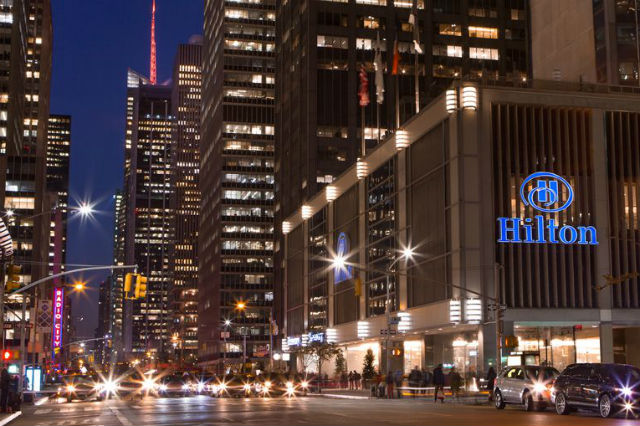
Book a Hilton Staycation!

AAA members save up to 15% at Hilton family hotels and resorts.

Book Now

Lucky for us, New York City is right next door. Venture out of the confines and familiarity of your neighborhood and devote a weekend to fun, relaxation and exploration in Gotham. From world class entertainment to luxury and relaxation, it’s all here.

Laundry beckoning to be done? Leave behind your domestic cares! Book a hotel room for one or two nights and make it a true vacation.

Here are four fabulous New York City staycation ideas that will have you feeling recharged in no time.

For Theater Lovers

Feel like you’re always too busy to catch a show? Get back to your passion with a theater-themed weekend! Check in at the Hilton Times Square or New York Hilton Midtown and enjoy floor-to-ceiling views of the crossroads of the world.

AAA members can enjoy up to 15% off at Hilton locations plus daily parking.

Take a walking tour with Broadway Up Close and hear fascinating stories of Broadway’s origins and rich history. Or embark on the popular “HamilTour” that retraces the steps of Alexander Hamilton and shares inside stories of the creation of the smash hit musical.

Grab a quick lunch at The Little Beet, then let your inner theater nerd out to play as you spend the afternoon browsing the shelves at the historic Drama Book Shop.

Immerse yourself in the hubbub of Times Square for some fascinating people watching (all the world’s a stage, after all), or get an elevated perspective with the breathtaking views from Top of the Rock’s 3-tiered observation deck at 30 Rockefeller Center.

Enjoy some beautiful, Japanese home-style cooking at Oootoya, then head to the theater for the main course. From “Harry Potter and the Cursed Child” to “Angels in America” to the newest ground-breaking masterpiece, Broadway’s theaters offer plenty of options to choose from. Afterward, wind down your evening with fascinating cocktails and live jazz at The Rum House.

hilton hotels the renwick hotel. new york city staycations
The Renwick Hotel.

 For Creatives and Art Lovers

Book a stay at The Renwick Hotel in historic Midtown East which previously housed studios for notable creatives such as John Steinbeck and F. Scott Fitzgerald. Each room is themed, celebrating a different artist or intellectual, and features functional art created by local New York artists.

When you’re not soaking up The Renwick’s creative vibes and enjoying your own private artist’s retreat, venture out to MoMA to see the latest exhibitions.

If the weather’s nice, bring a blanket and find a relaxing spot in Bryant Park where you can break out your sketchbook, notebook or camera. Stroll over to The Morgan Library and Museum, the fascinating and majestic private library of J.P. Morgan (turned museum) which boasts an incredible collection of rare books, manuscripts and art.

Nourish yourself with savory ramen and pork belly bao at Momosan Ramen & Sake, or satisfy your fine food cravings at Benjamin Steakhouse. Then finish off the night like a member of the Lost Generation with cozy drinks at Bedford & Co., The Renwick’s Argentinian-inspired in-house restaurant.

For Foodies

There’s no shortage of incredible food wherever you go in the city, but why not set aside some time to really partake in your favorite hobby? Venture out to Brooklyn for a culinary themed adventure and stay at the modern and vibrant Hilton Brooklyn New York.

Sit down to a sumptuous brunch at gorgeous Sauvage or enjoy the hearty fare and cozy environs of American bistro Esme, a local favorite.

Celebrate and explore food’s connection to culture with a visit to the newly-opened Museum of Food and Drink (MOFAD) where you can touch, smell and even taste the exhibits.

Get your fix of authentic Polish delicacies at local mainstay Restaurant Pyza, serving up heavenly pierogies and foot-long cheese blintzes. Or spend a relaxing afternoon at Milk and Roses, an Italian secret garden.

Sign up for a hands-on class at Bedford Cheese Shop and take your cheese-plus-beverage pairing game to the next level. Or learn how to make your own burrata from an expert cheesemonger.

Treat yourself to a responsibly sourced dinner at Greenpoint Fish & Lobster Co., or if you’re feeling truly adventurous (or just want to pretend you’re in more exotic climes) check out Selamat Pagi, serving up Balinese realness.

Spend the rest of your evening getting to know the impressive tap list at TØRST or catch a movie and delicious bites at Nitehawk Cinema. After a long day of feasting, you’ll be ready to head back to your comfy and spacious room to sleep off your food coma.

conrad new york's loop doopy lounge. new york city staycations
The Conrad’s Loopy Doopy Rooftop Bar.

For Hard Workers in Need of Major R&R

Whether you’re celebrating a job well done or need a break for self-care while you’re still in the fray, devoting a day or weekend to luxurious relaxation is always a smart move.

Treat yourself to a stay at the deluxe Conrad New York in Battery Park City. (AAA members get 5% off their stay, plus $50 per day in hotel rewards).

Open your staycation with a leisurely brunch at Little Park featuring sustainably sourced, seasonal ingredients. Then head to Aire Ancient Baths to bring balance to your mind and body with a truly unforgettable spa experience. Soothe and unwind in the thermal baths, detoxify with a Himalayan salt scrub, or even indulge in their legendary four-handed massage.

Continue the relaxation with a mani-pedi at the lovely Tenoverten where the polishes and nail care products are vegan and cruelty-free. Then take your pick of lavish dinner options, such as Grand Banks (oysters and rosé on an historic wooden schooner), Bâtard (sumptuous modern European cuisine) or Brushstroke (Japanese kaiseki and sushi, where every dish is a work of art.)

Cap off the night back at the Conrad’s Loopy Doopy Rooftop Bar where you can enjoy views of the Hudson River, the Statue of Liberty and the glittering lights of lower Manhattan.

In need of some R&R? What’s your ideal NYC staycation? Tell us in the comments.

Book your next Hilton stay with AAA.

Subscribe to Your AAA Newsletter

Sign up and receive updates for all of the latest articles on automotive, travel, money, lifestyle and so much more!

How to Be a Frugal Family and Still Have Fun

Once upon a time, families were able to not only survive but thrive on a single income. But those days are far behind us. In fact, from 1960 to 2012, the number of dual-income families skyrocketed from 25 percent to 60 percent, a figure that remains on the rise. This is due to several factors, of course, but chief among them is the amount of debt most families have acquired over the years.

According to one report, the average household carries roughly $260,000 in debt across mortgage, student and auto loans and credit card bills. With such a burden, many households are in desperate need of guidance on how they can control costs without sacrificing quality of life.

Believe us, it’s not impossible if you approach your expenses with the right strategies in place. Case in point, here are a few easy ways to cut down on expenses and still have fun.

Make a budget, and stick to it.

The value of having a meticulous budget cannot be overstated. Crunching the numbers of your expenses against your income might be a somber task, but it is still the best way to uncover spending habits that might reveal opportunities for improvement in your household. Just be honest with yourself as you assess how much you’re currently spending. Once you take a closer look at your financial statements, you might be tempted to let your defensive bias adversely affect your estimates. Resist this urge, as you’ll only be undermining the entire objective.

Small changes make all the difference.

A grand, sweeping gesture—like trading in your car or moving to cheaper housing—might present a simple solution for trimming expenses, but you might not immediately be ready for such a drastic move. So start out by finding more modest ways to save money. Seemingly inconsequential tactics like cutting down on your home’s energy expenditure, exploring alternatives to cable television or joining a carpool can be significant approaches to eliminate unnecessary costs. You’d be surprised the difference these relatively painless methods can make on your bottom line.

Find free or cheap things to do.

These days, most cities are cognizant of the fact that budgets are tight for families and have risen to tap into their specific needs. If you do a bit of research, you will likely find a ton of free or cheap events in your community, including everything from museum exhibits to puppet shows. Local libraries and parks often host such family-friendly festivities. If you know where to look, discounts on fun things to do are also readily available. No matter what activities you and your family are interested in, you will surely discover something that suits you.

discover frugal family

Cook at home instead of dining out.

For many American families, this one is bound to hurt. After all, according to a report by the Bureau of Labor Statistics, the average household spends just over $3,000 each year on dining out. By cooking at home more often than not, you’ll be able to feed your entire family for a much lower price and have the opportunity to create healthier meals in the process. Just be careful to plan your week’s menu ahead of time to prevent buying more groceries than you need (especially perishables). Prepare several meals at once, and you can consolidate cooking time. Even better, try involving the kids and make meal prepping a family affair!

Shop the sales or go outlet hunting.

Cooking more might be a practical solution to saving money, but groceries are only a fraction of your household expenses. For some items, you might be able to trim costs by simply keeping a close eye on sales. Many stores have regular discounts on a wide variety of products to incentivize shopper loyalty, while others offer coupons or even loyalty programs. For quality items at a greatly reduced price, look into any outlet malls or consignment shops in your city. Although you’re cutting back on luxury items, you don’t need to completely do without.

Moderate your holidays and other celebrations.

In the quest for creating unforgettable memories, many families fall into the trap of emptying their bank accounts to celebrate birthdays, Christmases and other holidays. Remember though that it is the time you spend with your children, not the amount you spend, that will ultimately make a lasting impact. Reorient your focus away from the expense of it all, and set a budget specific to the occasion or event you’re planning. Moreover, you can find plenty of cheaper, more homemade ways to make holidays special and foster those familial bonds. You just might have a richer experience by the time all is said and done.

Don’t be afraid to treat yourself.

Although we’ve highlighted various ways to cut expenses and control costs, don’t neglect the importance of giving yourself a bit of leeway with how you spend your money. Over time, your family may manage to save using the strategies above, and you should—on occasion—feel comfortable to splurge on something of particular interest. Maybe that’s an overnight trip, concert tickets or a fun night out at your family’s favorite restaurant. Whatever it is, be sure to build the occasional treat or extra purchase into your budget to prevent the frustration and fatigue that might accompany your newfound financial control.

With some practical steps to apply to your household, it’s very possible that you might be able to even begin building a savings. Learn how AAA can help.

Subscribe to Your AAA Newsletter

Sign up and receive updates for all of the latest articles on automotive, travel, money, lifestyle and so much more!

Celebrated Excursions – 10 Picks for Party of the Year

It’s a throwback, but Kool & the Gang got the message right with their anthem rallying the world to come together for a celebration. They asked, what’s your pleasure? We’ve got some answers. These journey-worthy jamborees provide a chance to experience people and places amid galvanizing gatherings.

Bordeaux Wine Festival

Oenophile joie de vivre reverberates through Bordeaux, France, during the Bordeaux Wine Festival (June 14-18, 2018). Tasting pavilions sprawl for nearly a mile between the 18th century facades of the city and the Garonne riverfront, a UNESCO World Heritage Site. Vineyard excursions, workshops by the famed Ecole du Vin Bordeaux and a tall ships regatta enhance the event.
Find and book a hotel near Bordeaux.

Fourth of July

Put politics aside and enjoy the pure, patriotic pomp of Independence Day in Washington, D.C. Revelry reigns, from a parade down Constitution Avenue to a free concert that culminates with fireworks bursting over the U.S. Capitol dome while the National Symphony Orchestra plays. Plus, where else can you spy the original Declaration of Independence?
Find and book a hotel near Washington.

Read Five Northeast Road Trips for a Fantastic Fourth of July

Oktoberfest

Hoist a stein in Munich at the world’s oldest and largest Oktoberfest (Sept. 22-Oct. 7), where the beer is cold and the potato salad is warm. Savor spicy sausages and crusty pretzels, sway to the sounds of an Oom-pah band and eye a Bavarian costume parade complete with horse-drawn beer wagons from local breweries.
Find and book a hotel near Munich.

Lantern Festival

Let your worries float away while making a wish for the future at the Yi Peng Lantern Festival in Chiang Mai, Thailand (Nov. 20). Witness the spectacle of countless paper lanterns glowing in the night sky and illuminating the hopeful faces of the crowd members who released them. The ritual honors Buddha and represents spiritual renewal.
Find and book a hotel near Chiang Mai.

Sydney rings in the new year like nowhere else in the world.

New Year’s

Forgo frigid temps and get a jump start on welcoming the new year in Sydney, the first major city in the world to watch the calendar flip. Aussies go all-out. Aerobatics, a glittering parade of boats and two tech-savvy fireworks shows set Sydney’s iconic waterfront, including the Harbour Bridge and Opera House, ablaze.
Find and book a hotel near Sydney.

Chinese New Year

To celebrate the Chinese or Lunar New Year (Feb. 5, 2019), Beijing beckons. Wander through vibrant temple fairs where folk art performances bring dragons and lions to life through dance. Dine on dumplings and appreciate doorways decorated in red couplets hailing prosperity. And, in this country that invented fireworks, be prepared for grassroots displays that blow your mind.
Find and book a hotel near Beijing.

Carnival

Rio de Janeiro is synonymous with Carnival (March 1-6, 2019), a celebration you have to see to believe. From the epic samba schools, with their costumed dancers and elaborate floats parading through the purpose-built Sambadrome, to the exclusive balls in signature haunts like the Copacabana Palace, to roaming street parties around every corner, unbridled Brazilian-style merriment abounds.
Find and book a hotel near Rio.

St. Patrick’s Day

Hop the pond to the Emerald Isle where Dublin does St. Patrick’s Day right, with an epic parade and quaint pubs pouring pints of Guinness, along with a multiday festival (March 15-18, 2019) honoring the country’s patron saint. Even public buildings get in on the action by getting bathed in emerald lights.
Find and book a hotel near Dublin.

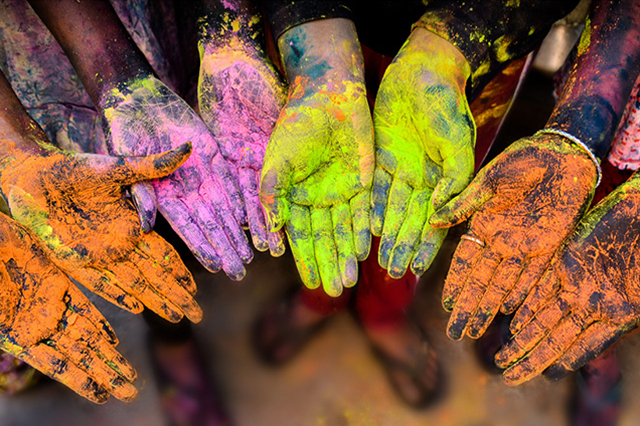
Colorful powders represent unity at a Holi celebration in India.

Holi

Head to Mumbai, India, for Holi (March 20-21, 2019), a kaleidoscopic festival that begins with a soul-cleansing bonfire during the night of winter’s final full moon on the Hindu calendar. It ends the next day with everybody in the streets dusted in colorful powders that magically render unity. The fete symbolizes the triumph of good over evil.
Find and book a hotel near Mumbai.

Cherry Blossoms

Relish cherry blossom season (late April, 2019) in Hirosaki, Japan, where ancient pruning techniques coax 2,600 cherry trees to erupt like pompoms cheering the arrival of spring. The fleeting show symbolizes life’s ephemeral nature. Hirosaki Park boasts blossom tunnels, a castle with a petal-strewn moat for boating, nighttime illuminations and snow-capped Mount Iwaki as the ultimate backdrop.
Find and book a hotel near Hirosaki.

Do you know where to celebrate these occasions closer to home? Tell us about it in the comments section.

Talk to a AAA travel agent to find our more about visiting these festive locales.

Subscribe to Your AAA Newsletter

Sign up and receive updates for all of the latest articles on automotive, travel, money, lifestyle and so much more!

Charming Bristol, R.I., Leaves a Lasting Impression

If you visit Bristol, R.I., be prepared: You might never want to leave. Love at first sight is a familiar story in this seaside town. Many a vacationer has become an entrenched community member.

Among them was Anthony Quinn. The famous actor, artist and writer chose Bristol to live out the last years of his life. He was so enamored of his waterfront property that he is buried there and left a prolific art collection, including many of his own works.

Bristol is a bastion of U.S. patriotism. Its main roadway, Hope Street, is striped in red, white and blue year-round, an homage to its annual Fourth of July Celebration. Dating to 1785, the festivities are said to be the longest-running Independence Day celebration in the U.S. They last three weeks and culminate in an impressive parade.

The peninsula town is situated between two bays – Narragansett and Mount Hope – and nestles Bristol Harbor near its middle. So, it’s no wonder the sea has historically been a mainstay in town life.

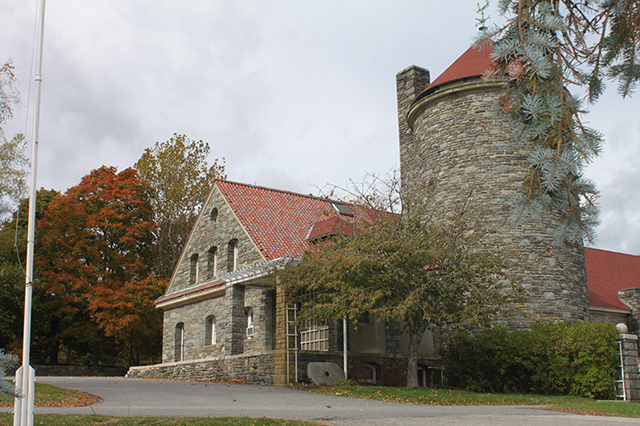
The old stone dairy barn at Colt State Park is a remnant attesting to the wealth of the property’s first owner Samuel P. Colt.

Colt State Park is 464 acres of grassy hills, peaceful coves, sweeping water views and a shoreline for swimming, fishing and other activities. A paved bike path circles the property and is an attractive detour from the East Bay Bike Path, a 14.5-mile paved connector between Providence, R.I., and Bristol.

Downtown Bristol is lined with quirky shops, centuries-old buildings, streets lined with beautifully maintained Colonial and Federal period houses and quite a few AAA Diamond Rated restaurants.

With all of that going on, it’s hard to believe that there is even more to do in this 10-square-mile community (20 miles with the harbor) – but there is.

What to Do

Linden Place sits at the center of Bristol’s downtown area.

Linden Place– Bristol Art Museum: Bristol can’t deny its involvement in the slave trade, but perhaps poetic justice was meted out at this 1810 Federal mansion. Gen. George DeWolf built this house above his means hoping to gain fortune in the already illegal trade. He lost it in financial ruin that also took down most of the town. His and other stories of some former residents and guests will hold you enthralled on this tour. Famous among them were actress Ethel Barrymore and four U.S. presidents. The art museum takes up the carriage house.

Mount Hope Farm hosts a farmers market every Saturday, even in winter when it moves into the barn.

Mount Hope Farm: The history of this property can be traced back more than 300 years to King Philip, the sachem of the Wampanoags infamous for King Philip’s War, a series of deathly Indian uprisings across New England in the late 1600s. Each subsequent generation brought more noteworthy occupants. Today, the 127-acre property on Mount Hope Bay is operated by the Mount Hope Trust and is on the National Register of Historic Places. Besides the glorious views from a network of trails, enjoy the local farmers market every Saturday for local produce and products, sheep shearing and other demonstrations.

Blithewold’s entrance is encased in foliage.

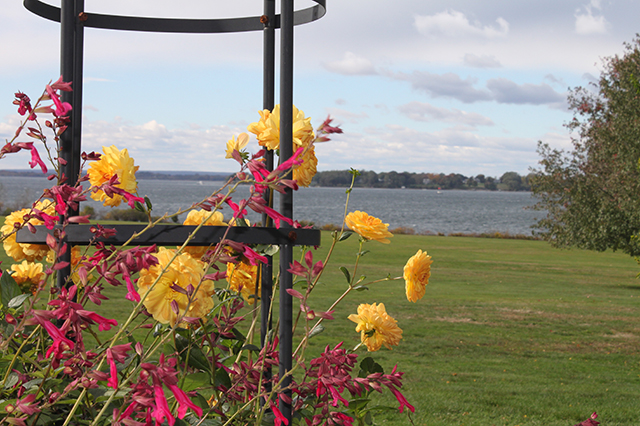
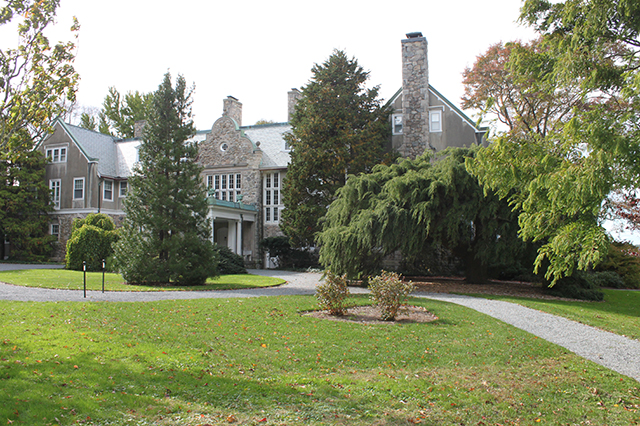
Blithewold Mansion, Gardens and Arboretum: The 1908 45-room mansion is styled after a 17th-century English country house and features the heirlooms of the Van Wickle family, its original owners. The 33-acre grounds overlook Narragansett Bay and are impressively manicured and naturally partitioned into a number of different gardens. Each garden bears a marker explaining its origin or a historical note. The property hosts programs all year long.

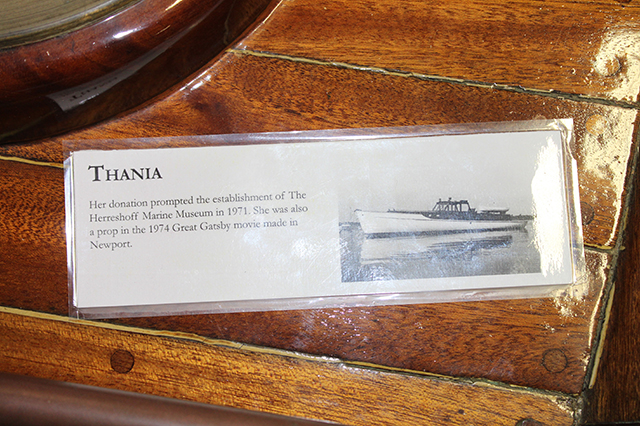
The Herreshoff Museum came into being in the 1970s.

Bristol is also home to the Audubon Society of Rhode Island’s Environmental Education Center and the Herreshoff Marine Museum – America’s Cup Hall of Fame and the Coggeshall Farm, a 1790s living history museum.

Where to Eat

The Hope Diner: Get a heaping helping of local flavor for breakfast or lunch. Dishes like chourico hash, linguica omelets and sweet bread French toast are influenced by Bristol’s large Portuguese population. Choose a seat at one of the tightly packed tables or at the counter overlooking the grill.

DeWolf Tavern: Outdoor seating overlooks busy Bristol Harbor. Indoor seating is in a 1818 building handsomely restored to highlight its storied past. Chef Sai Viswanath’s inspired menu is an ode to the abundance of locally caught seafood with a hint of Indian – he cooks in an intensely high-heat charcoal tandoor.

Lobster Pot: Besides the requisite lobster – whether it be boiled, broiled, grilled, stuffed, baked into a pie or mac and cheese, served as a salad in a roll or many other ways – this restaurant offers New England classics like fish and chips and a fried seafood platter. The large dining room is lined with windows for a fantastic perspective of the setting sun over Bristol Harbor.

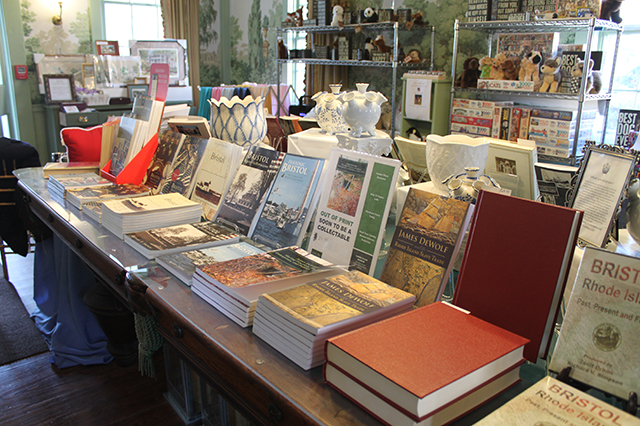
More than a few books have been written about Bristol, R.I., and are sold in the gift shop at Linden Place.

Enhance Your Visit

Read: “Anthony Quinn’s Eye: A Lifetime of Creating and Collecting Art” is heavy with photos of the late actor’s own sculptures, paintings and drawings as well as his vast collection of works by other artists and offers an insider’s perspective of his life through his widow, Katherine, and others.

Watch: “Hachi: A Dog’s Tale” was filmed mostly in Bristol and Woonsocket, R.I. Starring Richard Gere, it is a touching story of a dog’s devotion to his adopted owner.

Subscribe to Your AAA Newsletter

Sign up and receive updates for all of the latest articles on automotive, travel, money, lifestyle and so much more!

Rush-Hour Headache Relief

New York City and Boston rank in the top 20 cities in the world with the worst rush hour traffic, according to the annual INRIX Global Traffic Scorecard.

Even if you live outside these cities, driving during rush hour can be incredibly stressful and frustrating. Use these tips to make your gridlocked commute a little safer.

Getting Started

It may seem like common sense, but try to leave before or after peak driving hours, said AAA Media Relations Manager Robert Sinclair Jr. In most places, peak driving hours are 8 to 9 a.m. and 5 to 6 p.m. Leaving 15 minutes before or after these times can make a big difference.

Alternate Routes

There is usually more than one way to get somewhere. Learn alternate routes to and from your daily destination. And know when local radio stations broadcast traffic reports, which can help you steer clear of congested roads, Sinclair said.

Drive Smart

Defensive driving is always important, but especially in heavy traffic. Always signal lane changes, keep plenty of room between your car and the one ahead of you and scan for slowdowns in traffic ahead. Decelerate as needed and avoid abrupt stops.

Keep Cool

Just because somebody else drives irresponsibly doesn’t mean you need to do the same. If you see a driver swerving in and out of lanes, tailgating or eating, keep your distance and let them pass you.

What is your biggest frustration about your daily commute. Tell us in the comments section below.

Safe drivers save on auto insurance. Talk to a AAA insurance agent about your coverage.

Subscribe to Your AAA Newsletter

Sign up and receive updates for all of the latest articles on automotive, travel, money, lifestyle and so much more!

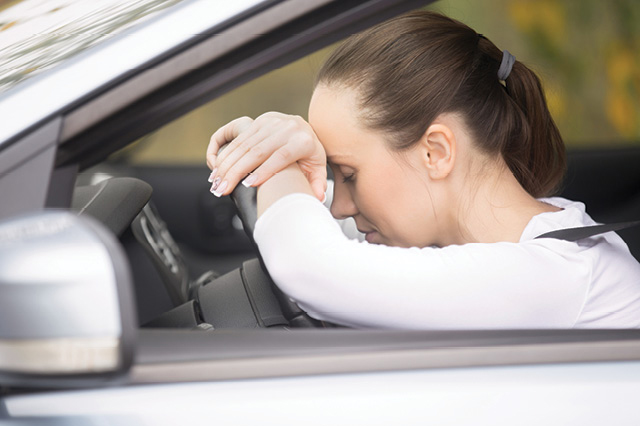
Drowsy Driving Endangers Lives

John Galvin
John Galvin

“If I just had one more hour.” We’ve all said it. The busier our lives get, the more we wish for time to get things done. But according to the experts, what we all need more of is sleep.

The Centers for Disease Control and Prevention says that 35 percent of U.S. drivers sleep less than the recommended seven hours per night. In a recent AAA Foundation for Traffic Safety survey, 96 percent of drivers say they view drowsy driving as a serious threat to their safety. However, 29 percent admitted to driving when they were so tired they had a hard time keeping their eyes open.

The foundation recently released results of drowsy driving research, indicating the percentage of crashes involving drowsiness is nearly eight times higher than federal estimates. Make no mistake: Drowsy driving puts everyone on our roadways at risk.

The study examined video of drivers’ faces in the three minutes leading up to a crash. From this, researchers were able to determine that 9.5 percent of all crashes and 10.8 percent of crashes resulting in significant property damage or injury involved drowsiness. These numbers are much higher than the 1 to 2 percent federal estimates.

The signs of sleepiness include having trouble keeping your eyes open and staying focused, to yawning, feeling irritable, drifting from your lane, or missing street signs and exits. AAA recommends getting plenty of sleep and avoiding medications that cause drowsiness. If you’re traveling a long distance, get a good sleep the night before, take a break every two hours or take turns driving with a passenger. You should drive during times when you’re normally awake and stay somewhere overnight on long trips. Most importantly, don’t work all day and drive all night.

Knowing the warning signs of drowsiness can help drivers avoid dozing off behind the wheel.

The impact that drowsy driving has on traffic safety shouldn’t be underestimated. Taking proper precautions can keep you and your family safe on the road.

Visit AAAFoundation.org for more information of AAA traffic research.

Subscribe to Your AAA Newsletter

Sign up and receive updates for all of the latest articles on automotive, travel, money, lifestyle and so much more!

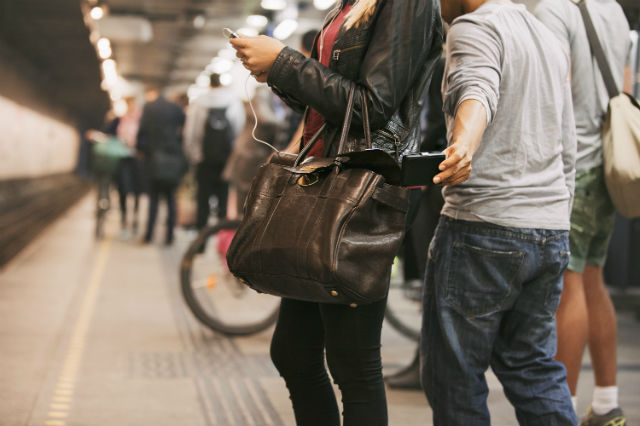
What to Do if Your Phone Is Stolen or Hacked

If it seems that you’re constantly using a phone for everything from business email to paying bills, you’re not alone. Our phones connect us to nearly every aspect of our lives, making us particularly vulnerable in the event they are stolen or hacked.

Sometimes we inadvertently put our personal information at risk by failing to take the proper security precautions. Fortunately, there are steps you can take to secure your phone while it’s still in your hands, and others that can help to protect your data if you suspect it has been compromised.

Precautions Add Layers of Security

With phone features and apps that provide layers of security, it’s possible to improve how well you safeguard personal information. Part of a security plan also involves assessing how you use your phone on the go, as use of public Wi-Fi can compromise sensitive data. Before you pay for lunch or photograph your next adventure, take these precautions.

  • The lock screen on your phone is the first line of defense. Lock your phone so that it can only be opened with a fingerprint, facial recognition or a strong passcode that is longer than four digits. If someone attempts to crack your passcode, chances are that they will trigger time delays, which will ultimately lead to an automatic wipe of your phone before they are able to break in. Just make sure to enable these security features.
  • Enable a device tracker so that your phone’s location can be monitored. Tracker apps have added features that allow you to wipe a phone’s data or even set off an alarm remotely. They also provide key information that can be used by police to locate a stolen device.
  • Keep your phone updated with regular downloads of software changes and carrier settings. These updates are designed to keep you phone operating properly and often they include security patches for known vulnerabilities. When an update is available, don’t delay.
  • Know the risks associated with using public Wi-Fi. Every coffee shop, store and airport offers free access to Wi-Fi, but connecting to these networks leaves you open to eavesdropping by cybercriminals, which can expose login credentials, passwords and other sensitive information. Don’t allow your phone to automatically connect to Wi-Fi networks so that you control when and for how long you take advantage of this free access. When you do connect, the safest way is through a virtual private network, otherwise known as a VPN.  These services provide an encrypted, secure connection for data sharing over public networks.
  • Use an app locker to secure individual apps or groups of apps with a passcode or fingerprint. With the abundance of personal data, photos and contacts stored on your phone, it’s important to add layers of security so that others can’t pry.
  • Store passwords in a designated password manager rather than as a note in your phone or email. These apps store your information in an encrypted data vault. Some even notify you if a site you use has been hacked, which should immediately trigger you to change log-in credentials.
phone is stolen

Defensive Steps Help to Safeguard Information After Loss

If you think your phone has been stolen, first establish that you haven’t simply misplaced it by using the phone’s locator app. If your phone still has power, this will allow you to determine its current location.

  • If the phone has been stolen, proceed the safe way by reporting the situation to local police so that they can attempt to recover it on your behalf. While it may be tempting to use this information on your own, this can be highly dangerous.  Allow the authorities to handle the situation.
  • Lock your phone remotely through your phone’s tracker app and consider a remote wipe, which will erase all data from the phone, particularly if you don’t think you will recover the phone.
  • Notify your wireless provider that the phone has been stolen. Your provider can shut off service to the phone so that it cannot be used.

Protective Measures Can Minimize the Impact of Being Hacked

There is a misconception that celebrities and major companies are the only victims of cybercrime. We all are vulnerable to attacks in the form of phishing links, malicious apps and forms of cyber eavesdropping designed to steal our personal information. When you consider the amount of data stored on your phone, it’s important to know what to do in the event your phone has been hacked – and how to determine it happened in the first place.

  • If you recently received a phishing text from a source claiming to be your bank or a suspicious message disguised as originating from one of your contacts, it’s likely that someone tried to hack your phone. By clicking on a link in that message or replying with personal data such as a bank account PIN number, you may have given away sensitive information. Remember that financial institutions and reputable companies will not require you to send sensitive information this way.
  • When your phone is operating slower than usual or battery life drains more quickly, it may have malware operating in the background. Speed can be affected by a few factors including the amount of memory remaining and battery-draining apps, but it also may be an indication of suspicious activity.
  • Spikes in data usage also may indicate that malware is operating on your phone. Keep an eye on your phone bill to look for higher than usual activity.

Since malware can compromise your personal information, an infected phone should be wiped and restored to its factory settings. Create a backup of the device and its data before following the startup process. All passwords that were stored in your phone should be reset, including bank, email and social media credentials.

While security precautions can help you to safeguard personal information, there are no foolproof measures. In the event your phone is stolen or hacked, you can minimize the impact by acting quickly.

Subscribe to Your AAA Newsletter

Sign up and receive updates for all of the latest articles on automotive, travel, money, lifestyle and so much more!

Skincare Secrets for Travelers

As the body’s largest organ, your skin can have a large impact on everything you do, including your next vacation. You can put your best face forward wherever you go with these tips from Dr. Karen Stolman, a dermatologist and author of “Everyday Natural Skincare” and “Everyday Acne Care.”

To guard against surprise breakouts or unexpected dry skin, consider your destination. “Check the climate of the place you’re traveling to and compare that to the climate you live in,” Stolman said. Adjust your moisturizing routine to account for changes in humidity.

Also think about how much sun you’ll be soaking up. Microdermabrasion and products containing retinoids and alpha hydroxy and beta hydroxy acids can make skin extra sensitive. Either cut down on these or ramp up your use of sunscreen, hats and shade to protect yourself. Men might consider shaving less frequently, as a freshly shaven face is also more sun-sensitive. “You might want to let that 5 o’clock shadow keep growing,” Stolman said.

You should pack the following in your checked luggage.

  • Facial cleanser.
  • Face and body sunblocks, SPF 30 or higher.
  • Topical steroid cream (hydrocortisone) and over-the-counter oral antihistamine for rashes or bug bites.
  • Razor and shaving cream.

Stick to products you normally use and avoid springing for something new and travel-size on your skin, or trusting it to the hotel soap and “I-forgot-my-razor” razor.

During long travel days, it’s best to wear no makeup, which traps pollutants from the air and oils from your skin, creating a grimy residue. In your carry-on, pack hypoallergenic baby wipes, face lotion, lip balm and hand cream for a mid-trip refresh. “If you cannot get to the sink and you cannot cleanse in your usual way, a baby wipe is better than no cleansing,” Stolman said.

Air on airplanes can be especially dry, so follow that wipe down with a splash of fresh water and lotion containing hyaluronic acid, gylcerine or sorbitol to trap the moisture and let your skin soak it up.

Sticking as closely as possible to your usual skincare routine and planning ahead for the rigors of travel will help you avoid dry skin, breakouts and other problems, so that your vacation photos won’t need retouching.

Read more about wellness while traveling.

Subscribe to Your AAA Newsletter

Sign up and receive updates for all of the latest articles on automotive, travel, money, lifestyle and so much more!

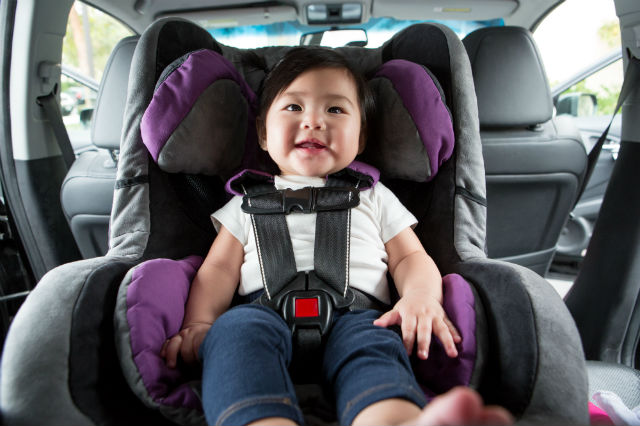
The Pros of Renting a Car Seat From the Car Rental Company

It’s a decision that all parents traveling with young children must make—should you bring your child’s car seat along for the trip or is it worth it to rent one with the rental car company?

It can be a particularly difficult choice if you’re going to be staying at your destination for several days, as the costs of renting a car seat can build up quickly. Fortunately for AAA members, the use of one child or infant booster seat is free when renting with Hertz.

In addition to not having to lug a bulky car seat around the airport, here are a few reasons why you might want to consider renting a child safety seat for your next trip.

Renting a Car Seat is Easy and Safe

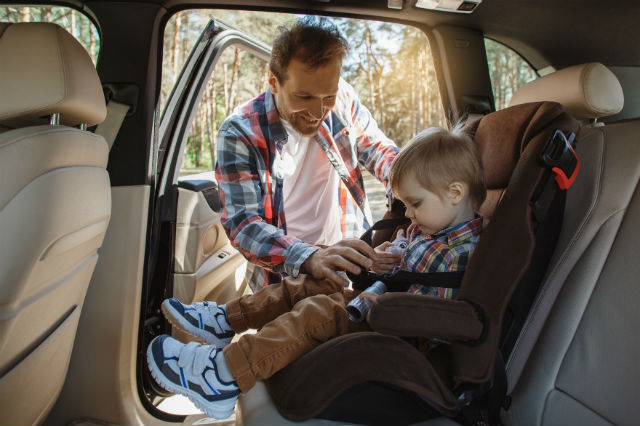
Most car rental companies offer a variety of options when it comes to securing the right seat to keep your child safe. Hertz provides a wide range of child safety seats at all of their rental car locations, voluntarily complying with state laws that require a child seat for rentals.

They offer an infant child seat, which is for a baby who is less than one year old and weighs up to 20 pounds. They also stock forward-facing child seats, for children weighing between 20-40 pounds. Additionally, they carry belt-positioning, high-back booster seats and strollers.

Beyond being assured that Hertz will have the right car seat for your child, you are able to avoid the additional stress of having to navigate airports with a heavy, awkward car seat. Some car seats weigh more than 25 pounds, which is a lot of extra luggage to be dragging around an airport, especially if you have a little one in tow. Avoiding this hassle is one of the top reasons most people decide to rent one.

A Lighter Load

According to U.S.A. Today, “All U.S. airlines and most international airlines will let you take a car seat with you for free, either as checked baggage or as a gate check item.” However, by renting one, you can avoid having to determine if your child’s car seat is safe for use during the flight.

If you’re unsure, you’ll need to check that it is FAA-approved. Even then, you’ll have to follow up with the airline to determine the seat dimensions of the aircraft you will be taking and then check that against the size of your child’s seat.

If it won’t fit, then you face a different kind of problem—the potential of it being damaged as it bumps along with the rest of the luggage being tossed into the belly of the plane.

renting car seat

Other Things to Consider  

One of the first concerns many people have when it comes to renting a car seat is the additional cost. Coming in at as much as $15 a day, the cost of a rental car seat can add up if you’re planning on staying in town for a while. Thankfully, most major car rental companies set a cap of $60 or $70 on a car seat rental. Unless, of course, you are a AAA member.

It’s important to rent a car seat from a reputable agency to avoid the risk of ending up with a seat that has not been well maintained and does not include instructions on how to safely and securely install it in the rental car.

Click here for car seat safety tips.

However, by relying on rental companies with stellar reputations, you can rest assured that child car seats that are no longer safe to be used are retired from the fleet and that those that are in use will be supplied with a user manual and thoroughly cleaned and sanitized after every rental.

The American Academy of Pediatrics advises against using previously owned car seats because there’s no way to know if the seat has been in a serious accident, which is fair. However, as long as you stick to reputable car rental companies, such as Hertz, you won’t run the risk of the seat being used after it was in a serious accident that could hamper its ability to protect your child.

Some people worry that the car rental companies don’t have enough car seats and that there won’t be one for them when they arrive. However, Hertz spokeswoman Paula Rivera explained to Today, “The daily rental fee pays for a national inventory across all our locations of many more seats than are necessary to meet the demand.”

Despite everything, for a germaphobe, no amount of disinfectant can erase the “icky” feeling they have about renting a car seat for their child. However, it’s probably good to remember that the rest of the seats in the car have also been rented out before.

When it comes down to it, renting a car seat for your child simplifies your life, removes stress from your travels and still ensures the safety of the most precious cargo in your vehicle.

Get exclusive discounts on Hertz services with AAA.

Subscribe to Your AAA Newsletter

Sign up and receive updates for all of the latest articles on automotive, travel, money, lifestyle and so much more!

An Uplifting Experience at the Albuquerque Balloon Fiesta

When I was around 7 or 8 and lived in a farmhouse in the Virginia countryside, one afternoon something magical happened: A hot air balloon landed in our neighbor’s cow pasture. I had, of course, seen “The Wizard of Oz” and was beyond excited to see a hot air balloon appear next to my house. I wanted nothing more than to go up in one.

It took a while, but I finally got my wish in a big way when I went to the Albuquerque International Balloon Fiesta in New Mexico in 2017.

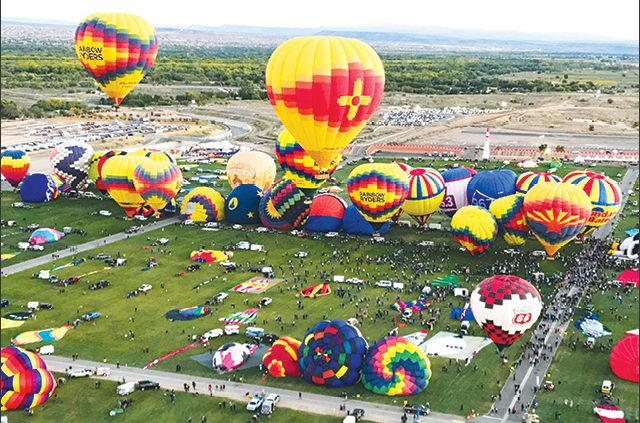
The self-described largest ballooning event in the world has pretty humble beginnings. It started in 1972 with 13 balloons launched from a mall parking lot. Now, almost 600 balloons launch from the 365-acre Balloon Fiesta Park, with more than 887,000 people attending the 2017 event, according to organizers.

The nine-day balloon festival features all sorts of ballooning activities, including mass ascensions (when all the balloons take to the sky), morning and evening “glow” sessions, fireworks, balloon rides, a special shape rodeo and a day full of live music. There’s also an International Balloon Fiesta Museum, which features a variety of exhibits about the history of ballooning and is open year-round.

After getting up before dawn, I made my way to the balloon festival site with two friends who were traveling with me. We sipped coffee in the early morning chill while we waited for the Dawn Patrol pilots, who take off before sunrise to check out the wind and weather and give the all-clear to the other balloonists.

Once they did, the field of waiting pilots and assistants moved into action, filling the hundreds of balloons with hot air as spectators watched. It was a noisy and bustling scene.

A balloon is prepared for launch at the Albuquerque International Balloon Fiesta.

Our balloon was black with a colorful image of a Day of the Dead sugar skull on it. Once it was full, we were quickly ushered into the basket.

Veteran balloonist Bill Lee of X-Treme-Lee Fun Balloon Adventures instructed us on where to stand (one to a side), what to hold on to (waist-high straps) and what not to touch (anything else), and off we went. It took very little time to get aloft. We waved to the people on the field below us growing smaller every second as balloons floated up around us.

It was surprisingly stirring to be in such a large company of balloons so far above the Earth. I found myself tearing up, something I didn’t expect. We kept pointing to different colorful balloons, some in improbable shapes like Darth Vader’s head and funny-looking cartoon characters we didn’t recognize. As we drifted higher, the balloons on the ground looked like so many beach balls scattered around.

After about 45 minutes in the air, we landed in a large field nearby. Once again, I was surprised: Standing there watching the balloons descend was just as amazing as watching them ascend. It brought me back to that moment of childhood wonder, of watching a balloon land in a cow pasture. Happily, it was just as spectacular decades later.

The 2018 Albuquerque International Balloon Fiesta will be held Oct. 6 through 14. Experience the balloon festival with AAA Exclusive Vacations.

Have you been up in an hot air balloon? Tell us about it in the comments section below.

Subscribe to Your AAA Newsletter

Sign up and receive updates for all of the latest articles on automotive, travel, money, lifestyle and so much more!

Discover History and Adventure Along the Erie Canal

In the early 19th century, before highways and railroads dominated, the Erie Canal helped to make New York City the commercial center of the nation. Today, while preserving the canal’s history in the low bridges and locks that you can spot along the corridor, the surrounding region has evolved into a charming destination.

From Albany to Buffalo, 500 miles of interconnected waterways and trails lead to quaint downtown areas, museums, historical sites, boating, dining and more.

For your next day trip or weekend road trip, discover all there is to see and do along the Erie Canal in Montgomery County.

Made of Something Stronger, Montgomery County

Montgomery County, a valley of history, adventure and allure carved by the mighty Mohawk River; the backdrop of all activities in the Mohawk Valley, the touchstone to which we always return. We’re a short drive from Albany, and conveniently located between Cooperstown and Saratoga. A varied landscape and culture, truly authentic.

Visit Today

Parks and activities

Follow the path of the canal on the Erie Canalway Trail, which has 300 miles of multiple use trails for cycling and hiking. Campsites are scattered through the canal system. You can rent a kayak at several locations along the trail as well.

Or bring your boat for a cruise throughout the canal; launches are available at many points across New York State. The Erie Canal also runs near several rivers and waterways, with access to fishing spots and paddling.

Take in the scenery on the Mohawk Valley Gateway Overlook pedestrian bridge, which spans 500 feet over the Mohawk River. Completed in 2016, the views from this bridge show off both sides of the city of Amsterdam.

Erie Canal Locks

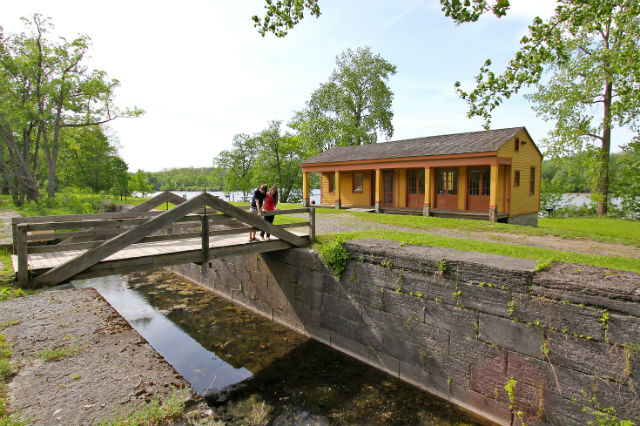
The Erie Canal is famous for its lock system, which raises and lowers the level of the water so ships can pass through smoothly. There are 35 locks total in the canal, with many of the original 19th century locks nearby.

Stroll down to the Schoharie Crossing State Historic Site and view multiple eras of canal history, including a section of the original Erie Canal from 1825 and stone locks built in the 1840s. The largest structure is the remains of the Schoharie Aqueduct, which was built in 1841 to carry canal boats. Six of the original 14 stone arches are still standing.

Hiking, biking and walking are available at Schoharie Crossing along towpath trails, as well as a boat launch. Check out the Visitor Center for a trail map and an exhibit on local Erie Canal history. The park is open year-round, while the visitor center is open May through October, Wednesdays through Sundays.

Go to Tribes Hill and see Lock 12 in operation. It is on the north end of Schoharie Crossing, just beyond the park. Then go 20 miles westward to see another lock in action at Lock 15 State Canal Park, which offers picnic facilities, camping sites and great views of the Erie Canal and the Mohawk River. Plus, it is a short walk from the Fort Plain village center.

erie-canal-montgomery-county
(Photo: Montgomery County)

History and museums

Not only is the Erie Canal itself a major part of history, it is adjacent to many museums and historical sites throughout the state.

The Arkell Museum in Canajoharie hosts works by Georgia O’Keeffe, Mary Cassatt, Winslow Homer, John Singer Sargent and many more artists, as well as prints and paintings of the Erie Canal and nearby Mohawk River. Bartlett Arkell, the founder of the Beech-Nut Packing Company, purchased much of the museum’s initial collection. There are special exhibitions throughout the year.

Step into colonial times at Old Fort Johnson. Sir William Johnson built this fortified stone house on the banks of the Mohawk River in 1749. He was the Superintendent of Indian Affairs for the British government and a highly influential businessman in the Mohawk Valley. Johnson and his family stayed in this home through the French and Indian Wars and the beginning of the American Revolution. Open May 16 through October 14 for the 2018 season.

The Fort Plain Museum and Historical Park is a hotbed of history. This original fort on this site, built in 1778 as a refuge for residents and evacuees after the Cherry Valley Massacre, was renamed as Fort Rensselaer, and became a headquarters for Revolutionary War generals. Nowadays, this area is a museum with exhibits on Mohawk and Oneida history, colonial settlers, the Victorian Era and the Erie Canal. The unearthed sites include a stone farmhouse from 1848, blacksmith shop, the foundation of a Revolutionary War-era bridge and settlers’ cabins.

More to explore

Visit one of the many Brew Central craft beverage producers or visit the restaurants that dot the landscape in every city. There are also plenty of spots to have a lovely picnic at several parks alongside the waterfront.

Jam out at the free concerts all summer long at Riverlink Park in Amsterdam. This waterside park and plaza on the Mohawk River has a boat dock, with electrical power and pump out facilities for travelers. Bathrooms, shower and laundry are also available. This family-friendly park also has a children’s playground. And if you’re hungry, eat dinner with a view at the River’s Edge outdoor restaurant.

See a movie under the stars at the El Rancho Drive-In in Palatine Bridge, which is just outside of Canajoharie. This drive-in has been in business since 1952. Grab a snack at the concession stand, sit in your car and listen to the movie through your FM radio. Open April to October.

Like fresh produce and locally grown food? Stop by one of the area’s many farms and farm stands.

Sports fans can watch the Amsterdam Mohawks play college-level baseball in June and July. The Mohawks are part of the New York Perfect Game Collegiate Baseball League, which includes 14 teams across upstate New York. Games are at Shuttleworth Park in Amsterdam, which also has a tennis court, volleyball court, two softball fields and a one-mile walking path along the Chuctanunda Creek.

This may sound like a lot of things to do, but it is only a small slice of the many activities available along every stop on the Erie Canal.

Go to VisitMontgomeryCountyNY.com for detailed itineraries and guides.

Subscribe to Your AAA Newsletter

Sign up and receive updates for all of the latest articles on automotive, travel, money, lifestyle and so much more!

Create Share-Worthy Vacation Videos With Your Phone

Whether your ideal vacation is relaxing on the beach, exploring a new city, or scuba-diving in the Pacific, you’ll probably use your phone to take video of your trip. Sometimes that video amounts to three minutes of crashing waves that convey monotony more than calm. At other times, the footage is exciting, but shaky camera work makes it difficult to watch. Before you set off on your next vacation, review these tips so that you return with share-worthy videos that truly capture the feel of your getaway.

Plan to capture vacation highlights

A little planning goes a long way when it comes to shooting a vacation video.  In the same way you plan by packing all the essentials for your itinerary like sunscreen, clothes and special gear, take a moment to think about your video footage. You can even set a few reminders in your phone so that you remember to capture moments that can’t be replicated, especially any first-time experiences. Even if you can repeat an activity, you don’t want to miss recording the energy and facial expressions of the initial reaction that will make you want to hit replay over and over.

Set the scene with good lighting

You may have remembered to record important highlights along the way, but without good lighting, they won’t be as enjoyable to watch.

For outdoor videos, the optimum time for recording is right after sunrise or just before sunset. With the sun lower in the sky, you will be able to avoid harsh shadows and take advantage of softer, more even lighting. You don’t have to take every video at that time of day, but it’s worthwhile to plan a few memorable ones while the position of the sun is optimal. When it’s time to pick the best scenes for a video scrapbook, these might wind up being your opening and closing footage.

As you ease into midday, it becomes a little trickier to record as the harsh sunlight distorts colors and creates unappealing shadows, not to mention all the squinty faces it causes on your family and friends. The key to this time of day is to find a spot that lends a little shade as the lighting will be softer and more diffused.

Indoor videos also work well on sunny days as long as the subjects aren’t backlit. Position your phone so that everyone is lit from the front. If an activity is taking place near a window, stand between the lighting source and your subjects so that the light filters onto their faces.

vacation video

Invest in special lenses and accessories

While your phone makes it effortless to shoot videos, some accessories are worth the investment.  A zoom lens allows you to record close to your subject without the pixelation that occurs when you use the phone’s digital zoom, and a host of accessories are designed to help with video stabilization. Newer phone models have optical image stabilization as a built-in feature, but nothing compares with the stability of a tripod or a case that adheres to almost any surface, not to mention the freedom to let go of your phone and become part of the video.

Perfect your stance

Even if you own a tripod, there will be times when you are making a video on the go.  Your phone’s stabilization features will help to create smooth footage, but that’s only part of the equation.

The most effective stance generally requires tucking your elbows into your sides and holding the phone with both hands. Take a few practice videos while bracing yourself this way and modify the stance as necessary so that you find the exact position that works best for you.

Focus on stability and comfort so that you won’t be tempted to cut a video short because of an awkward position, and plan to hold your camera in landscape orientation.  Even though vertical videos are supported by social sharing platforms, most people prefer landscape format, which translates to a better viewing experience on computer and TV screens.

Learn to use video editing apps or software

If you’re lucky or skillful enough to capture the perfect raw footage, you might want to share that content, but often vacation videos benefit from editing. Basic changes such as trimming can be done with your phone’s features, but for anything more extensive, you will need an app or software.

Finding the best one requires some experimentation, but there are a range of options designed to help you edit individual videos or turn them into a video scrapbook complete with smooth transitions between clips and a soundtrack. Whatever you do, retain the original videos in case you want to revisit them later.

Focus on making memories and capturing details

What makes your video distinct is the perspective you bring to it. Other vacationers may have toured Europe or explored Tokyo, but they didn’t capture it exactly the way you will. Pans of a gorgeous landscape or scenes of a bustling city give vacation videos a sense of place, but also remember to focus on the people and details that make your trip so memorable. This personal touch helps your video stand out among the crowd and is key to enjoying it yourself. After all, the appeal of reliving your vacation comes from the brief reminders that spark your memories. When creatively edited, these moments are fun for others to watch as well.

By planning ahead and following these tips, it’s possible to make more creative vacation videos.  With the native features on newer phone models and a host of accessories, capturing better footage has never been easier, which is why it’s also important to plan for enough storage.

If unstable camera work or poor lighting yields less than stellar results, remember you can always improve a video through editing or extract a few highlights. At the end of the day, your video is about capturing and sharing some memorable moments, so get out there and have fun!

Subscribe to Your AAA Newsletter

Sign up and receive updates for all of the latest articles on automotive, travel, money, lifestyle and so much more!

Flavorful Forays: 10 Places Around the World Where You Must Try the Food

Flavorful Forays: 10 Places Around the World Where You Must Try the Food

Nothing brings out the foodie in anyone more than a trip abroad. To truly experience a culture, you must experience its cuisine. Here are 10 places to travel and savor every bite along the way.

1. Japan

Everyone knows Japan for its sushi – in fact, the dish is now ubiquitous in many parts of the world. Sushi isn’t the only delicacy hailing from this Asian nation. Head to Osaka, home of takoyaki (balls of savory batter filled with diced octopus), or to Hiroshima for okonomiyaki, a savory pancake made with eggs, cabbage and other ingredients.

Laska Noodles in Singapore
Laska noodles are a spicy Singapore dish.

2. Singapore

Singapore’s long history as a major trading port of Asia has influenced its palate, fusing the culinary styles of the Malay, Chinese and Indian traditions. It’s easy to sample it all at Singapore’s famed food hawker centers, found in many spots around the island city-state, serving everything from entry-level Hainanese chicken rice to spicy laksa noodles.

Read more about traveling to Singapore.

3. Philippines

With roots in Malay tribes, the former Spanish-turned-American colony now has an independent identity that is influenced by its past – especially in its cuisine, where the flavor profiles are salty, savory and sour. Sisig – spiced minced pig head and liver served on a sizzling platter with a tangy splash of calamansi (Philippine lime) – is a culinary crowd-pleaser.

Poutine in Montreal
Poutine, a dish of french fries, gravy and cheese curds, is popular in Montreal.

4. Montreal

France meets North America by way of the Canadian province of Quebec, where the French influence on provincial cuisine is evident. However, the quintessential Montrealer dish is poutine, a platter of french fries smothered in brown gravy and topped with cheese curds. Some eateries even take this base recipe and add on another true Montreal delicacy: smoked meat.

5. Italy

Pasta is often associated with Italian cuisine, with so many varieties hailing from different regions. When in Rome, do as the Romans do: Eat bucatini all’amatriciana, a typical pasta dish of Italy’s capital city – with pecorino Romano cheese, of course. When in Piedmont, have agnolotti with white truffles. When in Tuscany, do gigli with a nice ragu.

Tapas in Spain
Tapas are a great way to sample a number of dishes in Spain.

6. Spain

Beyond the Valencia-born paella, there are many other must-try dishes when traveling through the 17 autonomous regions that comprise Spain. In Catalonia, sample the noodles of fideua de peix. Up north, try polbo a feira, an octopus recipe from Galicia. Want to sample a variety of dishes in one sitting? Order tapas – small plates intended to share.

Read about food and sights in Barcelona, Spain.

7. Hungary

Hungry in Hungary? There are delicious ways to satisfy your craving with classic dishes like chicken paprikash or goulash, a traditional stew of meat, potatoes and vegetables. If you’re a fan of all things fried, a real favorite is langos – a deep-fried bread typically smothered in a garlicky cream sauce and cheese. Add bacon, if you’d like.

Coq au vin in France.
Coq au vin, chicken cooked in wine, is a signature French dish.

8. France

France is synonymous with good food; so much so that the English word “gourmet” is borrowed from French. Each region of the country boasts a proud local cuisine, so you’re bound to find a great meal wherever you travel, from the fish bouillabaisse of Provence to the coq au vin of the Burgundy region. Bon appetit!

9. Thailand

There’s spicy and then there’s Thai spicy, which is a whole other level of heat. If you’re keen on embracing it as the locals do, go beyond the trite orders of pad thai by dining on panang gai (chicken in a spicy red curry from the southern region) or yum jin gai (a spicy chicken soup from the north).

Read our tips for traveling in Southeast Asia.

10. Peru

Peru’s dishes are as diverse as its landscapes. Citrusy ceviche, a popular seafood dish, hails from the shore, while papas a la huancaina (potatoes in a creamy yellow pepper sauce) are farmland fresh. Meat eaters on their way back from Machu Picchu will appreciate a tender steak of alpaca, a lean red meat similar to bison.

Now that you know what to order in these countries, make sure you show your manners. Check out our slideshows on the appropriate behavior when dining in some of these countries.

Have you tried any of these foods? Can you recommend other international dishes that others must taste? Tell us about it in the comments section below.

Subscribe to Your AAA Newsletter

Sign up and receive updates for all of the latest articles on automotive, travel, money, lifestyle and so much more!

Curb Cellphone Use to Keep Our Roadways Safe

John Galvin
John Galvin

Many years ago, I got my first cellphone. It was larger than the one I have today, and I could only make phone calls on it. Fast-forward to 2018, and cellphones are mini-computers that allow you to talk, text, watch shows, listen to podcasts and buy your favorite products. However, cellphones are also devices that have proven to be extremely distracting to drivers.

In a recent study, the AAA Foundation for Traffic Safety concluded that using a cellphone while driving can increase your chance of a crash up to eight times. For 70 years, the foundation’s mission has been to save lives through research and education. One of its main areas of focus is to guide drivers toward safe decisions.

While there are many benefits of cellphones, their use behind the wheel creates a dangerous situation. The study, which can be found on the foundation’s website at AAAFoundation.org, shows what happens when motorists use their cellphones while driving. It includes data from a sample of 3,593 drivers whose driving was monitored using in-vehicle video and other data collection equipment for a period of several months between October 2010 and December 2013. The results compared the odds of a crash involving motorists who used cellphones while driving versus motorists who did not.

Not surprisingly, motorists who texted while driving had significantly higher risks of a crash. In fact, the study found that motorists who texted or surfed the internet while driving were two to eight times more likely to be involved in a crash. Talking on the phone, even hands-free, made motorists four times more likely to be involved in an accident. These odds translate into more crashes on our roadways every day.

At AAA, we focus a lot of our efforts on saving lives. Motorists are putting themselves and others at risk when they use their phones while driving. I’m sure you’ll agree that any level of risk behind the wheel is risk not worth taking.

Visit the AAA Foundation for Traffic Safety to find out about other studies and findings.

Do you have a story about the dangers of cellphone use behind the wheel? Tell us about it in the comments section below.

Subscribe to Your AAA Newsletter

Sign up and receive updates for all of the latest articles on automotive, travel, money, lifestyle and so much more!

Have Allergies, Will Travel

Mold lurking on the shelves of a used book shop.

Dust mites embedded in a hotel pillowcase.

Peanuts tucked into a chicken salad.

These are the types of things that make travelers with allergies more likely to stay at home.

“People sometimes don’t travel as much,” said Dr. Julie D.K. McNairn, an allergist who practices in Ithaca, N.Y. “They may not explore as much. It kind of can limit your choices as to where you might be willing to go because there is that unknown aspect.”

But this need not be the case. With good preparation and modern tools, McNairn says people with allergies can enjoy travel just like anyone else would.

Start with a visit to your specialist to discuss your destination and review your allergy management plan. “A lot of times we will ramp up the plan a little bit pre-emptively, knowing that there are going to be unusual exposures,” she said.

Next, do a little research on your destination and download a handy tech tool or two.

WebMD Allergy, available as a free app, offers dust, grass pollen, tree pollen, ragweed and mold forecasts based on your location, as well as other handy features.

The AllergyEats app, also free, allows diners to share food-allergy-based dining reviews and has menus for more than 425,000 restaurants.

The website www.allergytranslation.com offers customizable cards that explain allergies to a variety of foods in any of 43 languages.
Because some challenges can’t be anticipated (a coffee shop that turns out to be a cat cafe, for instance), “make sure you have your antihistamine and your injectable epinephrine if those have been prescribed,” McNairn said. It’s also a good idea to look into allergy specialists and medical facilities at your destination.

On your journey, McNairn says that if you’re forthcoming with airport, airline, restaurant and hotel staff, most will be able to accommodate you. Restaurants are more aware that some diners have food allergies. And medications have made allergies easier to manage.

“Absolutely people can have allergies and still have a fabulous time on vacation,” McNairn said. Bon voyage!

Read more about wellness while traveling.

Subscribe to Your AAA Newsletter

Sign up and receive updates for all of the latest articles on automotive, travel, money, lifestyle and so much more!