AAA Northeast is a world leader for employee enrichment opportunities, ranked No. 29 by Training magazine on its 2020 Top 125.
The magazine is a go-to reference for human resources and workforce training professionals. Its annual Top 125 awards showcase organizations that demonstrate a strong commitment to employee enrichment that permeates its overall culture. Components include programs and scope, budget, tuition reimbursement, infrastructure and delivery, evaluation and metrics as well as human resources support.
“Working for an organization in the Training Top 125 means that you are working for an organization that invests in ongoing training and development,” said Keri Borba, director of learning and development at AAA Northeast. “It also shows that those entrusted with the job of designing and delivering training are educated, experienced, focused on the needs of adult learners and dedicated to equipping employees with the skills, knowledge and abilities they need to be successful.”
Preparing employees to deliver the highest level of performance, as well as supporting career growth, is a long-held tradition at AAA Northeast, said David Himsey, senior vice president of human resources at AAA Northeast. “We have a comprehensive approach to providing both skills training and leadership development,” he said.
There are 42 full-time instructors among the 3,000-plus employees at AAA Northeast. They are specialists and industry experts. Borba said. “They’re excellent trainers and they know their subject matter well,” Borba said. Another 40 or so employees regularly lend their expertise to training sessions.
They teach by example.
“We have a growth mindset. We are committed to our own continued development and learning,” Borba said.
For example, at the end of every course, trainers ask participants for feedback. The team takes that feedback seriously and makes adjustments to course content, course flow, timing and relevancy to ensure the needs of the participants are being met, Borba said.
With AAA Northeast employees situated across six states, the training team provides wide access to training outside of the classroom through online instruction and alternative learning methods, including quizzes, videos and interactive activities that can be completed at various times to make learning more convenient for every employee.
As we work our way through the COVID-19 crisis, we are all trying our best to try to stay healthy and help slow the virus’s spread. Due to high transferability, acts like social distancing, working remotely and self-quarantining are being used as precautionary measures.
If you are going to be stuck inside the house for a while, you might as well make the most of it. Here’s how to stay busy, entertained, productive and healthy at home.
Home Maintenance
Here’s an idea for how to stay busy when you have to stay in your house: get stuff done! Take the opportunity to do some cleaning and get organized.
Start with home projects you’ve been meaning to get to, like small repairs or organizing a junk drawer, closet, basement, attic or garage. Try going through your fridge, pantry and cabinets, getting rid of anything expired, wiping down the shelves and reorganizing.
Going room by room is a good approach, or you could try focusing on a specific method, like dusting, vacuuming or washing.
So you don’t start to feel cooped up, head outside to clean your home’s exterior. Other outside activities include sweeping your porch and/or walkways and prepping your lawn for the spring by raking your yard.
Self-Care
While you’re staying at home, do some things for yourself too. Taking care of your physical and mental health and knowing how to keep your mind busy is important, especially during stressful times.
Try doing some yoga, exercising or meditating. Treat yourself with a DIY spa day by taking a bath. If you have a porch or lawn, you can go outside for a little fresh air and/or some sunlight.
As always, drink plenty of water and eat a well-balanced diet. Consuming foods with immunity-boosting properties — like berries, greens, garlic and ginger — isn’t a bad idea either.
Utilize Technology
If you’re staying home for a while, it’s easy to keep yourself entertained with technology.
There are tons of movies and shows available for streaming. You can do a movie marathon by choosing a lengthy series — like the “Harry Potter” films, “Lord of the Rings,” “Star Wars,” “Fast 5,” “James Bond” movie, etc. — or explore a certain genre, theme or director. Binge-watching a show, like one you know is worth watching but you haven’t previously had time for, is another option.
Playing video games in an another way to pass the time. Whether you have a game console or like to use apps on your phone, there are a plethora of games for you to play.
You can also stay entertained by listening to podcasts or music. The choices here are practically endless, and another plus is you can do other things while listening too.
Like always, don’t spend too much time in front of screens. Be sure to get up, move around and make sure you’re staying hydrated.
Connect With Others
Just because you’re staying home doesn’t mean you have to feel lonely. You can use this time to connect with people. Call or video chat with family or friends, or simply text or instant message someone to check in.
Another option is vlogging or writing a newsletter that you can email to your loved ones to let them know about what’s going on in your world.
Get Creative
If you are wondering how to keep your mind busy when stuck inside the confines of your home, do something artistic, like drawing, painting, scrapbooking, crafts or writing. These are all great ways to have fun, stay busy and both stimulate and relax your mind. Practice makes perfect when it comes to these kinds of activities, so the longer you work at them, the better they’ll be.
Another way to get creative is by heading to the kitchen. Dig out an old family recipe or look online to bake or cook something delicious you normally don’t have enough time to make. Not only will this activity keep you busy, you’ll also have a treat to enjoy afterwards.
Engage Your Brain
Keeping your brain engaged is another great way to avoid feeling stir-crazy. If you enjoy learning, take online classes, quizzes or try watching some how-to videos/tutorials.
Losing yourself in a good book is a calming way to pass the time. For something a bit more challenging, try doing some brain games, like crosswords, word searches, Sudoku or jigsaw puzzles.
Now that you have a few ideas for how to stay busy at home, keeping your mind and body busy is also possible with a variety of home activities. Whether you choose to practice some social distancing, want to self-quarantine or spend less time in public, staying home can help slow the spread of COVID-19.
Check the CDC’s website to keep up with the latest information on COVID-19.
Do you have any other tips for how to stay busy when stuck at home? Share them with us in the comments.
Sound amazing? If you want to stop dreaming and start making this a reality, here are five steps you can take to jump-start your early retirement planning.
1. Set Your Retirement Goals
The first step in seriously planning for an early retirement is to figure out just how much you need to save.
Start by thinking about how much money you’ll live on per year once you’re retired. Some retirement planners suggest replacing 80% of your current income, while others say 100% is more realistic.
Some retirees opt to minimize their expenses and live a more modest lifestyle, while others maintain their current lifestyle. Chances are your spending in retirement will go down in certain areas, such as commuting costs and housing costs (if you’ve downsized or paid off your mortgage). It will likely increase in other areas, like travel and healthcare.
Say you’re planning to live on $40,000 per year in retirement. If you’re investing your savings wisely, such as in low-cost index funds, you won’t literally need to save $40,000 for each year. You’ll need to save enough that you can safely withdraw your income amount each year without affecting your nest egg’s growth.
The widely accepted “Safe Withdrawal Rate” is 4%, so multiply $40,000 by 25 and you’ll have your target savings amount: $1,000,000. With $1 million in your portfolio, you could have an annual withdrawal of 4 %, or $40,000, for the foreseeable future.
Now, at what age do you want to retire? If you’re 35 and want to retire at age 50, you’ll have 15 years to save up your $1 million. But how much should you save each year? Check out this compound interest calculator to estimate how you can reach your goal.
2. Maximize Your Savings
The math for early retirement is simple – the higher percentage you save of your current income, the sooner you’ll be able to retire. And thanks to compound interest, every little bit helps. (Check out this early retirement calculator to see how saving more pays off.)
If your employer offers a 401(k) contribution match, make sure you’re contributing enough to get their full match (a.k.a. “free money”). If you’re self-employed, be sure to open a solo 401(k). Traditional and Roth IRAs are another great way anyone can save.
Retirement savings accounts have great perks but typically have withdrawal rules linked to your age, so if you plan to retire before 55, consider investing independently in low-cost index funds (the best-performing type of mutual fund).
3. Increase Your Income
Earning more money is a surefire way to fast-track your savings (as long as you’re not also spending more).
This could mean starting a side hustle, asking for a raise, moving to a higher-paying job or even changing your career.
If you’re counting on Social Security as a crucial part of your retirement income, you should plan ahead to make sure you’ll get the most out of it.
Calculator and paperwork (doockie / iStock / Thinkstock)
4. Decrease Your Spending
Another way to free up more cash is to spend less. Reducing your spending could be as small as cutting back on lattes, or as significant as downsizing to a smaller home. A great place to start is signing up for a free Mint account to track exactly where your money’s going.
Here are a few ways early retirees decrease their expenses in order to save more for retirement:
Cooking dinner at home instead of eating out. Packing lunch instead of buying it.
Cancelling cable.
Taking public transportation or riding a bike instead of driving.
Downsizing to a smaller house or apartment.
Moving to an area with a lower cost of living.
5. Avoid Debt for Early Retirement
With credit card APRs nearing 16% and the average household owing $16,883 in credit card debt, you could end up paying tens of thousands of dollars just in interest if you keep a running balance on your card.
Avoiding and paying off debt is one of the best ways you can decrease your expenses and spending in the long run.
Many early retirees choose to buy their cars used and drive them for longer to avoid car payments. Some even pay off their mortgage early in order to save hundreds of thousands in interest and decrease their housing costs during retirement.
What steps are you taking to make early retirement a reality? Share them with your fellow AAA members in the comments section.
[Coronavirus update: You can check to see if certain National Parks are open on the NPS Public Health page here.]
National parks have often been touted as America’s best idea. With jaw-dropping landscapes and incredibly diverse flora and fauna, it’s easy to see how they have earned this title.
Photographing these scenic locations is an experience like no other; photographers come from all over the world for a chance to capture the beauty with the parks.
If you are planning a trip soon, read these tips on how to make the most of your national park photos.
Did you know that AAA helped to create the Park-to-Park Highway in 1920? The route connected the first 12 national parks in the American west, making the parks easily accessible by car.
Before you even step foot in a park you should do some research on locations to photograph. It is good to have a list of spots you want to photograph beforehand because many of the parks do not have cell service. I have a few different ways I research photography locations.
Instagram
My favorite way to look for photo spots is to do a location search for the park I am visiting on Instagram. I like to look at spots that other people have photographed and see which ones are popular among photographers.
Books
Look for photography books, like this one or this one, with the parks you plan to visit.
Google
Search Google for park photo ops. Many people blog about their visits and there are even sites that map out spots. I will often search for “photography locations at ____ park” or “best sunset spots at ____ park.”
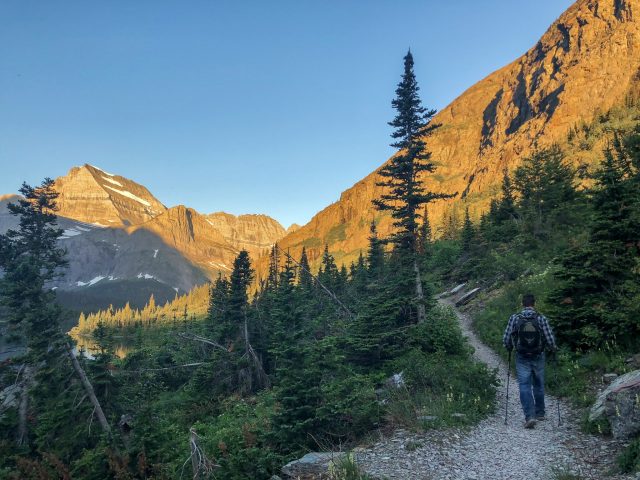
The early bird gets the picture! It’s no secret that the best time to take photos – especially national park photos – is around sunrise and sunset. The hour when the sun is just coming up or going down is referred to as “golden hour.” The hour right before the sun goes up or down is referred to as “blue house.” These are the best times to be out snapping pictures, not only because the light is beautiful but wildlife is most active. There are far fewer people out early in the morning and early evening which makes it easier to find parking.
Golden Hour
During golden hour the light is softer which makes shadows not as harsh. It also can create golden light and colorful sky displays.
Pro Tip: Take more than one exposure. Take one shot where you expose for the sky, and another shot where you expose for the landscape. You can then later merge the two exposures together in Photoshop.
Blue Hour
In the hour before the sun comes up there is still enough light to take pictures. It is soft, even light, which means no harsh shadows.
Pro Tip: Make sure your ISO is up high enough so that your shutter speed isn’t too slow. A tripod is also highly recommended.
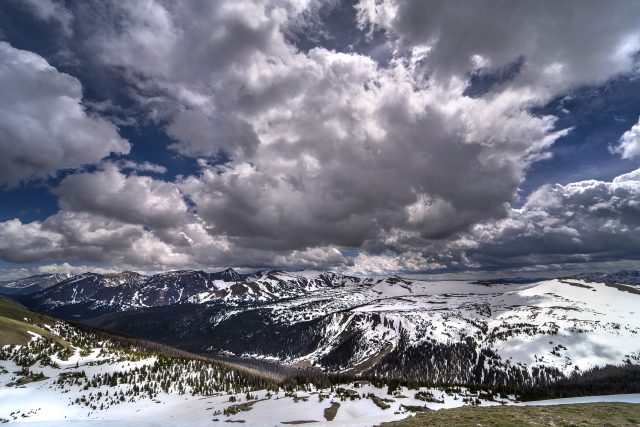
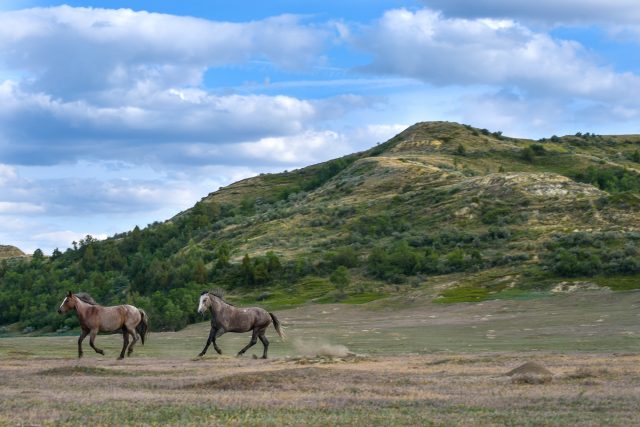
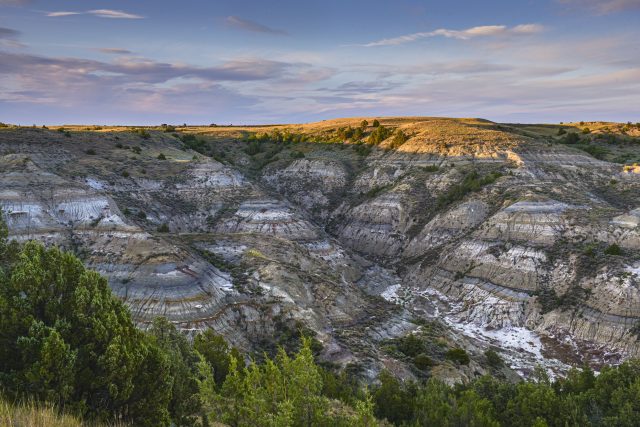
Theodore Roosevelt National Park
Be Prepared
Our national parks are brimming with wildlife, so you should be prepared at all times to deal with any encounter. I once encountered a grizzly bear on a hike, and I can tell you firsthand that it is terrifying. Bison and even wild horses have been known to charge people. Keep a safe distance at all times. Be on high alert if you are out during blue or golden hour, as this is when animals are most active. Carry bear spray, an emergency kit and plenty of water.
While there are a lot of beautiful views right along the roads in the parks, some of the most epic views require a hike. I recommend researching the distance and elevation gains before setting out on your hike.
Pro Tip: Pack lightly when hiking. While it can be tempting to take your whole lens lineup with you, the extra weight can really slow you down. I recommend bringing your camera and just one lens. I like to bring my 24mm as it is one of my lightest lenses and it is great for landscapes.
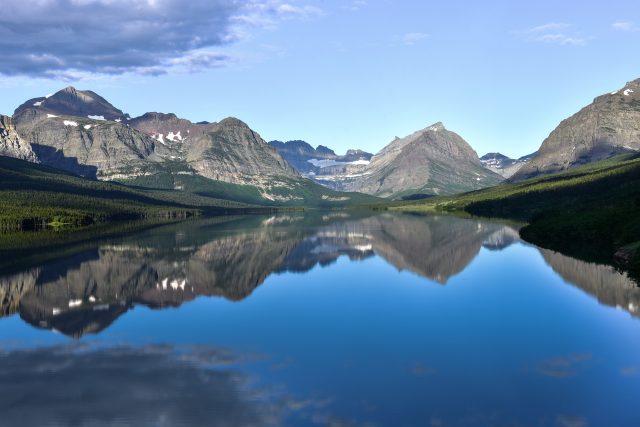
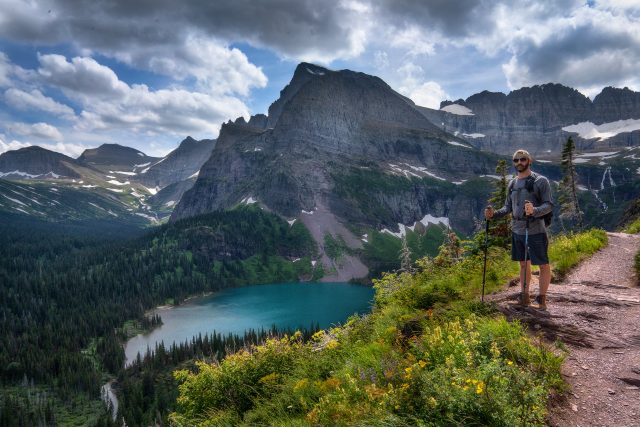
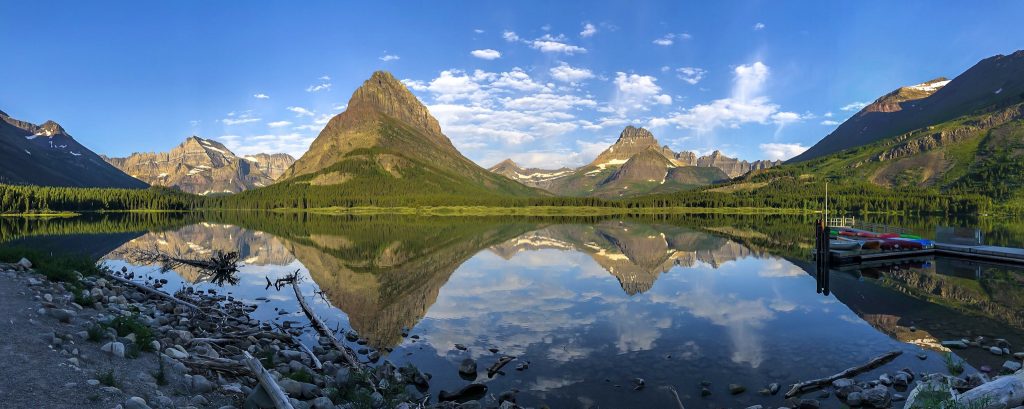
Glacier National Park
Watch the Weather
Look at the forecast every morning. Storms can make for some really amazing pictures. Most people head indoors when it starts to rain so you’ll almost have the park to yourself.
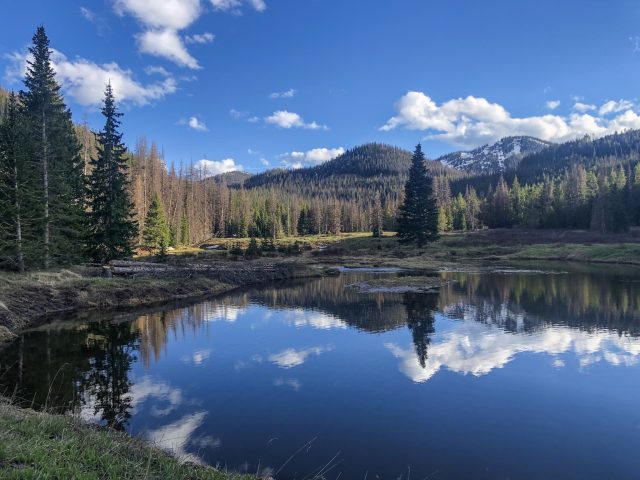
Pro Tip: Check the wind speed when you are looking at the forecast. Little to no wind is best for snapping water reflections.
Visit Off-Season
If you don’t want to deal with the hassle of large crowds, plan a visit during the off-season. Summer and fall are the busiest seasons at the parks. Plan a trip in the spring when there are fewer people. The month of September is also a great month to plan a visit because the kids are back in school. Winter sees the least amount of visitors. Even if you don’t like snow there are still parks in Utah, Arizona, Florida, etc. that have warmer winter weather. If you plan to visit a park that sees snow, check the website for the park to see what is open. They close roads in many of the parks in winter.
Theodore Roosevelt National Park
Take a Photography Workshop
If you do a quick Google search for “national park photography workshops” you’ll see no shortage of results. Workshops are a great way to see the park and learn techniques. Most workshops also have downtime, so you’ll still get to explore on your own. You can join me in Badlands National Park this spring for a female photography workshop.
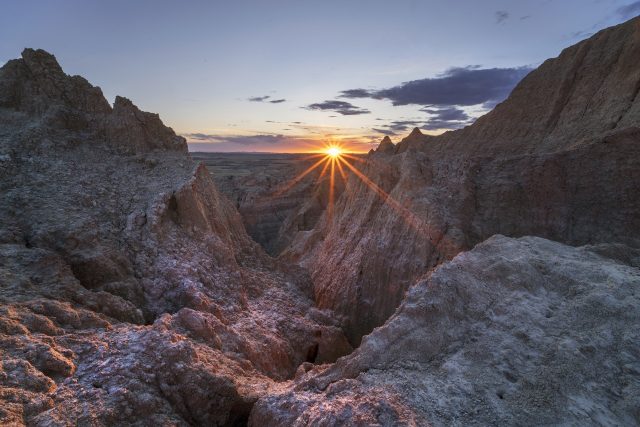
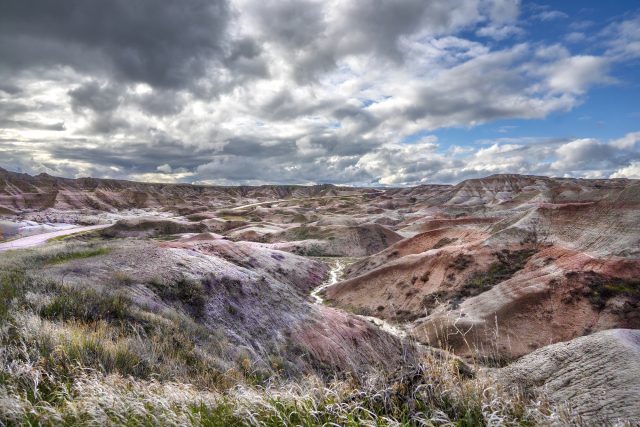
Badlands National Park
Be Careful
Last but not least, please be careful when you are out there photographing our parks. Keep away from cliffs and edges and stay on designated trails. No shot is worth dying for!
While you are out visiting the parks, don’t miss out on these cant-miss attractions.
Tell us about your national park photos and adventures in the comments below!
Beth Mancuso is a professional photographer. All photos are hers.
Once we’re ready to travel again, consider a visit to Washington, D.C., where you canpay tribute to our fallen heroes at numerous memorials. (Due to COVID-19, many of the sites listed are still closed or open with various restrictions; please go to a site’s website or call before visiting.)
Arlington National Cemetery is the final resting place for more than 400,000 active duty military personnel, veterans and their families.
Honoring Our Fallen Soldiers in our Nation’s Capital
Seeing Arlington National Cemetery is a must for any visitor to our nation’s capital. On Memorial Day a small American flag is placed on each of the over 400,000 graves, and the president or vice president visits the cemetery and lays a wreath at the Tomb of the Unknown Soldier. The tomb is guarded 24 hours a day year-round, and witnessing the changing of the guard is a solemn experience. The changing of the guard takes place every half-hour from March through September, and on the hour during the rest of the year.
Our nation’s largest Memorial Day Parade takes place every year along Constitution Avenue. This year, however, the parade has been canceled due to the public health threat from COVID-19. In its place a nationally televised special will honor the sacrifice of our uniformed men and women.
Arlington National Cemetery is not the only site honoring those who have made the ultimate sacrifice, and neither is the parade. Memorial Day ceremonies are also held at the Vietnam Veterans Memorial, the nearby Korean Veterans Memorial, the World War II Memorial, and the Women in Military Service for America Memorial. Last but certainly not least, you, the visitor, can pay tribute to our fallen heroes by visiting their graves and memorials.
One of the most moving memorials on the National Mall is without doubt theVietnam Veterans Memorial. I have visited many times, and I always see veterans coming to honor the 58,220 U.S. soldiers who lost their lives in this conflict. I will never forget my first visit, together with my young son, when a veteran came and taught us about the book of names and how to find a name on the wall. Even though we had no loved ones lost in the Vietnam War, the veteran encouraged us to rub a pencil over a piece of paper atop a name and adopt this soldier and hold him in our prayers.
The memorial was dedicated on Veterans Day in 1982; two years later the Three Servicemen sculpture by Frederick Hart was dedicated, followed in 1993 by the Vietnam Women’s Memorial. The sculpture depicts two uniformed women caring for an injured soldier. The memorial is thefirst memorial in Washington, D.C., honoring women’s military service.Find out more here.
Designed and financed by private contributions, the Korean War Veterans Memorial was dedicated on July 27, 1995. Nineteen steel statues by sculptor Frank Gaylord represent the ethnic cross-section of our nation. The statues represent four Army troops, three Marines, one Navy recruit, and one Air Force serviceman. Of these, 12 are white, three are black, two are Hispanic, one is Asian, and one is Native American. In just over three years, 36,574 Americans died in Korea, with 8,200 are still missing in action.
To the right of the statues is the Korean Memorial wall, covered with 2,400 Korean War images created from 15,000 photos obtained from The National Archives. The 38 panels symbolize the 38th Parallel, the original boundary between North and South Korea, as well as the 38 months the war lasted.
A walkway pays tribute to the 22 nations that committed troops to the Korean War. The far end of the memorial leads visitors to the Pool of Remembrance, a reflecting pool encircling a wall with the inscription ”Freedom Is Not Free.”
TheNational World War II Memorialhonors the more than 400,000 Americans who died during the worldwide conflict, as well as the 16 million Americans who served in the United States armed forces. Each state and territory is represented by massive granite columns surrounding a pool with multiple fountains. A wall of 4,048 gold stars reminds visitors of those who paid the ultimate price. The design architect of the memorial to the Greatest Generation is Friedrich St. Florian, a naturalized U.S. citizen born in Austria. The memorial is impressive during the day, but even more so at night.
The U.S. Marine Corps War Memorial, more commonly known as the Iwo Jima Memorial, is located in Virginia, near Arlington National Cemetery, and is dedicated to all Marine war casualities. Not far from the 32-foot-long sculpture is theNetherlands Carillon, a gift to our country by the people of the Netherlands. The carillon plays on the hour, and concerts are held during the summer. The carillon and its bells are currently under restoration, and the 50 bells of the carillon are back in The Netherlands for a complete overhaul. They will return in the summer of 2021.
The memorial offers a stunning view of the United States Capitol, the Lincoln Memorial and the Washington Monument. Only a five-minute drive away is the U.S. Air Force Memorial. Three spires representing jets rising into the Washington skyline commemorate the 54,000 airmen and women who died in combat.
Steps off Pennsylvania Avenue, between the Capitol Building and the White House, is the U.S. Navy Memorial.Fountains, 26 bronze sculptures and quarterdeck masts frame the largest granite map in the world, while one sailor stands watch. The memorial reminded me of the many Navy and sailor memorials I saw during my childhood in Belgium. They are haunting because of the lone sailor standing among what otherwise is a monumental and solemn sight. The memorial pays tribute to the men and women serving our country at sea, and hundreds of events take place on the plaza annually.
On the banks of the Potomac River, inside the Lady Bird Johnson Park, is the Navy-Merchant Marine Memorial. Located on Columbia Island, the memorial depicts seven seagulls flying over waves. The memorial honors the sailors and marines killed at sea during World War I.
A National World War I Memorial was supposed to open in November 2018 in time for the war’s centennial, but the project was delayed. It’s currently under construction in Pershing Park. No official dedication date has been announced. In the meantime, you can visit the District of Columbia War Memorial commemorating the men and women of the District of Columbia who gave their lives in World War I. It’s located slightly off of Independence Avenue.
When visiting Washington, D.C., I also recommend a stop at the American Veterans Disabled for Life Memorial. It is a powerful reminder of the costs of war. Located just east of the Capitol, it pays tribute to disabled veterans and the scars they carry as a result of their service.
Aching back and neck. Stiff joints. Bad posture. It’s not unusual for office workers to experience these ailments after sitting at a desk for hours five days a week (not to mention stress). It’s no better when you’re working from your desk at home. If this sounds familiar, consider taking a Pilates break during the workday.
“When you’re sitting at a desk, your hips and back are scooped in a C curve which can have an effect on the muscles,” says Jo Ann Graser of The Pilates Method Alliance, a national organization dedicated to promoting the teachings of Pilates and certification of its instructors.
Introduced in the 1920s by Joseph Pilates, who called his system Contrology, Pilates focuses on core strength and has been known to improve flexibility and balance. Although often associated with six packs and abs, many believe the practice also helps with stress management and relaxation.
According to Graser, who serves as the president of PMA’s board of directors, movement is key for people who work in sedentary jobs. “When you’re sitting for long periods, you need to get up and take a walk, arms swinging,” she said.
If you are interested in how you can effectively do Pilates at your desk, Graser recommends the following stretches.
Figure Four Stretch – Double Leg Stretch Pilates
Push away from the desk and scoop forward to the edge of your chair. Place your right ankle over your left knee. Make sure your hips are squared with the desk. Put your left hand on the right thigh. Let your right hand hang down to the side. Sit tall, rotate torso and focus your right eye towards the back of the room. Reverse the legs and repeat steps.
Upper Back and Neck Stretch – Spine Stretch Pilates
Sit tall and put your hand on your collarbone. Cover that hand with your other hand. Inhale as you tilt your head to move your ear to your shoulder and exhale as you return to center.
Because Pilates generally helps strengthen the neck and shoulders, it can lessen back pain that results from sitting at a desk.
Change Seated Positions
“The goal is not to be sitting in the same position,” said Graser. “Change how you sit in the chair throughout the day. Sit tall at your desk with your feet flat on the floor.”
Adjust Your Posture While Driving
Before taking off, Graser suggests sitting tall and adjusting your rearview mirror as soon as you get into your car. “If you can’t see it as you’re driving that means you need to sit up and adjust your posture instead of readjusting the mirror.”
More Stretches
Wellness site mindbodygreen.com also offers various stretches to release daily tension at work, like simple shoulder circles. Sit upright in a chair and slowly move your shoulders forward, up, down and back for five repetitions. Reverse the circles for five more repetitions.
To get the blood circulating after sitting all day, ankle flexes are also ideal. Sit in a chair and cross one leg over the opposite knee. Point the toes of the top leg away from you and flex the toes back. Do 10 repetitions. Repeat the stretch on the other leg.
Even people who don’t consider themselves fitness devotees or hate the gym can reap the benefits of practicing Pilates at work, both physically and mentally.
For decades, the Ford Model T was the most popular car in America and the world. It wasn’t until the 1970s – a half-century later – that another car passed its sales numbers. As revolutionary as the vehicle was, its popularity was more a sign of the times than anything else: There simply weren’t enough other cars being made for there to be any competition.
But because cars have evolved so drastically over the past century, there are now more four-wheeled options than ever. Naturally, one would expect car sales to disperse among all makes and models, and no automobile would stand head and shoulders above the others. And yet, a handful of vehicles have remained at the top of their class, year over year, decade over decade.
These are some of the most popular cars of all time and a look at what has made them so universally sought-after.
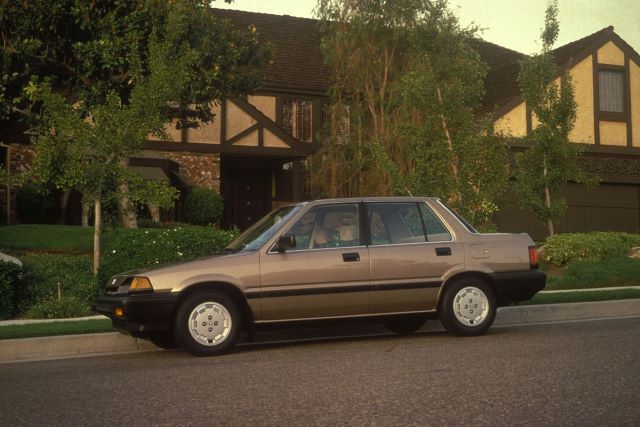
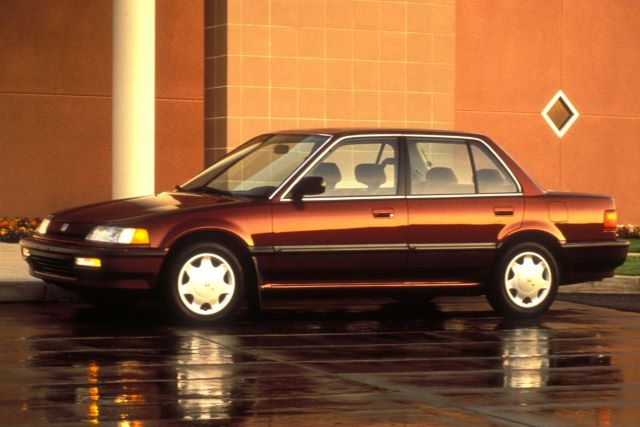
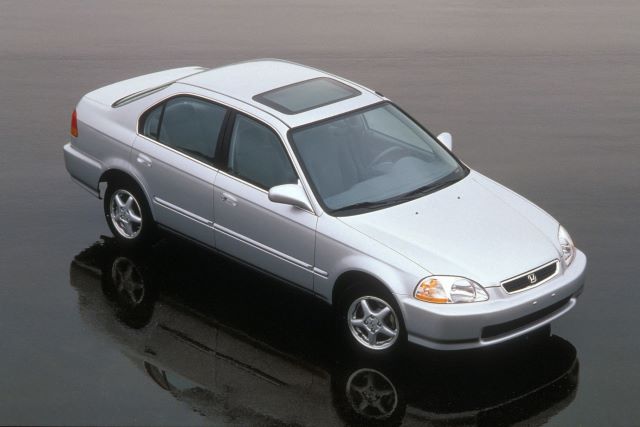
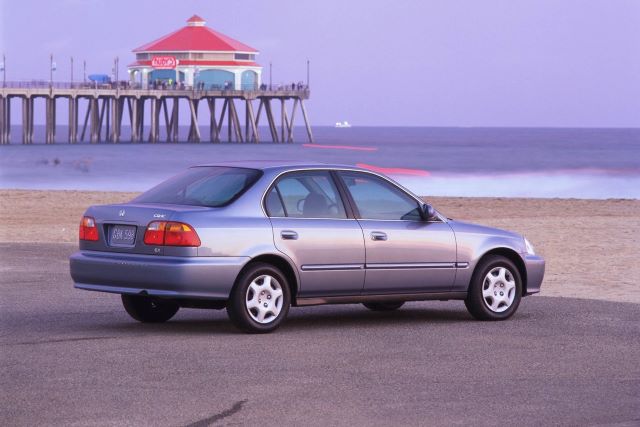
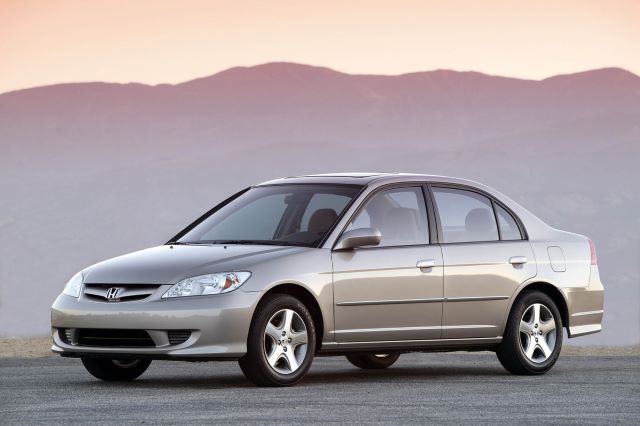
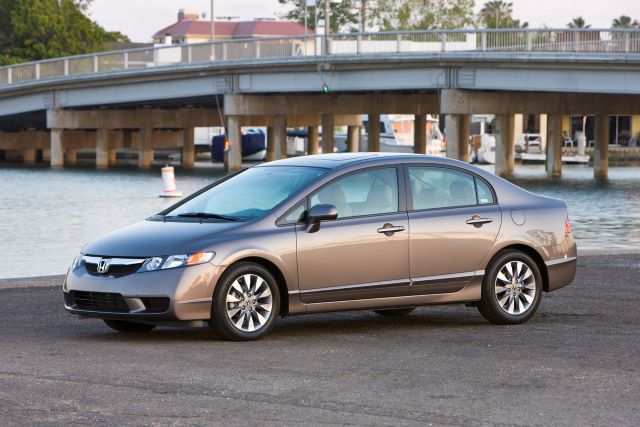
The popularity of the Civic isn’t hard to discover. It’s a practical car that checks just about all the boxes of the car-buying shopping list. It’s reliable, versatile and, maybe most importantly when it comes to getting it off the lot, moderately priced. The 2020 version checks in with a starting price just north of $20,000. In that sense, it’s no surprise the Civic has been the best-selling passenger car in America for four consecutive years.
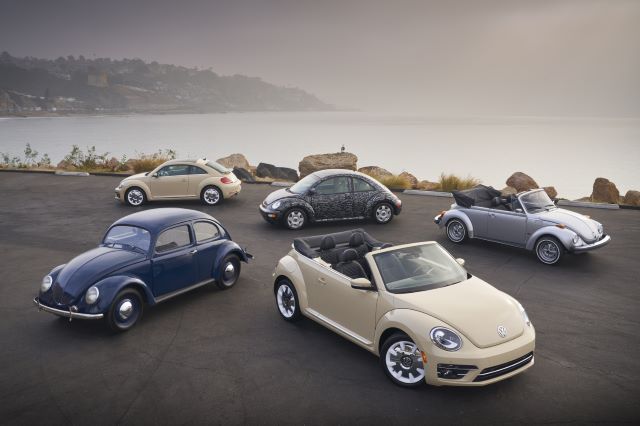
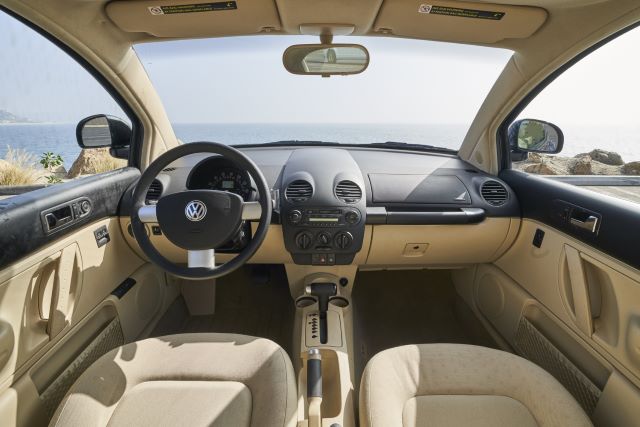
The Ins and Outs of the Iconic Volkswagen Beetle: 1949
1979
1998
2019
Volkswagen Beetle
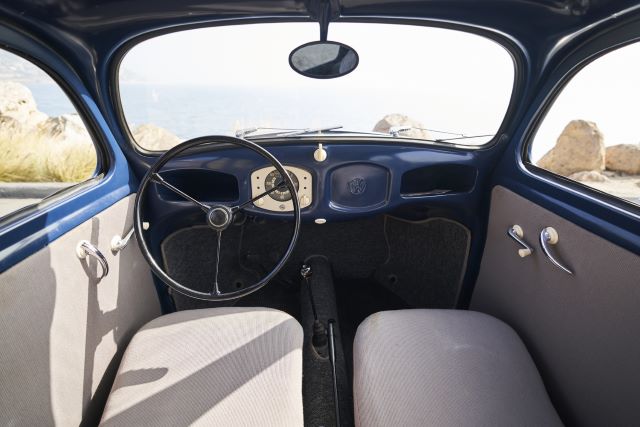
In some ways, the Beetle was destined to become a popular car. In the 1920s and 1930s, America was mass producing affordable cars thanks in large part to Henry Ford and the Model T. Europeans, however, were mostly limited to luxury models. Volkswagen was born out of the idea of manufacturing an affordable and practical automobile. The company’s name translates to “people’s car.” And with that, the Beetle was born.
Production of the Beetle began in 1938, with the first one arriving in America in 1949. For the next seven decades, it would prove not just a popular car but a cultural symbol. It even had starring roles in movies and television shows.
Its most notable stretch of market dominance in North America took place in the 1960s. The Beetle’s quirky look was an apt choice for drivers who embraced the counterculture. In 1972, the Beetle surpassed the Ford Model T as the best-selling car of all time. But demand dwindled toward the end of the century and production ceased on the original model in 2003. Not before, however, Volkswagen released a next-generation Beetle in 1998. It remained in production until 2019.
In total, Volkswagen sold more than 23 million Beetles throughout the car’s lifetime.
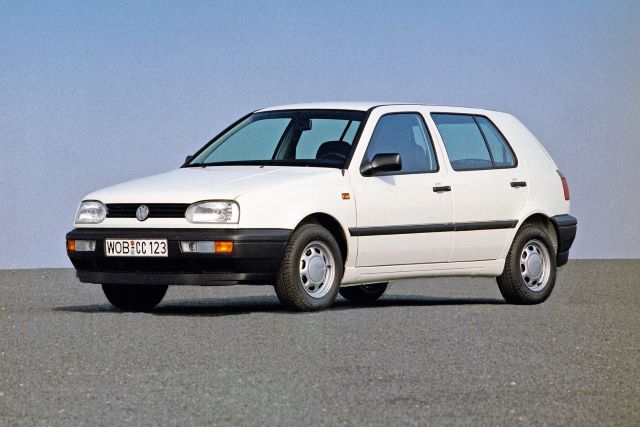
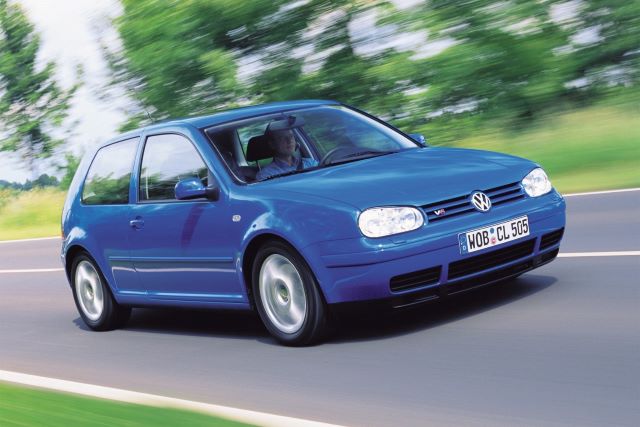
8 Generations of the Volkswagen Golf
Volkswagen Golf
Although it may be the household name of some of the other cars on this list, the Volkswagen Golf holds some distinguished titles, including the most popular car from a European manufacturer. According to Volkswagen, since the Golf was released in 1974, an average of 780,000 vehicles have been sold per year. For perspective, this means a new Golf was purchased somewhere in the world every 41 seconds for nearly 50 years.
The Golf also goes down in automotive history as the successor to the Beetle. When preference for the bulbous look of the Beetle was out, the boxy, compact style of the Golf was there to fill the void. It was a tall task, but one the model has far exceeded. The car’s design, modern and safe drive system concept, flexibility offered by a tailgate and folding rear seat backrest made it a hit.
It’s still popular today as a crossover that blends the luxury of a sedan with the spaciousness of an SUV. The eight generations of the Volkswagen Golf have combined to sell more than 35 million units worldwide.
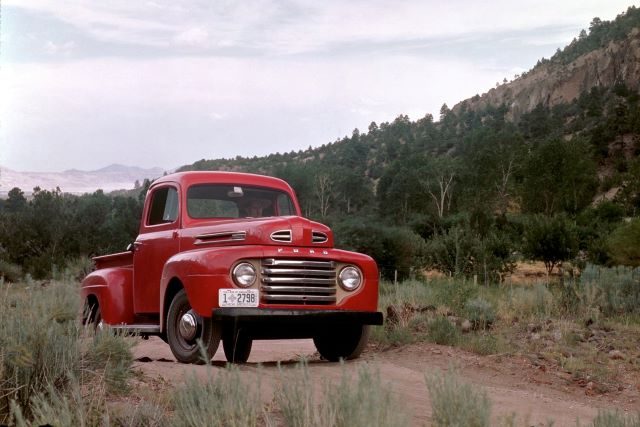
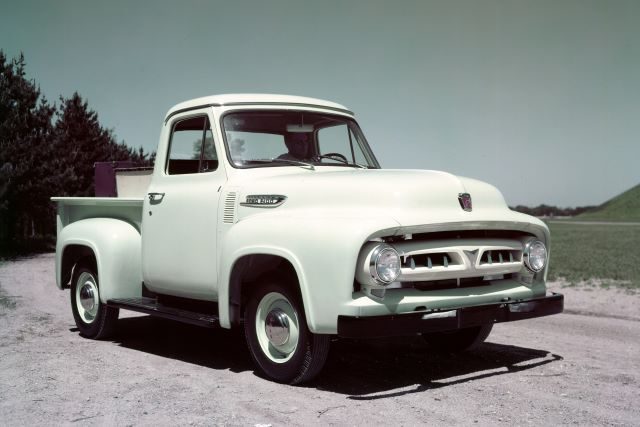
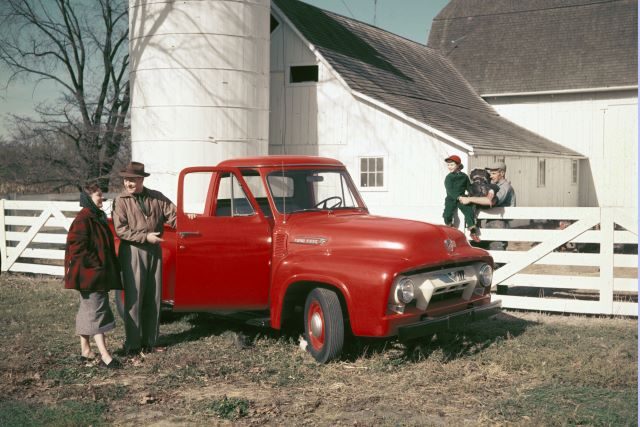
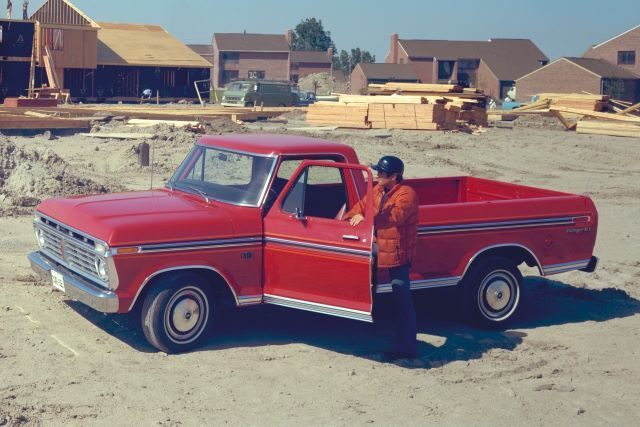
The Storied History of Ford's F-Series: 1948
1953
1954
1975
2008
2017
2019
2020
Ford F-Series
In 2019, Ford sold nearly 900,000 F-Series trucks, making it the most popular car in America. That should come as no surprise as it has held the title of America’s best-selling truck for 43 straight years and best-selling automobile each of the past 38 years. Its total sales number surpasses 40 million.
Ford has a brand name – and history – that no other marque can match. But it’s the quality of the F-Series that has kept it at the top of its field. Capable of carrying or towing heavy loads, the F-Series is tough, durable and built to work. It’s no wonder it is the most popular car in so many midwestern states, where farmers and ranchers can allow it to do the heavy lifting.
Over the past several years, Ford has made the F-Series as comfortable as it is powerful with a more luxurious cabin. Nowadays it can be used for both work and play.
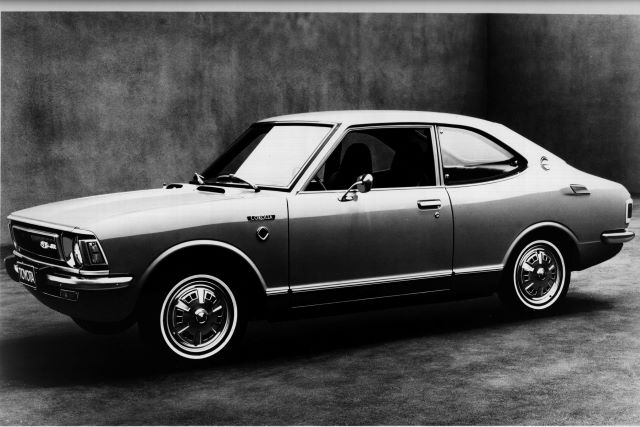
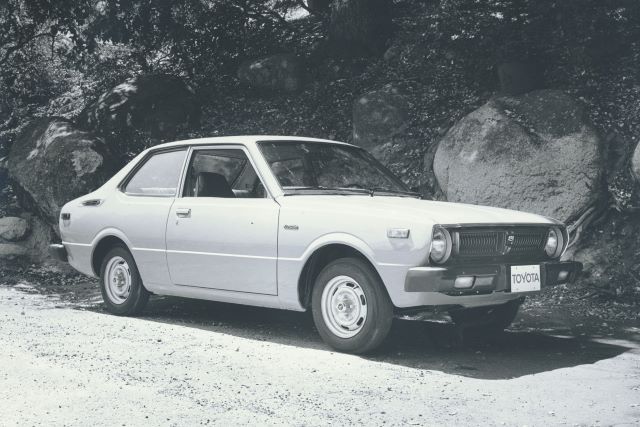
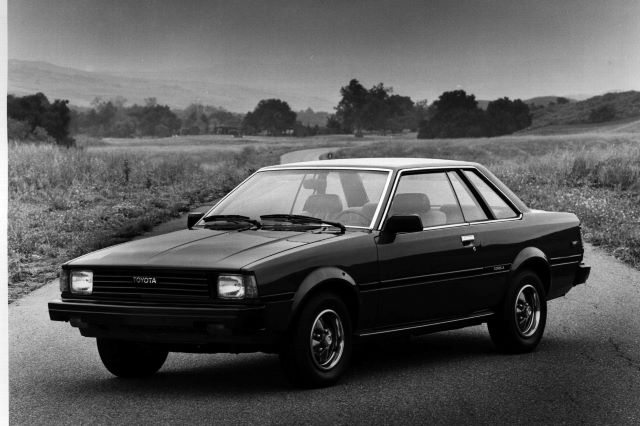
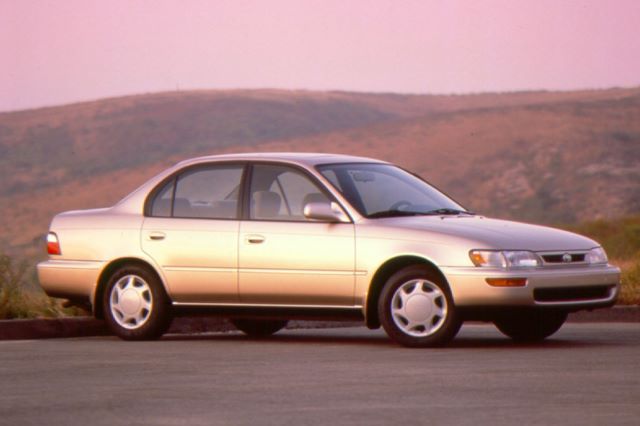
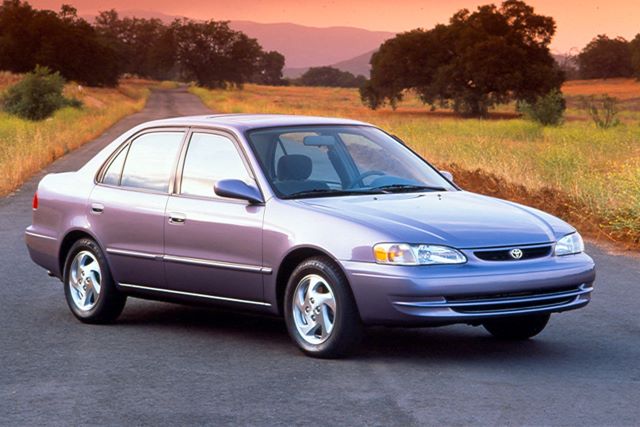
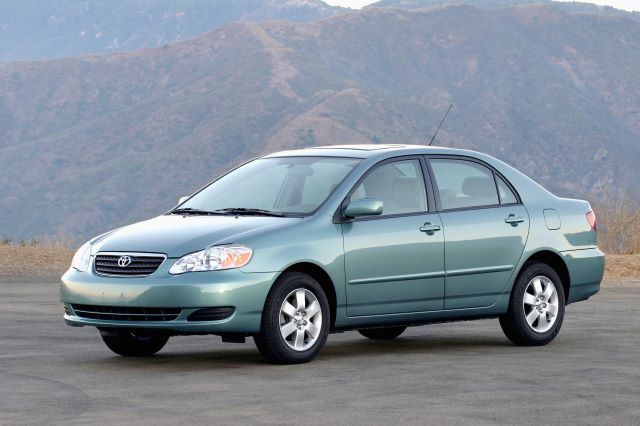
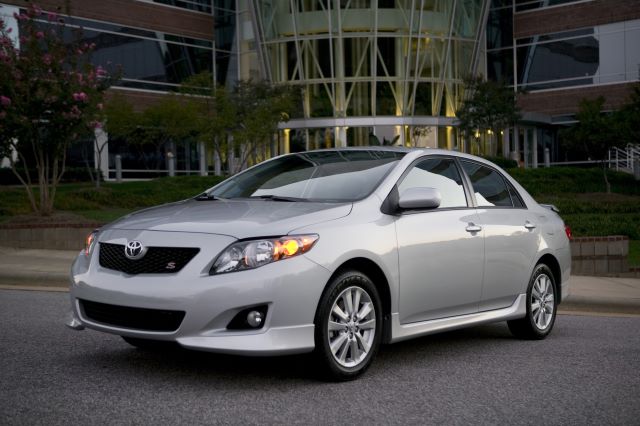
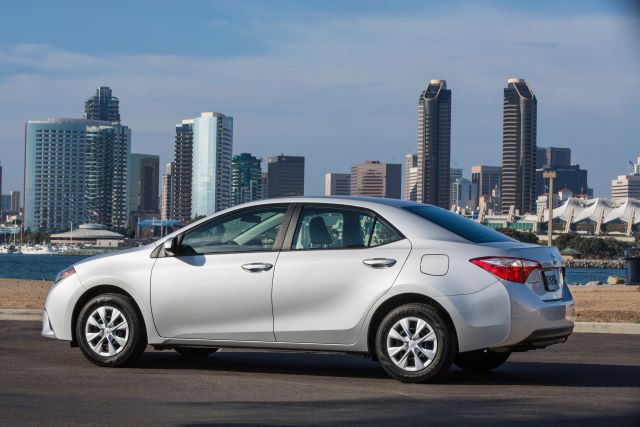
12 Generations of the Toyota Corolla: 1969
1972
1977
1983
1987
1992
1996
1998
2007
2010
2014
2020
Toyota Corolla
While the F-Series takes the top prize in America, the Toyota Corolla is the most popular vehicle globally. Since they first rolled off the factory line in 1966, there have been more than 46 million Corollas sold around the world.
To be the best-selling car of all time, you have to be a car for the masses, one that has a little something for everyone. There’s nothing particularly flashy about the Corolla – and maybe that’s been the key to its success. Much like the Civic, what it lacks in pizzazz it makes up for in reliability, safety, fuel economy and affordability. This has made it the most popular car of all time.
Interested in purchasing one of these popular cars? Let AAA’s Auto Buying Program get you the lowest price available. Already have your vehicle? Keep it in prime condition with maintenance tips and information from AAA experts.
Have you ever owned one of these cars? Share your car stories in the comments.
24 Traveling for Work Tips Gathered From Experience
Next time you are about to take a business trip, read through these tips to survive and thrive in unfamiliar hotels with conference goers and co-workers.
Traveling for work can be a blessing and a curse. There’s the awesome part, where you get to see new and interesting places on the company’s dime. Plus, if I’m honest, sometimes sleeping alone in a dark quiet room, sprawled out on a king size bed is heaven (sorry, mi familia!)
But when you factor in the unpredictability and stress that inherently comes along with being on the road or up in the air, it’s no wonder many people avoid traveling for work.
Through the years, as my personal work travel has multiplied, I’ve come up with some tools and hacks that help me not just get through the work and travel experience, but help me thrive as well. If you are ready to live by the scout motto and “always be prepared,” read on as I take you through some of the tactics, apps and tools I rely on to stay sane when I travel for work. If you are wondering how to enjoy traveling for work or feel you are tired of traveling for work, hopefully, this post will help.
List Me Once, List Me Twice
Whether you choose a Post-it note, paper journal, cloud-based web app or a mobile device, lists are imperative. Think about a simple trip to the supermarket. You can either meander up and down every aisle tossing things into your cart on a whim – or show up with a structured list that serves as the ingredient list of your weekly meal plan. There’s no doubt that the tactic involving a list will get you closer to your nutrition goals. Traveling for work is no different. From packing before you leave, to listing the things you want to accomplish for both business and pleasure, a list keeps you targeted.
For work and travel, I like a Moleskin journal. I’m still a paper and pen person. And I still get bizarrely satisfied when I cross out a task that has been accomplished with good old-fashioned ink. These streamlined pads travel light and look great.
Side note: I favor Bic 4-Color Pens so I can color code what I’m working on. I find this makes it easier when I inevitably scan through my notes at a later date.
If you prefer digital, list apps like Google Tasks and Remember the Milk gets the job done efficiently.
My Desk, My Rules
Keeping your desk at work (and home!) clutter-free is a task. Actually, it’s a chore. When traveling for work, I have learned that reserving “office” space solely for work encourages me to utilize the desk for what it was made for, not as a makeshift dresser/coffee table/ironing board.
I like to pretend that the housekeeping staff will take photos of my hotel room desk and post them on social media and send them to my boss. The last thing I want is for them to catch a stray sock or room service tray in their photo!
Another thing I do which might sound a bit strange (if most of this hasn’t already) is that I schedule a daily desk cleanup. You might not make your bed when you are away on business, but you should make it a point to tidy up your work area every morning. Waiting for housekeeping can cost you valuable (and productive) hours.
Oh, and typing away on the bed is a no-no, too. Put that laptop/phone away well before it’s time to catch some much-needed ZZZs. Sleeping well when traveling for work should be a primary goal.
Snacks can be handy when you’re traveling for work. (Photo: areebarbar / Shutterstock)
Know Thy Nutrition
Most of us know what we should eat right, and that’s hard enough to stick with at home. So when work and travel intersect, a perfect storm is often created, one that leads to last-minute, calorically crazed meals. However, with the proper planning, you will find that you don’t need the amount of discipline you might expect. My two big tips regarding eating when traveling for work:
Keep snacks on hand. Control what you can control by traveling with several snacks, ensuring that you will have a suitable snack during travel delays or when that meeting goes into overtime. This is also a godsend for people who need to regulate their blood sugar for medical or mood reasons. And if food doesn’t impact your mood, you might not be human.
Research dining options in advance. Have a plan of where you will eat and when. Call me an exploratory buzzkill, but knowing where your next meal is coming from will save you time, stress and fend off any “hangry” episodes. Not to mention, it will allow you to make better choices more often.
I’m App’y and I Know It
Those of us traveling for work may not have a solution for long airport lines or miles of vehicular traffic, but true road (and sky!) warriors can download several apps to alleviate some of travel’s pain points.
Before you head out for your next conference or business trip, download these travel-friendly apps.
Plugs of the World
This ad-free app is a must for international business travelers. It features a straightforward guide that contains information about AC power plugs and voltages in over 200 regions around the globe. iOS
Headspace
Nothing moves the needle on the stress-o-meter like travel. Do yourself a favor and download this app that encourages meditation, a practice proven to reduce negative energy. After giving the free 10-day trial a whirl, you’ll understand why there have been over 6 million downloads. iOS | Android
TripIt
Builds a cloud-based itinerary in calendar format by simply forwarding your confirmation emails to their master email address. iOS | Android
Uber
Generally safe and reliable, Uber gives business travelers more control over how they get from point A to point B. They also don’t have to worry about having cash at the ready. Set up a business profile and automatically receive an email that includes a map – this makes reimbursement with your employer a cinch. (See Expensify too!) iOS | Android
Evernote
Probably the most important app in my arsenal, Evernote ensures that everything I’ve written, annotated and collected is accessible anywhere. This is incredibly useful when putting together presentations from the road. Paid versions offer up to 10 GB of space to store everything you could ever possibly need. iOS | Android
White Noise – Sleep Well
You can pick your hotel, but you can’t pick your hotel neighbors. That’s why both light and heavy sleepers alike should download a noisemaking app. Choose from a variety of audio to drown out unwanted sounds. iOS | Android
AAA
Save time and money by loading a digital membership card on your phone. Plus, save on travel, find cheap gas, view maps and find discounts. The app was recently overhauled, so if you haven’t given it a go recently, try it again! iOS | Android
PackPoint
Tell the app where you are going, on which dates, and it will look at the climate and the weather to offer up suggestions on what to pack. Checklists can be shared with friends and coworkers. iOS | Android
Timely Alarm Clock
Simple interface to set an alarm and even design the appearance and interface of your personalized clock. Snooze the phone with a simple turn. Or, if you’re worried about missing that 9 a.m. seminar, set a challenge to dismiss the alarm. Android
Additional Traveling for Work Tips
There are plenty of other ways to stay organized when traveling for work. I’m a huge fan of the Grid-It organization system. This “rubberized woven elastic object retention system for gadget organization” is killer, allowing you travel with all sorts of devices and cords, giving them a concealed home base.
It’s also worth Googling “packing cubes” or “travel bag insert.” These soft-shell organizers help compliment your carry-on or luggage by giving you a place to stash bits and pieces by category.
Etsy, a marketplace for homemade goods, is a great place for unique travel accessories that can help keep you organized. From curated traveling kits to homemade utility belts, there’s something for everyone.
Even More Traveling for Work Tips
Have extra room in your luggage or carry-on? Consider these work and travel items as well.
Mobile hotspot. Many smartphones handle this today, but if your device is not compliant or you are light on data, consider a standalone hotspot.
Backup battery charger. Your boss is not going to want to hear that your laptop died while taking notes.
Door jammer. Many business travelers cite security as an issue when on the road. Take “locking” matters into your own hands with a portable safety device.
Chromecast/Roku/Amazon Fire Stick. Let’s face it; many hotels are still light in the in-room entertainment department. These light devices are a breeze to travel with and can keep you entertained during quiet periods.
Hot/cold packs. Another common complaint of flyers is the unpredictable (and often fluctuating) cabin temperature. Throw a disposable ice pack and/or heater in your carry-on bag to ensure optimal comfort.
Final Personal Work and Travel Tips
When traveling for work I have started to bring my Marpac Dohm dual-speed sound conditioner wherever I go. It’s a bit heavy, but it’s a small price to pay for comfort (and silence!) that reminds me of home.
Also, I keep my travel-size toiletries in a separate case – and I do not use them when I am not traveling – even if I run out of something I need. Keep your travel kit well stocked and take inventory every few weeks. This will save you pre-trip planning in the future.
Last but not least is my favorite piece of advice for staying calm and on task when traveling for work. It’s a practice that can apply to many areas of life: thought stopping. This technique has you stop dead in your tracks when you feel your mind wandering. Simply think “Stop!” and return your focus to the where you originally wanted it to be. You’ll be amazed at how effective this simple practice can be.
There are plenty of pros and cons when traveling for work. And it’s impossible to bring everything with you when you travel for business. However, with a little planning, you can be confident that all of your bases are covered the next time you’re away from home.
Traveling for work? Share your work and travel tips in the comments section.
Now more than ever, multi-generational travel has become the norm with families across the country. Vacationing as a group – with parents, grandparents and children – and the opportunity to create lasting memories with loved ones makes it one of our favorite trends.
Connecting with relatives across the region, or even across the country, might be easier with smartphone and video technology advances, but there’s nothing quite like spending real face time together.
If you’re looking to take your whole gang on an unforgettable trip that doesn’t require too much travel or money, look no further than these top multi-generational getaways in the Northeast. We’ve picked these spots based on their varied attractions that appeal to anyone, from the grandpa who just wants to relax to the kids who want a little more thrill, plus activities that everyone can enjoy together.
Hershey, Pa.
This chocolate-lovers’ paradise appeals to both kids and kids-at-heart.
Take your family to Hersheypark, where the group can enjoy roller coaster rides and classics like bumper cars, spinning teacups and a wooden carousel. The tram ride at Chocolate World, which takes visitors through a fictional chocolate factory, is a must for all ages.
From Chocolate World, the family can hop on board the Hershey trolley for a historic tour of the area. The Hershey Story museum also provides a look into the fascinating history of Milton S. Hershey and his chocolate empire.
For more multi-generational travel fun, there’s ZooAmerica, which houses various American animals, from kissing prairie dogs to sleepy black bears. On a nice day, the golfers in the family can play a round at one of Hershey’s golf courses, or spend some time relaxing among the flowers at Hershey Gardens. The Hotel Hershey and Hershey Lodge also provide great restaurants and spas (known for their signature chocolate treatments) that are worth a visit, if not a full stay.
Get more tips on how to visit the Sweetest Place on Earth with our guide.
Boston provides no shortage of things to do, especially if you want a place full of activities that’ll excite everyone in your family, no matter their age or interests.
Bring any baseball lover over to Fenway Park. Make sure to visit noteworthy spots of the stadium, such as the Green Monster and Pesky’s Pole. Check out our Fenway Park stadium guide for more things to see and do while you’re there. A fun side trip might include the Basketball Hall of Fame in Springfield, the sport’s birthplace. It’s a 90-minute ride from Boston.
There’s a lot more to the city than just sports history. There’s also The Freedom Trail, a red-brick trail that winds through historical sites such as the Old South Meeting House and Old State House.
And of course, museums abound. Be sure to bring the little ones to the Boston Children’s Museum, the museum that introduced hands-on exhibits and the Playspace, or the Museum of Science, a museum designed to introduce children to science and technology.
If you and the family need a breather from all the walking around in the city, be sure to stop by the Boston Public Garden, the first botanical garden in the country, and admire the beauty of the many different colorful plants, unusual monuments and grand fountains.
Cape Cod is a well-known destination for all kinds of getaways, and a multi-generational travel vacation is no different. There are opportunities for whale watching, biking and hiking and, of course, gorgeous crystal blue water and white sand beaches.
If you visit between the months of April and October, be sure to swing by the Pirate’s Cove. Considered a landmark of Cape Cod, this mini golf course is elaborately pirate-themed, so even the kids will enjoy swinging away and pretending they’re pirates out at sea while being on land.
Also, if you and your family are into the arts, hop on a ferry and travel 30 miles to Nantucket, home of noted galleries, such as the Maria Mitchell Association. If you’re into food (and who isn’t?), you’ve got to check out one of these 15 Cape Cod restaurants. The Cape also hosts a number of festivals, such as a book, comedy and even a cranberry festival. Be sure to check out what festivals might be happening during your time there!
Plan the ultimate road trip to Cape with help from our guide.
Want to make your family time a historical one? Philadelphia, in all its historic glory, is the place to go.
Stop by The Franklin Institute and see the Benjamin Franklin National Memorial, complete with a 20-foot high marble statue of Benjamin Franklin, its namesake and the official national memorial to the statesman and scientist.
You can also visit the Betsy Ross House, a 300-year-old house that was actually lived in by the flag maker herself, and the younger ones can enjoy a tour while solving 13 history mysteries. The little ones can also browse, play and learn in the Please Touch Museum, full of interactive exhibits, programs and special events.
If your family likes horse racing, then visiting Saratoga Springs is the multi-generational travel spot for you. Make your way over to the Saratoga Race Course, the fourth oldest racetrack, in the summer. Take part of the Breakfast at Saratoga program, which includes a free tram tour of the historic stable area.
During horse-racing season, be sure to visit Congress Park. You and your crew can have picnics surrounded by lush gardens and numerous fountains and springs. When peak season is underway, the park has all sorts of activities and special events. From live music concerts and art shows to summer festivals, anyone can have a great time at the park.
Is your family looking to cross off “seen a national landmark” on your trip? Make your way over to Saratoga Spa State Park. This park is home to two performing arts areas as well as the Saratoga Automobile Museum for the car lovers and the National Museum of Dance for the dance enthusiasts in your family.
During the Gilded Age, Long Island was a vast playground for the ultra-rich. As the wealthy flooded onto the North Shore of Long Island from New York City, they began establishing sprawling “country houses” – aka mega mansions. These gold coast mansions were enormous, and some of them were so big that they were called “castles.” Very few of the mansions remain private homes today, since the middle class grew and opulent castles started seeming a little gauche.
In their new lives, these mansions have transformed into arboretums, museums, hotels and more. Here are some of our favorite gold coast mansions of Long Island.
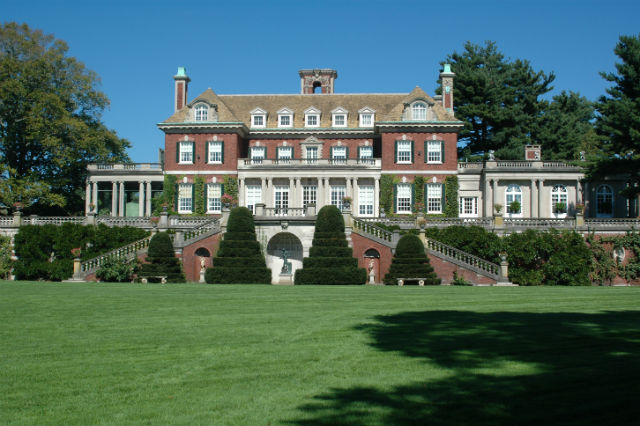
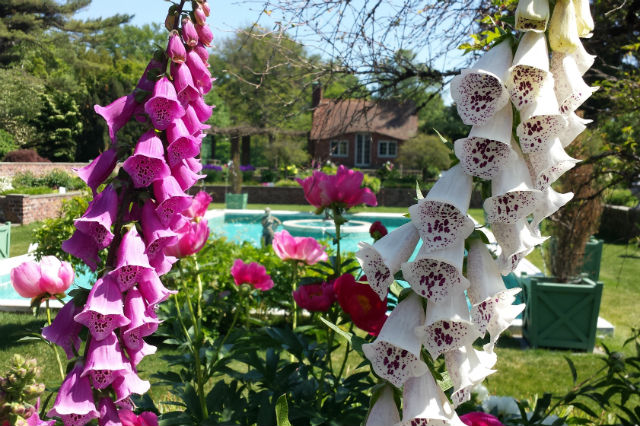
Old Westbury Gardens is one of the best-preserved gold coast mansions on Long Island. Built in 1906, Old Westbury Gardens is the former estate of John Shaffer Phipps, a U.S. Steel heir. The Charles II-style mansion is surrounded by 200 acres of gardens, walkways, woods and even a hedge maze. Old Westbury Gardens hosts guided tours of the mansion, as well as a series of seasonal events throughout the year, including the annual Scottish Festival and Highland Games in August and dog-friendly weekends in the fall.
The estate is a popular location for filming. Notable films and TV shows that Old Westbury Gardens has appeared in include “North by Northwest,” “Cruel Intentions,” “Pushing Daisies” and “Gossip Girl.” It even served as the inspiration for the design of the Buchanan estate in the 2013 film “The Great Gatsby.”
Sands Point (otherwise known as the Guggenheim Estate) consists of not one, but three different mansions; Castle Gould is based on Kilkenny Castle in Ireland, Falaise looks like a medieval fortress and Hempstead House is a 40-room Tudor style manor house. Construction was started by financier Howard Gould, then finished after Daniel Guggenheim purchased the property in 1912.
Sands Point Park and Preserve is filled with woodland hiking trails, and even has a beach on the Long Island Sound. Falaise houses a museum featuring antiques, architectural pieces, fine art and visiting exhibitions.
Oheka Castle is named after its original owner, financier Otto Hermann Kahn. It might sound cheesy, but Kahn came up with the name himself, and used it on a number of properties (and a yacht) afterward. Built in 1917, Oheka Castle is styled after a French chateau. At the time Kahn lived there, it was the second-largest private home in America. Since then, Oheka has had an interesting (and sometimes rocky) history. In the 1940s, it transformed into a military academy, but after 30 years it was abandoned and fell into disrepair. The property was purchased by developer Gary Melius in 1984, then fell into and out of his hands for the next couple of decades until he finally reacquired it and finished the renovations.
Today, Oheka Castle is an opulent hotel and event venue, with 22 acres of finely manicured gardens to boot. Oheka claims to have been the inspiration for Gatsby’s estate in F. Scott Fitzgerald’s “The Great Gatsby,” but most other gold coast mansions have made that claim as well. Its real claim to fame is that its exterior was used to portray Charles Foster Kane’s home, Xanadu, in one of the greatest films of all time, “Citizen Kane.”
The charming grounds of Planting Fields Arboretum State Historic Park. (Photo: M. Perjatel)
Tucked away in Upper Brookville is Planting Fields Arboretum, a 409-acre park filled with rolling fields, intricate gardens and dense woodlands. In the center of Planting Fields sits Coe Hall, a huge Tudor Revival mansion built in 1915. Coe Hall and its surrounding land is the former estate of insurance magnate William Robertson Coe and Standard Oil heiress Mai Rogers Coe. The Coes (especially Mai) were enamored with nature and filled their estate with an enormous variety of trees, plants and flowers. Two giant beech trees were even transplanted there from Mai’s childhood home in Connecticut.
Today, Planting Fields is a state park with grounds that are free to explore. Planting Fields is filled with little surprises and breathtaking landscapes. Apart from the vast Coe Hall, which is available for tours, you can explore two greenhouses (one which exclusively houses camellias), two charming cottages, a carriage house, several reflecting pools and ponds, gothic gazebos and more. If you go at the right time of year, you can travel through a pathway draped with roses on all sides.
The Vanderbilt estate spans 43 acres, purchased in 1910 by William K. Vanderbilt II. Vanderbilt shortly began construction on a sprawling, 24-room mansion in the Spanish Revival style. When it was complete, Vanderbilt christened the mansion “Eagle’s Nest,” due to its position on a hill.
Today, the estate is the Vanderbilt Museum. The museum is a mix of living history in fully-restored rooms of the house and specimens of marine, bird and insect life collected by Vanderbilt himself. In 1971, a planetarium was added to the grounds of the museum. It even has a rooftop observatory, which is open every Friday night.
The Georgian Revival mansion at the center of this 145-acre estate was built in the 1890s and purchased in 1919 by U.S. Steel co-founder Henry Clay Frick (on behalf of his son, the unimaginatively-named “Childs”). Frick hired architect Sir Charles Carrick Allom to do a massive redesign of the mansion. In 1925, Childs’s wife, Frances Frick, commissioned famous landscape architect Marion Cruger Coffin to design a series of intricate formal gardens on the property. The estate was purchased by the county in 1969 and transformed into the Nassau County Museum of Art.
NCMA has a collection of over 600 pieces of fine art and rotates them through periodic museum exhibitions. They also occasionally feature visiting exhibitions, like collections from a specific artist or time period. NCMA also features an expansive sculpture garden, which is free for the public to explore and enjoy.
The museums and beautiful grounds of most of these Long Island gold coast mansions have landed them on our list of the best things to do on Long Island in the summer. Check it out.
Have you ever visited any gold coast mansions? What were they like? Let us know in the comments below!
Check out AAA member exclusive discounts to local attractions, restaurants and more.
On any given day, there’s a treasure trove of amazing things to do in New York City – from special events and tours to Broadway shows and concerts and so much more. The city is a mecca of creative entrepreneurs hustling to bring New Yorkers and tourists some of the coolest adventures you can imagine. Here are some of the most unique and different things to do in NYC – good luck choosing just one!
Camping
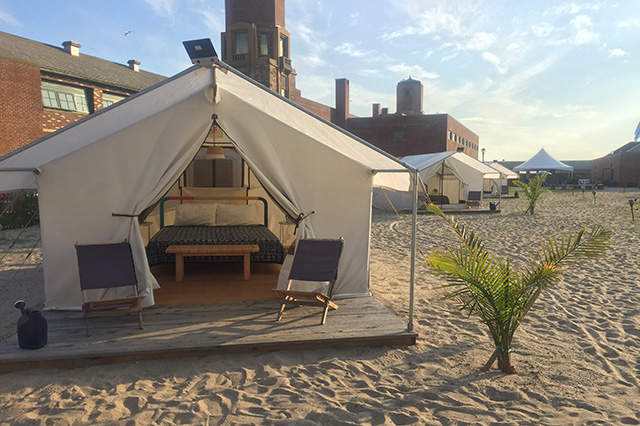
At Camp Rockaway at Riis Park in Queens, you can sleep in a furnished safari-style tent within earshot of the ocean’s mesmerizing waves. Do I have your attention yet? Open from May to October, Camp Rockaway offers a glamp-ground experience that includes comfy queen size beds with Brooklinen sheets, lights powered by solar energy, a picnic area with free coffee in the morning, hammocks for lounging and a communal fire pit for late night chats.
Hudson Yards
The Hudson Yards redevelopment project in Manhattan has completely changed the west side of the borough. The new neighborhood has drawn millions to see its public art, shops, restaurants and – of course – the Vessel, a massive structure of spiral staircases inspired by Indian stepwells. If you prefer a more leisurely experience, you can also view the landmark while enjoying brunch at Queensyard. Or pop into the BLVD Beauty Salon at Neiman Marcus, which offers the best beauty services from around the city in one salon. For a true New York experience, book a nail art manicure by Valley Nails.
Get Smart
There are a massive amount of different things to do in NYC and unique classes to take, from trapeze lessons and laughter yoga to basket weaving. Try your hand at the ceramics wheel at Artshack Brooklyn, a nonprofit ceramics and art studio that also offers sewing, felting and screen printing. Or learn how to make Vietnamese street food at The Brooklyn Kitchen.
Take a Tour
Choosing which tour to take in New York may take you longer than the actual tour, because there are literally thousands of them. But the New York Harlem Jazz Tour sounds pretty epic. It dives into the area’s rich music history and visits several jazz venues. You can even get up and join the bands if you’re brave enough! Over in Greenwich Village, take the NY Times-inspired Old, New and Delicious tour. Or enjoy an off-hours tour of the Comedy Cellar, where some of the greatest comedians have performed, and then make your own cannoli at a pasticceria.
Kayak Staten Island (Photo: Jeanette Zinno)
Hop on a Personal Watercraft
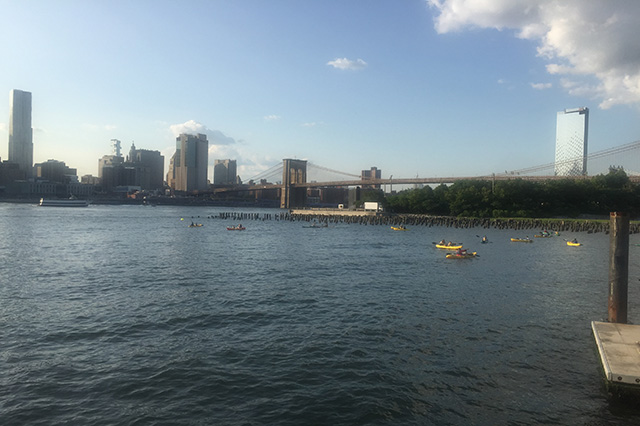
Take a personal watercraft tour and see all of the sights NYC has to offer from a different perspective. If you’re looking for a fun adventure, this experience is for you. New York Harbor Jet Ski offers tours that ride up and down the Hudson, around Ellis Island and the Statue of Liberty. Wear a bathing suit or athletic wear – you’ll definitely get wet! If that’s not your speed, you can kayak (for free) at several piers, like Brooklyn Bridge Park Boathouse and Kayak Staten Island.
Wellness
New York never sleeps, so find some time to relax at one of the countless spas and wellness centers, like Floating Lotus. There you can book a float session, a sensory deprivation healing treatment that feels like you’re floating in outer space. Float in a private tub filled with warm water, hundreds of pounds of Epsom salt, and total silence. Talk about a unique experience. Manhattan is home to the world’s first cool temperature fitness studio, called Brrrn. Battle ropes and weights don’t burn quite as much when the room is only 50 degrees.
Movie Theaters
Take in a movie with food and beverage service and you’ll never go back to the days of having to get up to refill your popcorn supply in the middle of the movie. NiteHawk Cinema in Brooklyn and the Alamo Drafthouse Cinema (opening soon in lower Manhattan) both offer full service, which means craft cocktails and truffle butter popcorn coming right to your seat. Both theaters even offer vegan and gluten-free options.
You don't have to carry around a heavy or expensive digital camera on vacation. Your smartphone can produce equally impressive photos if you know how to use it.
They say that the best camera is the one you have with you. More often than not, that means the phone in your pocket. Today’s phones are equipped with highly sophisticated cameras that are capable of taking beautiful images. Take your travel images to the next level with these smartphone photography tips.
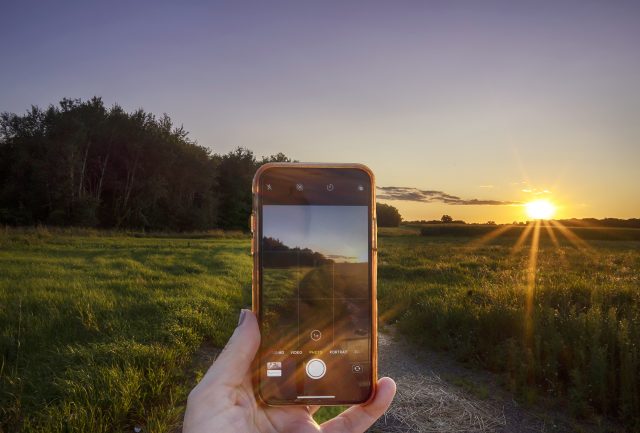
*All images shot with an iPhone X.
Know Your Modes
On an iPhone, you have six modes: slow-mo, video, time lapse, square, photo, portrait and panorama. The three most widely used modes for taking pictures are photo, portrait and panorama.
Photo Mode
In photo mode you have the option of shooting your image in portrait (vertical) or landscape (horizontal) orientation, depending on how you hold your phone. When you take a picture, all of your image will be in focus. You can zoom in or out, by using your two fingers or by holding down the 1x button and sliding it to the right to pick your magnification.
Tip: In photo mode, when you zoom really far in, the resolution of your image will become pixelated. Only use the zoom when your feet can’t get you any closer to what you are trying to photograph. Never put yourself – or your environment – in danger for a shot.
When to use it: Almost always when you are taking pictures. This mode has the most versatility for image captures.
Portrait Mode
In portrait mode, your camera is zoomed in more and the background of your images will be blurry. Only what you set your focus on will be in focus.
Tip: Only use this mode in well-lit situations. When faced with low light this mode struggles to find focus.
When to use it: Portrait mode is wonderful for capturing close-ups of food, flowers and people.
Panorama Mode
In panorama mode, you hold your camera vertically and move it from left to right. Your goal here is to keep the arrow that shows up on your screen on the line as the camera snaps consecutively.
Tip: You can stop the image before it reaches the end of the line.
When to use it: When your regular photo mode can’t capture the entire scene in front of you.
Setting Focus and Exposure
One of the easiest and smartest tips for photography with mobile phones is to adjust the focus and exposure before snapping a picture. To focus, simply tap your finger on the screen where you want the focal point to be. To set the exposure, slide your finger up or down to make the image brighter or darker. Once you have your focus and exposure set, lock in both. To do this, hold down the focal point until it flashes.
Tip: To make sure you don’t blow out or over-expose the sky in your image, set your focus on the sky until it is properly exposed. Sometimes this means other parts of your image will be dark, but you can almost always bring the shadows up in your image later through editing.
Camera Settings for Smartphone Photography
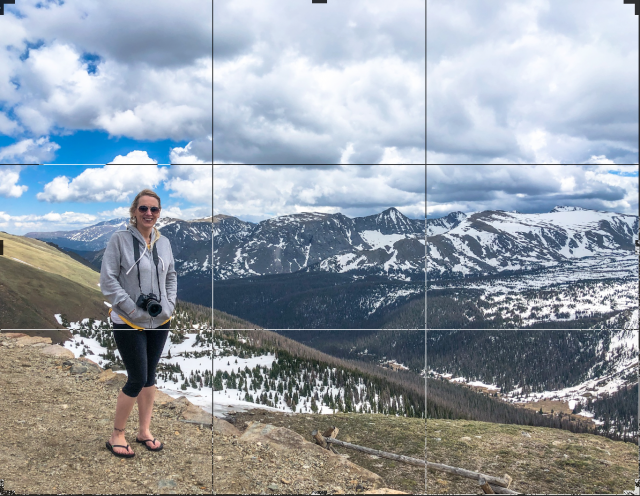
Turn on the Grid
To achieve optimal results with smartphone photography, try turning on the grid to help compose shots; the lines will help you to level your horizon. Your horizon line should always be straight in your images.
The grid also helps you compose your images using the rule of thirds. The rule of thirds is a composition technique that states you should have the subject or focus of your image fall near or on the points of intersection.
You will find the option to turn on the grid in you camera setting. While you are there, you can also turn on “auto HDR” and select “most compatible” from the format options. This will save your images at a higher quality (note: they will take up more storage space).
Must-Have Travel Shot List
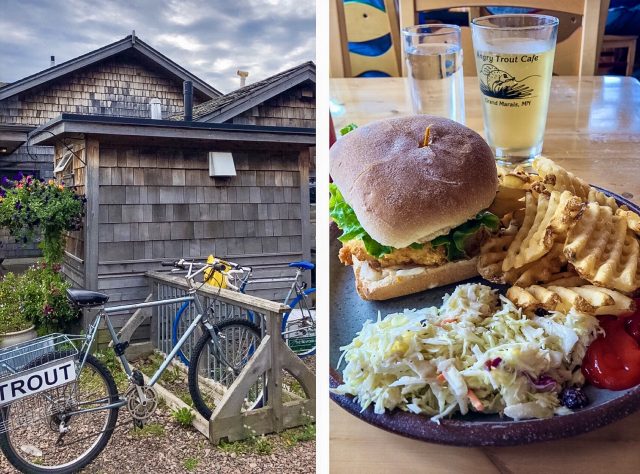
Food – Grab a meal at a local hot spot and take pictures of the food and the restaurant while there.
People – Photograph the locals when traveling to a different country. Make sure to always ask permission before taking an image.
Architecture – Head to the city and snap images of the architecture. Look for churches, government buildings, colleges and museums.
Landscape – National parks and state parks are wonderful places to photograph the landscape. See our tips for photographing national parks.
Art/Culture – Look for festivals, fairs and art museums while on your trip.
Adventure – Make sure to document any hikes, water sports, skiing, etc., that you take part in.
Wildlife – While you will most likely encounter wildlife while visiting the parks, also look for animal sanctuaries, refuges and zoos in the area.
Creative Techniques
Vary your angles – When faced with a photo opportunity don’t just take the image head-on. Walk around your subject and snap images from various viewpoints. Remember to look up and down as well.
Vary your height – Instead of taking all of your images standing, try crouching and even laying down to take an image. Alternately, get high by climbing steps or using a step stool.
Take it underwater – For an added element of fun, try taking your phone underwater. While some of the newer phones claim to be waterproof, it’s usually only to certain depths. For safer smartphone photography, I recommend getting a waterproof bag.
Shoot through things – Try shooting through leaves, flowers, even people to add depth to your images.
Photography is a wonderful hobby and creative outlet. Remember to enjoy your travels, too! It is easy to get caught up in getting the perfect images, but sometimes it’s best to just put down your phone and be present in the moment.
Beth Mancuso is a professional photographer. All photos are hers.
In a city with as rich a food scene as Providence, it’s easy to get a great cocktail. But if there’s a little bit of a scavenger hunt to find it? Even better.
The Creative Capital gets truly inventive when it comes to its underground drinking scene. Here are some speak-easies with hidden entrances in Providence that are worth finding.
Remember to enjoy responsibly and always designate a sober driver.
Justine’s
11 Olneyville Square
Blink and you’ll miss the lingerie store in Olneyville Square that disguises the entrance to Justine’s, a quiet lounge with swanky Parisian-inspired decor and, as the night goes on, movies that project from the mirrors behind the bar. There’s an $8 menu of Prohibition Era-cocktails like the Charlie Chaplin and the Mary Pickford, and a slightly more expensive selection of house cocktails like the Free Man in Paris, made with gin, apricot liqueur, Aperol, lime and absinthe.
Far West
55 Cromwell St.
The door to Far West isn’t hard to find – once you make it in the building, that is. This tiny 25-seat bar is inside Rooms & Works, a rehabbed factory building that’s now mixed-use business and residential space on the “far west” side of the city. Hit “075” on the keypad to get in and hope for the best to get a coveted seat inside the bar. Every month, Far West creates a new, themed menu: October was Stephen King, and December was, of course, Charles Dickens.
Courtland Club
51 Courtland St.
What started as a members-only club on Federal Hill has now become an “only if you can find it” club. Behind an unmarked door on Courtland Street, Courtland Club serves up small bites and inventive cocktails like the Japanese Julep, made with whiskey and shiso. The building has roots dating to the 1940s as a members-only club, and this bar still offers memberships, but now they’re for exclusive access to food events and private liquor lockers.
The Dean Bar
122 Fountain St.
To find The Dean Bar, you’ve got to go in through the lobby of The Dean Hotel, pass the elevators, and take a left at the heavy velvet curtains. You’ll know you’ve gone too far if you hit the Japanese-inspired private karaoke lounge in the back of this hip hotel. The cozy lounge focuses on invention and innovation, serving cocktails with hard-to-find spirits that you may not have heard of, but will be glad you did once you take a sip.
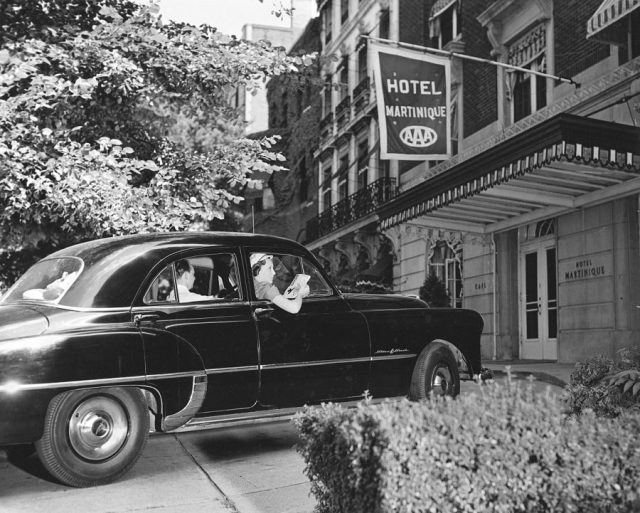
AAA began inspecting the nation’s hotels and restaurants in 1937, providing detailed descriptions to members on the go.
The program proved so valuable that AAA standardized the process in 1963, adopting a formal rating system specifically for accommodations.
But it wasn’t until 1976 that the AAA Diamond Program was officially born. The program was staffed by professional travel experts who maintained anonymity to keep their ‘mystery shopper’ status.
The program expanded beyond hospitality in 1986 to include restaurants. And today, the AAA Diamond Program continues to evolve.
Earlier this year, the program’s criteria was updated to reflect today’s expectations, replacing outdated hotel criteria (such as ironing boards) in favor of factors that more directly related to guest comfort, such as storage space and shelving.
So the next time you browse a ratings website to research destinations – and wonder if the advice is trustworthy – remember AAA has advised travelers for more than 80 years, with a voice as rock-solid and enduring as any diamond.
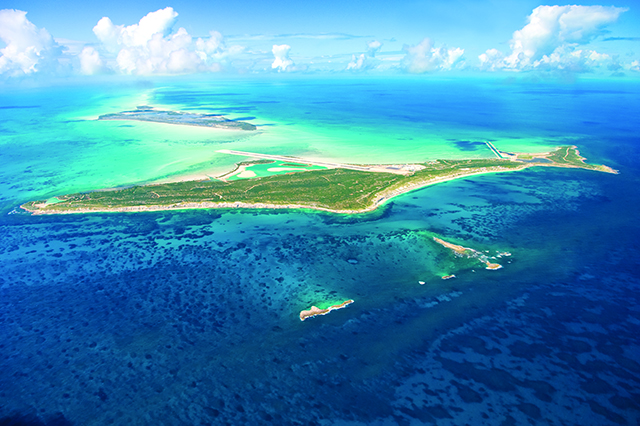
One of the nation’s largest, award-winning leisure tour operators, Travel Impressions has highlighted a new destination of the month: the picture-perfect Turks and Caicos Islands. With an average temperature of 83 degrees, crystal-clear ocean waters and beautiful sandy beaches, it’s easy to call this island destination a paradise.
Located in the Atlantic Ocean, southeast of the Bahamas, the Turks and Caicos Islands are home to numerous natural wonders, including a chain of 40 unique islands and cays, over 15 beaches spread across 230 miles, the world’s third-largest barrier reef and a vast stretch of coastline perfect for nature hikes.
The islands also host a variety of hotels and restaurants, so guests have plenty of amenities, living and dining options to help them feel relaxed and pampered. With travel dates spanning the rest of 2020, tropic-ready travelers can visit Turks and Caicos any time of year, to celebrate spring break, summer vacation, the holidays or any special occasion in-between.
Hotels and Resorts
The hotels and resorts that call the Turks and Caicos Islands home provide high-end luxury and a plethora of amenities and dining options, all set against stunning island views. Islandgoers looking for ultimate extravagance will find comfort in any of the elegant Turks and Caicos hotels, including the all-inclusive, private island escape of Ambergris Cay, the Alexandra Resort, the Blue Haven Resort and Beach House.
Ambergris Cay
The exclusivity of this private island isn’t its only draw – Ambergris Cay also has an array of activities like kayaking, snorkeling and guided nature walks, bonefishing, water sports and kitesurfing lessons. Other amenities include a daily, 30-minute complimentary spa treatment per adult and all-inclusive gourmet meals.
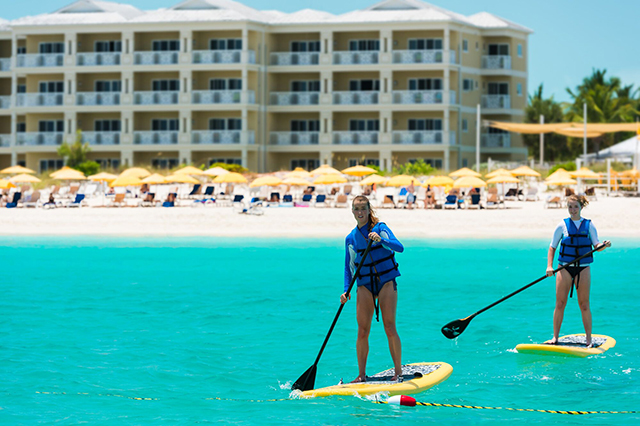
Guests can find true island luxury at the Alexandra Resort, where natural beauty meets contemporary comforts. Notable amenities include a large freshwater pool and swim-up bar and an on-site fitness center, as well as the Mango Reef restaurant, which serves a variety of international and Caribbean-inspired dishes.
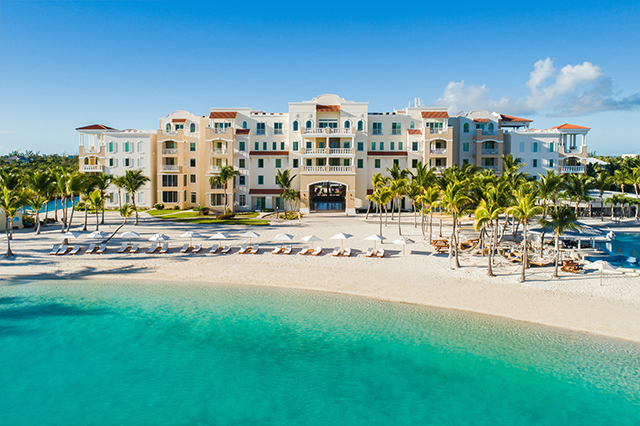
Blue Haven Resort
Thanks to its wide range of suites and guest rooms, Blue Haven Resort is perfect for couples, groups and solo-travelers alike. Between easy access to the sea via Blue Haven Marina and a private play beach – featuring volleyball, tennis, horseshoes and more – guests will have fun by land and by sea.
Beach House
The all-inclusive, adults-only resort pampers its guests with impeccable surroundings that overlook the white sands and aquamarine waters of Grace Bay Beach. Here guests will find elegant dining, pristine suites, prime beach access, premium drinks and free shuttle service and dining privileges to its sister resorts, the Alexandra Resort and Blue Haven Resort.
Alexandra Resort
Island Activities
Though the Turks and Caicos Islands’ hotels and resorts are the definition of luxury, guests will want to enjoy the outdoors as well. Thankfully, the islands have a wealth of activities for vacationgoers to partake in.
Beautiful Beaches
The beaches of the Turks and Caicos Islands, including Grace Bay Beach, Long Bay Beach and many others, are beautiful and unique. Turks and Caicos vacationers can enjoy picnicking, sunbathing, swimming and relaxing at some of the world’s prettiest beaches.
Made up of broken-down shells and coral, the soft, pale sand of Turks and Caicos beaches is a step above what you will find along other waterfront properties.
Diving and Snorkeling
The crystal-clear waters of the Turks and Caicos Islands make for amazing snorkeling and diving experiences. Home to lush sea grass and the third-largest barrier reef in the world, which stretches out across 14 miles, the area hosts countless spectacular dive sites, like the Bight Reef and Smith’s Reef.
Scuba Diving Magazine included the Turks and Caicos Islands in its 2019 “The Best Scuba Diving in the World” list. The area was also highlighted as one of the best spots to see large oceanic wildlife.
Nature-loving guests will enjoy seeing the vibrant coral, eagle rays, turtles and fish. Those looking to explore even further can participate in an exciting wreck dive. The HMS Endymion, an old frigate and remnant from the Napoleonic War, lies 20 feet under the water, waiting to be rediscovered by divers young and old.
Blue Haven Resort
Cave Systems
Guests looking for more natural wonders on Turks and Caicos have options. The islands house a plethora of caves, sinkholes and other hidden areas to explore.
Dry cave systems are located all over the Caicos Islands. Tourist-friendly caves include Conch Bar Cave and Indian Cave, both of which are dry systems located on Middle Caicos.
Nature Hikes
For vacationers looking to feel more at one with nature, the Turks and Caicos Islands offer coastlines perfect for a calming stroll or adventurous nature hike.
The central islands of Provo as well as the East, Middle and South Caicos are home to diverse environments. Meanwhile, nature reserves and national parks are still being developed for tourism.
Weekly Island Fish Fry
Thursday evenings at Bight Park, the Turks and Caicos Islands host more than a dozen local cultural acts, entertainers and food vendors who fill the air with a buzz of excitement and delicious aromas.
Both locals and visitors can experience some family-friendly fun while enjoying the freshest seafood – like fried fish, boiled lobster and conch salad – prepared by culinary masters.
Vacationing on the Turks and Caicos Islands is a breeze. Between all the hotels and resorts and natural wonders consisting of beautiful beaches, clear ocean waters and cave systems ready to discover, visitors can choose a vacation filled with adventure, relaxation or any combination of the two.
It’s that time of year again, and there are far too many people in the city. A weekend getaway from the hustle and bustle of the Big Apple might be just what you need to recharge. You could hit the slopes, relax in a spa, tour picturesque towns or even escape to another city entirely. With these winter getaways from NYC, the possibilities are limitless. Just don’t forget your mittens.
Straddling the Delaware River (and the state lines) are the sister cities of New Hope, Pa., and Lambertville, N.J. These two adorable towns are bonded by a shared love of culture … and a toll bridge. The bridge, which is short enough to be easily walkable, transforms the two towns into one fun little city on the river. Both sides of the river are devoted to art; there are studios and galleries no matter where you look. Lambertville, rife with beautiful Victorian architecture, has a decided bend toward antiquing. Every January, the two towns get together to throw an enormous winter festival, featuring ice sculptures, concerts, karaoke, dance parties and more.
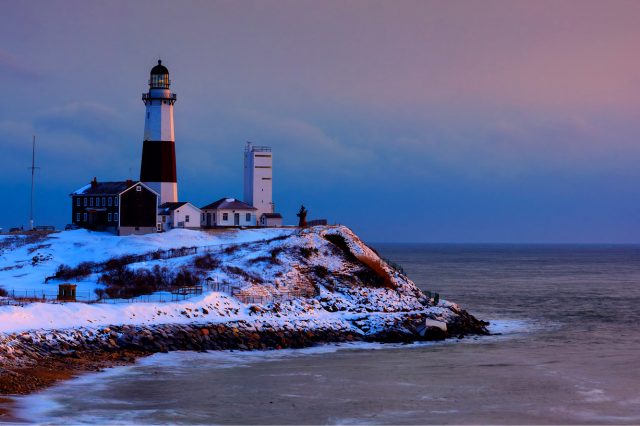
Of all the winter getaways from NYC, this one is perhaps the best-kept secret. Montauk is a summer town at the tip of Long Island, with boozy beaches, weathered motels and infrastructure that is vastly insufficient for the amount of visiting tourists. During the winter months, however, the crowds disappear. The romance of Montauk in winter comes mostly from the quiet. Situated beyond the Hamptons and over two hours away from the city, it really is an isolated town. There are deep price cuts in terms of hotel rooms, making luxury places like Montauk Manor and Gurney’s far more accessible. Bars and restaurants that were previously impossible to squeeze into suddenly start welcoming walk-in customers. I also recommend a visit to the Montauk Point Lighthouse. While you’re there, take a tour to see the harbor seals, who appear on the rocks near the lighthouse during winter.
What better place to relax than the Spa City itself? Once a wellness retreat for wealthy Northeasterners, Saratoga Springs is one of the most unique winter getaways from NYC. The race track is closed in winter months, but you can still visit the National Museum of Racing and Hall of Fame. Saratoga Springs offers ample room for cross-country skiing and snowshoeing. For those who prefer downhill skiing, there are the nearby Gore and West mountains. One of the most unique things to do in Saratoga Springs is to go on a tasting tour of the 21 naturally carbonated mineral water springs. At the Roosevelt Bath House, you can take a relaxing private bath in the natural mineral waters. You can also get a nightcap at a bar made completely of ice.
From the picture-perfect shorefront to the iconic Mystic Pizza, Mystic is one of the most charming winter getaways from NYC. The Mystic Seaport is lovely to visit in the winter, as snow and frost covers the 19th century village and preservation shipyard. Visit the Mystic Aquarium to see what goes on just below the waves. The seals who live there will be especially happy to see you during the colder weather. Both downtown Mystic and the Olde Mistick Village shopping district are easily walkable, with charming storefronts and fresh seafood eateries. Before you head back home, make sure to stop by B.F. Clyde’s Cider Mill to get some apple cider and authentic maple syrup to tide you over until next time.
Lake Placid, two-time host of the Winter Olympics, has found a second life for its Olympic complex by opening it up for all to enjoy. There is something for everyone at Lake Placid, from skiing and snowboarding down Whiteface Mountain, to ice skating on Mirror Lake, to an epic toboggan chute. The braver among you can go ice climbing on icy cliff faces and frozen waterfalls. You can tour the Lake Placid Olympic Museum to learn more about the winter games of the past and the history of this snowy playground. At the end of the day, kick up your feet at a cozy Lake Placid ski lodge, like Mirror Lake Inn Resort and Spa, Whiteface Lodge or the Crowne Plaza Resort.
The hills of Stowe, Vt., are alive with the sound of ski slopes. This picturesque Vermont town is a hot spot for skiers young and old, featuring both Mount Mansfield and Smuggler’s Notch State Park. Stowe is an idyllic winter playground, with skiing, snowshoeing, snowboarding, tubing and much more. For a cozy place to rest your head, you can stay in the Trapp Family Lodge, owned and operated by the actual Von Trapp family. It’s sure to be one of your favorite things in no time. Stowe is one of the farther winter getaways from NYC, but its ski slopes, beautiful landscapes and small-town charm are well worth the drive.
Do you have a favorite place to visit during the colder months? Let us know in the comments below!
Travel is an essential part of many of today’s jobs. While traveling for work can have its perks, like being able to escape from the office and experience different locations, business travel is still a task that comes with a few challenges.
Whether you’re a frequent business traveler, or only have to travel for your job a few times per year, these tips can help to make your planning and time away a little easier so you can focus on your work.
Plan Ahead
For business travel and as a general travel rule, try to book as soon as possible. It’s best to book eight to 10 months in advance for major airlines like American, United, Delta, Lufthansa, etc., and six to eight months for smaller carriers like JetBlue and Southwest, advises Stefan Kusznier, a AAA travel agent.
“Think of it as a first come first serve basis,” Kusznier said. “Just like rooms at a hotel, once that “category” of room sells out, the next room becomes available at a higher price. The longer you wait, the more expensive it gets.”
If you know you’ll be flying for work, set up price alerts for flights and/or hotels to compare prices and find the best deals. This can be as easy as signing up for emails/subscribing to travel websites or downloading an app.
If you’re going somewhere you’ve never been, or simply to a location with complicated geography or directions, download a map ahead of time.
You don’t want to lose service or run out of data when you don’t know where you’re going and have someplace to be, but it happens. Through sites like Google Maps, you can use a map while you’re mobile and offline by typing in “OK map” and hitting the download button — just make sure you have enough room on your phone. Or, there’s the tried-and-true method of an “old-school” paper map.
Also, don’t forget to scan or take photos of your important documents and print or email them to yourself. This is especially important for those traveling by plane and/or going abroad.
Pack Smart
Packing smart means being organized and making the most out of limited space. One of the best ways to do this is by folding your clothes efficiently. Two popular methods are either rolling your clothes or using the Marie Kondo fold. Kusznier currently prefers the latter.
“It folds everything into little triangles which helps you see everything,” he says. “Then just grab and go instead of rummaging through your stuff.”
Here’s a pro tip: Add dryer sheets to your luggage to keep things smelling fresh. Later, these same sheets can be used to reduce static cling.
Store smaller items that could get lost in compartmentalized vessels, such as contact lens containers or pill cases. Pack cords — like headphones and phone chargers — in eyeglass cases to avoid tangles. Put toiletries in small, reusable bottles and make sure they’re 3.4 ounces or less if they’re in an airport carry-on. Finally, store secret cash by rolling it up and putting it in an empty lip balm tube. Check out our do’s and don’ts of how to pack a suitcase.
Use a travel checklist to keep you on track and review it before you leave.
Enjoy Getting There
Dealing with the time getting from point A to point B can be tedious. To make getting to where you’re going a little more bearable, try listening to a music playlist, podcast or audiobook. If you’re not driving, you can use the time to catch up on your favorite show or catch some Z’s. Stay busy with a good book or make the most of your business travel time by getting ahead on work.
If you’re not a fan of flying, but find yourself on a plane for work, there may be ways to ease your discomfort.
“Its little things that can make the difference,” says Kusznier. For light claustrophobia or anxiety from lack of control, “sit near the window so you have the visual escape from tight space and the control over what your seat mates get to see.” If your anxiety is more severe, visit your doctor before a trip to discuss your options.
Make the Space Yours
If you’re going to be staying at a location for more than two nights, try making the space feel more like home.
“I utilize the storage in the hotel room,” says Kusznier. “I want to feel like [I’m at] home and not living out of a suitcase.”
This means putting clothes away in drawers, setting up your toiletries in the bathroom and bringing a pair of slippers or slides. Essentially, unpack everything and make the space yours.
Another way to feel more at home is to bring your laptop and an HDMI cable, Amazon Firestick or Chromecast to watch your shows away from home. Sync up with your significant other, roommate or a family member so you can enjoy the show together.
You should also consider bringing a surge protector with multiple outlets in case you need more than your hotel room offers. Also, though many U.S. hotels offer free Wi-Fi, this many not always be the case. If you have to travel internationally, consider making a hotspot or bringing your own router.
Hotel Hacks to Save on Food
Room service can be expensive, but there are certain hotel hacks that can help you save.
Consider your options. Breakfast and lunch are usually cheaper, so opt to eat out for those meals and try to be a little more thrifty at dinnertime. Supplement meals with food you can make right in your room. Hotel rooms often come with a coffee maker, but it doesn’t have to be just for coffee or tea. You can use the hot water to make a variety of instant foods, including noodles, oatmeal, mac and cheese, rice or soup.
Choose pick-up instead of delivery to avoid some room service fees by walking down to the hotel restaurant and picking up food yourself. You could also order food from a local eatery or use a food delivery app.
Finally, bring a reusable bottle and never pay for water. You can bring it through an airport empty and fill it after. The same goes for while you’re at your hotel. You’ll surely find water fountains and/or bottle refills, especially near the gym.
Traveling for work can be stressful, but by planning ahead, packing efficiently and hacking your hotel stay, it could be a little easier.
To assure your lodging will be perfect for your specific needs, stay at a AAA Inspected & Approved and Diamond Rated hotel. Whether you’re looking for something budget-friendly or more refined, there are nearly 59,000 hotels to choose from. Learn more about AAA Diamond Ratings.
What are your favorite business travel tips? Share them with us in the comments.
When Leonard Miller was in college, his mother forced him to sell his hot rod because he was spending more time working on the car than working on his studies. Little did she know that it would be her son’s automotive expertise that would power him to a pioneering career.
Miller grew up outside of Philadelphia where his mother worked as a housekeeper. It was this occupation, in fact, that indirectly introduced young Leonard to cars. “Living on those estates when I was real young, they talked about race cars and race horses,” Miller told Smithsonian Magazine. “All of these rich, white families had all these rare cars that were beautiful and sounded good. So, I said that was for me. And that’s what started me off to a lifetime of races.”
Miller would go on to pave the way for African American team owners, crews, mechanics, and drivers in the primarily white world of auto racing. It began when he formed Miller Brothers Racing with his brother Dexter. The team won dozens of races throughout the Northeast from 1969–1971.
In the early 1970s his career took a significant leap forward. Miller had co-founded Vanguard Racing Inc. and became the first African American owner to enter a car in the Indianapolis 500 when the team earned a spot in the 1972 race. Vanguard would turn into Black American Racers Inc. the following year. It would go on to become the first black professional race team to have a national sponsorship and to enter an African American driver in competition in England. During the mid-1970s the team was ranked among the top 60 in the world.
During this time Miller also created the Black American Racers Association with, amongst others, Wendell Scott, the first black driver to compete in NASCAR. The group promoted driver development and honored African American drivers, mechanics and others in auto racing. At its height, the association included 5,000 members from 20 different states and across stock car, open-wheel, and drag racing.
Kenny Wright, driver for Miller Bros., with a 1955 Chevrolet station wagon, NHRA V-Stock class. Wright was photographed in 1970 for "Driver of the Week" for East Coast Drag News magazine at Atco Dragway, Atco, N.J.
Leonard Miller (center) and Kenny Wright (right), awarded Top 10 Award at Atco Dragway, Atco, N.J., October 1970.
Black American Racers mechanic Kenny Wright (left), owner Leonard Miller (right) and driver Tommy Thompson awarded SCCA Northeast first place trophy in 1977.
Leonard Miller with BAR driver Tommy Thompson at The Milwaukee Mile, West Allis, Wis., in 1978.
Leonard Miller with BAR engineer Ron Hines (right) and BAR driver Tommy Thompson in the driver's seat at The Milwaukee Mile, West Allis, Wis., in 1978. (All photos courtesy of the National Museum of American History, Smithsonian institution)
(Photos courtesy of the National Museum of American History, Smithsonian institution)
With the help of his son, Leonard T. Miller, the automotive pioneer later founded Miller Racing Group to compete in NASCAR racing. The team won many races through the 1990s and early aughts. In fact, the father-son duo became the first African-American team owners to win a track championship in NASCAR history when they won the stock car title at Old Dominion Speedway in Manassas, Virginia, in 2005. However, gaining sponsorships was a difficult task from the start. When funding started to fade, the team folded in 2006.
Can’t make it to the legendary Mardi Gras celebration in New Orleans this year? No need to fret – there are countless events, festivals and celebrations throughout the Northeast for you to get your jambalaya fix on or around Fat Tuesday (Feb. 25).
Here are five celebrations that will have you on your dancing feet, catching beads and partying the night away, just like you would on Bourbon Street!
Bethlehem, Pa.
Attending a party at a historic hotel seems like the perfect way to celebrate Mardi Gras, and you can do just that at the Historic Hotel Bethlehem in Pennsylvania. The hotel is said to have many ghosts living there – a common theme in New Orleans, as well. Don’t worry – they’re said to be friendly!
The Mardi Gras celebration takes place Feb. 21 with a New Orleans-inspired feast featuring crawfish etouffee, chicken and shrimp gumbo, beignets, shrimp and grits and so many more notable Southern dishes. And bring your dancing shoes to dance the night away with live Louisiana dance music from local band Zydeco-a-Go-Go.
The South Street Diner brings Bourbon Street to Boston with its all-day Mardi Gras celebration on Fat Tuesday. From 11 a.m. to 11 p.m., you can expect that authentic New Orleans feel at the diner with an all-you-can-eat jambalaya feast, along with a full Louisiana-style Mardi Gras menu. Think crawfish boil, alligator sausage and shrimp po’boys. Our advice? Bring your appetite! Authentic king cake straight from the source – Gambino’s Bakery in New Orleans – will also be served.
The atmosphere will make you feel like you’re right on Bourbon Street! Employees, dressed head-to-toe in traditional Mardi Gras garb, will hand out beads to patrons. New Orleans’ zydeco music will be playing on the jukebox all night, so this is definitely the way to celebrate Mardi Gras if you’re Boston-based.
Massapequa, N.Y.
Big Daddy’s, aka the home of Southern food, knows how to celebrate Mardi Gras. A father-and-son duo run the Long Island restaurant that specializes in foods from New Orleans. So you can expect to get some authentic gumbo and an oversized Hurricane (they import the drink mix from the original, Pat O’Brien’s, in New Orleans).
The restaurant will celebrate Mardi Gras Madness Week Feb. 19-25, with nightly specials and live music. The Mardi Gras celebration kicks off with a crawfish boil, 2-for-2 oysters and live music. The biggest night will be on Fat Tuesday, with a traditional buffet, live music and party favors. Don’t forget your beads!
Philadelphia, Pa.
Celebrate Mardi Gras Philly-style with an epic party featuring 16 Philadelphia Mummers String Bands. The Mummers are dressed in elaborate costumes from head to toe and put on two lively performances at Xfinity Live!, a massive venue in South Philly on Feb. 23. You can expect to be a part of a lot of merriment and dancing!
This family-friendly event has booths with activities to fill the day: You can try on a costume and snag a photo with a Mummer in the open-air photo booth for a souvenir. Or try your hand at the “Build an Umbrella” station to make a bejeweled Mummers umbrella with sequins and feathers. There’s even a “bull-riding” contest to raise money for the bands. And of course, no Mardi Gras celebration is complete without some delicious food and drinks. This venue does not disappoint, with a laundry list of restaurants and vendors throughout the location.
Washington, D.C.
In recent years, The Wharf, a popular waterfront neighborhood in Washington, D.C., has become a hot spot for events and celebrations. On Feb. 22, it will host an extravaganza featuring an animated parade, dance party with live music and a spectacular fireworks finale for the biggest Mardi Gras celebration in the city. The parade features custom-designed floats from local businesses with bead-tossing galore, all with a gorgeous view overlooking the water.
The best part? The event is totally free (po’boys not included, but they’re worth the extra buck!). Neighborhood restaurants will serve up New Orleans-style specials and there will be a multitude of activities and craft for kids, including delicious s’mores-making at the Capitals Campfire at Camp Wharf.
How do you celebrate Mardi Gras? Tell us in the comments.