How Much to Tip Valet When Parking

In the ideal valet scenario, you pull up like one of the cool guys in the movies, toss your keys to the driver with a wink and ask him to “keep it close.” What happens in reality? Not so smooth.

In what is often a confusing and sometimes hectic situation, many are left guessing when it comes to proper valet protocol. How much to tip valet? Where to stop the car? Do you tip at drop off or pick up? What we should do and what’s right to do is not always clear-cut.

We spoke to lifestyle and etiquette expert Elaine Swann, aka “The Etiquette Lady,” for her advice and asked valets from Teller’s Chophouse in Islip, N.Y., for their take.

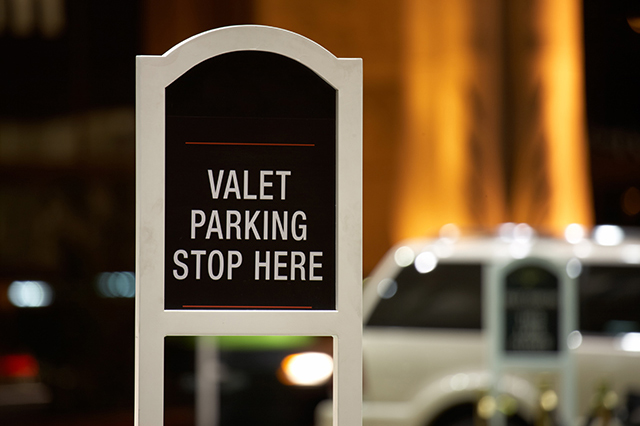
how much to tip valet

Although trusting a stranger with the keys of one of your most expensive possessions can be a bit unnerving, valet service is offered at high-end hotels and restaurants to elevate your overall experience at the establishment and can make it even more enjoyable. As Teller’s General Manager Frank Ferraro puts it, “The valets are working hard to make you happy.”

No doubt it is a luxury to walk out of a restaurant stuffed to your eyeballs and not even have to move to retrieve your car. And what a treat door-to-door service is on a rainy or freezing night!

If you choose to take advantage of valet service (keyword: service), it is not a question of if you should tip, but how much to tip valet. “It is always a good idea to tip the driver,” said Swann, who suggests leaving the gratuity when you return to pick up your car. Tips are commonly pooled so you don’t usually have to worry about tipping twice if the person who parked your car is different than the one who retrieved it.

Of course, if you want any extra attention, like if you want them to “keep it close,” the valet at Teller’s reveals that a slightly larger gratuity beforehand is the norm. I’m pretty sure that’s how the cool guys in the movies make it look so easy. I don’t know about the wink though. Maybe you shouldn’t do that.

In general, how much to tip valet depends on the level of help and accommodation provided. “The tip can be anywhere between three to five dollars depending on the service,” says Swann. Sometimes the valet will go above and beyond for you, carrying bags or gifts, going back to your car to get something you forgot, or even helping with directions and information about where you are going. “If they do anything for you other than just parking your car, then definitely give a larger tip.”

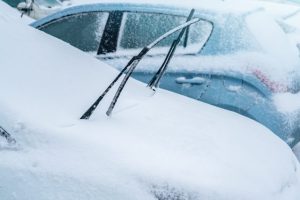
Also, consider the circumstances. The valets at Teller’s say that they appreciate any tip, but a little extra during times of inclement weather or bitter cold is always nice.

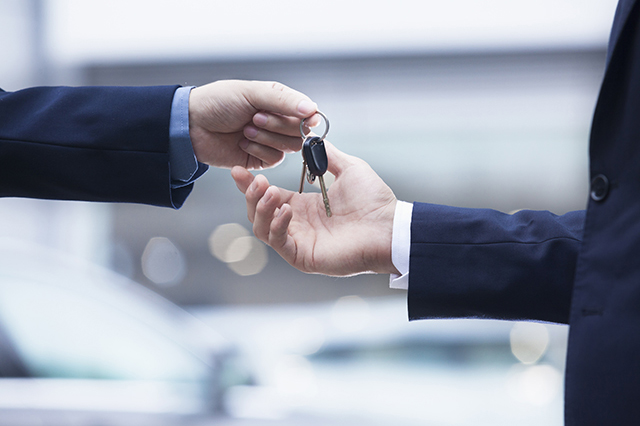
how much to tip valet
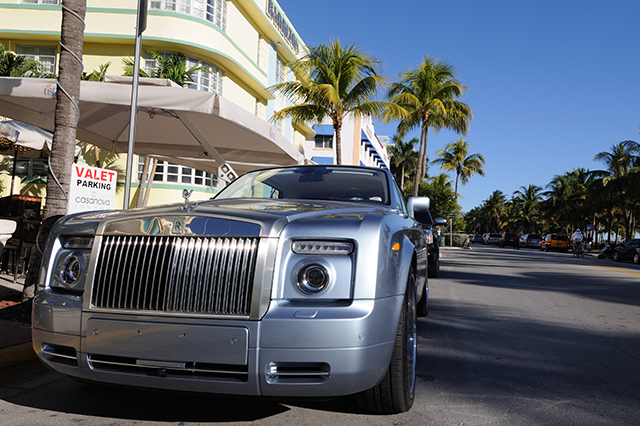
(Photo: Philip Lange / Shutterstock.com)

Swann recommends checking in with the hotel or restaurant in advance to see if valet service is included or can be added to your credit card. For example, some hotels will allow you to add the valet tip to your room charge. But most of the time, tips are earned and collected by the valets themselves, so you want to make sure that you have enough cash on hand.

Naturally, common courtesy goes a long way in determining the level of service you will receive. Simply being polite was the top solution from the valet at Teller’s for helping the entire process go smoother, not just for them, but for everyone in the lot. It also cuts the chance that they’ll take your Lambo out for a test drive while you’re eating. Just kidding.

Swann goes back to the basics, stressing the importance of saying “please” and “thank you” and establishing a friendly relationship with the valet. “If they’re wearing name tags use their first name so that way you have a connection with them. It will make them feel better about taking care of your car and taking care of you.”


To make parking as seamless possible, avoid distractions, stay alert and as Swann suggests, make eye contact with the valet as you are pulling in for direction. “If you’re looking around, getting distracted on your cellphone or talking to someone, you’re not paying attention. Making eye contact with that valet will help you in terms of getting instructions on where to stop your car.”

And finally, if you know you are going to valet park, turn down your radio, make sure the seat area is cleared of clutter, remove any valuables, and turn off the GPS and exit the navigation. Even if it’s just taking a minute to throw everything into the trunk, make sure your car is clean. “It makes it easier for the valet to get in and out without them having to worry about your phone charger hanging down … or having to fight with your GPS repeating and rerouting.”

Tell us your tips on how to tip valet in the comments below.

Learn about AAA’s automotive services

Subscribe to Your AAA Newsletter

Sign up and receive updates for all of the latest articles on automotive, travel, money, lifestyle and so much more!

Out There: My Vegas Vacation

We know because we’ve been: “Out There” is a series of inspiring travel spotlights from AAA Travel advisors and employees.

Most people know the old saying, “What happens in Vegas, stays in Vegas.” This cheeky little adage isn’t exactly true. In fact, for the past few years, Visit Las Vegas has flipped the script with their motto: “What happens here, only happens here.”

The Vegas experience is something unique and one that should absolutely be shared! When AAA travel advisor Michael Collins returned from his recent trip to the strip, we connected to hear about his experiences.

What do you think draws so many to the Vegas strip?

First off, Vegas is so much more than just the strip. Yes, most people think of the giant hotels, casinos and all the neon, but the city offers many unique experiences in such close proximity. One moment you find yourself at an award-winning musical and the next day you’re flying in a helicopter over the canyons or out to the Hoover Dam.

Very true! It is located close to quite a few other destinations, correct?

It sure is, making it a perfect place to stay, start or end a trip. Las Vegas is only a six-hour drive from Arches National Park and is only a two-hour drive from the Grand Canyon West Rim. For people looking to experience the canyon, including a stay in Vegas may make the trip even more memorable. The city is under four hours from Joshua Tree National Park, so don’t overlook Las Vegas if you’re thinking of a National Park trip.

There are so many hotels and resorts, and on this recent trip you popped in at more than one property, including New York, New York. From the street, this resort looks amazing as it mimics the monuments and skylines found in NYC. Is it just as fun on the inside?

You bet it is! At one time it was labeled as the first boutique hotel in the city, and since opening in 1997, the resort has had some of the most fun activities on the strip. Home to a rollercoaster that runs indoors as well along the rooftop edge, the resort has surprises around every corner. There is a piano bar, several restaurants, and a family-friendly arcade. Las Vegas has often been associated with weddings, and New York, New York offers a bridal package where couples can take their vows on the rollercoaster. Now there is a wedding photo opportunity! I will say this, though: the rollercoaster runs until midnight, so if you have a room with a “coaster view,” be aware.

What a fun property! What other hotels did you visit?

As a travel advisor, I like to make the most of my trips so that I can take back first-hand experiences to share with my clients. After my visit to New York, New York I spent a few nights at the Park MGM Las Vegas. This resort was once the Monte Carlo, but boy has it been refreshed and updated.

The Monte Carlo was a popular stay for decades. How has MGM revitalized the location?

Architecturally, the resort has been modernized. My room was a standard king, with very comfortable bedding. The room had a casual seating area, but right away I noticed there was no desk. MGM removed all office furniture from these rooms when they renovated and decided to make the Park MGM more like a “home away from home.” Even the art in each room is unique. No two pieces throughout the nearly 3,000 rooms are the same.

I think the best part of the Park MGM was the culinary scene! The resort is home to Eataly, Best Friend by Roy Choi and Bavette’s steak house. I couldn’t tell you which place was best, as I enjoyed myself at all three.

Good food and good stays! Speaking of which, are there any AAA 5 Five Diamond hotels in Vegas?

Bellagio and Aria are both Five Diamond locations! With over 4,000 guest rooms, 16 restaurants, 10 bars and nightclubs, and 150,000 square feet of gaming space, Aria has quickly become a landmark since opening in 2009 and has been featured frequently in movies and television, too!

I think one of the most fun parts of Aria is the main lobby. Aria features installations by artists from all over the world. The installations change frequently and add to the unique luxury atmosphere of the property. When I visited, there was this very cute display of brightly colored polar bears by multimedia artist Paola Pivi.

And let’s not forget the Aria sky suites. These suites include transportation to and from McCarron International Airport. Guests get a private check-in area with key-controlled access from the valet area and main Aria lobby.

The Bellagio fountain is one of the most famous attractions on the strip. Did you view the water show?

Yes I did, and if you want a great view of the fountain, visit the Paris Hotel and Casino across the street and make a reservation for the patio seats overlooking Las Vegas Blvd at Beer Park and you can get a great picture.

I also recommend heading inside the resort. Bellagio boasts some very unique features in addition to its famous fountain. Fiori di Como is an art installation by Dale Chihuly. It is comprised of over 2,000 pieces of hand-blown glass. Art critics from around the world have attempted to appraise the piece and have determined it to be priceless. Bellagio is home to the world’s largest chocolate fountain, too. There is also a botanical garden that changes five times a year for each season and for the Lunar New Year celebrated by East Asian cultures throughout the world.

There seems to be an art scene in Vegas!

Not only is there this new approach to art, but also wellness. Resorts are taking a healthy approach to stays, with features like the Stay Well rooms at MGM Resorts. These rooms include air purification, aromatherapy, specialized lighting, and enhanced cleaning protocols.

Another trend is touchless experiences. All MGM Resorts in Las Vegas offer free mobile check-in. This is also your digital key in most resorts. Simply open the app and touch your smartphone to your key panel and operate the elevator. This option is completely contactless and is super convenient. I checked in the night before I left home and when I opened the app at the airport the next morning I had my room assigned. I walked into the resort and went straight to my room.

From the lights and sights to the food and art, what happens in Vegas should definitely be shared!

Start planning your next trip with AAA Travel.

Subscribe to Your AAA Newsletter

Sign up and receive updates for all of the latest articles on automotive, travel, money, lifestyle and so much more!

Diamond Dish: Shell & Bones Oyster Bar and Grill

Diamond DesignationThree Diamond (Trendy food skillfully presented in a remarkable setting. Learn more about AAA Diamonds.)

Location: 100 S Water St, New Haven, Conn.

Located on the waterfront in the historic City Point area of New Haven, Shell & Bones is acclaimed for both its setting and food. While fresh fish and oysters are the stars, prime cuts of meats also shine.

Executive Chef Arturo Franco-Camacho incorporates fresh and sustainable ingredients to present new takes on classic dishes, like this award-winning New England clam chowder.


Restaurant Recipe Guide

Featuring more than 40 recipes and tips from top chefs and kitchens in the Northeast. Download the Restaurant Recipe Guide and get cooking!

Download Now!

Clam Chowder

  • 1½ cups water
  • ½ cup dry white wine
  • 50 littleneck clams
  • 2 tablespoons unsalted butter
  • 1 tablespoon bacon fat
  • ½ cup diced bacon
  • 1 large Spanish onion, diced
  • 3 garlic cloves, minced
  • 2 cups diced celery
  • 3 sprigs thyme, chopped
  • 2 bay leaves
  • 1½ pounds (about 2 cups) Yukon gold potatoes, peeled, cut into ¼-inch dice
  • 2 cups heavy cream
  • 2 tablespoons parsley, chopped

PRO TIP: The soup is better the next day. Letting it sit in the refrigerator overnight gives the bacon extra time to infuse its smoky flavor into the cream.

Pour the water and wine into a large pot. Bring to a boil at high heat. Add clams, cover and cook until they open, about 5 minutes. Remove clams to a bowl. Strain liquid and reserve. When they have cooled, set aside 6 clams in the shell. Remove remainder from their shells and cut into small pieces.

Melt butter and bacon fat in a pan over medium heat. Add bacon and cook until crisp, 4-6 minutes. Add onion, garlic, celery, thyme and bay leaves. Sauté until onions are translucent, about 4 minutes. Add potatoes, clam juice and heavy cream. Simmer until potatoes are tender, 8-10 minutes. Discard bay leaves. Add chopped clams and parsley, stir and serve.

Place a reserved clam in the shell on top of each bowl. Sprinkle crispy bacon on top if desired. Serve with crackers or potato chips.

Serves 6.

For more restaurant recipes, visit AAA.com/DiamondDish.

Subscribe to Your AAA Newsletter

Sign up and receive updates for all of the latest articles on automotive, travel, money, lifestyle and so much more!

Word Search: All About the ’80s

Take a nostalgic walk through a decade of big change and even bigger hair in our ’80s-themed word search.

Since our members are the root of everything we do, your feedback is important to us. Let us know if you run into any issues while playing, or share your ideas for future puzzles by emailing us.

Subscribe to Your AAA Newsletter

Sign up and receive updates for all of the latest articles on automotive, travel, money, lifestyle and so much more!

AAA Photo Session: Night

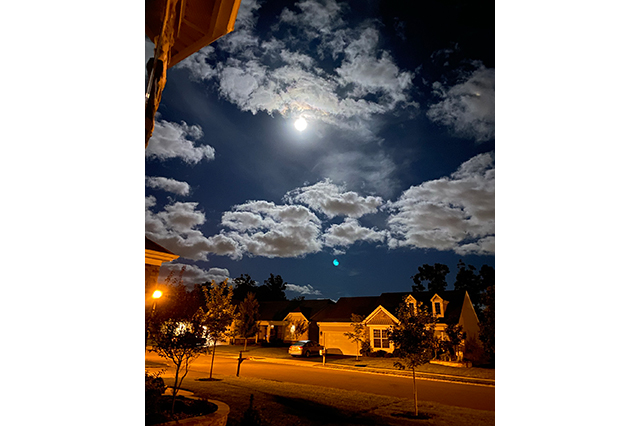
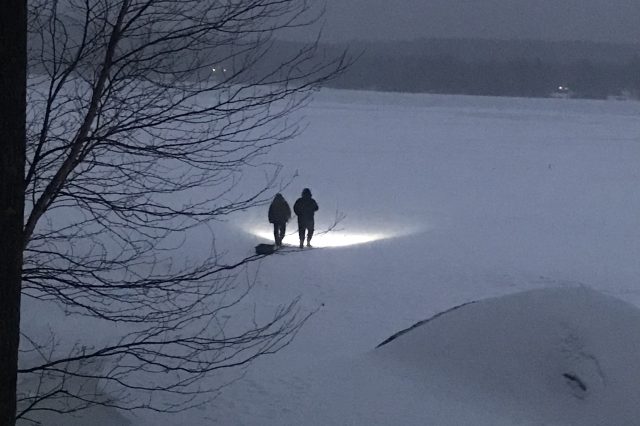
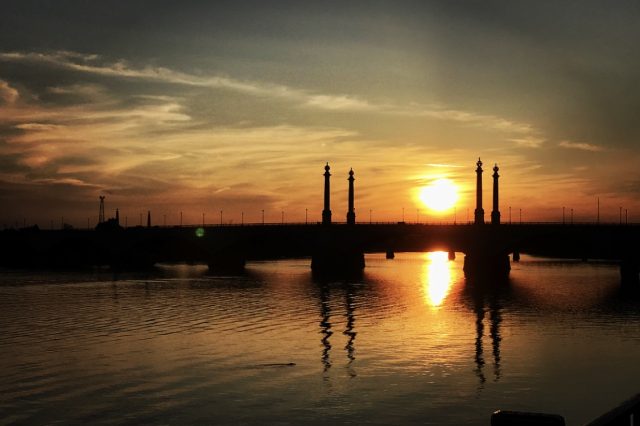
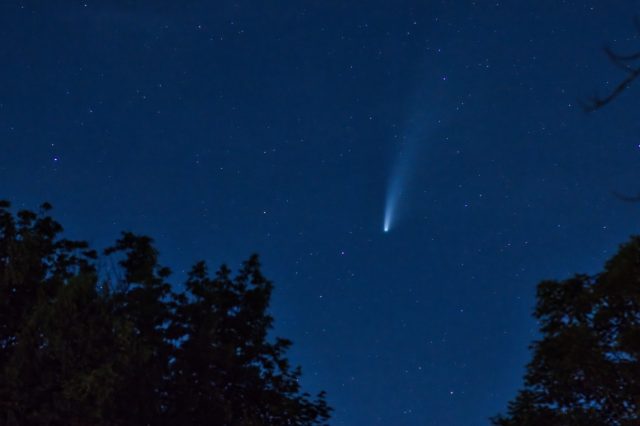
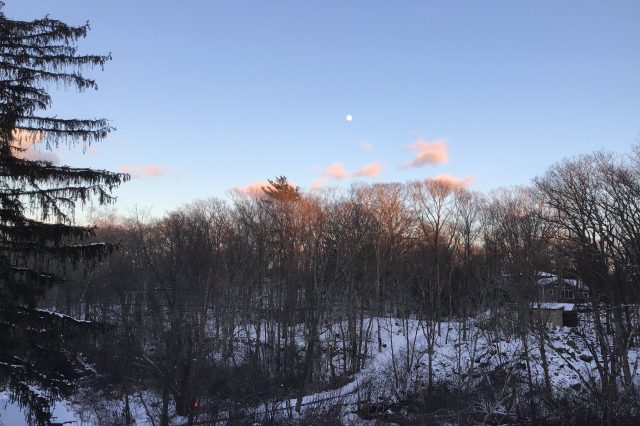
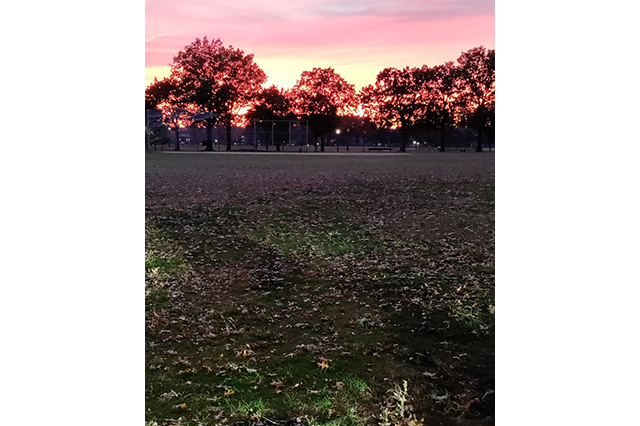
With nighttime photos, the fun is in the challenge. At night, you can play with light and shadows to produce moody scenes and capture magical panoramas of the moon and stars.

Thank You for Participating! (Session Closed) 

Browse through all of the photos we received during February’s night-themed Photo Session in the slideshow below, and don’t forget to check our social media channels, where we will be sharing some of our favorites. Select photos may also appear in an upcoming issue of Your AAA magazine.

Night Photography Tips 

Understanding and using your camera settings is especially handy when shooting at night. Relying on the auto feature will not do your images much justice in the dark, although smartphones are getting better at it. Learn how to use night mode on some of the latest phone models with these tips from CNET.

Check out past AAA Photo Sessions and stay tuned for the next one.

Subscribe to Your AAA Newsletter

Sign up and receive updates for all of the latest articles on automotive, travel, money, lifestyle and so much more!

The History of Car Batteries

Your car engine, with its mighty roar, may get all the glory, but without the silent understated work of the vehicle’s battery, your vehicle isn’t going anywhere.

We will concede the car battery is not the sexiest component of an automobile. Not only is it not seen or heard, it doesn’t come equipped with showboating descriptors like “276-horsepower, 3.6-liter V-6” that car engines do. But don’t be confused – car batteries are vital. Not only would vehicles not be able to operate electrical systems like lights, heated seats and air conditioning without them, but vehicles themselves wouldn’t be able to start without the humble lead-acid battery found in most cars today.

But the history of car batteries begins well before we had any cars.

The History of Batteries

Evidence suggests that the first batteries were created as far back as 200 B.C. in what is now Iraq. The word “battery,” however, wasn’t coined until the 18th century by none other than Benjamin Franklin, who used it to describe a device he invented capable of holding an electrical charge. The machine consisted of numerous Leyden jars grouped together; thus, Franklin adapted the military term for multiple pieces of artillery working together.

Alessandro Volta invented the world’s first true electric battery not long after. In 1800, the Italian physicist unveiled a device consisting of alternating zinc and silver disks separated by brine-soaked cloth. When a wire was connected to each end, a continuous electric current flowed through the pile. Unlike Franklin’s Leyden jars, this device didn’t need to be charged.

Volta’s discovery led to widespread research into new practical uses of electricity, and by the mid-1800s, the history of car batteries was well underway.

The Lead-Acid Battery

Gaston Planté may not be a household name, but he played an indispensable role in the history of the automobile. In the 1850s, the French physicist was experimenting with a battery that could store a useable amount of electrical energy. The best battery at the time produced just 1.1 volts, according to the National High Magnetic Field Laboratory.

Planté successfully created such a battery before the close of the decade. By utilizing lead and sulfuric acid, he was able to create a battery capable of delivering more power than any before it. The most significant evolutionary component in Planté’s design, however, was that the chemical reaction was reversible, meaning the battery could be recharged.

Just like that, the lead-acid battery was born.

history of car batteries

The Electric Car Starter

It would take a few decades after Planté’s invention before lead-acid batteries found their way into automobiles. After all, early cars didn’t require electricity: They didn’t have lights, engines used manual power, and bells or air horns were operated manually. Take a look back at auto history.

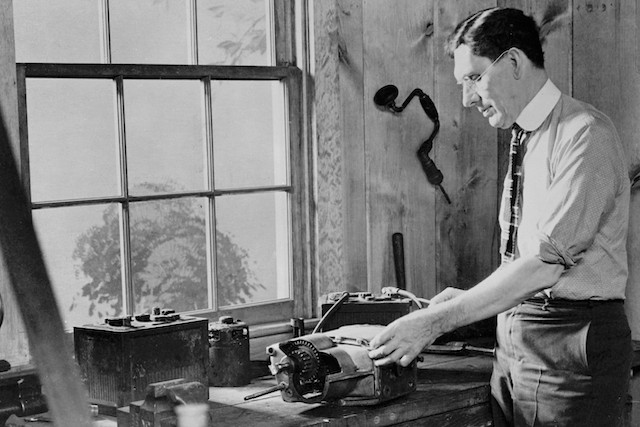
This all changed in the early 1900s when Charles F. Kettering invented the electric starter. This new device allowed motorists to start a car’s engine from the driver’s seat instead of hand-cranking the engine from the front of the vehicle. The starter, which required a battery, also powered a vehicle’s lights, another feature Kettering developed. The first electric starter appeared in Cadillacs in 1912. Not long after, Kettering’s Dayton Engineering Laboratories Company was purchased by General Motors. The engineer was hired as the automaker’s head of new research division, where he developed numerous instrumental technologies, including spark plugs, leaded gasoline, automatic transmission and four-wheel brakes.

More and more new cars came equipped with electric starters as the 1910s progressed, according to Wired. One of the last holdouts, however, was the Ford Model T. The prominent, widely owned car finally made the switch in 1919, at which point batteries could be found in just about every American automobile.

Modern Car Batteries

For the first half of the 20th century, cars were equipped with 6-volt batteries. That changed in the ’50s when vehicle electric systems transitioned to 12 volts, thanks to evolving car designs and features that required more power. To this day, most vehicles use 12-volt batteries.

Another important milestone in the history of car batteries occurred the following decade with the introduction of the absorbed glass mat battery. As its name implies, this iteration contains fiberglass mats that absorb the battery’s sulfuric acid, making it spill-proof and easy to ship. But what makes AGM batteries particularly well-suited for cars is that they can deliver more power, charge faster and last longer than traditional lead-acid batteries. They are also maintenance-free and resistant to vibration.

Despite all these advantages, AGM batteries weren’t commonly used in vehicles until the 1990s. By this time, cars’ electrical needs had grown substantially. The more efficient battery was needed to power features such as air conditioning and advanced computer systems.

car on road - history of car batteries

Electric Car Batteries

If you haven’t heard, there are these new things called electric cars. Well, they aren’t really new – the first electric car appeared in the United States way back in the late 1800s.

Electric cars use a battery to start the vehicle, power electrical features and power the motor. To do this, they depend on what’s known as a lithium-ion battery, which first became commercially available in 1991. This battery type boasts a higher energy density than others. This allows it to store more energy in a smaller battery, making it perfect for devices like cellphones and laptops.

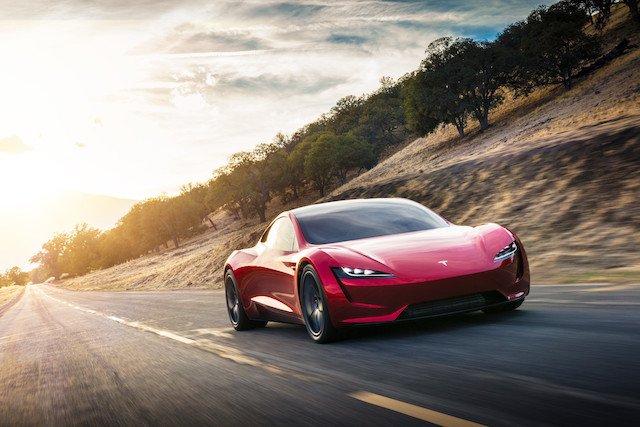
In 2008, the Tesla Roadster became the first production electric vehicle to use a lithium-ion battery. Today, they are used in nearly all electric vehicles and are capable of powering a car more than 500 miles on a single charge.

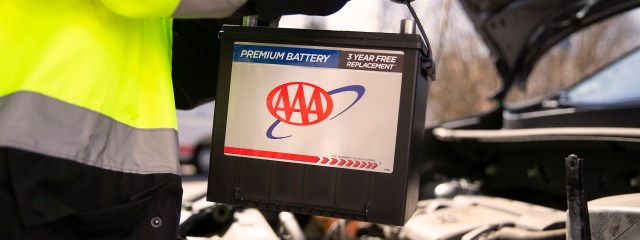
AAA is your one-stop shop for all things car batteries:

  • AAA Car Battery service is available to test, service or replace your car battery. Get a quote and request service online.
  • Want to learn how to keep your battery running smoothly? Your AAA is your go-to resource.
  • For all your auto parts needs, AAA members can save on replacement parts and accessories at NAPA.

For more interesting backstories on car parts and beyond, visit our automotive history page.

Subscribe to Your AAA Newsletter

Sign up and receive updates for all of the latest articles on automotive, travel, money, lifestyle and so much more!

Why a Custom Private Driver Tour May Be Right For You

For parties of nine or fewer, there is an opportunity to discover Ireland, Britain or Iceland your own way, at your pace, as you savor every moment with the people you know and love. With a custom private driver tour, you customize the itinerary, and with AAA Travel and our friends at CIE Tours, our planners will partner you with a local guide to lead you along your route, recommending unique stops and restaurants along the way.

CIE has curated these private tour opportunities to appeal to all — honeymooners, bucket-listers, solo travelers, families and those seeking to connect with their heritage. Private driver tours can accommodate multiple generations, from infants to great-grandparents, making this the perfect option for cross-generational explorations. Choose between over 50 pre-set itinerary and travel style options or build your own custom private driver vacation. Custom itinerary options are limitless — from luxurious 5-star adventures to family-friendly options. Each itinerary is a balance of famous icons with local haunts and immersive cultural experiences.

Throughout your journey, an expert guide provides the backstories and deep intel that simply can’t be gleaned from a book. CIE Tours drivers are dedicated experts, who know the local history and have plenty of personal connections and rich stories, and relish the opportunity to unfold the hidden beauties of their homelands, taking guests beyond the surface for a truly immersive experience. Plus, you and your group control the pace, including how much time you spend at sites and locations. Not ready to leave a site? With your own driver, you are  free to linger in places that catch your fancy — and spend less time in places that don’t. And, there’s the freedom to start your day when you want and to dine where and when you want, with plenty of great local recommendations from your driver.   

Custom private driver tours are also a wonderful choice for individuals looking to connect with their ancestry. Together with your AAA Travel advisor, you can build an itinerary that focuses on the areas, towns and perhaps even the streets and houses that your family once called home. For those of you with Irish ancestors, a visit to the Irish Emigration Museum may offer insight into your families path to America, and a day on the Dunbrody Famine Ship, an authentic replica of the vessel that helped carry Irish immigrants to the United States, offers a glimpse into the actual voyage from Ireland to America.

No matter the destination, AAA Travel Advisors are here to help you find the right vacation. Together, you can unlock the world all while ensuring you take advantage of every perk and discount available through your AAA membership. 

Share your dreams with a AAA Travel Advisor now.

Subscribe to Your AAA Newsletter

Sign up and receive updates for all of the latest articles on automotive, travel, money, lifestyle and so much more!

Test Drive: Crossover SUVs

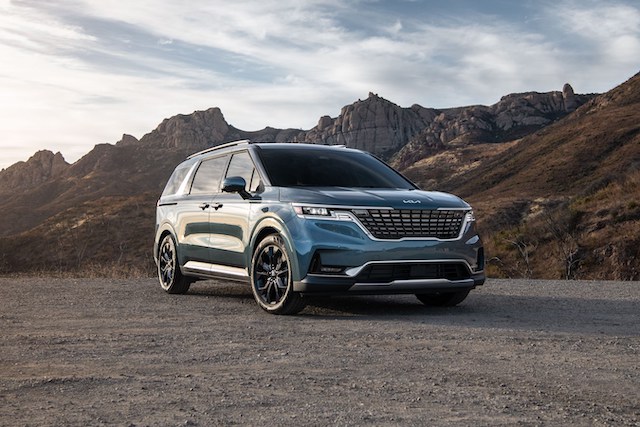
Even though your childhood memories of the carnival may have taken on a rosy glow over the years, the adult reality is that these traveling funfairs can sometimes be a bit sketchy. That said, the new Kia Carnival is anything but.

In fact, the only thing about this rolling Carnival that’s liable to give you pause is its layout. This midsize crossover amounts to a likeable combination of a traditional SUV’s styling and the functional details of a minivan.

While uncommon, the design works surprisingly well. The more rugged profile dilutes any soccer mom-related stigma, while wide-opening, sliding side doors make it an ideal way to get the entire family to and from the fair.

The 7- or 8-passenger interior has adult-sized legroom throughout. There’s also a generous 40.2 cubic feet of cargo space behind the third row and 86.9 cubic feet behind the second.

Figure in excellent power and handling and a long list of standard comfort, tech and safety features and Kia Carnival becomes one of the most entertaining rides in town.

MPG (City/Highway): 19/26


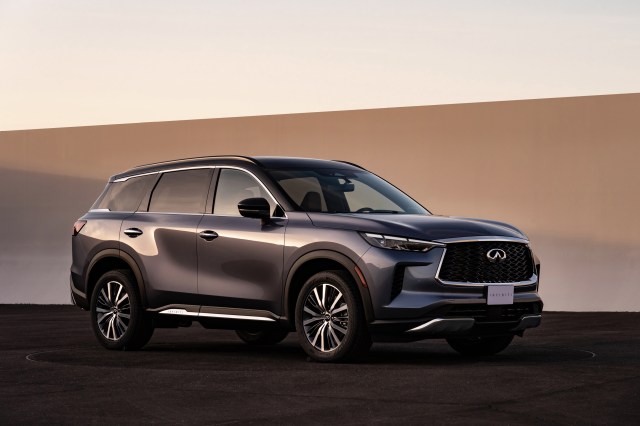
2022 Infiniti QX60

Peruse the average parking lot and you’ll quickly understand our world has no shortage of luxury cars. Yet, the all-new Infiniti QX60 blows them all away in the practicality department.

This classy-looking midsize crossover nicely combines the best qualities of high-end sedans and über-useful car-based SUVs in a sleek package. The top-of-the-line Autograph model we tested offered comfortable seating for up to seven passengers in three rows, done up in quilted leather upholstery and a genuine wood-trimmed dash. The heated/ventilated front seats with massage are a particularly nice touch.

There’s also a cargo hold with a healthy 14.5 cubic feet of room behind the third row, and more than 75 cubic feet with all the rear seats folded, not counting the handy underfloor storage bin.

Under the hood is a 295-hp, 3.5-liter V6 that delivers brisk acceleration. Front-wheel drive is standard, while all-wheel drive is an option. The ride quality is luxury-car smooth and, though the handling isn’t exactly sporty, the suspension is well-tuned enough to make hustling the QX60 along a curvy stretch of road enjoyable.

MPG (City/Highway): 21/26

Looking for a new ride? Check out more car reviews at AAA.com/TestDrive.

Subscribe to Your AAA Newsletter

Sign up and receive updates for all of the latest articles on automotive, travel, money, lifestyle and so much more!

Test Drive: Electric Avenue

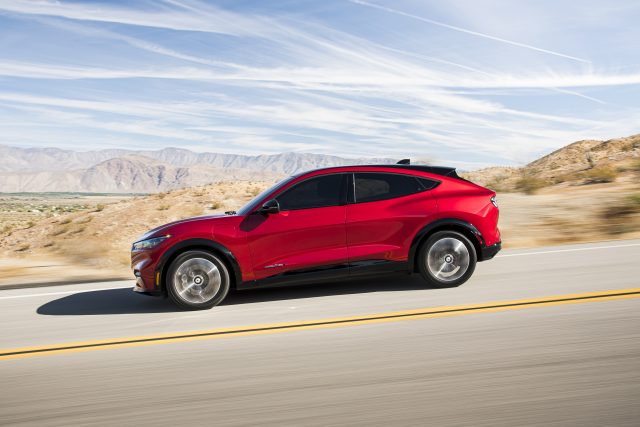
There are just some things that are hard to find fault with. The Ford Mustang Mach E is one of them.

Now, perfection may be unattainable, but this all-electric compact crossover comes pretty close. For starters, the Mach E feels vaguely familiar, with muscular good looks, abundant acceleration and crisp handling reminiscent of the long-running coupe with which it shares its galloping pony logo.

Besides impressive performance, the Premium trim level version we tested offered several driving-style settings. The Mustang Mach E’s low center of gravity and nicely tuned suspension made it feel at home on a curvy road. Ride quality was also good, especially considering its sporty attitude.

Inside, the cabin felt comfortable and spacious. The humongous vertical touchscreen stands out for being both beautiful and easy to use. In back is an adult-friendly rear seat and as much as 59.6 cubic feet of cargo room. A front trunk under the hood adds even more storage.

Add it all up and you have a new Mustang that’s hard to nitpick.

Starting Price: $42,895

MPGe (city/highway): 105/93

Safety: N/A

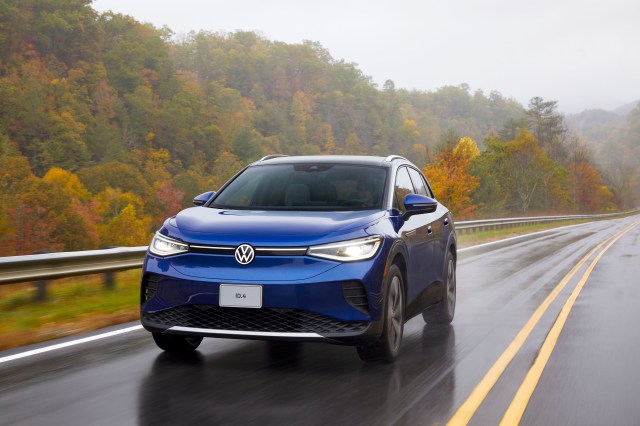
Volkswagen ID.4

When it comes right down to it, an electric vehicle is successful in direct proportion to how few compromises it requires of its owner. By that measure, the Volkswagen ID.4 is a winner.

While this battery-powered compact crossover is far from ordinary, it impresses with how comfortable it feels. Acceleration may not be neck-snapping, but the AWD Pro S model we drove was far from pokey. Ride quality is slightly firm and the handling feels confident, if not exactly sporty.

The ID.4’s quiet passenger cabin is roomy enough for four adults. There’s cargo space galore — 64.2 cubic feet of it with rear seats folded. Other quirks include oddly overcomplicated power window switches and a center touchscreen that can be tricky to use, especially while underway.

Overall, the Volkswagen ID.4 does a great job of not calling attention to itself. Plug it in at night to recharge and you have an environmentally friendly crossover that makes it easy to go green.

Starting Price: $39,995

MPGe (city/highway): 107/91

Safety: 5 Stars

Looking for a new ride? Check out more car reviews at AAA.com/TestDrive.

Visit AAA’s Electric Vehicle platform for more information on these cars of the future.

Subscribe to Your AAA Newsletter

Sign up and receive updates for all of the latest articles on automotive, travel, money, lifestyle and so much more!

Test Drive: Off-Roading in Style

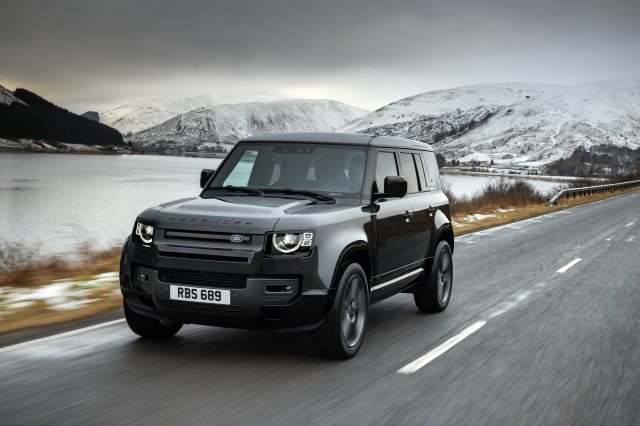
The latest in a long line of Land Rover Defenders is a classy beast that would look good pulling up to the toniest valet stand. That said, it ultimately shines brightest when you leave the civilized world behind. That’s because the Defender’s ruggedly handsome sheet metal wraps advanced mechanicals and electronics that make it quite possibly the most off-road capable model you can buy.

The four-door Defender 110 I tested (a two-door Defender 90 is also available) came propelled by an available 395-horsepower, inline-6. This powertrain delivered surprisingly satisfying acceleration but relatively poor fuel economy.

Ride quality and handling on pavement are both better than you’d expect from a tall four-wheel-drive vehicle. Off-road there’s a whopping 11.5 inches of ground clearance and the ability to ford as much as 35 inches of water.

Add a comfortable, upscale interior filled with top-quality materials, high-tech features and a generous 78.8 cubic feet of cargo space and you have a go-anywhere SUV that will help you leave civilization in the rearview mirror.

MPG (City/Highway): 17/22

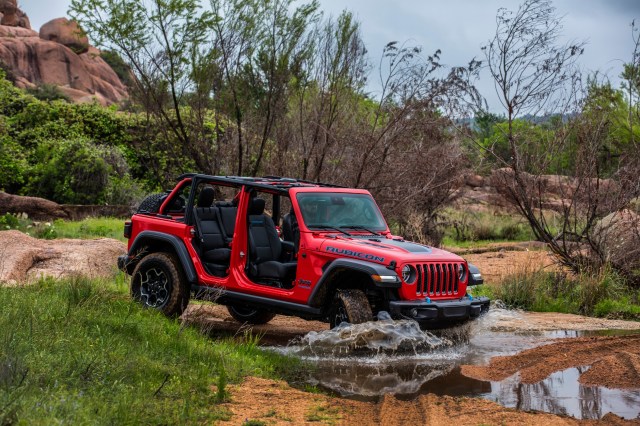
2022 Jeep Wrangler Rubicon 4xe

Jeep Wrangler 4xe

The classic Jeep is a machine purpose-built to go to remote places other SUVs would rightly fear to tread. Now comes a new hybrid version, known officially as the Jeep Wrangler 4xe, that’s designed to go there in an environmentally friendly manner.

Exploring this new green frontier starts with a plug-in hybrid powertrain built around a turbocharged 2.0-liter, 4-cylinder engine mated to an electric motor. As you’d expect, a rugged four-wheel-drive system is standard, as is a low-range gearbox for when the going gets tough. Perhaps the coolest feature of this setup, though, is that it can propel the Wrangler up to 21 miles on battery power alone.

Otherwise, the Wrangler 4xe is thoroughly familiar. The Unlimited model I tested had four doors that made for much easier rear-seat access and a removeable soft top with a slick power-operated sunroof.

In all, the Jeep Wrangler 4xe is an intriguing choice for those who want both serious off-road capability and eco-bragging rights, but it is definitely not right for everyone.

MPGe: 49

Looking for a new ride? Check out more car reviews at AAA.com/TestDrive.

Subscribe to Your AAA Newsletter

Sign up and receive updates for all of the latest articles on automotive, travel, money, lifestyle and so much more!

Test Drive: “Born In The USA” Pickups

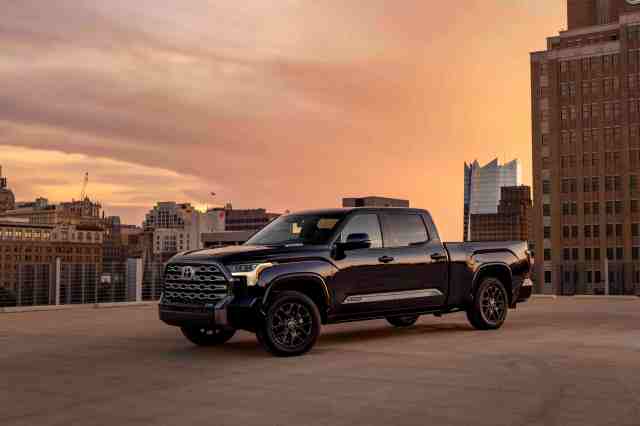
Buying “Made in America” products has taken off in the last year or so. This helps make the all-new Toyota Tundra the right truck at the right time.

That’s because the third generation of this full-size pickup was completely designed, engineered and manufactured in the U.S. It’s also full of American ingenuity, like a rear suspension that uses coil springs for improved ride and handling. Available air suspension also helps automatically level the truck when toting heavy loads. Speaking of which, maximum towing capacity is a robust 12,000 pounds.

Power comes from a choice of two twin-turbocharged, 3.5-liter V6 engines, including a hybrid version boosting output to 437-hp with a 36 kW electric motor. Under the hood of the Limited model we drove, this powertrain delivered enough performance that no one is going to miss the outgoing V8.

There’s more clever innovation inside. Highlights include a 14-inch central touchscreen, multiple camera displays and an expansive panoramic sunroof. Add a complete list of advanced safety features and you have a powerful new reason to buy American.

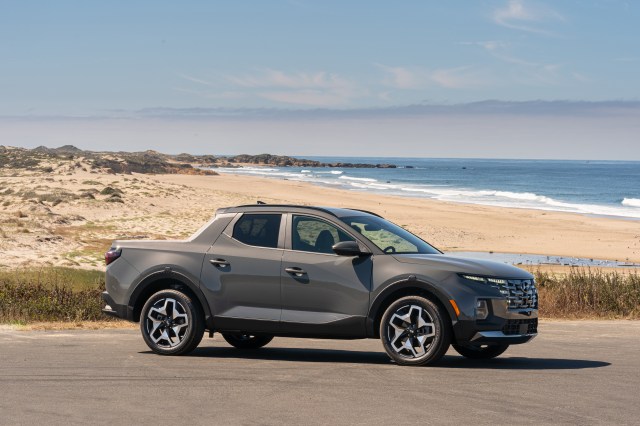
Hyundai Santa Cruz

If we were to sum up the new Hyundai Santa Cruz in a single succinct phrase, it might be, “expect the unexpected.”

The most obvious way that idea plays out on this Alabama-built compact pickup is in its styling. Simply put, it’s like nothing else on the market.

Aesthetics aside, the four-door Santa Cruz had a lot going for it. The 281-hp, 2.5-liter turbocharged 4-cylinder propelling our top-of-the-line Limited test truck (base models get a 191-hp, non-turbo 2.5-liter) delivered peppy performance and decent fuel economy. The suspension gives it a surprisingly good ride quality and solid handling.

The passenger cabin was handsome and offered car-like comfort and amenities for front-seat occupants, though touch-sensitive audio/climate controls were hard to use. The downside of the Santa Cruz’s compact dimensions is a tight rear seat best suited for kids.

Out back, the four-foot bed is also on the small side. A hard tonneau cover and lockable under-bed “trunk” are handy touches in everyday use, however.

Taken together, these elements make the Santa Cruz a pickup you wouldn’t have expected to like.

MPG (City/Highway): 21/27 (2.5L turbo AWD)

Looking for a new ride? Check out more car reviews at AAA.com/TestDrive.

Subscribe to Your AAA Newsletter

Sign up and receive updates for all of the latest articles on automotive, travel, money, lifestyle and so much more!

Test Drive: The Anti-SUVs

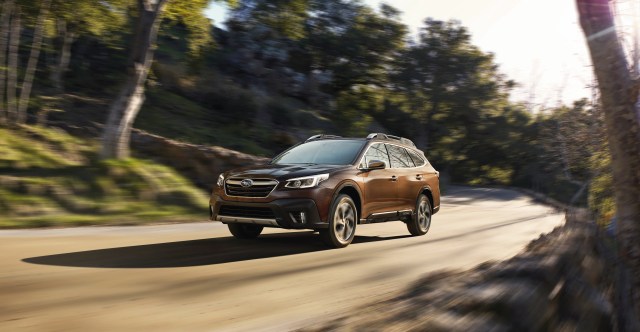
Even the most adventurous among us don’t want to be driving the kids in a SUV that looks like it escaped from the set of “Mad Max.” This is where the Subaru Outback Wilderness comes in.

This buff version of the compact all-wheel drive wagon features the kind of functional upgrades you might do yourself if you didn’t mind voiding the warranty. We’re talking all-terrain tires, a beefier suspension with 9.5 inches of ground clearance, and a front skid plate. There are also a few upgrades that would be hard to replicate, including a more capable AWD system.

While there are gnarly trails where the Outback Wilderness would be out of its depth, it performed admirably on dirt fire roads. On the pavement this ruggedized variant delivered the same smooth, quiet ride as its standard cousin. The 2.4-liter, horizontally-opposed turbocharged 4-cylinder delivered all the performance we could hope for.

Inside offers plenty of room for four and a week’s worth of camping gear, making it the model you want if you’re leaving civilization behind post-apocalypse.

MPG (City/Highway): 22/26; Safety: 5 Stars

2022 Volvo V90

Volvo V90 Cross Country

Can a station wagon be sexy? One look at the Volvo V90 Cross Country and we decided the answer is a resounding ‘Yes!”

The midsize V90 Cross Country’s svelte silhouette is propelled by a 295-hp 4-cylinder that’s both supercharged and turbocharged. While this engine design is unusual, we found the supercharger adds oomph at low speeds, while the turbo gives this family hauler a noticeable kick as speed builds.

The V90 Cross Country features all-wheel drive and raised suspension with a healthy 8.3 inches of ground clearance. Handling on the pavement is also better than you’d expect, making it a pleasure to drive.

Finally, just in case you think looks and practicality are mutually exclusive, know the V90 Cross Country’s upscale interior offers good passenger room, and a 69 cubic foot cargo area that’s larger than many crossovers. If you need to tote still more stuff, this wagon will tow up to 3,500 pounds when properly equipped.

All that aside, the real appeal remains watching heads turn as you drive by.

MPG (City/Highway): 22/29

Looking for a new ride? Check out more car reviews at AAA.com/TestDrive.

Subscribe to Your AAA Newsletter

Sign up and receive updates for all of the latest articles on automotive, travel, money, lifestyle and so much more!

Top True Crime Podcasts

Ever since the massive success of “Serial,” true crime podcasts have been a staple of the medium. People love to listen to stories of murder and mayhem while they’re sitting in traffic, idly shopping or running on a treadmill at the gym.

What is it about true crime that makes it so perfect for audio? There’s just nothing that satisfies people quite like a good, old-fashioned scary story. Here are the best true crime podcasts that will give you shivers, scares and even a laugh or two.

“Criminal”

Criminal is a great introduction to podcasting in general. Phoebe Judge’s expert reporting and hypnotizing voice will get anyone hooked onto this show about crimes, criminals and those who are affected by them. “Criminal” is about the crime stories that get lost between the cracks; the marginalia of true crime. Judge reports on crime stories that include curiosities like a superstar poodle, a woman who claimed to hear war secrets from ghosts, a bully who terrorized an entire town and the origin of the phrase “420.”

“My Favorite Murder”

The last time I wrote about “My Favorite Murder,” I was writing about it as a comedy podcast. That’s one of the main joys of this crossover hit: it’s either and it’s both. Hosts Karen Kilgariff and Georgia Hardstark are wildly enthusiastic true crime fans, who chat about famous crimes as well as stories sent in by their listeners. These listener submissions, or “hometown murders,” as they call them, warrant their own mini episode every week and shed light on crimes that most people have never even heard of. “My Favorite Murder” isn’t just a podcast – it’s a community.

“RedHanded”

In a similar vein to “My Favorite Murder,” you’ll find “RedHanded,” another chatty true crime podcast. In “RedHanded,” hosts Suruthi Bala and Hannah Maguire pick one true crime story to tell together. Many similar true crime podcasts will have one host tell the story while the other listens and interjects, but the “RedHanded” formula allows for deeper research and more thoughtful analysis from both hosts. Although they’re not afraid of making jokes sometimes, “RedHanded” can get pretty serious and gruesome. These stories are not for the faint of heart.

“Detective”

Garnsey Sloan covers the life and career of one retired law enforcement officer per season on Investigation Discovery’s podcast, “Detective.” Sloan’s extensive interviews explore what it takes to be a detective, and what sort of people wind up wearing the badge. Lt. Joe Kenda, Detective Garry McFadden and Detective Rod Demery have all had unbelievable lives, and they all have stories to tell.

podcast search

“In the Dark”

In the Dark,” hosted and reported by Madeleine Baran, is a haunting podcast that examines the disappearance of an 11-year-old boy named Jacob Wetterling, and the long legal fallout of that disappearance. “In the Dark” is not a podcast about mystery or the joys of amateur sleuthing. It’s a podcast about how unexplained tragedies and law enforcement errors can affect a community for a lifetime. Season 2 of “In the Dark” follows another miscarriage of justice – the case of Curtis Flowers, who was tried six times for the same crime.

“Uncover” Season One: “Escaping NXIVM”

CBC reporter Josh Bloch is catching up with a childhood friend, Sarah Edmonson, when she reveals that she’s just escaped a cult. NXIVM (pronounced “nexium”) was a sprawling network of multilevel marketers, self-help groups and faux-feminist empowerment programs in upstate New York and Canada. Edmonson tells the story of how she went from sitting in a circle and talking about professional development to being blindfolded and branded in a bizarre ceremony. Bloch takes us through the history of founder Keith Raniere, the development of NXIVM and the aftermath of Edmonson’s explosive tell-all with the New York Times. While you’re there for “Escaping NXIVM,” check out the other seasons of “Uncover,” like “The Village,” “Satanic Panic” and “Brainwashed.”

“Dirty John

Dirty John” is one of the most gripping true crime podcasts ever, and it’s not even about a murder. Well, not really. Presented by the Los Angeles Times and hosted by investigative reporter Christopher Goffard, “Dirty John” tells the story of Debra Newell and her new boyfriend, John Meehan. When Debra’s daughters expect that John isn’t all that he seems, their lives go off the rails. Fast.

“Generation Why

Justin Evans and Aaron Habel love to talk about crime, and on “Generation Why,” they analyze some of the most famous and chilling crimes in history. They are not only interested in who committed a crime and how, but in the motive behind the crime (in a nod to their title).

“Gangster Capitalism: The College Admissions Scandal”

Sometimes there’s a dark side to the American dream. “Gangster Capitalism” is about white-collar crime and corruption in a society where money and status is everything. The first season of “Gangster Capitalism” focuses on the “Varsity Blues” college admissions scandal, which saw wealthy parents paying scammers and professional test-takers to get their underperforming kids into elite schools. The most shocking parts of the podcast are the actual transcripts of conversations between the parents and the head scammer, Rick Singer. Singer sold his scheme as a “side door” to elite colleges – for parents who were wealthy enough to afford him, but not wealthy enough to “donate” millions to their school of choice. What does this scandal say about the current state of college admissions in America? “Gangster Capitalism” hopes to find out. Later seasons of “Gangster Capitalism,” “The NRA” and “Jerry Falwell Jr. and Liberty University” are also worth a listen.

For more podcast recommendations, check out the full Podcast Pulse archives. 

Do you have a favorite true crime podcast? Tell us about it in the comments below!

Subscribe to Your AAA Newsletter

Sign up and receive updates for all of the latest articles on automotive, travel, money, lifestyle and so much more!

Start a New Valentine’s Day Tradition This Year

Valentine’s Day is one of the most interpersonally fraught holidays we celebrate in America. It’s as though the pressure of a midnight New Year’s Eve kiss lasted for a whole day. Those who are in relationships feel the pressure of celebrating the day to the fullest, and those who aren’t in relationships feel the pressure of making sure everybody knows they’re fine. It’s fine, really. I’m fine. It’s fine!

You don’t have to be planning something romantic or even typical for Valentine’s Day. This year, you can start a new Valentine’s Day tradition for yourself and for your loved ones.

Valentine’s Day Traditions for You and Your Date

If you have a significant other when Valentine’s Day rolls around, you might be thinking of going the same old dinner-and-chocolates route. But restaurant meals during Valentine’s Day can be overpriced and overcrowded. Here are some nontraditional Valentine’s Day ideas for how you and your partner can shake it up.

Treat yourselves to a movie marathon. There’s no better way to mark the holiday than with your favorite romantic comedies. Order some takeout, buy some wine and kick your feet up while you watch Tom Hanks and Meg Ryan fall for each other again and again.

Make a special home-cooked meal. Cooking together is a great way to bond – not to mention, it’s a lot more cost-effective than a pricey prix fixe Valentine’s Day menu. Make plans to prepare a special meal together. With some candles, it can be even more romantic than a night out. Sign up for a Home Chef meal subscription with your AAA discount code and save.

Try something new. Is there something the two of you have wanted to do, but never had a reason to try? Valentine’s Day is your chance! Try an escape room, take a painting class together or head to a nearby rock climbing gym.

valentine's day traditions

Valentine’s Day Traditions for You and Your Friends

Valentine’s Day is about celebrating all kinds of love and there’s no reason you shouldn’t spend it with your BFFs.

Celebrate Galentine’s Day. Galentine’s Day, first popularized by the show “Parks and Recreation,” is a holiday celebrated on or near Feb. 14 (it’s Feb. 13 in the show). Galentine’s Day is all about celebrating female friendships – ideally over brunch. If you’re not a “gal,” don’t worry! Friends of any gender will love a little appreciation. A Winc wine subscription is the perfect gift.

Have a singles dinner party. Single on Valentine’s Day? Don’t worry, a lot of other people are too. A singles dinner party or potluck is a great way to commiserate (or celebrate) with your other single friends. And who knows? Maybe there’ll be a spark.

For You and the Kids

Kids like Valentine’s Day just as much as grownups do – and what’s not to like? It’s a holiday that’s mostly about receiving heart-shaped boxes of chocolate. Here’s how to celebrate Valentine’s Day with the little ones in your life this February.

Make them feel special. Parents can make their kids feel special by setting aside a moment that’s just for them. Try splitting up and doing single parent/single child outings, like daddy/daughter or mommy/son dinners. Giving a child one-on-one time with a parent can make them feel important and seen. A dinner with the whole family can also be a great way to celebrate the love you all have for each other.

Do your babysitting duty. Whether you’re single or in a relationship, a great way to pay it forward on Valentine’s Day is by babysitting for friends or family members. Parents of young children don’t often get time to go out for dinner together and by babysitting you can give them the gift of a night off. Meanwhile, you can watch “Frozen” with the kids, read a little bit of “Harry Potter” and maybe even let them sneak some sweets. The love and gratitude you will receive from their parents will put any date to shame.

How to Celebrate Valentine’s Day on Your Own

Enjoy your own company this Valentine’s Day! Use it as an excuse to step back and treat yourself to some self-care.

Treat yourself. Feel free to splurge a little and get something nice for yourself, something you’ve been wanting for a while. Cook or order your favorite meal – and don’t forget dessert! Then it’s time to light some candles and read a good book (or watch a good movie).

Have a DIY spa night. Spend Feb. 14 pampering yourself by turning your house into your own personal spa. Enjoy a bath bomb or a sugar scrub, try a new face mask, smell good smells, listen to some chill music. Let yourself relax and enjoy your personal time.

Looking for Valentine’s Day gifts? Save on presents with AAA Discounts. Or check out our storefront full of Valentine’s Day gift ideas

How are you spending this Valentine’s Day? Tell us about your Valentine’s Day traditions in the comments below.

Subscribe to Your AAA Newsletter

Sign up and receive updates for all of the latest articles on automotive, travel, money, lifestyle and so much more!

Driving the Oregon Coast to San Francisco

On my 48 States in 48 Days tour in 2020, I had penciled in the coast of Oregon. My plan was to stay in Newport, Ore., drive down the coast to Redwood National Park in California and then over to Redding, Calif., for the night.

But three days before I got to Oregon, I became concerned about forest fires, specifically about one near Redding. I called the hotel I had booked, and the front desk clerk told me, “according to a firefighter staying here, the fire is moving away from town.” Not wanting to be stuck in a fire, or even take a room from an evacuee or firefighter, I changed my route.

In October 2021, I decided to complete the portion of the trip I missed in 2020. I flew from Boston to Seattle, changed planes, and then flew to Portland, Ore. If I were to do it again, I would just fly to Seattle and drive to Oregon from there. By the time I changed planes in Seattle, I could have been in Oregon and also seen the Washington coast along the way.

The Oregon Coast

In Portland, I picked up a one-way rental car and headed to Seaside, Ore., a cute little coastal town not far from Washington. One thing I couldn’t do previously, because of the COVID-19 pandemic, was hang out and talk to people at dinner. I got the chance to this time at a little restaurant in Seaside. The Red Sox were in the playoffs and I got to watch a game. Baseball is a good sport to watch while you wait for your dinner: There is never any hurry or clock to worry about.

I had nine different stops on my list, the highlight being the little town of Cannon Beach. I had been to Cannon Beach once before, in 1999, when I had a weekend free on a business trip. I always thought it was a cool town. Back then, I went to a state park and started talking with a guy who was going surfing. He said he expected more surfers that day, and because of safety, he didn’t want to go in the water without someone being there. He asked me if I could stay and watch him for a while. I declined, saying I had places to be – which I really didn’t. I have felt bad about that ever since.

On this trip, I stopped at the same state park. When I pulled up to the same spot, two surfers were getting their gear on. I told them the story from 1999, and the woman absolved me of my guilt, saying I didn’t need to watch them.

The rest of the day I wound my way down U.S. Route 101, stopping at beaches, overlooks, lighthouses and the Sea Lions Cave – but all the sea lions left in August to go feed, and wouldn’t be back until May.

I spent the night in the little town of Reedsport, Ore.

Masks were still required inside almost everywhere in Oregon, and the compliance was very good.

Redwood National and State Parks

My first stop the next day was over an hour away. So, I took off in the dark, and when the sun came up, I stopped at Cape Blanco Lighthouse in Oregon, then continued down the coast. Much of the trip was along the ocean and view after view was amazing.

Shortly after crossing into California, I stopped at Jedediah Smith Redwoods State Park in Crescent City, picked up a map and got advice on where to stop and see the redwoods. I got off at the recommended stop and walked through Big Tree Wayside on a half-mile walk. Later I stopped at Lady Bird Johnson Grove, named for the former first lady because of her environmental efforts.

After the park, I stopped in Eureka for lunch at an all-you-can-eat barbecue place. There were some big eaters there, but I stopped at a half-chicken and kept heading south. At one point I saw a sign for the “famous drive-through tree.” Thinking it was something I should see, I made the detour. I don’t think it’s the same tree I have seen in pictures. My little rental car just squeezed through. But I guess it was worth the $10 to know I drove through a tree. From there, I headed to the coast on Route 1. It was a fun drive on an amazing winding road with hairpin turns and switchbacks. I stopped for the night at the coastal town of Fort Bragg. The northern California coast is just an extension of the beauty seen in Oregon.

Interior California to the Doorstep of Yosemite National Park

I didn’t have a lot of sites to see the next day. It was all about getting over to the east side of Yosemite National Park to get ready for the final day of my trip. The drive had a little bit of everything.

Going east from the coast, I went back over the mountains to find tight turns, logging trucks and impressive forests. After that, I was in agriculture country, surrounded by what looked like almond and olive trees. Continuing east, it was over the Sierra Nevadas though the area impacted by the Caldor Fire, south of Lake Tahoe. From there, I looped through Nevada for more high plains. There was some recent fire damage and even some snow on the side of the road. I stopped for the night in the small town of Lee Vining east of Yosemite National Park.

My mask report for California is all over the place. In Fort Bragg, all the places had mask mandates. Then I stopped for coffee at a convenience store about an hour away. Even though the sign said masks were required, nobody inside was wearing one. I asked the clerk, and she said the manager did not require them. Further east, I stopped in Folsom, near the state capital of Sacramento, to meet an old friend for lunch. There were lots of upscale restaurants and shops and no mask requirements in sight. In Lee Vining, it was back to mask requirements everywhere. I couldn’t figure it out, so I just walked around with my mask in my pocket and tried to do what I thought was right.

El Capitan
El Capitan in Yosemite National Park.

Yosemite

The next day I was able to check off one of the places big on my must-see list.

First, I grabbed breakfast at a little cafe near my hotel. Then I drove through Yosemite National Park from east to west, ending up at the base of El Capitan. Fortunately, a friend recommended I bring binoculars. I was standing at the base, where I heard climbers but didn’t see them. Using the binoculars, I was able to find them about halfway up the face. I didn’t have time to see all the sites in the park, but the drive took about three hours so I got a good feel for the park.

I ended my trip in San Francisco, where I met friends from grade school and junior high for dinner, a good end to a good trip.

I still have the excited feeling to see something new every day when I travel through this country. When that feeling ends, I guess it’s time to stop traveling.

Nate Williams is a AAA member from Massachusetts. We welcome member stories. Click here to submit yours.

Subscribe to Your AAA Newsletter

Sign up and receive updates for all of the latest articles on automotive, travel, money, lifestyle and so much more!

Hidden Gems: 5 Florida Beaches That Offer Sweet Seclusion

From the Atlantic coast to the Gulf of Mexico, there’s a Florida beach for every kind of beachgoer. If you prefer your sun and surf with less crowds, there are miles of hidden gems that offer the peaceful coastal tranquility you are looking for.

Dry Tortugas National Park

For the ultimate private retreat, head to the most remote beach in Florida at Dry Tortugas National Park. From the quiet of Historic Fort Jefferson to the living reef just begging to be explored with a snorkel, this far-flung Florida beach will leave you feeling refreshed and reflective. The quiet, crystal-clear waters and complete calm are second to none.

You can ride the ferry back to the mainland, but if you choose to camp, you’ll enjoy the night under a blanket of stars, drifting to sleep to a soundtrack of rolling surf.

santa rosa beach
Santa Rosa Beach (Photo: Patrick Farrell and Peter W. Cross)

Santa Rosa Beach

Perched on Florida’s sunny panhandle, Santa Rosa Beach welcomes tourists with rippling emerald waters and sand so white it looks like glittering sugar.

Though Florida’s Emerald Coast is popular, it’s still possible to find a secluded spot along the 26 miles of pristine beaches. If you need a break from the sun, the area boasts other peaceful retreats as well. Stroll into Point Washington State Forest from Santa Rosa Beach or tuck into a delicious dinner at one of South Walton County’s dining establishments.

Exactly Where You Need To Be

Find the adventure you’ve been craving on a Florida vacation.

Be Here

Caladesi Island State Park

Just off the coast of Clearwater Beach lies Caladesi Island State Park. It’s both a sleepy paradise and a hideout for herons, egrets, and other starlets of the Great Florida Birding Trail.

You’ll need to allow at least half a day for a visit to this slice of white powder and mangrove forests. You can access the park only by boat. Fortunately, a ferry runs regularly from Honeymoon Island, yet another of Florida’s hidden, glittering coastal gems.

st george island
St. George Island (Photo: Summer Gonzalez)

St. George Island

A trip to St. George Island will feel like stepping onto one of the last unspoiled beaches in the country. The sandy coast of the island has won countless accolades as one of the most beautiful beaches in the United States.

What makes St. George even more special is that the island is protected against high-rise buildings or national chains. The relaxed community is instead punctuated by charming cottages, local inns and delights such as Aunt Ebby’s Ice Cream, Weber’s Little Donut Shop and Paddy’s Raw Bar.

Bahia Honda State Park

Turn south toward the Florida Keys – Big Pine Key, specifically – to spread a beach blanket on your slice of private paradise. Bahia Honda State Park, like many of Florida’s other state parks, offers the chance to bask in the sun next to impossibly clear waters while a gentle breeze keeps you cool.

Bahia Honda State Park has gained popularity over the last few years, so it might not be correct to call it “hidden.” However, the park can close when it reaches capacity, so you should always be able to find a personal retreat on the beach. And if the energy of couples and families on the sand isn’t serene enough, grab your snorkeling gear and immerse yourself in the inimitable calm of the park’s emerald waters.

Start planning your Florida vacation today.

Subscribe to Your AAA Newsletter

Sign up and receive updates for all of the latest articles on automotive, travel, money, lifestyle and so much more!

Deputy Secretary Polly Trottenberg Discusses Infrastructure Act

In November, Congress passed the Infrastructure Investment and Jobs Act, a $1.2 trillion piece of legislation aimed at improving and modernizing all aspects of the country’s failing infrastructure. The historic, bipartisan bill is nothing if not comprehensive, addressing everything from transportation to broadband internet.

To get a better understanding of what’s in the bill and how it will affect the safety and mobility of motorists, we sat down with Polly Trottenberg, Deputy Secretary of the U.S. Department of Transportation. As the department’s number two official as well as New York City’s former transportation commissioner, Trottenberg has a keen understanding of the Northeast’s transportation problems and how the Infrastructure Bill aims to fix them.

How will the Infrastructure Bill make our roads and cars safer?

polly trottenberg

We are experiencing close to 40,000 people a year dying on our roadways in the United States. It’s unacceptable. We’re soon going to be putting out a new roadway safety strategy because part of this is going to be investments, but there are a lot of other tools in the toolkit: engineering, design and a bunch of other things we’re going to be doing, education.

Within the bill there are some incredible opportunities. First of all, The Federal Highway Administration just released their $52 billion in annual apportionments for state Department of Transportations (DOT). The things they’re really focusing on – that they’re hoping state DOTs will prioritize in terms of formula dollars – are making sure our existing roads and bridges are in good condition and safe.

Then there are several very specific programs targeted at safety within the bill. One that I think is the most exciting is called Safe Streets and Roads for All. It’s a $6 billion program. It’s money that goes to local governments, counties, NPOs, tribes. A lot of very interesting roadway safety things are happening at the local level. A lot of cities have adopted Vision Zero and are doing a lot of local things on the ground. These are going to be funds particularly targeting areas where we see a lot of fatalities. One area we really want to work on is roadway safety in tribal areas Unfortunately in the United States, there is a disproportionate number of crashes and fatalities in tribal communities.

Safe Streets and Roads for All will build on a lot of work that U.S. DOT has done and a lot of other DOTs around the country have done. We hope it’s going to be really innovative and impactful. There are a couple other programs. There’s a $1 billion SMART grant program to look at ways cities can use technology for roadway safety. There’s another $1 billion program for active transportation – making sure we’re focusing particularly on vulnerable roadway users like cyclists and pedestrians. I think this amount of resources and attention is really going to be transformative for roadway safety.

Talk about the importance of promoting and increasing electric vehicle use and how this bill addresses those issues. 

This is a part of the bill that has been a priority for the president and has been a huge centerpiece for the Biden administration. This administration is really committed to combating climate change and I think you see that infused in policy work across the board.

Clearly one of the big priorities is to electrify the transportation sector. Transportation is the largest emitter of greenhouse gases. The bill contains $7.5 billion altogether, a network of 500,000 EV chargers, and then on the DOE side, $65 billion to do upgrades on the transmission system. The actual, physical charger is but a small piece of the whole electric transmission system you need to make this work. The exciting part for us at the DOT is the creation of a joint program office with the DOE. Traditionally our two agencies have not always worked that closely on a lot of things, but on EVs we’re going to have an incredibly close relationship so that we’re thinking through both the electrical infrastructure, the charging infrastructure, and standing up the program with private sector participation and industry participation to really make the owning and operating of an EV as easy as a combustion engine automobile.

Part of that that’s going to be our focus is designating EV corridors. Funding will go to states to start installing electric chargers and then we’re going to have a discretionary program as well. We’re particularly going to look at areas where the private sector is not going to jump to right away, either rural or low income, areas where public dollars can really make a big difference.

Parts of the country you might not expect have really started to show big leadership on EVs. Oklahoma, traditionally a fossil state but has also been a state that has taken an incredible leadership role in building out a statewide electric vehicle charger system. There’s some great state examples around the country but I think for DOT and DOE, this is going to be one of the most extraordinary, groundbreaking work we’re going to do and we really hope to make that transition to an electrified transportation sector something that really can happen within a number of years.

One of the hurdles to widespread EV adoption has been the high cost of these cars. Does the bill address this?

[There is legislation] being debated in congress on making the ownership of EVs financially viable with tax credits and other things for those who are purchasing a car the cost would be comparable. It is an incredibly important priority for us that EV charging infrastructure be broadly available to all Americans with a focus on equity communities.


View this post on Instagram


A post shared by The White House (@whitehouse)

One project in the Northeast that has garnered attention is modernizing Amtrak’s Northeast Corridor. What will this look like?

One statistic I like to give is that this bill contains $66 billion overall for passenger rail. That is more funding than Amtrak has received in its entire 50-year history. It is beyond a generational investment.

The creation of the Northeast Corridor Commission brought together the U.S. DOT, the Federal Railroad Administration, all the key state DOTs from the northeast corridor states as well as the commuter rails — sort of all the key players that need to work together in the northeast corridor. They have spent a lot of years preparing for this moment, thinking through a whole suite of projects – how to sequence them in terms of dollars, in terms of where you put the work force. When you’re working on the rails you can’t just do everything all at once, you need to have a great sequence. A ton of groundwork has been laid for meeting this moment.

We’re now going to have $6 billion directly for northeast corridor investments, and we’re ready to spend it on some fantastic projects. Then there’s something called the federal-state partnership, which is going to be another $36 billion eligible for projects all over the country, but we think a good amount of those funds will also go towards the northeast corridor. As for the types of projects that Amtrak is looking at – you’ve heard a lot about the Hudson Tunnel but there’s also tunnel in Baltimore that predates the Civil War. So, there are some of those basic maintenance projects and then there are projects I think that are going to bring real time savings. If you’re someone who travels the northeast corridor in any mode, making train travel something that is more reliable and faster is a nice alternative for people. And if you are a driver, it’s going to get more people off the roads and onto rails.

In terms of the northeast corridor, this is sort of the moment we’ve been waiting for where good years of planning and intergovernmental work have been done, the dollars have arrived, and I think it’s going to be transformational.

How will federal and local governments work together to implement the bill’s initiatives?

The president has appointed former New Orleans Mayor Mitch Landreu to head up the administration’s implementation efforts for the entire bill. He has been giving that very question a lot of thought – how do we at the federal level work closely with states and local counties and tribes to both make sure all those entities are educated about the different programs and funding possibilities, and make this process as user friendly and non-bureaucratic as we can? The mayor wrote all 50 governors and gave them a preview of some of his thinking and asked them all to potentially appoint a statewide coordinator to help interface with the federal government on this very process.

We’re trying to work with states on what we think are some of the key administration priorities, but this bill also has by some estimates up to $200 billion in discretionary funds that will be available to states but also to local governments, airport authorities, transit agencies, a whole bunch of different entities around the country. The states will have a big hand in investing some of these dollars but we’re going to be working with all kinds of entities all over the country. A lot of the dollars will flow locally, which as a former local official I can say, I think will spur a lot of great investment and innovation.

The bill doesn’t contain enough money to cover all the country’s infrastructure needs, leaving mostly state officials with the task of deciding which get funded. In the past, these decisions have left certain communities behind. Is there concern that could happen again?

Something Secretary Buttigeg has talked a lot about is looking for ways we can help knit communities where the interstate system has done real damage, has divided and isolated them, back together and reconnect those residents to jobs and opportunities.

The bill also is going to follow some key guidance that has been important for the Biden administration since day one. We have a big executive order on equity and a big executive order on something we call Justice40, we have one on climate change too. Focusing on those questions has been big for us from day one. If you look at our discretionary programs this past year like INFRA and RAISE, we made climate and equity big priorities. We made them things that we really looked for in the projects we awarded dollars to. Climate and equity are two of our big north stars, for DOT, safety is another big north star and it’s really infused our work since day one.

When will we begin to see tangible results from the Infrastructure Bill?

Money is already starting to go out the door. The FHA has already put out a $52 billion apportionment to the states, which is going to have the states jumpstarted. We’re starting to put out both grant awards. Coming this year, you’re going to start to see solicitations for some of our repeat and new grant programs.

I was in the Obama administration back when we did the recovery act. There was a lot of talk about things being shovel-ready, but the country was in a very difficult economic state and there really was an emphasis on getting dollars out the door, making sure we’re really stimulating the economy. We will be doing a tremendous amount of that with this bill, but we are always trying to make generational investments here. There are going to be some shovel-ready, but we want a lot of shovel-worthy. There will be projects we’re doing up front, but some are going to take some years. We want to make sure for the precious dollars that we’re being entrusted with, that we’re producing incredible results – that we’re building projects that are transformational, that are generational and that really meet the needs of communities all over the country.

Visit AAA’s Electric Vehicle platform for more information on these cars of the future.

Subscribe to Your AAA Newsletter

Sign up and receive updates for all of the latest articles on automotive, travel, money, lifestyle and so much more!

Hidden Effects Winter Weather Can Have on Your Car

You may already know about, or have experienced firsthand, car batteries‘ propensity to die in the winter or how regular tires don’t grip snow-covered roads particularly well. Unfortunately, these issues are just the tip of the iceberg when it comes to the long list of harmful effects winter weather has on your car.

Some of these lesser-known problems are simple inconveniences while others can result in serious damage to your vehicle. But don’t panic just yet. Where there’s a will there’s a way, and there are indeed tips and tricks you can utilize to block the blow winter wants to deliver your car.

Lower Fuel Economy

If it feels like you’re making more trips to the gas station during the winter, you’re probably right. Fuel economy in a conventional gasoline vehicle decreases between 10% and 33% when the temperature drops, according to the U.S. Department of Energy. The reasons for the lackluster performance are plentiful:

  • Idling while your car warms up gets 0 miles per gallon, lowering your vehicle’s mpg.
  • Winter gasoline grades yield slightly less energy per gallon.
  • Driving slower (due to snow- and ice-covered roads) reduces fuel economy.
  • Four-wheel drive requires more fuel.
  • Colder air is denser, creating greater resistance against a moving car.

Solution: You won’t be able to completely ward off winter’s effect on your fuel tank but there are a few easy steps that can help. If possible, keep your car in a garage to prevent the engine and cabin from getting too cold. It takes less energy to keep your car warm than to get it warm, so this will go a long way in easing the burden on your engine. It will also eliminate the need for idling as you wait for car to warm up. Other helpful tips include removing any accessories that could increase wind resistance and combining trips so you spend less time driving with a cold engine.

Driving Range Reduction

It’s not just gas-powered cars that don’t move as well in the winter – electric vehicles can’t conquer the same distances in cold weather that they can in warmer months. One AAA study found the average driving range of an electric car decreased by about 40% when the temperature drops to 20 degrees. All this is the result of a lithium-ion battery that gets overly taxed in frigid temps.

Solution: Just as with gas-powered cars, you’ll be better off if you can keep your electric vehicle in a garage. This will save the battery from exerting a significant amount of power heating the car. Charging your battery more often, warming up the vehicle while it’s plugged in and utilizing eco-mode features are a few other ways to increase your electric vehicle’s driving range in the winter.

Learn more about how electric vehicles perform in the winter

winter car damage

Sluggish LCD Screens

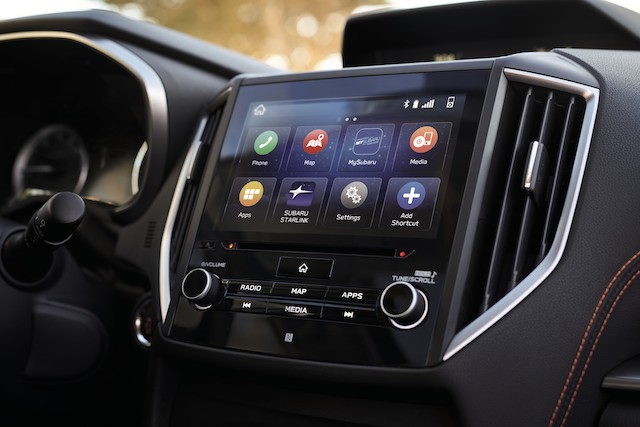
Many of today’s cars come equipped with liquid crystal display screens, better known as LCD. Just like other fluids, the molecules in these liquid crystals don’t move quite as fast when subjected to cold temperatures. Therefore, you’ll find your vehicle’s touchscreen to be sluggish and less responsive during the winter.

Solution: There’s little you can do to prevent this problem except wait for your car to warm up. The good news is that once the temperature rises, your screen will be humming along just like before.

Frozen Fuel Lines

Unless you live in the Arctic Circle, you likely will never need to worry about your gasoline freezing. However, any water moisture in the fuel lines can freeze, inhibiting fuel intake and preventing gasoline from reaching the engine.

Water can get into the lines if water vapor enters the fuel take. As the tank warms, the vapor undergoes condensation, creating water droplets that mix with the fuel and travel to the car’s engine.

Solution: Keep your gas tank as full as possible during the winter. There will be no room for air, or water vapor, if the tank is full of gasoline. Use a gas line antifreeze if you suspect there is water in the fuel tank.

winter car damage

Decreased Tire Pressure

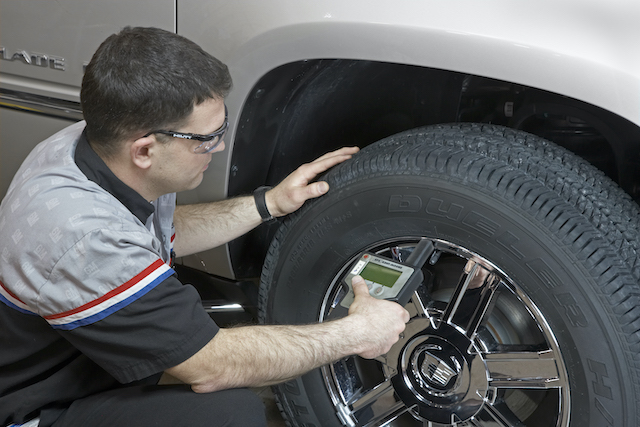
A common theme among cold-weather automotive problems is the issue of molecules contracting. As we’ve seen, this commonly occurs to a vehicle’s fluids, but it’s also true about air, as in the air in your tires. When the temperature drops, the air contracts and tire pressure decreases. Tires can lose between one-half and one pound of air pressure with every 10-degree dip in temperature. An under-inflated tire will wear down faster, negatively impact your car’s handling and fuel economy, and is more prone to a blowout.
Solution: While you can’t prevent your tire’s air pressure from dropping, you can prevent it from becoming a problem. It simply requires checking your air pressure more often and inflating your tires as needed.

Yes, you can wash your car during the winter. Here’s how

Damaged Undercarriage

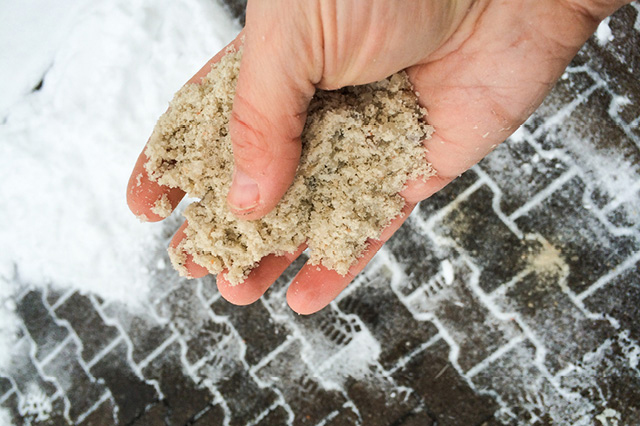
It’s no secret that the weather can wreak havoc on a vehicle’s exterior. But what’s out of sight is often out of mind, meaning your vehicle’s undercarriage can easily be forgotten about. This is particularly troublesome during the winter when snow, ice and salt can rust and corrode the metal components under your vehicle’s floor.

Solution: Make sure to clean the undercarriage when washing your car (which you should do at least monthly). Check out these tips on how to wash your car in winter.

Thick Motor Oil

Motor oil becomes thicker when the temperature drops and doesn’t circulate as easily. This makes the starter motor use more energy and the car’s oil pump work harder.

Solution: Your best bet is to switch to a low-viscosity synthetic oil. Consult your owner’s manual as the manufacturer may recommend a cold-weather oil.

Save your car from winter’s wrath with AAA Battery Service. Book your appointment today to have a AAA battery technician come to you, test your car battery and, if needed, install a new one.

Get more automotive maintenance tips or leave your questions in the comments below. 

Subscribe to Your AAA Newsletter

Sign up and receive updates for all of the latest articles on automotive, travel, money, lifestyle and so much more!

Your Guide to Common Snow Melt Solutions

As soon as the first snowflake falls, homeowners are already thinking about how to remove the ice and snow from their property. But did you know that snow melt solutions, especially rock salt, can damage your outdoor surfaces?

When spring arrives, and the effects of the brutal winter become more apparent, homeowners are often surprised to see pitted driveways, cracked walkways and deteriorated wood decking.

Here is our guide to the most common forms of ice melt, and the pros and cons of each, according to Consumer Reports.

Calcium Chloride

This is the fastest-acting ice melt of the bunch. If you’re a homeowner in a time crunch, this is the ice melt for you. But be cautious – calcium chloride can harm grass and plants when over-applied, and can cause minimal to moderate damage to asphalt and concrete.

Sodium Chloride

Also known as rock salt, sodium chloride is the most common – and inexpensive – choice. But it’s also the most likely to damage your concrete, asphalt, wooden, brick, stone and metal surfaces. It’s especially dangerous to newer concrete; Consumer Reports recommends that you don’t use rock salt on concrete less than 1 year old. In addition, rock salt is lethal to pets if ingested.

Magnesium Chloride

This is another snow melt to use if you’re pressed for time. It’s environmentally-friendly, safer for pets and more effective than rock salt. However, magnesium chloride can cause even more damage to asphalt or concrete than rock salt.

Potassium Chloride

Pet owners often choose potassium chloride because it’s one of the safer ice melt options. As far as benefits go, potassium chloride is more or less the same as magnesium chloride, but safer for your asphalt and concrete. However, exercise caution if you have a pet with kidney disease; ingesting this ice melt can be lethal to pets that suffer from the disease.

Urea/Carbonyl Diamide

This is also a common snow and ice melt for pet owners. It’s also the least likely to cause damage to your asphalt or concrete, and one of the most inexpensive options next to rock salt. However, it’s the least effective – with urea, you sacrifice efficiency for caution.

Discover more snow removal tools you need to survive the winter. 

Protect your home with homeowners insurance from AAA.

Subscribe to Your AAA Newsletter

Sign up and receive updates for all of the latest articles on automotive, travel, money, lifestyle and so much more!

On the Road Across the Canadian Border

I woke up in Bangor, Maine, on Sept. 20, 2021 with excitement for an adventure ahead, an open road to someplace new and an opportunity to use my passport for the first time in two years.

Canada had just opened to American tourists in August, and I was on my way from my Massachusetts home to see two provinces on a four-day trip.

The requirements for entering Canada were: 1. Download the Arrive Can app and upload pictures of your vaccination card; 2. Get a COVID test within 72 hours of your visit; and 3. Be willing to accept a random COVID test at the border and a rapid COVID test at the Prince Edward Island border.

It was with confidence and a backup plan that I got tested the previous morning and headed to Bangor for the night to wait for my results, which I received the next morning. I tested negative, and after a front desk clerk printed the results out for me, I was off to New Brunswick, Canada.

When Canada first reopened, the lines at the border were miles long. On this day in late September, I drove right up, showed my documentation, submitted to a random COVID test and was on my way. I was happy to get tested, I feel grateful that the Canadian government has a plan and protocol for letting us visit.

Inside Canada

My first stop was for coffee and a walk around St. Andrew’s by-the-Sea. Just over the border from Maine, St. Andrews, is a cute little village known for being Canada’s first seaside resort. Next stop was the largest city in the province, St. John. I had lunch and visited the three sites I had planned, the Reversing Falls, the city market, and Irving Nature Park. The stops were nice, but didn’t take me long, so I headed up the coast to Fundy National Park. In the little town of Alma, I got to see large fishing boats sitting on crates to keep them out of the mud at low tide. The tides here are so huge that the top of these boats was below the pier, amazing. The boats plan their daily fishing schedule based on the tides.

The next day I stopped at Hopewell Rocks, an iconic Bay of Fundy tide location. The tide is 46 feet here. I got lucky. Low tide was at 8 a.m. and I arrived in time for the 9 a.m. opening of the park.
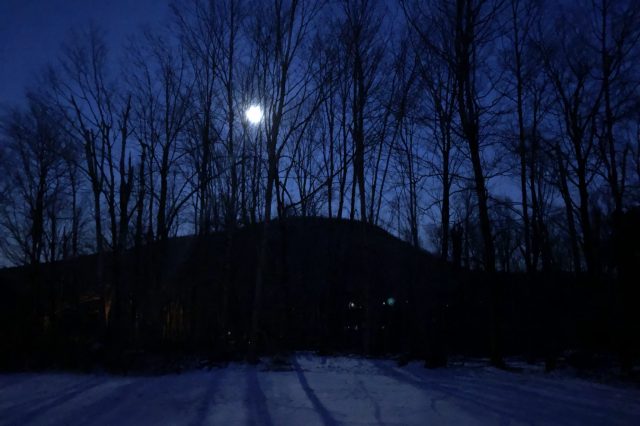
long bridge
A scenic view of the Prince Edward Island bridge in Canada.

Prince Edward Island

My travel style is get to where I’m going, see it, get back on the road. Just after 10 I was headed to Prince Edward Island. To get to PEI, I crossed an 8-mile bridge. It’s really something to see, it helped that the weather was perfect that day. Once across, I had to stop for a COVID rapid test. The island has kept COVID at bay with its ability to control who comes in. I did hear at dinner that there was a recent uptick in COVID, traced to a school, so they had put back in place mask mandates. Since I didn’t get a call about my rapid test, and my border test results came back negative (that’s three tests in three days for me), I was free to explore PEI.

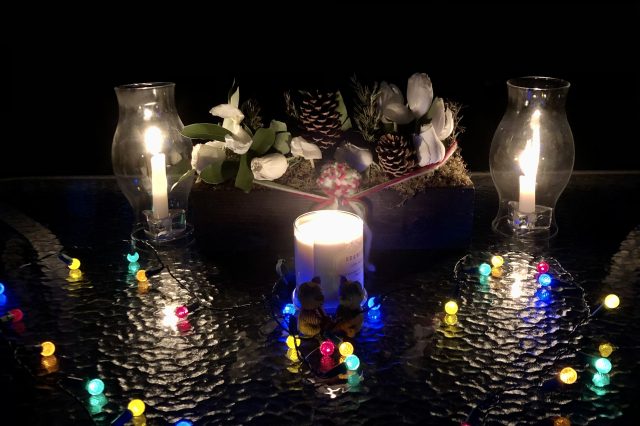
My wife has a friend who has spent a lot of time in PEI. Her husband emailed me a detailed list describing a three-hour drive I could take and get a good feel for the island. I followed the itinerary, starting with a restaurant in Charlottetown, where I probably had the best fish and chips ever. PEI is just amazingly beautiful, and it helps that the weather was perfect and there are not a whole lot of tourists around.

One of the things I couldn’t do last year on my “48 states in 48 days” trip is hang out and talk to people. That night I picked up some good information at a restaurant while having dinner. The first was from a guy who grew up on Prince Edward Island. When I told him I was thinking of driving to Cape Breton Island the following day, he said he had been there once in his life, during high school. His team had a sporting event, and they drove there overnight – it was five or six hours away. The second piece of information was that New Brunswick had instituted a new travel policy that day to cut down on COVID. Everyone had to apply to travel through the province.

I confirmed the distance to Cape Breton, and quickly ruled out trying to make it there and back to New Brunswick in one day. So, it’s now a destination for a future trip. On the second piece of information, I was able to download the form I needed, attach my vaccination record, and submit it to the province for approval to travel.

Now that I had extra time in Prince Edward Island, I went back over my list of things to see in and decided to backtrack on some of the places I missed. I don’t think I have ever been to a more picturesque place. Everything is just stunning from the color of the houses to the boats, to the landscape and the ocean. I was so glad that I slowed down to appreciate what was in front of me, rather than rush off to the next destination.

Back in New Brunswick

In Fredericton, New Brunswick, I had to show my vaccination card at the hotel and at every restaurant I went into. It is the capital of the province and a nice little city on the river. I walked along the river and crossed over on a bike bath converted from a rail line.

Do you think Canadian’s are nice? Yesterday before dinner, a guy walking down the street saw me about to put money in a meter, and he said “don’t waste your money. They don’t collect after 5.” I replied that the meter said to pay until 6 p.m. (It was 5:30.) He told me “don’t worry about it, they are all union and don’t work after 5.” The next day, as I was paying at another meter, a women walked by, pointed to a nearby parking lot and said: “It’s a lot cheaper, over there.”

My final day was the drive from Fredericton back to my home just outside of Boston, an easy six-hour drive. The roads in Canada are good and uncrowded at that time of year. I noticed they are not big on rest areas, but it was no problem finding gas stations and anything else I needed right off the highway.

If you are looking to use your passport, want to get the feeling of excitement for new places, and want to visit a nice area, I recommend New Brunswick and Prince Edward Island.

Subscribe to Your AAA Newsletter

Sign up and receive updates for all of the latest articles on automotive, travel, money, lifestyle and so much more!