Pump prices are slowly starting to rise across the Northeast as pricier summer-blend gasoline trickles into the market. But unusually light demand and broader concerns about the economy are tempering the increases.
Demand for gasoline settled at 8.6 million barrels a day last week, according to the Energy Information Administration (EIA) — down 174,000 barrels a day from the previous week and 72,000 below the comparable week of last year. That’s the softest demand figure for this time of year since 2022, and a key factor in the subdued seasonal rise in prices.
On the supply side of the equation, gasoline inventories in the Northeast remain above normal, standing at 61.6 million barrels — well above last year’s level as well as the five-year average, which were 58.2 million and 59 million barrels, respectively. There was a 1.2 million drop in barrel supply last week, according to EIA data. But demand wasn’t the cause; production is down as seasonal maintenance at regional refineries is ongoing.
Beyond supply and demand forces, concerns about tariff policies and inflation data that came in higher than forecasted last week are weighing heavily on crude and refined product prices.
“After trending down since January, pump prices across the Northeast are finally beginning to climb in line with seasonal expectations but remain well below what we were seeing this time last year,” said Jillian Young, director of public relations for AAA Northeast. “Compared to 2024, pump prices remain between 30 and 40 cents cheaper today.”
AAA Northeast’s March 31 survey of fuel prices found the current national average up 4 cents from last week ($3.12), averaging $3.16/gallon. The March 31 national average price is a nickel higher than a month ago ($3.11) and 37 cents lower than this day last year ($3.53).
Region
Current Price*
One Week Ago
One Month Ago
One Year Ago
Connecticut
$3.04
$3.01
$3.07
$3.44
Massachusetts
$2.97
$2.95
$3.02
$3.31
New Jersey
$2.96
$2.94
$3.01
$3.27
New York
$3.11
$3.10
$3.16
$3.44
Rhode Island
$2.95
$2.92
$2.99
$3.30
*Prices as of March 31, 2025
As of March 31, Mississippi and Oklahoma held the lowest prices in the nation, at $2.68 and $2.70, respectively.California and Hawaii held the highest prices in the nation at $4.80 and $4.51, respectively.
The AAA Gas Prices website is your resource for up-to-date fuel price information. Search for average gas prices on national, state and metro levels by regular, plus, premium and diesel.
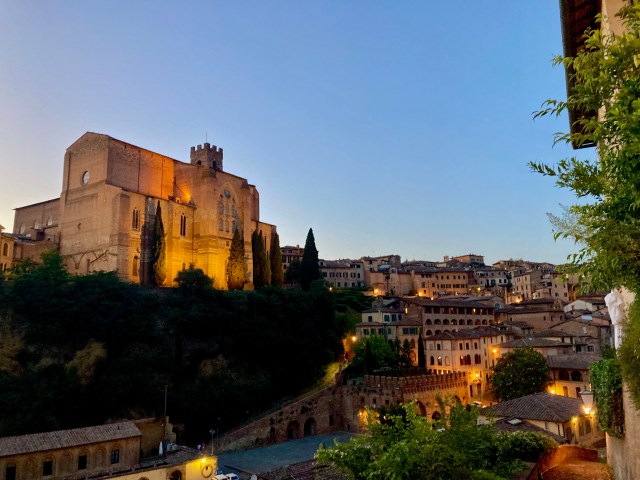
One balmy evening in Tuscany, my husband steered our rental car onto a rural road between clifftop Montepulciano and our farmstay for the night. The rugged hatchback rolled smoothly over narrow lanes bookended by rustic wooden fences. Pink clouds streaked across the sky. A summer breeze ruffled the tall grasses. As the Aperol-colored sun sank, we rolled the windows down and gaped at golden fields, stately cypress trees and Italian estates. I smiled and thought, “This. This is why I travel.”
More than anywhere else, travel in Tuscany feels like stepping into a sunlit postcard — only this visual treat is complete with the aroma of herbs, fresh cheese and the taste of a dozen vino della casas (wines of the day). It is holiday bliss. That’s probably why I’ve spent the last two summers road-tripping through the region.
If you also dream of driving through the rolling countryside of one of Italy’s most scenic regions, here are highlights from my Tuscany road trip to help inspire you.
Before any international road trip, I get my documents in order. For Italy, that includes a passport and an International Driving Permit (IDP). U.S. citizens can travel in Italy for up to 90 days without a visa.
IDPs are valid for only one year, so I’ve gone through several. Fortunately, the process is painless. Simply take a valid state driver’s license to my local AAA office, pay a $20 fee and that’s it! I can now legally drive in dozens of countries. AAA members can obtain an IDP at any AAA Northeast branch; AAA is the only authorized provider in the U.S.
For such a small region — slightly larger than New Jersey — Tuscany offers a bounty of villages and vineyards to explore. It would be possible to drive through in a day, but the best way to see Tuscany is to take it slow. Drink in the views, stop for roadside photos whenever inspiration strikes and plan to see just one or two towns per day. The joy is in the journey, after all.
Most road trips through Tuscany begin and end in Florence. It’s also possible to start in Florence, explore Tuscany, and dip south into Umbria on the way to Rome. No matter where the trip begins and ends, these Tuscany icons and lesser-visited gems shouldn’t be missed.
San Gimignano
It wasn’t love at first sight between San Gimignano and me. On our first Tuscany road trip, we visited this small, 13th century walled town for just one afternoon. The parking lots outside the walls were clogged with tour buses. Piazza della Cisterna, the central square, swarmed with crowds slurping melting gelato under the brutal summer sun.
But I gave this classic a second chance. On our last trip, we spent two nights at La Cisterna, an inn inside the city walls. What a difference! In the mornings and evenings, San Gimignano is another world entirely. The village wakes up slowly. At night, wandering the maze of streets centered around medieval towers feels like stepping back in time.
Certaldo
While staying at an agriturismo — a working farm with rooms to rent — outside San Gimignano, we asked our host where she would drive for a nice dinner. Certaldo, she said immediately.
The first treat in Certaldo was the cable car running from the modern town center to the compact, walled village above. Once we got to the top, all that was left to do was meander quiet cobblestone streets toward our host’s favorite restaurant: Ristorante L’Antica Fonte. We dined on fresh pasta and crisp white wine under an eave of foliage that made the restaurant feel like an enchanted garden. Clear views of San Gimignano across the valley were the cherry on top.
Montepulciano
When it comes to panoramic views, Montepulciano is hard to beat. The quintessential Tuscan town rises steeply from the main road. From afar, it looks like a formidable fortress. As we drove closer, the weathered, chalk-colored walls reflected the afternoon sun, and the pretty dome of the Sanctuary of the Madonna di San Biagio came into view.
The gardens, views and charming streets filled with shops and restaurants were worth the steep walk up in town. And it’s impossible to visit Montepulciano without enjoying at least one meal. Montepulciano is known for its local red wine, vino nobile, which pairs perfectly with one of my favorite Tuscan treats: pecorino cheese.
Siena
Siena is no hamlet — it’s a full-fledged Italian city with a massive, ornate cathedral and a distinct fan-shaped central square that hosts the twice-annual Palio di Siena, a storied horse race marked by much pomp and circumstance.
Like many Tuscan towns, Siena has a massive pedestrian zone. Parking can be challenging. In both 2022 and 2023, we found an empty spot at “La Stazione” paid parking only after circling the block for several minutes. But Siena is worth the wait. Its grand walkable streets are the perfect place to get lost for hours. I recommend hopping from a sunny pizzeria lunch to afternoon aperitifs to a sumptuous supper at one of the city’s five Michelin-starred restaurants.
If Hollywood made a movie set of a Tuscan village, it would look like Monteriggiono. Too small to be considered a town, the so-called commune consists of little more than a square that extends into three parallel streets. A perfect ring of medieval walls surrounds the tiny community. Still, it’s worth a visit — perhaps even an overnight stay — to stroll the cobblestone streets, pop into a handful of curated boutiques, and light a candle inside the small church. My perfect evening in Monteriggioni would include dinner at Ristorante Le torri Monteriggioni, where service is fabulously attentive, and a nightcap at uber-stylish Pit Stop 17.
Pienza
Located in Tuscany’s golden Val d’Orcia region, Pienza was the birthplace of Pope Pius II and was purportedly renovated to be “the ideal Renaissance town” in his honor. Beautiful wooden doors punctuate Pienza’s charming stone walls. The buildings practically drip with flower blooms in spring and summer, and cafes are located strategically to invite diners to drink in the views. We’ve twice stayed outside the town property. I vow to book one of the pretty terraced Italian rooms inside Pienza’s enchanting walls for our next Tuscany road trip.
Plan your road trip through Italy with a AAA travel advisor. Travel advisor services are included with your membership at no extra charge.
Looking for more European getaways? Click here to discover top destinations, trending vacations and more!
Refinancing your auto loan can be a big decision. You may be able to lower your interest rate and save money. However, in many cases, a new loan may cost you even more than the original.
Here are a few of the pros and cons of refinancing a car to help you decide if it is the right decision for you.
What Is Loan Refinancing?
Simply put, loan refinancing is replacing one loan for another. When you refinance, you are essentially paying off your old loan with money from your new loan, then repaying that new loan under its terms. There are several reasons you may choose to refinance depending on your personal circumstances and motivations. Typically, borrowers look to refinance their car if they believe they can qualify for a new loan with more favorable terms or they need to increase their immediate cash flow.
Pros
Lower Interest Rate
One of the most common – and financially beneficial – reasons to refinance your car loan is to reduce your interest rates. Interest rates can fluctuate depending on the market, so choosing to refinance your loan may simply come down to the fact that rates have lowered.
But the current market isn’t the only factor affecting interest rates. An important component lenders consider when calculating the interest rate they offer is the borrower’s credit score. This number helps financial institutions determine how likely you are to pay the loan back. Therefore, if you had a poor credit score when you took out your initial loan, your loan had a higher interest rate. Conversely, if your credit score has improved since then, you may qualify for a lower interest rate.
Lower Payments
If your financial situation has changed since you took out your original car loan and you are looking to lower your recurring expenses, refinancing could prove to be a good option. In this situation, a lender would offer you a new loan with lower monthly payments over an extended period. Essentially, you would be paying less money each month but over a longer time span. The downside of this, however, is that by extending the loan, the total amount you pay over the lifetime of the loan will increase (more on that below).
Increased Cash Flow
If you are in immediate need of cash, such as for a sudden home improvement need, a cash-out loan is also an option. This refinance option works if you currently owe less than what your vehicle is worth. You can then take out a new loan based on the equity of your car and pocket the money left over. For example, if your car is currently worth $12,000 and you owe $8,000, you have $4,000 in equity. A new loan would allow you to pocket the equity you have in your car.
There are some downsides to this option. Cars, unlike houses, are deprecating assets. Even if maintained well, a car will continue to lose value the longer you have it. This creates a possible pitfall of having an upside-down loan in which you owe more than what the car is worth. If you are involved in a crash that damages the car, the value will likely decrease drastically, making it even more likely that you go underwater on your loan.
Another consideration with cash-out loans is that interest rates tend to be much higher than with traditional car refinance loans. You’ll want to ensure that the total interest you will pay on the loan is less than the cash-out you receive.
Cons
Increase in Total Cost
Is refinancing a car worth it? It depends. If you need to lower your monthly costs, refinancing is a great place to start.
Lenders will generally will try to keep the original length of your loan. But if you have to extend the length for any reason, you may end up paying more over the life of that loan because interest will continue to be charged until the debt is fully paid. For example, if you have an $8,000 loan with a 5% interest rate paid over four years, you’ll pay a total interest rate of $843.25. If you extend your loan to six years, you will end up paying $1,276.44 in interest.
This may not be a problem if you are expecting to be in a better financial situation in the future or simply need a short-term influx of cash.
Higher Interest Rates
There’s no guarantee that you will be able to secure a lower interest rate when you refinance your car loan, particularly if you are refinancing in order to lower monthly payments or receive a cash-out loan. Because of this, you should review your auto loan at least annually to see if you can secure an interest rate lower than what you currently have. If you see a lower rate you may want to jump at the opportunity, even if you weren’t considering a refinance before. It’s better to get a good deal when you can rather than a bad deal when you need it.
You will also be susceptible to higher interest rates if you have an older car. Most lenders won’t issue a loan on an asset that has significantly depreciated in value. If they do, to make the deal financially viable, they will charge a higher interest rate.
Learn about refinancing options with AAA Auto Loans.
This article has been updated and republished from a previous version.
Gardening is one of the most satisfying pastimes. You dig around in the dirt a little bit, apply water and then — voila! — you have vegetables, greenery, herbs and flowers. Whether it’s spring, summer or fall, flowers can brighten up your garden or landscaping. But when is the best time to plant flowers? Our Northeast flower chart can help.
One of the first things you need to know when planting flowers is your planting zone. For the uninitiated, a planting zone is a way of measuring climate differences. The zones are based on the average annual minimum temperature in that area. You can find your zone here. There are around 11 planting zones in the US. Northeast planting zones range from 3 (cold) to 7 (mild), though most of the Northeast sits comfortably between zones 5 and 6. Only the very upper regions of New York, New Hampshire, Vermont and Maine get into the 3-4 range.
Sourced from the Old Farmer’s Almanac, our flower chart marks the zones in which certain flowers flourish, and it also notes if they’re annuals or perennials. Annual flowers, like impatiens, go through their entire life cycle in one planting period. If you want impatiens every spring, you have to plant them every spring. Perennial flowers, like peonies, have a longer life cycle. With proper care, they can return and flower year after year.
An important thing to note when consulting our flower chart is that most flowers do not do well in extremes. As you look over the flower chart, you’ll notice that almost all of the flowers thrive best when planted in either spring or fall. These mild, in-between seasons are perfect for growing strong and healthy flowering plants. Everyone knows you can’t usually plant flowers in winter, but the dog days of summer can be just as bad.
Sunflowers
Sunflowers are annual flowers that flourish in zones 2-11. (Although there are some smaller perennial varieties.) It is best to plant them after the last spring frost. Sunflowers look almost like huge daisies — some of them can grow over 16 feet in height! They are hardy plants that are easy to maintain. Sunflowers bloom in summer and early fall.
Zinnias
These annual plants grow best in zones 3-10. Like sunflowers, make sure to plant them after the last spring frost, and no sooner. Zinnias are great flowers for new gardeners, since they’re easy to plant as seeds and they grow very quickly. They bloom in summer and are beloved by butterflies.
Coneflowers
Coneflowers are perennials that grow in zones 3-9. These spindly purple flowers are best when planted in spring. Coneflowers bloom from June to October, adding a vibrant pop of color to your garden for many months. Like zinnias, they also attract butterflies.
Jacob’s Ladder
This perennial plant can grow in zones 3-8, and can be planted in either spring or fall. The vibrant purple flowers can bloom from late spring to early summer, and last up to four weeks.
Shasta Daisies
Shasta daisies are perennial flowers that can grow in zones 5-8. Like Jacob’s ladder, they can be planted in spring or fall. These flowers are classics of the garden, with white petals and yellow florets. Shasta daisies bloom in spring or early summer, and sometimes even flower through fall.
Lavender
This fragrant perennial grows in zones 5-9, and should be planted in late spring. Expect the signature fragrance to hit its peak when they bloom in late spring and early summer.
Roses
Roses are perennial flowers that can grow in zones 3-10. Plant your roses in late spring or early summer. There are many different types of roses, but they usually bloom on and off from spring to fall.
Black-Eyed Susans
These perennials thrive in zones 3-9. They should be planted in late spring or early summer, when the soil temperature reaches 70 degrees. Black-eyed susans brighten up any garden when they bloom throughout the summer.
Big-Leaf Hydrangeas
Big-leaf hydrangeas are perennial and they grow in zones 5-7. They can be planted in either spring or fall. Big-leaf hydrangeas are fascinating flowers that grow in an array of rich colors depending on the pH level of the soil. My hydrangeas blooms in shades of blue, purple and pink, so I truly have no idea what’s going on in my dirt. They bloom from mid-spring to early fall.
Tulips
Tulips are technically perennial, but generations of hybridization and human meddling has weakened their ability to come back year after year. Most gardeners treat them as annuals. Tulips can grow in zones 4-8. They should be planted in the fall, about 6-8 weeks before hard frost sets in. Tulips come in many varieties, but they usually bloom in spring.
Peonies
Peonies are perennial flowers that do best in zones 3-8. They are best planted from late September to early October, about six weeks before the ground freezes. These fat, fragrant blossoms flourish when planted in an area with direct sunlight. Once established, peony bushes are hardy plants with vast root systems. They bloom in late spring and early summer.
Get more tips for landscaping and gardening in the Northeast.
What are your favorite gardening flowers? Let us know in the comments below!
This article has been updated and republished from a previous version.
If you’re in the market for a new home, you’ve surely learned that the real estate landscape can drastically change in just a moment’s notice. Not long ago, houses would list and sell within days. Experts say that those days are behind us.
Financing a home has become costlier and buyers have become more cautious. With home sales slowing, many sellers have had to endure weeks and in some cases months of waiting as their properties sit on the market.
As of March 2024, the 30-year fixed rate mortgage (FRM) averages around 6.67%, according to Freddie Mac. To put it into perspective, the average 30-year FRM lingered around 3-4% ten years ago. While still high, it is an improvement from late October 2022, when the average rate was listed at at 7.08%, the highest in 20 years and more than double what it was at the same time the previous year. The spike led many potential homebuyers to hold off, lowering demand and pushing home prices down.
Despite the dark clouds facing homebuyers, an increasingly popular mortgage tool called a temporary buydown mortgage may be the silver lining. Steve Vieira, AAA Northeast’s director of mortgage operations and sales, says 2-1 and 1-0 options are “worth exploring and possibly beneficial for the seller and the buyer.”
How Does a Temporary 2-1 or 1-0 Buydown Mortgage Work?
“The first thing to be aware of is that the temporary buydown mortgage involves a cooperative seller,” Vieira said. “Before a qualified buyer locks in a fixed rate 30-year mortgage, the buyer or their realtor can approach the seller of the home or builder and negotiate a temporary buydown 2-1, or 1-0 mortgage.”
As its name suggests, a 2-1, or 1-0 temporary buydown mortgage allows the buyer to ease into their full fixed-rate mortgage fee. In a 2-1 mortgage, the first year of the buyer’s monthly payment is 2% less than the fixed rate. In the second year, the payment bumps up by 1% point. When the third year begins, the full fixed rate takes effect and remains for the duration of the loan. In a 1-0 buydown, the mortgage rate is 1% lower in the first year before increasing to the full rate in year two.
In each case, at closing, the seller pays the difference between the percentage points by depositing a lump sum cash deposit into an escrow account that is tied to the mortgage. Each time that the buyer makes a monthly payment, a withdrawal is made from the escrow account that brings the temporarily reduced payment up to the full loan rate.
Temporary Buydowns by the Numbers
When describing the benefits of a temporary buydown mortgage for a buyer, Vieira offered this example of a Northeast couple, buying a home with a 7% fixed $250,000, 30-year, 2-1 mortgage. This is how the numbers would play out for the buyers:
At closing, the seller or the home builder makes a $5,831.88, lump sum cash deposit into an escrow account that is tied to the buyer’s mortgage. This cash deposit equals the difference in the interest costs between the temporary buydown rate and the note rate.
The buyer’s full 7% monthly mortgage payment, including interest, is $1,663.46.
For the first two years of the loan, the buyers make monthly graduated loan payments.
In year one, the buyers make their 5% monthly mortgage payments of $1,342.05.
In year two, the buyer’s interest payments increase to 6% and their mortgage payments increase to $1,498.88 per month.
In the third year, the buyers pay the full 7% payment of $1,663.46. They continue to pay 7% for the life of the loan.
During the first year of their temporary buy down mortgage, the buyers saved $3,856.92
During the second year of their mortgage, they saved $1,974.96
The buyers total two-year savings equals $5,831.88, the same amount that the seller deposited into the escrow account at the time of the sale.
Benefits for Sellers and Buyers
As an increasing number of houses linger on the market for longer periods of time, the seller benefits by closing the sale in less time. Taking part in the temporary buydown mortgage may also save the seller money over time. It could result in a far lower expenditure than what it would cost to slash the sale price on the home. Time is money in real estate. If the house sits on the market for weeks or months, the seller may be forced to drop the price by significantly more than the temporary buydown escrow payment.
The buyers, meanwhile, can use the extra cash to purchase new furnishings, update their new house and take care of other expenses that come with a move. The house sells and the seller turns over the keys to the new owners.
Learn more about AAA’s temporary buydown mortgage program and how it can potentially save you thousands of dollars on your next home purchase.
*Disclaimer: All loans offered through AAA Northeast Bank. NMLS # 179871, AAA New Jersey Division Financial Services Inc. NMLS # 2495543 110 Royal Little Drive Providence RI 02904 (800) 446-6997. Licensed by the N.J. Department of Banking and Insurance. MORTGAGE BROKER ONLY, NOT A MORTGAGE LENDER OR MORTGAGE CORRESPONDENT LENDER. “We arrange but do not make loans.” Other rates and terms available. Rates and terms subject to change without notice. Some restrictions apply. All loans are subject to credit approval, appraisal and satisfactory title examination where applicable. Consult your tax advisor regarding the tax deductibility of interest. Other rates and terms available. Counseling may be required.
Northeast Pump Prices Hold Steady Amid Lackluster Demand, Market Uncertainty
Northeast gasoline prices have been relatively unchanged from last week amid an unexpected drop in demand and concerns about the potential for a slowing economy hanging over petroleum markets.
Domestic demand for gasoline last week fell a sizable 365,000 barrels a day to 8.8 million barrels a day, according to the Energy Information Administration (EIA). That’s a hefty week-to-week drop at a time of year that typically sees demand ride an incline through spring. Total product demand — which includes gasoline, propane and other oil-derived products — fell by 2.2 million barrels a day, the EIA reported.
Market prices for oil and gasoline did end last week slightly higher, after several moves by the Trump administration to increase pressure on Venezuela and Iranian oil production, which could reduce global availability of crude oil. The Treasury Department on Thursday issued penalties against a Chinese refinery for allegedly buying Iranian oil that is under U.S. sanctions. That action came on the heels of the Trump administration earlier this month revoking Chevron’s license to pump oil in Venezuela.
In the Northeast, gasoline inventories tightened last week on reduced output from Phillips 66’s refinery in Bayway, New Jersey, which is amid seasonal maintenance to switch to producing summer blended fuel. Stocks in the Northeast now sit at 62.9 million barrels, down 2.4 million barrels from last week but above last year’s figure of 60.9 million barrels.
“As gasoline prices remain relatively flat across the Northeast, the gap between pump prices this year and last year continues to widen,” said Jillian Young, director of public relations for AAA Northeast. “In some areas, prices are between 30 and 40 cents cheaper than this time last year.”
AAA Northeast’s March 24 survey of fuel prices found the current national average up a nickel from last week ($3.07), averaging $3.12 gallon. That national average price is 2 cents lower than a month ago ($3.14) and 41 cents lower than this day last year ($3.53).
As of March 24, Mississippi and Oklahoma had the lowest prices in the nation, at $2.66 and $2.69, respectively. California and Hawaii held the highest prices in the nation at $4.64 and $4.51, respectively.
The AAA Gas Prices website is your resource for up-to-date fuel price information. Search for average gas prices on national, state and metro levels by regular, plus, premium and diesel.
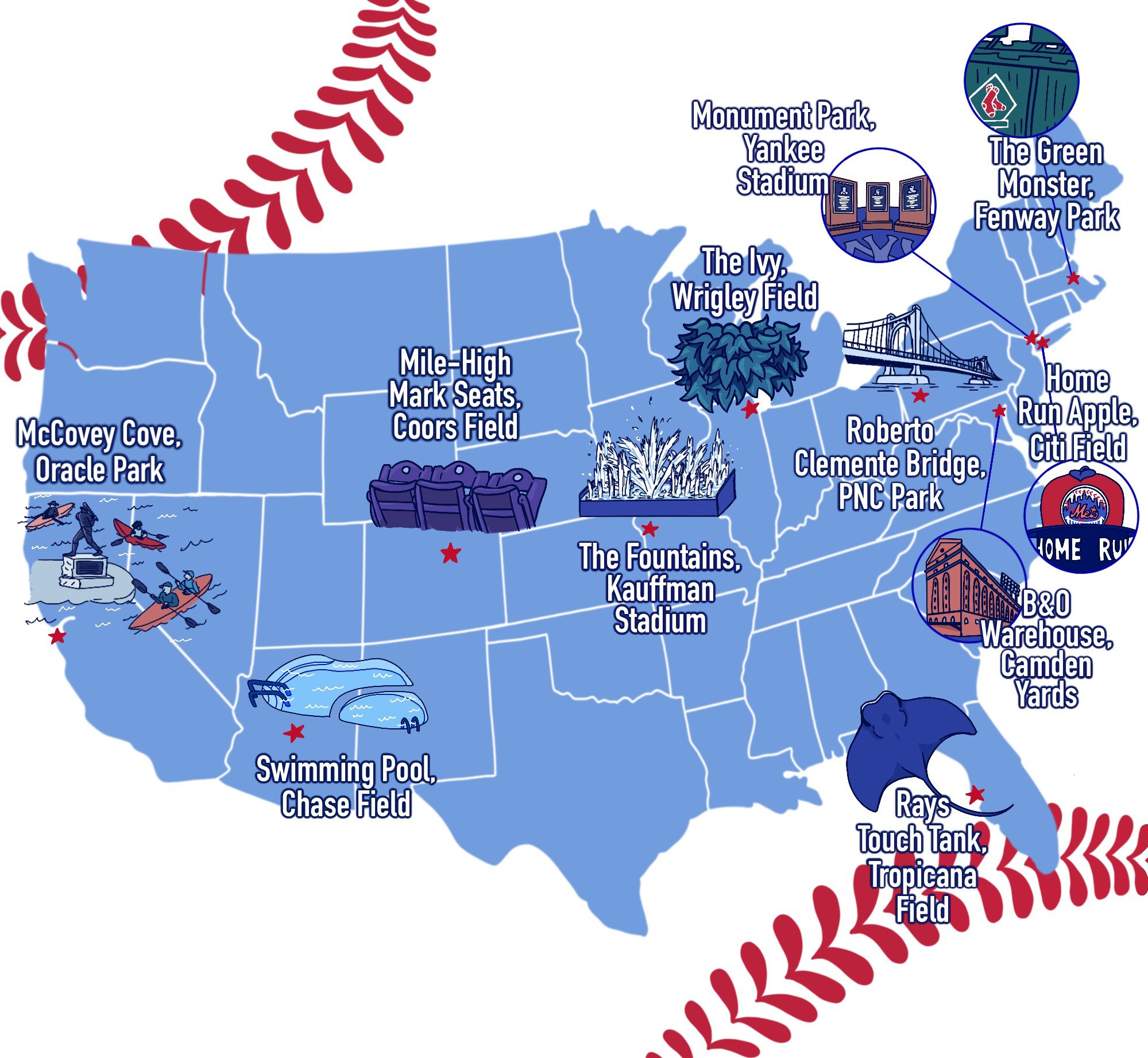
Few experiences are more enjoyable for sports fans than a trip to the ballpark. But the action on the field is not always the biggest draw. Sometimes, it’s the stadium itself that is worth the price of admission.
Whether it’s a signature aesthetic or noteworthy attraction, a century old or recently debuted, you can find these iconic baseball stadium features across the country.
(Illustration: Sarah Hopkins)
The Green Monster
Fenway Park
Boston
Towering more than 37 feet high, Fenway’s iconic left-field wall is likely the most recognizable stadium feature in all of baseball. Seats were installed atop the Green Monster in 2003, providing lucky fans with a one-of-a-kind view of the game.
With a record number of Hall of Famers as well as countless other greats who have helped win a Major League-best 27 World Series, the Yankees have a plethora of legendary players worth honoring. They do so at Monument Park, located just beyond the center-field fence. The museum is free and open to guests prior to each home game.
Since 1980, the Home Run Apple has been popping out of its resting place behind the center-field wall every time a Mets player hits a homer. When the team moved into Citi Field in 2009, the original apple was installed just outside the park, while a new, twice as tall apple took its place.
Constructed by the Baltimore and Ohio Railroad, the 1,000-foot-long warehouse has been standing in its place since 1905. When Camden Yards opened next door in 1992, the red-brick building became a signature feature of the stadium’s trendsetting retro-style aesthetic.
The Roberto Clemente Bridge
PNC Park
Pittsburgh, Pa.
The Roberto Clemente Bridge, named after the Pirates’ Hall of Famer, is an unofficial yet unmissable part of PNC Park. Spectators have an unimpeded view of the bright-yellow overpass that spans the nearby Alleghany River. The bridge is closed to cars during Pirates’ home games, giving fans a pedestrian path to the stadium.
The Ivy
Wrigley Field
Chicago, Ill.
Boston ivy has adorned the outfield wall of Wrigley Field since the 1930s. Installed to help make the stadium more of a destination, the foliage remains one of the most iconic baseball stadium features to this day.
The Water Spectacular
Kauffman Stadium
Kansas City, Mo.
The 322-foot-wide water spectacular, consisting of waterfalls and fountains, has been entertaining Kansas City fans for decades. Upon opening, it was largest privately funded fountain in the world.
Rays Touch Tank
Tropicana Field
St. Petersburg, Fla.
Part attraction, part educational exhibit, the touch tank is the 10,000-gallon home of a fever of cownose stingrays, the same species found in the waters of Tampa Bay. The animals are cared for by staff from the Florida Aquarium. Fans can visit the tank throughout the game.
The Purple Seats
Coors Field
Denver, Colo.
In the thin air of Coors Field’s upper deck, you’ll find a distinctively painted row of purple seats. This row is 5,280 feet above sea level, exactly a mile high.
The Swimming Pool
Chase Field
Phoenix, Ariz.
Cool off in the desert with a dip in Chase Field’s swimming pool. The 8,500-gallon tank, located just beyond the right-field fence, has been a staple of the Arizona ballpark since it opened in 1998.
McCovey Cove
Oracle Park
San Francisco, Calif.
The unofficial name of San Francisco Bay located just over Oracle Park’s right-field wall, McCovey Cove is named after former Giants’ great Willie McCovey. On game days, the water is filled with boaters and kayakers waiting for a chance to scoop up a home run ball.
For more tips and recommendations on things to see, do and eat in and around all three Northeast Major League Baseball stadiums, be sure to check out our full Northeast Baseball Guide.
Tell us about your favorite iconic baseball stadium in the comments.
Minor league baseball can be a less expensive, more entertaining alternative to major league games. Plus, teams are located in distinctly unique cities, ideal for exploring.
Some may say the smell of the flowers’ bloom is Mother Nature’s decree that spring has sprung. Others may simply chalk it up to a groundhog’s prediction. But to many, the true signaling of spring’s arrival is neither a smell nor a sight, but a distinctive sound: the crack of the bat.
Baseball season has arrived to wake us all out of our winter slumber. And while the major league gets most of the attention, minor league baseball games can often be a more enjoyable (and practical) experience. Because they’re not the biggest draw in the sports world, minor league games cater to the fans, offering inexpensive tickets, family-friendly entertainment and eccentric promotions.
Plus, minor league baseball cities are often smaller, unique and distinctively charming. Here are six such locations in the Northeast worth traveling to.
Sahlen Field helped usher in a new wave of stadium design that has become prevalent throughout the major leagues. (Photo: Buffalo Bison)
Buffalo, N.Y.
Home of the Buffalo Bisons (Toronto Blue Jays Triple-A team)
Buffalo is the second-largest city in New York, so there’s plenty of attractions no matter what form of entertainment you’re seeking. If visiting Niagara Falls is on your bucket list, this is the time to cross it off the list. The state park is just a 20-minute ride away.
Buffalo is one of the few minor league baseball cities that is also home to other professional sports teams, the Buffalo Sabres and Buffalo Bills. While the Bills’ season doesn’t start until the fall, depending on the time of year you visit, you may be able to take in a hockey game and make it a fully sports-themed trip.
Make sure to include a visit to the Martin House on your itinerary. It was designed by Frank Lloyd Wright for wealthy Buffalo businessman Darwin D. Martin. Consisting of six interconnected buildings, the complex is considered to be amongst Wright’s finest achievements. It was designated a National Historic Landmark in 1986. Wright designed several residential and recreational buildings in Buffalo, all of which are available to tour.
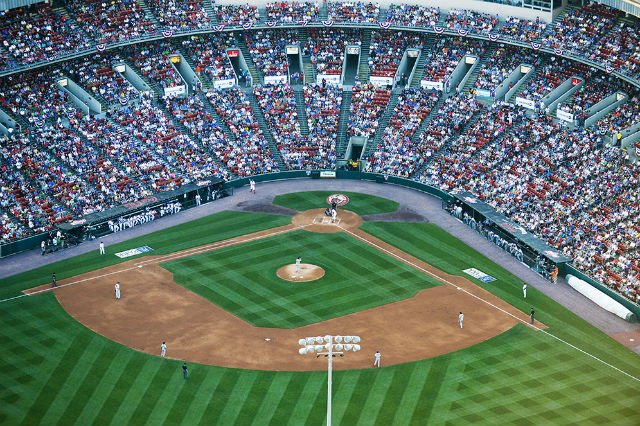
Speaking of architecture, Sahlen Field, home of the Bison, is one of the most significant ballparks in all of baseball, even if it is relatively unknown to most fans. Built in 1998, Sahlen Field was designed by the architect firm HOK Sport as one of the first retro-classic stadiums, a style that features distinctive aesthetics and architecture, and a location within the downtown area. A few years later, the same firm constructed Oriole Park at Camden Yards, kicking off a new wave of ballpark design that has become commonplace across major league baseball.
One could spend a whole afternoon simply wandering the Coney Island boardwalk and only scratch the surface of things to do. But there are a few must-see attractions. One of those is Luna Park, an amusement park home to dozens of rides, games, shops and dining options. And don’t forget to take a ride on the Cyclone. Built in 1927, the Cyclone is the country’s oldest wooden roller coaster still in operation. After you work up an appetite, head to the corner of Surf and Stillwell for a hot dog from the original Nathan’s Famous location.
Another top Coney Island attraction is the New York Aquarium, home to 8,000 animals including penguins, seals and a variety of shark species. If you’re in the mood for some music, head to the Ford Amphitheater. Since opening in 2016, the venue has played host to a who’s-who of musical acts including the Beach Boys, Sting and Peter Gabriel.
The Cyclones play at MCU Park, steps away from the boardwalk. The park opened in 2001 and marked the return of pro baseball to the borough of Brooklyn for the first time since the departure of the Brooklyn Dodgers in the 1950s. It’s hard to beat the view at MCU Park, as the Atlantic Ocean dominates the skyline (and brings in some cool ocean breezes during the summer) and the famous Parachute Jump ride towers over the right-field wall.
Tucked away in the picturesque Hudson Valley, two hours north of New York City, sits the town of Wappingers Falls.
One of the area’s can’t-miss spots for culture lovers is Dia: Beacon. Opened in 2003 in a former Nabisco box printing factory, the museum presents the Dia Art Foundation’s collection of art from the 1960s to the present, as well as special exhibitions and public programs.
Just to the north of Wappingers Falls in Poughkeepsie, another kind of tourist attraction lets you enjoy the great outdoors. Built on a converted railway bridge, Walkway Over the Hudson allows guests to traverse the Hudson River. The site welcomes 500,000 visitors each year who walk, bike and run amidst its scenic beauty.
The Renegades play in Dutchess Stadium. Built in just 71 days in 1994, the stadium has also hosted numerous concerts over the years. Performers have included none other than Bob Dylan and Bruce Springsteen.
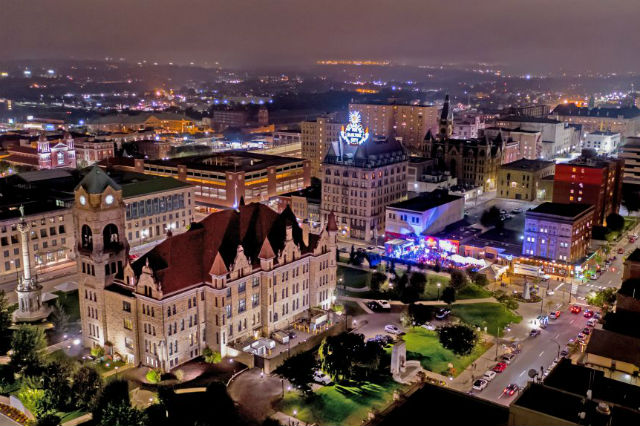
Scranton is more than just the home of Dunder Mifflin Paper Company. The northeastern Pennsylvania city played an important role in American history, one you can learn all about with a visit to the Electric City.
In the mid-1800s, brothers George and Seldon Scranton combined several smaller railroads to form the Delaware, Lackawanna and Western Railroad. This turned Scranton into a transportation hub. This history is immortalized at the Steamtown National Historic Site, a museum dedicated to Scranton’s railroad history.
Scranton also has a storied history in other trades that helped industrialize America. The Anthracite Heritage Museum showcases the story of coal mining, its related industries and the immigrant culture of northeastern Pennsylvania. For the brave of heart, you can also tour a coal mine originally opened in 1860. You’ll take a mine car down 300 feet to explore the winding underground rock tunnels and learn about the methods used in deep mining’s history.
When you get above ground, you’ll be happy to breathe the fresh air at PNC Field, home of the RailRiders. The stadium opened in 1989 and received a $40-million renovation in 2013.
Manchester lies along the Merrimack River in southern New Hampshire. One of its top tourist attractions is the SEE Science Center, which offers interactive exhibits for people of all ages. A particular highlight is the LEGO Millyard, which recreates Manchester’s Amoskeag Millyard as it might have looked circa 1900. It is the largest permanent LEGO installation at mini-figure scale in the world.
The Currier Museum of Art features European and American works by the likes of Picasso, Monet and O’Keeffe. It also offers tours of the Frank Lloyd Wright-designed Zimmerman House. The property is the only Wright-designed building in New England open to the public. If you’re looking for a show or concert, two of the area’s premier entertainment venues are the SNHU Arena and the Palace Theatre.
Located on the shore of the Merrimack River in downtown Manchester, Northeast Delta Dental Stadium has been home to the Fisher Cats since it opened in 2005. The 6,500-seat venue has an open concourse, allowing guests to see the game action wherever they are. In 2008, the Samuel Adams Brewhouse opened just beyond the left-field wall. The bar and restaurant is open before and during home games. A $1 million stadium renovation in 2017 added a state-of-the-art live music stage, a Tiki Bar and a rock waterfall at the top of the main entrance stairs.
Thoughts of Maine often conjure up images of scenic coastlines, and the seaside town of Portland brings those visions to life. A walk along Commercial Street lets you explore a working waterfront and dip into a restaurant of your choosing for another Maine staple: fresh seafood.
And when you need a beverage to wash down the delectable fare, you’ll soon discover you’re in the perfect town. Portland has become one of the country’s craft brewing epicenters. There are a host of local breweries all worth a visit including Allagash, Rising Tide and Shipyard, just to name a few.
If it’s a more high-brow experience you’re after, head on over for a tour of the Wadsworth-Longfellow House, where the iconic poet Henry Wadsworth Longfellow grew up.
When you’re ready to watch the Sea Dogs, Hadlock Field is a great setting to catch a game. The park takes a cue from Maine’s picturesque surroundings with a lighthouse that rises from the centerfield fence every time a Sea Dogs player hits a home run and when the home team wins. The stadium’s most prominent feature, however, is the “Maine Monster” in left field, a nod to the famed “Green Monster” at Fenway Park.
Need a ride to the ballpark? AAA members can save on Hertz rentals.
You are finally ready to buy a house and like most folks, you need a mortgage. Traditionally, big banks beckon, but increasingly people are seeking out mortgage brokers for more personal attention and expedited service.
Mortgage brokers work as intermediaries between homebuyers and lenders to find customers the best mortgage for them.
Consumer appetite for mortgage brokerage services has been growing and is anticipated to increase significantly in the coming years, according to a forecast by Allied Market Research.
The demand for mortgage products is highly dependent on the loan interest rates and housing market, according to Steven Vieira, AAA Northeast’s director of mortgage sales and operations. “Although both are severely depressed right now, it’s expected to turn around dramatically in the summer when the Federal Reserve begins to lower interest rates for the first time in several years,” he added.
When you compare AAA mortgage brokers to big banks, the two experiences are vastly different. “We have wholesale rates versus the retail rates,” Vieira explained. “Big banks have behind-the-scenes costs. We can access those same programs without the extra costs.”
AAA is paid by the lender for its services, Vieira said. “This covers our expenses.” The borrower still has traditional closing costs like attorney’s fees, title insurance, appraisals and recording fees.
Choices Make Choosing a Mortgage Easier
The biggest advantage of mortgage brokers is they have access to a variety of lenders and can compare rates, terms and other factors. When people apply for a mortgage with a bank and they don’t get it, they need to find another bank and apply again, which eats up valuable time.
In Vieira’s case, if the first mortgage application he submits to a lender is not approved, he simply goes to the next lender on his list. “When buying a house, the most important thing is not the rate and closing costs, but if a lender is going to approve you,” Vieira continued. “A lot of first-time homebuyers are concerned about rate, but you want to know if a lender is going to deliver an answer to you quickly and easily, because you need to have everything ready quickly.” If the loan application is delayed or rejected, the buyers run the risk of losing the house they had their eyes on.
“The biggest thing to do is to get preapproved for a mortgage,” noted Vieira. “Sellers move fast, and you have to have your financing set.”
Learn more about how to be the best mortgage candidate.
Get Extra Help
AAA loan officers also assist members by participating in regular free homebuying webinars, where members get advice on what to look for when buying a house and ways to prepare before making an offer. “We look at the entire process,” Vieira said. “Buyers have to do more themselves now and it’s good to bring along someone who knows what to look for.”
Mortgage brokers are required to keep up with industry regulations. New requirements for mortgage brokers were developed after the 2007-2009 financial crisis, when thousands of foreclosures flooded the market, primarily due to banks and brokers approving home loans people could not afford.
Now brokers now need to take courses to earn certification, and according to Vieira, are held to a high standard. “With a mortgage broker, the federal government wants to make sure the education is up to par.”
Regulations passed after the housing market collapsed in 2009 outlawed many subprime mortgages, established separation between the appraisers and the lenders and created a licensing and registration system for all loan officers, according to Vieira. “The reforms have stabilized the mortgage industry and made it much more resilient against challenges,” he said. “When you look at the whole industry today, it’s so much better than before.”
Casinos, once mostly part of the Nevada landscape, can now be found throughout New England and the country. As gambling has gone mainstream, casinos have evolved to become vacation destinations, and many offer family-friendly attractions right on sight. However, if you’d rather step away from the casino grounds for the day, you can find many fun attractions a short drive away.
Here we share popular attractions near southern New England casinos and in New Jersey and New York casino towns.
Less than a dozen miles separate Connecticut’s two biggest casinos, Foxwoods Resort Casino in Mashantucket and Mohegan Sun in Uncasville. Both can be found in the southeastern part of the state, less than an hour’s drive in good traffic to the picturesque seaport town of Mystic.
In Mystic, you can explore aquatic life at the expansive Mystic Aquarium and geek out on the state’s seafaring history at the Mystic Seaport Museum. Another nearby museum focuses on a different class of ship: submarines. The Submarine Force Library and Museum in Groton houses the world’s first nuclear-powered submarine, the USS Nautilus, as well as many other submarine artifacts. For something different, try the kid-friendly entertainment at Nature’s Art Village in Oakdale. The village hosts a dinosaur sculpture trail and mini golf during the warmer months and hands-on gem mining and shopping year-round.
There are enough Boston-based attractions near Encore Boston Harbor casino in Everett to make the casino the day trip and Boston the main attraction. Further west, the attractions found just a few blocks away from the MGM Springfield casino should not be overlooked. Springfield is the birthplace of basketball and where you can find the Basketball Hall of Fame. Here, you can see exhibits and artifacts of basketball’s history and marvel at the stats of the hall’s inductees. Also, within city limits is Springfield Museums, which offers access to five downtown museums for the price of one admission. The biggest draw of the five may be The Amazing World of Dr. Seuss Museum, with plenty of colorful, hands-on exhibits. For roller coaster lovers, Six Flags New England is just south of Springfield. The much quieter Yankee Candle Village, in nearby Deerfield, gives you the chance to make your own scented, wicked concoction at the candlemaker’s flagship store.
Rhode Island
Because of Rhode Island’s small size, all of the Ocean State’s attractions are relatively close to Bally’s Twin River Casino in Lincoln (and the smaller Bally’s Tiverton). At Twin River, you can find R1 Indoor Karting Entertainment Center, which offers indoor go-karts, complicated escape rooms and axe throwing. Head south to Providence to explore Roger Williams Park, which hosts a zoo on 40 acres, a botanical center (open during warmer months) and a museum of natural history and planetarium. The RISD Museum showcases some 100,000 pieces of fine art and design, and you are sure to find many Brown University and Rhode Island School of Design students studying the artwork there.
Casino Weekend Getaways in New York and New Jersey
New Jersey
The Garden State has nine casinos, all located in Atlantic City. Many have their own entertainment options. Should you want to step away from the casino, Steel Pier offers an urban amusement park for all ages that overlooks the ocean. If the saltwater calls, hop aboard a boat with Atlantic City Cruises to view the shoreline and spy Atlantic bottlenose dolphins. There are several wineries located fewer than 30 miles from downtown, including Renault Winery & Resort. This winery, one of the oldest in America, also has a hotel, fine dining and a sculpted golf course.
New York
New York has 34 casinos spread throughout the state, according to the American Gaming Association. Here we highlight two.
Located between Syracuse and Utica is Turning Stone Resort Casino in Verona, which offers more than 120,000 square feet of gaming and plenty of entertainment options. To the east, history buffs might enjoy Fort Stanwix National Monument in Rome, located at a historically important convergence of regional waterways. To the west, you can explore the International Boxing Hall of Fame in Canastota, which has an annual induction ceremony. Turn north to explore nearby Oneida Lake and stop by the cozy Sylvan Beach Amusement Park in warm weather for some family-friendly thrills.
Downstate in the Catskills, Resorts World Catskills Casino in Monticello offers 100,000 square feet of gaming. Fewer than 2 miles away, the Kartrite Resort & Indoor Waterpark offers year-round aquatic fun at New York’s largest water park, as well as plenty of other family-friendly entertainment. About 20 miles west of the casino, you can explore two beautiful lakes at Lake Superior State Park. You can also take a walk through the history of the Woodstock music festival and the flower power generation at the Bethel Woods Center for the Arts museum.
For such a small state, Rhode Island is surprisingly big on food. The birthplace of New England favorites like stuffies and johnnycakes, the Ocean State also boasts quite a few of its own culinary specialties, indigenous to its tiny corner of the world.
From doughboys to Del’s lemonade, tradition is at the heart of all signature Rhode Island foods, earning them a dedicated fanbase of anyone who’s ever experienced a clam shack pit stop on a lazy beach day or late nights that ended with New York System hot wieners served “all the way.”
Learn about these and more as we highlight our top 10 favorite Rhode Island foods and where to get them. Prepare for lots of New England flavor and seafood, lots of clams, heaps of tradition and plenty of delicious excuses to pack up the car and go.
If you thought fried calamari was already addictive, you haven’t tried it Rhode Island-style. Made with squid freshly fished from the surrounding waters, the crispy battered rings and tentacles get a flavor boost from a quick toss with garlic, butter and the vinegary kick of pickled cherry peppers. From the mouthwatering first whiff to the savored last bite, the dish is completely hard to resist and so revered that it was named the official state appetizer of Rhode Island in 2014.
Where to try it:
Hemenway’s, Providence. This classic Rhode Island seafood restaurant is consistently ranked among the top spots for calamari. Its central location to Providence attractions including the RISD Museum and the Rhode Island Convention Center makes it even more appealing.
Twin Oaks, Cranston. Bringing a friend to Twin Oaks to try the calamari is kind of like saying “try my mom’s.” Family-owned since 1933, it’s been around long enough to feel like family. The waterfront views aren’t bad either.
The Capital Grille. Good news for anyone who can’t make it to Rhode Island every time a calamari craving strikes – the Capital Grille serves Rhode Island-style calamari at its locations across the country as a nod to its roots at Union Station in Providence.
Clam Cakes
A staple of Rhode Island’s many beach and roadside clam shacks, these fried dough fritters are crispy on the outside, soft on the inside and traditionally stuffed with meaty Rhode Island quahogs (aka the state’s official shellfish). They are best served hot and often come beside a bowl of Rhode Island clam chowder (more on that later), in which they are ideal for dunking.
Where to try it:
Aunt Carrie’s, Narragansett. Some say that Aunt Carrie was the inventor of clam cakes, but there is no hard evidence to prove it. No matter what, it’s a local favorite near the beach. Open seasonally.
Monahan’s Clam Shack, Narragansett. Another casual walk-up shack, located on the Narragansett seawall. You can’t beat clam cakes and chowder while watching the sunset over the water at one of the outdoor tables on a summer night. Don’t forget ice cream after! Open seasonally.
Stuffies
We told you there were going to be a lot of clams on this list. And no list of Rhode Island foods would be complete without mentioning stuffed quahogs, affectionately referred to as stuffies by the locals. Baked and served on the half shell, these clam shack favorites are typically made with a mixture of celery, onions, clams, bacon, breadcrumbs, chopped clams, clam juice and seasonings. Every place has their own spin; the fun part is trying them all.
Where to try it:
Anthony’s Seafood, Middletown. Anthony’s serves both hot and mild versions made with either roasted or cherry peppers. Like many variations, the stuffing includes Portuguese chourico sausage, influenced by Rhode Island’s large Portuguese population.
Amaral’s Fish and Chips, Warren. Fresh and simple. If you’re looking for a taste of the classic, try these.
Flo’s Clam Shack, Middletown (Clam Shack) and Portsmouth (Drive-In). The stufffies here are known to be so big that they need to be contained with a rubber band. Open seasonally.
Rhode Island Clam Chowder
Unlike creamy New England clam chowder or the tomato-based Manhattan version, Rhode Island clam chowder has a clear broth, putting all of the focus on the clams (quahogs, of course!) Big chunks of tender potatoes, herbs and bacon make up a hearty bowl of what may very well become your new favorite type of clam chowder.
Where to try it:
Evelyn’s Drive-In, Tiverton. This clam shack on Nanayuaket Pond serves all the staples, including this local favorite.
Matunuck Oyster Bar, South Kingston. A bowl of chowder is always a good place to start before sampling some of the freshest shellfish around. The oysters at Matunuck are fished right from the waters of the restaurant owner’s nearby oyster farm.
Hot wieners, also known as New York System wieners, are what Rhode Islanders crave. Served at diners throughout the state, they are more than your average hot dog; in fact, you’re better off not calling them hot dogs at all. And don’t put ketchup on them either. These small sausages made with pork, veal and spices are typically ordered “all the way,” with onions, yellow mustard, celery salt and a seasoned beef sauce. Wash it all down with a cold glass of coffee milk (keep reading to learn more) and you’ve got quintessential Rhode Island late-night munchies.
Where to try it:
Olneyville New York System, Providence and Cranston. Winner of the James Beard Foundation America’s Classics Award in 2014, Olneyville sets the standard for hot wieners.
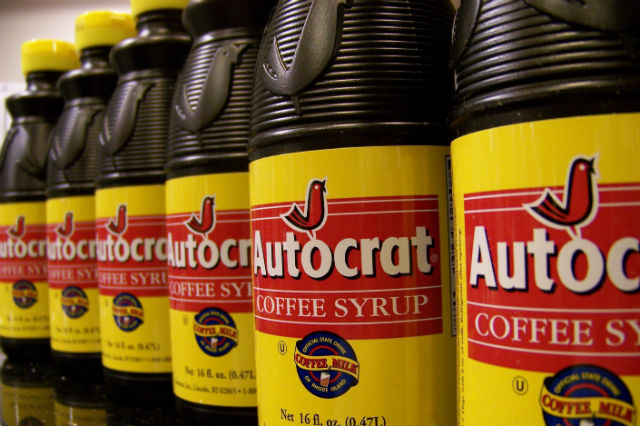
A hot wiener’s best companion. Yet another one of the Ocean State’s “officials,” the designated state drink of Rhode Island is one that not too many people have heard of elsewhere, at least by the same name. Like chocolate milk, coffee milk is made by stirring coffee-flavored syrup into milk. Add coffee ice cream to the mix and you have another uniquely Rhode Island beverage: the coffee cabinet. Try one of the milkshakes at Newport Creamery locations throughout the state where it is called an Awful Awful or at Delekta Pharmacy in Warren, which has been serving the treat at its soda fountain for over 100 years.
Where to try it:
At most diners/hot weiner spots … like Olneyville New York System.
Make it yourself. You can purchase coffee syrup in most general stores and supermarkets throughout Rhode Island. Autocrat and Eclipse are the most famous brands.
Del’s Frozen Lemonade
Nothing says summer on Rhode Island like Del’s frozen lemonade. It comes in flavors like orange, watermelon and blueberry, but true Del’s enthusiasts know that it’s all about the classic lemon. Frosty, sweet and tangy, it strikes the perfect balance between slushy and Italian ice — no straw or spoon required. It’s one of the most refreshing things that you can have on a hot day.
Where to try it:
In the summer you can find Del’s stands and trucks all throughout the state. Most are only open seasonally, but you can also make it yourself in the off-season with their make-at-home packets.
Rhode Island’s version of a beignet, a doughboy is simply a square of dough that’s been fried and dusted with either granulated or powdered sugar. Best enjoyed still warm from the fryer. Available at pizzerias and clam shacks throughout the state.
Often the most anticipated guest at any Rhody get-together, some might say that it’s not a party without pizza strips. Unlike traditional pizza, this unique-to-Rhode Island specialty is sold at bakeries and features a thick, airy crust topped with tomato sauce and not much else, except for maybe a sprinkle of parmesan or herbs on top. There’s no mozzarella cheese on this pizza.
Where to try it:
D. Palmieri’s Bakery, Johnston. A staple of children’s birthday parties, cookouts and game nights, D. Palmieri’s “party pizza” is in the highlight reel of many Rhode Islander’s most memorable moments.
Rhode Islanders are passionate about all of their foods, but perhaps none are as hotly debated as johnnycakes. From how to spell their name (jonnycakes or johnnycakes?) to how to make them (milk or water), to whether they should be thick (South County-style) or thin (Newport County-style), the unleavened cornmeal pancakes are notorious for causing arguments. Two things are for sure — johnnycakes are a tradition that started with Native Americans and have been around longer than any of us, and whether you enjoy them like pancakes for breakfast, as a side dish with dinner or lunch, or even for dessert, they are delicious.
Where to try it:
Kenyon’s Grist Mill, Usquepaugh. Kenyon’s Grist Mill is the world’s largest manufacturer of Johnny Cake Meal. Try a sample on one of their tours or at the annual Johnnycake Festival in West Kingston.
Commons Lunch, Little Compton. Crepe-thin is how they make the johnnycakes at this long-time establishment.
What are your Rhode Island foods? Did your favorite make the list? Tell us in the comments!
This article has been updated and republished from a previous version.
Life insurance is crucial to providing a safety net for your loved ones in the event of your death. Understanding the do’s and don’ts of life insurance ensures that you make informed decisions that align with your financial goals and family’s needs. Here are five things to make sure of and five things to avoid when it comes to life insurance.
Do
Assess your needs and goals. Before purchasing life insurance, evaluate your financial needs and long-term goals. Consider factors such as your family’s lifestyle, outstanding debts and future expenses like education and mortgages. Understanding your financial situation will help you determine the appropriate coverage amount.
Regularly review and update your policy. Life is dynamic, and your financial situation may change over time. It’s a good habit to regularly review your life insurance policy and make changes accordingly that align with your current needs. Major life events such as marriage, the birth of a child or a significant career change may warrant adjustments to your coverage.
Choose the right type of policy. Life insurance comes in various forms, including term life, whole life and universal life. Each type has its advantages and disadvantages depending on your individual circumstances. Assess your needs and preferences to choose the policy that best fits your financial objectives.
Disclose all relevant information. Honesty is key when applying for life insurance. Provide accurate and complete information about your health, lifestyle and medical history, as failing to disclose relevant details can lead to complications during the claims process, potentially resulting in the denial of benefits.
Consult with a professional. Speaking to an insurance professional will allow you to receive personalized advice and get a better understanding of your options. They’re also the right person to give expert guidance on policy features and comparisons.
Assume it’s too early to think about life insurance. Procrastination can be detrimental when it comes to life insurance. “No one has a crystal ball and can predict what lies ahead for themselves or people they care about,” advised Paula Vaphiades, director of life insurance for AAA Northeast. The younger and healthier you are when you purchase a policy, the lower your premiums are likely to be. Waiting until later in life can result in higher costs and potential health issues that may affect your insurability.
Underestimate your coverage needs. It’s important to adequately estimate your coverage needs to ensure your loved ones are financially secure in the event of your death. Underestimating the amount can leave your family vulnerable to financial strain. “All too often people put off buying the protection they need, and a tragedy occurs, and [then] it’s too late,” said Vaphiades. “Be proactive, explore your options and take action if it’s necessary to do so.”
Lapse payments. Failing to pay your life insurance premiums can lead to a lapse in coverage. If this happens, you may lose the benefits you’ve been paying for. Set up automatic payments or reminders to make sure you stay current on your premiums and maintain continuous coverage.
Rely solely on employer coverage. While employer-sponsored life insurance is a valuable benefit, it may not be sufficient for your needs. Only having this coverage can leave you underinsured, especially if you experience a change in employment. Consider supplementing employer coverage with an individual policy to provide comprehensive protection.
Overlook policy exclusions and limitations. Life insurance policies have exclusions and limitations that specify situations where benefits may not be paid. It’s crucial to understand these terms and conditions to avoid surprises during the claims process.
Most drivers know they need car insurance to legally get behind the wheel, but a smaller number of drivers probably understand exactly what their car insurance policy protects.
Your insurance agent can answer all your car insurance questions and make sure you’re not overpaying for coverage. Schedule an appointment with a AAA insurance agent to learn more about your options.
In the meantime, we spoke to a few of our agents about frequently asked auto insurance questions.
Common Car Insurance Policy Terms
First things first: understanding the lingo in your policy. Here are some of the most common words and phrases you’ll come across when reading the conditions of your coverage. See our auto insurance terms glossary for more.
Claim
A claim is a request for an insurance company to issue payment per the terms of your car insurance policy.
Deductibles
An amount a driver must pay out of pocket before their insurance company steps in. Accepting a policy with a higher deductible can often lower premiums as it decreases what an insurance company may have to pay following an accident.
Limits
The extent to which a policy protects a driver.
Limits are often expressed in the following manner: A/B/C. “A” is the limit of what an insurance company will pay for bodily injury to a single person if a driver is at fault in an accident. “B” equals the total amount an insurance company will pay, per accident, for bodily injury if a driver is at fault. “C” is the total amount an insurance company will pay for property damage, such as damage to another motorist’s vehicle, if a driver is at fault.
Term
The period of time your car insurance policy is in effect.
Common Car Insurance Questions
What is a premium?
Premiums are what drivers pay for a car insurance policy. “Insurance carriers use underwriters to calculate the premium based on the risks associated with the policy,” explains John Donovan, sales manager of insurance at AAA Northeast.
A variety of factors affect premiums. “Carriers must account for operating costs and anticipated claims payouts,” says Donovan. “As our economy sees increases in the cost for good and services, these increases have a direct impact on the cost of insurance, reflected in rising insurance premiums.”
Other factors that affect premiums include:
Your car: The more expensive your car, generally the more expensive your repairs and insurance rates.
Your driving habits: The more you drive, the higher your chance of being in a crash, and greater risk typically means higher premiums.
Where you live: Those who live in urban areas usually have higher premiums than those in rural areas because the risk of accidents, theft and vandalism grows with population density.
Your driving record: Someone who has been in multiple accidents or has multiple moving violations is a statistically greater risk than someone with a clean driving record. Premiums follow accordingly.
Your coverage: Accepting a higher deductible can lower your premium because it decreases what your insurance company could be forced to pay. Having higher limits or optional coverage, like collision, on the other hand, can increase what an insurance company may have to pay, which can mean higher premiums.
Credit rating: California, Hawaii and Massachusetts are the only states where insurance companies cannot use drivers’ credit ratings to influence auto insurance premiums.
Discounts: Have you bundled your auto insurance and homeowners coverage? Did your teen driver complete driver education, or do they get good grades in school? Is your car equipped with anti-theft devices? Answering yes to any of these questions can sometimes help lower premiums. Depending on the state you live in, the AAA Driver Improvement Program can also earn you a discount on your insurance premium.
Who is covered by my auto insurance?
Auto insurance is coverage for your vehicle, not for individual drivers. Anyone who is part of your household or has permission to use your car has the same insurance protection as the named insured. This is a key distinction that may affect who you allow to borrow your car. When you loan another person your car and they get into an accident, your insurance will be the primary policy liable for covering costs.
What is liability protection?
Liability protection is the foundation of an auto insurance policy. It protects drivers against damage they inflict upon other people or their property. Nearly every state mandates drivers to have a minimum level of liability protection.
Uninsured or underinsured motorist coverage is designed to protect you from drivers who don’t have insurance or damage you or your property beyond the limits of their insurance. This is optional coverage in some states and mandatory in others. Currently, Connecticut, Massachusetts, Maine, Vermont, New York and Maryland require that all drivers purchase uninsured motorist insurance.
In other states, such as Delaware, it is automatically included in drivers’ insurance policies, and dropping it requires that drivers reject the coverage in writing.
Personal injury protection is also a requirement in some states. It covers medical bills and may cover other costs for drivers and their passengers after an accident regardless of whether they were at fault.
What is collision coverage vs. comprehensive coverage?
Collision coverage protects your vehicle should it strike another object like a wall, tree or vehicle. It’s optional under state law but is often a requirement for anyone financing a vehicle purchase. Some drivers who carry collision coverage consider dropping it when the cost of the protection exceeds the value of their vehicles.
Comprehensive coverage, on the other hand, is optional under state law but often a requirement for drivers who’ve financed vehicle purchases. “Think of comprehensive coverage as the coverage for damage to your vehicle that happens from anything other than a collision,” says Ashley Kehew, sales manager for insurance at AAA Northeast. “It covers fire, theft, vandalism, flood and glass. Beyond that it also covers if a tree falls on your vehicle, or if you were to hit an animal, like a deer.”
AAA insurance experts are available to answer more of your car insurance questions. Get connected with one of our helpful insurance agents today.
Northeast Pump Prices Continue to Fall, Defying Typical Spring Trend Upward
Northeast gasoline prices continue to buck the seasonal trend, falling at a time they typically climb thanks to sizable inventories that remain well above average and economic uncertainty gripping global markets.
A dip in gas prices comes despite demand for gasoline last week reaching the highest level of the year at 9.18 million barrels a day, according to the Energy Information Administration (EIA). That’s an increase of 300,000 barrels a day from the previous week and the highest seen for an early March week since 2020.
But the stronger domestic demand wasn’t enough to keep petroleum prices from falling alongside stocks and commodities as uncertainty about tariffs and trade injected volatility into markets last week. Global demand is also weighing heavily on prices, particularly because OPEC+ production increases are expected to begin in April. Last week, the International Energy Agency forecasted that global supply will exceed demand later this year, which could keep a lid on crude prices and lead to cheaper gasoline.
The other factor keeping prices down is strong supply. Domestic inventories of gasoline are about 7 million barrels above where they were in the comparable week of last year and about 3 million more than the five-year average, according to the EIA. It’s a similar story in the Northeast: 65.3 million barrels are in storage, compared to 61.1 million last year and the 62 million five-year average.
“As more Americans took to the road last week, they enjoyed markedly lower gas prices this year than last,” said Jillian Young, director of public relations for AAA Northeast. “In the Northeast, for example, average prices are more than a quarter lower than they were last year.”
AAA Northeast’s March 17 survey of fuel prices found the current national average down a penny from last week ($3.08), averaging $3.07 gallon. The national average price was 9 cents lower than a month ago ($3.16) and 39 cents lower than March 17 last year ($3.46).
Region
Current Price*
One Week Ago
One Month Ago
One Year Ago
Connecticut
$3
$3.03
$3.08
$3.35
Massachusetts
$2.95
$2.99
$3.03
$3.24
New Jersey
$2.90
$2.95
$3.02
$3.24
New York
$3.11
$3.13
$3.17
$3.36
Rhode Island
$2.91
$2.93
$3
$3.21
*Prices as of March 17, 2025
Mississippi and Texas had the lowest prices in the nation this week, at $2.63 and $2.65 respectively.California and Hawaii held the highest prices in the nation this week at $4.65 and $4.51, respectively.
The AAA Gas Prices website is your resource for up-to-date fuel price information. Search for average gas prices on national, state and metro levels by regular, plus, premium and diesel.
Every state has its own regulations when it comes to REAL ID requirements. Please be sure to reference DHS.gov/realid for state-specific details. AAA Northeast is providing general information about the REAL ID Act and what to expect.
A REAL ID is a state‑issued driver’s license or identification card that meets federally mandated security standards under the REAL ID Act and is typically marked with a star.
As of May 7, 2025, travelers are required to have a REAL ID to fly domestically, enter federal buildings or access military bases unless they have an alternative form of acceptable identification, such as a valid passport, federal government PIV card or U.S. military ID.
REAL IDs can be obtained at the DMV/RMV, and AAA members can get theirs at select AAA branches.
How do I get a REAL ID?
You can apply for a REAL ID at any time. License/ID holders must apply in person (with required documentation) at an RMV/DMV office.
Those who are renewing their current standard license or ID card can apply for a REAL ID in person (with required documentation) at a local AAA branch. AAA REAL ID service is available to members in Massachusetts, Rhode Island and select downstate New York and Connecticut branches.
In Massachusetts, Rhode Island and New York, DMV/RMV services are free for all AAA members. In Connecticut, AAA members from outside AAA Northeast territory pay $6 for DMV services and non-members pay $8.
Your REAL ID card will be mailed to you several weeks after you have completed the application.
What are the REAL ID requirements?
All customers need documents showing United States citizenship or lawful presence, in addition to other identification documents, as required by federal and state law — even if you already have a state-issued driver’s license or ID card.
Each state has set its own requirements for what documents are accepted, so make sure you check with your state’s RMV/DMV office and have all the proper paperwork ahead of time. All documents need to be originals — photocopies will not be accepted.
Please note Massachusetts does not accept laminated Social Security cards or any type of document.
The following categories of documents are all required:
Proof of identity
This can be in the form of a U.S. birth certificate, valid U.S. passport, employment authorization document, permanent resident card or foreign passport with an approved form I-94. If your current name doesn’t match the one that appears on your lawful presence document(s), you must prove your legal name change in order to qualify for a REAL ID driver’s license/ID card. If there are multiple name changes, documentation for each name change must be provided.
Proof of Social Security number
Social Security card, W-2 or pay-stub showing the full nine-digit Social Security number are all acceptable. Your Social Security number will be verified with the Social Security Administration. Massachusetts does not accept laminated SSN cards, but Rhode Island does.
Proof of residency
You will need to show two documents proving your residency. Examples include a mortgage bill, utility bill, property tax bill, rental or lease agreement or an employment/school document. Massachusetts also accepts medical documents.
Massachusetts and Rhode Island both require that these documents be dated within the previous 60 days.
This list of documents is not inclusive. Documents other than the ones listed above may be accepted as proof of Social Security number and residency. For additional types of documents, visit your state’s RMV/DMV website.
Is REAL ID mandatory?
No, you are not required to own a REAL ID. It is not needed to drive any motor vehicle or to vote, only for domestic air travel and to enter federal buildings and military sites that require identification.
You can still fly domestically and enter federal buildings without it as long as you have another acceptable form of identification, such as a valid passport, permanent resident card or U.S. Department of Defense ID.
AAA REAL ID
Starting Feb. 1, 2026, airline passengers without a REAL ID will need to pay the Transportation Security Administration (TSA) $45 to verify their identity for travel and access security checkpoints. So, if you haven’t already, now is a great time to apply for your license upgrade at your nearest AAA branch.
AAA members in Connecticut, Massachusetts, Rhode Island and New York can apply at certain local branch offices. Reserve your spot online ahead of time at AAA.com/Reservations.
Learn more about REAL ID requirements and applications.
Information subject to change without notice. Refer to State Real ID websites for the most up-to-date information.
We know what you’ve been thinking — you need a vacation.
More than half of Americans agreed that “taking time off is more important than ever,” according to a 2023 consumer insight report from the U.S. Travel Association. Yet, fintech company Sorbet’s 2024 PTO report found that nearly two-thirds of workers are not using their vacation days. Undoubtedly, the many business owners, stay-at-home parents and non-corporate folks of the world who don’t receive paid days off have even less time for themselves.
Yes, there is lots to be done and seemingly not enough time to do it, but you can’t constantly operate at full-speed without a rest stop. That’s just not how people are programmed. Burnout is real. Like a wind-up toy that’s been cranked to capacity, you can only go so long at your strongest before you start to slow down.
Being overworked and constantly connected can lead to mental and physical stresses that can be just as detrimental to your health as being sick. And it’s not just you who feels it. All the reasons why you work so hard in the first place — your job, your family and friends — start to become affected by your stress too. Don’t discount the importance of a much-needed, well-deserved dose of R&R. Whether you would like to get away with your family or are thinking of venturing out solo, you need a vacation to refresh and come back better than ever.
Here are some real (and other not-so-serious) signs that it may be time to get in touch with a AAA travel counselor ASAP.
Your inner dialogue is full of irrational villain-esque criticisms and nitpicking of absolutely everything. Things you normally wouldn’t flinch at or may have never bothered you before are now driving you insane. You might snap at your partner for leaving their dishes in the sink or maybe you curse the phone every time it rings. Don’t they know you are busy (Netflix binging)?
You, um, forget stuff.
You have so much weighing on your mind that you start forgetting about other, sometimes important, things. You know those days when you put on two different socks, can’t remember where you parked or maybe even forgot to pick your kids up from school? Too many of those days are a clear sign that you need a vacation to recharge.
Your passport is looking a little empty.
When’s the last time you used that thing anyway? Better check before you start planning a trip. It might be time to renew. Learn about AAA’s passport services.
You’re low on sunshine.
Your doctor might have told you that you are lacking vitamin D, which is a common deficiency. Sunlight is a major source of vitamin D, so go somewhere far from the fluorescent lights above your cubicle and soak in some rays.
You order a pina colada at happy hour but it just doesn’t hit the same.
And getting caught in the rain is not fun either.
New vices.
Whether it’s a drink after work, snacking throughout the day, overeating or sneaking in an occasional smoke break, you’ve picked up an unhealthy habit to deal with the stresses of one long day after another. You clearly need a vacation, but in the meantime try exercising to release tension instead.
Travel commercials make you overly emotional.
What a perfect life that couple is having, splashing around on the beach and clinking champagne glasses in an infinity pool. And here you are eating chips in your sweatpants, trying to determine if it’s where they are, how happy they look or how great they look in their bathing suits that’s making you the most envious right now.
You don’t care.
Motivation is lacking and you’ve been feeling depressed.
The most excitement your sunglasses have seen lately is the glare on your commute home …
Which, incidentally, is causing everyone to drive 5 mph and making you a little crazy. First, take a deep breath. Next, contact your AAA travel advisor. This service is included with your membership (translation: It’s free)!
You’re always tired.
Too much stress can lead to having trouble sleeping, which can lead to trouble staying awake at your desk. If you’ve become best friends with the snooze button, your body is telling you that you need a vacation.
You can’t think.
You have a deadline to meet, but all you can think about is if it’s Friday yet. You find yourself unable to concentrate, easily distracted and no matter how hard you try, you can’t seem to get your brain to work.
You forget what it feels like to function without caffeine.
Must. Have. Another cup of coffee …
The closest you’ve been to a spa is your own bathtub.
Maybe you lit some candles. Treat yourself to a real spa day or, even better, a week-long wellness retreat.
Daydreaming all the time.
In meetings, you find yourself lost in thoughts of palm trees and steel drum bands. And on the road, traffic becomes a mirage of a desolate beach. Just try not to daydream yourself into the car in front of you.
You’re thinking about deleting your social media accounts because the FOMO is too much.
Why does it seem like everyone else has time for a vacation?
Your bank account is not balanced.
As in, most, if not all of the things you pay for are bills and necessities and not enough fun things that make you happy. Treat yourself!
You keep revisiting old photo albums and living vicariously through your happy, vacationing self.
Time to get started on creating some fresh, new memories.
So what’s the verdict? Do you need a vacation? Whether your ideal getaway involves exploring faraway destinations, a road trip, family time at a theme park or lounging around on a cruise or in the Caribbean, don’t let those vacations days go to waste.
First Step: Planning
Stop procrastinating and start making your much-needed vacation a reality. Here are a few tips to get you started.
Create a tentative budget and a schedule. Penciling in the date not only gives you something to look forward to but it gives you a goal to work toward.
Research the pros and cons of traveling to your desired destination during your preferred time frame. Will the attractions and activities that you are most interested in seeing be available?
Book with a travel advisor. In addition to providing in-depth expertise about destinations across the globe, these professionals have relationships with cruise lines, hotels and tour operators and often have access to special rates and added benefits that you can’t find anywhere else.
Take advantage of exclusive travel discounts on car rentals, flights, hotels, vacation packages and more.
Check your passport. It can take up to six weeks to get a new passport,and some destinations require it to be valid for six months beyond your return date. If you don’t have a passport, you will need a REAL ID to travel domestically. Make sure you have enough time to get all of the necessary documentation needed before you go on your trip.
Consider purchasing travel insurance to protect against unforeseen events such as personal emergencies, weather-related delays and cancellations, and more.
The lush countryside of Ireland inspired the nation’s nickname, the Emerald Isle, and the best time to visit Ireland is in the spring, not only for the chance to celebrate St. Patrick’s Day in the “auld sod” but to see the country in all its verdant beauty.
Spring Is the Best Time to Visit Ireland to Avoid Crowds
“My favorite time of year to visit Ireland is in the spring, when the flowers are starting to bloom and outdoor cafes are opening back up,” says Wendy Marley, AAA travel advisor and Ireland expert. “You’ll run into fewer crowds and mild weather perfect for outdoor activities such as golfing or trying your hand at the national sport, hurling. Prices are less in the shoulder season as well, making it a great time to book a stay in a castle.”
“It was always once springtime in my heart,” wrote Irish poet and playwright Oscar Wilde, and spring is a lovely season to take a tour of Wilde’s birthplace, Dublin, with stops at his house in Merrion Square, the pharmacy (Sweny’s), made famous in “Ulysses,” and Trinity College, where Wilde studied and debated.
If you need to warm up as the evening chill sets in, pop into a local pub for some Gaelic football action among an enthusiastic crowd of supporters; Doyle’s Pub, close to Trinity College, is a popular spot for live music.
The Best Months to Visit Ireland
The months of March, April and May each offer their charms to visitors. March 17, of course, is St. Patrick’s Day, and the patron saint of Ireland is celebrated with a five-day festival in Dublin, a giant parade in Cork and smaller events throughout the country.
April offers the ideal mix of good weather and smaller crowds at Irish tourist destinations. If you love Irish music, make your way to Donegal for the annual Cup of Tae Festival, a celebration of traditional music.
May Day, when the coming of summer is marked by traditions honoring fairy folk and warding off evil spirits, has been celebrated as La Bealtaine in Ireland since the age of the ancient Celts.
St. Colman’s Cathedral in Cobh, a harbor town in County Cork, Ireland.
More Things to Do in Ireland in Spring
“Spring is perfect for visiting the seaside villages, Kinsale and Galway, or hiking in one of Ireland’s many national parks,” said Marley. Killarney National Park in County Kerry is a 25,000-acre sanctuary of forests, lakes, waterfalls and high peaks. The port city of Kinsale in County Cork is full of history, from a 12th-century church that has been in continual use for more than 800 years to Charles Fort with its commanding views of the harbor.
Visiting the Cliffs of Moher — 9 miles of sea cliffs rising up to 390 feet above the ocean waves — is one of the most popular things to do in Ireland. You’ll probably need to bundle up for a spring trip, but the reward is the opportunity to wander along the cliffs’ edges with far fewer fellow tourists than in summer.
Galway, one of the cultural capitals of Ireland, makes a great base for exploring the cliffs as well as the heaths and peaks of Connemara National Park and historic Kylemore Abbey, where an order of Benedictine nuns welcomes visitors to stroll more than 1,000 acres of grounds, tour the castle-like estate and walled gardens, and enjoy tea and baked goods prepared by the resident nuns.
Galway has a lively food and pub scene — the city’s annual food festival is held in May, and visitors shouldn’t leave town without trying the traditional fish and chips at McDonagh’s or sipping a pint of Galway Hooker beer, named for a local type of fishing boat. The Galway City Museum is a great place to spend a few hours on a cloudy day, but when the sun peeks out, it’s time for a brisk seaside walk along the Salthill Promenade. Or just wander around town to admire the medieval architecture and ramparts of this formerly walled city.
Ross Castle
Ireland is a country of castles, which can be found everywhere from the heart of Dublin to the Ring of Kerry. The legendary 111-mile driving tour of the Iveragh Peninsula starts and ends in Killarney and includes a number of castles, both ruined and restored. Ross Castle, built in the 15th century, sits on the shore of Lough Leane and is open for tours. Blarney Castle, home of the kissable Blarney Stone, is in County Cork, while County Claire is home to Bunratty Castle, completely restored with a 19th century Irish village that serves as a living history museum.
Fancy a castle stay? Ashford Castle in County Mayo, close to Galway, is one of dozens castle hotels in Ireland. The 800-year-old structure is set on a 350-acre estate that comes alive in the springtime with activities like falconry, equestrian, golf, cycling, fishing and boating on Lough Corrib. Guests staying in the five-star resort’s 83 rooms, as well as visitors, can sample Galway oysters and traditional Irish cuisine at several castle restaurants, including a dramatically arched dining room dubbed the Dungeon.
Plan your Ireland vacation with the help of a trusted a AAA travel advisor.Travel advisor services are included with your membership at no extra a charge.
Looking for more European getaways? Click here to discover top destinations, trending vacations and more!
This article has been updated and republished from a previous version.
If you don’t have your REAL ID yet, be sure to check it off your to-do list before your next domestic flight. Starting May 7 travelers will need a REAL ID or REAL ID compliant credential to board domestic flights or enter certain federal buildings.
While a traditional license will remain a valid form of identification for driving purposes, domestic air travelers should ensure they possess a REAL ID or REAL ID compliant credential before finalizing travel plans. Although a valid, unexpired U.S. passport will remain acceptable by the Transportation Security Administration for domestic air travel, AAA recommends frequent domestic travelers upgrade their traditional license to REAL ID.
“The key to making the REAL ID process as smooth as possible is preparation and arriving at appointments with all the right documents,” said Jillian Young, director of public relations for AAA Northeast. “Travelers should also know that they do not need a REAL ID simply to purchase airline tickets after the deadline, but will need to have a REAL ID to board any domestic flight after May 7.”
What are the common challenges to getting a REAL ID?
REAL ID requires in-person physical and electronic verification of all documents.
Only original, unlaminated, unaltered and accurate documents are accepted. You will not be successful if you deviate from your state’s REAL ID checklist.
Documents cannot be issued from a church, hospital or nongovernment agency.
All name changes must be proven with legal documents from birth to current name if a person has had name changes. Therefore, people who have had changes in their name should bring all documents showing the name trail from their lawful presence/birth document to their current name on their driver license/state ID. These documents must be issued by a city or state; church marriage certificates cannot be used.
All Social Security documentation must show the person’s full name and full Social Security number. If you need a new Social Security card, visit SSA.gov to request a free replacement card.
Travelers do not need a REAL ID to purchaseairline tickets, even for trips after May 7. Travelers just need to have a REAL ID or REAL ID compliant credential to board a domestic flight after May 7.
Be wary of fake RMV, DMV or MVC websites that emulate official state websites and may contain incorrect information. Always look for websites that end in .gov — phony websites often pay to show up at the top of search results.
AAA members in Connecticut, Massachusetts, Rhode Island and New York can apply for a REAL ID at certain local branch offices. Reserve your spot online ahead of time at AAA.com/Reservations.
As clocks spring forward on Sunday for Daylight Saving Time, AAA is reminding drivers just how important it is to catch up on rest before getting behind the wheel. With the time change impacting sleep patterns and daylight hours, drivers may be at a greater risk of the dangers associated with drowsy driving.
There were 693 fatalities from crashes involving drowsy driving in 2022, according to the latest data from the National Highway Traffic Safety Administration. However, official statistics on the prevalence of drowsy driving have long been underestimated given that most drivers don’t admit to being drowsy after a collision. Research from the AAA Foundation for Traffic Safety estimates that drowsy driving is a factor in 10 times as many traffic fatalities as traditional crash data indicates.
Drowsy driving crashes occur most frequently between midnight and 6 a.m. or in the late afternoon, when people experience dips in their circadian rhythm. These crashes often involve only a single driver with no passengers.
To protect yourself and others, AAA recommends drivers commit to the following safe driving practices.
Stay alert and rested: Ensure you get enough sleep before driving. Drowsy driving can be as dangerous as driving under the influence, so drivers should travel at times of the day when they are normally awake whenever possible.
Avoid distractions: Drivers should not use a cellphone while behind the wheel; the AAA Foundation for Traffic Safety’s annual Traffic Safety Culture Index found93% of drivers recognize the dangers of texting, emailing and reading while driving, according to a AAA study, but 37% also reported reading a text/email while driving in the previous 30 days. Stow your smartphone away, turn it to airplane mode or activate call/text blocking features like “do not disturb.”
Obey speed limits: Speeding significantly increases the severity of a crash. Nearly half of drivers (49%) admitted to going 15 mph over the posted speed limit on a freeway at least once in the past 30 days, while 36% of drivers reported driving 10 mph over the posted speed limit on a residential street.
Drive sober:95% of drivers perceive drunk driving as dangerous and socially unacceptable. Yet 7% admitted engaging in this behavior in the previous 30 days. If you consume cannabis or alcohol, then don’t drive. If you are taking potentially impairing prescription medications, discuss with your doctor or pharmacist how best to stay safe and healthy behind the wheel.
Buckle up for every ride. It does not matter where in the vehicle you are seated. A properly worn seat belt is the most effective way to survive a traffic crash. Don’t forget passengers, especially children: A 2024 AAA analysis of five years of government crash data revealed that child safety seat and booster use declines after a child turns 3. Find child passenger safety resources by state, including how to get a car seat checked, occupant protection laws. and answers to car seat questions.
State Crash Data:
In Massachusetts, between 2022 and 2024, there were 5,200 crashes where police indicated that either drowsiness, fatigue or a driver falling asleep was a contributing factor, according to the state’s IMPACT crash data portal.
In Connecticut, between 2022 and 2024, there were 3,788 crashes involving an asleep or fatigued driver, according to the Connecticut Crash Data Repository. Of those crashes,1,370 resulted in injuries and six were fatal.
In New York, between 2022 and 2024, there were over 14,000 crashes in which either fatigue, drowsiness or a driver falling asleep was a contributing factor, according to state crash data. Of those crashes, 35 resulted in a fatality and over 5,000 resulted in an injury.
In New Jersey, since 2022, there were over 4,000 crashes in which a driver was drowsy or fatigued, according to state crash data. Five of the crashes resulted in a fatality and over 1,700 led to an injury.
Q. I have a 2015 Hyundai which is still like new. However I get a rumbling noise, I think from my tires. It is most noticeable if the road is not perfectly smooth. Do you agree, or could the sound be from something else? I am ready to replace the tires. Any suggestions?
A. The tires could certainly give you a rumbling noise when driving on smooth roads. If you run your hand over the tires and the tread feels slightly scalloped, it is likely the noise. Also, if the tires are the original, at 10 years old it is time for replacement. The other possibility is the suspension is starting to age. It is possible the struts or strut mounts are wearing and making a rumbling over uneven roads.
Q. I just purchased a 2025 Hyundai Santa Fe Hybrid. It is my first non-American vehicle. I was wondering about your opinion of the car. I probably should have asked before I purchased it. Also, what are your suggestions for maintenance? The manual indicates there is no maintenance required for the transmission, which I find a little strange. In the past I always changed the transmission fluid at 30,000-mile intervals and the AWD transfer case at 35,000 miles. Is there anything on which I should focus?
A. The Hyundai Santa-Fe is a very good vehicle, with styling that is somewhat polarizing. Some people love the Land Rover Defender look, some think it is too boxy. But overall, a very good vehicle with a great warranty. The vehicle is well designed with a full complement of advanced driver assistance technology. Regarding maintenance, follow the suggestions in the owner’s manual which requires servicing every 8000 miles.
Q. I have two new questions: My wife set up an app to start her new to her 2021 Lexus RX 350. Although it seems to work to heat up the car, when she goes to open the car door, the engine stops, and she has to restart it. Is that normal for some safety reason? Second, the steering wheel has the ability to warm up in cold weather. However, it only warms up across the two sides: not around the entire wheel. Is that normal? It seems rather foolish since the hands go from warmth to cold when turning the steering wheel.
A. Many vehicles with remote start will shut off when the door is opened, so yes normal. Regarding the heated steering wheel it can vary, generally with most cars the heat grid is made into the leather of the steering wheel cover and most of the wheel is heated. This may also be Lexus’s attempt to get you to place your hands in the proper driving position which is 3 and 9 (numbers on a clock). I looked at a Lexus forum and most owners commented that the entire wheel is not heated.
Q. I inherited a John Deere garden tractor that has not run in a decade. Where do I start to get it running? You once said you answer every question, even lawn tractor questions?
A. Getting an old tractor to start is pretty similar to rescuing any old vehicle. The fuel system is usually the biggest issue. Drain the fuel tank, replace the fuel filter, and clean out the carburetor. Depending on the condition, you may find the carburetor needs rebuilding. Drain and replace the oil and spark plug(s). When the spark plugs are out, add some light oil to the cylinders. Check the engine turns over and there is spark. On the first attempt to start the tractor I would use premixed two-stroke fuel. The little bit of oil in the fuel will help lubricate the engine. Once it is running, let it fully warm up and then shut it down. Check the oil and belts and look for loose bolts, brackets and wire connections. Yes, I do try to answer every email, usually within 24 hours.
Q. I have a 2023 RAV4 plug-in hybrid which I drive about 9,000 miles a year – at least half of that is with the electric motor. I would think that oil life would be longer than a fully gasoline engine. I have been having the oil changed every 6 months but is this necessary?
A. Toyota recommends a 5000-mile service which it nothing more than a series of checkups. Every 10,000 miles or once per year-whichever comes first, the oil and filter should be changed. Changing the oil and filter as directed in the owner’s manual will maintain the car’s warranty.
Q. In April of 2022, I wrote you about ghosting on my 2017 Mazda 6 navigation system. You were kind enough to send me TSB No. 09-037/21, which addressed the problem. While the factory would not fully cover the touch screen repairs, it helped me to get them to cover part of it. Now we have the same problem with my wife’s 2019 Mazda CX-5. We love these cars, but this issue is maddening. I wonder if you have any updated information that might help resolve this problem with her car. Thanks for all you do. You’ve helped me more than once and I’m sure thousands of others feel the same way.
A. Similar to your Mazda 6, the navigation screen is faulty. Mazda published a technical service bulletin 09-003/22 titled center display peeling or scrolling, which is described as ghost-touch. It appears that now there is a screen replacement procedure (similar to a phone screen replacement) which may help with the overall repair cost.