What I Learned Sending My Kid to College (That Isn’t Taught in Textbooks)

When my child first went off to college, I was so worried they’d starve that I chose the most expensive food plan. But my child – after a few weeks of sleeping in, skipping breakfast and getting tired of cafeteria food – started eating meals off campus.

Once I got over the worry of a starving child (and the issue of wasting money on meals that were never eaten), we smartened up. Next time, we bought a cheaper meal plan and I learned that the card used for meals was also accepted at off-campus restaurants.

A parent’s default setting is to worry about their kids. So if I asked you to worry less about your child, let alone one going off to college and leaving the house for the first time, you’d likely think, “impossible.” I know – I was (clearly) the same way.

Whether you’re ready for it or not, however, colleges treat students as adults. So you’ll also have to adapt. For example, privacy laws prevent parents from calling up schools to get information on their child, particularly if it involves their health or finances. You can counter this by signing up for campus alerts and having the student complete authorization forms.

But the best plan of all is to limit your worry and establish great communication with your student.

Funds Focus

As difficult as it may be, I would suggest devoting some your focus instead to finances. College is getting more expensive – and more difficult to pay for – every year. But there are numerous ways to save money on tuition.

For instance, colleges require students to be covered by health insurance and will sometimes automatically charge you for a plan. And these are not cheap plans – some can cost from $2,000 to $4,000. If your child is already covered, make sure to waive the school’s health plan and show proof that the student has valid insurance.

I also discovered I could get tax breaks to offset all of the expenses of paying for college. You can even deduct the interest you pay on student loans.

Just how beneficial, and important, steps like these prove to be will vary depending on your situation, but there are certain financial measures every parent of a college student should take, regardless of their circumstances. Most notably is filling out the Free Application for Federal Student Aid (FASFA).

What Is FAFSA?

Everyone should fill out the FASFA form, even those who believe they won’t qualify for aid because you make too much money. Low interest financial aid loans are available to everyone regardless of income level. Even if a student is not planning on using financial aid, many private scholarships want to see a student’s FAFSA results.

Scholarships outside of the college are another great way to save money. However, many families treat scholarship searching either as solely a freshman year activity or give up as the process leads to frustration and little to no results.

But never give up. Even if your child only wins a relatively small scholarship, that money will reduce any loan amount you have to borrow and, when you factor in interest charges and deferment expenses, could lead to significant savings in the long run.

The Flourish Line

You and your child can make it out of their college years in as sound a financial position as you began. Your child, however, will inevitably go through changes – and this is not a bad outcome. There’s a good chance the child you sent off to college will not be the same one that comes home.

I noticed all types of other changes – not just facial hair, becoming taller than you and putting on a few more pounds. They’re doing their own laundry, volunteering to do yard work and, my favorite so far, cooking their newly learned favorite recipes for family dinner. Even commonplace things such as conversations between us seemed to be more detailed and delved into topics I would never have dreamed my high school student would ever have interest in.

My lesson is this: trust that your child will flourish, act to keep your finances steady.

Donald Kerr is the senior manager of student lending at AAA Northeast.

Subscribe to Your AAA Newsletter

Sign up and receive updates for all of the latest articles on automotive, travel, money, lifestyle and so much more!

The Best Northeast Road Trips for Families

The Northeast offers some of the most beautiful roads in the country for your family road trip. Not only is the scenery stunning, there are plenty of activities to suit a range of interests, so everyone is happy at the end of the day. There’s also history to discover, with some roads tracing their origins back to early settlers.

Here are some of the best Northeast road trips for families to explore, whether your ultimate goal upon arrival is a group hike at a mountainside escape or lounging beside a seaside vista.

The Kancamagus Highway, New Hampshire

“The Kanc,” as the locals call it, is a scenic highway that’s stunning any time of year, but especially during the fall when the leaves change color. The Kanc is a section of Route 112 that runs between the towns of Conway and Lincoln – right through the White Mountain National Forest.

There are plenty of places to stop along the 34.5-mile route that takes you up to an elevation of nearly 3,000 feet. Scenic overlooks provide lots of opportunities to stretch you legs along with hiking trails suited to every skill level. Take time for a picnic lunch along the Swift River or plan a longer stay and spend the night at one of several campgrounds along the route.

Park Loop Road, Maine

Acadia National Park is the home of Park Loop Road, which starts at the Hulls Cove Visitor Center and winds along the rocky Maine coastline for 27 miles. It’s slow-going in the summer when crowds are at their peak, but that simply gives you more time to relax and enjoy the fabulous view.

Started in 1922 and financed in part by John D. Rockefeller Jr., this stretch of road takes you all the way to the summit of Cadillac Mountain. If the family is up for an early start, it’s a breathtaking spot to catch the sunrise.

The Mohawk Trail, Massachusetts

The first scenic road in New England, The Mohawk Trail officially opened in 1914 with 63 miles of road and 50,000 acres of forest. It harks back to the days of the early settlers and runs from Williamstown to Athol in rustic western Massachusetts.

There are activities for the whole family along the Mohawk trail, making it the perfect place for a weekend family getaway. Explore hiking trails, book a campsite for an outdoor adventure or stop in a classic New England town where you can stay at an inn and enjoy browsing shops with antiques, clothes and one-of-a-kind crafts.

Lake Champlain, Vermont

There isn’t a seacoast in Vermont, but there’s still a waterfront thanks to Lake Champlain, one of America’s largest lakes. You can drive the coastline, but for something a little different try island-hoping through the Champlain Islands. This route takes you across bridges with panoramic views of the water you simply cannot get from the shoreline.

This drive takes you along U.S. Route 2 for roughly 37 miles with plenty to do and see along the way. There’s snowshoeing and cross-country skiing in winter, wondrous foliage in the fall and farms and trails to explore in the warmer months. Don’t miss Sand Bar State Park, a natural sandbar with beaches perfect for swimming with the kids.

road trips for families

Coastal Drive, Connecticut

The Northeast has endless forests to explore, but it also has a beautiful seacoast perfect for summer vacations. The Connecticut coast from Stonington to Greenwich runs more than 100 miles, lined with villages and a quaint New England vibe. That might seem like a long route, but this is one where you can pick and choose which parts to explore.

There are beaches where the kids can run off some energy along with shops and restaurants for when you’re ready to take a break and slow down. Wander through New Haven and check out the beautiful grounds at Yale University or stop at Five Mile Point Lighthouse in Lighthouse Point Park and challenge yourself to climb to the top.

Adirondack Trail, New York

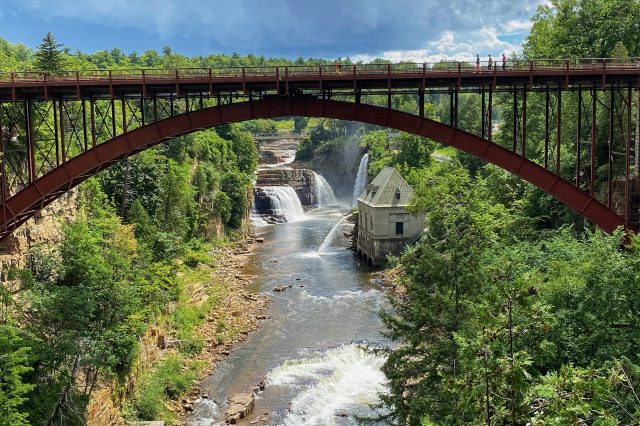
This route winds for 188 miles and takes your from just south of the Canadian border, through Adirondack Park, to the town of Fonda. It’s a beautiful and rugged landscape that includes many historic stops along the way.

You will pass through Johnstown, the location of one of the final battles of the Revolutionary War, and get the chance to experience colonial history. There’s also Great Sacandaga Lake where the family can enjoy fishing and boating or just stop for a picnic to take in the scenery.

Old King’s Highway, Massachusetts

No trip to Massachusetts is complete without a visit to Cape Cod and Old King’s Highway is the perfect route. Also known as Route 6A, this stretch of highway gives you a chance to explore the Cape and get a taste of history at the same time.

Start your drive in Sandwich and enjoy the scenery from farmlands to salt marshes to cranberry bogs over the course of a 34-mile route. There’s plenty to see and do with myriad beaches, shops and restaurants. Take a break from the road and rent a bike to cycle one of the many bike paths, which are easily manageable even for the kids.

Green Mountain Byway, Vermont

Traveling the Green Mountain Byway allows for views of meadows, forests and farms. There are three state parks along the route so you can stop to hike and explore when it’s time for a break from the road.

The route starts in Waterbury and makes its way across the state to Stowe with plenty of small towns and recreational opportunities. The journey also includes Mount Mansfield, which is Vermont’s highest peak. It’s the most frequently visited mountain in the state and one of the few places in Vermont where you can find Arctic Tundra.

Plan your drive with maps and AAA-recommended lodging, food and activities. 

Need a ride? Learn about exclusive Hertz discounts for AAA members.

Subscribe to Your AAA Newsletter

Sign up and receive updates for all of the latest articles on automotive, travel, money, lifestyle and so much more!

The Pros and Cons of Real Estate Apps

Scoping out properties on real estate apps and websites has become something of a trend, especially in today’s white-hot housing market. Some of these sites are visited more than 100 million times each month. They’ve even pushed themselves into the pop culture lexicon.

Real estate websites can be great tools to narrow down the overwhelming number of homes that are for sale at any given time, ultimately leading you to your dream home. But as convenient as it is to peruse every available home in your area, these sites do have some potential pitfalls.

Here are some pros and cons of using real estate apps and websites.

Pros

A Large Database

The most significant advantage these websites have is the vast amount of listings in their database. Zillow, for example, has more than 110 million listings on its site at any given time (although this number also includes rental properties). This allows potential homebuyers to peruse any type of home in any region of the country with just a few simple clicks. Furthermore, most of the major sites have real estate apps on both Apple and Android platforms, allowing users to access all this information on their phone or tablet. Simply put, it’s never been easier to search for a new home.

Community Information

Realty apps and sites can provide useful snapshots of the community that would otherwise be difficult to ascertain if you’re new to an area. Some helpful neighborhood insights you may find listed include maps, information about nearby schools, local crime rates, transportation options and the value history of nearby homes.

Notifications and Saved Searches

Even with millions of listings, it’s possible the home you’re looking for simply isn’t available yet. If this is the case, real estate apps and websites have some helpful tools for you. First, is the saved search option. Let’s say you’re looking for a four-bedroom, two-bathroom house with a pool for less than $800,000. You can apply all of those filters to your search results and save them, allowing you to view all the qualified properties with just one click the next time you visit. Even better, you can sign up to receive notifications that will alert you when a new property that meets your needs gets added to the site.

Tools and Calculators

Real estate websites use all the digital world has to offer with tools and features you can’t get in a brochure. These may include 3D home tours, virtual open houses, interactive maps and even a feature that allows users to take a photo of a home’s real estate sign and get details on the property right away. Many sites also have mortgage calculators to give users an idea on how much a particular home would cost each month.

real estate app

Cons

Accuracy

One of the main issues with realty apps and websites is the accuracy of their listings. In some cases, sites will pull a property’s information from municipal tax databases and multiple listing services, but in others, a realtor or homeowner will manually input the information. In the latter scenario, some stats may be inaccurate or out of date.

Some companies have worked to improve accuracy by having information validated, but users should still confirm anything they see or read on a site. It’s a good idea to consult a professional real estate agent to help interpret what you find online.

Price

A number of sites have tools that give home price evaluations. However, because the sites don’t always have the correct info on a property, these estimates should be taken with a grain of salt. Take for example, Zillow, one of the most popular real estate listing websites.

Nationally, according to Zillow itself, the site’s price estimate is within 5% of the actual selling price roughly 85% of the time. But this number fluctuates from state to state and region to region. In all the states of the Northeast, for example, Zillow’s 5% accuracy is below the national average, bottoming out at New York’s 72.5%.

In Zillow’s defense, it states that this tool is not an appraisal and should simply be used as a “starting point” for determining a property’s value. But many users haven’t gotten that message, and people who say Zillow is misleading prospective homebuyers have sued the site.

Featured Listings

Just like search engines, most real estate apps and websites have featured or sponsored listings. These homes appear at or near the top of any search results within the site, even when you sort the results using a filter. Make sure to look out for a note on their listing that designates their “featured” status and take that into consideration when looking for your dream home.

Privacy

Most realty apps and websites are free to use, and you can peruse all the listings and pull pertinent information without providing anything. However, in most cases, if you want to access all of the site’s features, you’ll need to give up some of your personal info, such as your name, email address and other information.

For instance, if you find a property you’re interested in, you’ll likely need to create a profile or at least submit contact information to get more info on a property or schedule a tour. While you might be fine with being contacted regarding a specific home, providing your number and email address could open you up to a wave of sales calls and emails from outside companies. You can visit OptOutPrescreen.com ahead of time to avoid unsolicited offers or junk mail.

When you’re ready to purchase a home, AAA is here to help. To learn more our home loan services or to speak to a mortgage specialist now, visit AAA.com. For ways to save even more at home, go to AAA.com/HomeServices.

Subscribe to Your AAA Newsletter

Sign up and receive updates for all of the latest articles on automotive, travel, money, lifestyle and so much more!

AAA Photo Session: Flowers

Thank You for Participating!

Summer is in full bloom! You headed out into your backyards, parks and local botanical gardens, and sent us photos of the flowers that inspired you. Together, you created a beautiful garden, full of color and variety. Explore the gallery below to see all the pictures we received, and don’t forget to check our social media channels, where we will be sharing some of our favorites. Select photos may also be featured in an upcoming issue of Your AAA magazine.

Tips on Photographing Flowers

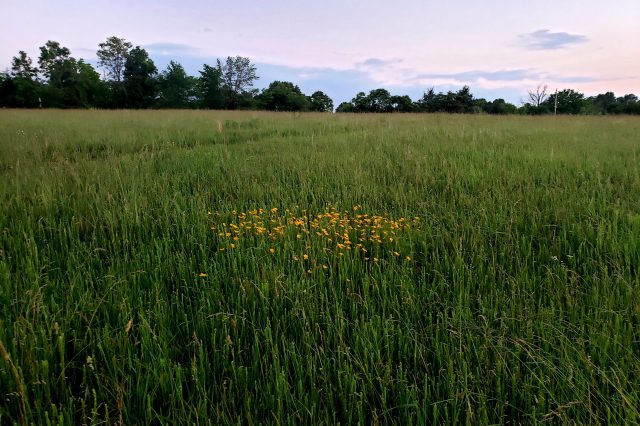
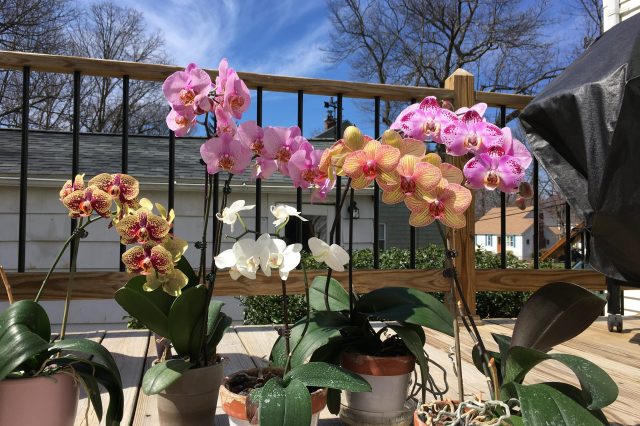
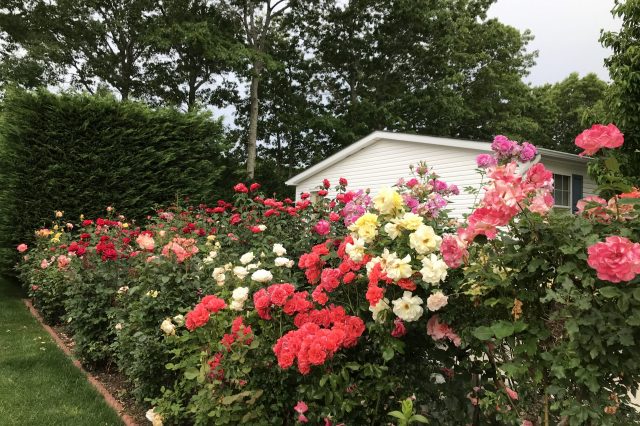
“The earth laughs in flowers.” I have to agree with Ralph Waldo Emerson on this. Flowers are one of Mother Nature’s most beautiful creations. There is nothing that brings me more joy than photographing a field of wildflowers.

There are so many things to consider when photographing flowers, from lens choice to lighting. Although you are starting out with a photogenic subject, there are still ways to elevate a quick snap to a thoughtful, vibrant and well-composed image that amplifies what nature provides. I am sharing my favorite flower photography tips below.

Lens Choice

You can use just about any lens for flower photos. Different apertures and focal lengths yield completely different results. For example, a macro lens will allow you to get really close and capture all the details, whereas a wide-angle lens will show more of the flower in its environment. I love using a macro lens and my 135mm f/1.8 lens. The 135mm gives beautiful blur and compression. I recommend playing with different lenses and focal lengths to see what you like best.

flower photos
(Photo: Beth Mancuso)

Lighting

If you are a novice, I highly recommend waiting for an overcast day or cloud cover to try out flower photography. Overcast days provide soft, evenly distributed light, which really makes for beautiful pictures. Full sun leaves you with bright spots and harsh shadows. If you find yourself stuck with a sunny day, you can use a diffuser to filter the harsh sun rays.

More experienced photographers should snap floral pics during the golden hours – the hour after sunrise and before sunset. Golden hour shots add in more lighting dimension and an overall sense of warmth.

Aperture Choice

When photographing flowers you need to consider your depth of field. Do you want to showcase just one flower and have the background be blurry? If so, then you will want to choose a large aperture – anywhere between f/1.8 -f/4. If you are trying to capture multiple flowers or a field of flowers you will want to choose a small aperture – anywhere between f/11-f/22.

Framing

Framing your flowers with other flowers or leaves makes for an interesting composition. You can look for plants that are already there or you can try cutting one and holding it near the flower or your lens.

Height and Angles

Vary your height and angles when shooting flowers. I like to take them from three different angles and heights. I start out at the flower’s height, move up slightly, and then take one shot straight down on the flower. I like to rotate 360 degrees around the flower too. Your lighting and background can be completely different with each turn.

flower photos
(Photo: Beth Mancuso)

Bonus Tip

Bring a water mister or spray bottle with you to spray the flowers with water. This will add some beautiful water droplets to your flowers.

Check out past AAA Photo Sessions and stay tuned for the next one, coming soon.

Beth Mancuso is a professional landscape and travel photographer.

Subscribe to Your AAA Newsletter

Sign up and receive updates for all of the latest articles on automotive, travel, money, lifestyle and so much more!

Ostia Antica: The Best-Kept Secret in Italy?

Ostia Antica once was Rome’s main seaport, a pivotal harbor for trade and warfare during the empire’s peak.

Today it just may be the best ancient attraction you’ve never heard of.

Like the celebrated ruins of Pompeii, much of Ostia Antica is still standing. But it wasn’t a volcano that sealed the city’s fate as a remarkably well-preserved site.

Ostia Antica was abandoned in 476 A.D. after the Roman Empire fell. In the centuries that followed, deposits of silt piled up until the entire city was buried (and then some). The once-waterfront locale is now 2 miles away from the sea.

The silt served as a Ziploc bag for Ostia Antica, preserving many of its buildings, roads, mosaics and frescos. And today, you can still sit in the stands of its amphitheater, climb the stairs of ancient apartment buildings, and breeze through restaurants, baths and workplaces that defined a way of life.

Maybe best of all, unlike Pompeii, there are barely any tourists around for most of the year.

(Photo: Getty Images)
Mid-Rise Antiquity

Between 75,000 and 100,000 people called Ostia Antica home during its peak in the second and third centuries AD. It was mainly a mercantile and working-class town filled with laborers, in contrast to Pompeii’s tony tone.

As such, some of Ostia’s most well-known ruins are housing. Most of its population lived in “insulae,” the world’s first apartment buildings. While these were built to house the majority of the city’s working class, some also include luxury apartments, complete with surprisingly modern floorplans, running water and kitchens.

You can still climb the narrow stairs of some of these buildings or check out the hollowed-out taverns located on the ground floor. In essence, Ostia was a city dominated by (what we’d call today) mixed-use, mixed-income, mid-rise commercial real estate.

Taken together, the city provides valuable insight into the everyday lives of the empire’s middle-class. Where Pompeii was a playground for the wealthy, Ostia was down to earth, a true bedroom community.

And true to its nature, there are few if any velvet ropes cordoning off the ruins. You can climb them, sit on them, interact with them in a way you can’t in most ancient sites.

Site Insight

It’s not just architectural style that gave the ruins their renown. There’s plenty of historical substance too.

The city is home to the oldest known synagogue in Europe, and one of the oldest in the world found outside of Israel. Unearthed in 1961, the Ostia Synagogue was built around 45 A.D. and actively served as a synagogue right up until the fifth century A.D.. And for Catholics, Ostia is notable for being part of St. Augustine’s journeys and also as the city where his mother,  St. Monica, died.

Ostia’s oldest structures date back to the third century B.C., including the ruins of a military camp. Over the years, it witnessed civil wars, pirate sackings, political kidnappings, was burnt down and rebuilt then torn down again.

The statesman/orator Marcus Tullius Cicero provided the city with protective walls. Tiberius built its first forum. Julius Caesar expanded the city’s port and canals to secure the transport of grain to Rome. Claudius built its harbor while Trajan built a bridge across it.

And obviously, much of it was built to last. The city’s 2,000 year-old amphitheater still hosts some cultural celebrations today.

Getting to Ostia Antica

The Rome – Lido railway is the main transportation to and from Ostia and the center of Rome, a ride that takes about 35 or 40 minutes. Once there, local busses will get you where you want to go.

You’ll want to avoid Ostia Antica during summer months as a lot of native Romans vacation at its beaches. Otherwise, you can stroll through the city’s original curbed pavement without too much competition.

Mainly, the best advice is to take comfortable footwear because if you want to see it all – and it can all be seen in one day – you’ll have to hoof it.

But in the future it may be impossible to see Ostia Antica all in one day. Archaeologists estimate nearly two-thirds of the town still hasn’t been excavated.

This city of ghosts may still have a few more secrets to tell hidden just below the surface.

Experiencing wanderlust? Visit AAA.com/Travel for plenty of Italian tour info and inspo!

Where’s your favorite “best-kept secret” spot? Tell us in the comments below!

Subscribe to Your AAA Newsletter

Sign up and receive updates for all of the latest articles on automotive, travel, money, lifestyle and so much more!

How to Save for Vacation

The pandemic put a lot of vacations on hold. Now, as the world starts to open up, hopes are high that we’ll be able to go on the much-needed getaways we’ve been patiently waiting for.

Whether you hope to spend your next adventure lounging on the beach, theme park hopping or kayaking down a babbling waterway, make sure you can afford everything you want to do with these tips on how to save for vacation.

Choose Your Timing Wisely

As you begin planning for your next vacation, consider going to your destination sometime other than during the summer. Early in the year (January to February) or late summer/early autumn (September) – essentially staying away from peak travel times like holidays and school breaks – are good choices. This way, you’ll be avoiding crowds and saving money by choosing less sought-after times.

Calculate the Price and Set a Goal

Depending on whether you’re planning to stay domestic or travel internationally, there are a variety of costs to account for, including plane tickets, transportation, lodging, meals, entertainment and souvenirs. All-inclusive trips are great, but you should still save a little extra money for spontaneous out-of-pocket expenditures.

Once you have an idea of how much your vacation will cost, subtract what you already have saved. The difference is your vacation savings goal. Knowing the specific amount of money you still need to save will allow you to figure out how much money you need to set aside per paycheck, week or month.

Pocket Some Extra Cash

Make saving for your next vacation a little quicker and easier by earning some extra money. One way to do this is by picking up a side gig or part-time/seasonal job.

A side gig, also known as a side hustle, includes jobs like driving for a ride-share service like Lyft/Uber, making food deliveries or doing freelance work. Side gigs offer the flexibility to work around your current schedule while earning additional income. If you need inspiration, check out these 5 great gigs for college students and 7 best part-time retirement jobs.

For a part-time or seasonal job at a brick-and-mortar location, grocery stores, restaurants and other retail locations often have plenty of options. Do your job search through a website like Indeed or ZipRecruiter, or visit the official website of a business you like and search for career opportunities.

Another way to earn a little extra money is to sell items you already have. Consider holding a yard/garage sale or sell more specific items like art, clothing, knickknacks and collectibles, with websites or apps like eBay, Facebook Marketplace, Let Go and Poshmark.

Make the Most of Your Money

Consider opening a special savings account specifically for vacations. Make it a high-interest or high-yield savings account if you can.

If your vacation isn’t for a while, consider saving with a high-yield certificate of deposit. There will likely be a minimum deposit requirement and you won’t be able to access that money without a penalty until it matures – after 6 months, a year, 2 years, etc., but the annual percentage rate or APR will likely be higher, meaning you’ll earn more interest.

Another option is using a cash-back rewards credit card. We all have daily expenses, so why not earn money on eligible purchases? Then, funnel those cash-back rewards right into your vacation savings.

save for vacation

Cut Costs Where You Can

Anywhere from a year to six months before your trip, try to be extra frugal. Set a stricter budget and save a little extra cash by not eating out, canceling a gym membership or cutting back on subscription services.

Shop Discounts and Sales

If your vacation will require a lot of walking (hello, theme parks!) or if you’ll be participating in watersports, hiking or other activities, you may need some gear you don’t already own. Get a new pair of walking shoes or more specific gear when they’re on sale to minimize the amount you have to spend.

AAA members can save with the AAA Powersports, RV and Buying Program or take advantage of discounts on products from Outdoorsy, Life is Good, Reebok Outlet Stores and other merchants. 

Another way to save and shop the sales is by using a travel agent. They will help you find different travel packages, comparing prices to help you find the best deals for your budget. AAA Travel Advisors are friendly, knowledgeable and will help you find and plan your next vacation.

Subscribe to Your AAA Newsletter

Sign up and receive updates for all of the latest articles on automotive, travel, money, lifestyle and so much more!

Intro to Yoga: Basics and Benefits

Yoga is a practice that incorporates a mix of stretches, physical postures, deep-breathing exercises and relaxation techniques as a way to help improve both physical fitness and mental wellness. If you’ve never tried it before, or are simply looking to brush-up, this intro to yoga will get you acquainted with the basics and benefits.

Intro to Yoga

The practice of yoga originated in India and was first introduced to the U.S. by a Hindu monk named Swami Vivekananda in 1893. This early form of yoga was more of a philosophy, including elements of psychology and self-improvement. Yoga would continue to spread around the world and take on many forms.

“While there are more than 100 different types, or schools, of yoga, most sessions typically include breathing exercises, meditation and assuming postures (sometimes called asana or poses) that stretch and flex various muscle groups,” according to the American Osteopathic Association.

The pose-based yoga we know today gained popularity in the early 20th century. Modern forms of yoga often focus on improving mental and physical health, and some also include spiritual elements.

The Health Benefits of Yoga

Yoga boasts many benefits, including improving physical fitness, mental health and emotional well-being, according to Johns Hopkins Medicine.

Physical Benefits

Yoga helps improve your balance and flexibility all while toning and strengthening a variety of muscles. It can also help lessen chronic pain, including arthritis, carpal tunnel syndrome, lower back pain and more.

“With continued practice comes a gradual loosening of the muscles and connective tissues surrounding the bones and joints; this is thought to be one reason that yoga is associated with reduced aches and pains,” according to a study by the International Journal of Yoga.

Yoga can also improve your cardio and circulatory health. Yoga involves a lot of deep breathing, leading to improved respiration and increased blood flow.

“Yoga also thins the blood,” according to the study, “which can decrease the risk of heart attack and stroke.”

Like many other forms of exercise, routinely practicing yoga can also help you maintain a balanced metabolism and help with weight loss.

Mental/Emotional Benefits

When it comes to emotional and mental benefits, yoga can help improve your concentration as well as promote feelings of calmness and general wellbeing.

Yoga can help you feel more energetic and improve your mood. “Yoga can produce an invigorating effect on mental and physical energy that improves fitness and reduces fatigue,” according to the International Journal of Yoga study.

Yoga has also been used as a tool for coping with mental health issues, helping people achieve a more balanced mental state.

“Yoga targets unmanaged stress, a main component of chronic disorders such as anxiety, depression, obesity, diabetes and insomnia,” according to the American Psychological Association. “The practice enhances resilience and improves mind-body awareness, which can help people adjust their behaviors based on the feelings they’re experiencing in their bodies.”

Yoga can also help with stress management and alleviate some of the adverse effects stress has on the body.

“Practicing yoga and meditation as a means to manage and relieve both acute and chronic stress helps individuals overcome other co-morbidities associated with diseases and leads to increased quality of life,” according to the study. “It lowers breathing and heart rate, decreases blood pressure, lowers cortisol levels and increases blood flow to the intestines and vital organs.”

Yoga may also help you get better sleep. The same study by the International Journal of Yoga showed “regular practice of yoga resulted in a significant decrease in the time taken to fall asleep, an increase in the total number of hours slept and in the feeling of being rested in the morning.”

yoga basics

Types of Yoga

There are many different schools of yoga. Modern interpretations tend to place more emphasis on physical fitness, as opposed to spiritual enlightenment, but stress-relief and mindfulness are still important aspects in several forms of yoga.

To get you started on your intro to yoga, here’s a general breakdown of some of the most popular types.

  • Yin/Meditative yoga – a slower paced form of yoga, where poses are held for longer.
  • Vinyasa/Flow yoga – focuses on pairing breath with movement.
  • Sivananda – focuses on general relaxation, using a mix of poses and breathing exercises.
  • Restorative yoga – focuses on relaxing your body and mind, calming you down after a long day.
  • Prenatal yoga – intended for pregnant women, helps prepare them for labor.
  • Power yoga – a more physically active form of yoga, open to interpretation by individual teachers.
  • Kundalini yoga – a mix of physical and spiritual wellness, focusing on unlocking energy (life force energy, prana or chi).
  • Jivamukti yoga – a vinyasa-style yoga mixed with spiritual Hindu teachings, including connection to the Earth and vegetarianism.
  • Iyengar yoga – focuses on alignment, often includes props (straps, blocks, chairs, etc.)
  • Hot yoga – occurs in a hot, sauna-like room to help you sweat.
  • Hatha yoga – focuses on balance, also an umbrella term for physical-based yoga practices.
  • Ashtanga yoga – focuses on poses, where you work through a series of postures.
  • Anusara yoga – focuses on the mind-body-heart connection.
  • Aerial/gravity yoga – a newer practice that uses suspension/hammocks.
  • Acro yoga – another new interpretation, this yoga form is done with a partner.

Trying Yoga

Yoga is accessible to beginners and experts alike, regardless of age.

When it comes to supplies, all you need is a yoga mat and comfortable clothes. If you’re new to yoga, or looking to get back into it, there are plenty of instructional videos and apps available online. Also, in-person yoga classes (especially outdoor varieties) for beginners are likely to return as more people get vaccinated. It’s helpful to learn from an in-person instructor if you’re a beginner, since they can help you with form and adjustments.

For more information about meditating , check out these meditation tips along with these meditation and mindfulness apps. Don’t have a lot of time to set aside for exercise? Try chair yoga as a way to destress at your desk.

What’s your favorite thing about yoga? Did you find this intro to yoga helpful? Tell us in the comments.

Subscribe to Your AAA Newsletter

Sign up and receive updates for all of the latest articles on automotive, travel, money, lifestyle and so much more!

Caring for Elderly Parents

Aging may not be something we enjoy thinking about, but it is an inevitable and natural part of life. As we get older, so do the people around us, meaning now might be the right time to start learning more about caring for elderly parents.

No one wants to have to “parent” their parents, but a day may – and likely will – come when older family members can no longer live on their own.

Figuring out how to handle elder care can be daunting. It all starts with an awareness of your parents’ physical, mental and emotional well-being as well as their wishes for the future. Do they need help with simple, daily tasks or more specific, health-related care? What are their hopes when it comes to their final years? How has the pandemic affected them?

Knowing the right questions to ask and some preemptive steps to take can go a long way in lessening familial concerns. This guide about caregiving for elderly parents may help.

Adult Caregivers in America

“There are 40.4 million unpaid caregivers of adults ages 65 and older in the United States,” according to data from the Pew Research Center. “Of that group, nine-in-ten are providing care for an aging relative, and a plurality is caring for a parent.”

Adults between the ages of 45 and 65 are the most likely to be caregivers. “About a quarter (23%) of adults ages 45 to 64 care for an aging adult,” according to Pew Research.

Most (58%) of these caretaking adults are helping their parents with daily tasks and home maintenance, like running errands, doing housework and making home repairs. While a majority (88%) of adults providing care for a 65+ parent find it rewarding, nearly one third of these adults (32%) also find it stressful.

Knowing How to Help

Many times, you’ll only know what others need by asking. Figuring out how to go about caring for elderly parents is a lot easier when everyone is on the same page.

Have a Talk

“92% of Americans think it’s important to discuss their end-of-life wishes,” according to a national survey by The Conversation Project. “Yet only 32% have actually shared their wishes.”

Ask your parents their preferences: How would they like to spend their older years, specifically when it comes to living situations and their wishes for medical care in the case of serious illness? Choosing a primary decision-maker and getting financial affairs and important documents in order can be harder topics to discuss, but are equally necessary.

It’s also important to understand how much care your parents need based on their cognitive health, physical mobility and quality of life, as well as their desire for a social life and proximity to family.

Assessing your parents’ ability to carry out activities of daily living, also known as ADLs, is important as they continue to age. ADLs include eating, getting dressed, functional mobility, bathing and other personal hygiene routines, according to Aging In Place. As ADLs become more difficult, additional assistance is likely necessary.

Offering Assistance

Once you know your parents’ wishes and how they’re doing when it comes to ADLs, you can start making a plan.

Create a list of daily, weekly and monthly to-do’s and assess how manageable they are. Your parents may still be completely capable of remembering to take medications and pay bills, but might need help with transportation to medical appointments and assistance with house and yardwork.

Companionship is another thing to consider. Try organizing visits with siblings, cousins and grandchildren – and even close friends and neighbors – to ensure elderly family members are never lonely.

If you’re having trouble getting family involved in elder care, see these tips from Daily Caring on how to ask family for help.

Know Your Boundaries and Limitations

Caring for elderly parents is not an easy job. It’s important not to forget self-care, especially when caring for others.

Take some time to self-reflect and consider how much care you can realistically give without hindering your own mental, emotional and physical well-being.

Your own schedule and responsibilities may keep you from visiting older relatives as often as you’d like or need. You may also not feel comfortable doing certain tasks. Bathing or helping others go to the bathroom may be out of your comfort zone, and that’s OK.

You may need the assistance of a home care provider. Also, certain diagnoses – like dementia and Alzheimer’s – may eventually require specialized care.

Special Services

There are a variety of services that offer in-home, supplemental assistance to make your parents’ lives easier.

Deliveries and Subscriptions

Start with a grocery or food delivery service to make sure your parents are eating well. Then, teach them how to shop online and set up reoccurring deliveries for frequently bought consumables like pet food, cleaning supplies and personal hygiene products.

In-Home Caregiver

If your parents need help with daily tasks, an in-home caregiver is another option.

“Caregivers have found that in some instances the person receiving care can be more cooperative with someone other than the primary caregiver,” according to the Family Caregiver Alliance. “Engaging an attendant can help to preserve your relationship as daughter or partner, rather than always having to be the chore person or taskmaster.”

See tips on hiring in-home help from the FCA here.

Respite Care Services

If you’re providing frequent care for your parents, you might want to consider a respite care service.

“Respite care provides short-term relief for primary caregivers,” according to the National Institute on Aging. “It can be arranged for just an afternoon or for several days or weeks. Care can be provided at home, in a health care facility or at an adult day center.”

Use this National Respite Locator to find a service near you.

Other Programs

Other services worth consideration are adult day programs. These programs offer social and recreational activities for seniors as a means of family support during the day. Find adult day programs near you here.

There are also volunteer senior companion programs, where volunteers visit seniors to offer companionship, conversation and activities like art, games and puzzles.

Looking for more ways to support your elderly parents? AAA members can save on Joy for All Companion Pets, robotic cats and dogs that bring comfort and companionship to those who are aging.

caring for elderly parents

Housing Options

Your parents’ living situation can help dictate how much – and what form of – additional, long-term care they may need.

Staying Close to Family

For the time being, your parents might want to continue living independently. This could mean downsizing to a more manageable property or moving to a location closer to you or other relatives. Another option is moving in with family – whether that be with their kids, grandkids or a sibling – as long as it’s safe and beneficial for everyone involved.

Independent Living Communities

Independent living communities – also called retirement communities – let seniors rent or buy a home, apartment or mobile home and be part of a community of their peers. This kind of housing often includes amenities, like security, group meals and transportation options. Also, residents often won’t have to do yardwork and/or housekeeping.

Assisted Living Communities

Assisted living communities provide staff who help residents with certain daily tasks – like dressing, bathing and meals, along with transportation to medical appointments. While more care is offered here compared to independent living communities, seniors who need medical surveillance and/or more specialized caregiving may be better off in a nursing home.

Nursing Homes

Nursing homes – or skilled nursing facilities – “typically include nursing care, 24-hour supervision, three meals a day and assistance with everyday activities,” according to the National Institute on Aging. “Rehabilitation services, such as physical, occupational and speech therapy, are also available.”

Financial Concerns

Figuring out how to pay for long-term care can be a major source of stress, but there are many options to explore when it comes to affording elder care.

Tax Credits and Deductions

If you are a family caregiver, you can be eligible for federal tax credits and deductions.

Until 2025, the Internal Revenue Service allows family caregivers to claim certain individuals as “other dependents.” Your loved one must be a legal resident who lives with you while you pay 50% of their living expenses. Their income must also be below a certain amount to qualify.

Personal Finances

It’s best to start saving for elder care as soon as possible.

One option is purchasing long-term care insurance. This must be done prior to retirement age – so when you’re in your 40s and 50s. Other options are to save by investing in a 401(k), an IRA or a non-retirement investment account now, so you can pay for care later.

Now may also be the time to start thinking about your will and planning your estate.

Life Insurance

Again, purchasing a life insurance policy is cheaper when you’re young, but it’s never too late to invest in your – and your family’s – future. Policy holders can borrow money against their policy to help pay for post-retirement expenses.

Reverse Mortgages

Adults must be 62 years or older in order to qualify for reverse mortgages. Also known as a home equity conversion mortgage, a reverse mortgage allows senior homeowners to gain access to the equity built up in their home in the form of tax-free loan proceeds. Speak with a AAA reverse mortgage consultant today.

Government Programs

Medicare can pay for some medical costs for people ages 65 and older. This includes “inpatient hospital stays, care in a skilled nursing facility, hospice care and some home health care” (Medicare Part A/Hospital Insurance), “certain doctors’ services, outpatient care, medical supplies and preventive services” (Medicare Part B/Medical Insurance) and “helps cover the cost of prescription drugs” (Medicare Part D), according to Medicare.gov.

Medicaid covers medical care and some types of long-term care for people with limited income.

“Medicaid pays for care for seven out of every 10 nursing home residents, but Medicare generally does not pay for nursing home care,” according to Aging in Place.

The U.S. Department of Veterans Affairs may provide long-term care or at-home care for some veterans. Other programs worth consideration are the Program of All-Inclusive Care for the Elderly and the State Health Insurance Assistance Program.

For more information on government benefits/assistance, visit benefits.gov. For help finding a service, call the National Council on Aging at 571-527-3900.

Additional Elder Care Resources

Every person’s situation is different, meaning you may need more specialized resources.

If you’re finding broaching the topic of elder care difficult, check out these Conversation Starter Guides from The Conversation Project.

Support Groups

Support groups for adult children struggling with elder care can be found at the FCA, Alzheimer’s Association and Cancer Care websites.

Wives, husbands and partners of chronically ill or disabled people can find support through the Well Spouse Association and their nationwide listing of local support groups.

For more information on caring for elderly parents, visit LongTermCare.gov, the National Institute on Aging and its Benefits Checkup or the Area Agency on Aging.

Do you have tips on caring for elderly parents? Share them in the comments.

Subscribe to Your AAA Newsletter

Sign up and receive updates for all of the latest articles on automotive, travel, money, lifestyle and so much more!

Travel Advice You Can Trust

It’s time to start thinking about traveling again. It’s a moment we’ve all been anticipating. And we at AAA Northeast are ready to help.

If you need some great ideas, check out our story about family travel trends. I can’t wait to hit the road again with loved ones, and I’m sure many of you feel the same.

If you need help with planning your long-delayed getaways, turn to our trusted Travel advisors, who have years of experience and specialized training to help you get the most out of your travel plans.

Now more than ever, members are using AAA Northeast Travel advisors to triple-check itineraries, find member discounts and provide information on ever-changing COVID-19 regulations.

They are SmartDepart-certified, so they can counsel you on the best travel safety practices and help you comfortably navigate any new guidelines.

And if you have any travel credits from delayed plans, they can help with that, too.

With demand increasing, any available openings at resorts, theme parks and cruise lines will fill up fast. I encourage anyone who wants to travel to book now – and work with an agent to help secure your preferred timing and itineraries.

I look forward to seeing you on the road – and in the skies – soon.

Make an appointment with a Travel advisor today at AAA.com/TravelAdvisor

Subscribe to Your AAA Newsletter

Sign up and receive updates for all of the latest articles on automotive, travel, money, lifestyle and so much more!

Great Northeast Boating Trips & Where to Rent a Boat

There’s something magical about getting out on the water, especially on a beautiful day. Thankfully, the Northeast is home to rivers, lakes and other waterways perfect for canoeing, kayaking, stand-up paddleboarding, boating and simply whiling away lazy summer days out on the water.

We’ll show you where to rent a boat, canoe or kayak in the Northeast and share some our favorite places for local boating trips.

Whether you’re marveling at the sights or traversing rapids, paddling can be a relaxing or thrilling activity. Head out on your own for some quiet time alone in nature or go with a partner or small group for a memorable day out.

Connecticut

The longest river in the New England region, the Connecticut River is over 400 miles long and stretches out across several states. It’s both wide and deep, making it suitable for boats of various speeds and styles. The Connecticut River also features many hidden creeks and coves great for small-boat exploration. There are hundreds of access points along the river, which can be found here.

Then there’s the Farmington River, which stretches diagonally from northwestern Connecticut until it joins the Connecticut River further southeast. This river is great for canoeing, kayaking and tubing.

If rivers aren’t your speed, Connecticut is home to plenty of lakes, like Lake McDonough and Mashapaug Lake, while also boasting plenty of coastal region.

Where to rent a boat: These state parks offer tons of great spots for canoeing and kayaking; however, only Burr Pond, Lake Waramaug and Sunrise Resort State Park offer rentals.

Massachusetts

The Concord River runs for about 11 miles and is great for canoeing, kayaking and rafting. You can travel the entire waterway by canoe or kayak, but it’s also conveniently broken into sections: Egg Rock to Carlisle-Bedford Bridge and Carlisle-Bedford Bridge to the Middlesex Canal.

There’s something for every kind of boating fan in Massachusetts. The Boston Harbor Islands offer great views of Boston’s skyline. The Massachusetts Office of Fishing and Boating Access maintains 290 access points on coastal waters, great ponds and rivers across the state. See which ramps are open for the season, here.

Where to rent a boatPlum Island kayaking features tours and lessons as well as opportunities to see wild seals. Find more opportunities for local boat rentals, here.

New Hampshire

New Hampshire is home to the the Fourth, Third, Second and First Connecticut lakes. The Ashuelot River, with its five boat landings, is great for both whitewater and leisure paddling, depending on your preference. Both small watercraft and motorboats are allowed in deeper waters while canoes and kayaks are appropriate for rapids.

More white waters can be found in the Contoocook River, though waters are calmer closer to Concord, N.H. Sea kayaking on the Great Bay is also exciting, along with kayaking and canoeing on Lake Umbagog and Squam Lake.

Animal lovers will enjoy Grafton Pond, a 300-acre lake that’s a popular nesting site for loons, along with New Hampshire’s other state parks perfect for boating and nature-gazing. The calm, swimmable waters of the Pemigewasset, or “Pemi,” River are also popular.

Where to rent a boat: There are tons of boat rentals and marinas in New Hampshire’s Lakes Region.

where to rent a boat

New Jersey

Take a canoe, kayak, raft or tube down the Delaware River, a 300-plus mile waterway that stretches along the borders of New Jersey, New York and Pennsylvania. The Delaware features a mix of calmer and rougher waters as well as scenic views.

Lake Hopatcong, the state’s largest freshwater lake, is great for boating, kayaking and sailing. Hopatcong State Park is located at the southwest end of the lake, making it a great spot for nature-watching and swimming, too.

There are also plenty of ocean boating and sailing opportunities in New Jersey along the coastal side.

Where to rent a boat: Both canoe and kayak rentals are available along the Hackensack River, which begins in New York and stretches out across much of New Jersey. Make a difference on your trip by participating in a river cleanup.

New York

New York has access to many lakes, including the Finger Lakes and two Great Lakes. For busy bodies of water, look into Lake George or any one of the Essex Chain Lakes‘ 18 bodies of water. If you prefer calmer water, there’s Lake Champlain as well as the North-South Lake, where no motorized boats are allowed.

There are also great kayaking opportunities along the Hudson River and Saint Regis Canoe Area. For saltwater sailing and boating, there are plenty for opportunities on the Long Island Sound as well as on the Atlantic Ocean.

Where to rent a boat: Find local boat rentals for the Finger Lakes at Morgan Marine or Stivers Seneca Marine. For Lake George rentals, see here. Find more spots perfect for canoeing and kayaking here.

Rhode Island

For saltwater kayaking, there’s Ninigret Pond, a large coastal lagoon, or the scenic Napatree Point and its three small marinas. For calmer waters surrounded by foliage, head to the Upper and Lower Woods Rivers. Paddle route maps to these rivers can be found here.

Paddlers on the historic Blackstone River, which stretches across Massachusetts and Rhode Island, will pass farmlands, forests and the occasional watermill. You can even rent a kayak in downtown Providence and gain a stunning new vantage point of the city’s skyline.

Where to rent a boat: There are plenty of boating and sailing opportunities in the Newport area. Rhode Island is also home to state and local parks as well as plenty of boat ramps and kayak rentals.

Where is your favorite spot to boat, canoe or kayak? Tell us in the comments below!

Do you own a boat? AAA offers specialized insurance for boats and other recreational vehicles.

Subscribe to Your AAA Newsletter

Sign up and receive updates for all of the latest articles on automotive, travel, money, lifestyle and so much more!

Forget the Tent

There’s no denying that in the past year, interest in RV travel – whether in a deluxe 40-foot model, a converted van, a “Skoolie,” (a transformed school bus), or a tow-along trailer – has exploded. And why not? In a world that practically shut down last year, getting out in the great outdoors had enormous appeal, and still does.

RV shipments were up 39% in January 2021, compared to January 2020, according to a report by the RV Industry Association. Another interesting fact: 51% of RV owners are between 18-54 years old.

Forget the tent
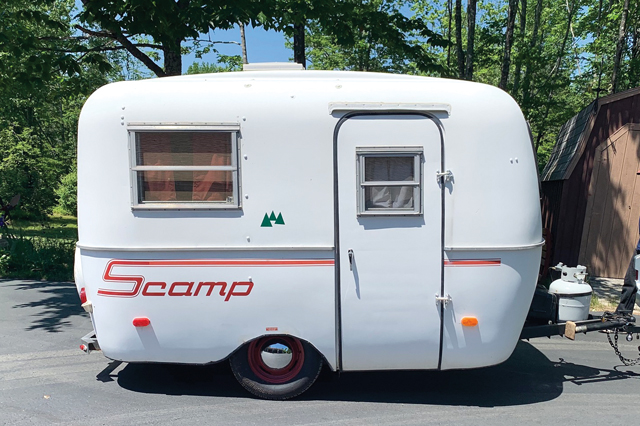
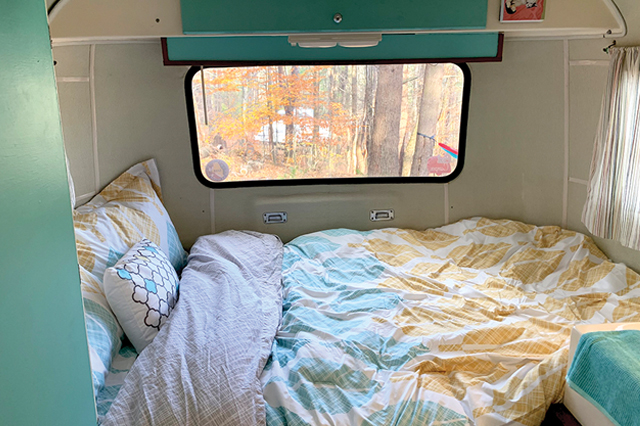
Kim Foley MacKinnon inside her customized (by her) Scamp.

Anecdotally, I can attest to this trend, because I’m part of it. Last June, I bought a used travel trailer, having only seen it via video, almost on the spot. And I don’t regret it one bit. My little 13-foot 1981 Scamp has allowed me to travel during the pandemic in a way that makes me feel safe. Though tiny, it is mighty, with a sink, stovetop, heat, refrigerator, lights and room for three. Having purchased a privacy tent, a solar shower and a camp toilet setup, my family can be mobile and completely self-contained.

Forget the tent

We aren’t new to camping; we’ve just used tents until now. Having a solid roof, a comfy o­ff-the-ground bed and an indoor stove, is pure luxury to us. We’ve camped in Plymouth, Mass., Cape Cod and the Berkshires so far, respecting state travel restrictions and learning as we go: how to hook up the water and electric, back up into a tight space, check the propane and more. Maybe my curtain-making skills aren’t that great, but they do the job. And my husband, our household chef, is thrilled to have a fridge. No more endless runs to buy ice.

Forget the tent

Countless RV groups and YouTube videos have been enormously useful. That’s how I learned to make no-sew curtains and discovered a foolproof way to back up the Scamp called the “scoop.” It’s already been an adventure for us, and we’ve hardly gone anywhere. I can’t wait to explore further afield!

Forget the tent

Prefer to Test the Waters?

If renting and driving an RV seems too daunting (let alone purchasing one!), there are creative ways to get a taste of an RV vacation. Outdoorsy is a company that works like Airbnb, but with RVs instead of rooms or houses. You can book one you like and even have it delivered to the campground of your choice. AutoCamp Cape Cod just opened this spring, with luxurious Airstreams, fancy tents and tiny houses all decked out. Many campgrounds also o­ffer RVs for rent. Sites like GoRVing, The Dyrt, Harvest Hosts and others are also great places to get advice and information.

AAA members can save at AAA.com/discounts.

Subscribe to Your AAA Newsletter

Sign up and receive updates for all of the latest articles on automotive, travel, money, lifestyle and so much more!

Ask a Mechanic: How Long Do Car Brakes Last?

Carmakers like to boast about the latest and greatest safety features on their vehicles. But no matter how far technology goes, properly functioning car brakes will always be the first line of defense against a crash. Now, we all know what car brakes do. But how many of us know how they work? Or how long car brakes last or the warning signs of malfunctioning brakes?

To get some answers to these pressing questions, we spoke with Stephen Dias, service manager at Dorman’s Auto Center in Pawtucket, R.I., who guided us through a car brakes inspection and provided other automotive maintenance tips to make sure your ride will always be smooth and safe.

What’s the most common car maintenance mistake you see car owners make?

The most common maintenance mistake drivers make would be neglecting routine oil changes and ignoring warning signs their vehicle may give them, such as unusual noises.

How long do car brakes typically last?

The average brake life is usually around 30,000 to 40,000 miles. This can vary depending on your driving habits.

How often should you get your brakes inspected?

Car brakes should be inspected with every visit to an automotive repair shop. This includes when bringing the vehicle in for a routine oil change or any other visit.

What does a proper brake inspection consist of?

A thorough brake inspection consists of a visual inspection of friction material, measuring the brake pad/shoe thickness, as well as measuring brake discs and also checking for any disc runout. (Runout refers to the amount of deviation or wobble occurring as the disc rotates. A car’s brake runout must be limited so the brakes don’t shake and vibrate when activated.)

What are the signs that something may be wrong with your brakes?

Brake warning signs include noise, pulsation and a pull to either side while braking. Operators should also watch for a low brake pedal, although this can be difficult for most drivers to notice as normal brake wear is gradual, and the lower pedal may be something the operator doesn’t feel.

What’s you best advice for motorists to keep their cars running smoothly?

My best advice is to not neglect routine maintenance and listen to your service writer when you’re advised on maintenance and safety concerns. Keep your ears and eyes open to any changes in performance. or anything else that doesn’t feel normal.

For the best car care, find a AAA Approved Auto Repair facility near you. Need help getting there? Your membership covers you with 24/7 roadside assistance. If you need us, request service quickly and easily at AAA.com/GetMoving.

AAA members can save on automotive replacement parts and accessories at NAPA.

What automotive questions do you have for our mechanics? Let us know in the comments below.

Subscribe to Your AAA Newsletter

Sign up and receive updates for all of the latest articles on automotive, travel, money, lifestyle and so much more!

Hot Trend Summer

Pride On!

This year’s NYC Pride Parade is back! After being canceled last year due to the pandemic, the parade is back in a hybrid form: Portions will be virtual, with some in-person elements sprinkled throughout. This year’s theme is “The Fight Continues,” which pays tribute to the challenges still faced by the LGBTQ community, the city and the country as a whole. The parade, along with a PrideFest celebration, will take place June 27.

#trending2

Heritage & Hip-Hop

After 20-plus years of planning, the National Museum of African American Music has opened its doors in Nashville, Tenn. The 56,000-square-foot museum honors the African American musicians who created more than 50 genres of music, from the blues and jazz to hip-hop and gospel. Its seven galleries are filled with 1,500 artifacts, costumes, instruments, sheet music and more, with high-tech displays, films and virtual exhibits rounding out the offerings.

#trending3

Come Sail … and Sail … and Sail Away 

Really, really want to get away? AmaWaterways has debuted the world’s longest-ever river cruise: a 46-night journey that winds through 14 countries and seven rivers. The cruise departs June 1, 2023, whisking 144 lucky guests through France, Switzerland, Germany, Amsterdam, Austria, the Czech Republic, Romania and more. Tickets for the dream cruise start at $25,999 per person for a riverside stateroom. The itinerary proved so popular that AmaWaterways added a second sailing for April 20, 2023. Bon voyage!

Find more #trending stories at AAA.com/Trending.

Subscribe to Your AAA Newsletter

Sign up and receive updates for all of the latest articles on automotive, travel, money, lifestyle and so much more!

Headlights, Camera, Action: Drive-In Movie Theaters in the Northeast

Drive-in movie theaters are more than just another way to watch a film — they’re an experience. And for much of the 20th Century, the drive-in was an iconic part of the American soul, as ingrained in pop culture as any Elvis or Chuck Berry song.

But like jukeboxes and pinball machines, drive-in theaters are a vanishing breed. In 1958, more than 4,000 drive-ins packed them in (sometimes, with a stowaway or two in the trunk) across the nation. Today, only 305 such theaters are left in the United States — half as many as even just a decade ago, according to the United Drive-In Theatre Owners Association.

A state-by-state selection of drive-ins can be found at the end of this article.

Though a warm-weather enterprise, drive-ins continue to flourish in colder climes. Many in the Northeast don’t realize it, but there are more drive-in theaters in New York state (28) than in California, Arizona, Louisiana, South Carolina, New Mexico, Hawaii and Nevada — combined. Pennsylvania has the second-most in the nation, at 26.

And in an age when many of us converse via text or social media (while craving “authenticity”), the drive-in is returning to its roots as a fun and flirty communal hub.

The Gate

The origin of the drive-in theater is a matter of some dispute.

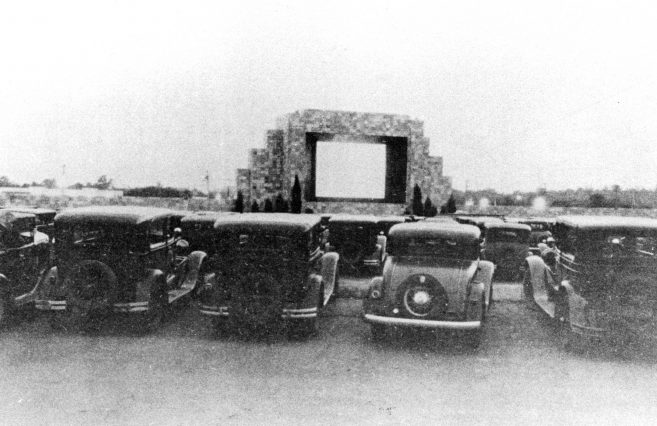
The accepted history is that the first drive-in opened in Pennsauken Township, N.J. in 1933. The theater was owned by local businessman Richard Hollingshead, Jr. who, a year earlier, nailed a giant screen to some trees in his backyard, placed a radio behind it and set a Kodak projector on the hood of his car. He perfected then patented the technology in 1933.

The theater’s slogan? “The whole family is welcome, regardless of how noisy the children are.”

While Hollingshead may have been visionary in some ways, he may have been short-sighted in others. After failing to make a profit, he sold the theater three years later, just as drive-ins began to catch on nationwide.

But was Hollingshead really the founding father? An outdoor theater in Las Cruces, New Mexico opened during the silent-film era, in April 1915, and another opened in Comanche, Texas in 1921. And long before Hollingshead’s patent, many small towns showed outdoor movies in the late 1910s and throughout the 1920s, as much a communal event as any town hall meeting or church picnic.

One such town was Schoharie, N.Y., about 40 miles west of Albany. In 1917, the small town started an outdoor movie series free to the public every Thursday night as a way to generate foot traffic for downtown merchants.

“It was so successful that this village with a population of 800 would get thousands, even nearly 10,000 people coming; a special bus would run from Schenectady every Thursday,” said Dwight Grimm who, together with his partner Leigh Van Swall, run the Greenville Drive-In in Greenville, N.Y. “All of the nearby farmers would come to socialize. Many of them weren’t watching, they just came to mingle.”

drive in movie theater
The first drive-in theater in America, the Park-In Theater in Camden, N.J.

Concessions

Grimm recreated that first Schoharie event a century later, in 2017, complete with a fleet of Model T Fords (one of which had a hand-cranked projector atop). On the bill? A screening of the first silent film shown in Schoharie, “The Awakening of Helena Ritchie.”

Grimm’s focus on novelty is no accident. Today, the drive-in industry is divided between larger companies that show first-run Hollywood movies on digital projectors, and smaller theaters that survive through creativity and flair.

The cost of converting to digital equipment in the mid 2000’s was a blow for many owners/operators. The big studios won’t release a first-run movie to a venue unless it has the most modern equipment, and digital projectors can cost upwards of $100,000.

“The conversion to digital was a death knell for a lot of smaller operators,” said Josh Frank, who runs a boutique pop-up drive-in called The Blue Starlite, with locations in Austin, Texas and Vail Valley, Colorado.

For Frank, a film school graduate, the drive-in is a labor of love.

“A lot of the smaller mom-and-pop shops like me, they do it because they’re passionate,” he said. “They want to be creative; they’re in love with the idea, the romance of the drive-in.”

Now Showing

The Blue Starlite is as boutique as it gets, a mini-urban drive-in with space enough for just 30 cars, mostly featuring throwback classics such as “Grease,” “The Goonies,” and “Back to the Future.” While sodas and popcorn account for some of its income, the Blue Starlite specializes in add-ons, creative ways to heighten the experience that blend the old and new—one package deal, for instance, includes virtual reality goggles and car-hop service.

“We bought an RV and people can rent it for small groups, to party for the evening,” he said. “You can pick the movie you want to see, or even use the screen for karaoke or video games.”

Grimm, too, ups the ante through creativity. For the Greenville Drive-In’s 60th anniversary this year, he featured 1959’s top film, “Some Like it Hot” as a ‘ukulele party,’ where patrons could jam together or steal the spotlight at an ‘Open Mic’ before being treated to a concert by a professional musician an hour before the show.

It’s been a tough grind for Grimm ever since he resuscitated the drive-in in 2015. But today, the Greenville Drive-In is something of a community resource, much as the silent films shown in Schoharie were 100 years ago.

“If our goal was to financially enrich ourselves, reviving a drive-in is the most knuckleheaded idea you could come up with,” said Grimm. “But in terms of something with community value — a gathering that brings together a diverse local crowd — it’s awesome.”

A Selection of Northeast Drive-In Movie Theaters to Check Out


New Hampshire

Connecticut

New Jersey (last remaining in the state)

New York

Massachusetts

Rhode Island

What’s your favorite memory of going to a drive-in theater? Let us know in the comments below! 

Subscribe to Your AAA Newsletter

Sign up and receive updates for all of the latest articles on automotive, travel, money, lifestyle and so much more!

Diamond Dish: Ocean House

Diamond Designation: Five Diamond (World-class luxury, amenities and indulgence for a once-in-a-lifetime experience. Learn more about AAA Diamonds.)

Location: 1 Bluff Ave, Westerly, R.I.

You can play sous chef beside the culinary team at the Center for Wine & Culinary Arts at the AAA Five Diamond Ocean House (also home to Coast, Rhode Island’s only Five Diamond restaurant). The historic seaside hotel o­ffers regular cooking classes, events and activities inspired by New England culture and the local landscape.

Restaurant Recipe Guide

Featuring more than 40 recipes and tips from top chefs and kitchens in the Northeast. Download the Restaurant Recipe Guide and get cooking!

Download Now!

Gluten-Free Apple Tart Dough

  • 270 grams butter
  • 3 tablespoons vegetable oil
  • 6 tablespoons water
  • 3 tablespoons granulated sugar
  • ½ teaspoon kosher salt
  • 500 grams almond flour
  • 2 tablespoons apple cider vinegar

Heat oven to 400 degrees. In oven-safe bowl, combine butter, oil and water. Bake in bowl until butter starts to brown. Combine and sift all dry ingredients. Remove bowl from oven and fold in dry ingredients and apple cider vinegar. Chill for at least 2 hours.

Filling

  • 4 pounds apples, sliced thin (half Granny Smith, half Honeycrisp)
  • 1/3 cup brown sugar
  • ¼ cup granulated sugar
  • 2 tablespoons lemon juice
  • 1 teaspoon cinnamon
  • Salt
  • 1 teaspoon allspice
  • 1 teaspoon cardamom
  • 1½ cups apple cider
  • Vanilla bean
  • 2 tablespoons cornstarch
  • 3 tablespoons water

Toss apples with brown sugar, granulated sugar, lemon juice, cinnamon, salt, allspice and cardamom in a large bowl. (Reserve some slices for decoration.) Let sit for 1-3 hours.

Use parchment paper to roll out dough.

Place apple cider in saucepan and scrape in vanilla bean seeds; add pod. Bring to boil and whisk occasionally until reduced by two-thirds. Add in juice from bowl of apples. Return to boil until reduced to ½ cup; remove vanilla pod. Stir cornstarch into 3 tablespoons of water in a separate bowl, then whisk into apple cider mixture. Cook, whisking constantly, until cider mixture is thick and bubbling. Cool slightly, then pour over apples; toss to coat.

Transfer dough to a pie 9-inch dish. Scrape in apple filling. Fan remaining apples on top, alternating colors. Sprinkle with Demerara sugar.

Heat oven to 375 degrees. Bake until crust is deep golden brown and juices are thick and bubbling, 1½ hours, or until apples are tender.

Makes 8-12 slices.

For more restaurant recipes, visit AAA.com/DiamondDish.

Subscribe to Your AAA Newsletter

Sign up and receive updates for all of the latest articles on automotive, travel, money, lifestyle and so much more!

Explore the National Seashores and Forests of the Northeast

When it comes to federally recognized outdoor spaces, National Parks get all the attention, and fairly so. But there are plenty of other nationally designated areas, filled with adventure, scenery, nature and wildlife, well worth a visit. And for Northeast residents, these destinations are far more accessible. After all, the Northeast has just one National Park but boasts three national forests and two national seashores.

While they may not garner the acclaim of a national park, these areas provide just as much to visitors: picturesque views, local wildlife, outdoor activities, historical sites and scenic drives. So pack your bags, fill up the tank and hit the road to explore the seas and trees of the Northeast.

Note: Due to the ever-changing nature of the COVID-19 crisis, please see official websites before visiting to check for restrictions or closures.

Car Rental Savings

Get up to 20% off the base rate of your next car rental.*

*Terms apply.

Book Today

Fire Island National Seashore

Fire Island National Seashore is a 26-mile, protected area of Fire Island, a barrier island off the southern coast of Long Island. The park offers visitors a little bit of everything: beaches, hiking, history and wildlife viewing.

One of the area’s main attractions is the Fire Island Lighthouse. At 168 feet, the structure is the tallest lighthouse on Long Island. Guests can climb the 182 steps to the top to enjoy 360-degree views. On a clear day, you can even see the New York City skyline. The surrounding area features beaches and a nature trail for hiking.

Speaking of hiking, the park offers ranger-guided tours of Sunken Forest. This ecologically rare holly forest is one of the world’s last remaining occurrences of such an assemblage of plants. Another site unique to Fire Island is The Otis Pike Fire Island High Dune Wilderness, New York’s only federally designated wilderness area.

Amongst all this nature are 17 unique Fire Island communities filled with restaurants, stores and other attractions. One important thing to remember when planning your visit: You can drive to some parts of Fire Island but not through it, as most of the island does not have paved roads. The best way to get there is by ferry. Once on the island, guests have the option of traveling from spot to spot by foot, bike or water taxi.

Cape Cod National Seashore

Massachusetts’ Cape Cod National Seashore is 40 miles of pristine coastline, home to beaches, ponds, lighthouses, cultural sites, cranberry bogs and much more. For those looking to bask in the sun, several of the regions sandy oases, including Coast Guard Beach and Race Point Beach, are considered among the best in the country.

Those looking for more of an adventure can explore Cape Cod on foot by following one of the park’s seven hiking trails, or by bike on one of the three paved bicycle paths. Cape Cod is home to numerous lighthouses including Highland Light in North Truro and Nauset Light in Eastham. All the lighthouses are open to visitors seasonally from spring through fall.

As picturesque as the region is, Cape Cod is also a beacon of culture and history. Visitors can view public art works at the Highland Center, or travel back in time to sites such as the French Cable Station Museum and the Old Harbor Life-Saving Station.

White Mountain National Forest

The White Mountain National Forest is the easternmost such forest in the United States, stretching from western New Hampshire to eastern Maine. It’s home to dozens of 4,000-foot mountains, including Mount Washington, the highest peak in the Northeast. Visitors can also explore the forest’s 1,200 miles of hiking trails, 160 miles of the Appalachian Trail, 12,000 acres of wetlands, and more than 100 lakes and watersheds.

Not to be outdone, the White Mountain National Forest boasts six Congressionally designated Wilderness Areas spread out across 150,000 acres. Here, sharp-eyed visitors can spot moose, white tail deer and nearly 200 different species of birds.

Those looking for a scenic drive must make a cruise along the Kancamagus a priority. The National Scenic Byway traverses 34 miles through the forest and rises to an elevation of nearly 3,000 feet. Scenic vistas plotted along the highway provide unparalleled picturesque views of the surrounding mountains, rivers and other natural wonders.

Green Mountain National Forest
“Green Mountain National Forest” by Rich Moffitt is licensed under CC BY 2.0

Green Mountain National Forest

Vermont’s Green Mountain National Forest encompasses more than 400,000 acres of the southwestern corner of the state. It’s the largest contiguous piece of public land in Vermont and, along with New Hampshire’s White Mountain Forest, one of New England’s two nationally recognized forests.

The forest contains three notable hiking trails, including sections of the Appalachian and Long Trails, as well the Robert Frost Interpretive Trail. The latter commemorates the work of the famed poet, with many of his poems posted along the route. It’s an easy walk for guests of all ages and the first section is wheelchair accessible.

The location has a total of eight wilderness areas, home to turkeys, beavers, moose, deer and many other forms of wildlife. Those looking to witness a different form of eye-catching nature can visit Thundering Falls. Here, water cascades 140 feet down through a narrow cataract, making Thundering Falls one of Vermont’s largest waterfalls.

Finger Lakes National Forest

The 16,000-acre Finger Lake National Forest in New York is located on a ridge between the region’s two largest lakes, Seneca and Cayuga. The area offers just about everything an outdoor enthusiast could ask for: hiking, biking, fishing, camping and horseback riding.

The forest is home to a wide array of wildlife, including deer, beavers, bobcats, foxes, turkeys, as well as a host of grassland, shrubland and forest birds. Viewers can watch these animals at one of the countless ponds, gorges, ravines, woodlands or pastures found throughout the area.

If you’re hungry for a bite you can enjoy fresh blueberries, apples, raspberries and other fruit that are available for picking. The Finger Lakes is also one of the country’s foremost wine-producing regions and there are several wineries located on the outskirts of the national forest.

Need a ride as you tour the historic sites in the Northeast? AAA members can save up to 20% on Hertz rentals. And up to four additional drivers (who are AAA members) can drive for free, so everyone can take turns in the driver’s seat. 

Subscribe to Your AAA Newsletter

Sign up and receive updates for all of the latest articles on automotive, travel, money, lifestyle and so much more!

AAA Photo Session: Northeast Landmarks

From the Statue of Liberty to Plymouth Rock, the Northeast is home to hundreds of landmarks of cultural and historical significance.

This Photo Session, we asked you to share photos of your favorite nearby landmarks. Whether as iconic as the Empire State Building, as elegant as the Newport mansions or as inspiring as Walden Pond, all are reminders of what makes our region such a fascinating place to live and visit.

Flip through the slideshow below to see all of the photos submitted and be sure to check our social media channels, where we will be sharing some of our favorites. Select photos may also be featured in an upcoming issue of Your AAA magazine.

How to Photograph Northeast Landmarks

Find Them

Local landmarks can help you learn more about the history of where you live and can make for some interesting photo ops, but first you need to find them. Fortunately, seeking them out is part of the fun. Travel apps and website make it easy to find Northeast landmarks and plan your day.

Download the AAA mobile app to help plan your trip, get directions and find the cheapest gas wherever you are.

Capture the Story

Whenever I photograph a local landmark, I always try to include a photo of a descriptive sign or plaque that may be next to it. Having the visual narrative of the landmark will help you to remember the story and history behind it. I like to create a diptych collage using the sign and a photo of the landmark.

northeast landmark
(Photo: Getty)

Just Add People

Gather the family and pose them by the landmark. Not only does it help show the scale of the landmark, it’s also a wonderful way to document the time spent together and the places you visited. Make sure to get yourself in the frame!

Bonus tip: Revisit the same landmark and take the same family photo every year. This is a fun way to see how everyone changes over the years. When you’re done, you can make a collage or photo book.

Time Your Shots

Daytime shots will make colors come to life in your photos. If you are photographing a landmark like a mural that is very colorful, daylight is going to give you the best chance at making those colors pop.

If you want to have warm, soft light hitting your landmark, then shoot for the golden hours – an hour after sunrise and an hour before sunset. This is also the best time to photograph people in front of your landmark. Harsh daytime light causes people to squint their eyes.

Check out past AAA Photo Sessions and stay tuned for the next one, coming soon. 

Beth Mancuso is a professional landscape and travel photographer.

Subscribe to Your AAA Newsletter

Sign up and receive updates for all of the latest articles on automotive, travel, money, lifestyle and so much more!

10 Things to Know About China Tours and Traveling

It’s a shame that most people’s impressions of China tours come from things like animated movies or current happenings in foreign politics. The only way to truly understand this foreign nation for yourself is to participate in China tours and immerse yourself in the culture.

But a trip to China is distinctly different than a trip to places within the United States or a vacation to the very-Westernized Europe. China is anything but Westernized, with a focus on traditional values and a connection to their ancient roots.

As such, traveling through China can be a bit of a culture shock for those expecting or accustomed to being catered to. The following tips can help you properly prepare yourself for an upcoming trip, both in terms of required cultural adjustments, working around the “big brother” nature of the Chinese government, and anything else that may otherwise come as a surprise when you tour Asia.

Looking to plan your next vacation? Be sure to consult a knowledgeable AAA travel agent to help guide you through the rapidly changing travel landscape.

1. You’ll need a visa for China tours

This is true even for a short-term trip. Traveling to China is not something you can do on a whim, perhaps because the government likes to feel like they’re in control of everything that goes on within their borders. If you opt into China tours led by a reputable tour group, they may be able to secure your visa on your behalf, but you can also take care of this at your nearby Chinese consulate general for a fee. Come prepared with your passport and documents detailing your itinerary and where you’ll be staying.

2. Don’t expect English to help you much

For the most part, when traveling the world, English will be sufficient to get around. Most people learn English as a second-language in school. And while this is true for some in China, attempts to converse with natives in English will mostly be met with a blank stare. Even your fluent tour guide may have a hard time with your accent.

So have fun getting lost and finding your way back home later. To make sure you don’t get too lost, grab a card from your hotel with a map to easily guide a taxi driver in a way they’ll understand.

3. Respect the local culture 

Just about everything you’re used to is different in China. An immature traveler might laugh at local customs, or make fun of them, but don’t be tempted to be an ugly American. Instead, show respect for the people and their traditions. If a local offers to teach you something about their culture, take them up on this with an open mind.

4. The food may not always agree with you

It’s not uncommon to feel bloated after eating a traditional Chinese meal. Chinese food tends to contain MSG, which improves the taste but can cause temporary bloating in some people. Don’t worry so much that you’re gaining weight — you’ll drop the bloat when you return to your usual diet.

China tours will likely take you to restaurants with Americanized ideas of Chinese food. But when you venture out on your own, expect some of the flavors to be a little more foreign to your stomach, and expect reactions to happen. Pack some Imodium just in case, especially if you get a bit adventurous with street food.

Another random tip for your trip to Asia destinations? Wear dark clothing to hide noodle slurping stains!

chian tours

6. Don’t miss out on China’s ancient wonders

The Great Wall of China is one of the new 7 Wonders of the World, which takes into account monuments and other amazing spectacles that are still standing today. Depending on where your China tours take you, there’s a lot to see. A few wonders to try and fit in when possible are:

  • Beijing: The Forbidden City
  • Outside Beijing: The Great Wall of China
  • Shanghai: Oriental Pearl Tower. Not ancient, but a must-see in this modern Chinese city.
  • Xi’an: Terracotta Army

6. You can (and should) bargain

This won’t work in a luxury shop or restaurant, but is fair game in a market. Shopkeepers expect haggling, and most start with a price at 10 times the amount you should counteroffer. You’ll end up meeting somewhere in the middle, but don’t be afraid to start walking away to drive the negotiations in your favor.

Chinese markets are known for selling a number of counterfeit goods featuring your favorite brands, which make for some fun souvenirs.

7. Big Brother is always watching

Censorship is present in many aspects of daily life, though none so obvious as when it comes to internet use. Accept that you won’t have access to Facebook, Instagram, Google and other similarly blocked websites.

8. The toilets are different

If you’ve never seen a squat-style toilet before, prepare to be a bit surprised. Outside of your hotel, these are quite common, and are essentially a hole in the ground or porcelain bowl that you crouch over. Make sure to bring your own toilet paper and hand sanitizer, as many facilities don’t offer hygienic supplies.

9. Safety is practically a non-issue

Many worry that when traveling outside of the culture they know and understand, they’re unsafe. This mostly stems from a fear of the unknown, especially when it comes to traveling in China. Unlike the warnings you often hear when traveling to European cities, there isn’t as much anxiety about pickpockets in China. Violent crime is not as big of an issue in China’s big cities as it is in the U.S.

10. Err on the side of acting conservative

For instance, dress a bit more conservative than you would at home. Chinese people aren’t used to yoga pants and bikini tops in public. Additionally, tone down the PDA with your significant other to a light peck or handholding at most. Though these things might not correlate to your normal daily life, they’re important for respecting the culture of the place you’re visiting.

What are your best tips for things to know about traveling through China? Leave your thoughts in the comments below!

Plan and book your China vacation with AAA Travel.

This story was originally published in 2018 and has been updated.

Subscribe to Your AAA Newsletter

Sign up and receive updates for all of the latest articles on automotive, travel, money, lifestyle and so much more!

The History of the Car Horn

If there’s one automotive feature drivers are willing to sound off about it’s the humble car horn. Some people use them, others use them far too liberally. But behind this debate is the fact that car horns are important safety features. They allow drivers to alert pedestrians and other motorists of their presence, hopefully avoiding any injury or damage.

For nearly as long as there have been automobiles, there have been car horns – and the tool’s simplicity means it hasn’t changed too much since. But that doesn’t preclude the history of the car horn from having its share of noteworthy developments.

The History of the Car Horn: Early Car Horns

Car horns were important features on early automobiles. In fact, the biggest change in the car horn since its inception isn’t the feature itself, but in how it’s used. While these days, excessive car honking is considered déclassé, it was polite to use one’s horn in the early 20th century.


“You were expected to honk your horn if you were coming up on pedestrians, to let them know you were bounding down the street,” Matt Anderson, curator for transportation at the Henry Ford museum, told Car and Driver magazine. “You’d be thought rude if you weren’t using your horn, which is the exact opposite of where we are today.”

The first car horns came in three different varieties. Air horns had a plastic bulb the driver could squeeze to emit a sound. Exhaust horns consisted of cuts made into exhaust pipes that elicited a sound similar to a steam engine. Finally, there were electric horns, which are most like what we have today.


The Klaxon Horn

One of the first pioneers of car horn manufacturing was Miller Reese Hutchison. In the early 1900s, the inventor became inspired to create an improved horn after nearly hitting a pedestrian while driving. Hutchison believed car horns should elicit a louder, harsher noise, which is precisely what his invention, the klaxon horn, did. If you’ve never heard of the klaxon horn you’ve almost certainly heard its famous “ahooga” sound.

The klaxon horn became almost immediately ubiquitous on roadways since it was affixed to most Model T’s. It remained the prominent horn of automobiles even as Ford transitioned to the Model A. Eventually, by the 1930s, the klaxon was replaced by electric horns.

Did You Know? Just a few years before the klaxon, Hutchison invented the first portable electrical hearing aids, called Acousticons. This led to none other than Mark Twain joking, “Hutchison invented the Klaxon horn to deafen people so they would have to buy Acousticons.”

history of the car horn

How Car Horns Work

Truth be told, the car horn is one automotive feature that hasn’t evolved much over the decades. There have been some changes in look and sound, but the science has remained about the same.

When a driver pushes down on the horn, an electric current travels through a coil to an electromagnet, creating a magnetic field. This field causes a metal diaphragm to flex. Once in this flexed position, contact points disengage and the current flow stops, causing the diaphragm to return back to its flat position and the cycle is repeated. This process continues as long as the horn is being pressed. The vibrations made by the oscillating diaphragm produce the horn sound.

Did You Know? Most of today’s car horns emit a sound of approximately 100-110 decibels.

Modern Car Horns

While the science remains the same, automakers are making slight adjustments to the car horn in order to satisfy the ever-growing and ever-changing automobile market. For instance, GM makes its diaphragms out of tungsten instead of steel because the former lasts longer. This is particularly important in Asia, where drivers tend to honk more often and drive over more rough roads, two factors that can cause horns to wear out.

Some companies are also swapping out copper wires for aluminum, a lighter material that improves a vehicle’s all-important fuel efficiency.

How do you feel about car horns? Do drivers use them too much or maybe not enough? Let us know in the comments below.

Now that you know about the history of the car horn, learn the backstories of other automotive features at AAA.com.

Subscribe to Your AAA Newsletter

Sign up and receive updates for all of the latest articles on automotive, travel, money, lifestyle and so much more!

Test Drive: Maximum MPG

OK, the Hyundai Ioniq has an odd name. But even so, it’s one of the most environmentally friendly compact cars on the market.

There are actually three different Ioniq hatchbacks on offer, including a traditional hybrid, a plug-in hybrid like my test car and an all-electric battery-powered version. The Environmental Protection Agency’s MPG estimates for the regular hybrid “Blue” model (57 city, 59 highway) make the Ioniq the most fuel-efficient hybrid on sale today.

My plug-in hybrid version performed adequately, though power delivery from the 139-horsepower four-cylinder gasoline engine and hybrid system felt a little anemic. On the upside, 630-plus miles of total range means you can go a long time between fill-ups.

The Ioniq’s handling inspires confidence, though it’s admittedly no sports car. The suspension also delivers a ride quality that’s on the overly soft side.

Taken together, all this makes the Ioniq an appealing choice in spite of its quirky moniker.

Test Drive Honda Clarity

Quick: What’s the best ice cream flavor? It’s a highly subjective question. Which brings to mind the Honda Clarity, a state-of-the-art sedan that may not be available in 31 flavors, but has enough different versions to satisfy a wide range of tastes.

This midsize four-door comes in three relatively uncommon varieties: a plug-in hybrid that will work for anyone, an all-electric battery version for the committed environmentalist, and a hydrogen-powered fuel cell version only offered in select markets with the requisite refueling infrastructure.

Of the three, the plug-in hybrid is the most practical for most people, with excellent 47-mile all-electric range and a 340-mile total range on a tank of gas. The 1.5-liter four-cylinder engine and electric motor team up to produce 212 total horsepower, but still delivers leisurely acceleration.

Ultimately, while the Honda Clarity may not suit everyone’s tastes, there’s no denying there’s a lot to like here.

Looking for a new ride? Check out more car reviews at AAA.com/TestDrive.

Subscribe to Your AAA Newsletter

Sign up and receive updates for all of the latest articles on automotive, travel, money, lifestyle and so much more!